Category: News

  • Plan to print 3D kidney tissue using Queensland expertise

    Plan to print 3D kidney tissue using Queensland expertise

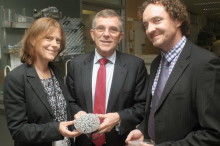
    Minister for Science, Information Technology, Innovation and the Arts The Honourable Ian Walker announced the plan to print 3D kidney tissue using Queensland expertise.

    It sounds like something out of science fiction but a US company is planning to produce kidney tissues using a 3D printer. And there’s a Queensland connection.

    Minister for Science and Innovation Ian Walker said mini-kidney tissue would be printed by America’s 3D bio-printing company Organovo following an agreement signed with the University of Queensland’s commercialisation company UniQuest.

    It delivers on the government’s election promise to provide better front-line services to Queenslanders, especially in health.

    “Professor Melissa Little and her team made a huge leap forward in stem cell technology last year by growing a tiny kidney in a laboratory dish.”

    “One in three Australians are at risk of developing chronic kidney disease so what Professor Little accomplished last year was a hugely important development,” Mr Walker said.

    He said the breakthrough drew enormous international interest, including from the San Diego-based Organovo, because of the continuous research progress shown in Professor Little’s labs.

    “The agreement with Organovo, the world leader’s in 3D printing of human tissue, will optimise the cells created using Professor Little’s technology in order to print kidney tissues from them using 3D bioprinting.”

    Mr Walker said the Queensland Government provided $1 million to support Dr Little’s research and that now the state was seeing a great outcome.

    Prof Little, from the Institute of Molecular Bioscience at UQ, said 3D printing of fully functional mini-kidney tissue would enable better disease modelling and drug development.

    “The mini-kidney tissue can be used to test the safety of new drugs,” Prof Little said.

    “The sad fact is that most new drugs fail during testing in humans and a big reason for that is that they turn out to be toxic to kidneys.

    “If we can test a drug for kidney toxicity before applying it to human trials, we’ll save a lot of time, effort and money.”

    The ultimate goal of Professor Little’s research is to produce artificial kidneys for humans.

    “There’s more work to get to this point but when we do it will save lives and cut the cost of treating the disease.”
  • Soil contamination detector launched in the US

    Soil contamination detector launched in the US

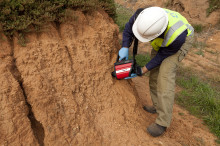
    A handheld detector that reduces both the cost and time taken to remediate sites contaminated by petroleum products has been launched to market in the United States.

    The device, RemScan, developed by CSIRO and industry partner Ziltek, uses an infrared signal to directly measure petroleum hydrocarbons in the soil, giving a result in around 20 seconds.

    The ability to rapidly and accurately detect petroleum contamination on site, instead of the traditional method of sending soil samples to a laboratory and waiting days for results, will enable industry to close projects or declare sites contaminant free, faster and with a greater degree of certainty. The technology has the potential to save the environmental remediation industry millions of dollars per year in laboratory and project costs globally.

    Petroleum contamination as a result of leaking tanks or industrial spills is a widespread global issue with potentially serious impacts for human and environmental health.

    RemScan can be used as a quick in-field screening tool to characterise contaminated sites, to validate spill clean-up areas, or to monitor ongoing contaminant degradation. In remote areas, where laboratory analysis is either not available or is prohibitively expensive – RemScan demonstrates its true value as a quick, easy to use and accurate instrument. The technology is particularly useful for the quantitative measurement of diesel, oil and crude products in soil, but can also be used as a screening tool for lighter fuels such as jet fuel and gasoline.

    Successfully commercialised in Australia by Ziltek in 2012, RemScan is now in use by the mining industry and the oil and gas industries in various Australian states. CSIRO holds the recently accepted US patent for the RemScan method, which is licensed exclusively to Ziltek for global distribution.

    CSIRO has significant expertise in advanced analytical methods to detect contaminants in soils, including new portable spectroscopic techniques for the rapid identification of a variety of soil properties. RemScan is one example of the commercial application of this expertise.

    “CSIRO has enabled the use of infrared spectroscopy for rapid non-destructive prediction of contaminants in soils and soil properties using both near- and mid-infrared spectral regions,

  • Tech girls are superheroes

    Tech girls are superheroes

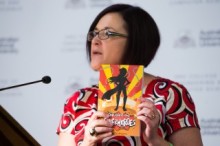
    A new campaign to encourage more girls to take up careers in computing and information technology has been launched at The Australian National University by the Minister Assisting the Prime Minister for Women, Senator the Hon Michaelia Cash.

    Female participation in IT stands at a mere 25 per cent, against 45 percent for other careers. The Tech Girls Are Superheroes campaign aims to inspire school girls to redress this balance and take up technology careers.

    “I was delighted to attend the launch, but more importantly I was heartened by the dedication that was shown towards greater gender equality in non-traditional roles such as IT,

  • Twitter tool shows a real-time view of our emotions

    Twitter tool shows a real-time view of our emotions

    Researchers from CSIRO have unveiled a new online tool developed for the Black Dog Institute, in partnership with Amazon Web Services, called ‘We Feel’ which analyses the words from millions of tweets to display a real-time view of our emotions.

    The tool will help researchers understand how our emotions fluctuate over time due to changes in social, economic and environmental factors such as weather, time of day, news of a natural disaster or announcements about the economy.

    We Feel will help Black Dog Institute’s researchers who are world leaders in the diagnosis; treatment and prevention of mood disorders such as depression, verify whether the large and fast sample of information coming from Twitter can accurately map our emotions. It is hoped the tool could help to understand how our collective mood changes, help monitor community mental health and predict where services needed to be assigned.

    “We Feel looks for up to 600 specific words in a stream of around 27 million tweets per day and maps them to a hierarchy of emotions which includes love, joy, surprise, anger, sadness and fear,

  • Weekly Science Picks

    Weekly Science Picks

    One more week finishes and here we are to recapitulate what have happened during the last exciting and promising 7 days. The task was quite challenging, but after careful consideration we made it. Here we would like to present what have attracted our attention the best. Sure you will enjoy this journey.

    How extreme isolation warps the mind

    That summer, the 32-year-old had been hiking with two friends in the mountains of Iraqi Kurdistan when they were arrested by Iranian troops after straying onto the border with Iran. Accused of spying, they were kept in solitary confinement in Evin prison in Tehran, each in their own tiny cell. She endured almost 10,000 hours with little human contact before she was freed. One of the most disturbing effects was the hallucinations.

    How do you build a city in space?

    Science fiction has delivered on many of its promises. Star Trek videophones have become Skype, the Jetsons’ food-on-demand is materialising through 3-D printing, and we have done Jules Verne one better and explored mid-ocean trenches at crushing depths. But the central promise of golden age sci-fi has not yet been kept. Humans have not colonised space.

    Here’s to accidental discoveries

    What do Velcro, penicillin, the microwave and Coca-Cola have in common? They were all discovered by accident. While most accidents are best avoided, some can turn out to be pretty awesome. Take wine for instance, one of the oldest drinks known to mankind.

    High-speed solar winds increase lightning strikes on Earth

    Scientists have discovered new evidence to suggest that lightning on Earth is triggered not only by cosmic rays from space, but also by energetic particles from the sun. Researchers found a link between increased thunderstorm activity on Earth and streams of high-energy particles accelerated by the solar wind, offering compelling evidence that particles from space help trigger lightning bolts.

    These would be all for this Weekly Science Picks. Hope you have enjoyed this trip at least as we did.

  • WHO’s first global report on antibiotic resistance reveals serious, worldwide threat to public health

    WHO’s first global report on antibiotic resistance reveals serious, worldwide threat to public health

    New WHO report provides the most comprehensive picture of antibiotic resistance to date, with data from 114 countries.

    A new report by WHO–its first to look at antimicrobial resistance, including antibiotic resistance, globally–reveals that this serious threat is no longer a prediction for the future, it is happening right now in every region of the world and has the potential to affect anyone, of any age, in any country. Antibiotic resistance–when bacteria change so antibiotics no longer work in people who need them to treat infections–is now a major threat to public health.

    “Without urgent, coordinated action by many stakeholders, the world is headed for a post-antibiotic era, in which common infections and minor injuries which have been treatable for decades can once again kill,

  • Teacher awarded international fellowship

    Teacher awarded international fellowship

    A Queensland high school teacher is swapping suburban Brisbane for New York City after winning the 2014 Smithsonian Cooper-Hewitt Fellowship valued at $19,000.

    Science, Information Technology, Innovation and the Art Minister Ian Walker congratulated Kelvin Grove State College teacher, Terry Deen, who would soon be heading off to one of the world’s most renowned design education departments at the Cooper-Hewitt National Design Museum.

    “This is a great opportunity for one of our brightest teachers to gain invaluable experience in delivering quality design education,” Mr Walker said.

    “If we want Queensland students to get the best education, then we need teachers such as Terry to learn from the best and bring that knowledge back to Queensland classrooms.

    “This delivers on a key commitment at the last election to improve frontline services for families, and supporting outstanding teachers to reach their potential means students will get the best.

    “The contribution this fellowship makes to the state is highlighted by the community design projects that students of previous fellows have completed.

    “They played a vital role in the Living City project where students presented responses to the Brisbane City Centre Master Plan in Brisbane’s King George Square, and the Sit-Art project where students produced 60 redesigned chairs for the Myer Centre eatery in Brisbane’s CBD.

    “Great teachers inspire students with their own love for their subjects and Terry is obviously in these ranks.”

    Mr Deen said he recognised the opportunity this fellowship provided for the growth of Queensland’s science, educational and cultural capabilities.

    “I’m proud to be named this year’s recipient of the Smithsonian Cooper-Hewitt Fellowship which will give me the opportunity to enhance my knowledge and provide leadership in design education by partnering with the Cooper-Hewitt National Design Museum in New York,” Mr Deen said.

    “The $19,000 awarded by the Queensland Government will make a real difference to improving my capacity to provide innovative learning experiences in the areas of technology and design, science, IT and engineering.”

    In 2013-14, funding up to $30,000 was made available by the Department of Science, Information Technology, Innovation and the Arts as part of the Queensland Government’s commitment to develop and maintain key strategic alliances through science and innovation.

  • Do Rappers Have a Bigger Vocabulary Than Shakespeare?: A Data Scientist Maps Out the Answer

    Do Rappers Have a Bigger Vocabulary Than Shakespeare?: A Data Scientist Maps Out the Answer

    Each year brings us a new list of words that, once hip or subcultural, signal their admission into the mainstream by entering the pages—print or online—of the Oxford English Dictionary or Merriam Webster’s.

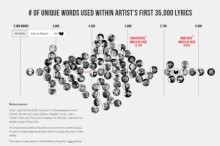
    Many of those come from the world of hip hop. The form is a veritable laboratory of linguistic innovation, spawning dozens of region-specific argots that mutate and evolve beyond the capacity of hip lexicographers to document. One data scientist, Matt Daniels, has made an interesting attempt, however, in a project he calls “The Largest Vocabulary in Hip Hop.

  • An Ode to What a Dog Can Teach Us About the Meaning of Life

    An Ode to What a Dog Can Teach Us About the Meaning of Life

    Mastering the art of unselfconscious presence.

    “Because of the dog’s joyfulness,

  • Ocean winds keep Australia dry, Antarctica cold

    Ocean winds keep Australia dry, Antarctica cold

    New ANU-led research has explained why Antarctica is not warming as much as other continents, and why southern Australia is recording more droughts.

    Researchers have found rising levels of carbon dioxide in the atmosphere are strengthening the stormy Southern Ocean winds which deliver rain to southern Australia, but pushing them further south towards Antarctica.

    Lead researcher Nerilie Abram, from the ANU Research School of Earth Sciences, said the findings explained the mystery over why Antarctica was not warming as much as the Arctic, and why Australia faces more droughts.

    “With greenhouse warming, Antarctica is actually stealing more of Australia’s rainfall. It’s not good news – as greenhouse gases continue to rise we’ll get fewer storms chased up into Australia,

  • Weekly Science Picks

    Weekly Science Picks

    Here we are at the end of one more exciting and fascinating week. It’s Sunday, as you know. It’s the day when we summarise what have happened during the last 7 day. This week was amazing, indeed. We got the opportunity to enjoy many different scientific and technological contributions and right now we would like to present what have attracted our attention the most.

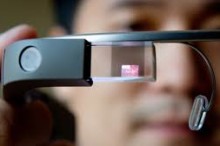
    Google Glass: Why the gadget faces its biggest test

    Will Google Glass catch on? With a backlash in full swing, there may be one thing that threatens the technology’s adoption more than anything else, argues Chris Baraniuk. And in the video above, BBC Click’s Spencer Kelly takes a look at how one airline is embracing the technology while some other businesses would rather ban it.

    Shrimp’s shell-smashing punch hands researchers a lead on tougher materials

    Able to withstand thousands of strikes without breaking, the marine crustacean’s “fists” have inspired a carbon-fibre composite material that is stronger and more durable than that currently used by the commercial aircraft industry. Researchers created an architecture of carbon fibres to mimic the claw’s shock-absorbing interior and then used impact testing to judge its toughness versus other composites.

    Creative ways we’re keeping fish on your plate

    Grilled with garlic, oven baked, or lightly pan fried with a hint of lemon: Blue-eye Trevalla is one of Australia’s premium seafoods, and an iconic fish species for commercial fishers and seafood lovers alike.

    Longevity gene may boost brain power: Researchers discover the gene may enhance cognitive abilities

    Scientists showed that people who have a variant of a longevity gene, called KLOTHO, have improved brain skills such as thinking, learning and memory regardless of their age, sex, or whether they have a genetic risk factor for Alzheimer’s disease. Increasing KLOTHO gene levels in mice made them smarter, possibly by increasing the strength of connections between nerve cells in the brain.

    Please stay thirsty and scientifically passionate for new stories. They will come soon.

  • New antivirals closer with opening of new laboratory

    New antivirals closer with opening of new laboratory

    Construction of the unique Biosecure Immunology Laboratory in Victoria will improve Australia’s ability to develop new treatments for highly infectious viruses such as influenza and Middle Eastern Respiratory Syndrome (MERS).

    CSIRO and Deakin University today officially open the new high-tech national research facility, located inside the Australian Animal Health Laboratory (AAHL) in Geelong.

    Dr Kurt Zuelke, director of AAHL, said the new laboratory will provide more specialised techniques, at a cellular level, to help pin-point the immune mechanisms employed by various animal hosts.

    “This new world-class facility will be critical in helping us develop new, more natural, therapeutics and boost our work in preventing, detecting and treating emerging infectious diseases,

  • 3D printed first to treat sleep apnoea

    3D printed first to treat sleep apnoea

    A new 3D printed device is set to end the suffering for thousands of sleep apnoea patients.

    Using a 3D scanner to map a patient’s mouth, CSIRO researchers and Australian dental company, Oventus, can now print a mouthpiece which prevents dangerous pauses in breath during sleep.

    Printed from titanium and coated with a medical grade plastic, the breakthrough mouthpiece is customised for each patient.

    The device has a ‘duckbill’ which extends from the mouth like a whistle and divides into two separate airways. It allows air to flow through to the back of the throat, avoiding obstructions from the nose, the back of the mouth and tongue.

    Sleep apnoea occurs when the air passage in the throat becomes blocked during sleep and causes people to stoping breathing. In severe cases, people can suffer hundreds of events per night.

    An estimated one million Australians suffer from the disorder, which can lead to high blood pressure, stroke, irregular heartbeats, heart attacks and diabetes. This number is expected to increase due to growing obesity levels and an aging population.

    The existing treatments for sleep apnoea include devices that push the lower jaw forward to open up the airway or in more severe cases; a face mask which creates a continuous flow of air can be used.

    CSIRO’s 3D printing expert, John Barnes, said the technology is opening new doors for treatments of a range of medical issues globally.

    “When Oventus came to CSIRO with this idea, we were really excited. The possibilities of 3D printing are endless and the fact that we can now design and print a completely customised mouthpiece for patients is revolutionary,