Category: News

  • Research leads to food and sport deals

    Research leads to food and sport deals

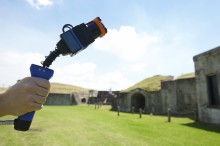
    The commercialisation of CSIRO research and technology reached an important milestone last week with agreements being signed in the food, sport and surveying industries.

    CSIRO has now created more than 150 companies and currently hold interests in around 30. It is also Australia’s largest patent portfolio and issues around 80 licenses each year, many to Australian businesses.

    CSIRO Director of Business Development and Commercial Jan Bingley said the deals for BARLEYmax, Zebedee and WASP, further demonstrate how CSIRO was helping build Australian businesses and boost the country’s productivity.

    “CSIRO works with about 3000 clients each year, including more than 20 per cent of the Australian Stock Exchange top 200 companies and 1300 Small to Medium Enterprises,

  • Weekly Science Picks

    Weekly Science Picks

    Indeed, it’s Sunday again. But, it’s not only Sunday. It’s Easter for all Christians all over the globe. Happy Easter to everyone! Also, it’s our time to recapitulate what have happened in this week. To be honest, the task was quite challenging, since the science and technology market is highly competitive and unpredictable. Luckily, we made it. Now we would like to present you top stories that were published during this week.

    The crashes that changed plane designs forever

    Sacrifices were made in great numbers in the early days of powered flight. Aeroplanes suffered a catalogue of catastrophic construction and engineering failures compounded by bad weather and pilot error. These tragedies were part of a long and fraught process that helped make flying as safe as it is today.

    Nasa Kepler telescope discovers planet believed to be most Earth-like yet found

    A newly discovered planet may be the most Earth-like yet found in another solar system, scientists believe. Kepler-186f is almost the same size as the Earth and occupies its star’s “habitable zone” where temperatures are mild enough to allow liquid surface water.

    Ancient viruses sound scary, but there’s no need to panic

    The researchers raised concerns that drilling in the permafrost may expose us to many more pathogenic viruses. Should we be worried about being infected from the past? Can human viruses survive in this permafrost environment and come back to wreak havoc?

    ‘Dressed’ laser aimed at clouds may be key to inducing rain, lightning

    The adage “Everyone complains about the weather but nobody does anything about it” may one day be obsolete if researchers further develop a new technique to aim a high-energy laser beam into clouds to make it rain or trigger lightning. Other possible uses of this technique could be used in long-distance sensors and spectrometers to identify chemical makeup.

    Until next meeting, please stay thirsty for new updates from the world of science and technology.

  • 2014 Prime Minister’s Prizes for Science

    2014 Prime Minister’s Prizes for Science

    The Prime Minister’s Prizes for Science are Australia’s national annual awards for recognition of outstanding achievement in science and excellence in science education. Nominations are open to Australian citizens and Australian permanent residents.

    The five awards are:

    • The Prime Minister’s Prize for Science (AUD$300,000);
    • The Frank Fenner Prize for Life Scientist of the Year (AUD$50,000);
    • The Malcolm McIntosh Prize for Physical Scientist of the Year (AUD$50,000);
    • The Prime Minister’s Prize for Excellence in Science Teaching in Primary Schools; (AUD$50,000); and
    • The Prime Minister’s Prize for Excellence in Science Teaching in Secondary Schools (AUD$50,000)

    The Prime Minister’s Prize for Science

    • The Prime Minister’s Prize for Science is awarded for an outstanding specific achievement or series of related scientific achievements advancing human welfare or benefitting society.
    • Nominees can be an individual or a group of up to four, if the achievement is a collaborative team effort.
    • There are no restrictions as to when the achievement was accomplished, however nominees must be currently active in research.
    • Past recipients of the Malcolm McIntosh Prize and Frank Fenner Prize (or its predecessor, the Science Minister’s Prize) are eligible to be nominated and considered for this award.
    • Previous nominees are eligible for re-nomination subject to eligibility criteria being met.
    • The award comprises an award certificate, a gold embossed medallion, lapel pin and a grant of AUD$300,000.

    Frank Fenner Prize for Life Scientist of the Year and Malcolm McIntosh Prize for Physical Scientist of the Year

    • Nominations are open to individuals only.
    • Previous nominees are eligible for re-nomination subject to eligibility criteria being met.
    • The Frank Fenner Prize and the Malcolm McIntosh Prize recognise the achievement of scientists in their early to mid-career whose research advances human welfare or benefits society – or has the potential to do so.
    • The Frank Fenner Prize is awarded for achievement in the life sciences, including health and medical research, biology, agriculture, veterinary science and environmental science.
    • The Malcolm McIntosh Prize is awarded for achievement in the physical sciences and related enabling sciences, including chemistry, engineering, physics, astronomy, earth sciences, mathematics and information technology.
    • To be eligible, the nominee must have achieved outstanding research during a research career spanning no more than 10 years (or full time equivalent):

    The nominee’s highest degree should have been awarded not more than 10 years ago (on or after 29 May 2004), and a certified copy of the testamur must be provided.

    The achievements listed in the nomination can include research conducted as part of studies for a bachelor’s degree, master’s degree or PhD.

    At least four years of the nominee’s research career must have been spent in Australia.

    Allowances will be made for career disruptions such as family leave.

    Each award comprises an award certificate, an embossed silver medallion, lapel pin and a grant of AUD$50,000.

    Prime Minister’s Prize for Excellence in Science Teaching in Primary Schools and Prime Minister’s Prize for Excellence in Science Teaching in Secondary Schools

    • These prizes are awarded in recognition of contributions by science teachers in their commitment and dedication to effective and creative science teaching.
    • Nominations are open to individual teachers only.
    • Previous nominees are eligible for re-nomination subject to eligibility criteria being met.
    • The AUD$50,000 grant component of the prizes for science teaching will be shared equally between the prize recipient and the last school in the Australian education system in which the achievements cited in the nomination were realised. The school’s share of the grant must be used to finance a project or projects that will improve the school’s capacity to teach science.
    • In addition to their share of the grant, the recipient will receive an award certificate, an embossed silver medallion and lapel pin.

    The full eligibility criteria, nomination guidelines and the online nomination form are online at: http://www.industry.gov.au/scienceprizes.

    For further information, please email: pmprize@industry.gov.au

    How to nominate

    Nominations for all five prizes will be conducted in two stages.

    Nominators are advised to refer to the 2014 nomination guidelines for the Prime Minister’s Prizes for Science before submitting a nomination. Nominations will be assessed in accordance with the guidelines.

    Stage 1 requires that nominators register online to complete a form including:

    • Nominator and nominee(s) details.
    • Details of two supporters (for the three science prizes, one of these supporters must be based overseas).
    • An achievement summary of no more than 800 words describing the achievement nominated, with reference to the selection criteria for the prize.
    • A two-page curriculum vitae, which must be compiled with reference to the specific guidelines for each prize category.
    • Certified proof of Australian citizenship or permanent residency.
    • For the three science prizes only: the curriculum vitae should include reference to at least four articles or publications or patents which relate directly to the achievements for which the nomination is made.
    • For the Frank Fenner and Malcolm McIntosh Prizes only: evidence that the nominee’s research career spans no more than 10 years (or full time equivalent):

    The nominee’s highest degree should have been awarded not more than 10 years ago (on or after 29 May 2004), and a certified copy of the testamur must be provided.

    The achievements listed in the nomination can include research conducted as part of studies for a bachelor’s degree, master’s degree or PhD, so long as the entire period covered is not more than 10 years.

    At least four years of the nominee’s research career must have been spent in Australia.

    Allowances will be made for career interruptions such as family leave.

    Stage 2 requires shortlisted nominees to submit further details, including:

    • Reference from the nominator of no more than five pages, addressing each point of the prize selection criteria.
    • References from the two supporters endorsing the nominated achievement.
    • A paragraph in simple English describing the nature, impact and importance of the nominee’s nominated achievements, for possible use in publicity.
    • For the three science prizes only: a list of publications and copy of each of the four publications which best describe the nominated achievement.

    CLOSING DATE: 29 May, 5.00 pm local time in Canberra
  • Science & Cooking

    Science & Cooking

    I can hardly think of a more appealing nexus of the sciences, for most of us and for obvious (and delicious) reasons, than food.

    Add a kind of engineering to the mix, and you get the study of cooking. Back in 2012, we featured the first few lectures from Harvard University’s course Science and Cooking: From Haute Cuisine to the Science of Soft Matter. Their collection of rigorous and entertaining presentations of that which we love to prepare and, even more so, to eat has since expanded to include one- to two-hour lectures delivered by sharp professors in cooperation with respected chefs and other food luminaries on culinary subjects like the science of sweets (featuring Flour Bakery’s Joanne Chang), how to do cutting-edge modernist cuisine at home (featuring Nathan Myhrvold, who wrote an enormous book on it), and the relevance of microbes, misos, and olives (featuring David Chang of Momofuku fame).

    Alternatively, you can pick and choose from the complete list of Harvard’s Science and Cooking lectures on Youtube or on iTunes. Some get deep into the natural workings of specific dishes, ingredients and preparation methods; others, like “The Science of Good Cooking

  • Chocolate bytes with virtual mouth this Easter

    Chocolate bytes with virtual mouth this Easter

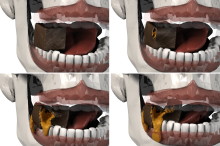
    Here’s something to chew over. Easter chocolates, along with our favourite everyday foods, could taste just as good but be healthier in future, thanks to new technology that is revealing the science of chewing.

    CSIRO’s 3D mastication modelling, demonstrated for the first time in Melbourne today, is starting to provide researchers with new understanding of how to reduce salt, sugar and fat in food products, as well as how to incorporate more fibre and nutrients, and even how to create new food sensations.

    CSIRO biomechanical engineer and computer modeller, Dr Simon Harrison, said the world’s first 3D dynamic virtual mouth can provide detailed insight for developing healthier foods.

    Just in time for Easter, Dr Harrison has modelled a caramel filled Easter Egg to see what happens when the virtual mouth takes a bite.

    “In polite company, we can’t see inside someone’s mouth while they’re eating and, until now, it has not been possible to view how the chewing process alters food,

  • Years of Living Dangerously – the New Series on Climate Change

    Years of Living Dangerously – the New Series on Climate Change

    Ever since Al Gore’s An Inconvenient Truth came out to critical accolades, Conservative scorn and a handful of Oscars, there has been no shortage of well meaning documentaries about the perils of climate change. Most feature a Hollywood celebrity or two, a liberal amount of liberal guilt, and a distinct sense of preaching to the converted.

    The new Showtime series Years of Living Dangerously might have plenty of those first two elements but none of the third. In the first episode of the series –which has been released for free on YouTube (above) – Don Cheadle asks, “Is there a way to discuss climate change without politics or religion getting in the way?

  • Weekly Science Picks

    Weekly Science Picks

    Well, it’s Sunday again. It’s our time to recapitulate all the scientific contributions, ideas, events and discoveries that have occurred in this week. To be honest, the job was quite challenging, since the science and technology market is highly competitive and unpredictable. Luckily, we made it. Now we would like to present you top stories that were published during this week.

    Nanostructures with applications in infrared and terahertz ranges

    Scientists have created a compound semiconductor of nearly perfect quality with embedded nanostructures containing ordered lines of atoms that can manipulate light energy in the mid-infrared range. More efficient solar cells, less risky and higher resolution biological imaging, and the ability to transmit massive amounts of data at higher speeds are only a few applications that this unique semiconductor will be able to support.

    Baking bread by the numbers

    If we had to name who’s involved in bread making, most of us would probably identify the baker, the farmer who grows the wheat and maybe even the miller who grinds the wheat into flour. But how many people would think of the humble statistician? Dr Emma Huang would – and she’s eager to prove their worth in the process.

    Try stargazing wherever you are

    The first “wow” moment of my stargazing adventure took place before I had even looked through a telescope. Staring up at the cloudy night sky one cold March evening, I spotted a bright pinprick of light to the south-west. “Which star is that?” I asked Seb Jay, the astronomer who was going to teach me to stargaze and who was, at that moment, busy setting up a pair of telescopes in my back garden.

    ‘I have lived underwater’

    The first night Deron Burkepile spent underwater was over 10 years ago, but the memory is still fresh in his mind. He remembers getting suited up — a couple of scuba tanks on his back, extra safety gear hanging from his rig—and stepping to the back of the boat. “You’re used to getting off the boat and coming back in an hour, maybe two at most,

  • Media Studies: new media and new literacies

    Media Studies: new media and new literacies

    Many commentators agree that the field of media studies will become more and more important in the coming years.

    The European Science Foundation (ESF) publication “Media studies: new media and new literacies

  • How a Young Sigmund Freud Researched & Got Addicted to Cocaine

    How a Young Sigmund Freud Researched & Got Addicted to Cocaine

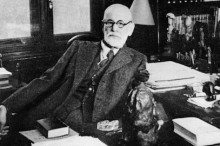
    As David Bowie had his cocaine period, so too did Sigmund Freud, beginning in 1894 and lasting at least two years.

    Unlike the rock star, the doctor was just at the beginning of his career, “a nervous fellow

  • New tool for galactic archaeology

    New tool for galactic archaeology

    Reconstructing the history of our Galaxy has just become a whole lot easier, thanks to a team of international astronomers led by Dr Luca Casagrande from the Research School of Astronomy and Astrophysics.

    By examining both the light and soundwaves from stars, the team has developed a more precise way to deduce the ages of stars and to pinpoint when our Galaxy’s big events happened.

    The development will help astronomers study the properties of ancient stars and help them better understand the formation and evolution of the Milky Way.

    “We might also uncover evidence for violent events in the past, such as collisions with other galaxies,

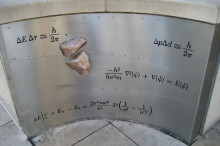
  • Beautiful Equations

    Beautiful Equations

    Like many right-brained people, artist and critic Matt Collings finds higher math mystifying, a word that implies both bewilderment and wonder.

    Faced with the equations that make, for example, Stephen Hawking’s work possible, most of us are left similarly slack-jawed. Collings aptly describes the realm of theoretical physics—which so contradicts our everyday experience—as “an alien world,

  • Weekly Science Picks

    Weekly Science Picks

    We have come to the end of one more week and it’s time to summarise what has happened during this week. As usual, the task was quite challenging, but we made it. Here is the review of the most exiting and fascinating news from the world of science and technology.

    Do coffee and tea really dehydrate us?

    They enjoy the taste and the fact that the caffeine wakes them up. But when we’re exhorted to drink six or eight glasses of water a day, it’s usually emphasised that drinks like coffee and tea don’t count towards your daily liquid total because they’re dehydrating. Or so we’re told. What’s the evidence?

    Mind-controlled robotic suit to debut at World Cup 2014

    Shortly before 5pm local time on 12 June at Arena Corinthians in São Paulo, a young paraplegic Brazilian will stand up from a wheelchair, walk over to midfield, and take a kick in the opening ceremony of the 2014 World Cup.

    Saving daylight

    Not that “adjusting

  • Whatever You Are, Be a Good One

    Whatever You Are, Be a Good One

    From Tolstoy to Tumblr, a compendium of timeless wisdom on life.

    In March of 1884, Leo Tolstoy resolved in his diary to create a “circle of reading

  • Peak Data – coming to a network near you

    Peak Data – coming to a network near you

    CSIRO has released a report on “spectrum crunch” and the role of ubiquitous connectivity in future wireless applications.

    The threat of ‘peak data’ and what that could mean for the way we connect and access essential services in the future, is the focus of a report released by CSIRO.

    Director of CSIRO’s Digital Productivity and Services Flagship Dr Ian Oppermann said wireless technology had been adopted at “breakneck pace” in Australia and around the world.

    “The data rates that people now expect from their mobile services are about a hundred times the amount we thought possible only two decades ago,” Dr Oppermann said.

    The report, World Without Wires, points out that wireless communications rely on the availability of radiofrequency spectrum. The spectrum has practical limits and more spectrum cannot be created so we are faced with a finite resource and growing demands to use it.

    Today’s technologies and infrastructure will be hard pressed to support further increases in demand, both in terms of speed and volume, for wireless data and services over the coming decades.

    Many global cities, including here in Australia, are fast approaching the point of ‘peak data’ – where user demand for wireless internet, telephony, and other services can no longer be fully accommodated by the available radiofrequency spectrum.

    “Currently the useable spectrum is divided up and allocated to various uses, such as TV/radio broadcast, emergency services, and mobile phone communications for example,” Dr Oppermann said.

    “In the future, how spectrum is allocated may change and we can expect innovation to find new ways to make it more efficient but the underlying position is that spectrum is an increasingly rare resource.

    “Some estimates suggest that spectrum demand will have almost tripled by 2020, and existing infrastructure will need to rapidly expand its currently available capacity if it’s to meet this demand.

    “With more and more essential services, including medical, education and government services, being delivered digitally and on mobile devices, finding a solution to “peak data” will become ever more important into the future.”

    World Without Wires examines the role that ubiquitous access to high-speed wireless connectivity will play in enabling a range of future applications and social developments, including:

    (1) The replacement of digital TV and telephony services by internet-based, personalised streaming services

    (2) Widespread sensing technologies that optimise and improve almost every aspect of our daily lives

    (3) The widespread use of wireless positioning technologies, from making driverless cars the norm to enhancing retail experiences through “virtual concierges”

    (4) “Tele-services” as the default model of service delivery for government and businesses, with education, healthcare and other public goods being delivered via private digital networks

    (5) A radical improvement in the way existing wireless infrastructure accommodates ongoing growth in service demands, including smaller cells, smarter antennae, and beyond.

    “Such developments will have a profound impact on both Australia and the rest of the world, constituting significant market opportunities, and a chance to deliver widespread public good from our wireless research and enterprise community,” Dr Oppermann said.

    Source and image.