Category: News

  • How to Code in 12 Weeks?

    How to Code in 12 Weeks?

    Today, we bring you the CS50, Harvard’s Introductory Computer Science course, taught by Professor David Malan, which appeared last year.

    Why revisit an updated version of the same class a year later? For one thing, the material has been updated. And, as you can tell by the rousing reception Malan receives from the audience at the start of the first lecture (above), Malan is kind of a big deal. From his opening boom of “This is CS50,

  • Adapting to change around the Indian Ocean rim

    Adapting to change around the Indian Ocean rim

    Experts from countries around the Indian Ocean rim are meeting this week in India to discuss ways to improve their disaster resilience and improve management of future climate risk.

    The meeting of Indian Ocean Rim Climate Change Adaptation Officials, under the auspices of the Indian Ocean Rim Association (IORA), is the first meeting of delegates from around the Indian Ocean rim to discuss the implications of future climate risk. The workshop, which is being co-organised by CSIRO, was announced as part of a $1.175 million package during the IORA Council of Ministers’ Meeting in Perth in November 2013.

    Workshop convenor, Ms Jennifer Sutton from the CSIRO Climate Adaptation Flagship, said the workshop would share information and plans about practical ways to help communities, farmers, industry and policymakers adapt to climate changes expected around the Indian Ocean rim, including for small island developing states. The meeting would discuss what actions are being taken and determine possible options for future action.

    “Around 50 delegates will share knowledge of the impacts of climate change on the livelihoods of the people of the Indian Ocean rim, to identify the best ways to increase resilience,

  • Shedding new light on the origins of life

    Shedding new light on the origins of life

    Researchers looking at the origins of life on Earth have come up with a new explanation for how the earliest molecular material was able to replicate in the primordial soup.

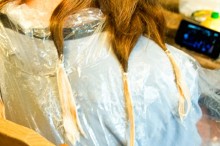
    They have found that hydrogen peroxide, an ingredient commonly associated with hair bleach, may have been the key to the early replication of RNA – the polymeric molecule that is thought to have existed before cellular life and DNA.

    The research sheds new light on how the earliest forms of life developed, and helps explain the mystery of why new forms of life don’t emerge on modern Earth.

    “The problem of how life originated is enormously complicated,

  • Weekly Science Picks

    Weekly Science Picks

    It’s Sunday again! It’s our time to give a brief review of the most amazing science and technology news that have appeared on the web during this week. The task was quite challenging, but we made it. We proudly present you the top stories of this Weekly Science Picks.

    Will we ever… travel in wormholes?

    The universe is huge. Travelling at light speed to the nearest star would take more than four years. Venturing to the other side of the galaxy? More than 100,000 years. So what’s an intrepid space traveller to do?

    Airliners should broadcast location every 15 minutes, says Inmarsat expert

    Inmarsat, which analysed the eight satellite “pings” from the missing MH370 to determine that it crashed in the southern Indian Ocean, already offers a service which costs $1 per hour to provide rapid updates. This service were used by Air France, and helped rescue services determine where flight 447 crashed into the sea off Brazil.

    What on earth is urban mining?

    There is a wealth of valuable metals – gold, silver, copper, rare earths – that can be extracted, processed and reused from products, which is what we call ‘urban mining’. This saves energy, water and landfill, but it could also deliver benefits to our national economy.

    Autism begins in pregnancy, according to study: Cortical layers disrupted during brain development in autism

    Researchers have published a study that gives clear and direct new evidence that autism begins during pregnancy. The researchers analyzed 25 genes in post-mortem brain tissue of children with and without autism. These included genes that serve as biomarkers for brain cell types in different layers of the cortex, genes implicated in autism and several control genes.

    That’s all for this Sunday. Until next meeting, stay thirsty for new scientific stories.

  • How the Ancient Greeks Shaped Modern Mathematics

    How the Ancient Greeks Shaped Modern Mathematics

    If you think Ancient history doesn’t matter to your life today, think again.

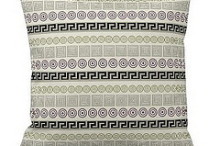
    Created by The Royal Institution and the animation shop 12Foot6, this short animated video reminds us that the Greeks gave us some of the most basic concepts used in mathematics — concepts that we still use to navigate our modern world today. As with drama and philosophy, everything goes back to the Ancient Greeks.

    Source and image.

  • Detailing diversity of life in Booderee National Park

    Detailing diversity of life in Booderee National Park

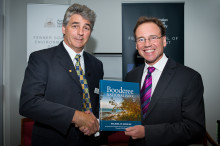
    A new book detailing the rich diversity of life in one of Australia’s greatest and most popular national parks, the Booderee National Park, has been written in a unique collaboration between ANU researchers, Parks Australia managers and the Wreck Bay Aboriginal Community.

    Booderee National Park, at Jervis Bay south of Sydney, receives more than 450,000 visitors annually – more than Kakadu and Uluru National parks combined – and is a major part of Australia’s tourism infrastructure.

    The book contains stunning images of the park, its plants and wildlife, and examines research spanning more than a decade into the park’s biodiversity.

    The authors find the park, which covers 6,600 hectares of land and coast, is both thriving and surviving, despite challenges posed by the large number of visitors, and from bushfires, invasive plants species and feral pests, such as the Red Fox.

    “This park is a crucial part of the nation’s tourism infrastructure, but it still maintains its ecological integrity,

  • Skills over Degrees

    Skills over Degrees

    Universities in Australia should prepare themselves for a fundamental change in their relationship with employers, who increasingly want students with particular skills rather than degree qualifications.

    Employers were moving past the 20th-century model in which students removed themselves while they studied for a bachelor’s degree, and then possibly a master’s degree, before entering the workforce. This is a fundamental change. The credential is still important but it’s actually the skills that are attached to it that will drive the economy forward.

    What employers want to know today is what skills candidates have gained and how they have applied them in the field.

    The tendency is as follows. People want to go to university because they believe it will help them get a good job and a better quality of life. But, from employers’ perspective, the value of a degree is actually waning.

    So, what should be the purpose of a good education system? To provide a proper education, nice knowledge and maybe ability to process the facts or something else?

    First of all, an education system must follow the current trends regarding industry and market. No one needs experts who are good at theoretical level only. Today’s employees must be good in resolving practical problems, because that’s what the country needs for a strong economy and stable system.

  • Digital tools hold promise for Australia’s bill of health spending

    Digital tools hold promise for Australia’s bill of health spending

    Robots on hospital wards, smart apps on mobile devices and home-monitoring systems will transform our health system a report released by CSIRO has revealed.

    The report A Digitally-enabled Health System looks at how the Australian health system can reduce costs and deliver quality care.

    “We know Australia’s health system faces significant challenges including rising costs, an ageing population, a rise in chronic diseases and fewer rural health workers,

  • Reviving Einstein’s “spooky action at a distance

    Reviving Einstein’s “spooky action at a distance

    Physicists from the Australian National University and the University of Queensland have demonstrated a software-based quantum amplifier, which has the potential to expand the use of ultra-secure quantum cryptographic communications.

    The development could lead to new ways to guarantee security of everyday communications, including financial transactions and email.

    “This has the potential to guarantee security for any kind of information you want to transmit, from particularly sensitive information, like banking data or electoral results, to personal emails,

  • Weekly Science Picks

    Weekly Science Picks

    We have come to the end of one more week and it’s time to summarise what has happened during this week. As usual, the task was quite challenging, but we made it. Here is the review of the most exiting and fascinating news from the world of science and technology.

    Want to learn quicker? Use your body

    Ever got to grips with a problem? Picked up a new skill? Grasped a difficult concept? The language of learning is full of references to parts of the body outside the brain. Perhaps that’s because these phrases hint at something deeper. Researchers are discovering that learning is easier, quicker and more long-lasting if lessons involve the body as well as the mind – whether it’s gesturing with the arms or moving around a room. Can these insights enhance teaching and learning in the future? And should it inform the way technology is employed in the classroom?

    Gravitational waves give Nobel prize committee another headache

    A team of American astronomers announced that they had detected the tell-tale signature of “cosmic inflation” using an experiment called Bicep2 – a telescope located under the clear skies of the south pole.

    When disaster strikes: the science of oil spills

    To do this, in addition to monitoring and letting the contaminated site recover on its own, there are three main oil spill countermeasure techniques used: mechanical recovery, for example capturing the spreading oil on booms and pumping oil back into barrels (always the first preference); burning the oil off the water’s surface; and applying chemical dispersants to break up the oil into small droplets within the water column which become diluted at sea to harmless levels and subsequently broken down naturally, by bacteria.

    Humans can distinguish at least one trillion different odors

    Humans are capable of discriminating at least one trillion different odors, new research shows. Scientists determined that our sense of smell is prepared to recognize this vast olfactory palette after testing individuals’ ability to recognize differences between complex odors mixed in the laboratory. It has been said for decades that humans were limited to distinguishing only 10,000 different odors.

    That’s all for this Weekly Science Picks. Until next meeting, stay thirsty for new scientific stories.

  • Insect’s mating secrets key to protecting Aussie farms

    Insect’s mating secrets key to protecting Aussie farms

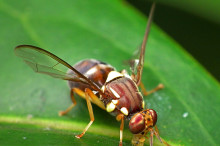
    CSIRO scientists are combining micro sensing, sterile insect technology and new insect trapping systems to protect our farms from one of Australia’s most economically damaging pest – the Queensland fruit fly.

    Although only 8mm in length the Queensland fruit fly, or Q-fly, is a highly mobile insect capable of infecting a wide range of major fruit and vegetable crops, including stone and tropical fruits. The spread of Q-fly in Australia’s eastern states is threatening the nation’s A$6.9 billion horticultural industry, which relies on both domestic and international trade.

    Until recently, farmers located in areas where Q-fly is present have used agri-chemicals – such as dimethoate and fenthion – to prevent and manage incursions. However, after a long period of review, the Australian Pesticides and Veterinary Medicines Authority has recently restricted the use of these insecticides.

    According to CSIRO researcher Dr Paul De Barro, increased Q-fly numbers can also threaten status of pest free areas.

    “We believe that our sterile insect technology (SIT), through development of a male-only line of Q-fly, will offer a new environmentally friendly, sustainable and cost effective approach to assist in managing this damaging pest.” Dr De Barro said.

    “SIT is a scientifically proven method for suppressing or eradicating fruit fly populations and managing their potential impacts in horticulture production areas.”

    This biological control method has already been used with great success around the world and in South Australia to combat the Mediterranean fruit fly. However, the development of male-only sterile Q-fly is a first.

    “Despite all our knowledge of fruit flies, we do not actually know where they go to breed,” Dr De Barro said.

    “When you’re looking to deploy sterile male flies to disrupt the mating cycle this information is a critical piece of the puzzle.”

    By using micro sensing technology on Q-flies, as we have done with honey bees in Tasmania, CSIRO will be able to answer that question and, most importantly, understand where to deploy sterile Q-flies and also how to make better use of other management options such as new trapping systems and pheromone baits.

    “It will tell us how many sterile flies we will need to release and most importantly, when to release them,” Dr De Barro said.

    “Combining SIT with other sensor technologies represents a game-changing opportunity as it not only provides us with information about how the Q-fly interacts with its natural environment, but offers real opportunities to reduce the cost of current monitoring networks for fruit fly.”

    According to Horticulture Australia Limited’s David Moore, General Manager R&D Services, this initiative is the first effort in a long time at investing in medium to long term research that will provide a sustainable solution to Australia’s fruit fly problem and its impact on production and market access.

    “There is still a lot of work to be done but compared to examples of overseas best practice along with the shared vision and dedicated support of key investors and industry, we’re confident that this project will deliver real impact for Australian farming communities,” Mr Moore said.

    CSIRO, Horticulture Australia Limited, Plant and Food Research, the Department of Primary Industries and Regions South Australia and New South Wales Department of Primary Industries are working together to develop a male only line of sterile Q-fly.

    Source and image.

  • abNormal: A Short Documentary on the Science of Being Different

    abNormal: A Short Documentary on the Science of Being Different

    What do a dancer, a chess player, a visual artist, a trumpeter, an architect, and a cab driver have in common?

    In the case of the dancer, the chess player, the visual artist, the trumpeter, the architect, and the cab driver profiled in trained molecular biologist and neuroscientist and The Rough Guide to the Brain author Barry J. Gibb’s abNormal above, they share… well, abnormality, in some sense or another. This half-hour documentary, which Gibb made in consultation with psychologist and neuroimaging researcher Chris Frith, “points a microscope at human behaviour, asking viewers to question their perceptions of others and even of themselves.

  • Australian soil carbon map sets a baseline for future gains

    Australian soil carbon map sets a baseline for future gains

    A new CSIRO-developed map of Australia’s stored soil carbon provides an important benchmark against which Australia can track future changes in soil carbon storage or carbon sequestration.

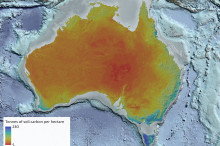
    Providing the most detailed and accurate representation of soil organic carbon stocks, to a depth of 30 cm, at a national scale, the 2010 soil organic carbon map for Australia, draws on soil sampling data and innovative prediction methods. The map includes an estimate of soil carbon stock and an estimate of the uncertainty for approximately two billion football-field-sized blocks (90m by 90m) across Australia.

    “This map is the first effective nationwide baseline of organic carbon levels in the top 30 cm of soil, which comes with estimates of uncertainty,” according to lead researcher, Dr Raphael Viscarra Rossel.

    Until now, estimates of soil organic carbon across the breadth of Australia have not been available or were largely uncertain because of large gaps in data and the limits of past measurement and spatial modelling.

    “The map provides a reliable benchmark for Australia to monitor the influence that changes in land cover, climate, land management and greenhouse gas offset activities have on soil carbon stocks and associated carbon dioxide removal from the atmosphere,” Dr Viscarra Rossel said.

    In assembling the new map, CSIRO drew on three major datasets, including CSIRO’s National Soil and Spectral databases and the national Soil Carbon Research Program – a nationally coordinated research program led by CSIRO, universities and state government agencies and funded by the Australian Government and the Grains Research and Development Corporation.

    The map and its prediction methods provide new insight into the environmental drivers that determine the distribution of soil carbon across the nation, its diverse bioregions and its states and territories.

    “Australia’s largest soil organic carbon stores per hectare occur in the cool, temperate zones, which have higher-than-average rainfall and extensive rainforests and eucalyptus forests,” Dr Viscarra Rossel said.

    “These larger stocks of organic soil carbon tend to coincide with southern states and regions fringing the coastlines, where wetter and cooler conditions produce more vegetation growth with slower decomposition and loss of carbon dioxide. South Australia, due to its large amount of desert, is an exception; its soils contain the least amount of organic carbon per hectare, followed by northern and western jurisdictions and regions exposed to Mediterranean, subtropical and tropical climates.”

    The average amount of organic carbon in the top 30 cm of Australian soil was estimated to be 29.7 tonnes per hectare and the total stock for the continent at 25.0 gigatonnes (Gt= 1000 million tonnes) with a 95 per cent confidence of being within the range of 19.0 to 31.8 Gt. The total stock in agricultural regions of Australia is 12.7 Gt with 95 per cent confidence of being within the range of 9.9 to 15.9 Gt.

    The new map and associated estimates and uncertainties have important applications, according to Dr Viscarra Rossel.

    “The maps of the estimates and their uncertainty are for 2010 and could be used to:

    (1) set a baseline from which Australia’s national soil carbon stocks could be monitored

    (2) guide the design of national soil monitoring networks

    (3) help guide future soil sampling designed to improve estimates of Australia’s soil carbon stocks

    (4) help to assess the potential of Australian soil to sequester carbon

    (5) improve Australia’s terrestrial carbon budgeting

    (6) assist with strategies to mitigate and adapt to the effects of a changing climate.”

    This work was published this week in the journal, Global Change Biology through CSIRO’s Sustainable Agriculture Flagship.

    Source and image.

  • Richard Feynman Explains How Rubber Bands Work

    Richard Feynman Explains How Rubber Bands Work

    The world is a dynamic mess of jiggling things, if you look at it right.

    When you see an ordinary rubber band stretched around and holding together a stack of stuff over a long period of time, you’re actually witnessing a miraculous force of physics at work — a perpetual pounding of the atoms as they struggle to hold these chains together against the outward push of the stack, vibrating with extraordinary vigor just to accomplish this seemingly mundane task. That peeling away of the mundane to reveal the magnificent is the greatest gift and most lasting legacy of Richard Feynman — champion of scientific culture, graphic novel hero, crusader for integrity, secret artist. Indeed, it was this very talent that earned Feynman the moniker “the Great Explainer