Category: News

  • Volcanoes helped species survive ice ages

    Volcanoes helped species survive ice ages

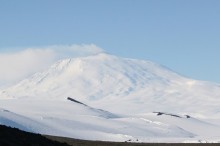
    An international team of researchers has found evidence that the steam and heat from volcanoes and heated rocks allowed many species of plants and animals to survive past ice ages, helping scientists understand how species respond to climate change.

    The research could solve a long-running mystery about how some species survived and continued to evolve through past ice ages in parts of the planet covered by glaciers.

    The team, led by Dr Ceridwen Fraser from the Australian National University and Dr Aleks Terauds from the Australian Antarctic Division, studied tens of thousands of records of Antarctic species, collected over decades by hundreds of researchers, and found there are more species close to volcanoes, and fewer further away.

    “Volcanic steam can melt large ice caves under the glaciers, and it can be tens of degrees warmer in there than outside. Caves and warm steam fields would have been great places for species to hang out during ice ages,

  • Weekly Science Picks

    Weekly Science Picks

    Well, it’s Sunday again. It’s our time to recapitulate all the scientific contributions, ideas, events and discoveries that have occurred in this week. To be honest, the job was quite challenging, since the science and technology market is highly competitive and unpredictable. Luckily, we made it. Now we would like to present you top stories that were published during this week.

    How to learn like a memory champion

    For most of his 20s, Ed Cooke had been hovering around the top 10 of the World Memory Championships. His achievements included memorising 2,265 binary digits in 30 minutes and the order of 16 packs of playing cards in just an hour. But at the age of 26, he was getting restless, and wanted to help others to learn like him. “The memory techniques take a certain discipline,” he says. “I wanted a tool that would just allow you to relax into learning.”

    Take that, space junk! Australian scientists to zap debris with lasers

    It may sound like science fiction but an Australian team is working on a project to zap orbital debris with lasers from Earth to reduce the growing amount of space junk that threatens to knock out satellites with a “cascade of collisions

  • The Science of What Motivates Us, Animated

    The Science of What Motivates Us, Animated

    “When the profit motive gets unmoored from the purpose motive, bad things happen.

  • The Origin of Water on Earth

    The Origin of Water on Earth

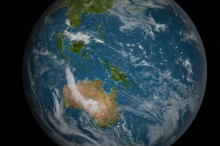
    The reason that there is clearly more water on the Earth than on the other planets of the Solar System has not been clarified. There are few theories on how the world’s oceans were formed over the past 4.6 billion years.

    Some of the most likely contributory factors to the origin of the Earth’s oceans are as follows:

    (1) The cooling down of the primordial world to the point where the outgassed volatile components were held in an atmosphere,
    (2) Comets, trans-Neptunian objects or water-rich meteoroids,
    (3) Measurements of the ratio of the hydrogen isotopes deuterium and protium point to asteroids,
    (4) Biochemically, during the Great Oxygenation Event, via redox reactions and photosynthesis,
    (5) Gradual leakage of water stored in hydrous minerals,
    (6) Photolysis: radiation can break down chemical bonds on the surface,
    (7) Planetesimals heated by the decay of aluminum.

    The reasons why we have water on Earth are presented in the following video material.

  • Learn Right From Wrong – Oxford’s Free Course

    Learn Right From Wrong – Oxford’s Free Course

    Oxford University professor Marianne Talbot has a number of excellent philosophy podcasts online, some of which we’ve previously featured on the site. Today, we bring you Talbot’s A Romp Through Ethics for Complete Beginners (Web – iTunesU – YouTube), which addresses one of philosophy’s central questions: what is the right way to conduct yourself in life?

    The problem may, at first, seem somewhat trivial. “Live whichever way you want, as long as you’re going to be a good person,

  • Why Do We Cry?

    Why Do We Cry?

    Everyone’s had one of those days when everything seems to go wrong. At this point, some of us resort to nature’s tried and true stress relief method – crying. But, why do we cry? Is there any scientific explanation to this phenomenon?

    Basically, there are some research explanations which we would like to present you through the following video material.

  • How to Remain Cyber Safe?

    How to Remain Cyber Safe?

    Over the decades security experts all around the world have been debating what sort of protection is the most suitable for a PC. So, what do you think you should do to keep your computer cyber safe?

    Below are some key steps to protecting your computer from intrusion:

    Keep Your Firewall Turned On

    A firewall assists in protecting your computer from hackers who might try to gain access to crash it, delete information, or even steal passwords or other sensitive information. Software firewalls are widely recommended for single computers. For multiple networked computers, hardware routers typically provide firewall protection.

    Install or Update Your Antivirus Software

    Antivirus software is designed to prevent malicious software programs from embedding on your computer. If it detects malicious code, like a virus or a worm, it works to disarm or remove it. Viruses can infect computers without users’ knowledge. Most types of antivirus software can be set up to update automatically.

    Install or Update Your Antispyware Technology

    Spyware is just what it sounds like—software that is surreptitiously installed on your computer to let others peer into your activities on the computer. Some operating systems offer free spyware protection, and inexpensive software is readily available for download on the Internet or at your local computer store.

    Keep Your Operating System Up to Date

    Computer operating systems are periodically updated to stay in tune with technology requirements and to fix security holes. Be sure to install the updates to ensure your computer has the latest protection.

    Be Careful What You Download

    Carelessly downloading e-mail attachments can circumvent even the most vigilant anti-virus software. Never open an e-mail attachment from someone you don’t know, and be wary of forwarded attachments from people you do know.

    Turn Off Your Computer

    With the growth of high-speed Internet connections, many leave their computers on and ready for action. The downside is that being “always on” renders computers more susceptible.

  • Weekly Science Picks

    Weekly Science Picks

    We came to the end of this week and it is our time to recount the most exciting and incredible stories from the world of science and technology. As usual, we had to make a hard decisions and after a careful consideration we decided to promote the news as follows:

    Can Facebook make you sad?

    Not so long ago a new form of communication swept the world, transforming life in ways unimagined just a few years before. One commentator heralded it as “the greatest means of communication ever developed by the mind of man

  • The Science of Which Came First, the Chicken or the Egg, Animated

    The Science of Which Came First, the Chicken or the Egg, Animated

    What the ancient proto-chicken has to do with how wolves became dogs.

    Since the dawn of recorded history, philosophers have pondered which came first, the chicken or the egg, as a causality dilemma exploring grander existential inquiries into the origin of life and the universe. But, it turns out, science has an answer that bypasses the metaphysical and dives right into the nitty-gritty of the tangible and concrete. In yet another illuminating animation, AsapSCIENCE enlist evolutionary biology in answering the age-old question, comparing the process to how dogs became dogs and ultimately demonstrating that — like much of science — the solution may have more to do with semantics and nomenclature than with actual scientific evidence.

    Source and image.

  • Scientists: accelerate your career with collaborative, high impact fellowships

    Scientists: accelerate your career with collaborative, high impact fellowships

    Queensland’s researchers and scientists are encouraged to apply for fellowships to help them develop and establish their professional reputations through innovative, practical and applied research, working closely with business.

    The $3 million Accelerate Fellowships funding program was opened today by Queensland Chief Scientist Dr Geoff Garrett AO who said the program will support scientists to undertake research that can have a positive impact on Queensland.

    “Early career fellowships will offer a researcher with up to five years’ post-PhD research experience $180,000 over three years to support them lead and manage a research project, with close engagement with business partners.

    “Mid-career fellowships will offer $300,000 over three years for a researcher with five to ten years’ post-PhD experience to lead a research team to deliver a significant research project,

  • The Chemistry of Sriracha

    The Chemistry of Sriracha

    If you head over to the Huy Fong Foods web site, they’ll tell you that Sriracha, their ever-popular Thai condiment, is “made from sun ripen chilies which are ground into a smooth paste along with garlic and packaged in a convenient squeeze bottle.

  • The Occupation of Parents Defines Kid’s Results at School

    The Occupation of Parents Defines Kid’s Results at School

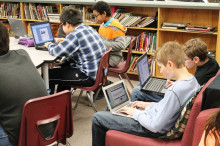
    Children who have at least one parent working in IT, business or engineering are the best performing students in Australia.

    An OECD report into the connection between student performance and their parents’ occupations has also found the kids of subsistence farmers, salespeople and machine operators are the lowest performing students in the nation’s schools.

    Not only were the kids of information and communications technology (ICT) workers top of the country in maths and science, they were also the best in terms of reading.

    By Australian Information Industry Association, ICT workers’ skills include the analytical, the innovative, the creative thinking, the can-do, curiosity and solving business problems.

    These means that the children of ICT workers are enjoying the benefits of being exposed to all of those skills and being inspired in their family environment to take risks.

    But, that’s not the end of the story. The gap between Australia and the top maths performers is so big that the children of a Shanghai (China) subsistence farmer will perform as well as the offspring of an Australian health or teaching professional.

  • State of the Climate 2014: A clear picture of Australia’s climate

    State of the Climate 2014: A clear picture of Australia’s climate

    A definitive report on observed changes in long term trends in Australia’s climate has been released today by CSIRO and the Bureau of Meteorology.

    Bureau Chief Executive Dr Rob Vertessy said temperatures across Australia were, on average, almost 1°C warmer than they were a century ago, with most of the warming having occurred since 1950.

    “Australia’s mean temperature has warmed by 0.9°C since 1910,

  • Google’s Military Robots are Here

    Google’s Military Robots are Here

    Computers and robots will become smarter and more adept than human beings in 15 years time. Computers develop an almost-organic intelligence gleaned from experience, and will be able to tell jokes and flirt with humans.

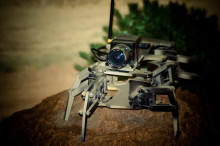
    How real is this? Well, it’s quite real. Internet search giant Google has spent billions buying up the world’s top robotics companies. These corporations include DeepMind, a British company which specializes in machine learning, and Boston Dynamics, which makes advanced military robots.

    We present you some of their solutions in the following video material.