Category: Science

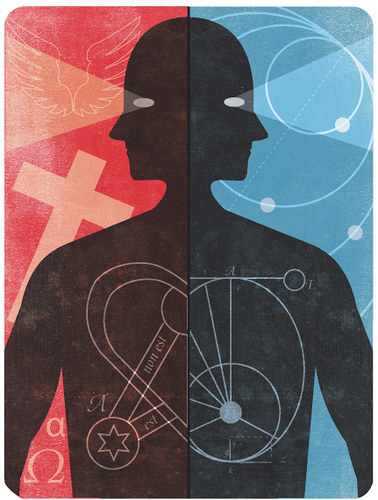
  • Science and Faith

    Science and Faith

    If I let go a hammer on a planet having a positive gravity, I need not see it fall to know that it has, in fact, fallen. – Spock, “Court Martial,” Star Trek, stardate 2948.9.

    I recently viewed the film Salmon Fishing in the Yemen. Dr. Jones, (brilliantly played by Ewan McGregor), has been ordered by the Ministry of Fisheries to undertake this farfetched project of introducing salmon into the Yemen River, wholeheartedly, or be out of a job. Dr. Jones reluctantly agrees but continuously ridicules this idea based on his years of research and meticulous study of salmon. He casts doubt every chance he gets that this project will actually work. And what we actually have here is a case of policy dictating science; in the name of a heartfelt, goodwill story meant to assuage the voting public’s uneasiness with the war. (A totally different issue of debate, which I will not touch on here.) It’s not until Dr. Jones meets Sheikh Muhammed, a deeply spiritual man of faith that he begins to open up to another way of thinking, one that defies all his principles of scientific reasoning. And he embraces that this plan just might work, with farmed salmon no less. But what causes the radical reversal of the scientist’s viewpoint from staunch biological reasoning to faith that this project might actually be possible?

    Science and religion have had something of a love-hate relationship, intertwined for centuries and often at direct odds with each other. Popes and bishops issued condemnations and accused some great scientific minds of heresy in the Middle Ages. The work of Galileo, Conrad Gessner and Charles Darwin also come to mind, having caused quite a ruckus of controversy in their day. And well Darwin may always be at odds with some folks.

    From my own experience growing up Catholic and pursuing biology and chemistry in college, I found it difficult to compartmentalize science and religion. But there have been and still are a few scientists out there who can separate their scientific beliefs from their religious practice. Copernicus was a Catholic clergyman; Gregor Mendel was an Augustinian friar; and Georges Lemaitre, who first proposed the Big Bang Theory, a Belgian priest. They seemed to have been able to separate their work from their spiritual beliefs. Perhaps they had truly find enlightenment? Or maybe that’s exactly what it is; just a spiritual belief, for right or wrong, that has nothing to do with science.

    As with most conflicts, it seems that the bitter clashes between science and religion arose primarily due to a different interpretation over the definition of ‘science’. Secular philosophers considered science in the sense of natural science; while theologians took the view that all science is based on demonstrations – according to the St. Thomas Aquinas viewpoint. The shift toward science becoming the top dog, so to speak, over religion seems to have occurred as Europe and North America experienced greater secularization. The political power and influence of the church relating to scientific research has gradually decreased. According to the Catechism of the Catholic Church: “Methodical research in all branches of knowledge, provided it is carried out in a truly scientific manner and does not override moral laws, can never conflict with the faith, because the things of the world and the things the of the faith derive from the same God. The humble and persevering investigator of the secrets of nature is being led, as it were, by the hand of God in spite of himself, for it is God, the conserver of all things, who made them what they are”. I will leave it up to the reader to ponder that and agree or disagree.

    But let’s explore the concept of faith for a moment. The word faith is thought to date back to the early 13th century, around the time of some budding scientific discoveries. Formally, faith is a belief in one or more gods or in the doctrines of religion. Buddhism, Christianity, Judaism, Sikh, Hinduism, Islam – all of these religions have some concept of faith stationed at the root of their core beliefs. Informally, it can mean a trust or belief without proof, a hope. And this is where the criticism starts, over this very definition of faith, and how it can seem at odds with science.

    Critics argue that faith is opposed to reason, while advocates argue that faith addresses questions that cannot be settled by evidence. The evolutionary biologist, Richard Dawkins stated, “Faith is the great cop-out, the great excuse to evade the need to think and evaluate evidence. Faith is belief in spite of, even perhaps because of, the lack of evidence.

  • New Associate EMBO Member from Australia

    New Associate EMBO Member from Australia

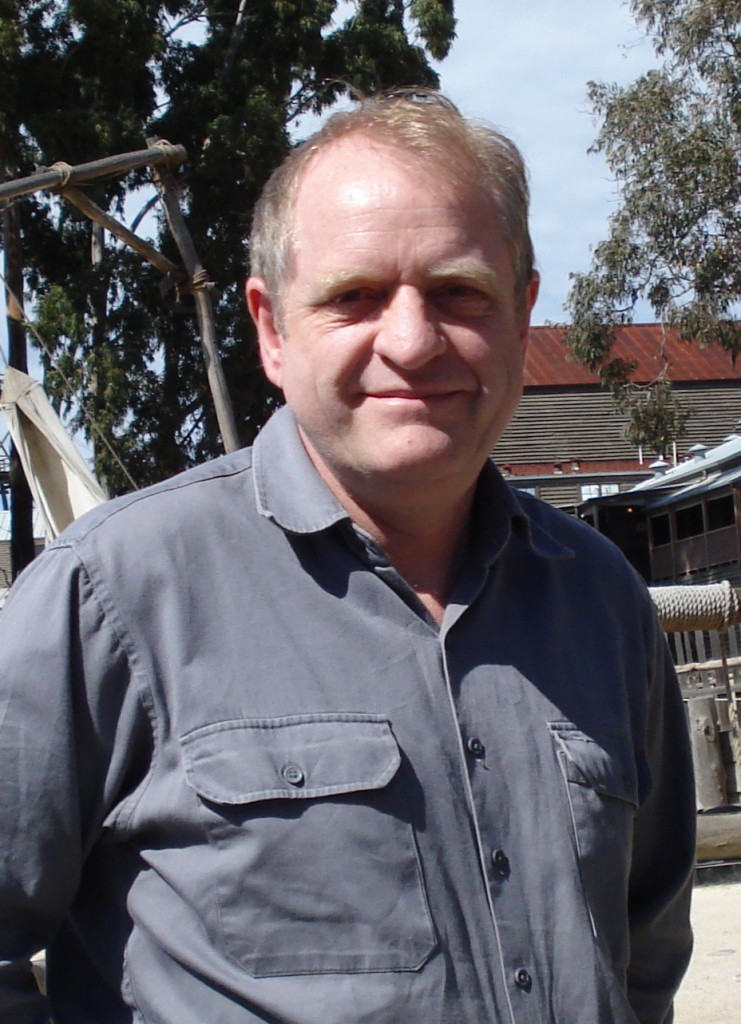
    New Associate EMBO Member from Australia – professor David L. Vaux

    Fifty-five life scientists from Europe and around the world, on 9 May 2012 in  Heidelberg, Germany, were recognised by EMBO (Excellence in Life Sciences) for their excellence in research. Forty-eight of the researchers are from Europe and neighbouring countries while seven scientists from Argentina, Australia, South Korea and the United States join as Associate Members. In total, EMBO membership now comprises almost 1,550 life scientists in the international scientific community.

    EMBO elects new members annually on the basis of scientific excellence. The new members represent a broad cross-section of the life sciences. The latest scientists to join the group come from 17 different countries and include 13 female scientists recognized for their contributions to life science research.

    The new Associate Member from Australia is professor David L. Vaux, Walter and Eliza Hall Institute, Parkville. Prof. Vaux is best known for identifying the proto-oncogene bcl-2 as an inhibitor of cell death, thus launching the field of molecular biology of apoptosis (programmed cell death). Read more about his research division Cell Signalling and Cell Death and his research overview, interests, and selected publications.

    The selected researchers will help shape the direction of the life sciences in Europe and beyond by their involvement with the activities of the organization. EMBO Members provide scientific input such as acting on advisory editorial boards of the four scientific journals of the organization, serving on selection committees for EMBO Programmes and giving general advice to the scientific community.

    A list of all new EMBO Members and Associate Members accompanies this announcement [link].

  • Australian team nominated for European Inventor Award

    Australian team nominated for European Inventor Award

    Dr. Josef Theurer is nominated in the category Lifetime achievement for his railway track-laying machines

    Dr. John O’Sullivan and team nominated by European Patent Office for paving the way for Wi-Fi. Australian scientists laid world standard in modern communication and licence out their invention all over the globe.

    Battistelli: “The innovation led by Dr. O’Sullivan and team has impacted on our daily life to an extent that only few inventions have achieved before.

  • The social network of solitary lizards

    The social network of solitary lizards

    Burra, South Australia. Dirt roads link sparsely populated towns and communities once home to copper miners that lived in tiny dugouts along the banks of the creek. Burra is a place capsulated by hot, dry summers and cool moist winters. Across the arid place a grey-brown reptile with short limbs and a large cumbersome head shuffles along the dirt in search of the place it calls home. No other living thing is in sight. For all intents and purposes, this lizard is the last being in existence.
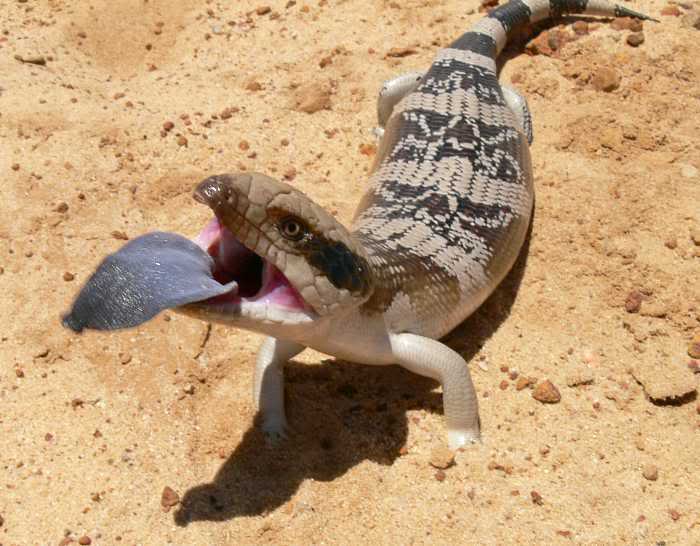
    The Pygmy Bluetongue Lizard is the smallest of the genus Tiliqua and, unlike the other members of the genus, it has a pink tongue. Its home is a vertical burrow constructed by spiders. The bluetongue lizard is generally territorial and lives a  life of solitude. The solitary lizards rarely leave home, and when they do rarely for any great amount of time, taking solace within their holes for many months at a time and rarely encountering a neighbour outside of mating season.

    The lizard’s use of wolf and trapdoor spider holes as a home is only a recent discovery. It really makes no modifications to its lodging, using it for day time shelter, retreat sites for hiding, ambush sites for hunting passing prey, basking sites for thermoregulation, and birthing sites. Really from cradle to the grave.

    At the height of the mining boom, the population of miners living in the Burra region was in the area of 5000, approximately the number of lizards that currently roam the grasslands near Burra today. Bluetongue lizards are now endangered and under threat from climate change, the changing of the natural soil under its feet due to ploughing of native grassy understorey, and — most importantly — from parasites.

    The lizards are host to an ixodid tick, Bothriocroton hydrosauri, and an oxyurid nematode, Pharyngodon wandillahensis. Two parasites that don’t really go out of their way to be parasitic.

    How a host acts can be very beneficial for a parasite or pathogen. Parasites evolve to get the most out of their host… by hook or by crook. Some parasites go to great lengths to change the behaviour of their hosts. The Tom & Jerry dynamic witnessed in Toxoplasma gondii, and zombie ants are the more popular examples.

    One of the challenges of disease ecology in a wildlife setting is to identify and map how different parasites and pathogens spread and establish a foothold within a population. From influenza to measles to HIV to foot and mouth to real or hypothetical diseases, the modelling is all very similar. The patterns of contact among hosts within a population are likely to play a central role in how parasites spread. A good social network is key to any disease transmission.

    Why would the bluetongue lizard make a good animal to study the spread of disease through a population, given its less than social nature? And the more pertinent question of how can a parasite remain successful with an anti-social host? These were the questions that faced researchers at Flinders University in South Australia.

    The spread of parasites is one that often relies on the modification of host behaviour, but in the case of the tick and the nematode, the parasite takes advantage of the lizard’s less than social nature.

    The tick requires three hosts, and each developmental stage of the tick is on a different host. Larvae, nymphs and adult females each attach to a host, feed and then detach. The detached larvae and nymphs then moult to the next developmental stage. Whereas the female lay eggs that hatch into larvae.

    Tick activity and development occur in the spring and summer months when the weather is warm and the lizards are at their most adventurous (lizard activity is at its peak). The tick adopts a ‘sit and wait’ strategy to find its next host. Once detached from its host, it will move less than half a metre to find the next host. It simply waits for the lizard to find it.

    The oxyurid nematode has a more astute strategy. Lizards use their tongues to sense environmental cues, and the bluetongue lizard uses its tongue to inspect scats other lizards use to mark their territory. This is when transmission occurs.

    Both tick and nematode are working against the clock. The tick must be found by a lizard within a relatively short amount of time (40 days). Whereas the eggs of the nematode are thought to have no more than 10 days to find its next host before they die.

    The parasites rely on the more adventurous lizards within the population to be mobile enough to disperse the disease. Those that act as dispersers, wandering from neighbouring settlements. These dispersing lizards behave more cautiously, and are more likely to inspect any scats with its tongue as they move through occupied habitat. And thus, more likely to encounter a parasite.

    These parasites, unlike most, have to rely on the rare occasions of interpersonal contact patterns between lizards. These parasites have to rely on the social network of antisocial, solitary lizards.

  • In the Quest to Tell the Story for Science

    In the Quest to Tell the Story for Science

    Skills learned in science have a carryover effect into other areas of life, and ultimately have an impact in their chosen profession – influencing their thought process and how they carry out decisions. Whether kids choose science as a major in university and continue with it through to the job market, even at the earliest levels of schooling, science engages students to become leaders. Why? Because they are inquiring to learn about the environment around them, to find out what makes it tick, and to correct or enhance any “ticks
  • In the footsteps of Marie Curie: L’Oreal-UNESCO honours Women in Science

    In the footsteps of Marie Curie: L’Oreal-UNESCO honours Women in Science

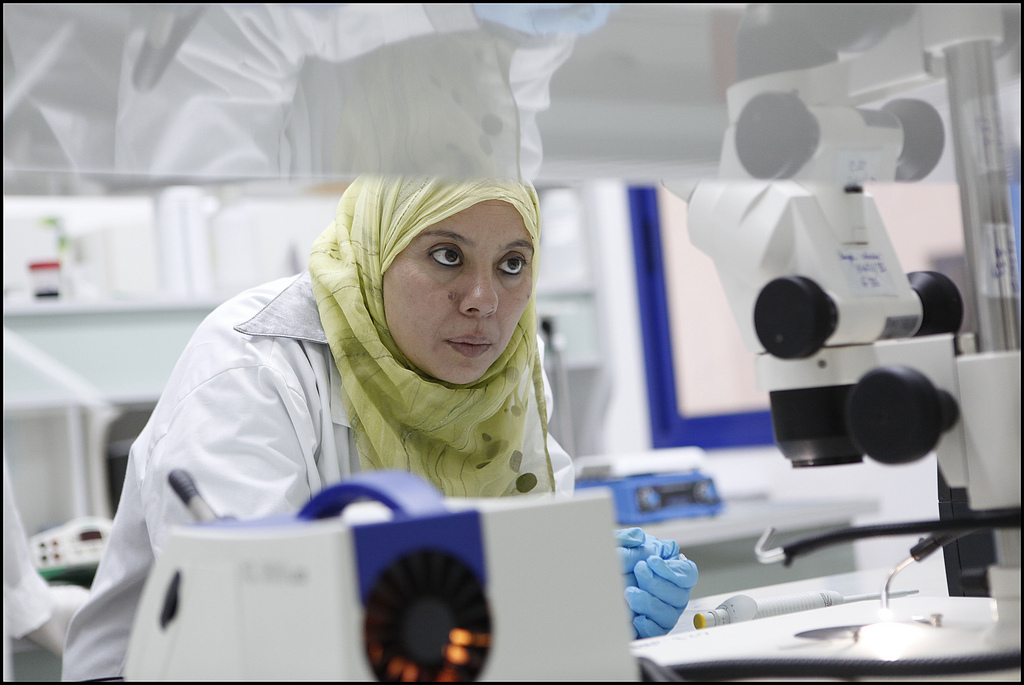
    Paris, France — March 2012. The auditorium is filled to the brim — from the doors to the pulpit. High school children at the back, dignitaries at the front. Looking around you get the sense of a grand occasion in waiting. Shirts, ties and smart casuals. In true international style, headphones are available — the proceedings will be translated into French and English.

    We are within the halls of the Institut Pasteur, right in the heart of Paris. A place whose name signposts the amount of history that comes along with it. In his time Louis Pasteur made some of the greatest breakthroughs in modern medicine. You get the sense something on that scale is about to happen.

    Six empty chairs sit on a raised stage at the front of the auditorium, below a presentation screen with two logos and four words. The logos are unmistakable. L’Oreal and UNESCO have come together “For Women In Science

  • “Smarter, more competitive, more productive

    “Smarter, more competitive, more productive

    There is no doubt in the mind of Australia’s Chief Scientist, Professor Ian Chubb, the future will be shaped by science technology, engineering and mathematics.  Unfortunately, he finds that at present the standing of science, as an expert authority, is being challenged.  Furthermore, Ian Chubb finds that the science message is getting lost in the white noise of the mainstream media.  I was heartened to hear his positive words about science communication, social media, science and technology education and innovative Australian workplaces.

    These were the messages from Ian Chubb at an address he gave as part of NICTA’s Big Picture Seminar series on Wednesday March 28, 2012 at the University of Melbourne.

    It was refreshing to see Australia’s Chief Scientist out and about and addressing public forums such as this one.  Although judging by the faces, the suits and the overheard conversations at the drinks and nibbles prior to the address, I think this was definitely a speech to the science and technology faithful.  That is a pity, his words were worth  exposure and considered comment in the mainstream Australian media.

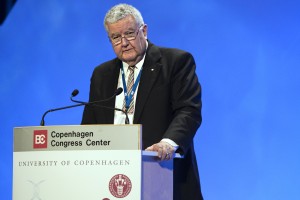
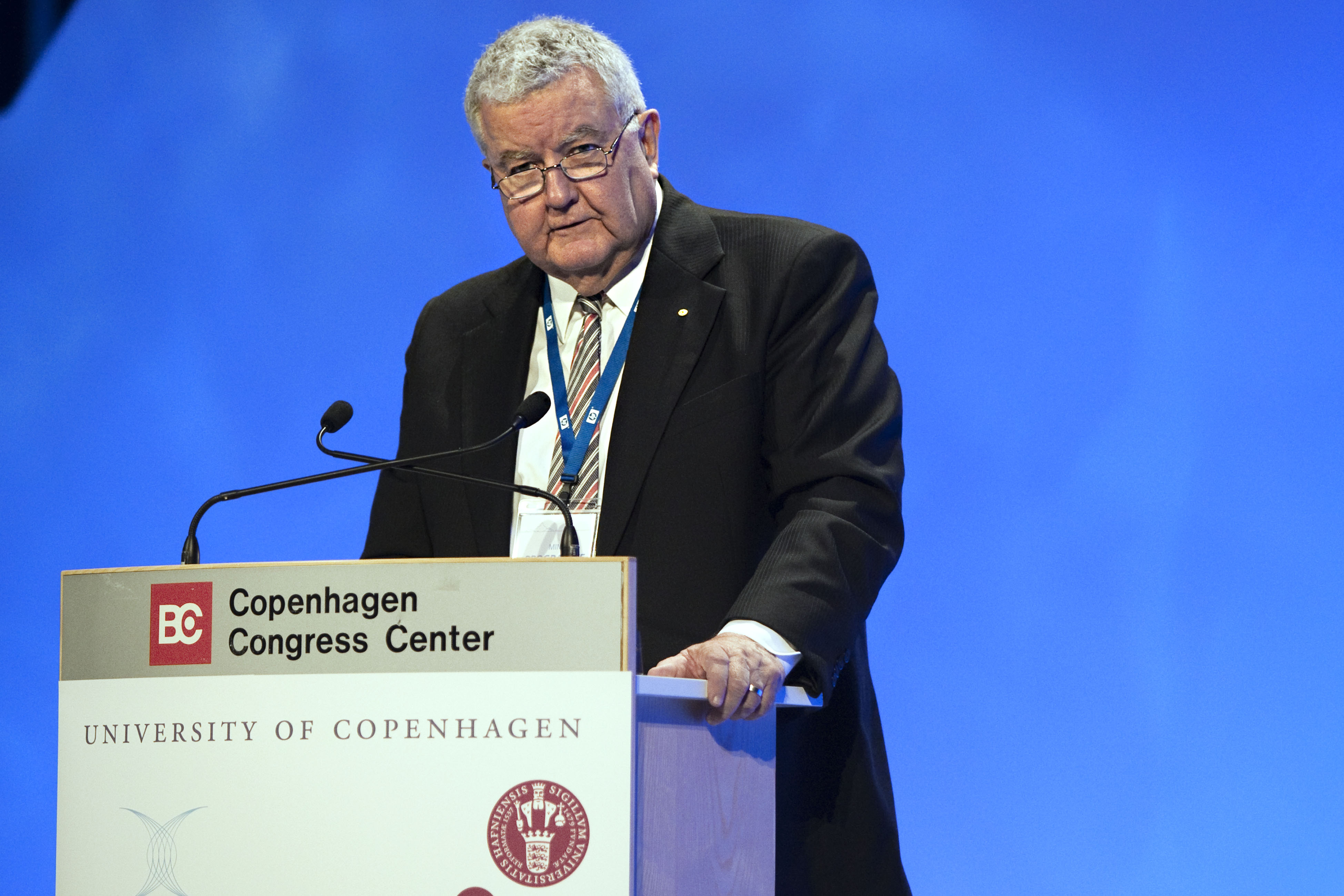
    Prof. Ian Chubb at the Climate congress, Copenhagen 2009, March 10-12. Opening session.

    Professor Ian Chubb emphasises Mathematics, Engineering and Science provide the enabling skills and knowledge that underpin every aspect of modern life. They help us understand the natural world and enable us to respond as humans to this world with a constructed view aimed at improving the lot of human kind.

    In Australia, as in many economies, we have observed a decline in the number of people choosing a career in these disciplines.  Not only that, the STEM subjects (Science Technology Engineering and Mathematics), as he called them, are taken for granted or simply ignored.   Although it is obvious without at least an appreciation of these subjects, a modern citizen is hampered in their ability to critically evaluate and make informed decisions about the issues that are shaping their future. Among his many roles as Australia’s Chief Scientist, Professor Ian Chubb has been charged with examining this decline and offering strategies to address it.

    Professor Ian Chubb is eminently suited to this task.  He was appointed to the position of Chief Scientist on 19 April 2011 and commenced the role on 23 May 2011. Prior to his appointment as Chief Scientist, Professor Ian Chubb was Vice-Chancellor of the Australian National University.  Professor Chubb’s research focused on the neurosciences.  Although he jokingly said on the night he would prefer not to be quizzed, on science specifics, by such an informed audience.  He has co-authored some 70 full papers and co-edited one book all related to his research. In 1999 Professor Chubb was made an Officer of the Order of Australia (AO) for “service to the development of higher education policy and its implementation at state, national and international levels, as an administrator in the tertiary education sector, and to research particularly in the field of neuroscience

  • Technology and the Meaning of Life

    Technology and the Meaning of Life

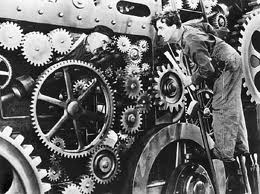
    Modern Times, Charlie Chaplin (1936)

    The endless cycle of idea and action,
    Endless invention, endless experiment,
    Brings knowledge of motion, but not stillness;
    Knowledge of speech, but not of silence;
    Knowledge of words, and ignorance of the Word.

    Where is the Life we have lost in living?
    Where is the wisdom we have lost in knowledge?
    Where is the knowledge we have lost in information?

    – T. S. Elliot


    We uncouple technologies, such as computing and road building, from our deepest human values. The questions asked by T. S. Elliot become irrelevant as we refuse to acknowledge the human context.

    Students at universities become mainly focused on “practical knowledge” that leads to high paid jobs. The values by which we guide our technological development and application become afterthoughts. We must wonder if technology now controls human life more than humans control technology.

    Information technology is valued above wisdom. There is no “wisdom technology”. It’s easier to understand information technology then wisdom. A high school student can quickly grasp computer programming, but it takes almost an entire lifetime to mature to wisdom. People who think of themselves as wise because they have read some books are dangerous. Wisdom is lived, not mastered as procedures and facts that can be scored on an exam sheet.

    Data and information are the “atomic” components of knowledge. These components don’t make a lot of sense by themselves. Water is composed of molecules, which are in turn composed of atoms of hydrogen and oxygen. We could say that molecules are like information and atoms (a level further down) are like data. But such an understanding does not allow us to understand the “wetness” of water. Wetness is an emergent phenomenon that is experienced by sentient human beings. When we look at a friend, we just don’t see atoms and molecules, we see a friend.

    Meaning is the real food of human life. Our real task is to arrange education, family, society, moral training, technology and economic arrangements in way that allows meaningful human life to unfold for as many people as possible. Clearly, we have remarkable technologies. But do we have enough meaning?

    _________________
    Image: Charlie Chaplin, ‘Modern Times’, classic silent movie, 1936. Worth locating a copy for viewing.


  • The Future of Energy

    The Future of Energy

    The 7th Annual MIT Energy Conference held March 16-17 in Boston, MA, was an all-around inspiring event filled with conversations of hot topic scientific research and intense policy discussion. It was impressive, considering this event is entirely planned and executed by the student body, with well over 500 in attendance. From the scientific prowess of the professors working on new energy technologies, the caliber of executives leading the charge on the corporate front, to the undergraduate and graduate students pursuing their dreams to engineer a better tomorrow for society, we are indeed poised to see a radical transformation in both the technology and the policies of the energy sector.
    ‘Insight and Innovation in Uncertain Times’ could not have been a more appropriately named theme for the conference. The whole MIT community understands and embraces the challenges that lie ahead. And they are committed to finding solutions that include sustainable and renewable energy. The realization that we must commit to being better environmental stewards moving forward was a message that resonated throughout the panel discussions. It was enlightening to hear many of the large corporations such as BP, GE and Shell, understand the need to reduce their carbon footprint, lower their GHG emissions, and develop clean technology to power a changing world.

    Biofuels, LNG, CNG, shale gas, nuclear, wind, solar, hydro – all these energy sources were highlighted throughout the day in conversations and presentations. Because it’s not just going to be one type of energy that we rely on for power; it’s going to be a combination of several, an energy portfolio that keeps the lights on and the cars rolling down the highway. And it may be different from one municipality, or a state, to another. Community planners have a big role to play in terms of energy. Many expressed the need for their seat at the table of discussion on global warming at the conference. It appears communities are starting to grasp that we must connect these three pillars – the social, economic and environmental. It is this type of holistic thinking and long-term planning, that will put not only the United States, but other countries who adopt these approaches, on the path to a secure, clean, energy future.

    An energy policy is difficult to implement anywhere; to be sure, this is no small feat. But unless countries attempt to craft a decision-making framework for implementing an energy policy, progress will continue to be haltered. For the past 30 years, the US has not had a sound energy plan. Sure, the Energy Policy Acts of 1992 and 2005 were notable. But the time is ripe with the myriad of technologies we now possess to start implementing a comprehensive plan. The very nature of public policy is incremental and iterative; define the problem, identify criteria, list alternatives, analyze, evaluate, implement. If something doesn’t check out, repeat process. Mistakes will be made; it is the ability to think fast and correct those mistakes that we will learn and find the solutions needed to drive us forward. By 2050, the global population will be 9 billion. Think about that. We will have to figure out how to move that extraordinary number of people and the goods they require, safely and responsibly. Can we pull it off while being environmentally conscious at the same time? We really have no other option.

    I believe that option will be met courtesy of universities such as MIT, along with corporations and policymakers partnering in innovative ways. I would also be remiss if I didn’t add it was refreshing to see so many women at the event, from students, to researchers, to corporate executives. The energy frontier is open for women to conquer, from the lab bench to the boardroom. From scientists, to policymakers, to venture capitalists, women can carve their niche in the sustainable energy field. You’ve heard the saying, “the future of tomorrow begins with today.

  • Australian Science Reflection

    For as long as I can remember, I have wanted to travel to the land down under. I remember that my frequent response to the question “what do you want to do today?

  • Who found the water on the Moon?

    Who found the water on the Moon?

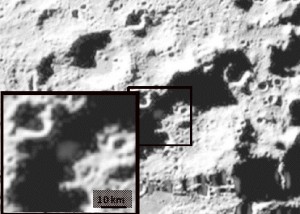
    At just over two tonnes, the second stage of an Atlas V rocket, makes for an unusual ‘kinetic probe’.  Nonetheless on October 9, 2009 NASA deliberately impacted a spent Centaur rocket into the lunar south polar crater Cabeus.  The target area was a permanently shadowed region within this crater.  The impact, not surprisingly, ejected a spectacular plume of debris, dust and vapour.

    Science experiment, observe the system, perturb it, and measure what happens

    The US scientists had thrown a heavy object at the Moon.  They then threw all the instruments possible to monitor the impact.  The prize was a decades-long search to directly find water on the Moon.

    The impact would have been majestic to watch.  Picture those slow motion images of Apollo astronauts on the Moon.  Hold that thought and then imagine the impact.  An observer could marvel at the slow motion, low gravity, return of the dust and debris cloud to the Moon’s surface.  If you could see in the infra-red, the impact flash lasts for 10 seconds.  There is a cloud of debris, dust, and vapour rising.  At eight seconds the the ejecta cloud is 4.5km in diameter, in the ultra-violet spectrum, the plume is 10km in diameter.  At 20 seconds after impact the ejecta cloud was is at its maximum diameter of 8.5km and the plume has reduced to little less than 10km.

    The observer would be watching a science experiment on a grand scale.

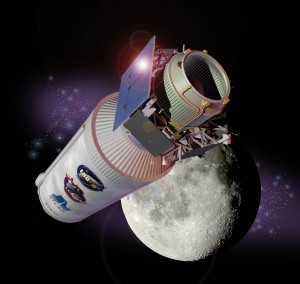
    The observer in this experiment was neither you nor I, it was a trailing “shepherding spacecraft”.  The Centaur had propelled NASA’s Lunar Reconnaissance Orbiter and Lunar Crater Observation and Sensing Satellite to the Moon.  Shortly after launch the Lunar Reconnaissance Orbiter had separated to go on its own mission.  Once in lunar orbit the Centaur had vented its remaining fuel.   Control was then assumed, for the next four months, by the Lunar Crater Observation and Sensing Satellite as the shepherding satellite.  During this next period the shepherding satellite maneuvered the Centaur to allow the Sun to bake-out residual water and volatiles.  This was to ensure that no contaminant chemicals were passengers to the lunar impact site.  The Centaur’s fuel was a volatile combination of liquid hydrogen and liquid oxygen, both chemicals that were to be scanned for in the impact cloud.  The Lunar Crater Observation and Sensing Satellite also calibrated its instruments, then targeted the Centaur to impact with the Moon.  Four months of meticulous preparation.

    LCROSS spacecraft with Centaur stage, image credit NASA

    The Lunar Crater Observation and Sensing Satellite carried nine instruments, including cameras, spectrometers and a radiometer.  The spectrometers measured the reflected light at different wavelengths.  These enabled the identification of the chemicals present in the ejected cloud.

    Near-infrared absorbance attributeble to water vapour and ice, and ultraviolet emissions attributable to hydroxyl radicals (OH-) support the presence of water in the debris.  The researchers determined from these observations that there was over 5%, by mass, of water ice in the lunar regolith of the impact site.  Certainly this is small by terrestrial soil standards, but more substantial than most earlier estimates.

    Over a year after the impact, in the October 22, 2010 issue of the journal Science, the results of this experiment were delivered to the world’s attention.  This certainly marked a defining moment for lunar scientists, directly confirming the availability of water on the moon.  It was however neither the first nor last word on this.

    Cabeus crater LCROSS impact site, photo credit NASA

    Early attempts

    Since the first lunar sample were carried back to earth by Apollo astronauts in the late 1960s, scientists have operated under the presumption that the moon was entirely dry.  In total 382kg of lunar material was bought to Earth by the Apollo missions astronauts and a further 0.32kg by the unmanned USSR Lunar missions.  New analyses of these rocks with improved analytical techniques have made it possible to perform highly sensitive isotopic measurements on very small lunar grains.  These analyses are revealing water in Apollo samples that were once thought to be dry.

    Well before these new studies, scientists had been puzzling about why more water was not seen on the moon.  It was thought that volatile materials, such as water, could be accumulating at the moon’s permanently shaded polar regions.  Here they could be trapped for geological periods of time without significant loss.  The in 1998, the orbiting Lunar Prospector spacecraft measured the the abundance of elements on the moon’s surface using neutron spectroscopy.  This provided compelling evidence for enhanced hydrogen concentrations, and by inference water, at both of the lunar poles.

    In 1999 the Cassini spacecraft flew by the moon on its way to Saturn.  It turned its Visual and Infrared Mapping Spectrometer to the moon.  By measuring the surface reflectance of light from the moon scientists found absorption attributed to hydroxyl and water on the sunlit surface of the moon.  These results were not published until 10 years later, in October 2009.  The reason was renewed interest in water on the moon.

    On October 22, 2008 Chandrayaan-1 was launched on a lunar mission by the Indian Space Research Organisation.  One of its major scientific missions was to look for water on the moon.  It had three different instruments ready to make 2008-10 an interesting period for lunar water exploration.

    Chandrayaan-1, India’s lunar water finder

    The Chandrayaan-1 story is told in detail elsewhere.  Here I intend to showcase the marvelous outcome of Chandrayaan-1’s water finding experiments.  Perhaps the most exciting of all these was one of the simplest.  This was the CHandra’s Altitudinal Composition Explorer (CHACE) on board the Moon Impact Probe.

    On November 14 2008 (the birthday of the late Pandit Jawaharlal Nehru, India’s 1st Prime Minister) the Moon Impact Probe became the first Indian built object to reach the surface of the Moon.  The probe was a 34kg box-shaped object containing a video image system, radar altimeter, and The CHACE mass spectrometer.

    Symbolically the Indian tricolour was painted on three sides of the Moon Impact Probe.  This enables India to also lay claim to having the “Indian tricolour placed on the Moon”.  Needless to say that “placing” in this case was a hard landing in the Moon’s south polar region near the Shackleton crater, flying over the Malapert mountain en route.

    The CHACE mass spectrometer took 650 spectra of the tenuous lunar atmosphere during its 1487 second, 98km, plunge to the lunar surface.  Tenuous is right the atmosphere even on the sunlit side is only 7/10,000,000,000th of the Earth’s atmosphere.

    The mass spectrometer was tuned to look find water and direct evidence of water it did find.  The team leader of the experiment, Dr S M Ahmed, remembers, “We all were jumping when we saw water was literally pouring out of our instrument

  • February Fourier Talks 2012: Harmonic Analysis and Applications

    February Fourier Talks 2012: Harmonic Analysis and Applications

    Each year the two-day February Fourier Talks, organized by the Norbert Wiener Center in the Department of Mathematics at the University of Maryland, College Park, feature a diverse array of invited talks in the field of Harmonic Analysis and Applications. A single track of presentations from top academic, industry, and government researchers is scheduled, allowing ample time for interaction with other participants.

    This year the FFT 2012 took place February 16 – 17, 2012, in the Department of Mathematics at the University of Maryland. Thursday evening featured a keynote address by Mario Livio, astrophysicist at the Space Telescope Science Institute and popular author of The Golden RatioSymmetry: From Human Perception to the Laws of Nature, and Is God a Mathematician? Thursday afternoon featured a talk in our Norbert Wiener Center Distinguished Lecturer Series by Gilbert Strang, of MIT, and Friday afternoon featured the Norbert Wiener Colloquium, by Peter Jones of Yale University.

    You can see video of these three lectures on the proceedings page.


    Source

  • Occupy the Internet! Why is so viral this expression?

    Occupy the Internet! Why is so viral this expression?

    The animated occupation soldiers are in front of the line and they espect the orders to occupy the internet. This is a real battle, because people took to the streets of internet to show their messages. Many websites are occupied, in fact there is a list with the websites currently being occupied. fffff.at published here a list with such websites and you can use the Occupy Service. You copy and paste a code into any HTML page to your website or to websites you control (or, attention, you can get control of).

    This thing represents the effect of some acts like SOPA, PIPA or ACTA. Occupation movement implies an “army

  • Google Science Fair 2012:  Everyone has a question. What’s yours?

    Google Science Fair 2012: Everyone has a question. What’s yours?


    On January 11th  2012, Google has launched the second annual international online Science Fair, a a unique opportunity for young people to engage with the scientific community at large. This competition encourages students  to be curious, ask questions, get engaged with their peers, and perform science experiments to answer those questions.  The organisers believe that science fairs help students to explore their vision and curiosity through science. It allows any student with an Internet connection and a Google account (more…)