Category: Science

  • Nikola Tesla and the magic of science

    Nikola Tesla and the magic of science

    Science is but a perversion of itself unless it has as its ultimate goal the betterment of humanity – Nikola Tesla

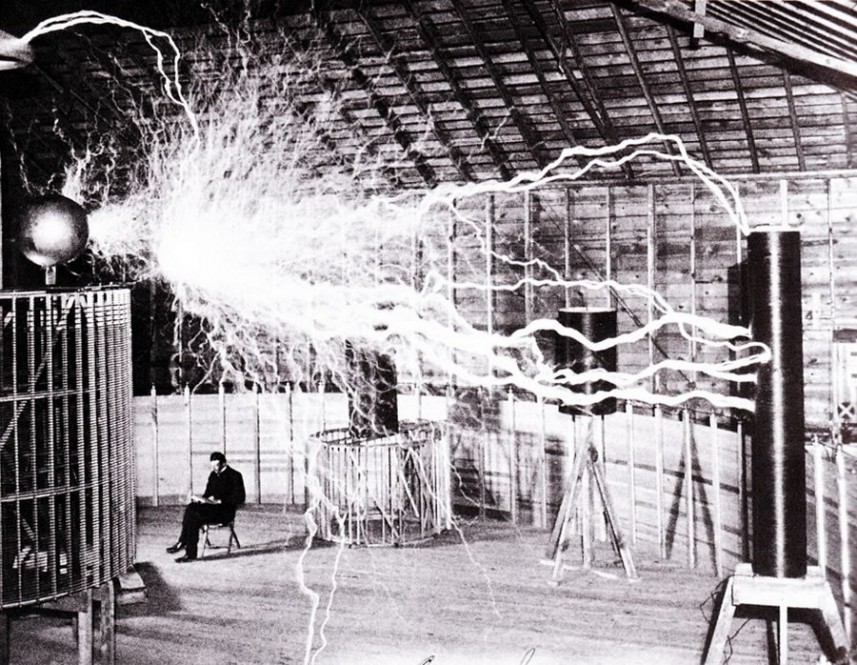
    One of the greatest people in the history of science, and the greatest inventor of the post industrial society, Nikola Tesla, is the visionary that many people have never even heard of or about his work. He could visualise the future inventions with the greatest facility. Numerous articles have been published, books have been written related to this magician of the science. There are many sources about this man who lit the world, and his developments.

    Among many Tesla’s inventions,  the most relevant that influence directly our everyday life include: radio, wireless telegraphy, remote control, robotics. He even photographed the bones of the human body. But the high point was the realisation of a childhood dream: harnessing the raging powers of Niagara Falls, and bringing light to the city. Tesla has over 700 patents to his name: invented the World First AC Generator which led to electrical development and enlightment of the world. This high frequency high volatage electricity is used today in many communication devices.

    Also, Tesla’s Wireless power System including certain devices is now considered to be an untouched method to transmit electrical current without wires. Extraterrastrial Radio Transmitter – Teslascope, radio transceiver designed with the intention of communicating with extraterrestrial life on other planets. It received publicity after Tesla’s statement on the device was published by Time magazine in their July 20, 1931 issue celebrating Tesla’s 75th birthday.

    We should mention here Tesla’s Earthquake Machine invention that probably many people never heard of. This is an excerpt from the New York World Telegram, July 11, 1935:

    “Nikola Tesla revealed that an earthquake which drew police and ambulances to the region of his laboratory at 48 E. Houston St., New York, in 1898, was the result of a little machine he was experimenting with at the time which “you could put in your overcoat pocket.

  • BioGrid Australia links data to show bowel cancer screening is making impact on patient survival rate

    BioGrid Australia links data to show bowel cancer screening is making impact on patient survival rate

    BioGrid Australia links data to show bowel cancer screening is making impact on patient survival rate.

    Victorian researchers have been able to confirm that the national bowel cancer screening program is making a major impact on patient survival.

    Using data made available through BioGrid Australia, the researchers have shown that patients diagnosed as a result of a positive screening test have a much higher survival rate than patients presenting with symptoms.

    Maureen Turner, CEO of BioGrid Australia, said today that recent analysis from six Victorian hospitals has shown an increased number of early stage cancers diagnosed via the bowel screening programs (43% versus 19%) and a reduced number of patients with advanced cancer (4% versus 18%),² she said.

    This research is further confirmation of the value of the national bowel cancer screening program and the valuable contribution that BioGrid Australia, an innovative medical research platform, is making to furthering our understanding of cancers and other diseases,² she said.

    Dr Peter Gibbs and colleagues analysed diagnosis and survival information for 103 patients (all of whom had no symptoms of cancer) diagnosed as the result of a positive stool screening test on the national program.

    The patients attended six hospitals in Melbourne: Royal Melbourne, Royal Melbourne Private, Western Hospital, Western Private, Box Hill and Epworth Eastern. These patients were diagnosed between May 2006 and 2012 and their results were compared to 793 patients of the same age presenting with symptoms over the same timeframe.

    ³This analysis confirms that patients with a bowel cancer detected by a screening test, long before any symptoms have appeared, have a much improved outcome, with a projected five year survival of 95% compared to 73% for patients of the same age who were diagnosed with symptoms² said Dr Gibbs.

    ³This research yet again emphasises the ongoing need for and value of Australia¹s national bowel screening program which is leading to better survival rates as a direct result of earlier diagnosis.² Data available through BioGrid Australia was previously used in a campaign to extend the Australian National Bowel Cancer Screening Program to 60 and 70 year olds, by demonstrating the potential savings of early bowel cancer diagnosis.

    The research released in 2010 showed that annual bowel cancer treatment costs was likely to increase four-fold to $1 billion over 10 years by 2011, strengthening the economic case for expanding the Government¹s National Bowel Cancer Screening Program. The study by Victorian researchers supported by BioGrid Australia combined Australian screening data with treatment costs and survival rates, providing new evidence of the program¹s economic and social benefits. The researchers determined the cost of treating any one patient with bowel cancer at about $55,000 a patient.

    Due to the cost of expensive new therapies treating stage 3 (more advanced) cancers tripled from $25,000 in 1999 to $75,000 and for stage 4 (most advanced), the cost has significantly escalated 10 fold from $6,000 to $61,000. By screening leading to the detection of early stage cancers which can be dealt with by surgery alone, the substantial cost of treating later stage cancers, including the use of expensive chemotherapy drugs, are avoided. The data available through BioGrid was able to show the cost effectiveness of screening.

    The free National Bowel Cancer Screening Program was introduced in 2006. In the 2012 ­ 2013 Federal Budget, the program was expanded to include Australians turning 60 years of age from 2013 and those turning 70 years of age from 2015.

    The expansion of the screening program means that an estimated 1,000 early cancers will be detected each year and between 300 and 500 lives saved annually. This will significantly reduce the burden of bowel cancer on Australians and their families. Bowel cancer is the second most commonly diagnosed cancer in Australia, with annually more than 13,000 cases and 4,100 deaths from this disease.

    BioGrid Australia

    BioGrid Australia (www.biogrid.org.au) is an innovative medical research platform that facilitates privacy-protected research across many hospitals and medical research institutes. BioGrid provides an online Access Request System by which researchers can apply for access to specific databases.  Through this system, the data custodians approve access to their data and a Scientific Expert Review Committee assesses the proposed investigation providing formal ethics approval. Once authorised, researchers can access de-identified data for specified research.

    Issued on behalf of BioGrid Australia.

    Image source.
  • The smoking guns of dying stars

    The smoking guns of dying stars

    VY Canis Majoris, the largest known star in our galaxy, with it's huge smoky clouds of gas and dust being lost into interstellar space. Credit: NASA, ESA, and R. Humphreys (University of Minnesota)

    The ancient Greeks once believed that the heavens were immutable. A vast starry vista, eternally unchanging above our heads. But we now know this to be untrue in the slightest. A lot has changed since then, however, and over the past few hundred years, astronomers have unfurled ever increasing knowledge of the lives of stars. Look out across a starry night sky and you can see stars in all stages of their lives, from brightly burning newborn stars, to ageing giants in their final gasping breaths. As stars near the ends of their lives, they begin to shine a rich red colour as they expand and dramatically increase in size.

    As red giants, these stars are burning the last of their fuel, and as they do so they begin to sputter and gasp. Just as a candle flame does when it starts to burn out, red giant stars flicker – though for these, the largest stars in the universe, those flickers can take thousands of years each. These final bursts of energy are known as thermal pulses, and they mark the star’s final days. During the last couple of million years of its life, a red giant star will lose incredble amounts of material to interstellar space. Even when not caught mid-pulse, these stars lose several times the mass of our planet every year. And the puzzle of exactly how they do so has been recently been unravelled by a team of astronomers led by researchers at the University of Sydney.

    All stars emit a stellar wind – a steady stream of particles being constantly accelerated outwards by the star. Even the Sun emits its own solar wind (with a speed measured at 535 kilometres per second as I write this). The wind from red giant stars is slightly different. As the star loses more mass, stellar material cools and condenses into dust. This dust then catches starlight which is so intense near to the star that it actually pushes that dust outwards. This effect, known as radiation pressure, causes the tiny reflective dust grains to act like minute sails and accelerates them away. Each dust grain is tiny compared to the kind of dust we find on our bookshelves, much more like fine smoke than any dust we’d recognise. Instead of being called stardust, it could easily be called starsmoke!

    “The winds that stream from the upper atmosphere of the red giant stars are responsible for removing massive amounts of matter. The grains that we have discovered here will come as a real shock to the accepted wisdom in the field. They are both much larger and much closer to the stellar surface than anyone expected.” said Barnaby Norris, a PhD student at the University of Sydney, and lead author on the research published earlier this year in Nature.

    This stardust emitted by these smoky smouldering old stars is transparent, not unlike finely powdered glass. The implications of this stardust being detected to close to an ageing star could help us to better understand the processes that occur in stars as they die, and how they manage to lose such prodigous amounts of mass so rapidly. As Norris said, “Hopefully our findings will help to illuminate a key step in the grand cycle as matter is expelled from stars into the galaxy only to seed new generations of stellar and planetary birth.”

    On a final poetic note, all of the chemical elements essential to life are created within stars, before being seeded back into the cosmos when stars die. This means that this condensing stardust contains the fundamental raw materials needed for life to eventually form. As Carl Sagan so often used to muse, we are literally made of stardust.

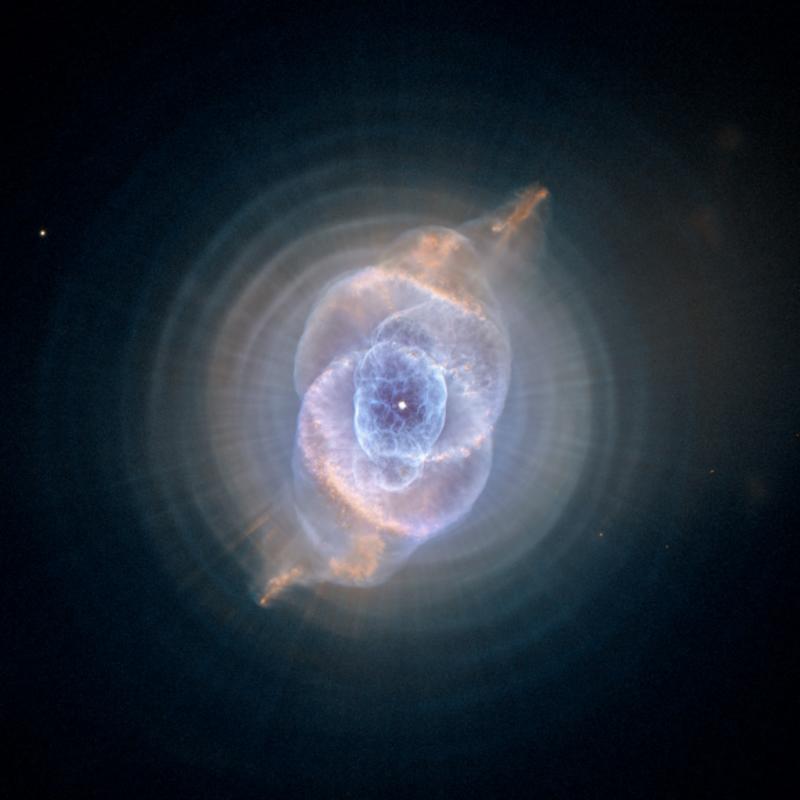
    The Cat's Eye nebula, a star which has now ended its life and is casting its outer layers into the cosmos. The concentric rings show material lost as stellar wind during the star's final thermal pulses.. Credit: ESA, NASA, HEIC and The Hubble Heritage Team (STScI/AURA)
  • Radio quiet, please!

    Radio quiet, please!

    Originally conceived over 20 years ago, there’s a project being undertaken by scientists and engineers across the whole world to help us all better understand the mysteries of the galaxy and the very beginnings of the Universe. It’s estimated to be completed by around 2024,costing $1.85 billion AUS (€1.5 billion). Once completed, it’s set to be the most complex and technologically advanced machine ever built by humanity. It will use enough optic fibre to wrap twice around the Earth and will need a computer capable of performing 10^18 operations per second – about three million times the number of stars in our galaxy. It will produce over 980 Exabytes of data every day (equivalent to about 15 million 64GB iPods) and to cope with that, it will need to handle data transfer rates over 10 times as high as the current global internet traffic. No, it isn’t a starship. But it might just be the next best thing.

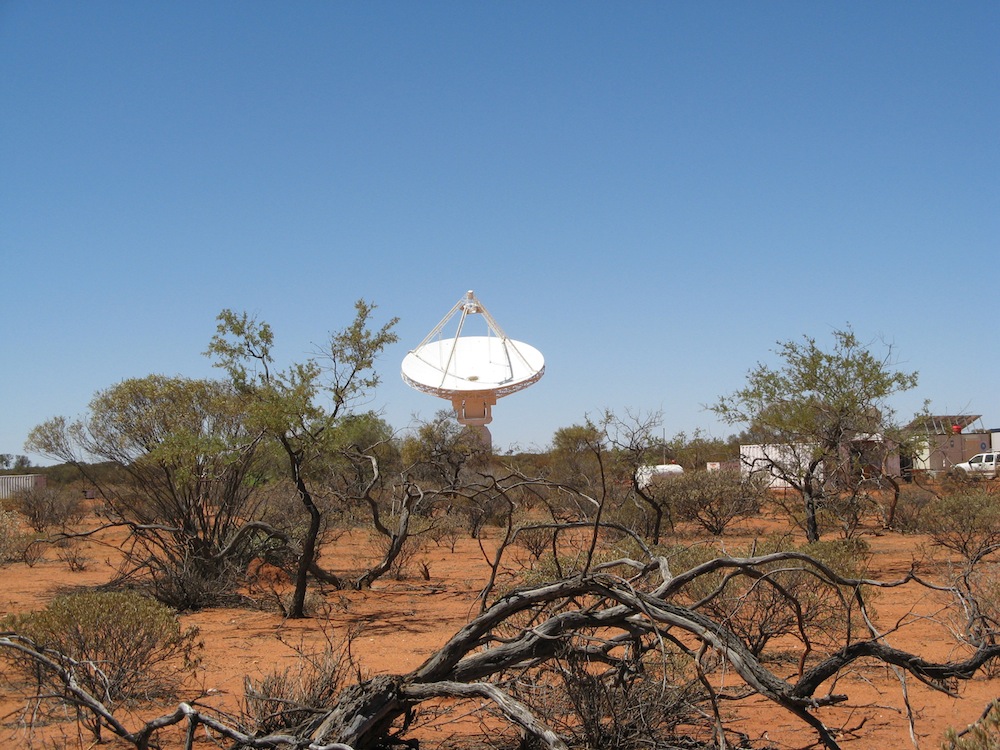
    One of the first components of the SKA, constructed in Western Australia. Credit: Dave DeBoer, CSIRO.

    The Square Kilometre Array (SKA) is one of the most ambitious scientific projects ever devised, and when completed it will comprise a huge number of telescope antennae which will work as one to form a single radio telescope so powerful that it could detect an airport radar on a planet 50 light years away. The sensitivity of any telescope is defined by the area it uses to collect data. With optical telescopes, this is the size of the mirror, and with radio telescopes it’s typically the size of the dish. The SKA gets its name because when fully constructed, all of the detectors and antennae that make it up will have a combined area of one square kilometre, or one million square metres. To put that properly into perspective, the Green Bank Telescope is currently the largest steerable single dish radio telescope, and its area is just under 8000 square metres.

    Being astronomy’s answer to the large hadron collider, the SKA is a staggeringly large international collaboration. I was lucky enough to attend a major meeting regarding the planning of the SKA (the headquarters are to be based here in the UK in Manchester), and the myriad different languages and nationalities represented was impressive to say the least. Over 24 major organisations from countries spanning 5 continents are involved in the project, ranging from universities to industrial engineering companies. New technologies, both software and hardware, are still being developed as a result of this project. Based on the huge data storage and transfer requirements of a machine as complex as the SKA, many of those new technologies are likely to feed straight back into society by offering profound improvements to computing resources like the internet. In fact, as the world’s largest project for sorting and storing data, the SKA is expected to be literally bigger than Google!

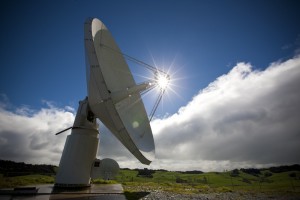
    The Warkworth antenna in New Zealand – an important part of early SKA science. Credit: Alex Wallace.

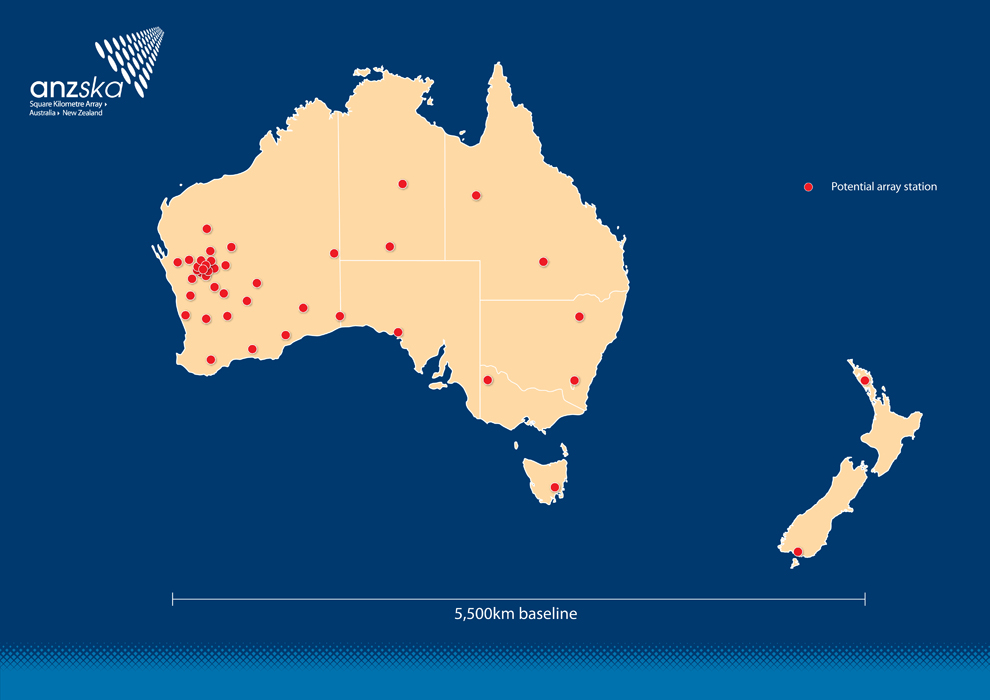
    The most difficult decision, understandably, has been where precisely to build it. Humanity has an unfortunate tendancy to fill the atmosphere of our planet with noise, bouncing radio waves to and fro and filling the air with radio frequency chatter. A radio telescope array this sensitive needs to be placed somewhere quiet to gain the full benefits, and the most recent decision has been to effectively split the SKA into two components, to be built in Southern Africa and Australia. While this may seem like an odd thing to do, it actually makes perfect sense. The SKA actually has three types of antenna operating at different frequencies. Intended to cover a huge range of radio frequencies (from 70 to 100000 MHz), three types of antenna are needed, because no single technology can actually operate across such a wide range. So the decision was made to build the lowest frequency detectors across Australia, centred at Murchison in outback Western Australia. Murchison is blessed with being one of the few places on our planet which isn’t flooded with FM radio at the low end of the frequency scale. From a radio astronomer’s point of view, it’s the quietest place on Earth.

    This is set to be complemented by the higher frequency steerable dishes which are set to be constructed across Africa. Both South Africa and Australia have put extensive efforts into developing the SKA, and Australian-developed technology is still set to be implemented in the African telescopes. This will mean a huge influx to the African astronomical community and numerous African nations won’t lose out on the economic boost from contributing to such a prestigious project. It’s an ideal situation where everyone wins.

    All in all, it’s an exciting time to be an astronomer. An epic project like this is likely to attract all manner of researchers from across the world to both continents. Just maybe, it could also finally help us to answer the really big questions, like how the galaxy formed, how the Universe began, and whether or not there’s anyone else out there.

    A map of prospective SKA sites. Credit: anzska
  • The Higgs boson does exist: New particle observed at 125 GeV

    The Higgs boson does exist: New particle observed at 125 GeV

    Australian researchers helped design and build parts of the ATLAS detector and helped analyse the results.

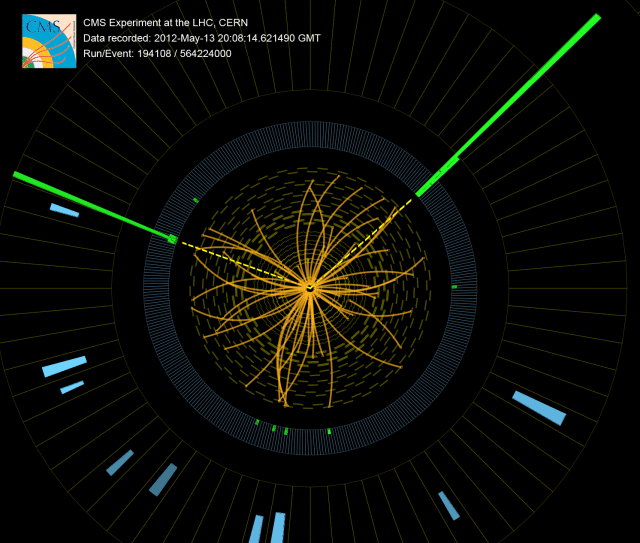
    Researchers using two huge detectors at the Large Hadron Collider announced the results of their searches at a joint scientific seminar in Geneva and Melbourne, where the International Conference on High Energy Physics is being held.

    In a joint seminar today at CERN and the “ICHEP 2012

  • Mr Boson, I presume…?

    Mr Boson, I presume…?

    ATLAS proton-proton event containing four muons

    When Peter Higgs steps out onto the tarmac at an airport near the franco-swiss border, it will probably be with equal parts trepidation and elation.

    CERN, the European Organization for Nuclear Research, and the world’s leading laboratory for particle physics, is to hold a scientific seminar on July 4th, with Peter Higgs in attendance, to deliver the latest update in the search for the Higgs boson — the famed “God Particle

  • The EMBO Meeting 2012 – Call for Participation

    The EMBO Meeting 2012 – Call for Participation

    EARLY REGISTRATION & ABSTRACT SUBMISSION: 12 JUNE 2012
    ON-LINE REGISTRATION: 4 SEPTEMBER 2012

    UPDATE: Late abstract deadline 12 August 14:00 CEST (Berlin)

    SUBMIT ABSTRACT | REGISTER


    http://www.the-embo-meeting.org/

    This annual conference attracts 1,500 scientists working in the life sciences. Featuring an impressive line-up of more than 120 world-class scientific speakers, including: Paul Nurse, Linda Partridge, Kari Alitalo, Steven Henikoff and Rob Singer. The programme includes three plenary lecture sessions devoted to genomics, RNA and oxygen sensing, vasculogenesis and disease. 20 concurrent sessions juxtapose classical fields of research with those exploring new frontiers in molecular biology. Daily meet the speaker lunches, giving access to leading researchers, and poster sessions extend the scientific programme.

    Latest News:

    Brisbane Times:

    Scientists closer to elixir of youth

    A FUTURE where Australians can pop a pill and significantly delay the effects of ageing – from hair loss to the onset of dementia – may be only about a decade away, one of the world’s leading evolutionary biologists predicts.

    Professor Dame Linda Partridge, who heads research teams at University College London and is the founding director of the Max Planck Institute for Biology of Ageing in Cologne, has been selected to give the prestigious Graeme Clark Oration in Melbourne next month.

    She predicts that at some point in the next 10 years drugs will be available that could keep us healthy in body and mind long into old age.

    More: http://www.brisbanetimes.com.au/act-news/scientists-closer-to-elixir-of-youth-20120616-20h6o.html

    Latest Videos:


  • Wikimedia Commons – Images of the Year Announced

    Wikimedia Commons – Images of the Year Announced

    Winner of the 2011 Picture of the Year: A view of Lake Bondhus in Norway, and in the background of the Bondhus Glacier, part of the Folgefonna Glacier.

    Wikimedia Commons have just announced their three best images from 2011. Commons is an online repository of media freely licensed and available for anyone to use and repurpose. Every year the Commons community highlights the best media submitted over the course of the previous 12 months, in what has become the Picture of the Year Contest. This year, German Wikipedian Heinrich Pniok is the winner of the Sixth Annual contest for his picture of Lake Bondhus in Norway. You can read the complete story behind the 2011 Picture of the Year inthis excellent article by User:Tony1 from the 25 June 2012 issue of the Wikipedia Signpost.

    Australian Science Editorial Board’s favourite photo is a self portrait of Tracy Caldwell Dyson in the Cupola module of the International Space Station observing the Earth below during Expedition 24, featured in the article Networking the Solar System.

    Tracy Caldwell Dyson on the International Space Station


  • ScienceOnline 2013 – be a part of the program, and participate!

    ScienceOnline 2013 – be a part of the program, and participate!

    ScienceOnline2013 conference will take place Jan. 31-Feb. 2 in the McKimmon Conference Center on the campus of N.C. State University in Raleigh, North Carolina.

    For those not familiar with ScienceOnline conferences, ScienceOnline started in 2007 as a one-day conference with 135 people who wanted to explore the world of science blogging. Today, ScienceOnline has grown into an international and interconnected network of thousands of individuals, local groups and regional affiliations, and signature annual events that delve into all the ways that science is done, shared, communicated and supported through the Web and tools of social media.

    In short, ScienceOnline is a global community – a community built through our online connections and face-to-face conversations.
    Those connections and conversations have been in full splendor online with the hashtag #scio13.
    Note that the scio13 planning wiki, where you can add suggestions for discussion sessions, workshops and demonstrations, will close July 1 at 12 noon E.D.T. Bora and the program committee will then begin to build the program for the conference.
  • Free and Open Source Agriculture

    Free and Open Source Agriculture

    Credit: Thamizhpparithi Maari, Wikimedia Commons

    A recent news published online by The Wall Street journal about  the Indian Council of Agriculture Research (ICAR) offer of germplasm from its massive seed gene bank at National Bureau of Plant Genetic Resources (NBPGR) to multinational corporations (MNCs) in exchange for expertise and a share of the profits made me to put forth before you about the topic ‘Free and Open Source Agriculture’ which is proposed and discussed by Janet E. Hope (2004), Susan H. Bragdon (2005), Daniel D. Holman (2007) Keith Aoki (2009) and others. It is strange that the ICAR which is an the apex body of the world’s largest National Agricultural Research System (NARS) coordinating, many institutes involved in basic and strategic research, education and extension, is still looking at MNCs for next generation genetic technologies and the for the want of the same, it is going to share/sell its genetic materials. No doubt agriculture in India and elsewhere in the world is facing challenges from the changing climatic conditions, threats from biotic and abiotic factors. India is rich in biodiversity and with the use of agricultural biotechnology, it is now possible to develop new crop varieties that are tolerant to adverse climatic and poor soil conditions, pests, diseases, insects, weeds etc. and build agriculture and food security. The MNCs with their huge investments have taken proprietary rights on most of the rapid scientific and technological advancement tools and products. Now they are looking at harness the public plant genetic resources for the creation of new generation of crops with the use of advanced molecular biology tools.

    As per the Convention on Biological Diversity (CBD) 1992, plant varieties are national sovereign resources and with sui generis system of protection in India under the Protection of Plant Varieties & Farmers’ Rights Act, 2001(PVFRP), the plant breeders and farmers have been given rights for conservation, improvement and re-use. Now the question arises once the MNCs takes the role of plant breeders and claim their rights on the improved traditional varieties with the help of biotechnological tools, does the farmers have any right to use the same improved material for his own use? or would they be left with no choice other than to buy the planting material at the cost specified by the MNCs?

    As per the PPVFR, the farmers would have the right to claim for rewards from Gene Fund if genes from their local varieties are used for the production of improved material for commercial purpose, they don’t have any right to participate in decision making on matters related to the conservation and sustainable use of plant genetic resources for food and agriculture as suggested in the International Treaty on Plant Genetic Resources for Food and Agriculture (ITPGR) in Article 9.2. However it seems that in man of the decisions on sharing/selling the country’s germplasm, there is no seeking of prior consent from the farmers/communities from whose locations, the germplasm might have been collected.

    Under the IPR regime, the free progress of science and innovation is hampering and the fruits are not reaching to the public while, the exchange of knowledge and tools should be a way of life in agricultural research. Hence, I would like to put forth the concept of ‘Open Source‘ in Agriculture and Biotechnology which is proposed/discussed since quite sometime when the Free and Open Source Software (FOSS) and GNU movements had become global movements. In contrary to the proprietary software which gives only license to work, FOSS gives source code and a bundle of rights to the user to use, reverse engineer, learn, share and improve it. We are seeing now many FOSS products which are built by the community and are very good. These products are licensed as ‘Copyleft‘ or ‘Share Alike‘ of creative commons and or GNU Public License which requires that the copies or adaptations of the work to be released under the same or similar license as that of original.

    This concept of FOSS initiative in agriculture has not taken up as a policy by the public funded research institutes. Though the germplasm is being received and sent (shared) by material transfer agreements (MTAs), many of the breeders are not exploring the concept of ‘Share Alike‘. When the crop improvement is being taken up by both public and private, the MTAs should have the licensing terms which asks the agencies to share their improved materials in the similar terms to the public for further use and development without seeking any royalties for the further improvement and use. Recently, there are reports that there is a charge against the Bt Brinjal’s developers in India for violation of the Biological Diversity Act, 2002 and allegations that they had accessed Indian varieties of brinjal for the development of genetically modified ‘Bt Brinjal’ without prior permission from the National Biodiversity Authority (NBA). These issues could be avoided when the materials are freely available to everyone to use and also for re-use.

    Though there is a provision for ‘Compulsory License‘ under PPVFR for undertaking production, distribution, and sale of the seed or other propagating material on the grounds that the reasonable requirements of the public for seeds or other propagating material of the variety have not been satisfied or that the seed or other propagating material of the variety is not available to the public at a reasonable price, there is no provision for the use of the material for further improvement.

    The FOSS movement had not built in one day but its a continuous building movement. And if this initiative to happen in agriculture, it would be a great thing. However, for that it needs greater advocacy and to be built by the convinced breeders/farmers. Centre for Sustainable Agriculture from Hyderabad in India which is working for sustainable agriculture is now exploring the concept called ‘Open Source Seeds‘. In the world, the BiOS Initiative of Cambia (BiOS – Biological Innovation for an Open Society) is the one which is based on the GNU/FOSS model  and is sharing enabling technologies with large community of innovators under ‘Protected Commons‘. The BiOS licenses when employed for MTAs, would enable the public to access to the technologies freely and there would not be any prevention of the same by appropriation of IPR rights by private players.

  • Australian scientists win European Inventor Award 2012

    Australian scientists win European Inventor Award 2012

    · European Patent Office honours outstanding inventors with European Inventor Award in Copenhagen

    · Australian prize winners Dr. John O’ Sullivan, Dr. Terence Percival, Graham Daniels, Diethelm Ostry and John Deane paved the way for today’s Wi-Fi technology

    · EPO President Benoît Battistelli: “The work completed by Dr. O’Sullivan and his team perfectly demonstrates how a publicly funded Research Centre can use patent protection and licensing revenue to finance further innovation.

  • The transit of Venus 2012 as seen from Cairns (Australia)

    The transit of Venus 2012 as seen from Cairns (Australia)

    Credits: GLORIA Project (www.gloria-project.eu)

    Transit of Venus as seen from the Cupola Module, by NASA_JSC_Photo
  • 2012 Victoria Fellowships Open for Expanded Prestigious Science Awards

    2012 Victoria Fellowships Open for Expanded Prestigious Science Awards

    Minister for Innovation, Services and Small Business Louise Asher today announced applications are now open for the 2012 Victoria Prize for Science and Innovation, and the 2012 Victoria Fellowships.
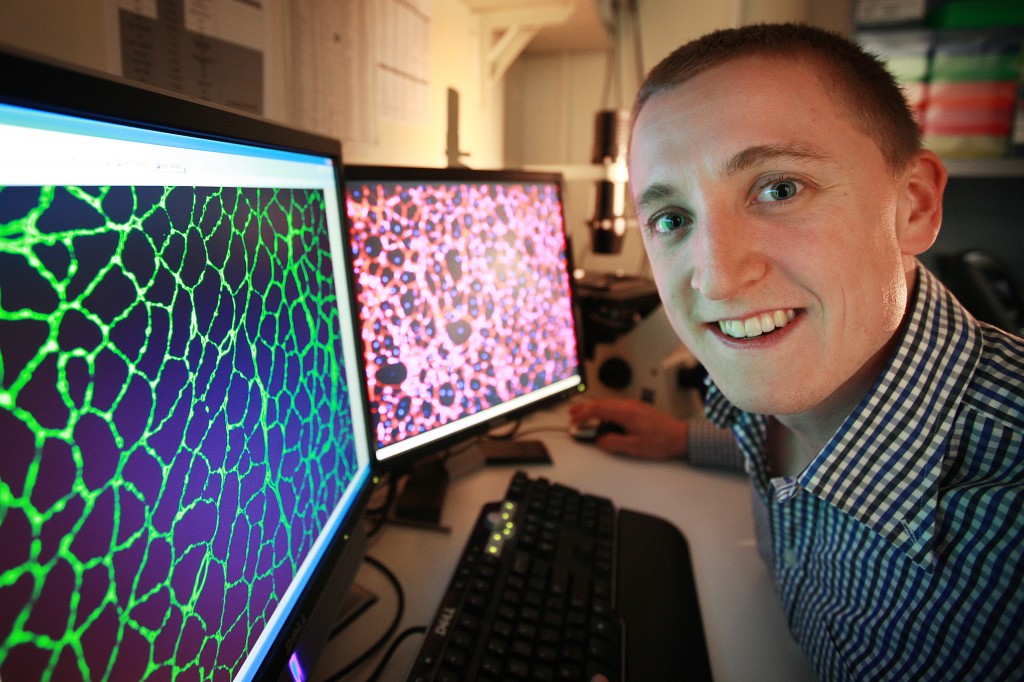
    Ms Asher said the Victorian Coalition Government was committed to supporting discovery and development in research and innovation, and had doubled the number of Victoria Prize and Victoria Fellowships on offer. “The Coalition Government believes there is immense scientific and research talent to reward and promote in Victoria and that is why we made an election commitment to double the number of awards,

  • Victoria’s Leading Postgraduate Health and Medical Researchers Recognised

    Victoria’s Leading Postgraduate Health and Medical Researchers Recognised

    Premier Ted Baillieu and Minister for Health David Davis today announced that Dr Stefan Gehrig has been awarded the prestigious Premier‟s Award for Health and Medical Research for 2012. The Premier‟s Award for Health and Medical Research recognises and honours the achievements of Victoria‟s early career health and medical researchers.

    Mr Baillieu said Dr Gehrig won the award from a highly competitive field of young Victorian researchers for his far-reaching investigation into Duchenne muscular dystrophy (DMD).

    “Dr Gehrig discovered that increasing levels of a specific protein in muscles has the potential to treat DMD – a severe and progressive muscle wasting disease,