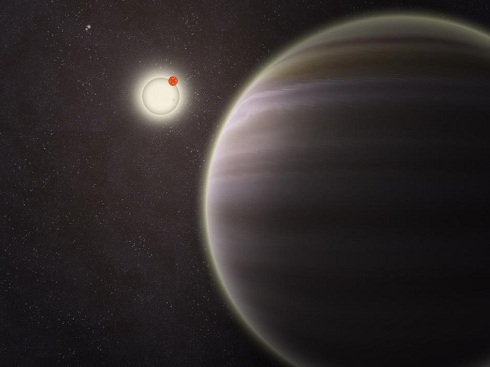
The discovery of planets continues to expand beyond the domain of professional astronomers. A joint effort of amateur astronomers and scientists has led to the first reported case of a planet orbiting a double-star that, in turn, is orbited by a second distant pair of stars.
Aided by volunteer citizen scientists using the Planethunters.org website, a Yale-led international team of astronomers identified and confirmed discovery of the phenomenon, called a circumbinary planet in a four-star system. Only six planets are known to orbit two stars but none of these are orbited by a distant binary.
Image Credit: Haven Giguere/Yale
Coined PH1, the planet was identified by the citizen scientists participating in Planets Hunters, a Yale-led program that enlists the public to review astronomical data from NASA’s Kepler spacecraft for signs of planets transits distant stars.
“I celebrate this discovery as a milestone for the Planet Hunters team: discovering their first exoplanet lurking in the Kepler data. I celebrate this discovery for the wow-factor of a planet in a four-star system,” said Natalie Batalha, Kepler scientist at NASA Ames Research Center, Moffett Field, Calif. “Most importantly, I celebrate this discovery as the fruit of exemplary human cooperation– cooperation between scientists and citizens who give of themselves for the love of stars, knowledge, and exploration.”
A bit larger than Neptune and thought to be a gas giant, PH1 orbits its host stars every 137 days. Beyond the planet’s orbit approximately 900 times the distance between the sun and Earth, a second pair of stars orbits the planetary system.
The research paper submitted to the Astrophysical Journal is scheduled to be presented today at the annual meeting of the Division of Planetary Sciences of the American Astronomical Society in Reno.
Ames Research Center in Moffett Field, Calif., manages Kepler’s ground system development, mission operations and science data analysis. NASA’s Jet Propulsion Laboratory, Pasadena, Calif., managed the Kepler mission’s development.
Ball Aerospace and Technologies Corp. in Boulder, Colo., developed the Kepler flight system and supports mission operations with the Laboratory for Atmospheric and Space Physics at the University of Colorado in Boulder.
The Space Telescope Science Institute in Baltimore archives, hosts and distributes Kepler science data. Kepler is NASA’s 10th Discovery Mission and is funded by NASA’s Science Mission Directorate at the agency’s headquarters in Washington.
For information about the Kepler Mission, click here.
Like songbirds and humans, male mice have brain circuits and behaviors they may use to learn some of their sounds.
Guys who imitate Luciano Pavarotti or Justin Bieber to get the girls aren’t alone. Male mice may do a similar trick, matching the pitch of other males’ ultrasonic serenades. The mice also have certain brain features, somewhat similar to humans and song-learning birds, which they may use to change their sounds, according to a new study.
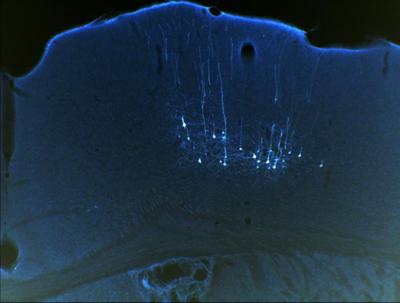
This image shows the motor cortex neurons that directly project to the brainstem and ultimately control the larynx of male mice. Credit: Gustavo Arriaga and Erich Jarvis, Duke.
“We are claiming that mice have limited versions of the brain and behavior traits for vocal learning that are found in humans for learning speech and in birds for learning song,” said Duke neurobiologist Erich Jarvis, who oversaw the study. The results appear Oct. 10 in PLOS ONE and are further described in a review article in Brain and Language.
The discovery contradicts scientists’ 60-year-old assumption that mice do not have vocal learning traits at all. “If we’re not wrong, these findings will be a big boost to scientists studying diseases like autism and anxiety disorders,” said Jarvis, who is a Howard Hughes Medical Institute investigator. “The researchers who use mouse models of the vocal communication effects of these diseases will finally know the brain system that controls the mice’s vocalizations.”
Jarvis acknowledged that the findings are controversial because they contradict scientists’ long-held assumption about mice vocalizations. His research suggests the vocal communication pathways in mice brains are more similar to those in human brains than to sound-making circuits in the brains of chimpanzees and other non-human primates. The results also contradict two recent studies suggesting mice do not match pitch or have deafness-induced vocalization changes.
“This is a very important study with great findings,” said Kurt Hammerschmidt, an expert in vocal communication at the German Primate Center who was not involved in the study. He is cautious about some of the claims but suggested that if mice can learn vocalizations they could become a good model to study the genetic foundation of the evolution of language.
Jarvis, his former graduate student Gustavo Arriaga, and a colleague from Tulane University tested male mice for vocal learning traits as part of a larger project to study speech evolution in humans. Vocal learning appears to be unique to humans, songbirds, parrots and hummingbirds and scientists define it with five features related to brain structure and behavior. Since scientists have never found the features in other animals, “I almost expected every experiment in mice to fail,” Arriaga said.
In the study, funded by HHMI, NSF and NIH, Arriaga first used gene expression markers, which lit up neurons in the motor cortex of the mice’s brain as they sang. Arriaga then damaged these song-specific neurons in the motor cortex and observed that the mice couldnât keep their songs on pitch or repeat them as consistently, which also happened when the mice became deaf.
Arriaga also used an injectable tracer, which mapped the signals controlling song as they moved from the neurons in the motor cortex to those in the brainstem and then to the muscles in the larynx. “This direct projection from the mice’s forebrain to the brainstem and muscles was the biggest surprise,” Jarvis said.
“The evidence of direct projection from these motor cortex regions is a great finding,” Hammerschmidt said. “And I think it is important to try to understand whether these projections are really able to work in a similar way like such projections known in birds and humans.” The question is whether mice can learn a vocalization the way other species do. The researchers found that when two male mice were placed in the same cage with a female, the males’ pitch began to converge after seven to eight weeks. Arriaga and Jarvis tested 24 male mice and did the experiment twice to confirm the result.
Hammerschmidt is skeptical. Jarvis and Arriaga’s “pitch convergence story is less convincing,” he said. Scientists have observed pitch convergences in non-vocal learners and the number of tested animals in this study could be too low to determine whether the discovered effect is reliable, he said.
Jarvis disagrees, but added that more work does need to be done to know if mice can learn other features of vocalizations or if their learning is limited to just pitch.
“Our results show that mice have the five features scientists associate with vocal learning. In mice, they don’t exist at the advanced levels found in humans and song-learning birds, but they also are not completely absent as commonly assumed,” he said. His team is now searching mouse brains for genes specific to the brain circuits for vocal behavior. So far, these genes have only been found in songbirds and humans but, based on these results, could be in mice too, Jarvis said.
Citations:
“Of mice, birds, and men: the mouse ultrasonic song system has some features similar to humans and song-learning birds,” Arriaga, G. et. al. (2012) PLOS ONE. 7(10): e46610. doi:10.1371/journal.pone.0046610
“Mouse vocal communication system: are ultrasounds learned or innate?” Arriaga, G. et. al. (2012) Brain and Language.
Science this month tackled many of the big questions: Where did life on Earth originate? How do we learn? How can we live healthy lives? and, What is it with scientists and sticky-tape?
Lithopanspermia is the idea that basic life forms are distributed throughout the universe via meteorite-like planetary fragments. Eventually, another planetary system’s gravity traps these roaming rocks, which can result in a transfer of any living cargo.
Researchers reported that under certain conditions there is a high probability that life came to Earth — or spread from Earth to other planets — during the solar system’s infancy when Earth and its planetary neighbors orbiting other stars would have been close enough to each other to exchange lots of solid material.
Image Credit: Shutterstock
Previous research suggests that the speed with which solid matter hurtles through the cosmos makes the chances of being snagged by another object highly unlikely. This research reconsidered lithopanspermia under a low-velocity process called weak transfer in which solid materials meander out of the orbit of one large object and happen into the orbit of another. In this case, the researchers factored in velocities 50 times slower than previous estimates, or about 100 meters per second.
Using the star cluster in which our sun was born as a model, the team conducted simulations showing that at these lower speeds the transfer of solid material from one star’s planetary system to another could have been far more likely than previously thought.
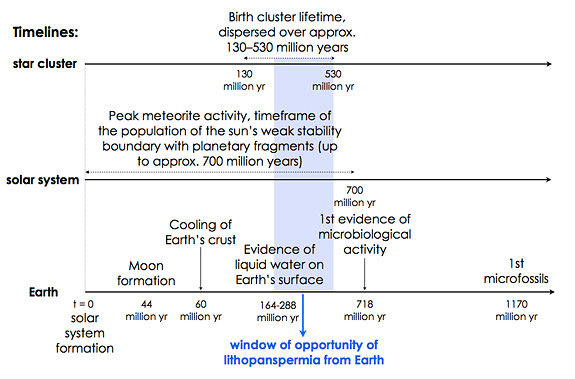
The researchers suggest that ideal conditions for lithopanspermia in the sun's birth cluster, in the solar system and on Earth overlapped for several hundred million years (blue shaded area). Rock evidence suggests that the Earth (bottom line) contained surface water during a period when the relative velocities between the sun and its closest cluster neighbors (top line) were small enough to allow weak transfer to other planetary systems, and when the solar system (middle line) experienced high meteorite activity within the sun's weak gravitational boundary. If life arose on Earth shortly after surface water was available, life could have journeyed from Earth to another habitable world during this time, or vice versa if life had an early start in another planetary system. Image credit: Amaya Moro-Martín
The researchers suggest that of all the boulders cast off from our solar system and its closest neighbor, five to 12 out of 10,000 could have been captured by the other. Earlier simulations had suggested chances as slim as one in a million.
This research highlights that life could have originated away from earth. The theory that it did is yet to be demonstrated.
Research has again shown that you can indeed “teach old dogs new tricks.” The brain you have at any stage of your life is not necessarily the brain you are always going to have. It can still change, even for the better. This time however the researchers observed changes in the brain’s white matter.
Most people equate “gray matter” with the brain and its higher functions, such as sensation and perception, but this is only one part of the anatomical puzzle inside our heads. Another cerebral component is the white matter, which makes up about half the brain by volume and serves as the communications network.
The gray matter, with its densely packed nerve cell bodies, does the thinking, the computing, the decision-making. Projecting from these cell bodies are the axons – the network cables. They constitute the white matter. Its color derives from myelin – a fat that wraps around the axons, acting like insulation.
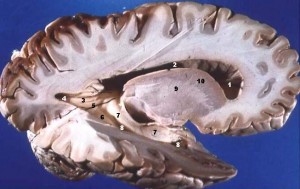
Human brain right dissected lateral view, showing grey matter (the darker outer parts), and white matter (the inner and prominently whiter parts). Photo credit: John A Beal, Dep't. of Cellular Biology & Anatomy, Louisiana State University
This study looked at a really complex, long-term learning process over time, actually looking at changes in individuals as they learn a language. The work demonstrates that significant changes in the mylenation were observed in adults as they were learning. This research demonstrates how learning is a many step process in our brain.
The flip-side of learning is the persistence of misinformation. Why does that kind of ‘learning’ stick? A new report explores this phenomenon. According to the researchers rejecting information actually requires cognitive effort. Weighing the plausibility and the source of a message is cognitively more difficult than simply accepting that the message is true. If the topic isn’t very important to you or you have other things on your mind, misinformation is more likely to take hold.
Misinformation is especially sticky when it conforms to our preexisting political, religious, or social point of view. Because of this, ideology and personal worldviews can be especially difficult obstacles to overcome.
Even worse, efforts to retract misinformation often backfire, paradoxically amplifying the effect of the erroneous belief.
Though misinformation may be difficult to correct, all is not lost. According to the report, these strategies can set the record straight.
Provide people with a narrative that replaces the gap left by false information
Focus on the facts you want to highlight, rather than the myths
Make sure that the information you want people to take away is simple and brief
Consider your audience and the beliefs they are likely to hold
After the successful organisation of workshop and seminar on Open Access Indian Academy of Sciences (IAS), Bangalore and Indian National Science Academy (INSA), New Delhi at Bangalore and Pune in 2002 and 2003 respectively, the M S Swaminathan Research Foundation (MSSRF) had organised two workshops on Open Access at Chennai in 2004. In these workshops, researchers and policy makers from Indian Council of Agricultural Research (ICAR) and others from various State Agricultural Universities in India have participated. However, there was no activity on Open Access in Agriculture in India. During 2006 in the first AGRIS workshop on open access in agricultural sciences and technology held at ICRISAT, Hyderabad, the participants had decided to suggest the establishment of the two pilot open access information repositories in the agricultural domain in India and in 2009, the ICRISAT has formally launched its Open Access Repository for its scientific publications mandating every researcher at ICRISAT to send a authors final copy for deposit upon acceptance of the publication. In the same year (2009), the National Agricultural Innovation Project (NAIP) supported consultation on enhancing Open Access in Indian agriculture was held at ICRISAT. In the consultation, the researchers from ICAR and the Agricultural Research Service Scientists’ Forum (ARSSF) agreed to build Open Access agricultural research publications repository either within Agropedia, a digital knowledge repository with the open platform for learning and sharing information related to Indian agriculture or establishment of institutional repositories so that the researches in ICAR would be be able to deposit their research articles for wider reach.
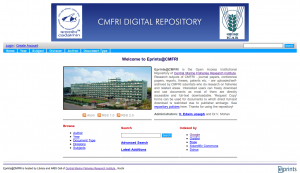
The fall out of the meeting held at ICRISAT in on Open Access (2009) resulted in establishment of Eprints@IARI, an Open Access Institutional Repository of Indian Agricultural Research Institute (IARI). and OpenAgri, an open access agricultural research repository in 2009 and 2010 respectively. These developments made for the establishment of Eprints@CMFRI, an Open Access Institutional Repository of Central Marine Fisheries Research Institute (CMFRI); DSpice@IISR, an Open Access Institutional Repository of Indian Institute of Spices Research (IISR) and E-Repository@IIHR, an Open Access Institutional Repository of Indian Institute of Horticultural Research (IIHR)
In the National Agricultural Research System (NARS) of India, apart from the ICAR and NAIP established repositories, exclusive thesis repository for agricultural sciences in India was initiated in 2008 under the name ‘Krishiprabha‘. It houses all the doctoral dissertations submitted to various agricultural universities in India (NARS). It is now housing, 7624 dissertations and is hosted by Chandhary Charan Singh Haryana Agriculture University, Hissar. However, it is only open to the consortium partners and other constituents of the NARS. Whereas, the ETD@UASD, thesis repository established by University of Agricultural Sciences, Dharwad in 2011 is freely available to public for download and use. It has total 1119 thesis submitted to the university since year 2005. Under the NAIP’s Rice Knowledge Management Portal (RKMP), India Rice Research Repository (i3R) is established in 2010.
Though the efforts are being made to make agricultural research publicly available since 2004 in India, the pace at which it needs to be taken forward is very slow and the concept of Open Access had not reached all the stakeholders of National Agricultural Research System (NARS) especially, the researchers and the research managers. The records in Eprints@IARI are 229; Dspice@IISR 497; E-Repo@IIHR 193. The only most populated repository in ICAR/NARS is Eprints@CMFRI with 8978 records. The ICAR needs a policy on ‘Open Access’ and the researchers and the research managers should consider Open Access as an important agenda for taking forward the movement of making all the publicly funded research publicly available and accessible in India.
To take forward the concept of Open Access and to advocate it, Open Access India (OAIndia) an online group is formed by the researchers, librarians and students in NARS. The OAIndia is quite active on facebook with ~2290 members and is involving its members to discuss and debate on ‘Open Access’ – why it is needed and what needs to be done and what are the bottlenecks and how to overcome them and is now looking for establishment of its online repository which would harvest all the publicly available research information (meta-data) and make it accessible to all the stakeholders in NARS.
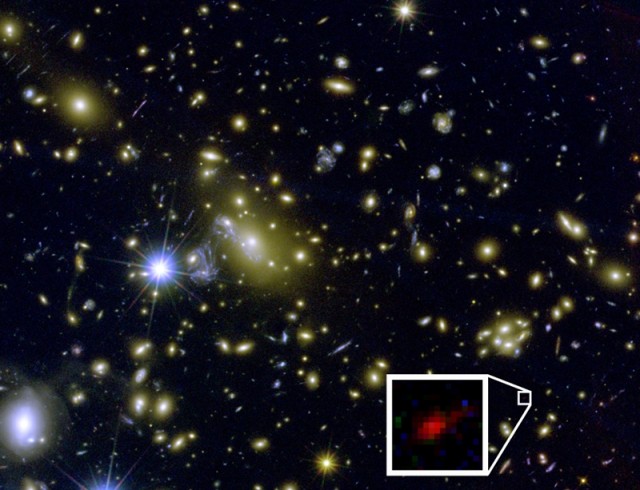
Image credit: The CLASH team/Space Telescope Science Institute
The tiny object in that inset may not look like much. A blurry smudge of red pixels. Not nearly as dramatic as the stunning bouquet of galaxies all around it. But in astronomy, not everything is quite so straightforward. That small red smudge is probably the most exciting thing in this whole image. You see, it too is a galaxy. An unimaginably ancient one.
An ultraviolet image of the nearby Andromeda Galaxy – possibly similar to what we might see of MACS 1149-JD if we could get a more detailed view… Credit: NASA/Swift/Stefan Immler (GSFC) and Erin Grand (UMCP)
The light that made this unassuming red dot left its source less than 500 million years after the Big Bang and the birth of the Universe. The photons that make up that light have been travelling for over 13.2 billion years. This galaxy was blazing brightly as the oldest known stars in our own galaxy, the Milky Way, were just starting to shine. Back when the gas which would one day become the Sun was still drifting silently amongst stars which are now long dead, and before planet Earth was even a whisper of interstellar dust. Before a massive star forged the iron atoms in your blood, and before a supernova scattered those atoms into space. Before anything we know from the world around us existed, even the stars we see as we look up to the night sky, this galaxy was shining in the dark.
The Universe was a much smaller place back then. Over the billions of years these photons have been travelling, the Universe itself has expanded with them in the midst of it – stretching them out, redshifting them to longer and longer wavelengths. The light we see here as red was probably ultraviolet once, when it left the galaxy which created it.
Ancient galaxies like these are difficult to see, purely because they’re so distant. So few photons make it this far that only the most sensitive telescopes can make them out, and even then they need a helping hand. The bloom of galaxies in this image is a massive galaxy cluster called MACS J1149+2223. A collection of galaxies bound together by gravity, clusters like these are some of the largest and most massive objects in the Universe. With that much mass gathered together, gravity starts to do some interesting things, and one of the most interesting is gravitational lensing. Because the gravity of all of those galaxies distorts spacetime, it actually causes the space around the galaxies to act like a titanic lens. A gravitational lens. The ancient red galaxy in this image is only visible because it’s magnified, not only by the Hubble Space Telescope, but by that gravitational lens too.
It would be naive to assume that this galaxy, dubbed MACS 1149-JD, is special somehow. Instead, it’s most likely to be one of a huge number of primordial galaxies. Except that this one just happened to be in the right place at the right time. A whole population of these ancient galaxies were likely shining brightly at the time, full of hot stars which were driving the reionisation epoch – the time when the Universe went from being an opaque, dark fog, to a clear place where photons could travel long distances. The photons in this image may well have been some of the first photons to have travelled through that ancient and newly transparent Universe.
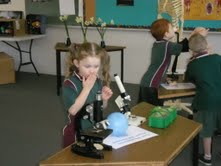
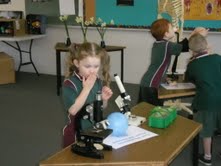
A young scientist on the brink of discovery during National Science Week
In my last post, I talked about the role of imagination in science and early childhood education and the U.S. efforts on encouraging students to pursue careers focused on STEM (Science, Technology, Education and Mathematics). I also mentioned that I would be featuring a primary school in Brisbane, Australia to gain an understanding of their science curriculum. If Australia was worried about their place in the global rankings of science and math test scores and working to get kids interested in science at an early age, they only need look at the example being set by Mitchelton State School. It starts with passionate and committed teachers.
SC@M
The Science Club at Mitchelton (SC@M) came about as an initiative of teacher Ms. Danielle Spencer. After completing an Education Queensland scholarship-funded Graduate Certificate in Primary Science, she wanted to start a club at Mitchelton dedicated to promoting students’ interest and involvement in science, and particularly to encourage girls to participate. With the support of Principal Roger Sheehan, Ms. Spencer worked collaboratively with Ms. Katie McIntyre, Head of Curriculum, and the two educators laid out the objectives for the new science club:
1) Promote science and a love of scientific enquiry within Mitchelton State School.
2) To provide opportunities and facilities that support scientific interest.
3) To liaise with external groups with similar objectives and aims.
4) To encourage girls interest in science.
To join SC@M, students were asked to submit an application containing a series of questions about their views on science, why they wanted to join and what they wanted to do in the science club. For some of the questions they were asked whether they agreed with a statement and why or why not. For example, ‘Science has too much math in it’ and ‘Men are better at science jobs than women’. I find it fascinating the children were questioned about their views on the gender imbalances in science. This area is a personal research interest for Ms. Spencer. Once the application portion was complete, students agreed to commit, with the support and consent of their parents, to attend each week for one lunch break and participate fully (and safely) in all activities.
Each term would be dedicated to a different area of scientific knowledge including physics, biology, chemistry and earth science driven by the children’s interests. To ensure that student activities are developmentally appropriate for the students, Mitchelton established SC@M to focus on Years 4 to 7. However, they are finding the younger kids want to join the science club too; so discussions are underway to assess the feasibility of adding a second period to the week allowing them to participate in activities geared toward their age and comprehension level. Less than two months old, I’m not sure the school was prepared for the level of enthusiasm displayed by the students to participate in SC@M once National Science Week came around and more children applied for the club. Thirty-nine children are now participating in the science club, and if numbers keep increasing they may have to initiate a cut off and place children on a waiting list.
National Science Week
National Science Week started 15 years ago, but this was Mitchelton’s first year participating in the nationwide event (August 11-19th) and to really shine the spotlight on it, they organised a Science Expo at the school to run for the whole week. The event included hands-on activities allowing the students to investigate the properties of slime, rocks and sound; exploring world‘s not seen by the naked eye with microscopes; and discovering natural events such as tornadoes in a bottle and exploding volcanoes. The entire school took part in the Science Expo with a poster design contest, a competition to name the school’s new skeleton, and a scientist dress-up day. The kids listened to a brief presentation from one of the SC@M coordinators and then were free to explore and interact with the exhibits for 45 minutes. Many of the children were having so much fun they did not want to leave when their time was up.
Mitchelton opened up the Science Expo to the public for two afternoons so parents and members of the community could engage in scientific exploration with their children and others. Here the SC@M members chaired the different science stations and provided their expertise and scientific rationale to the public. In addition, the school invited members of the high school community to share the experience by presenting a Science Show to the students and hosted a representative of the Young Scientists Association. On the final day of Science Week, a group of visiting scientists presented science demonstrations at a school-wide event. These activities involving the high school students and the visiting scientists clearly demonstrate Mitchelton’s holistic thinking on identifying and building the scaffolding necessary to show students that a pathway to continue their pursuit of science does exist.
The science club is the highlight of my week, just love it! – Danielle Spencer, Teacher at Mitchelton State School
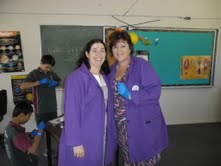
Teachers' commitment to science: Ms. Katie McIntyre (left) and Ms. Danielle Spencer
Australia Places National Emphasis on Early Childhood and Science
I wanted to know if the same emphasis on early childhood instruction is placed on teachers, kids and schools in Australia, as in the U.S. Ms. McIntyre stated, “There is certainly a huge emphasis placed on early childhood development, and in more recent times, Queensland education has focused on increasing students participation in a pre-prep program similar to other states.” This has resulted in the establishment of a large number of independently run pre-prep centres housed in primary schools. She went on to say teachers are finding that the Australian Curriculum is expecting more of students at a younger age and they are adapting their teaching practice to this requirement. While the prep curriculum remains play-based, there is a growing emphasis on explicit instruction in literacy and numeracy. This is similar to what is happening with the early childhood curriculum in the U.S., though I will have to leave my compare/contrast analysis for another posting and get back to science.
Both Ms. Spencer and Ms. McIntyre agree the Australian Curriculum endorses and provides a hands-on approach to engage children in science and develop that passion for it. Ms. McIntyre indicated that in addition to exposing children to science, it’s also essential “to develop the attributes of curiosity that are necessary to the investigations around science.” One way Mitchelton incorporates this active learning involves activities from CSIRO – The Commonwealth Scientific and Industrial Research Organisation. Ms. Spencer has used numerous activities from CSIRO, (e.g. The Helixand Scientriffic magazines) in her classroom and feels CSIRO provides a valuable resource for science teachers in Australia. She appreciates that the activities are enquiry-based and directly linked to the different strands of the Australian Curriculum. Having that link between CSIRO and the national curriculum is vital. I believe this level of collaboration demonstrates a complete feedback loop where the local level works with the state and national levels to influence and advance the science curriculum and grow the interest and passion for careers in science.
It’s inspiring to hear and see the students at Mitchelton wanting to be involved and, in fact, demanding more science in their school day. In addition to joining SC@M, several students who displayed an increased aptitude for scientific enquiry were encouraged to enter national science competitions such as the 60Second Science Video Competition (organised by Brendan O’Brien and sponsored by the Department of Education and Early Childhood Development in Melbourne, Victoria), and the NATA Young Scientist of the Year Award. At this writing, I am pleased to report that Mitchelton swept the primary school award category for the entire state of Queensland. The winners and notable mentions are:
1st Place: Xanthe Czerniawski
Runner-Up: Jessamy Bryant, Jacob Schofield & Hunter Griffiths
Highly Commended: Amelia Czerniawski
Highly Commended: Amelia & Claudia Czerniawski
Well done, kids!
How Australia Must Inspire its Young Scientists
The Australian Curriculum has identified science and math as two of the core priorities to prepare students for further study in science and technology careers, though Ms. Spencer worries the problem Australia faces “is the declining involvement in math and science carers.” She states this is particularly notable with girls and has been the basis for numerous national studies and strategic reports. Both Ms. McIntyre and Ms. Spencer feel that the primary school setting could use more resources and funding as they are limited to the types of scientific experiments they can instruct children in. We all understand budgets are tight, but earlier exposure to quality science activities could raise the interest level of children, providing long-term benefits. Where do you put the money for the greatest return on long-term investment?
The other investment that must be made is in teachers. Teachers who continue their professional development, who pass their love of learning for exploration and discovery in the pursuit of science, (and any discipline, really) is how kids will continue on with careers in science and technology. It’s not a guarantee of course, but teachers are that spark to the kindling that starts the fire of learning in students. It’s up to the students to carry the torch. It would be interesting to follow up later and see how many of this inaugural group of SC@M members are working to cure diseases, attempting to solve our energy problems and tackling our food security issues. Or maybe they go on to design buildings, work in government to protect our natural resources with laws and regulations, or use their social media gadgets to communicate the stories of science to others. But we’ll have to wait a few years for that. In the meantime, let’s hope their curiosity in learning continues and prepares them well for the avenues they choose to travel. They have a head start at Mitchelton.
Special thanks to Mitchelton State School staff – Roger Sheehan, Danielle Spencer, and Katie McIntyre – for their gracious participation in the Q&A and photos for this article and the commitment they demonstrate in providing an enriched, quality education for the children in the community they serve.
So much science, so little time… – Photo credit, Leo Reynolds
Sigh, my photo caption sums it all up…
But here are the news stories that caught my eye and I hope you find them interesting as well. Maybe reading them will inspire your own work or to dig deeper for answers. In any case, enjoy!
This is one of my favorite topics because it offers up rampant debate on so many topics – society, education, cognition. You’re just going to have to read it for yourself.
So what is the Internet doing to our thinking? It is hard to say. Current research has a hard time keeping up with the break-neck pace of online culture, and only the more conventional mediums like television and newspapers have been evaluated in any rigorous sense.
Newspapers might be old school, but they do have an online media presence as well these days. This article was published in The Australian this week and concerns Australia’s own CSIRO. Genetically modified crops and foods have been a part of our collective diet for many years, whether or not some want to admit it. And they are here to stay. I am of the opinion that they play an important role in our food security given a number of ever changing variables in our environment. The usual characters are depicted in this piece and it will be interesting to follow this story and hear the response from CSIRO.
SCIENTISTS from three countries are warning a CSIRO-led push to make Australia the first nation in the world to introduce genetically modified wheat crops could pose a significant health threat to humans and other animals.
If you haven’t heard, NYC Mayor Mike Bloomberg has banned sugary soft drink sales in cups larger than 16 0z. in his efforts to personally tackle the obesity epidemic. I feel some disclaimers are in order: One, this story did appear on www.bloomberg.com, but you could have found it in a variety of online publications; and two, I serve on the Mayor’s Best Practices Partnership to identify strategies to combat childhood obesity. That being said, I find the details of the ban interesting as you can see in the quote below. I personally do not see the need for a a 32 oz. soda, but people who want their sugary fix will do some quick addition, carry more cans or bottles and walk to get more refills. Oh, how long must we wait for data on this?!
Restaurants, movie theaters and other outlets have six months to comply or face a $200 fine each time there’s a violation, the health department said. The ban doesn’t apply to convenience stores and groceries that don’t act primarily as purveyors of prepared foods, which are regulated by New York state. The rules do allow consumers to buy as many of the smaller drinks as they want and to get refills.
To continue with the discussion on obesity, this is an interesting read which once again highlights the genetics vs. environment debate.
The chemist says, “Smell ‘A’ generates a pattern in the nose, a unique set of activated receptors, and these are different for every smell we encounter. Smell ‘B’ has a different pattern. Your brain will instantly recognize each, even if the only time you ever smelled it was 40 years ago. In the same way, we can tune or teach our nanoparticle array to recognize many healthy tissues, so it can immediately recognize something that’s even a little bit ‘off,’ that is, very subtly different from normal. It’s like a ‘check engine’ light, and assigns a different pattern to each ‘wrong’ tissue. The sensitivity is exquisite, and very powerful.”
Results from the 2012 60SecondScience Video Competition have been released. For the last two years 60SecondScience has been a global science event involving students and citizens from 40 countries. These citizen and student-created videos have been downloaded and viewed well over 700,000 times, and growing daily. The competition is sponsored by DEECD Victoria, Australia. Winners below share $10,000 in cash prizes in the 2012 Competition.
The 2012 Competition is now finalised and our 11 fabulous local and world judges have made their decisions. In 2013 the judging panel welcomes Richard Saunders and Dr. Rachael Dunlop. Judging criteria are based on science accuracy, communication and video production values.
With assistance from Emeritus Professor John McKenzie AM, the convenor presented Australian winners with awards last Friday 7 September at BMW Edge Theatre, Federation Square as part of the ICT Week Celebrations, opened by Victorian Minister for Technology Gordon Rich-Phillips.
The 2013 Competition opens for Registration and Uploads on 23 September 2012 and closes on 18 August 2013.
Karamoja region in northern Uganda is one of pastoral communities and closely dispersed ethnic groups that rely on livestock for their livelihood. It is within a semi-arid place like this that economies based on meat, milk, and blood from cattle thrive. In communities such as this one, cattle plague will always be the number one fear.
The morbillivirus rinderpest goes by many names — cattle plague in the old english or “loleoo
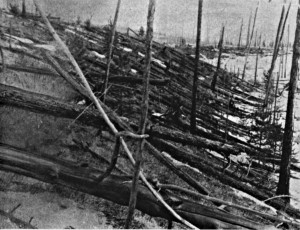
On June 30, 7.17am in a remote, sparsely inhabited area in Siberia, Russia, near the Podkamennaya Tunguska River, occurred an event of enormous devastation. An asteroid or comet estimated to be 40-50 meters in diameter, exploded at low altitude with an energy almost 200 times that of the atom bomb dropped on Hiroshima. Trees where knocked down over an area of two thousand square kilometres, hundreds of reindeer where killed and the seismic shock from the airborne explosion was registered on barometers in England. Eyewitnesses 60km away, reported seeing the northern sky covered with fire, followed by an enormous bang, though thankfully no human deaths were recorded.
Fallen trees at the Tunguska impact site
Dan Yeoman from NASA’s Jet Propulsion Laboratory stated in an interview in 2008, “the Tunguska event is of great importance not only because of the devastation caused to a thankfully remote area, but also as it is the only modern era event of this type where we actually have first-hand accounts.
The month of August indeed belonged to the tiny rover that could — Curiosity. We were all hooked right from the landing and until those first images of the red planet were beamed back. Not even Will.i.am could spoil it for us. We revelled in everything in between, from the missed high-fives, peanuts, Neil deGrasse Tyson’s conversation with the rover, to — yes, unfortunately — Will.i.am’s new single being broadcast from the surface. Curiosity even spawned this generation’s cultural hallmark that is the fake twitter account. If there is any one milestone that denotes you’ve reached a certain level of cultural status… it’s the fake twitter account. From Mrs Rupert Murdoch to dead literary figures, the fake twiteratti are just as important as the real ones.
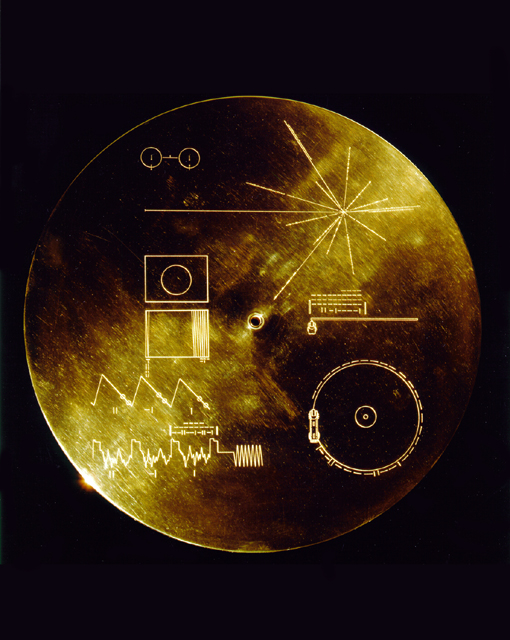
In an odd roundabout way, all of this got me thinking about a bizarre event that happened in 1977.
The United Nations debating such topics as aliens and extra-terrestrial encounters of any kind seems like something confined to the annals of science fiction. And yet, the most significant debate any international body has had on the prospect of alien encounter happened at the 32nd session of the United Nations General Assembly, for reasons unbeknown to me and probably many at the committee.
Member nations and delegations convened at the 32nd session of the General Assembly to listen to the man from Grenada, Sir Eric M. Gairy, the Prime Minister and Minister for External Affairs of Grenada (evidently taking his title to its farthest logic conclusion — what could be more external than space?).
He began with a reading from the Bible — Psalm 100, then launching into an engaging speech that touched on freedom and independence of nations, human rights, wars and conflicts. It quickly took on another flavour. The smallest nation in the UN (at the time) had centre stage and was determined to make the most of it. Mr. Gairy began to speak of unidentified flying objects (UFOs) with the same unabashed enthusiasm he was getting a reputation for.
He concluded by recommending that not only the UN take it seriously but they should set up a department to study UFOs. The UN already had a space outfit — the Of






 OPEN DIVISIONS