Category: Technology

  • The Influence of Mobile Phones on Teenagers

    The Influence of Mobile Phones on Teenagers

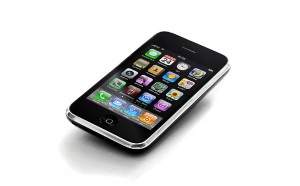
    iphoneMobile phones have become very popular in recent years and their development has been amazing. It is no wonder why they have become irreplacible. With all applications which go with them they have gained a huge popularity with teenagers.

    Basics:

    A mobile phone (also known as a cellular phone, cell phone and a hand phone) is a device which can make and receive telephone calls over a radio link whilst moving around a wide geographic area. It does so by connecting to a cellular network provided by a mobile network operator. The calls are to and from the public telephone network which includes other mobiles and fixed-line phones across the world. By contrast, a cordless telephone is used only within the short range of a single, private base station. [1]
    The quality of sleep of almost half of 16 year olds may be affected by text messaging on mobile phones, a study from Belgium says.
    The sleep of one in four 13 year olds could be affected too, says the researchers, who looked at the effects of text messaging on sleep interruption in teenagers (Journal of Sleep Research (2003:12:263).
    In the research, about 2500 first and fourth year children (aged 13 years and 16 years respectively) in the Leuven study on media and adolescent health (SOMAH) based in Flanders, Belgium, were asked how often they were awoken at night by incoming text messages on their mobile phone.
    In the first year students, 13.4% reported being woken up one to three times a month, 5.8% were woken up once a week, 5.3% were woken up several times a week and 2.2% were woken up every night. In the fourth year group, 20.8% were woken up between one and three times a month, 10.8% were woken up at least once a week, 8.9% were woken up several times a week, and 2.9% were woken up every night. The teenagers were also asked to indicate how tired they felt at various times.
    “These preliminary findings suggest that mobile telephones may be having a major impact on the quality of sleep of a growing number of adolescents. It affected a quarter of the youngest to almost half of the eldest children in the sample,” says Jan Van den Bulck of the Katholieke Universiteit Leuven, who reports the findings in a letter to the journal. [2]
    Cell phones are a great invention and a popular way to communicate—half of all Americans and Europeans use one. They allow us to work on the go and stay in touch. When put in the hands of a teenager, however, they can have some effects of which adults should be aware.
    Cell phones provide security for teens and parents who worry about them; help is never out of reach and parents can check on their children easily.
    Young people’s ability to communicate is extended—they can reach more people (including family) on a daily basis with cell phone speech and texting.
    Teens’ natural tendency to follow trends may result in an emotional attachment to a cell phone (in its latest model) that is out of scale with its actual value. Some teens may even develop an “addiction” to the device that excludes anything not viewed or heard.
    Cell phones allow only verbal, disembodied relationships at a time when adolescents should be working on developing a sense of their own—and others’—physical space. [3]
    The acquisition of a cell phone appears to influence the communication choices of teens. In particular, cell phone users are much less likely to choose to use email than teens without cell phones. When asked which medium teens used to send written messages to friends most often, teens with cell phones were much more likely to select instant messaging and text messaging than email, while teens without mobile phones were more likely to choose email or instant messaging as their most favored textual method of communicating with friends. And while all teens are more likely to say they most often talk on the phone when communicating with their friends, teens with cell phones are more likely than teens without to say that they most often communicate with friends by written messages rather than the phone. Sixty-seven percent of teens without cell phones say they use a phone most often when communicating with their friends, compared to 58% of teens with a cell phone. So even though they potentially have more opportunities to talk on the phone than teens without cell phones, cell phone owners prefer to communicate with friends via written communication. [4]
    It is a common sight – cell phones (mobile phones) in the hands of people, especially teenagers. Literature has provided in-depth evidence of the uses, advantages, disadvantages, impact, consequences and concerns about the use of mobile phones. Why teenagers fancy this device, is an interesting observation where the experts attach its significance to teenagers’ identity factor. The usage of mobile phones has re-shaped, re-organised and altered several social facets. Particularly focussing on teenagers’ mobile phone usage, literature has provided evidence of them being used for both positive purposes and negative reasons. Teenagers possessing mobile phone/s were 96.5% (n=111). A further breakup of age groups indicated that all the 17-19 olds had mobile phones. In addition, not possessing mobile phone/s is higher in the age bracket 15-16 year olds when compared to 13-14 olds. [5]
    The spread of mobile communication among Finnish teenagers has been markedly rapid during the latter half of the 1990s. Young people have created and developed a communication culture that incorporates many special features, such as a rise in the use of text-based communication channels. Teenagers’ intersecting and selective use of communication channels has generated multimedial communication. From the theoretical standpoint provided by symbolic interactionism, we can ask whether communication through new media technologies generates new forms of social interaction. If this is the case, how could we describe and analyse these new forms of interaction? The media landscapes created by teenagers serve to articulate their personal space, as well as enabling their presentation of self and defining their relationships to others.[ 6]

    Conclusion:

    The influence of mobile technology on our lives is huge and even greater on teenagers. In the age in which they’re developing as individuals all that mobile phones birng leaves a strong trace on their growing up. The usage of mobile phones in their age should be controlled but they shouldn’t be discouraged from using them as they bring many benefits.

    References:

    [1] http://en.wikipedia.org/wiki/Mobile_phone
    [2] ”Text messaging is spoiling teenagers’ sleep” by Roger Dobson
    [3] ”The Effects of Cell Phones on Teenagers” by Laura Reynolds
    [4] ”Teens and Technology” by Amanda Lenhart, Paul Hitlin, Mary Madden
    [5] ”Mobile phones and teenagers: Impact, consequences and concerns – parents/caregivers perspectives” by Ravidchandran, Shanthi
    [6] ”Mobile Communication as a Social Stage Meanings of Mobile Communication in Everyday Life among Teenagers in Finland” by Virpi Oksman
  • The Future of Internet Search

    The Future of Internet Search

    emotivWhat does the future hold for search engines? Is Google as far as the realm of Internet search will go? According to the Technological Singularity hypothesis, Internet search has not yet reached the apex. A technological singularity occurs when the intellectual capacity of humans has been so greatly augmented by technology that it facilitates a hyperintelligence. Under this hypothesis, Internet search is bound to succumb to knowledge in the next few decades.

    Theoretically, the human capacity for learning and knowledge acquisition is endless. A human could conceivably store and parse more information than Watson, the artificial intelligence computer system developed by IBM. Watson’s 15 terabytes of human knowledge and superfast algorithmic processing power came in handy when it beat the whip-smart champions of the television quiz show Jeopardy! in February, 2011.

    The human processes of learning, teaching and knowledge acquisition have been significantly augmented by the Information Age. While the advances in Internet technology have come a long way from the days of dial-up modems, bulletin board systems and America Online, the search interface paradigm basically remains the same: users need some sort of input device and an Internet connection to access information. Whether it’s a keyboard, touch screen or voice command, humans are dependent on external hardware input devices.

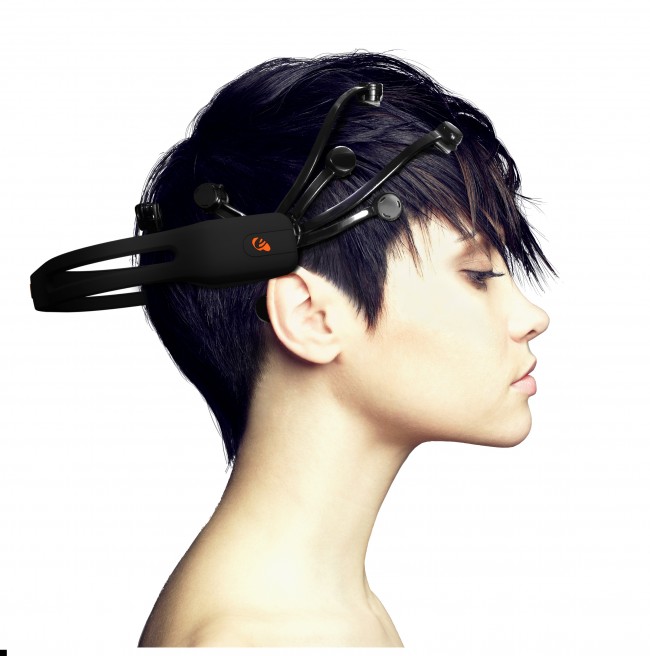
    What if the external interfaces could be eliminated, or at least minimized so that they can no longer be classified as hardware? The current answer to that question lies in the world of brain-computer interfaces, which are commercially available and open to developers. Brain-computer interfaces are wonders of electroencephalography (EEG) technology that allow true wireless, hands-free and voiceless interaction between humans and external devices. The Emotiv EPOC is such a device. While it may sound -and look- like something out of a William Gibson cyberpunk novel, the Emotiv EPOC is able to recognize thought patterns via electrodes and translate them into actions.

    The Emotiv EPOC is mostly used for computer gaming these days, but the day will soon come when brain-computer interfaces can execute a Google search. Think about the SEO and marketing possibilities: custom search results and advertising based on the user’s thoughts, emotions and general state of mind. What is your opinion about neural SEO? What can be accomplished in terms of Internet marketing? Please leave your comments and ideas.

  • Information technology and its impact on productivity

    Information technology and its impact on productivity

    PCIT-information technology is one of the fastest developing branches of technology. It has become an important part of our every-day lives and doing serious business has become impossible without using IT. The question on everybody’s lips is: is it really improving workers’ productivity?

    Basics:

    IT is the area of managing technology and spans wide variety of areas that include but are not limited to things such as processes, computer software, information systems, computer hardware, programming languages, and data constructs. In short, anything that renders data, information or perceived knowledge in any visual format whatsoever, via any multimedia distribution mechanism, is considered part of the IT domain. IT provides businesses with four sets of core services to help execute the business strategy: business process automation, providing information, connecting with customers, and productivity tools.[1]

    Productivity is a measure of the efficiency of production. Productivity is a ratio of what is produced to what is required to produce it. Usually this ratio is in the form of an average, expressing the total output divided by the total input. Productivity is a measure of output from a production process, per unit of input.[2]

    The impact of information technology on work life has been one of the most talked about issues over the recent years. Chief executive officers spending millions of dollars on information technology face the critical issue of assessing the impact of this technology on work. Information system managers are increasingly required to justify technology investment in terms of its impact on the individual and his/her work. Measures of impact of information technology have narrowly focused on productivity impacts. This study uses a broader concept that is based on the impact of technology on the nature of work literature. This literature recognizes the multiple impacts of technology on work at the level of the individual. A review of the literature enabled us to generate thirty-nine items that were grouped into four constructs. In a pilot study, these constructs were assessed by observers in structured interviews with eighty-nine users to provide a criterion measure. Next, the users completed the thirty-nine item questionnaire. The unidimensionality, internal consistency and criterion-related validity of each construct were assessed. The pilot results suggest a four factor 12-item instrument that measures how extensively information technology applications impact task productivity, task innovation, customer satisfaction and management control. In a large scale study, a sample of 409 respondents was gathered to further explore this 12-item instrument and its relationships with other constructs (user involvement, user satisfaction, system usage). The results support the four factor model. Evidence of reliability and construct validity is presented for the hypothesized measurement model and future research is discussed.[3]

    For over a decade, empirical studies in the information technology (IT) value literature have examined the impact of technology investments on various measures of performance. However, the results of these studies, especially those examining the contribution of IT to productivity, have been mixed. One reason for these mixed empirical findings may be that these studies have not effectively accounted for the impact of technology investments that increase production efficiency and improve product quality on firm productivity. In particular, it is commonly assumed that such investments should lead to gains in both profits and productivity. However, using a closed-form analytical model we challenge this underlying assumption and demonstrate that investments in certain efficiency-enhancing technologies may be expected to decrease the productivity of profit-maximizing firms. More specifically, we demonstrate that investments in technologies that reduce the firm’s fixed overhead costs do not affect the firm’s product quality and pricing decisions but do increase profits and improve productivity. In addition, we demonstrate that investments in technologies that reduce the variable costs of designing, developing, and manufacturing a product encourage the firm to improve product quality and to charge a higher price. Although this adjustment helps the firm to capture higher profits, we show that it will also increase total production costs and will, under a range of conditions, decrease firm productivity. Finally, we show that the direction of firm productivity following such investments depends upon the relationship between the fixed costs of the firm and the size of the market.[4]

    257 studies met the inclusion criteria. Most studies addressed decision support systems or electronic health records. Approximately 25% of the studies were from 4 academic institutions that implemented internally developed systems; only 9 studies evaluated multifunctional, commercially developed systems. Three major benefits on quality were demonstrated: increased adherence to guideline-based care, enhanced surveillance and monitoring, and decreased medication errors. The primary domain of improvement was preventive health. The major efficiency benefit shown was decreased utilization of care. Data on another efficiency measure, time utilization, were mixed. Empirical cost data were limited.
    Four benchmark institutions have demonstrated the efficacy of health information technologies in improving quality and efficiency. Whether and how other institutions can achieve similar benefits, and at what costs, are unclear.[5]

    As more information technology (IT) is deployed in organizations, it is important to understand its impact on individual performance and organizational productivity. Most past research has concentrated on identifying determinants of computer acceptance. This may be inadequate in determining the value and return on investment due to IT. Organizations are able to deploy IT more effectively if the consequences of its acceptance are obviously valuable. This study seeks to investigate the implications and consequences of IT acceptance by examining the relationships between IT acceptance and its impact on the individual user. The research model involves three components: user satisfaction, system usage, and individual impact. It is hypothesized that user satisfaction and system usage affect individual impact and that usage partially mediates the effect of satisfaction on individual impact.
    A comprehensive questionnaire on computer acceptance was used to collect data from 625 employees of a large organization in Singapore. The results suggest that user satisfaction is an important factor affecting system usage and that user satisfaction has the strongest direct effect on individual impact. The results also demonstrate the importance of system usage in mediating the relationship of user satisfaction on individual impact.[6]

    Based on previous empirical research, there seems to be little relation between investment in information technology (IT) and financial performance (often referred to as the `productivity paradox’). We hypothesize that this is due to the fact that many companies implement IT projects ineffectively. Like any other asset, IT must be utilized effectively to result in increased financial performance. By comparing successful users of IT and less successful users of IT, we show that successful users of IT have superior financial performance relative to less successful users of IT. However, any financial performance advantage is short-lived, possibly due to the ability of competitors to copy IT projects.[7]

    Technology products are a means to an end, not an end in themselves. When thinking about your IT needs, always begin by thinking about your strategy and business goals.
    Ask: how can I improve my business? Where can I get the jump on competitors? What are my biggest costs and where would I benefit most from efficiency gains?
    Remember that IT can be a powerful source of competitive advantage. Do with IT what your competitors can’t, and customers will take note.
    Only once you’ve decided exactly what it is that your businesses wants to achieve with technology, should you start looking for the solutions themselves.

    Conclusion:

    It cannot be said that information technology has a direct impact on productivity. It does help iproductivity in many cases and improve it, however, it does not have a direct influence on it.

    References:

    [1] http://en.wikipedia.org/wiki/Information_technology
    [2] http://en.wikipedia.org/wiki/Productivity
    [3] “The development of a tool for measuring the perceived impact of information technology on work” by G Torkzadeh and W.J Doll
    [4] “The Impact of Technology Investments on a Firm’s Production Efficiency, Product Quality, and Productivity” by Matt E. Thatcher and Jim R. Oliver
    [5] “Systematic Review: Impact of Health Information Technology on Quality, Efficiency, and Costs of Medical Care” by: Basit Chaudhry, MD; Jerome Wang, MD; Shinyi Wu, PhD; Margaret Maglione, MPP; Walter Mojica, MD; Elizabeth Roth, MA; Sally C. Morton, PhD; and Paul G. Shekelle, MD, PhD
    [6] “The consequences of information technology acceptance on subsequent individual performance” by M. Igbaria and M. Tan
    [7] “Does successful investment in information technology solve the productivity paradox?” by Theophanis Stratopoulos and Bruce Dehning