Category: Technology

  • Could the next generation of electronics be made with graphene?

    Could the next generation of electronics be made with graphene?

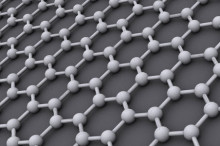
    While it may look like little more than molecular chicken wire, graphene really is wonderful stuff. A sheet of carbon atoms naturally forms into a geometrically perfect set of hexagons and, since it was first chemically synthesised in 2004, researchers across the world have been investigating its potential for uses in a wide variety of ways – everything from DNA sequencing to hunting for it in interstellar space!

    One of the biggest potentials for graphene, however, is in electronics. As graphite (a naturally occurring mineral), carbon is semiconductive. Due to the way carbon atoms are arranged in this hexagonal pattern, it leaves some electrons free to move across the material in a way not entirely unlike the way the motion of free electrons allows metals to be conductive. However, pure graphite isn’t really very conductive. Pure graphene is a much better conductor, but a single sheet of atoms is quite delicate and difficult to engineer into anything by itself.

    The latest development in the story though, is courtesy of the Royal Melbourne Institute of Technology and the Commonwealth Scientific and Industrial Research Organisation (CSIRO), where research has been underway to make high grade electronics with graphene. Their recent success came from a layered material made from graphene and tiny crystals of molybdenum oxide. By using a process called exfoliation, the layers in this material are a mere 11 nm thick, and electrons are able to move freely through it without any scattering from impurities in the material (one of the main limiting factors in any system of electronics). Free from such obstructions, electroncs can flow through this new material at high speeds.

    You see, electronics is one of the fastest progressing types of technology in the world today. Moore’s Law is a principle which states that approximately every two years, the number of transistors in electronic circuitry – and therefore the overall speed of computers – doubles every two years. This trend has been continuing for over half a century now; the average mobile phone today probably has more computing power than Apollo 11 did when it travelled to the Moon.

    But the growth of electronics is predicted to start slowing down, not because technology will stop progressing, but because we’re expecting to reach the limit of what’s possible with our current silicon-based electronics technology. For electronics to continue improving, new and faster materials are required. Graphene-based technology may well hold the key to the future of electronics. CSIRO’s Serge Zhuiykov, spokesman for the Australian researchers involved in this project, believes it could be, stating, “Quite simply, if electrons can pass through a structure quicker, we can build devices that are smaller and transfer data at much higher speeds.

  • Telecommunications and the NBN Infrastructure Revolution

    Telecommunications and the NBN Infrastructure Revolution

    According to the 2011 Deloitte Access Economics for Google report, The Connected Continent, the contribution of the Internet to the Australian economy is about $50 billion, or 3.6% of the national GDP, and this number has been increasing substantially and rapidly over the years [1]. This number also does not take into account huge savings in many areas of life made possible by the increase in productivity due to the use of high speed internet. This is the primary reason why the old telecommunications technologies, which were used back in the day when the Internet did not have so many advanced business purposes, are gradually becoming more and more obsolete.

    Communication has always been one of the most significant aspects of the progress of human society and culture, and in this increasingly globalised world, telecommunication, the means of communicating by sending different types of signals over a distance using technology, is one of the principal means of progress. The first organised communications network in Australia was the postal network back in the 19th century. The first means of telecommunication dates back to the use of smoke signals, and telecommunication technologies include telegraph, radio, telephone, satelite technologies and the most recent fibre optics. The beginning of the 20th century was marked by the development of the first wireless technologies with the creation of the first radio communication technologies. The beginning of the 21st century is marked by the fast spreading of the fibre optic telecommunications network all over the globe.[2]

    Most Australian households and businesses are currently still using a limited bandwidth, copper wire network which is over a century old. This network was initially designed for telephones, and the quality of the signal sent through this network decreases significantly with distance, so, by today’s standards it does not support high Internet speeds, which is one of the main requirements of modern life. This is why the Australian government started building the National Broadband Network, abbreviated as NBN. The NBN is a cutting edge fibre-optic broadband network, that is currently being built across Australia in order to provide the telecommunications infrastructure necessary for the further development of the Australian economy in today’s online business world.


    NBN for Business by Macquarie Telecom [3]

    With the growth of downloaded internet volume increasing by over 50% last year [4], significant investments in the development of the Australian telecommunications infrastructure, and specifically in NBN, is more timely and crucial than ever before.

    The NBN service will bring an increase in internet speed of 20% up to the incredible 200% over the next decade. It has already been rolled out in most urban areas in Australia, but the plan is for the fribre optic network to cover over 93% of Australian households and businesses by the completion of the project. The new, nation-wide fibre optic network is expected to increase the effectiveness, quality and productivity of not only businesses, but also government, health and educational institutions.[5]

    In today’s digitised world, it is highly important to keep in mind that the development and the application of new technologies, especially when it comes to the telecommunications infrastructure, and every investment into the development of a future-proof, strong economy, are absolutely crucial for advancement of Australia in today’s increasingly knowledge-based Australian and global economy.

    References:

    [1] “The Connected Continent”. Deloitte Access Economics. August 2011. Web. 10 April 2013 Available at http://connected-continent.appspot.com/media/illustrations/download.pdf
    [2] “Plagiarism.” Wikipedia, The Free Encyclopedia. Wikimedia Foundation, Inc. 8 April 2013. Web. 10 April 2013. Available at http://en.wikipedia.org/wiki/Telecommunication
    [3] “NBN for Business”. Macquarie Telecom. Web. 10 April 2013. Available at http://www.macquarietelecom.com/corporate/data-voice/nbn
    [4] “Internet Activity, Australia, December 2012”. Australian Bureau of Statistics. 9 April 2013. Web. 10 April 2013. Available at http://www.abs.gov.au/ausstats/abs@.nsf/mf/8153.0
    [5] “Why is the NBN important?”. Australian Government, Department of Broadband, Communications and the Digital Economy. Web. 10 April 2013. Available at http://www.nbn.gov.au/nbn-advertising/why-is-the-nbn-important/

  • SoilMapp: one small step for apps one giant leap for soil science

    SoilMapp: one small step for apps one giant leap for soil science

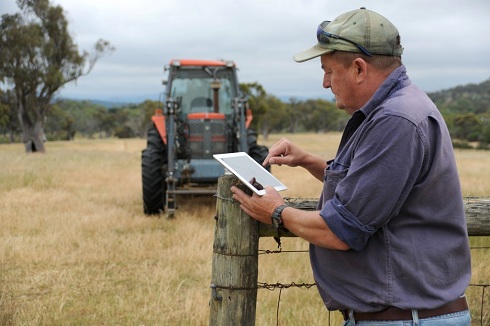
    Australia’s national soil databases can now be accessed in real time online through a new iPad app called SoilMapp.

    The new app provides open access to the best and most up-to-date information for soil at any location in the country within a matter of seconds.

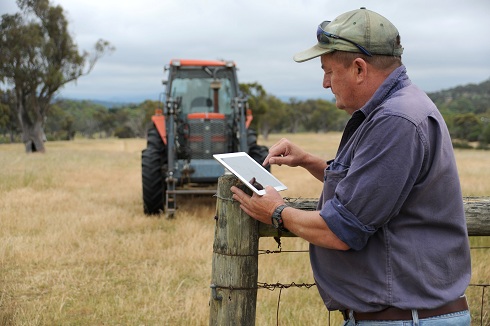
    The SoilMapp for iPad will allow farmers and others to access real time information about their soils from in the field.

    Information such as soil depth, acidity, salinity, soil carbon, soil water holding capacity and other attributes will help land managers, farmers and rural advisors make on-the-spot, decisions about how to more effectively manage their land.
    This mobile device technology will deliver detailed scientific information on soils directly into the hands of farmers, rural consultants, agronomists, and potentially other soil enthusiasts like real estate agents, hobby farmers and keen bushwalkers.

    The app has been developed by the Australian Collaborative Land Evaluation Program (ACLEP) and CSIRO, with funding from the Grains Research and Development Corporation (GRDC), because understanding soils is essential for sustaining healthy, natural environments and productive agricultural landscapes.

    CSIRO’s Mike Grundy said soils are one of the most important building blocks of our agricultural and ecological systems and are a precious natural asset.

    “They sustain food production, biodiversity, water quality and play a key role in human health. Understanding the characteristics of soil allows us to ensure we make decisions about its management to ensure maximum productivity and maintain or improve its health for today and future generations,” Mr Grundy said.

    SoilMapp is the first app developed by CSIRO and it is being launched at the Joint Australian and New Zealand Soil Science Conference in Hobart on Tuesday, in time for World Soil Day on Wednesday. The app taps into soil information from the Australian Soil Resource Information System (ASRIS) and APSoil, the database behind the farming systems model, the Agricultural Production Systems SIMulator (APSIM), which is used worldwide.

    Both these databases are stocked with contributions from thousands of individuals and organisations including the Australian Government Department of Agriculture, Fisheries and Forestry (DAFF), state and territory agencies responsible for land resource assessment, Geoscience Australia, and soil research and industry groups. The databases contain information about approximately 85,000 samples from nearly 15,000 locations, some dating back to the 1950s.

    “There’s a lot of information about Australian soils stored in these two databases and the beautiful thing about SoilMapp is that it provides a user friendly mechanism for accessing that information in real time, on location,” Mr Grundy said.

    “Although that information is already available through the web, it is now of far more use to famers or consultants working out on the land because it can be at your fingertips in the field, and at no cost. Importantly, as our soil agencies improve their data collections, SoilMapp will provide access to later releases,” he said.

    Senior Agronomist Steve Richmond from Kerin Landmark Rural said the app will be a welcome addition to his decision making toolkit when speaking with growers.

    “By understanding the soil’s characterisation, water holding capacity and amount of organic carbon, we can make calculations about how much nitrogen to use on certain crops. This could lead to improvements in fertiliser use efficiency as well helping prevent soil acidification from the overuse of nitrogen. That provides a productivity benefit as well as environmental and economic benefits,” Mr Richmond said.

    “Farmers are the custodians of vast tracts of Australia, and the decisions they make daily will impact on the short and long term future of this country’s ability to feed itself, meet growing global demands and to sustain its natural beauty. The more informed we can be when making these decisions, the greater benefit we can deliver for both productivity and environmental health. It’s a win-win,” he said.

    While SoilMapp for iPad currently accesses Australian information, other users may soon be able to get the benefit of this technology, with CSIRO exploring the possibility of working with partners in New Zealand, Indonesia and the Pacific Island countries to widen the scope of SoilMapp.

    SoilMapp was developed by CSIRO through the Australian Collaborative Land Evaluation Program (ACLEP) and the Grains Research and Development Corporation (GRDC) project Doing it better, doing it smarter — managing soil water in Australian agriculture.

    SoilMapp for iPad will be available from the App Store soon.

    Media are invited to attend the Joint Australian and New Zealand Soil Science Conference on Monday and Tuesday to use SoilMapp and speak with the researchers that developed it.

    Find out more about SoilMapp for iPad: soil information at your fingertips.

    Media and image source.

  • Internet Society: Global Internet User Survey Reveals Attitudes, Usage, and Behavior

    Internet Society: Global Internet User Survey Reveals Attitudes, Usage, and Behavior

    A worldwide survey of more than 10,000 Internet users in 20 countries conducted by the Internet Society revealed attitudes towards the Internet and user behavior online. The Global Internet User Survey is one of the broadest surveys of Internet user attitudes on key issues facing the Internet. This year’s survey covered areas such as how users manage personal information online, attitudes toward the Internet and human rights, censorship, and the potential for the Internet to address issues such as economic development and education.

    “Today’s online users have high expectations for the Internet and its impact on our lives and society, while also expressing concerns over censorship and excessive governmental controls,” said Lynn St. Amour, President and CEO of the Internet Society. “As part of realizing the Internet Society’s vision of an Internet that is for everyone, this survey uniquely focuses on users and their experiences, attitudes, and opinions on how to meet the challenges and opportunities facing the Internet and society in general. We are committed to the Internet’s continued open growth and evolution, not only for those who enjoy the Internet today, but until everyone is able to access and benefit from an open Internet.”

    Key Findings

    Key findings from this year’s survey cover a broad range of topics.

    The Internet and Human Rights:

    • Eighty-three percent of respondents agreed or agreed strongly that access to the Internet should be considered a basic human right.
    • Eighty-nine percent agreed or agreed strongly that Internet access allows freedom of expression on all subjects, and 86 percent agreed or agreed strongly that freedom of expression should be guaranteed.
    • Sixty percent of respondents agreed or agreed strongly that Internet access has contributed significantly to civil action and political awareness in their country.

    Internet censorship:

    • Thirty percent of users agreed strongly that censorship currently exists on the Internet.
    • Sixty-six percent of respondents agreed or agreed strongly that governments in countries with no Internet censorship have a responsibility to keep the Internet free of censorship in countries where the Internet is being censored/controlled/shut down.
    • More than 70 percent of users agreed or agreed strongly that more government involvement would make the Internet too controlled or would limit content they can access.
    • More than two-thirds agreed or agreed strongly that increased government control would inhibit the growth of the Internet and/or stifle innovation.

    Online privacy and identity:

    • Even when users know they are sharing personal data with a site or service, most users (80 percent) do not always read privacy policies and a significant fraction (12 percent) of respondents admitted that they never read privacy policies.
    • Of users who logged into online services, only half reported that they logged out.
    • Nineteen percent of respondents were aware of circumstances in which personal data was used in a way they did not expect. The most commonly reported consequences were: unsolicited communications, stolen personal data, private data becoming public, impersonation, and financial loss.

    The Internet and economic and societal issues:

    • Nearly two-thirds of respondents agreed or agreed strongly that the Internet would play a significant role in solving global problems, including reducing child mortality (63 percent), improving maternal health (65 percent), eliminating extreme poverty and hunger (61 percent), and preventing the trafficking of women and children (69 percent).
    • An even higher percentage of respondents agreed or agreed strongly that the Internet would increase global trade and economic relationships (81 percent), improve the quality of education (80 percent), and improve emergency response during a natural disaster (77 percent).
    • A majority of respondents felt strongly that the Internet plays a significant role in making improvements to business, science, and technology in areas such as: expanding the availability of goods and services (66 percent), allowing entrepreneurs to conduct business across all countries (65 percent), and advancing science and technology and creating a technologically recognized workforce (61 percent).

    Attitudes towards the Internet:

    • Ninety-eight percent of users agreed or strongly agreed the Internet is essential for their access to knowledge and education.
    • More than 80 percent agreed or agreed strongly that the Internet plays a positive role for their individual lives as well as society at large.
    • Nearly 75 percent of users strongly agreed that access to the Internet allows them to seek any information that interests them.

    General Internet usage:

    • Internet users nearly universally (96 percent) indicated they accessed the Internet at least once a day.
    • More than 90 percent of Internet users surveyed globally indicated they use social media, with a majority (60 percent) using it daily, an increase of 10 percent over 2011.
    • Connection speed (73 percent) and reliability (69 percent) ranked slightly above more affordable monthly fees (68 percent) among factors that would increase usage. Other factors included more content in their local language (50 percent) and more online availability of government and/or community services (49 percent)

    The Internet Society’s Global Internet User Survey (GIUS) provides reliable information relevant to issues important to the Internet’s future. As an ongoing effort, the survey provides information, informs and supports the activities of the global Internet Society community, and makes the data it collects openly available for all. While other ICT surveys focus on economic, infrastructure, or other Internet use indicators, the GIUS focuses on users, which are the source of innovation that has driven the Internet’s development, evolution, and dramatic growth over the past four decades. The first GIUS in 2011 gathered the responses of 6,088 Internet users in 11 countries.

    This year, the GIUS was conducted on behalf of the Internet Society from July to August 2012 by Redshift Research, a leading business market research firm. The survey questionnaire engaged 10,789 Internet users in 20 countries: Argentina, Brazil, Chile, China, France, Germany, India, Indonesia, Italy, Kenya, Peru, Philippines, Poland, Russia, Saudi Arabia, South Africa, South Korea, Spain, UAE, and the United States. Of the respondents, 53 percent were male and 47 percent were female. Results from the survey varied across countries; future reports will provide additional insight into these variations.

    The complete questionnaire, full results—including results by country—and more information on survey methodology are available at: http://www.internetsociety.org/survey

    Press release – source. 

    Image source.

  • New Internet Exchange Point Launched 16 November in Kinshasa, Democratic Republic of the Congo

    New Internet Exchange Point Launched 16 November in Kinshasa, Democratic Republic of the Congo

    [Washington, D.C. and Geneva, Switzerland] — A new Internet Exchange Point (IXP) was launched on 16 November in Kinshasa, Democratic Republic of the Congo (DRC). The Kinshasa IXP (KINIX) was funded through the Internet Society’s Community Grants Programme and managed by the DRC ISP Association (ISPA-DRC), as part of its DRC-IX project, which aims to establish IXPs in Kinshasa, Lubumbashi, and Goma.

    KINIX will serve as a catalyst for innovation and development of Internet services and applications in the DRC, and will support Government efforts to implement E-government services and lower the cost of developing local hosting and application development.  The presence of KINIX will improve local Internet resilience by eliminating the dependence on international connectivity for local Internet services and Internet-based communications.

    DRC is largely dependent on satellite connectivity for its Internet access. As the DRC waits to get connected to the West Africa Cable System, the time to access locally hosted content will be reduced significantly from over 500ms to less than 50ms through KINIX.

    Initially, KINIX will connect six Internet Service Providers (ISPs): AfriNET, Cielux, Cybernet, Global Broadband Solutions, Microcom, and Vodacom.  Twenty-six (26) engineers from these ISPs, including the regulator (ARPTC); Central Bank of Congo; local universities; and the tax, customs and revenue authorities among others have received technical, hands-on training prior to the launch through the Internet Society Africa Interconnection and Traffic Exchange (ITE) programme. The training sponsored by the Internet Society, and in partnership with Netnod and Jaguar Network, will also enable the network providers in the DRC to prepare their networks for interconnection with the rest of the world once the submarine cable connection is activated.

    The Internet Society’s Africa Interconnection and Traffic Exchange programme has been actively supporting the development of IXPs and regional interconnection in the region. The programme aims to have 80% of Internet traffic exchanged in Africa by 2020, keeping local traffic local. This objective has been boosted by the appointment of the Internet Society to implement the African Union’s African Internet Exchange System (AXIS) programme, http://www.internetsociety.org/axis-announcement.

    Source

  • Weekly Science Picks

    Weekly Science Picks

    Ah, the weekend! Time to kick back, relax, and look back over everything that’s happened over the past few days. And I’m rather happy to say that some quite interesting things have happened, including the Leonid meteor shower which peaked on Friday night (though if you step outside after dark and watch the sky, you may still see a few stragglers). So what else has caught my eye this week, science-wise?

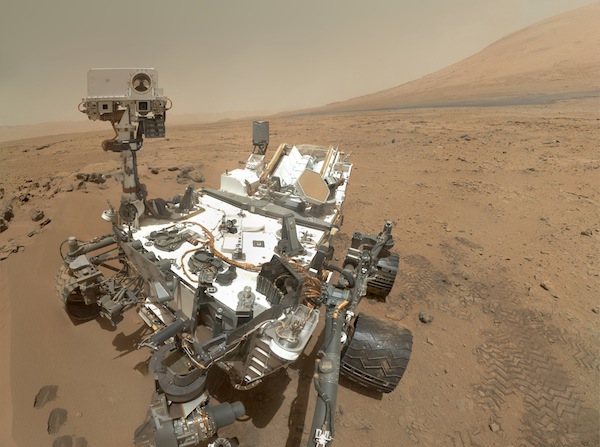
    Well first off, the Curiosity Rover has been busy over on the planet next door. I can’t help but find everything about the Curiosity rover exciting, especially as it’s paving the way for actual manned exploration to another planet. As many people will agree, no matter how sophisticated a rover can be, it will never be as good as a team of properly equipped geologists exploring a site in person. As it turns out, this idea just came a step closer to being reality…

    Astronauts Could Survive Mars Radiation, Curiosity Rover Finds

    The findings demonstrate that Mars’ atmosphere, though just 1 percent as thick as that of Earth, does provide a significant amount of shielding from dangerous, fast-moving cosmic particles.


    Some people may recall the death of an aged tortoise nicknamed Lonesome George, so called because he was thought to be the last surviving member of his species. I know I do, and was rather saddened by it. While it may be an inescapable part of the way life on our planet works, there’s something quite humbling about being forced to simply watch a species go extinct and not be able to do anything about it. But then, was George’s death really the end of the story? As it happens, perhaps not…

    DNA tests show Lonesome George may not have been last of his species

    “These giant tortoises are of crucial importance to the ecosystems of the Galapagos Islands, and the reintroduction of these species will help preserve their evolutionary legacy,” said Danielle Edwards, postdoctoral research associate at Yale and lead author on the study.


    Lisa Grossman at New Scientist discusses the phenomenon of rogue planets – planets roaming interstellar space after being forcibly ejected from their home systems. It’s a concept which I’ve thought about in great detail in the past, as have many others, including astrophysicists, astrobiologists, and science fiction authors.

    Astrophile: Lonely planet roams with stellar outcasts

    The wanderers are no longer gravitationally linked, but they are headed in the same direction. “Like when you kick a clod of sand, the grains don’t stick together anymore but they have the same common motion,” Delorme says.


    In chemistry, I’ve always held a certain fascination with noble gas compounds. Molecules formed from atoms which aren’t supposed to react and form molecules always seemed rather exotic and curious. Several of these compounds have been predicted involving Xenon, one of the heaviest noble gasses. And there may be a lot of Xenon trapped inside the Earth this way…

    Professor predicts stable compounds of oxygen and ‘inert’ gas xenon

    “In addition to providing a likely solution to the missing xenon paradox and clarifying essential aspects of xenon chemistry, our study may result in practical applications,” says [Artem R.] Oganov. “For example, the ability of xenon to form strong chemical bonds with oxygen and other elements, and to be trapped in crystalline defects, suggests their use as non-classical luminescence centers and active sites for catalysis”.


    And to end on a humourous note, XKCD wrote a comic this week describing the Apollo Spacecraft and Saturn V rockets using only the 1000 most commonly used words in the English language. The result was slightly hilarious and rather enlightening about how often writers like myself use words which aren’t in that top 1000. A testament to XKCD’s popularity is how many people in the online space and astronomy communities mentioned it – including at least one astronaut!

    xkcd: Up Goer Five

    Lots of fire comes out here. This end should point toward the ground if you want to go into space. If it starts pointing toward space you are having a bad problem and you will not go into space today.


    Hope you’re having a good weekend!


  • The Science Surrounding James Bond

    The Science Surrounding James Bond

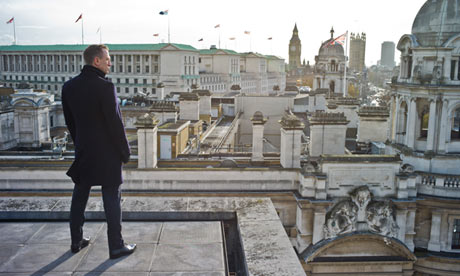
    James Bond in Skyfall. Original source: The Guardian. Photograph: Francois Duhamel

    Bond. Double Bond.

    That was a quip a lab partner of mine cracked during a sophomore chemistry class and I have not forgotten since. And it is a perfect lead in for this week’s post as I take you through the past and into a closer look with – The Science Surrounding James Bond.

    This year marks the 50th Anniversary of Ian Fleming’s classic James Bond series. And Friday, 9 November 2012, the 23rd installment of the series, Skyfall, hit theatres in the United States. And I wouldn’t have missed it for the world.

    I became a James Bond fan early on, around age 5, thanks to my Dad. Perhaps, not the most appropriate film choice for a 5-year-old per se, but that’s water under the bridge. What captivated my attention so? The action-packed chases, the sports cars (Aston Martin DB5, yes, please), the explosions, the science behind it all!

    The Quartermaster – Q

    The Quartermaster, known affectionately by the moniker ‘Q’ is head of the fictional research and development division of the British Secret Service. Q – always the scene stealer, in my opinion, whether portrayed by John Cleese, Desmond Llewellyn, Peter Burton, and now the youngest gadget genius, Ben Whishaw – keeps the spy business humming along. Where would 007 be without Q who created so many of those gadgets allowing his to escape safely and serve country and Queen? Q in fact answers this question in License to Kill.

    “If it hadn’t been for Q Branch, you’d have been dead long ago” – Q to Bond

    Yes, where would James Bond be without science and technology?

    I could not possibly list all of the gadgets and technology featured in the James Bond films. Well, I could, but for space’s sake I’ll refrain. I’ll just highlight some of the more clever mechanics and mind-blowing inventions, some of which still have relevance today. Perhaps. This may be a list of mundane ordinary household items or personal effects, that are anything but, and all very much deadly. I’ll also include the movie reference for homework, just in case you’d like to check it out for yourself.

    Handgun with palm recognition – Skyfall

    Bioemetric Fingerprint Scanner – Diamonds Are Forever

    Radioactive Lint – On Her Majesty’s Secret Service  (Fun fact – George Lazenby who played Bond in this film is Australian)

    Perfume Flamethrower – The Spy Who Loved Me

    Montblanc fountain pen – Octopussy

    Mini Submarine – For Your Eyes Only

    SNOOPER – A View to a Kill

    Philips Keychain – The Living Daylights 

    Miniature Binoculars – The Living Daylights 

    Dentonite Toothpaste – Licence to Kill

    Surfboard – Die Another Day

    Kids, there is a lot of chemistry, physics and hi-stakes math going on these films, so pay attention. Many of these inventions and gadgets helped keep humankind safe from terrorism and evil in the films. I’d hate to be a Debbie Downer and mention the downside, such as the loss of life, and destruction to the environment that sometimes results from Bond’s escapades, but there is a price to pay for freedom. All the more reason to study the sciences with the aim to improve the societal good of the world!

    The Old and the New

    The tales of Bond have allowed audiences to see the world; those that maybe haven’t had the luxury to travel so much. For a kid growing up on a farm in the Midwest, those movies opened my eyes to different lands and cultures and set my mind racing with possibilities. Possibilities of what I wanted to do in the field of science.

    I really don’t want to give anything away for those that have yet to see the film (IT’S SUPERB!), but Skyfall especially displays that melding of the classic Bond with the futuristic Bond. Bond has actually found immortality – the writers, producers and actors have found ways to continually reincarnate and refresh this character for future audiences. Here’s to another 50 years of shaken martinis, fine tailoring, fast sports cars, death-defying stunts, witty one-liners and keeping the world safe from terrorism at all levels. Cheers.

  • OKFN Australia Group re-launching again

    OKFN Australia Group re-launching again

    The Open Knowledge Foundation is dedicated to promoting the creation, sharing and application of Open Knowledge in the Digital Age.

    Yesterday, a working group at OKFN Australia gathered data geeks from around the country. The opening the Australian chapter of the Open Knowledge Foundation happened via a Google hang-out. The group includes internet public servants, data scientists, data visualisation specialists,  data journalists, and others dedicated to the idea that, when it comes to knowledge and information, open is better.
    OKFN Au is a community initiative to create a bridge between the many and varied open knowledge communities in Australia, including hackers, data journalists, scientists, Gov 2.0 and open data peeps, knowledge and change management enthusiasts and civil society.

    OKFN Au is part of the global OKFN community, established originally in the UK. It brings together people interested and active in opening up and using data to create and share knowledge.

    The goal of OKFN Au is to support, promote and bring together the active and diverse open knowledge communities in Australia. Member communities come from a variety of backgrounds where open knowledge is already being practically applied. Australia has some well established tech communities, research groups, open government communities, emerging data journo communities and loads more that could all benefit through being connected to each other, even if just peripherally. It makes it easier to understand the breadth and skills of our community which, in turn, makes it easier to connect with each other and collaborate on common goals or projects.

    Check out the OKFN Au site for more information.

    Image source.

  • The “POLI

    The “POLI

    This article is part of Media and Learning month’s newsletter, dedicated series on lecture capture. It is provided by the Lifelong Learning project REC:all, which aims to explore new ways in which lecture capture can become more pedagogically valuable and engaging, and which is investigating a variety of learning design, technical and legal issues related to lecture capture.  Marta Cabedo Fabrés from Universitat Politècnica de València (UPV), Spain – describes how.

    The new educational paradigm due to the Bologna process, presents a teaching model in which the professor acts as facilitator of learning and the students assume an active and autonomous role. Based on these points the Universitat Politècnica de València (UPV) has developed and implemented a number of tools (POLIMEDIA, POLITUBE and POLICONECTA) and a Virtual Learning Environment (POLIFORMAT), in order to adapt to the European Higher Education Area and to improve teaching quality.

    POLIMEDIA is a system designed at the UPV for creating multimedia content (videos, instruction clips, knowledge clips, etc.), and POLITUBE is a free access portal enabled by the UPV to store educational videos that are used to support and complement classroom teaching.
    The materials and resources available in POLITUBE and POLIMEDIA, after a rigorous review, are recognized as learning objects and become part of Riunet (UPV institutional repository). Riunet provides access from the Internet to the scientific, academic and corporate production of this university following the international movement of Open Access.

    POLIFORMAT is a tele-education platform used in the UPV. It is based on Sakai and it offers a standardised interface for accessing to a Web 2.0 toolkit. It facilitates autonomous and collaborative learning to students.

    Each subject has its own space in POLIFORMAT and it is accessible only to teachers and students enrolled in the subject. The tools available include news, calendar, repository of resources, tasks, contents, on-line exams, chat, internal mail, discussion forum, wiki and student’s personal space. Some of these tools can be activated during a specified period of time, according to the needs of the subjects.

    POLICONECTA is a videoconferencing tool developed at the Lifelong Learning Center of the UPV for distance learning. It is based on
    the use of commercial software Adobe Connect, and allows virtual meetings, video conferencing and remote lectures, which can be
    recorded. It also includes the ability to share documents, applications or a whiteboard.

    For the delivery of courses or seminars at a distance UPV makes more than 30 classrooms available which are properly equipped with multiple cameras, microphones, projector, monitors, and interactive whiteboard. Some classrooms also have “Paper Show” (a special notebook that records what you write or draw with a pen in a computer). The only equipment  required by students is a broadband Internet connection, headphones and a microphone.

    All tools and platform described in this article have already been used with a high degree of acceptance by more than 250 lecturers and approximately 36000 students at the UPV. In the last six years more than 3000 videos have been produced using these technologies and actual experiences show that the use of lecture captures results in a substantial improvement of teaching quality. Find out more.

    UPV’s experience in lecture capture will be presented during the REC:all workshop taking place on 13 November.

    Source

  • First Color Image of the Martian Landscape from Curiosity

    First Color Image of the Martian Landscape from Curiosity

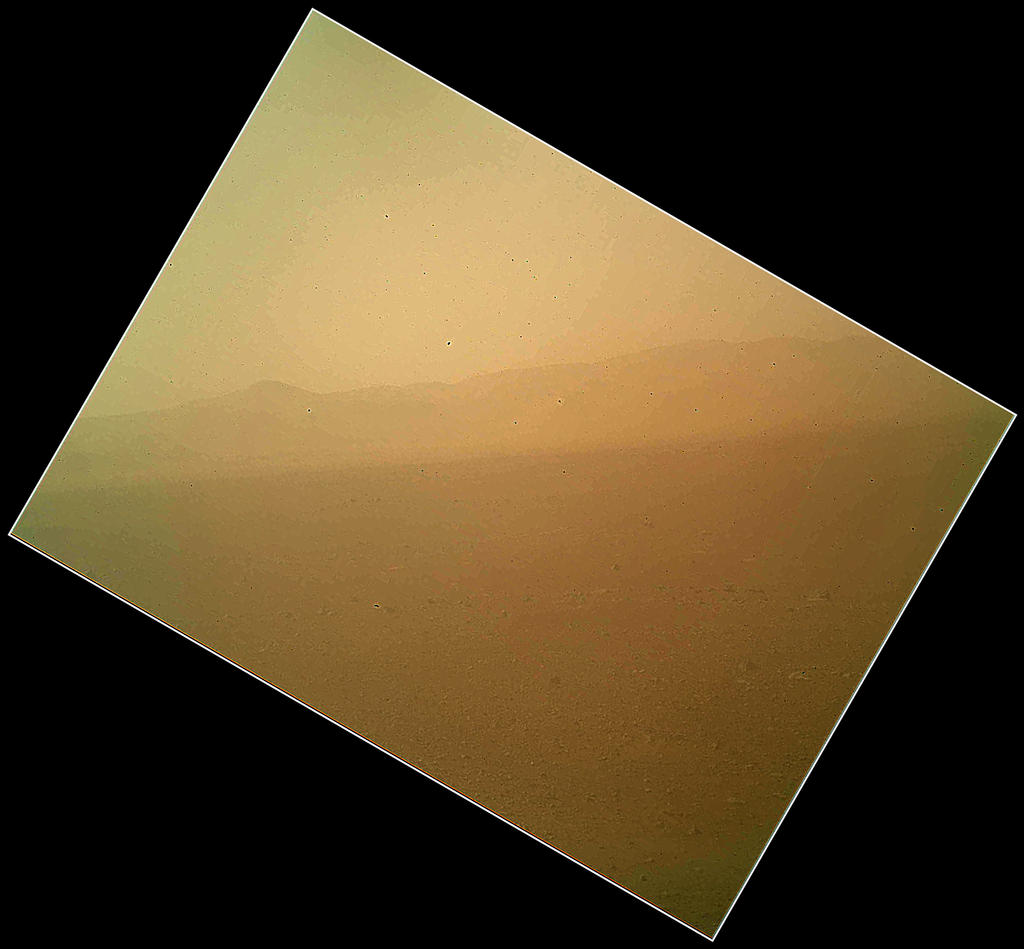
    This view of the landscape to the north of NASA’s Mars rover Curiosity acquired by the Mars Hand Lens Imager (MAHLI) on the afternoon of the first day after landing. (The team calls this day Sol 1, which is the first Martian day of operations; Sol 1 began on Aug. 6, 2012.)

    In the distance, the image shows the north wall and rim of Gale Crater. The image is murky because the MAHLI’s removable dust cover is apparently coated with dust blown onto the camera during the rover’s terminal descent. Images taken without the dust cover in place are expected during checkout of the robotic arm in coming weeks.

    First Color Image of the Martian Landscape Returned from Curiosity

    The MAHLI is located on the turret at the end of Curiosity’s robotic arm. At the time the MAHLI Sol 1 image was acquired, the robotic arm was in its stowed position. It has been stowed since the rover was packaged for its Nov. 26, 2011, launch.

    The MAHLI has a transparent dust cover. This image was acquired with the dust cover closed. The cover will not be opened until more than a week after the landing.

    When the robotic arm, turret, and MAHLI are stowed, the MAHLI is in a position that is rotated 30 degrees relative to the rover deck. The MAHLI image shown here has been rotated to correct for that tilt, so that the sky is “up” and the ground is “down”.

    When the robotic arm, turret, and MAHLI are stowed, the MAHLI is looking out from the front left side of the rover. This is much like the view from the driver’s side of cars sold in the USA.

    The main purpose of Curiosity’s MAHLI camera is to acquire close-up, high-resolution views of rocks and soil at the rover’s Gale Crater field site. The camera is capable of focusing on any target at distances of about 0.8 inch (2.1 centimeters) to infinity. This means it can, as shown here, also obtain pictures of the Martian landscape.

    Image Credit: NASA/JPL-Caltech/Malin Space Science Systems

    Source

  • Explore the World with Google Earth Engine

    Explore the World with Google Earth Engine

    Last week marked the 40th anniversary of the Landsat satellite program (http://landsat.gsfc.nasa.gov/) —now the longest-running continuous acquisition of satellite images of the Earth’s surface. The entire Landsat7 imagery archives are publicly accessible through Google Earth Engine (http://goo.gl/fjTZL), with a new and improved featured gallery, which includes zoomable time-lapse videos and a beautiful new interface: http://earthengine.google.org/#intro!

    Google Earth Engine enables scientists to use our extensive computing infrastructure—the Google cloud—to analyze an unprecedented amount of satellite imagery and data. The new gallery includes what may be the largest video frame ever created. At 1.78 terapixels, if you tried to view all at once, it would take 18 football fields’ worth of computer screens laid side-by-side.

    Google Earth Engine technology has already been used to compute the forested areas of Mexico (http://earthengine.google.org/#intro/MexicoTreeCover), identify deforestation in the Amazon (Monitoring Forests From the Ground to the Cloud) and map roadless areas of the world (http://earthengine.google.org/#intro/Roadless1km).

    We look forward to seeing the full potential of the Landsat archives revealed, as Google Earth Engine and other tools enable non-professionals to explore this valuable trove of data.

    Source.

  • A Tankful of Sugar

    A Tankful of Sugar

    E=Sugar^3

    Remember those toy trucks, the 18-wheelers (tractor-trailers) that gas companies manufactured? If you grew up in the 80’s, and were a boy or had a brother, or just loved trucks, your dad probably bought one for Christmas. My brother and I would build towns out of Lincoln Logs and Legos and we would wait for the weekly delivery of gasoline from my brother’s Amoco truck to our “town’s

  • Sonification of the Higgs Boson – the Sound of Particle

    Sonification of the Higgs Boson – the Sound of Particle

    The July 4 achievement and the discovery of Higgs Boson particle, created new possiblities for the researchers who have “sonified” the data from the Atlas experiment, by turning these scientific findings into music using data sonification. Working from results supplied by the Atlas experiment at the Large Hadron Collider (LHC), researchers have created melodies that make the results easier to understand.

    Sonification requires enormous amounts of networking and processing power to produce results, as the pan-European GÉANT network reports, it is the project coordinated by Domenico Vicinanza of DANTE (the UK-based organisation that operates the GÉANT network on behalf of European national research and education networks (NRENs)), in collaboration with Mariapaola Sorrentino of ASTRA Project, Cambridge, who contributed to the sonification process and Giuseppe La Rocca from INFN Catania, responsible for the computing framework.

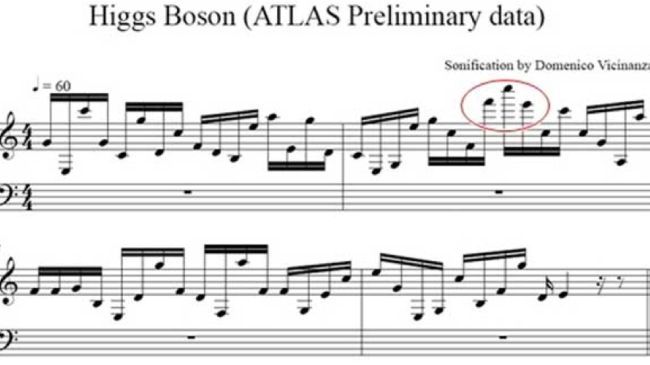
    “In the music the peak of high notes in the second bar is the appearance of the Higgs-like particle (about 3.5 seconds into the recording). The researchers created two versions, one as a piano solo, and the second with added bass, percussion, marimba and xylophone.”

    Take a listen on a SoundCloud:

    “The discovery of the Higgs-like particle is a major step forward in our knowledge of the world around us,

  • Call for Participation: EuroNOG – an international meeting

    Call for Participation: EuroNOG – an international meeting

    Want to broaden your knowledge in ICT topics and meet other people working in this field? Take part in the second EuroNOG meeting on September 10th-11th in Budapest, Hungary.

    EuroNOG – an international meeting of experts responsible for the design, maintenance and development of ICT networks. The first edition was held on the 30th September 2011 in Krakow (Poland). The second edition will be organized on September 10th-11th, 2012 in Budapest (Hungary). Subsequent meetings are going to be held annually in various cities in Europe. Our main goal is to build a platform to exchange experience between the operators, ISPs and companies responsible for network implementation.

    National borders are becoming blurred, and increasing international cooperation is a key element of the Internet development. At the same time, due to various technical and economic conditions, in each of the European countries the development of networks diverged in a different way. Therefore it is difficult to compare and easily transfer ready-made solutions from one country to another – just look at the networks in Scandinavian countries compared with countries from Southern Europe– different solutions, architectures and equipment. It is best for us to exchange experience and learn from best practices used by local players on the European market.

    What sets us apart from the RIPE, TERENA and other IX meetings?

    Certainly, our conference is not academic, we do not want to focus only on the theoretical backgrounds of the IP world. We want to provide the greatest number of good practices and presentations including deployment case studies. Our point of view resembles NANOG, as we are looking at Europe through the prism of a global network, treating each country as a state – strong co-operation but also territorial autonomy. The EuroNOG conference will be a vendor-independent meeting place for experts.

    For Australian Science readers the organisers have prepared special discount code “as_10”. People registrating with this code will get 10% discount.

    Detailed information: Date: 10-11 September 2012

    Location: RamadaPlaza Hotel, Budapest (Hungary)

    Registration: http://registration.euronog.eu

    Conference website: http://euronog.eu

    If you have any questions, please contact: Emilia Staszczak

    EuroNOG main organizer mail: emilia.staszczak@euronog.eu