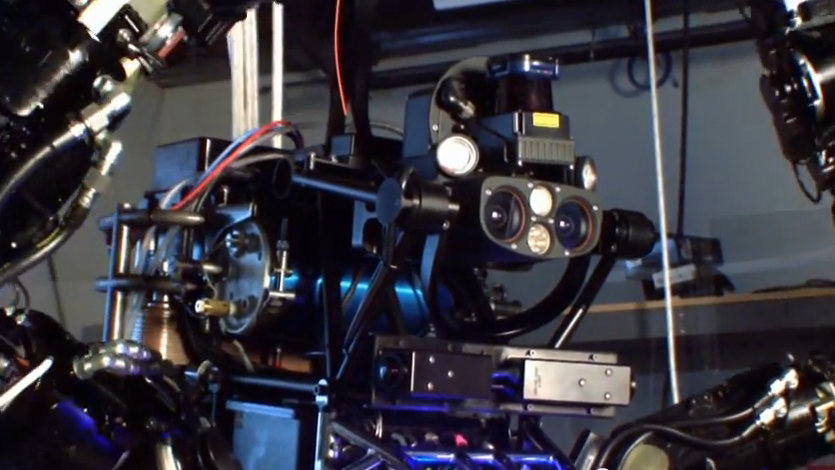
Building a robots for snow removal seemed like a good business idea to founders of Avidbots company. However it has soon proved itself to be an idea difficult to be effectively implemented. After conducting a market research at this company, results have shown that it will need a lot of effort to break through and reach the customers of this specific market. Furthermore, snow removal market was already too much segmented into distinctive sub-markets such as driveway, parking, street snow removal market etc. Not to mention the sensibility of the demand towards whether conditions and the amount of snow which may vary from year to year. (more…)
Category: Technology
-
How Mature is Your Cyber Security Model?
In the previous articles, we’ve been discussing cyber security throughout different angles and perspectives, but we’ve never talked about its maturity model and how it’s important in the modern world. First of all, we should define what the term cyber security means. As it is known, security represents a process of maintaining an acceptable level of risk. So, does that mean that, by the same definition, cyber security is a process of maintaining an acceptable level of cyber risk? Basically, that’s exactly what it does. In this article, we will try to define a cyber security maturity model, explain approaches to cyber operations and introduce some maturity levels. Well, let’s start with our story.
Introduction
At the beginning, we should try to explain why maturity is so important in terms of security or even cyber security. Also, we believe, at this stage, it’s not completely clear what we mean by maturity or its model. So, what do you think a maturity could represent in terms of cyber security? When we say something is mature, what we mean by that? In this case, a cyber security model has a certain level of maturity if it can obtain a high level of its operations in terms of its human recourses, processes and technology. Well, if we wish a high level of maturity of any cyber system, we need it being capable to provide highly controlled and reliable processes, get driven by highly skilled and motivated people and supported with the cutting-edge technology.
Further, what we could mention is that this is not the fact in the real world. In the reality, a lot of enterprises suffer some difficulties and they are not able to obtain a competitive level of cyber maturity. In fact, the reason for that is the world’s lobber market is facing up some sort of crisis if it comes to cyber professionals, so only small percentage of cyber systems can say for themselves that they are mature. Experts believe this gap can be covered only within few decades.
So, what are the challenges that we face up today? Firstly, a modern world has a lack of capable cyber professionals and, consequently, if we do not have experts to manage their tasks, our working process cannot be covered appropriately as well. In other words, developed countries have an advantage if we talk about modern technology, but if there are not enough competitive people to use those technological solutions and to maintain processes through them, the problem must get obvious. The reason why we suffer a cyber skills shortage is that a cyber security career is highly challenging and quite difficult and requires a lot of investment and hard work in order to get ready to contribute on the market.
The Best Approaches to Cyber Operations
As it is known, traditional approaches to Cyber Operations are proving to be inadequate against today’s increasingly sophisticated cyber threats. Too often, governments and businesses find themselves one step behind attackers, reacting to rather than anticipating each new threat. It is obvious that a new approach to Cyber Operations is required, one that is proactive, dynamic, adaptive, and recognizes that cyber security occurs within a cyber ecosystem of multiple, interdependent actors who also are potential partners in combating cyber threats.
That new approach to Cyber Operations builds on principles and practices of other communities to create a response lifecycle that integrates four operational functions:
(1) Anticipation. Understanding existing vulnerabilities and emerging threats to develop proactive contingency plans for responding in network time—seconds and minutes—to a cyber event.
(2) Awareness. Implementing automated systems and processes to provide a complete, accurate, real-time understanding of the health and status of networks.
(3) Action. Initiating response plans to anomalies and attacks by coordinating activities to achieve a unified, dynamic network defence that minimizes the impact and facilitates rapid recovery.
(4) After-Action. Determining what happened, who did it, how they did it, and incorporating the lessons learned to create future plans and responses that are adaptive.It is critical that organisations develop these essential functions to improve operational effectiveness. Once organisations have internally matured, they can more deeply collaborate externally with others in the cyber ecosystem.
What Do We Mean by Maturity Level?
Let’s start with the maturity levels in the cyber security. Each of the maturity levels in the cyber model have been assigned a name indicative of the types of threats and activities being addressed at the level.
The first level is labelled “Security Aware
-

A Dynamic Encryption – The Facts
As we live in a very dynamic and constantly changing world, where new information and ideas are appearing and disappearing at really fast pace, we should notice that data protection and critical information security play a crucial role in maintaining our everyday’s lives. For that reason, invoking the technique of dynamic encryption could be strategically important in this digital time. In this article we should attempt to provide the answers to the following questions. What is critical information? Are we going more intelligent? Why the concept of dynamic encryption matters? What could be the future of modern cyber security? Well, let’s begin.
What is Critical Information?
In security practice, it is very important to define critical information as an information or data that is strategically or vitally important for some information or communication system operations. The term of critical information is strongly connected to the concept of critical infrastructure. In reality, critical infrastructure relies on critical information. What is critical infrastructure for real? Well, it’s every infrastructure that strategically means for some nation or country. For instance, here, we could include power plants, airports, telecommunication systems, the government’s departments, information or cyber infrastructure, transportation systems and so on. In other words, everything that plays a vital role in everyday’s life of the country and its people.
We would try to explain that critical information better? At this stage, it can appear as unclear what it could represent. Firstly, it’s very significant to understand how modern technical and information systems work, because they are the best indicators of critical infrastructure trends. As it is known from nowadays engineering and computer science experience, the operation of technical systems greatly depends on computers and digital information transmission. For example, in recent power plant systems there are the computers that maintain communication and information flow within the sub-systems and that are responsible for the production of electricity. If someone would cut off the signal or try to disturb it, it would cause a great damage to the power plant functioning. For that reason, we see that information transfer as critical or vital for the operation of critical infrastructure system such as, in this case, that power plant.
Let us summarise this part of the article. Critical information is every information transfer within digital or cyber part of some critical systems on which that system depends. The lack of communication or data exchange inside the system can cause damage or even catastrophical consequences to critical infrastructure and do harm to entire nation.
Are we going more intelligent?
The answer to this question is yes. Modern security systems are going very intelligent. The concept of intelligence-driven security systems is gaining popularity nowadays. Well, it’s not only up to popularity, but rather to a quite good practical results it can offer. Let’s start explaining these.
Today’s security systems relies on intelligence. By definition, intelligence is an information with some analysis applied. In the past, an information was the one which followed operations. The modern trend requires security service to produce some intelligence which will be capable to lead the operation. How these matters in the world of cyber security? Well, try to imagine a cyber system which depends on intelligence. That cyber system can be some computer set or an entire network. As it is known, computer systems are led by the set of rules or instructions. That set is better known as an algorithm. If we attempt to apply the concept of intelligence-driven security, we would notice that we have a system which is, in this case, an algorithm that is capable to adapt to or follow the information. As we know, the previous cyber systems had the algorithm leading the information, but today the set of rules is the one which is led by intelligence.
We will explain in the coming parts of the article how these can affect the future of cyber security. But, in total, yes. We are getting more intelligent.
Why Dynamic Encryption Matters?
As we see, the modern world is a very dynamic place. We are going very digital and the information are getting a normal part of our lives. Everything changes very fast and sometimes it’s quite challenging to follow all those changes. If our world is going dynamic, the logical question should be as follows: “Do we need the protection that will go dynamic as well?
-
Satellite Hacking: A Closer Look to the Sky
Satellites are vital to sustaining the current balance in the global economy, society, and advanced militaries. As such, states are increasingly recognizing satellites as critical infrastructure. They provide a significant role in climate and natural disaster monitoring, communication, early warning systems, global broadcasting, meteorology, navigation, precision strikes, reconnaissance, remote sensing, surveillance, and the advancement of science and understanding.
1. Introduction
A significant disruption to satellite services would have damaging effects on society. Limiting the information given might be due to security concerns or a lack of attention span on the part of its intended audience; however oversimplification gives the impression that an individual hacker sitting at their computer can access satellites with a few simple keystrokes. Conversely, it might lead others to dismiss the topic as fiction when there is a credible threat that needs to be addressed.
This article investigates key questions relevant to the topic of satellite hacking: What is the structure of satellite systems? What does it mean to ‘hack’ a satellite? And why are these systems vulnerable to hacking?
2. The Structure of Satellite Systems
In order to better address satellite hacking, it is first necessary to have an understanding of how satellites work. Most satellite systems conform to a broad template, which consists of the satellite itself, a tracking, telemetry, and control (TT&C) ground station, communications ground stations, and uplinks and downlinks between these ground stations and the satellite.
The satellite itself is composed of a bus and payload. The payload is usually a collection of electronic devices specific to that satellite’s desired function. For example, a surveillance satellite would contain imaging equipment, while the payload for a communications satellite would include transponders for receiving and relaying signals such as telephone or television. The bus is the platform housing the payload; this includes equipment for manoeuvring, power, thermal regulation, and command and control.
TT&C ground stations “perform tracking and control functions to ensure that satellites remain in the proper orbit and to monitor their performance. Communications ground stations process imagery, voice, or other data and provide, in many cases, a link to ground-based terrestrial network interconnections
-

Artificial Gravity Swimming Pool
The idea of taking a space holiday, once the stuff of science fiction, is no longer a far flung fantasy. The major hurdle to a viable commercial space holiday venture has long been the provision of a reusable launch system. Until an orbital launch system similar to the reusability of aircraft is developed, we will remain earthbound. Efforts to overcome this barrier have been underway since an international conference on the subject in Bremmen, Germany in 1997. More recently, the Space X reusable launch system development program has progressed to the active test program stage.
The possibilities that these advances have opened in terms of space leisure are tantalizing. The imaginations of science enthusiasts and future astronomical entrepreneurs have been running wild with the possibilities. One of the most intriguing concepts is that of an artificial gravity swimming pool.
Space hotels will, inevitably, offer their guests recreational options to occupy themselves and enhance the experience beyond the novelty of simply being in space. And, just as no self-respecting hotel on earth would open for business without a swimming pool, it seems likely that their orbiting counterparts will find a way to do the same. This, however, does present a challenge. The zero gravity environment of space means that water acts a whole lot differently to the way it does on earth. As explained in detail in a new paper published on Space Future , a space swimming pool presents some very interesting physics dilemmas.
The lack of gravity means that, without some sort of artificial compensator, you’re not going to get a pool that resembles anything you’re used to. For a layman’s explanation of the limitations of zero gravity swimming (along with a cool experiment), click onto this article:
For space patrons to dive into anything resembling the familiar is going to require the addition of artificial gravity. How can man recreate gravity? With the benefit of inertia. An example of inertia creating a gravitational effect is when spinning a bucket overhead. For this reason most space habitat designs use a rotating design. While a tethered section of a hotel with a rotating pool is a possibility, the length of tether required to create the required gee force is not practical. More feasible is a rotating, cylindrical pool design. This could be accomplished in three ways:
(1) The entire hotel rotates around the same axis as the pool
(2) The pool is the only rotating part of the hotel requiring an arm attaching it to the hotel
(3) The pool is housed in a portion of the hotel that rotates around the same axis as the pool
The Space Future article details each of the functional and logistical requirements that the above options entail, with a focus on the third option. These include the water management system, which will have to include an efficient anti-sloshing system to prevent excessive oscillation of the pool’s structure. Several options are offered, but most of them would provide some level of inconvenience for swimmers. Water retention is another issue, with a greater likelihood of leakage in an artificial gravity pool than in a 1-g earth bound pool. Water purification systems would also be necessary, although there would be no need to modify the processes used on earth, as microbes and moulds act the same in both environments.
The logistical requirements of the rotating joint that connects the rotating pool room with the stationary main part of the complex are considered in some detail. Limitations identified include the transport limitations of launch vehicles. The largest single assembly component would be the rotating joint, while the transport of the water to fill the pool would take the most time. A volume of 600 cubic meters would require approximately 100 dedicated flights to transport to it’s space hotel destination.
In order for the concept of a space hotel, along with it’s artificial gravity water sports facilities, to ever venture beyond the design stage, a number of safety concerns must be addressed. Prime among them is eliminating the problems associated with orbital debris. A collision would smash the man-made structure to oblivion. To combat this danger, a range of methods have been developed to remove debris from the atmosphere. The most viable – and cost effective – method involves the use of ground-based lasers.
The only physical health problems associated with short term space travel involve solar flares, which are brief bursts of intense energy emanating from the Sun. On earth we are protected from the effects of solar radiation by the earth’s atmosphere and magnetic field. In space, however, there is no such protection. To protect against solar flares, storm shelters will have to be built.
The effects of the living in a weightless environment on the human body present further challenges. In the absence of gravity, our key balancing mechanism, the vestibulary system, would be disoriented, making it difficult to distinguish direction and orientation. This had led to what is known as Space Adaptation Syndrome, a condition which results in feelings of nausea and vomiting. In space there is no force to keep our internal body fluids – water, blood and other liquids – flowing to the bottom of the body. This results in too much fluid migrating to the head, with resultant sinus problems along with puffy faces and shrunken legs. More seriously, because the heart no longer needs to pump blood around the body, the heart shrinks. Muscles, no longer required to work against gravity, also atrophy, as do bones.
The article also discusses the feasibility of such a project from a commercial vantage point. Potential costs are analyzed and from them some basic end user costings are proposed. The end analysis concludes that an artificial gravity swimming pool as part of a space hotel complex would be an attractive commercial proposition to at least some hotel operators.
The major limiting factor to any commercial space development remains the cost of launching. While such costs are still prohibitive for the majority of consumers, robust competition is already taking shape which will, inevitably, drive prices down. Once this occurs, the article makes it clear, space hotels with inbuilt water sports facilities will surely follow.
-
What is Big Data, and why it matters?
In the past few years you probably read everywhere about the “new big thing ” – the big data promise, opportunities, challenges, etc. What is actually big data? A new concept, a social media buzzword, or maybe something else? The first mention of “big data
-

The Future of Solar Power Technologies in Australia
As the cost of fossil fuels go up around the world, and the impact of climate change becoming increasingly avoidable, people are looking for reliable, alternative sources of energy. With the favourable climate in Australia, it’s a no-brainer that solar power is the way forward. But gone are the days of inefficient panels at extraordinary prices – and Australian researchers are leading the way.
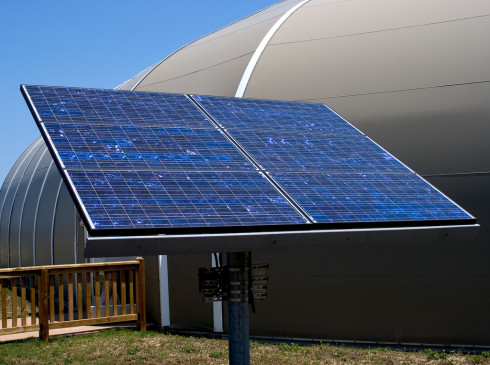
Cutting edge solar panels About solar power
Solar power is fast becoming the top choice for families and businesses looking to cut down on their electricity bills and minimise their impact on climate change. In the past, the cost was inhibiting, but as technology improves and costs come down – it is being rapidly implemented.
Solar power can be used for a variety of purposes – some use it in combination with standard energy while others use it as a sole energy provider. It can also be used as a standalone technology to heat a hot water system, which can be a popular choice as heating can account for up to 70 per cent of energy bills.
In the past, solar energy could only be captured and used at that same moment – but now, solar systems are able to store energy during the day and then release it at night, making it a much more practical choice.
Australia and solar power
Australia is a global leader in solar power technology. There are nearly 17,000 people employed full-time in the solar industry and there are now over one million solar power systems installed across the country, compared to just 8,000 in 2007.
A 2013 report into Australia’s solar energy future found that despite Australia being the world’s sunniest continent, solar energy was largely underutilised. However, it also found that the price of solar power systems were dropping so fast that in some areas the cost was almost competitive with standard electricity companies, and the cost of installation was less than a quarter of the price a decade ago. (Flannery, T., 2013)

Solar station in White Cliffs Current solar power technology
Solar power technology has come a long way even in just the past few years, and Australians now have numerous options when it comes to choosing a solar energy solution. Options include manufacturers, materials used and the technology within the solar panels, too.
There are three main types of solar panels – polycrystalline, monocrystalline and amorphous modules. There are numerous others, but these are the most popular choices due to efficiency, cost and aesthetics. For example, monocrystalline tend to be the most efficient, but are not as cheap as polycrystalline is cheaper to produce. In the past few years, though, the cost of monocrystalline panels have dropped – making them the most popular choice for Australians.
Future of solar power
It is estimated that by 2050, solar power will account for 29 per cent of Australia’s energy needs. (Flannery, T., 2013) To achieve this, technology needs to be continually advancing – and new solar technology is already on its way, with Australia leading the research. Here are a few key developments happening in Australia right now.
Printable Solar Panels
Australian researchers have recently developed a method of producing printable solar cells. A printer that has been installed at CSIRO is capable of printing solar cells in A3 size – the largest ever created. Although they are not ready to be released to the public, the technology – and low cost of production – is a good sign of things to come.
Solar Power Farms
In August 2013, the University of Queensland announced that it had would be leading a $450 million solar farm project in western New South Wales. A joint initiative between the Federal Government and AGL Energy, the project will see the building of the southern hemisphere’s largest solar power plant, bringing renewable energy into many more homes. (UQ, 2013)
The building of solar farms has the benefit of providing mass solar power and minimising our carbon footprint, without the need for individual homes to have solar panels installed.
Mildura Solar Concentration Power Station
The largest step towards increasing solar energy in the state of Victoria is due to be completed in 2017. The Mildura Solar Concentration Power Station, which will become Australia’s largest concentrated solar panel plant on completion, is set to be a 100MW power plant and currently has 40 CPV dishes already feeding power into the region’s grid. The technology to be used at the power station was originally developed by Boeing to be used on satellites.
The company who owns the power station, Silex, has said that the cost of energy could drop to 10c/kWh ($100/MWh) within a few years using their innovative technology, which – if achieved – is a significant decrease. (Renew Economy, 2013)
Conclusion
Considering the huge increase in uptake of solar energy in just the past five years, solar is clearly the way forward for Australia’s energy supplies. Not only is it cost-effective but it utilises a resource that is naturally available to us and doesn’t require Earth-destroying mining or drilling to get to it.
Although solar power is already a relatively significant part of energy in Australia, technology still has a long way to come before it is considered our primary source.
Images by Kenny Louie, Jimmy Joe and Richard Gifford.
-

Going ‘Smart’: Interactive Home Technologies
The home is undergoing its greatest advancements since the 1950s. Instead of new appliances like the fridge and vacuum cleaner, we’re getting interactive technologies that are making our homes ‘smart’.
These developments are geared towards making our lives easier, cheaper (through lowered bills), and less hands-on. The following are just some of the technologies that will help homes look radically different in coming years.
Smart Thermostats
The smart thermostat is more than just managing the temperature of your home through a smartphone or tablet app. The Nest is the premiere example of what this technology can already achieve for your home today.
What really sets the Nest apart is that it’s a ‘learning’ thermostat. It takes notice of your schedule, knowing exactly when you leave your home, the typical temperatures you prefer at a given time of day and yes, it also allows you to tweak the settings from its app.
So how does it work? Nest uses a combination of activity and humidity sensors, current weather conditions (by checking forecasts through Wi-Fi), and temperature sensors to adjust the thermostat. As it begins to learn from your activity over time, you will need to be less involved in manually setting the temperature.

Image credit: Nest Superior Lock Technology
The so-called ‘smart lock’ discards the need for codes or keys, allowing you to manage your entire home security system from your computer, smartphone or tablet. This nifty technological advancement keeps your home safe – even when you’re not around.
In addition to the ability to lock and open your doors securely without the need for the traditional key, you also get log records to see who’s gone in and out, temporary access for short-term visitors, as well as the superior security from encryption (similar to what’s used in the banking industry). It beats the danger of someone copying a lost key or cracking entry codes.
You can also check everything is as it should be long after you’ve left the home (saving you the trip back to double check), you can let in guests at the touch of a button without having to be there, and should anything untoward happen the app instantly notifies you. It all works through an app you install on your smartphone and the inbuilt Bluetooth technology that allows the lock to synch with your device. It’s all password protected, meaning only you can manage your system.

Image credit: August One of the reasons these smart locks are so promising is that they ‘retrofit’ into existing single-cylinder deadbolts. This means you still have the capability of using the traditional key, as well as saving you the hassle of dismantling your entire doorway system from top to bottom in order to use the device.
We’ve already seeing a wave of start-ups and established brands offering devices that boast similar feature sets, and we only expect the demand to rise as the technology is further perfected. Don’t be surprised to see keys demoted to a museum display and out of day-to-day use.
Touch-Screen Fridge
The modern-day fridge has long offered more than just the ability to keep your foods chilled. The icemaker was an early break-through, but now the fridge is really starting to move into the 21st century.
The fridge has essentially become the manager of your entire diet. It keeps tabs on which foods are about to expire and even gives you recipe ideas based on what you’ve got in your fridge. When something’s about to run out (milk, for example) you get a warning so you can stock up early.

Image credit: Make it mine In terms of technology, it’s all based on Radio Frequency Identification (RFID). These days, many common food products have an RFID tag that can be automatically read by your smart fridge. Your stock list will be updated based on data gathered from a remote database of products. If you happen to buy something that doesn’t have a tag (such as organic food from a farmer’s market), then all you need to do is enter it manually.
Sleep Sensors
Ever wondered why you wake up groggy in the morning and can’t seem to get a good night’s rest? Perhaps the new wave sleep sensor technology can help. And if you’re already rolling your eyes, it does more than just track movement like some of the low-end apps for your smartphone.
This is a step up from anything we’ve seen on the market before. You don’t need to wear uncomfortable sensors on your body – all you need to do is attach it to your mattress. The device will then track your heart rate, breather, movement, and snoring. Not only that, it keeps track of your ambient environment. Your responses to noise and temperature will be tracked.

Image credit: Digital trends The device will then give suggestions as to why you’re struggling to get decent shuteye. Perhaps it’s that your room gets a little too hot at night? Or maybe your partner tends to start snoring in the middle of the night, disturbing your sleep. You can then make adjustments to your sleeping habits, which can make all the difference in the amount of actual rest you get.
-
Grand Engineering Challenge – Providing Energy from Fusion
Fusion is a process by which two light nuclei join together (fuse) to form a heavier nucleus, and in doing so release considerable energy. Achieving this requires high temperatures such as those that drive the fusion processes which power the sun and stars. The aim of fusion research and development is to create conditions on earth which are sufficient to generate many fusion reactions which may be harnessed to produce large amounts of thermal and/or electrical power.
Introduction
Although fusion energy and its potential for unlimited energy production with minimal environmental impacts is attractive for meeting our future energy needs, the high cost and uncertainty of developing a commercial fusion power technology and the uncertainty of it competitiveness with other existing and future power technologies do not present a clear direction for our current involvement in fusion energy research and development.
Measuring the economic and environmental value of fusion energy is complex as such a measurement cannot be carried out simply by understanding the capability and characteristics of fusion technology alone without the connection of this technology to all aspects of the economy both national and international. All energy supply technologies, from existing fossil fuel to renewable technologies, must be considered and depletable resources such as fossil and uranium fuels must be tracked.
The cost of the technology, more specifically the cost of electricity from this technology, relative to other existing and future power technologies will be the primary factor in fusion’s ability to penetrate the energy market. Also the time in which the fusion power technology is available is important if the benefit is to be captured in the near future and if environmental impacts such as global climate change dictate early action in controlling greenhouse gas emissions.
What is fusion?
Fusion is the energy source for the sun. To be sure, producing power from fusion here on Earth is much more challenging than in the sun. There, enormous heat and gravitational pressure compress the nuclei of certain atoms into heavier nuclei, releasing energy. Earthbound reactors cannot achieve the high pressures of the sun’s interior.
Deuterium is a relatively uncommon form of hydrogen, but water — each molecule comprising two atoms of hydrogen and one atom of oxygen — is abundant enough to make deuterium supplies essentially unlimited. Oceans could meet the world’s current energy needs for literally billions of years.
Tritium, on the other hand, is radioactive and is extremely scarce in nature. That’s where lithium comes in.Can we control a fusion reaction?
Human-engineered fusion has already been demonstrated on a small scale. The challenges facing the engineering community are to find ways to scale up the fusion process to commercial proportions, in an efficient, economical, and environmentally benign way.
While other approaches to fusion are being studied, the most advanced involves using magnetic forces to hold the fusion ingredients together. ITER will use this magnetic confinement method in a device known as a tokamak, where the fuels are injected into and confined in a vacuum chamber and heated to temperatures exceeding 100 million degrees. Under those conditions the fusion fuels become a gas-like form of electrically charge matter known as a plasma.
What are the barriers to making fusion reactors work?
For one thing, materials will be needed that can withstand the assaults from products of the fusion reaction. Deuterium-fusion reactions produce helium, which can provide some of the energy to keep the plasma heated. But the main source of energy to be extracted from the reaction comes from neutrons, which are also produced in the fusion reaction.
Not only will the neutrons deposit energy in the blanket material, but their impact will convert atoms in the wall and blanket into radioactive forms. Materials will be needed that can extract heat effectively while surviving the neutron-induced structural weakening for extended periods of time.
Building full-scale fusion-generating facilities will require engineering advances to meet all of these challenges, including better superconducting magnets and advanced vacuum systems. The European Union and Japan are designing the International Fusion Materials Irradiation Facility, where possible materials for fusion plant purposes will be developed and tested.
Will fusion energy be safe?
From a safety standpoint, it poses no risk of a runaway nuclear reaction — it is so difficult to get the fusion reaction going in the first place that it can be quickly stopped by eliminating the injection of fuel. And after engineers learn how to control the first generation of fusion plasmas, from deuterium and tritium fuels, advanced second- or third-generation fuels could reduce radioactivity by orders of magnitude.
The good news is that the first round of challenges are clearly defined, and motivations for meeting them are strong, as fusion fuels offer the irresistible combination of abundant supply with minimum environmental consequences.
Conclusion
In support of a large-scale expansion of humankind into the solar system, fusion system performance at the levels discussed would provide numerous advantages fur space propulsion arid power: (1) Higher specific power values than projected for nuclear or solar electric propulsion, (2) Higher, more flexible specific impulses than chemical, solar, or fission systems can achieve, allowing efficient long-range transportation, and (4) Net-energy-producing fuel, available throughout the solar system. The symbiosis between large-scale space development and fusion energy seems clear, and the key question is not if each will be developed but whether the time frames are consistent.
References:
[1] K.R. Schultz, Why Fusion?, IEEE CONTROL SYSTEMS MAGAZINE, 2006
[2] Sándor Zoletnik, Modeling and Simulation Needs in Fusion Energy Research (Invited Paper), IEEE, 2007
[3] Son H. Kim, John Clarke & Jae Edmonds, THE ECONOMIC VALUE OF FUSION ENERGY, IEEE, 1996 -

Discovering Cyber Forensics
Cyber forensics is a new and fast growing field that involves carefully collecting and examining electronic evidence that not only assesses the damage to a computer as a result of an electronic attack, but also to recover lost information from such a system to prosecute a criminal. With the growing importance of computer security today and the seriousness of cyber crime, it is important for computer professionals to understand the technology that is used in cyber forensics.
Introduction
Cyber forensics involves the preservation, identification, extraction, documentation and interpretation of computer data.
The three main steps in any computer forensic investigation are acquiring, authenticating, and analyzing of the data. Acquiring the data mainly involves creating a bit-by-bit copy of the hard drive. Authentication is the ensuring that the copy used to perform the investigation is an exact replica of the contents of the original hard drive. Analysis of the data is the most important part of the investigation since this is where incriminating evidence may be found.
Part of the analysis process is spent in the recovery of deleted files. The job of the investigator is to know where to find the remnants of these files and interpret the results. Any file data and file attributes found may yield valuable clues. If deleted data could not be recovered through the use of common forensic tools, more sensitive instruments can be used to extract the data.
Data recovery is only one aspect of the forensics investigation. Tracking the hacking activities within a compromised system is also important. With any system that is connected to the Internet, hacker attacks are as certain as death and taxes. It is impossible to completely defend against all attacks. As soon as a hacker successfully breaks into a computer system the hacker begins to leave a trail of clues and evidence that can be used to piece together what has been done and sometimes can even be used to follow a hacker home. Computer forensics can be employed on a compromised system to find out exactly how a hacker got into the system, which parts of the system were damaged or modified.
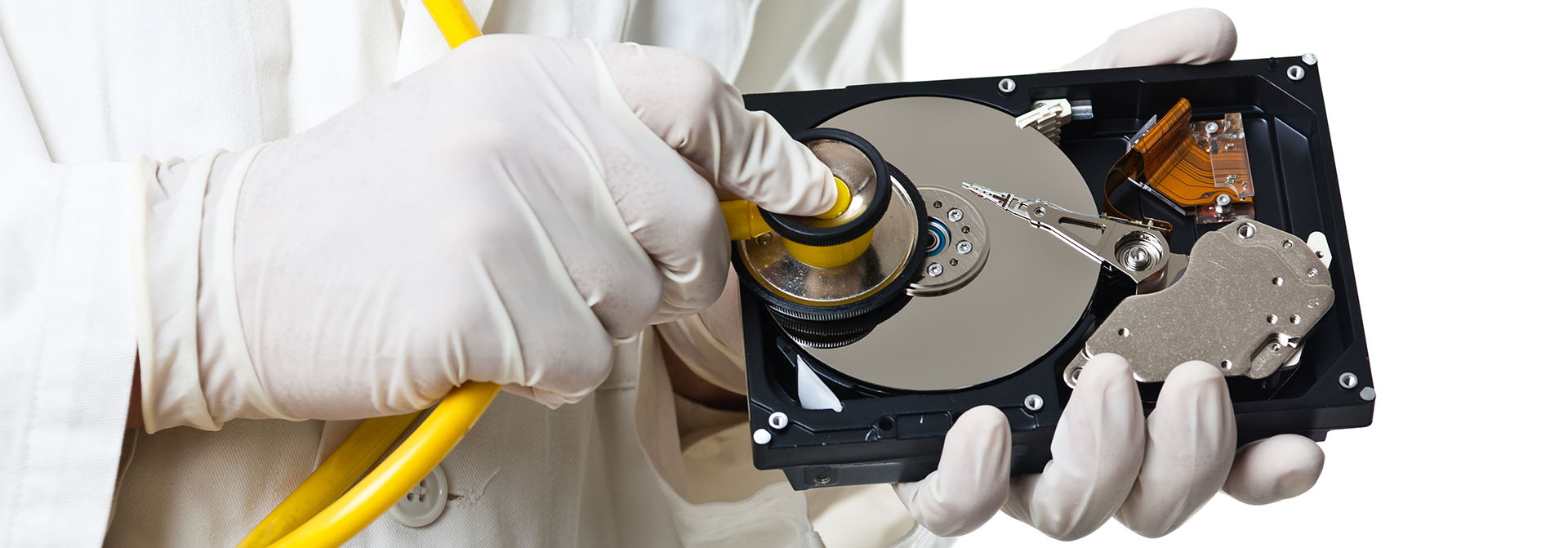
Image source: http://www.datasector.hr What is Cyber Forensics?
If you manage or administer information systems and networks, you should understand computer forensics. Forensics is the process of using scientific knowledge for collecting, analyzing, and presenting evidence to the courts. Forensics deals primarily with the recovery and analysis of latent evidence. Latent evidence can take many forms, from fingerprints left on a window to DNA evidence recovered from blood stains to the files on a hard drive.
Because computer forensics is a new discipline, there is little standardization and consistency across the courts and industry. As a result, it is not yet recognized as a formal “scientific
-

Advances in the Robotics Industry: DARPA Robotics Challenge Trials
Every year it seems a new movie comes out that tells a story of robots going out of control and taking over the world. In reality, some of the world’s brightest minds are developing robots and software to help assist humans in a range of important work, including surgery, bomb detection and natural disaster assistance.
The DARPA Robotics Challenge Trials were developed to help support and advance those who work with this technology.
About the trials
The DARPA Robotics Challenge (DRC) is run by the American Defense Advanced Research Project Agency, and winners are awarded a $2 million grant to go towards further development of their robotic technology.
The purpose of the DARPA Robotics Challenge is to promote the use of robotics in assisting humans with natural and manmade disasters; in particular, the use of robots to do things that humans cannot safely do themselves.
Entrants are put through a series of simulated disaster response scenarios such as driving a vehicle, cleaning up debris and cutting through a wall.
Unlike the majority of robots used currently, which work in a very methodical, predictable fashion – such as those in factories – robots that are designed to work in unpredictable situations and environments serve an entirely different, more complex purpose.
DARPA said that robots in the trials generally have the intellectual ability of a two year old child. Although they will still require human commands such as ‘clear up that rubble in front of you’, they can understand a range of commands and implement them.
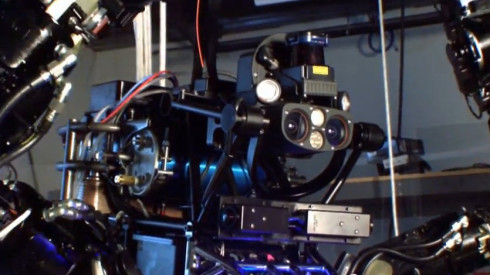
Photo by robots.net Categories of the trials
During the trials, there are seven different tasks that competitors have to complete. The complexity and variety of these tasks demonstrates just how advanced these robots are.
Vehicle
During the vehicle task, robots have to drive a vehicle around a pre-determined course that is lined with bollards and pylons and then get out of the vehicle and exit the scene at the end of the course.
Terrain
The terrain task requires robots to travel across three different terrains, which vary in difficulty and complexity. The terrains are made from a variety of blocks, which may shift during the competition.
Ladder
The third task has robots climbing a ladder that is secured at the base. The teams can choose to have either zero, one or two handrails on their course. They can also choose whether they want the ladder at a 60 or 75 degree angle.
Debris
The debris task is divided into three stages. First, the robot must lift and remove five pieces of debris, they will then lift and remove a further five pieces of debris; finally, they must exit through a doorway. The debris is made from a light material such as balsa wood. As long as the robot moves the debris out of its path, it is acceptable.
Door
There are three separate components of the door task. The robots must be able to open a push door, a pull door and a weighted pull door. The doors use a lever-style handle and have a 36
-

Offices Tech Tools That Will Transform Our Future
With technology expanding at incredibly rapid rates and businesses today under constant pressure to perform and keep up with the global economy, technological tools and appliances are reaching new levels of innovation.
From virtual keyboards and sci-fi inspired glasses, these amazing tools are something every office should have as we move into the technology driven future:
Virtual Laser Keyboards
Bulky office appliances are fast being done away with in today’s digital era and this virtual keyboard is set to revolutionise the way we use computers. It is entirely laser projected (by a small cube), meaning you can set yourself up practically anywhere and type. The keyboard can be connected via Bluetooth to any device, including iPads, iPhones and most other tablets, laptops and desktops.
Holographic Telecommuters
At the University of Arizona, researchers are working on technology that will be able to project holographic images, like those we remember from Star Wars. If the technology takes off, it will awaken a whole new world for “dial in
-

Grand Engineering Challenge – Economical Solar Energy
As a source of energy, nothing can be compared with the sun. Solar energy is so called renewable source of energy which means it has very vital and promising role on our whole civilization. Nowadays humans have to be very efficient and capable to use all these sources of renewable energy to harness our economical and social growth.
Introduction
At the moment, sun’s contribution to human energy needs is crucial. But, total solar energy market remains quite small. It covers below 1 % of total energy consumption, compared with roughly 85 % from oil, natural gas, and coal.
Those fossil fuels cannot remain the dominant sources of energy forever. For a long-term, sustainable energy source such as solar power offers an attractive alternative. Its availability far exceeds any conceivable future energy requirements. It is environmentally clean, and its energy transfer from the sun to the Earth is free of charge.
Many of the technologies to resolve these issues already exist. Dishes can concentrate the sun’s rays to heat fluids that drive engines and produce power which is a possible approach to solar electricity generation. Another popular method is direct production of electric current from captured sunlight.
The efficiency of solar energy technology
Energy consumption has been growing worldwide during the last decade. It is well known that growing population usually accelerates energy consumption. Nowadays, fossil fuels supply a huge percentage of the primary energy consumed worldwide. This fact is responsible for the global warming and climate change. On the other hand, energy is a key asset in the welfare of humankind and its development. It is also important to understand the definition of energy efficiency. In general, it is the need for rationalization and reduction of energy consumption and to which a set of actions contribute to improve its use.
Let’s return to solar energy issue. Today’s commercial solar cells normally convert sunlight into electricity with an efficiency of only 10 % to 20 %. To make solar economically competitive, engineers must find ways to improve the efficiency of the cells and to lower their manufacturing costs.
Basically, prospects for improving solar efficiency are promising. Current standard cells have a theoretical maximum efficiency of 31 % due to the electronic properties of the silicon material. But, new materials can evade that limit. Experimental cells have exceeded 40 % efficiency.
Can solar energy be more economical?
A key issue here is material purity. Current solar cell designs require high-purity, because impurities block the flow of electric charge. That problem would be avoided if charges had to travel only a short distance, through a thin layer of material.
Another interesting thing here is an application of renewable energy in building systems. Because of its energy-efficient technology and friendly environmental benefits, building combined cooling heating and power (BCHP) system is broadly identified as an alternative for the world to meet and solve energy-related problems and environmental issues. Solar energy has been applied to BCHP systems for its compromising environmental benefits and cost saving potentials.
Clean solar energy
The solar power satellites concept has been around late 1968. The method of transmitting power to the earth using microwaves from the small antenna on the satellite to a much larger area on the ground is known as rectenna. The concept has again become interesting due to increased energy demand and cost.
The space has several advantages over Earth for the collection of solar power. There is no air in the space, so satellites would receive somewhat more intense light unaffected by weather and day night cycle. This received amount of energy will be transformed in microwave energy and will be transmitted through the antenna previously place on satellite aimed at Earth.
The solar power satellite essentially consists of 3 parts: (1) a micro wave antenna on satellite aimed at earth, (2) a huge solar collector made up of solar cells, (3) an antenna occupying large are on the earth to collect the power disadvantages for lower orbits. Satellite power and obvious choice would be to look for an orbit which maximises the use of the power system on the night side on the Earth.
The storage of solar energy
Many technologies offer mass-storage opportunities. New materials could greatly improve the effectiveness of capacitors, superconducting magnets, or flyweels, all of which could provide convenient power storage in many applications.
Another possible solution to the storage problem would mimic the biological capture of sunshine by photosynthesis in plants. The plant’s way of using sunlight to produce food could be duplicated by people to produce fuel. Fuel cells have other advantages. They could be distributed widely, avoiding the vulnerabilities of centralized power generation.
Conclusion
One of the greatest engineering challenges nowadays is to improve solar cells, reduce their costs, and provide efficient ways to use their electricity to create storable fuel. If we resolve all this problems in the future a solar power will assert its superiority to fossil fuels as a sustainable motive force for civilization’s brilliant prosperity.
References:
[1] Aditya goel, Rishi P Jamdagni, N. K.Mishra, New Hope for Clean Energy through Exploring Space, IEEE, 2010.
[2] Dr. D. Biran, Prof. A. Braunstein, Solar Electrical Systems for Communication, IEEE, 1978.
[3] J. Galvão, S. Leitão, S. Malheiro, T. Gaio, Model of Decentralized Energy on Improving the Efficiency in Building Services, IEEE, 2010.
[4] Jiang-Jiang Wang, He Bai, You-Yin Jing, You-Yin Jing, Economic Analysis and Optimization Design of a Solar Combined Cooling Heating and Power System in Different Operation Strategies, IEEE, 2011. -

The Greatest Engineering Challenges for the Future
If there would be a way to see the future, we believe the engineering one would be extremely exciting. With the development of science and technology, the progress of the Human Kind is going on at very high rate. Almost every day of modern history is known as the beginning of some new and amazing discovery or even achievement. From that perspective, the future of engineering seems quite promising.
But, from today’s point of view, what would be the greatest engineering challenges for the future? By a committee of the National Academy of Engineering, the Grand Challenges for engineering would be:
Make solar energy economical
As everyone knows, the Sun is a source of energy in our Solar system. It out-powers anything that human technology could ever produce. Only a small amount of the Sun’s energy comes to the Earth. Amazingly, even that provides 10,000 times as much as all the commercial energy that humans use on the planet. Imagine what would be the possibilities of the commercial use of solar energy.
Provide energy from fusion
If you have any mobile device at home, its battery normally consists of the metallic element lithium. Theoretically, the lithium in that battery could supply your household electricity needs for 15 years. Imagine what else would be feasible if we could provide an energy form fusion.
Develop carbon sequestration methods
The fact is that the growth in emissions of carbon dioxide causes a global warming. That problem no longer can be ignored. Perhaps it can be buried deep underground or beneath the ocean.
Manage the nitrogen cycle
The human-induced changes in the global nitrogen cycle pose engineering challenges just as critical as coping with the environmental consequences of burning fossil fuels for energy.
Provide access to clean water
When Samuel T. Coleridge wrote “water, water, everywhere, nor any drop to drink,