Blog

  • Effects of a crude oil spill on ecology

    Effects of a crude oil spill on ecology

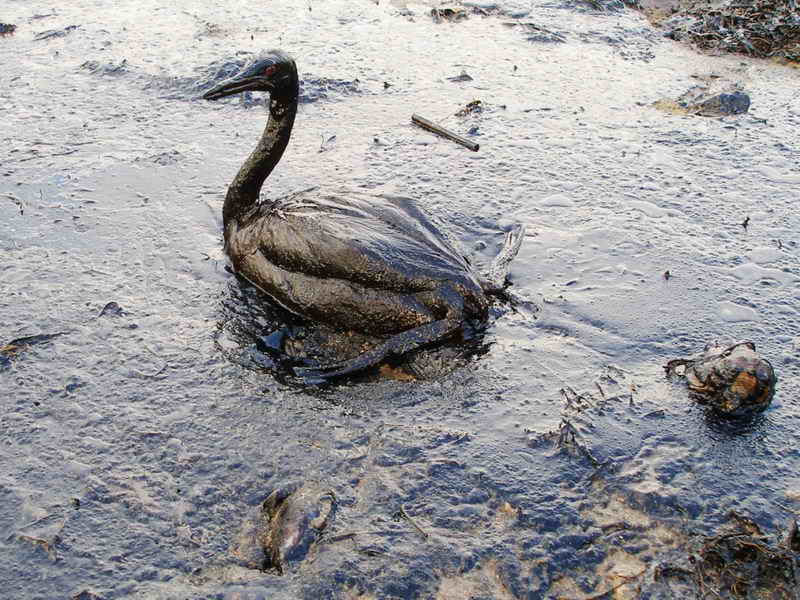
    Oil spill effects
    Image source: en.wikipedia.org

    When mistakes are made by people or when people are careless that way causing leaking of oil of an oil tanker into the ocean oil spills can occur. Oil spill can also happen if equipment breaks down.

    Basics:

    An oil spill is the release of a liquid petroleum hydrocarbon into the environment, especially marine areas, due to human activity, and is a form of pollution. The term is mostly used to describe marine oil spills, where oil is released into the ocean or coastal waters. Oil spills may be due to releases of crude oil from tankers, offshore platforms, drilling rigs and wells, as well as spills of refined petroleum products (such as gasoline, diesel) and their by-products, heavier fuels used by large ships such as bunker fuel, or the spill of any oily refuse or waste oil. Another significant route by which oil enters the marine environment is through natural oil seeps. [1]

    Oil wastes that enter the ocean come from many sources, some being accidental spills or leaks, and some being the results of chronic and careless habits in the use of oil and oil products. Most waste oil in the ocean consists of oily stormwater drainage from cities and farms, untreated waste disposal from factories and industrial facilities, and unregulated recreational boating.

    boat
    Image source: aussieloans.com.au

    It is estimated that approximately 706 million gallons of waste oil enter the ocean every year, with over half coming from land drainage and waste disposal; for example, from the improper disposal of used motor oil. Offshore drilling and production operations and spills or leaks from ships or tankers typically contribute less than 8 percent of the total. The remainder comes from routine maintenance of ships (nearly 20 percent), hydrocarbon particles from onshore air pollution (about 13 percent), and natural seepage from the seafloor (over 8 percent).Oil spills present the potential for enormous harm to deep ocean and coastal fishing and fisheries. The immediate effects of toxic and smothering oil waste may be mass mortality and contamination of fish and other food species, but long-term ecological effects may be worse. Oil waste poisons the sensitive marine and coastal organic substrate, interrupting the food chain on which fish and sea creatures depend, and on which their reproductive success is based. Commercial fishing enterprises may be affected permanently.Wildlife other than fish and sea creatures, including mammals, reptiles, amphibians, and birds that live in or near the ocean, are also poisoned by oil waste. [2]

    The most damaging oil spill ever to occur in North American waters was the Exxon Valdez accident of 1989. More than most tanker accidents, this one was very preventable. It was caused when an intoxicated captain gave temporary command of the supertanker to an unqualified and inexperienced subordinate, who quickly erred in his navigation and ran the ship aground onto a well known reef. The spilled oil affected about 1,200 mi (1,900 km) of shoreline of Prince William Sound and its vicinity, causing especially great ecological damages in tidal and subtidal habitats. Large numbers of sea mammals and birds were also affected in offshore waters. An estimated 5,000-10,000 sea otters (Enhydra lutris) were present in Prince William Sound, and at least 1,000 of these charismatic mammals were killed by oiling. About 36,000 dead seabirds of various species were collected from beaches and other places, but the actual number of killed birds was probably in the range of 100,000-300,000 birds. At least 153 bald eagles (Haliaeetus leucocephalus) died from poisoning when they scavenged the carcasses of oiled seabirds. [3]

    Petroleum hydrocarbons affect plants chemically and physically. Although plants sometime survive fouling by producing new leaves, even relatively non-toxic oils can stress or kill plants if oil physically prevents plant gas-exchange. Plant sensitivity to fouling varies among species and among populations within a species, age of the plant, and season of spill. Physical disturbance and compaction of vegetation and soil associated with clean-up activities following an oil spill appear to have detrimental effects on the US Gulf coast marshes. Other techniques, including the use of chemicals such as cleaners or bioremediation, may be necessary to address the problem. Clean-up may also be beneficial when timely removal prevents oil from migrating to more sensitive habitats. [4]

    In 1986 more than 8 million liters of crude oil spilled into a complex region of mangroves, seagrasses, and coral reefs just east of the Caribbean entrance to the Panama Canal. This was the largest recorded spill into coastal habitats in the tropical Americas. Many population of plants and animals in both oiled and unoiled sites had been studied previously, thereby providing an unprecedented measure of ecological variation before the spill. Documenation of the spread of oil and its biological begun immediately. Intertidal mangroves, algae, and associated invertebrates were covered by oil and died soon after. More surprisingly, there was also extensive mortality of shallow subtidal reef corals and infauna of seagrass beds. After 1.5 years only some organisms in areas exposed to the open sea have recovered. [5]

    To determine carefully the effects on the marine and estuarine benthos of Number 2 fuel oil spilled by the barge FLORIDA off West Falmouth, Massachusetts, we sampled for many months along an onshore-offshore gradient of pollution, and less intensively at unoiled sites. Analyses of hydrocarbons established that pollution was greatest and most persistent in the intertidal and subtidal zones of Wild Harbor River, less severe in degree and duration at stations farthest from shore. A variety of concurrent analyses showed that disturbance of the fauna was most severe and longest lasting at the most heavily oiled sites, and least severe but perceptible at lightly oiled stations. Patterns of disturbance were not related to granulometry of the sediments. Plants, ctustaceans, fish, and birds suffered both high mortality immediately after the spill, and physiological and behavioral abnormalities directly related to high concentrations of the fuel oil. Five years after the spill its effects on the biota were still detectable, and partly degraded #2 fuel oil was still present in the sediments in Wild Harbor River and estuary. [6]

    Conclusion:

    Oil spills causes great damage to eco system. The damage dometimes cannot even be repaired and that is what makes it worse. The unfortunate thing is that oil spill mostly happens because of people’s lack of care and attention.

    References:

    [1] http://en.wikipedia.org/wiki/Oil_spill
    [2] http://www.waterencyclopedia.com/Oc-Po/Oil-Spills-Impact-on-the-Ocean.html#b
    [3] http://science.jrank.org/pages/4849/Oil-Spills-Ecological-damages-oil-spills.html
    [4] ”The effects of oil spill and clean-up on dominant US Gulf coast marsh macrophytes: a review” by: S.R. Pezeshkia, M.W. Hesterb, Q. Linc, J.A. Nyman
    [5] ”Ecological Effects of a Major Oil Spill on Panamanian Coastal Marine Communities” by: J. B. C. Jackson, J. D. Cubit et.al.
    [6] ”Anatomy of an oil spill : long-term effects from the grounding of the barge Florida off West Falmouth, Massachusetts” by: Sanders, Howard L.; Grassle, J. Frederick; Hampson, George R.; Morse, Linda S.; Garner-Price, Susan; Jones, Carol C.


  • February Fourier Talks 2012: Harmonic Analysis and Applications

    February Fourier Talks 2012: Harmonic Analysis and Applications

    Each year the two-day February Fourier Talks, organized by the Norbert Wiener Center in the Department of Mathematics at the University of Maryland, College Park, feature a diverse array of invited talks in the field of Harmonic Analysis and Applications. A single track of presentations from top academic, industry, and government researchers is scheduled, allowing ample time for interaction with other participants.
    This year the FFT 2012 took place February 16 – 17, 2012, in the Department of Mathematics at the University of Maryland. Thursday evening featured a keynote address by Mario Livio, astrophysicist at the Space Telescope Science Institute and popular author of The Golden RatioSymmetry: From Human Perception to the Laws of Nature, and Is God a Mathematician? Thursday afternoon featured a talk in our Norbert Wiener Center Distinguished Lecturer Series by Gilbert Strang, of MIT, and Friday afternoon featured the Norbert Wiener Colloquium, by Peter Jones of Yale University.

    You can see video of these three lectures on the proceedings page.


    Source

  • Communicating Science and Connecting people: An interview with Bora Zivkovic, the Scientific American editor

    Communicating Science and Connecting people: An interview with Bora Zivkovic, the Scientific American editor

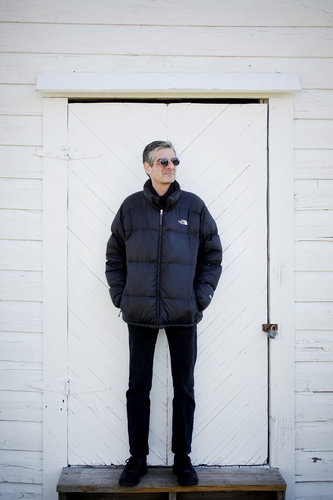
    Photo credits: Travis Dove, The New York Times

    Jean Cocteau once said that the art is science made clear, but what he didn’t indicate is that the science is creating different forms of art including the art of connecting people and communicating science. Bora Zivkovic is a unique, energetic, technologically-savvy, and multidisciplinary scientist, connector, and blogger. I met Bora twice: during the Science Online 2009 and Science Online 2010 conference in Raleigh NC, USA, and on many other occasions online, and he would always motivate me with incredible energy and passion for science and people. I would say that Bora is the real science connector, not only communicating and articulating science in its many forms but also connecting people, networks, and the scientific communities world wide.

    Born in Belgrade, former Yugoslavia (now Serbia), Bora’s studies of veterinary medicine were interrupted by the 1990s war in the Balkans, when he arrived in the USA. He went to graduate school at North Carolina State University where he studied how bird brains measure time of day (circadian rhythms) and time of year (photoperiodism). He started A Blog Around the Clock in 2004 as a prolific science blogger. He was the online Community Manager for the open access journal PLoS ONE. He is now the editor of Scientific American’s blog network, organizes the annual ScienceOnline conference, and is the editor of The Open Laboratory, an annual collection of the best writing from science blogs.

    He even interviewed me once, as a host of a series of interviews with various scientists, bloggers, educators, and journalists; and now is my turn to ask Bora questions I always wanted to ask him. I had an opportunity to interview him and here are the questions and perceptive, knowledgeable, and fun responses.

    Welcome to Australian Science! Recently the Science Online 2012, #scio12 has finished, and impressions are still spreading online among scientists, bloggers, journalists by sharing blog posts, videos, tweets. How do you feel after this year’s conference? Do you think that some things and social dynamics during this conference have changed comparing to previous conferences? I’ve seen familiar names tweeting online, people I met in person in 2009 and 2010. What has changed in the conference dynamics since then?

    We were very aware that growing a meeting by 50% can change the dynamics. We spent the entire year discussing strategies for ensuring that the intimate atmosphere of the meeting does not vanish. I wrote quite a lot about this in my long blog post after the event, especially about the need to make sure that so many new people feel welcome and instantly included into the community – including all the fun parts of the event. We completely changed the daily schedule in order to foster more informal interractions, we (really, Karyn Traphagen) designed the Cafe Room with this in mind, and we put quite a lot of effort in our communications on the blogs (including my post which was recommended to all to read beforehand), emails and social media, to prepare everybody for the unconference format and for the unique blend of serious discussions and crazy fun of ScienceOnline. For the most part, judging from what people are saying on their blogs and in our feedback forms, we were successful.

    You are an influential leader of the scientific blogging network community – I may say – worldwide. You have a lot of experience in the curating, managing, coordinating scientific events, scientific blogs, and online communities. You’ve been organizing the ScienceOnline conference for the past 6 years and also serve as series editor for The Open Laboratory anthology. You’ve worked as PLoS online community manager and now work in the role of Editor at the Scientific American blogs. What are the best strategies for building and maintaining blog network (out of scratch)?

    Building a blog network from scratch is actually a wonderful experience – one gets to turn one’s vision into reality. Of course, building a network hosted on the Scientific American website is not exactly “from scratch”, as the power of the brand (as well as the resources of the organization) almost guarantee visibility and traffic from the start. I spent several years as a blogger at Scienceblogs.com so I could experience (and later analyze) many aspects of the community building at that site – definitely insights I used in building the SA network later on. Also, just before Scientific American hired me, I was briefly involved in the planning and early organization of the PLoS Blogs and Scientopia blogs. In both of these, my voice was one of several. At Scientific American I was hired specifically to do this, so I had more freedom to build exactly the kind of network I wanted to.

    The key to the success of a network are its people. I had the luxury of having nine long months to think about it. I dug through the archives and started following literally thousands of science blogs. I used Twitter to ask for suggestions for even more blogs, especially blogs that do a particular ‘thing’, e.g,. writing about a particular topic in a particular style. What I was looking for was to assemble a team, rather than produce a “best of” list. I wanted a group of people who will be joy to work with, who will have fun communicating with each other in the backforums and in their blogs’ comment sections, and who will be naturally inclined to feel as members of a community, not just writers for hire.

    Of course, there are many people like that, so I also made sure that, within the limits of size and budget, I include quite a lot of diversity. When I say ‘diversity’ I am not talking just about coverage of as many topics and scientific disciplines as we can accommodate, but also diversity in voices. I wanted to have people on the network who can speak to different audiences, so I wanted to find people of varied backgrounds (geography, career path, age, gender, race/ethnicity, etc.), with different writing styles, writing at different “reading levels”, etc, in order to capture as broad and varied audience for the network as a whole. Inclusion of several bloggers who communicate well using media other than text was also very important to me, as art, illustration, video, music, photography, cartoons, animations, infographics and other ways of communicating science are just as important as good text writing for extending our reach and capture new audiences.

    It is also important to understand that a blog network is not static. Bloggers come and go. It is OK – life and career sometimes force people to take different directions, which may entail stopping blogging temporarily or permanently, or taking one’s blog in a completely different direction. It is important to make these transitions smoothly without disrupting the community and the overall tone of the network.

    As a science blogger and network community manager, what’s the one piece of advice you would give to people who want to curate and manage their local and national blogging communities? And what is your advice to bloggers, scholars, scientists, educators, and journalists who want to write for those scientific online networks? I have noticed that relationships, people and linking matter the most, I would like to hear your thoughts. 

    Analyze the audience. Make a vision that fits it (and expands to other audiences you want to attract). Then – ignore personal friendships! Both you and I have thousands of friends in the science blogging circles. Many of them are fantastic bloggers whose blogs I read religiously. Yet I did not invite them to the network because their blogging topics and styles do not fit the vision I have for the network. Some of the bloggers who ended up on the network happen to be my friends, but they are here because of what they do and how they do it. Other bloggers on the network I only first encountered when I started looking around really hard – I liked their writing, I started communicating with them online, perhaps “tested” them on the Guest Blog, and decided they were a good fit. I also deliberately chose a few bloggers who are veterans, people who have experience, reputation and authority, people who can help on a bad day when trolls are all over a bloggers’ comment section, or if there are uncertainties in the troops (and of course, they already have many regular readers who will follow their blogs onto the new hosting network). But most are relatively new or young bloggers who I thought had great talent and potential. Most have more than repaid my trust in them and grew into tremendous forces of high-quality blogging.

    You are an avid twitterer and I remember you used FriendFeed a lot. What social web tools are you using these days the most besides Twitter? What social media tools help you now for promoting the work and networking and which one do you use for professional development?

    Twitter is still my main social network where I spend the most time and do most of the interraction – this is where I discover stuff, promote stuff, and talk with people. I also post links to most of my bloggers’ posts on my Facebook and Google Plus pages. If interraction there happens, and it often does, I am happy to go there as well to reply, but these are definitely not taking up much of my time. I am only very superficially exploring the worlds of Tumblr, Posterous, Quora and Pinterest, am studiously avoiding LinkedIn (though I have a profile there – and probably everywhere), have pretty much abandoned FriendFeed since it was bought by Facebook, and use other sites (e.g., YouTube and Flickr) mainly as repositories rather than places where I expect to get much interraction. I see quite a lot of potential in Google Plus which, I sometimes joke, is how FriendFeed would look like if it continued developing.

    I have a feeling that the new social web paradigm in science, technology and education cannot sustain without building relationships and links. Do you find the human factor and the power of community prevailing over machines and tools we are using? Are we finally getting to the point that despite McLuhan’s “that tools will be using us

  • Do you want to contribute to the Australian Science knowledge community?

    (For those drawn here from blog posts and other social media sites, Australian Science is a science and technology magazine and blogging network covering new technologies, web, education, scientific materials, and other related fields.)

    Starting this March, we are expanding our blogging and network activities to cover more scientific fields. We already have contributors world wide, but we would like to expand our blogging network throughout Australia and elsewhere. We are seeking the world’s best science, technology and education bloggers with a multidisciplinary background to join us.

    Each contributor, as an author/blogger, will have complete freedom to write about whatever they want to related to science, technology and the internet, as often as they wish, in their own contributor space.  We will then provide editing and review services before online publication.  Our intention beside expanding the network is to put an emphasis on science networking and relationship-building throughout the Australian and world wide blogosphere in science and related subjects. We hope to raise the profile of Australia’s contribution to world wide research and technology topics.

    If you’re an author who likes to write and blog about science, web technologies and everything related – join us! If you already run a blog or website and think your articles would fit well into Australian Science, contact us to discuss syndication. In particular we are encouraging applications from writers covering subjects that are not yet well represented in Australian Science, such as robotics, neurology, space, cosmology, cybernetics, internet technologies, Earth science, mathematics, chemistry … or whatever you think!
    Additionally, if you represent an organization (both non-profit and for-profit) and you have something relevant to share with us such as an announcement, a conference call for participation, scientific findings or other topics related to our mission then feel free to contact us.

    Whether you will be a one-time guest blogger or a regular contributor to our pages, we would love to hear from you.  Please get in touch via our contact form.

    To keep right up-to-date with Australian Science activities, daily articles,  and initiatives, please follow us on Facebook, Twitter, or Google+.

  • Prime Minister’s Prizes for Science nomination announced

    Prime Minister’s Prizes for Science nomination announced

    The round for the 2012 Prime Minister’s Prizes for Science – Australia’s most prestigious science awards, is now open for nominations.The Prizes are a key element of the Government’s national initiative, the Inspiring Australia, to inspire a sense of national pride by the public recognition and reward of the achievements of Australians in the sciences. They honour Australians who have made significant contributions to building a more prosperous and progressive society through scientific achievements and science education.
    Science and innovation are key drivers to improve Australia’s living standards, health, productivity and environment. Prime Minister Julia Gillard and Minister for Tertiary Education, Skills, Science and Research Chris Evans encouraged the science community to nominate outstanding colleagues for the Prizes. The Prizes are part of the Australian Government’s Inspiring Australia strategy to foster greater scientific engagement. The Gillard Labor Government highly regards our scientific community for the tremendous contribution it makes to build a richer, fairer, cleaner and safer nation.

    In the past, the Prizes have been awarded for Australian discoveries such as wireless LAN technology and the bionic ear and for achievements in areas like immunology, quantum technology and astronomy. Past Prime Minister’s Prizes for Science recipients Elizabeth Blackburn AC and Brian Schmidt went on to be awarded Nobel Prizes in 2009 and 2011 respectively. Other past recipients include Ezio Rizzardo and David Solomon, John Shine AO, John O’Sullivan, Ian Frazer, Graeme Clark AC and the late Frank Fenner AC.

    The Prime Minister’s Prizes for Science relies on nominations from across many sectors of our nation, to reward and recognise the outstanding achievements of  Australian science researchers and science teachers. Closing Date for submissions is 27 April 2012, AEST 5.00 pm, and the Prizes will be announced later in the year.  Further information on the Prizes and online nominations are available by visiting science prizes.

    Further information on Eligibility Criteria and Selection Information can be found here, as well as the information on the Inspiring Australia Initiative.

  • About cybism, viractualism and Immersion into Noise

    About cybism, viractualism and Immersion into Noise

    Art world is in direct contact today with science and technology. But, net-art is in difficulty since web 2.o explosion and this thing represent a new artist situs. I discussed about the curent artist situs, about cybism and viractualism with Joseph Nechvatal.

    Joseph Nechvatal is a post-conceptual art digital artist and art theoretician who creates computer-assisted paintings and computer animations, often using custom-created computer viruses. Since 1986, Joseph Nechvatal has worked with ubiquitous electronic visual information, computers and computer-robotics. In 2002, he extended that artistic research into the field of viral artificial life through his collaboration with the programmer Stéphane Sikora. Books: Towards an Immersive Intelligence: Essays on the Work of Art in the Age of Computer Technology and Virtual Reality (1993-2006), published by Edgewise Press in 2009, Immersion Into Noise, Open Humanities Press/ 2011.

    Rares Iordache: What is the current artist situs in digital culture? The idea becomes a machine that makes the art, says Sol LeWitt. After some good years net-art seems to enter in obscurity. I have to say that web 2.0 introduce the relative in scheme, and user became (v)user. Everything is relative to clicking, to be online. What is the current trend in art world?

    Joseph Nechvatal: Cybism is a new sensibility emerging in art respecting the integration of certain aspects of science, technology and consciousness – a consciousness struggling to attend to the prevailing current spirit of our age. This cybistic zeitgeist I identify as being precisely a quality-of-life desire in which everything, everywhere, all at once is connected in a rhizomatic web of communication. Therefore, cybism is no longer content with the regurgitation of standardized repertoires. Rather I detect in art a fertile attraction towards the abstractions of advanced scientific discovery – discovery now stripped of its fundamentally reductive logical methodology. Moreover, cybism can be used to characterize a certain group of researchers and their understanding of where cultural space is developing today. Cybists reflect on system dynamics with a hybrid blending (cybridization) of the computational supplied virtual with the analog. Digitization is a key metaphor for the cybists only in the sense that it is the fundamental translating system today.

    *

    RI: I said recently that we live in a viral culture, were information spreads very fast and we are all affected by technology. The mechanism is similar to virus spreading, even rizhomatic. You connect your theory, viractualism, with this technological stage. In a recent essay you talk about viractualism in webbed digital age and viral viractualism.

    JN: My concept of viractuality-and viractualism-emerged out of the research I conducted in virtual reality at the Centre for Advanced Inquiry in the Interactive Arts, in the U.K.. It begins with the realization that every new technology disrupts previous rhythms of consciousness. I believe that the viractual realm is now the authentic domain of art in the information age. This concept is central to my work as an artist. The basis of the viractual conception is that virtual producing computer technology has become a significant means for making and understanding contemporary art and that this brings us as artists to a place where we find the emerging of the computed (the virtual) with the uncomputed corporeal (the actual). This merger-which tends to contradict some dominant techno clichés of our time-is what I call the ‘viractual’. The blending of computational virtual space with ordinary viewable space indicates the subsequent emergence of a new topological cognitive-vision of connection between the computed virtual and the uncomputed corporeal world.

    *

    RI: In your book, Immersion into Noise, you theorize the immersive noise consciousness, as a ontological unification stage of consciousness. It seems to be a phenomenological operation, which is based on self-re-programmablity. Everything is put on the brackets, and after that is re-composed at another level. What is immersive art-of-noise role in this ecuation?

    JN: Immersion Into Noise is intended as a conceptual handbook useful for the development of a personal-political-visionary art of noise. On a planet that is increasingly technologically linked and globally mediated, how might noises break and re-connect in distinctive and productive ways within practices located in the world of art and thought?  That is the question I explore in Immersion Into Noise.

    *

    RI: Can we talk about noise as a relevant element to re-symbolize, to stabilze the instability of an existent body/mint rupture?

    JN: The method used in Immersion Into Noise reflects on the insights noise suggests to the traditional western history of unified being (which indeed engenders extraordinarily deep conflicts). This entailed a review of past and present approaches towards ontology and an analysis of a variety of artistic maneuvers. I thus outlined an integrative noise philosophy by tracing the visual noise impetus through its various expressions so as to examine the immersive noise philosophy from all possible sides. Of principal interest was the discussion of subject/object cognition.

    *

    Interview published in Net-Art 2.II

    Towards an Immersive Intelligence: Essays on the Work of Art in the Age of Computer Technology and Virtual Reality (1993-2006) was published by Edgewise Press in 2009.

  • Earth’s City Lights

    Earth’s City Lights


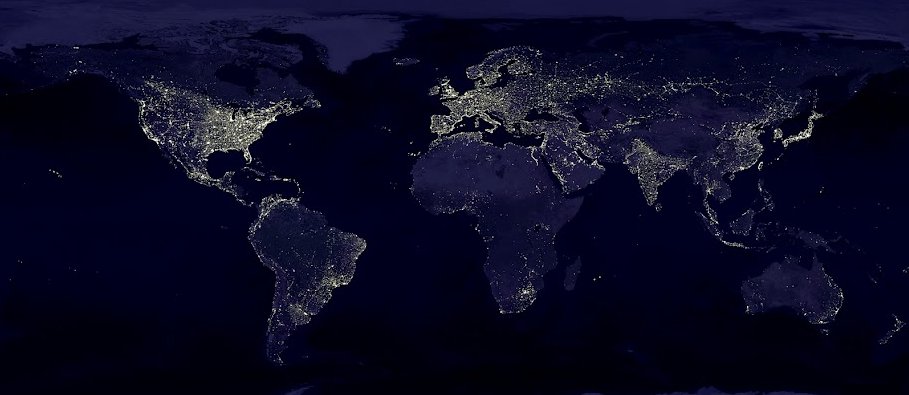
    This image of Earth’s city lights was created with data from the Defense Meteorological Satellite Program (DMSP) Operational Linescan System (OLS). Originally designed to view clouds by moonlight, the OLS is also used to map the locations of permanent lights on the Earth’s surface.

    The brightest areas of the Earth are the most urbanized, but not necessarily the most populated. (Compare western Europe with China and India.) Cities tend to grow along coastlines and transportation networks. Even without the underlying map, the outlines of many continents would still be visible. The United States interstate highway system appears as a lattice connecting the brighter dots of city centers. In Russia, the Trans-Siberian railroad is a thin line stretching from Moscow through the center of Asia to Vladivostok. The Nile River, from the Aswan Dam to the Mediterranean Sea, is another bright thread through an otherwise dark region.

    Even more than 100 years after the invention of the electric light, some regions remain thinly populated and unlit. Antarctica is entirely dark. The interior jungles of Africa and South America are mostly dark, but lights are beginning to appear there. Deserts in Africa, Arabia, Australia, Mongolia, and the United States are poorly lit as well (except along the coast), along with the boreal forests of Canada and Russia, and the great mountains of the Himalaya.

    Credit: Data courtesy Marc Imhoff of NASA GSFC and Christopher Elvidge of NOAA NGDC. Image by Craig Mayhew and Robert Simmon, NASA GSFC.
    http://www.nasa.gov/

    Cross -link to this post.

  • 60 second science: Engaging with the ‘Youtube Generation’

    60 second science: Engaging with the ‘Youtube Generation’

    Being one of the International judges for the International Science Video Competition, I have talked with Brendan O’Brien, the convenor of the  “60 second science“.

    What is “60 second science”?

    60SecondScience is a fully online International Video Competition sponsored by the Department of Education (DEECD-Innovation Next Practice Division), Victoria, Australia. Since its first iteration in 2008, it has enjoyed relentless growth and appeal, from 30 Victorian school-only participants, to over 300 science videos uploaded in 2011, with over 400 registering from 22 countries. The competition links directly to required student outcomes over a number of Science, Citizenship and ICT Standards. Valuable prizes are distributed each year, as determined by a prestigious International panel of judges.

    Why is this competition used in the Science Classrooms?

    Teachers can engage the interests and skills of students in a way that increases the depth of their science knowledge as they hone their multimedia skills.  Many of today’s students are an entrenched part of  the ‘youtube generation’ and are more than comfortable with being producers of content, whereas other generations were comfortable as mere consumers of content. Many students are ‘over’ powerpoint reports by the time they get to secondary settings, and are happy to shoot video on their smart-phones, flipcams, videocameras or webcams. The competition is easily adapted to be used not as an add-on, but as a contingent element within the existing science curriculum.

    How is this Video competition used in Secondary/High School Science Classrooms?

    A.     Teachers give students the option of making a 60second video to demonstrate their understanding of a topic or unit of work they are studying/researching in any area of the secondary science curriculum. Eg Newton’s Laws, The States of Matter, Forces, Chemistry. Projectile Motion, Chemical Bonding,  This is often done as an alternative to producing a written report, poster or Powerpoint.

    B.     Teachers give the student teams the option to make a ‘prac report video’ instead of the standard ‘written’ prac report. Eg. The Law of Reflection, Heart-rate, Thermal expansion, Displacement Reactions.
    In both cases, students are required to research deeply and collaborate closely to refine their understandings and condense their knowledge to convey their key concepts and ideas into the 60second format.

    Students work with their teacher on a particular science topic or integrated study unit, and produce a video over a number of weeks as part of their weekly routine. This can be used as a science teaching strategy at any grade level. E.g. Grade 1 Temperature, Grade 3 Capillary Action, Grade 4 Mould on Bread, Grade 6 Plant Osmosis

    How does “60 second science” support Multicultural Classrooms?

    The LOTE Divisions encourage entrants to use Languages Other Than English. Eg Chinese, French, Cantonese, Malayalam, Italian.

    There are several divisions such as International Open – for professional/amateur film-makers, teachers, non-school-age citizens, International primary / elementary school division, International secondary / high school division, International LOTE – with English sub-titles and spoken in a Language Other Than English; as well as the Best Cinematography – for videos in any Division, Best Animation – for videos in any Division and for the others. The ‘Winner’ gets a Certificate and an offer of free online video production and science workshop for teachers and students.

    You can register for the competition by 1 August 2012, and upload videos by 26 August 2012. Please find all other details and contact the convenor on the official web site.


  • Occupy the Internet! Why is so viral this expression?

    Occupy the Internet! Why is so viral this expression?

    The animated occupation soldiers are in front of the line and they espect the orders to occupy the internet. This is a real battle, because people took to the streets of internet to show their messages. Many websites are occupied, in fact there is a list with the websites currently being occupied. fffff.at published here a list with such websites and you can use the Occupy Service. You copy and paste a code into any HTML page to your website or to websites you control (or, attention, you can get control of).
    This thing represents the effect of some acts like SOPA, PIPA or ACTA. Occupation movement implies an “army

  • Google Gets an Upgrade

    Google Gets an Upgrade

    According to Google’s Grzegorz Czajkowski, many of the things people are involved in can be represented in the form of graph, including professional activities and personal relationships. The company was the first to use advanced graph analysis methods like PageRank to get more from the Web.

    Using graphs in a dynamic environment like the society brings a new angle to computational power and scalability. Google applies the Bulk Synchronous Parallel Model in its scalable graph analysis by using a framework known as Pregel. Pregel simplifies the calculation of PageRank and scales clusters autonomously without requiring programmers to intervene manually. As a result, the software engineers have more time to concentrate on the algorithm itself.

    The Basics of PageRank

    PageRank uses the random suffer model that assumes that Web surfers use a linear method when following links until their interests stop or they stop browsing. All the clicks away from the source documents reduce the PageRank. Of course, the actual process is more complex, with the typical value of PageRank dampening being 0.15.

    The entire Web can be treated like a graph, where all the pages and index-able files are regarded as ‘vertices’ and the links as ‘edges.’
    The vertices are usually initialised with starting values that, interestingly, make no major influence on the end-result. Pregel runs
    through a series of super-steps after initialisation by updating values and sending messages to other vertices.

    Related Frameworks and Methodologies

    According to Bill Slawski of SEO by the Sea, there’s more behind Pregel and Google, which uses other techniques like FlumeJava and Dremel. The company uses Pregel because it is ‘expressive’ and easy to program.
    Software engineers have designed their own frameworks and toolkits, especially when dealing with multi-step graph operations.

    Characteristics and Benefits of Dremel

    Nested data

    Interactive speed

    Trillion-record, multi-terabyte datasets

    Columnar processing and storage

    Aggregation tree architecture

    Spam analysis

    Analysing crawled Web documents

    In situ data access

    Crash reporting for Google Products

    OCR results from Google Books

    Tracking the install of Android Market apps

    Resource monitoring for work run in Google’s data centres

    Debugging map tiles on Google Maps

    FlumeJava

    Google users started using FlumeJava in May 2009. It is simpler than MapReduce and can control executor and optimizer if necessary. Hundreds of people use pipelines with processing capacities ranging from gigabytes to petabytes every month.
    Google employs interchangeable tools and systems that multiple groups can use.


    References:

    http://arxiv.org/abs/1201.2261
    http://arxiv.org/ftp/arxiv/papers/1201/1201.2261.pdf
    http://arxiv.org/a/petrovic_d_1

  • Google Science Fair 2012:  Everyone has a question. What’s yours?

    Google Science Fair 2012: Everyone has a question. What’s yours?


    On January 11th  2012, Google has launched the second annual international online Science Fair, a a unique opportunity for young people to engage with the scientific community at large. This competition encourages students  to be curious, ask questions, get engaged with their peers, and perform science experiments to answer those questions.  The organisers believe that science fairs help students to explore their vision and curiosity through science. It allows any student with an Internet connection and a Google account (more…)

  • Science Online 2012 – wrapping up the unconference

    Science Online 2012 – wrapping up the unconference

    The Science Online 2012 (un)conference on science and the Web is over. It gathered many bloggers, scientists, scholars, journalists world wide, actively engaging, interacting, writing, and communicating on science, social media, technology, art.  The conference offered numerous sessions throughout three days (January 19-21, 2012) on different topics ranging from Cybersecurity and Digital rights,  Dealing with Scientific Data to  Semantic Web, WikipediaTeaching Science Journalism in the Era of Social Media, Digital Preservation and Science Online. There were practical sessions on podcasts, creating eBooks, on art and science, and  Making Beautiful Maps.

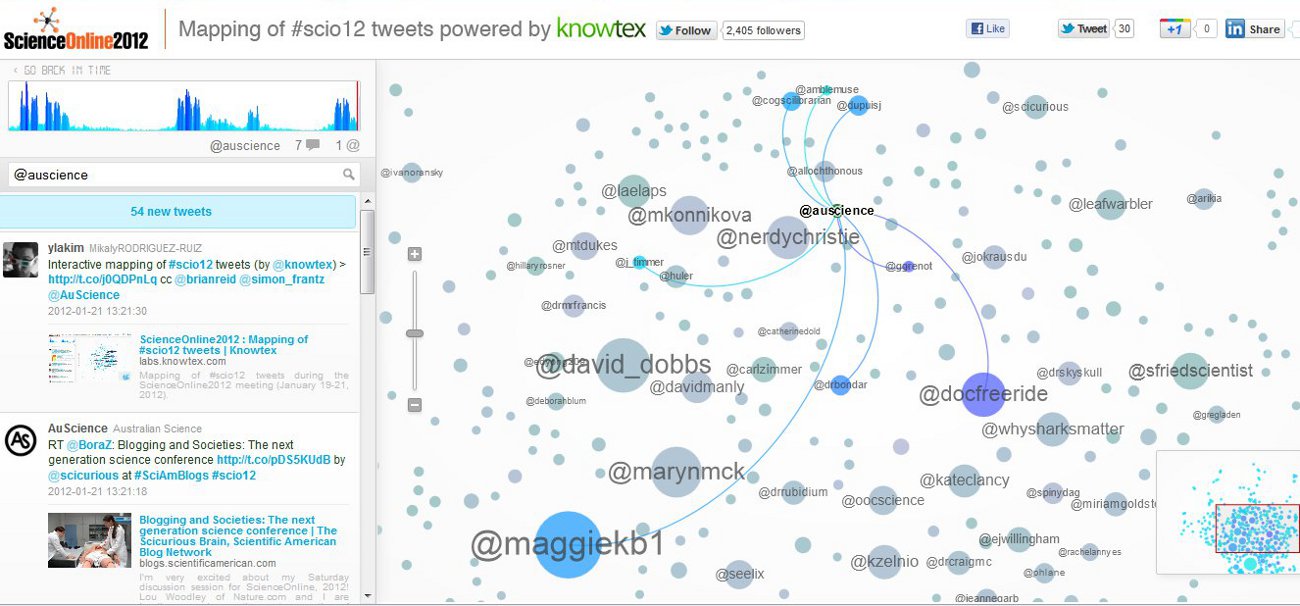
    We talked about the conference and the power of the scientific community earlier last week, and we have been live tweeting during the event, virtually, on our Twitter feed – Australian Science. You can check out the tweets with the hashtag  #scio12. There is a wonderful archive of scio12 tweets : 27,000+ total tweets from 12/26/ to 01/23.  Also, check out the beautiful visualisation of #scio12 tweets, an interactive map.

    There has been lot of interactions during the sessions and off sessions with the colleagues who were there, sharing impressions of the meeting and in between events as well as the reactions and blog posts on the conference. This is the list of all blog posts and articles about the conference, and media coverage.

    And Bora already announced ScienceOnline2013 planning wiki – Program Suggestions that already started to fill in with program sessions proposals.

    Selected interesting sources, videos and music mash-ups:

    #SciAmBlogs – the post-#scio12 blues

    Science Online 2012 #scio12 Photo/music mash-up

    Science Online 2012: Communicating with Images  (video)

    Science Online Youtube channel with #scio12 videos


  • Open access: Opening the Science

    Open access: Opening the Science

    Open access databases, archives, repositories are hopefully present, for almost a decade, in technology, education, science, and the iron gates systems are slowly behind us; we can say that the technology, science, and academia are striving to be more and more open.

    There is an international movement that uses the Internet to throw open the locked archives, libraries, online databases, information flow in general,  that once hid and restricted knowledge.

    One of the definitions of ‘open’ denotes ‘a piece of knowledge is open if you re free to use, reuse, and redistribute it.

  • ScienceOnline2012 – The power of the Scientific Community

    ScienceOnline2012 – The power of the Scientific Community


    I want to share some of my personal experiences from the past meetings of the Science online unconference as someone who have participated and attended the conference. I have attended Science Online twice: I have held a session on Open access e-resources in the networked world (2009) and held a workshop – Social Media for the Scientists (2010); interacted, being overwhelmed with positive energy, had wonderful conversations with  scientists, journalists, educators, bloggers, Web developers, and scholars.

    And it all started several years ago, thanks to the initiative and organization of Bora Zivkovic and Anton Zuiker, in Bora’s words:

    “…upon my return from a bloggercon of some kind, I was enthused by the atmosphere at the event and thought to myself how nice it would be to have something similar but with a focus on science. I posted my thoughts on the blog and received many enthusiastic comments and e-mails. But I did not really have a good concept or ideas how to actually make it happen.

    Enter Anton Zuiker. At one of our regular monthly blogger meetups which he organized at the time, Anton took me aside and suggested we work on this project together. It was do-able, he thought, if we did it smart.

    Several months later, the first conference became a reality.

    And people loved it and made sure we understood that this was not going to be a one-time event, but something we’ll have to organize every year. So we did.