Author: Editorial Board

  • Putting a value on environmental change

    Putting a value on environmental change

    The value of the global environment to human well-being, health and livelihoods fell by around US$20 trillion (A$21.5 trillion) a year between 1997 and 2011 due to loss of wetlands, coral reefs and tropical forests, a new study from a team of international researchers has found.

    The study, published in Global Environmental Change, found the total value of global ecosystem services in 2011 was US$124.8 trillion (A$134 trillion) a year, down from $US145 trillion a year in 1997. That compares to global GDP of just $US75.2 trillion in 2011.

    Global ecosystem services measure the value of ecological systems to human well-being, on top of the usual economic measures contained in gross domestic product (GDP) figures.

    “Nature is not just a pretty place. Nature is a large and important part of the real economy which adds to human well-being,

  • Investment in midwifery can save millions of lives of women and newborns

    Investment in midwifery can save millions of lives of women and newborns

    A report released today by UNFPA, the United Nations Population Fund together with the International Confederation of Midwives (ICM), WHO and partners reveals that major deficits in the midwifery workforce occur in 73 countries where these services are most desperately needed. The report recommends new strategies to address these deficits and save millions of lives of women and newborns.

    The 73 African, Asian and Latin American countries represented in the “State of the World’s Midwifery 2014: A Universal Pathway – A Woman’s Right to Health” suffer 96% of the global burden of maternal deaths, 91% of stillbirths and 93% of newborn deaths, but have only 42% of the world’s midwives, nurses and doctors. The report urges countries to invest in midwifery education and training to contribute to closing the glaring gaps that exist. Investments in midwifery education and training at agreed international standards can yield – as a study from Bangladesh shows – a 1,600% return on investment.

    “Midwives make enormous contributions to the health of mothers and newborns and the well-being of entire communities. Access to quality health care is a basic human right. Greater investment in midwifery is key to making this right a reality for women everywhere,” said Dr. Babatunde Osotimehin, UNFPA Executive Director.

    Midwives have a crucial role to play in the achievement of the Millennium Development Goals (MDGs) 4 (decrease child death) and 5 (increase maternal health). When educated to international standards and within a fully functional health system, they can provide about 90% of the essential care to women and newborns and can potentially reduce maternal and newborn deaths by two thirds. Despite a steady decline in maternal deaths in the 73 countries that are covered in the report – dropping yearly by 3% since 1990 – and newborn deaths – decreasing by 1.9% per year since 1990 – there is more these countries need to do to address the severe shortage of midwifery care.

    “Midwives are central to midwifery care and the lives of women and newborn babies. The report precedes the Lancet Special Series on Midwifery, which together with the report will provide the evidence to guide all policy-makers in their quest to end preventable maternal and newborn deaths,

  • What’s in the sheep genome? Wool see

    What’s in the sheep genome? Wool see

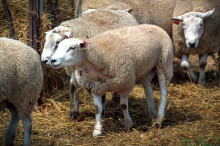
    After eight years of work, researchers have completed the first sequencing of the entire sheep genome.

    Scientists from CSIRO led an international research team to complete the sequencing, which could lead to more effective breeding strategies and new approaches to the management of sheep in Australia and around the world.

    With about 70m head of sheep in Australia and 1bn globally, the sequencing of the genome could have a massive impact for the rural economy given that sheep are a major source of meat, milk and wool products.

    “We investigated the completed genome to determine which genes are present in a process called gene annotation, which resulted in an advanced understanding of the genes involved in making sheep the unique animals that they are,

  • Stephen Hawking Reveals the Conditions That Could Lead to England’s Victory at The World Cup

    Stephen Hawking Reveals the Conditions That Could Lead to England’s Victory at The World Cup

    Speaking at the Savoy Hotel in London, physicist Stephen Hawking told a crowd: “Ever since the dawn of civilisation, people have not been content to see events as unconnected and inexplicable.

  • Supercritical solar – new frontier for power generation

    Supercritical solar – new frontier for power generation

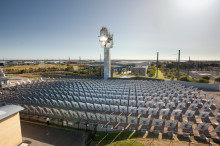
    CSIRO has used solar energy to generate hot and pressurised ‘supercritical’ steam, at the highest temperatures ever achieved in the world outside of fossil fuel sources.

    Supercritical steam is a breakthrough for solar energy and means that one day the sun could be used to drive the most advanced power stations in the world, currently only driven by coal or gas.

    CSIRO’s Energy Director, Dr Alex Wonhas said this milestone is a game-changer for the renewable energy industry.

    “It’s like breaking the sound barrier; this step change proves solar has the potential to compete with the peak performance capabilities of fossil fuel sources.

    “Instead of relying on burning fossil fuels to produce supercritical steam, this breakthrough demonstrates that the power plants of the future could instead be using the free, zero emission energy of the sun to achieve the same result,” Dr Wonhas said.

    Supercritical solar steam is water pressurised at enormous force and heated using solar radiation. Around 90 per cent of Australia’s electricity is generated using fossil fuel, but only a small number of power stations are based on the more advanced supercritical steam.

    The world record, set in May this year, was at a pressure of 23.5 megapascals (a measure of force per unit area), and temperatures up to 570 degrees Celsius. It is the combination of pressure and temperature demonstrated at scale that makes this such a breakthrough for solar power.

    Commercial solar thermal power plants around the world use subcritical steam, operating at similar temperatures but at lower pressure. If these plants were able to move to supercritical steam, it would increase the efficiency and help to lower the cost of solar electricity.

    The $9.7 million research program is supported by the Australian Renewable Energy Agency (ARENA) and is part of a broader collaboration with Abengoa Solar, the largest supplier of solar thermal electricity in the world. CSIRO and Abengoa Solar, with support from ARENA, are developing advanced solar storage to provide solar electricity at any time, day or night.

    The breakthrough was made at the CSIRO Energy Centre, Newcastle, home to Australia’s low emission and renewable energy research. The Centre includes two solar thermal test plants featuring more than 600 mirrors (heliostats) directed at two towers housing solar receivers and turbines.

    Although there is still work to be done before this technology is ready for commercialisation, ARENA CEO Ivor Frischknecht acknowledged the significant achievement saying it demonstrates the importance of research and development.

    “This breakthrough brings solar thermal energy a step closer to cost competitiveness with fossil fuel generated power,” said Mr Frischknecht.

    Source and image.

  • Media Education Futures: Coding skills not enough in an information society

    Media Education Futures: Coding skills not enough in an information society

    The need to learn coding as one of the civic skills needed in the 21st century has been particularly emphasised in the Western world.

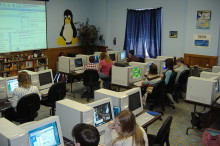
    Whether coding skills should be included in the new national core curriculum is debated in Finland where IT companies have even organised coding clubs for children. However, the conclusion of the international conference Media Education Futures held at the University of Tampere, Finland, on 7 – 9 May was that coding skills alone are not enough in information societies.

    The conference brought together over 140 researchers, teachers and policymakers in the field of media education from 26 countries. According to the research results presented at the conference, for young people to develop the critical awareness they increasingly need in information societies, technical skills must be supported by pedagogy. Critical thinking is also based on creativity which is one of the starting points for competitiveness in all fields, even in the creative industries. The conference also called for increasing multidisciplinary cooperation in order to develop research in this field.

    The Media Education Futures Conference was co-organised by the School of Education and School of Communication, Media and Theatre, University of Tampere where the Media Education Master Program has been established earlier.

    At the MEF conference, it was also announced that a new International Master’s Degree Programme in Media Education (120 ECTS) will start in 2015 at the University of Tampere. The essential focus will be centred on developing expertise in the discipline of media education formed by media literacy linked to information and communication technology in learning, media production and critical thinking in media saturated societies. The emphasis encourages the development of conceptual awareness and practical skills that are necessary for competence in reading and writing media, also creating suitable learning environments.

    Source and image.

  • Technology deal secures commercial RAFT agent supply

    Technology deal secures commercial RAFT agent supply

    The global polymer industry will soon have access to commercial quantities of RAFT agents, thanks to a new licensing arrangement between Boron Molecular and CSIRO.

    Under the terms of the agreement announced today, Boron Molecular will have the right to mass-manufacture and sell RAFT chain transfer agents globally for both R&D and commercial purposes.

    CSIRO’s reversible addition-fragmentation chain transfer (RAFT) technology is a powerful method that allows users to tailor polymer properties with unprecedented control.

    Up until now companies have only been able to access much smaller ‘research’ quantities of the agent for R&D evaluation.

    With access to commercial volumes of RAFT agents, it is expected that the uptake of the technology in key markets will accelerate significantly, including in the biomedical, personal care, agriculture and the industrial and chemical sectors.

    Boron Molecular Director Zoran Manev said the agreement would allow the company to expand its expertise and manufacturing base.

    “This agreement with CSIRO broadens the scope of our business and enables us to offer, for the first time, RAFT agents to the marketplace. We are pleased to be able to offer quality agents in larger quantities for both evaluation and commercial purposes, and at competitive prices.

    “We expect that this will expedite the development of new polymer-derived products for a variety of markets,

  • Australians respect science but don’t know the details

    Australians respect science but don’t know the details

    A new report has found Australians have extremely positive attitudes about science and technology, although they’re not always clear about the details.

    The report, entitled How do Australians engage with science? presents preliminary findings from a national survey, designed by Dr Suzette Searle from the Australian National Centre for the Public Awareness of Science.

    The survey found 80 per cent of participants agreed that science was very important to solving many of the problems facing us as a society today, yet only 49 per cent could name an Australian achievement in science and technology.

    “It’s clear that most Australians think scientific research makes an important contribution to the economy, that they see careers in science as good careers, that they engage with information about science and technology frequently and recognise science and technology as part of everyday life,

  • The Science of Dreams and Why We Have Nightmares

    The Science of Dreams and Why We Have Nightmares

    The psychology of our built-in nocturnal therapy.

    “The interpretation of dreams is the royal road to a knowledge of the unconscious activities of the mind,

  • Internet Research: Skills Your Students Should Have

    Internet Research: Skills Your Students Should Have

    Internet research is the practice of using Internet information, especially free information on the World Wide Web, in research. Internet research has had a profound impact on the way ideas are formed and knowledge is created. Common applications of Internet research include personal research on a particular subject, students doing research for academic projects and papers, and journalists and other writers researching stories.

    Research is a broad term. Here, it is used to mean “looking something up on the Web“. It includes any activity where a topic is identified, and an effort is made to actively gather information for the purpose of furthering understanding. It may include some post-collection analysis like a concern for quality or synthesis. It is:

    (1) focused and purposeful (so not recreational browsing),
    (2) uses internet information or internet-based resources (like internet discussion forums),
    (3) tends towards the immediate (drawing answers from information you can access without delay),
    (4) and tends to access information without a purchase price.

    Search tools

    The most popular search tools for finding information on the internet include Web search engines, meta search engines, Web directories, and specialty search services. A Web search engine uses software known as a Web crawler to follow the hyperlinks connecting the pages on the World Wide Web. A Meta search engine enables users to enter a search query once and it runs against multiple search engines simultaneously, creating a list of aggregated search results. A Web directory organizes subjects in a hierarchical fashion that lets users investigate the breadth of a specific topic and drill down to find relevant links and content. Specialty search tools enable users to find information that conventional search engines and meta search engines cannot access because the content is stored in databases.

    Website Authorship

    When using the Internet for research, countless websites appear for whatever search query is entered. Each of these sites has one or more authors or associated organisations. Who authored or sponsored a website is very important to the accuracy and reliability of the information presented on the website.

    Top Online Research Skills

    At the end, we should mention some top internet research skills every student would have:

    1. Check Your Sources

    The Skill: Evaluating information found in your sources on the basis of accuracy, validity, appropriateness for needs, importance, and social and cultural context.

    The Challenge: While most students know not to believe everything they read online, the majority also don’t take the time to fully evaluate their sources.

    The Solution: The following benchmarks for evaluating a website should be discussed: currency (Is the information up to date?), security (Does the site ask for too much personal information or prompt virus warnings?), scope (Is the information in-depth?), and authority (Does the information come from a trusted expert?).

    2. Ask Good Questions

    The Skills: Developing and refining search queries to get better research results.

    The Challenge: Students will enter a search term, say, “Abraham Lincoln,

  • The Animals of Chernobyl

    The Animals of Chernobyl

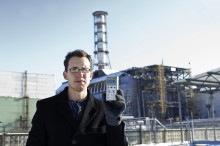
    In 1986, the number 4 reactor at the Chernobyl nuclear power plant blew up in what is now Ukraine.

    The site spewed a cloud of radioactive material that spread over much of Europe. The area immediately around Chernobyl received more than 400 times the radiation as Hiroshima and won’t be safely inhabitable for about 20,000 years. The government set up a 1,000 square mile exclusion zone around the site. While short visits to the zone are possible without too much danger, living there is not advisable. Cancer is a real problem for the couple hundred elderly stalwarts who still make the zone their home.

    Within the zone, nature has taken its own course, dismantling the Soviet-era brutalist tenements of the surrounding abandoned cities and turning it into what at first blush looks more and more like a prelapsarian Eden. The truth proves to be more complicated.

    Dr. Timothy Mousseau, a biologist from the University of South Carolina, has been examining the wildlife around Chernobyl for fifteen years. He’s discovered that the radiation that has been bathing the area for almost 30 years is changing nature. As you can see in the New York Times Op-Doc video above, birds are developing tumors, bugs have abnormal spots and spider webs seem much more freeform than usual.

    Source and image.

  • Cycling’s Tour de Campus

    Cycling’s Tour de Campus

    ANU will celebrate the use of pedal power to fund world-class cancer research on Tuesday with a special cycling Tour de Campus.

    The event will welcome cyclist Chris Gruar to the University as he completes one of the final legs of a 45,000km charity bike ride from England to Sydney.

    Chris, 28, left England in March 2012 on a world cycling expedition to raise money for the Association for International Cancer Research (AICR), which funds cancer research around the world, including at the ANU Research School of Biology.

    He aims to raise $30,000 for AICR in memory of his mother who died of cancer.

    ANU cyclists of all abilities are invited to join Chris on a special campus cycling tour at 10am on Tuesday, to be led by ANU cancer researcher Dr Richard Callaghan, followed by a morning tea to hear Chris talk about his journey.

    Dr Callaghan will also talk about his research into multidrug resistance in cancer chemotherapy treatments, which benefits from a grant of around $300,000 from AICR. The grant funds Dr Callaghan’s lab and three PhD students who are working on cancer research.

    To learn more about Chris’ journey visit cycling4cancer.wordpress.com.

    The tour starts at Sullivans Creek Bridge and finishes at the Wolfgang Buttress sculpture in the Research School of Biology Courtyard. Riders will be asked to make a gold coin donation.

    A detailed map of the cycling route can be found here.

    Source and image.

  • Plan to print 3D kidney tissue using Queensland expertise

    Plan to print 3D kidney tissue using Queensland expertise

    Minister for Science, Information Technology, Innovation and the Arts The Honourable Ian Walker announced the plan to print 3D kidney tissue using Queensland expertise.

    It sounds like something out of science fiction but a US company is planning to produce kidney tissues using a 3D printer. And there’s a Queensland connection.

    Minister for Science and Innovation Ian Walker said mini-kidney tissue would be printed by America’s 3D bio-printing company Organovo following an agreement signed with the University of Queensland’s commercialisation company UniQuest.

    It delivers on the government’s election promise to provide better front-line services to Queenslanders, especially in health.

    “Professor Melissa Little and her team made a huge leap forward in stem cell technology last year by growing a tiny kidney in a laboratory dish.”

    “One in three Australians are at risk of developing chronic kidney disease so what Professor Little accomplished last year was a hugely important development,” Mr Walker said.

    He said the breakthrough drew enormous international interest, including from the San Diego-based Organovo, because of the continuous research progress shown in Professor Little’s labs.

    “The agreement with Organovo, the world leader’s in 3D printing of human tissue, will optimise the cells created using Professor Little’s technology in order to print kidney tissues from them using 3D bioprinting.”

    Mr Walker said the Queensland Government provided $1 million to support Dr Little’s research and that now the state was seeing a great outcome.

    Prof Little, from the Institute of Molecular Bioscience at UQ, said 3D printing of fully functional mini-kidney tissue would enable better disease modelling and drug development.

    “The mini-kidney tissue can be used to test the safety of new drugs,” Prof Little said.

    “The sad fact is that most new drugs fail during testing in humans and a big reason for that is that they turn out to be toxic to kidneys.

    “If we can test a drug for kidney toxicity before applying it to human trials, we’ll save a lot of time, effort and money.”

    The ultimate goal of Professor Little’s research is to produce artificial kidneys for humans.

    “There’s more work to get to this point but when we do it will save lives and cut the cost of treating the disease.”

  • Soil contamination detector launched in the US

    Soil contamination detector launched in the US

    A handheld detector that reduces both the cost and time taken to remediate sites contaminated by petroleum products has been launched to market in the United States.

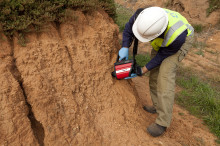
    The device, RemScan, developed by CSIRO and industry partner Ziltek, uses an infrared signal to directly measure petroleum hydrocarbons in the soil, giving a result in around 20 seconds.

    The ability to rapidly and accurately detect petroleum contamination on site, instead of the traditional method of sending soil samples to a laboratory and waiting days for results, will enable industry to close projects or declare sites contaminant free, faster and with a greater degree of certainty. The technology has the potential to save the environmental remediation industry millions of dollars per year in laboratory and project costs globally.

    Petroleum contamination as a result of leaking tanks or industrial spills is a widespread global issue with potentially serious impacts for human and environmental health.

    RemScan can be used as a quick in-field screening tool to characterise contaminated sites, to validate spill clean-up areas, or to monitor ongoing contaminant degradation. In remote areas, where laboratory analysis is either not available or is prohibitively expensive – RemScan demonstrates its true value as a quick, easy to use and accurate instrument. The technology is particularly useful for the quantitative measurement of diesel, oil and crude products in soil, but can also be used as a screening tool for lighter fuels such as jet fuel and gasoline.

    Successfully commercialised in Australia by Ziltek in 2012, RemScan is now in use by the mining industry and the oil and gas industries in various Australian states. CSIRO holds the recently accepted US patent for the RemScan method, which is licensed exclusively to Ziltek for global distribution.

    CSIRO has significant expertise in advanced analytical methods to detect contaminants in soils, including new portable spectroscopic techniques for the rapid identification of a variety of soil properties. RemScan is one example of the commercial application of this expertise.

    “CSIRO has enabled the use of infrared spectroscopy for rapid non-destructive prediction of contaminants in soils and soil properties using both near- and mid-infrared spectral regions,