Author: Editorial Board

  • Tech girls are superheroes

    Tech girls are superheroes

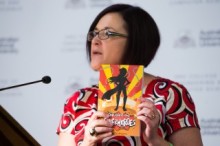
    A new campaign to encourage more girls to take up careers in computing and information technology has been launched at The Australian National University by the Minister Assisting the Prime Minister for Women, Senator the Hon Michaelia Cash.

    Female participation in IT stands at a mere 25 per cent, against 45 percent for other careers. The Tech Girls Are Superheroes campaign aims to inspire school girls to redress this balance and take up technology careers.

    “I was delighted to attend the launch, but more importantly I was heartened by the dedication that was shown towards greater gender equality in non-traditional roles such as IT,

  • Twitter tool shows a real-time view of our emotions

    Twitter tool shows a real-time view of our emotions

    Researchers from CSIRO have unveiled a new online tool developed for the Black Dog Institute, in partnership with Amazon Web Services, called ‘We Feel’ which analyses the words from millions of tweets to display a real-time view of our emotions.

    The tool will help researchers understand how our emotions fluctuate over time due to changes in social, economic and environmental factors such as weather, time of day, news of a natural disaster or announcements about the economy.

    We Feel will help Black Dog Institute’s researchers who are world leaders in the diagnosis; treatment and prevention of mood disorders such as depression, verify whether the large and fast sample of information coming from Twitter can accurately map our emotions. It is hoped the tool could help to understand how our collective mood changes, help monitor community mental health and predict where services needed to be assigned.

    “We Feel looks for up to 600 specific words in a stream of around 27 million tweets per day and maps them to a hierarchy of emotions which includes love, joy, surprise, anger, sadness and fear,

  • WHO’s first global report on antibiotic resistance reveals serious, worldwide threat to public health

    WHO’s first global report on antibiotic resistance reveals serious, worldwide threat to public health

    New WHO report provides the most comprehensive picture of antibiotic resistance to date, with data from 114 countries.

    A new report by WHO–its first to look at antimicrobial resistance, including antibiotic resistance, globally–reveals that this serious threat is no longer a prediction for the future, it is happening right now in every region of the world and has the potential to affect anyone, of any age, in any country. Antibiotic resistance–when bacteria change so antibiotics no longer work in people who need them to treat infections–is now a major threat to public health.

    “Without urgent, coordinated action by many stakeholders, the world is headed for a post-antibiotic era, in which common infections and minor injuries which have been treatable for decades can once again kill,

  • Teacher awarded international fellowship

    Teacher awarded international fellowship

    A Queensland high school teacher is swapping suburban Brisbane for New York City after winning the 2014 Smithsonian Cooper-Hewitt Fellowship valued at $19,000.

    Science, Information Technology, Innovation and the Art Minister Ian Walker congratulated Kelvin Grove State College teacher, Terry Deen, who would soon be heading off to one of the world’s most renowned design education departments at the Cooper-Hewitt National Design Museum.

    “This is a great opportunity for one of our brightest teachers to gain invaluable experience in delivering quality design education,” Mr Walker said.

    “If we want Queensland students to get the best education, then we need teachers such as Terry to learn from the best and bring that knowledge back to Queensland classrooms.

    “This delivers on a key commitment at the last election to improve frontline services for families, and supporting outstanding teachers to reach their potential means students will get the best.

    “The contribution this fellowship makes to the state is highlighted by the community design projects that students of previous fellows have completed.

    “They played a vital role in the Living City project where students presented responses to the Brisbane City Centre Master Plan in Brisbane’s King George Square, and the Sit-Art project where students produced 60 redesigned chairs for the Myer Centre eatery in Brisbane’s CBD.

    “Great teachers inspire students with their own love for their subjects and Terry is obviously in these ranks.”

    Mr Deen said he recognised the opportunity this fellowship provided for the growth of Queensland’s science, educational and cultural capabilities.

    “I’m proud to be named this year’s recipient of the Smithsonian Cooper-Hewitt Fellowship which will give me the opportunity to enhance my knowledge and provide leadership in design education by partnering with the Cooper-Hewitt National Design Museum in New York,” Mr Deen said.

    “The $19,000 awarded by the Queensland Government will make a real difference to improving my capacity to provide innovative learning experiences in the areas of technology and design, science, IT and engineering.”

    In 2013-14, funding up to $30,000 was made available by the Department of Science, Information Technology, Innovation and the Arts as part of the Queensland Government’s commitment to develop and maintain key strategic alliances through science and innovation.
  • Do Rappers Have a Bigger Vocabulary Than Shakespeare?: A Data Scientist Maps Out the Answer

    Do Rappers Have a Bigger Vocabulary Than Shakespeare?: A Data Scientist Maps Out the Answer

    Each year brings us a new list of words that, once hip or subcultural, signal their admission into the mainstream by entering the pages—print or online—of the Oxford English Dictionary or Merriam Webster’s.

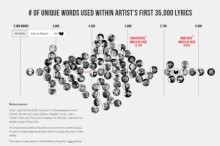
    Many of those come from the world of hip hop. The form is a veritable laboratory of linguistic innovation, spawning dozens of region-specific argots that mutate and evolve beyond the capacity of hip lexicographers to document. One data scientist, Matt Daniels, has made an interesting attempt, however, in a project he calls “The Largest Vocabulary in Hip Hop.

  • An Ode to What a Dog Can Teach Us About the Meaning of Life

    An Ode to What a Dog Can Teach Us About the Meaning of Life

    Mastering the art of unselfconscious presence.

    “Because of the dog’s joyfulness,

  • Ocean winds keep Australia dry, Antarctica cold

    Ocean winds keep Australia dry, Antarctica cold

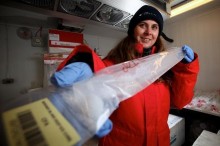
    New ANU-led research has explained why Antarctica is not warming as much as other continents, and why southern Australia is recording more droughts.

    Researchers have found rising levels of carbon dioxide in the atmosphere are strengthening the stormy Southern Ocean winds which deliver rain to southern Australia, but pushing them further south towards Antarctica.

    Lead researcher Nerilie Abram, from the ANU Research School of Earth Sciences, said the findings explained the mystery over why Antarctica was not warming as much as the Arctic, and why Australia faces more droughts.

    “With greenhouse warming, Antarctica is actually stealing more of Australia’s rainfall. It’s not good news – as greenhouse gases continue to rise we’ll get fewer storms chased up into Australia,

  • New antivirals closer with opening of new laboratory

    New antivirals closer with opening of new laboratory

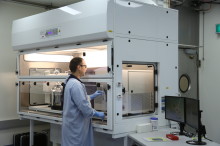
    Construction of the unique Biosecure Immunology Laboratory in Victoria will improve Australia’s ability to develop new treatments for highly infectious viruses such as influenza and Middle Eastern Respiratory Syndrome (MERS).

    CSIRO and Deakin University today officially open the new high-tech national research facility, located inside the Australian Animal Health Laboratory (AAHL) in Geelong.

    Dr Kurt Zuelke, director of AAHL, said the new laboratory will provide more specialised techniques, at a cellular level, to help pin-point the immune mechanisms employed by various animal hosts.

    “This new world-class facility will be critical in helping us develop new, more natural, therapeutics and boost our work in preventing, detecting and treating emerging infectious diseases,

  • 3D printed first to treat sleep apnoea

    3D printed first to treat sleep apnoea

    A new 3D printed device is set to end the suffering for thousands of sleep apnoea patients.

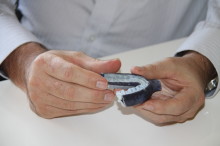
    Using a 3D scanner to map a patient’s mouth, CSIRO researchers and Australian dental company, Oventus, can now print a mouthpiece which prevents dangerous pauses in breath during sleep.

    Printed from titanium and coated with a medical grade plastic, the breakthrough mouthpiece is customised for each patient.

    The device has a ‘duckbill’ which extends from the mouth like a whistle and divides into two separate airways. It allows air to flow through to the back of the throat, avoiding obstructions from the nose, the back of the mouth and tongue.

    Sleep apnoea occurs when the air passage in the throat becomes blocked during sleep and causes people to stoping breathing. In severe cases, people can suffer hundreds of events per night.

    An estimated one million Australians suffer from the disorder, which can lead to high blood pressure, stroke, irregular heartbeats, heart attacks and diabetes. This number is expected to increase due to growing obesity levels and an aging population.

    The existing treatments for sleep apnoea include devices that push the lower jaw forward to open up the airway or in more severe cases; a face mask which creates a continuous flow of air can be used.

    CSIRO’s 3D printing expert, John Barnes, said the technology is opening new doors for treatments of a range of medical issues globally.

    “When Oventus came to CSIRO with this idea, we were really excited. The possibilities of 3D printing are endless and the fact that we can now design and print a completely customised mouthpiece for patients is revolutionary,

  • Most young people go online for fun – but they want to learn more

    Most young people go online for fun – but they want to learn more

    From a recent survey on media usage among 12-13 year olds in Ireland, it came as no surprise to learn that the most common reason cited for going online was fun.

    However, findings also revealed that school work scored just as highly, as did social networking. Not discounting social desirability implications of the ‘school work’ response, our findings confirmed what anecdotally we already knew – that this particular age group, officially too young for Facebook, is active on social networks and the internet and for a variety of reasons.

    The 12-13 Project carried out by the Irish Film Institute (IFI) between October 2012 and May 2013 aimed to map the media usage of this age group in Ireland through an online log to be completed over a finite number of days. The findings would then inform several media literacy interventions which would be delivered at a variety of locations around the country and draw on the expertise of local media providers and professionals. While the primary activity of IFI is cinema exhibition, at the same time we are conscious of the multi-platform ways in which young people today access film. The EU Kids Online Survey has provided invaluable information on young peoples’ online habits across Europe. We were hoping that our small project would tell us a little more about their use of other media such as film, TV and radio – and whethermedia literacy interventions would affect any behavioural or attitudinal change.

    Initially setting out to connect with out-of-school media experiences, including film watching, we wanted to find out the nature and duration of media-based activities, the skills and competencies, and the awareness and understanding of internet safety, amongst our target group. The age range was very particular, falling as it does in Ireland between primary and secondary school, when moving up involves a transition to a very different learning environment. Just as media literacy could provide a transactional learning space between in and out of school, perhaps it could ease transition to more demanding curricula or confidence-building in the challenging teen years. Equally we wanted to facilitate a positive engagement with media, when so much that is published about young people and media inclines towards the negative. This is not to underestimate the role that social networking may have played in serious or tragic occurrences, but rather to acknowledge its place in teen communications and to encourage discussion around issues of safety, with a view to promoting more discerning use.

    From the findings of our online survey, we could surmise that the average 12-13 year old in Ireland used a mobile phone mostly to send texts, would go online each day and they would watch TV. Over half could adjust privacy settings, half would play games. In other words, the young people who took part in our research were to varying degrees media-savvy. Our follow-up media interventions in radio, web design, TV and filmmaking, which also included input and discussion on online safety, offered further confirmation of the participants’ media skills but most significantly, their interest in furthering them. As with our previous research project, Film Focus, and the numerous other research projects that are being carried out by other bodies in this highly pertinent field, we get repeated confirmation that active media engagements excite and motivate young people and they want to learn more. Curriculum developers, youth work and education funders, please take note.

    Source and image.

  • How to Move People with Integrity?

    How to Move People with Integrity?

    “Like it or not, we’re all in sales right now… whether we’re teachers or art directors or in healthcare.

  • Future cyber threats to cause more headaches than ‘Heartbleed’

    Future cyber threats to cause more headaches than ‘Heartbleed’

    Tomorrow’s hackers could shut down infrastructure and defraud public sector of billions according to a new report released by CSIRO at CeBIT’s Cyber Security Conference.

    Many of these future attacks could take advantage of vulnerabilities similar to “Heartbleed

  • Kazakhstan’s first Earth observation satellite has been placed successfully in orbit

    Kazakhstan’s first Earth observation satellite has been placed successfully in orbit

    Recently we have received the news from Airbus Defence & Space saying that Kazakhstan’s first Earth observation satellite has been placed successfully in orbit. Now we would like to explain what it is all about.

    KazEOSat-1, the Republic of Kazakhstan’s first Earth observation satellite, was successfully launched in night on 29th of April 2014 on board a Vega launcher from the European Spaceport in Kourou (French Guiana). It is in a low Sun-synchronous orbit (about 700 km from Earth), from which it will operate, and has sent the first operational signal. KazEOSat-1 was built entirely by Airbus Defence and Space, the world’s second largest space company.

    “Bravo to the Arianespace teams, who are responsible for the marketing and commercial exploitation of the European launchers at the Guiana Space Centre, for this latest success!