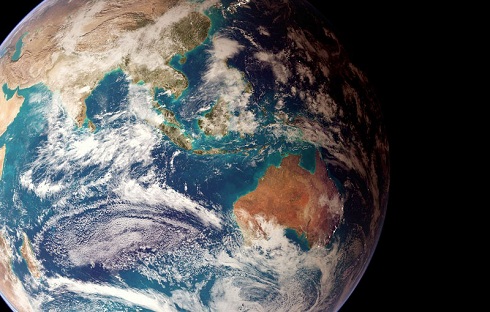
I spent the other day meandering through some of the exhibits on display at the American Museum of Natural History. I checked out the Global Kitchen, Butterflies, and Whales exhibits and the planetarium Journey to the Stars show. Between the whales and the planetarium, I had this thought: What animals will we see extinct during our lifetime?
Perhaps a morbid thought, but when you walk through an exhibit on whale hunting, see hundreds of taxidermic specimens, stroll through the hall of biodiversity, you start to think about the state of the natural world. And what a state it is in.
Whales
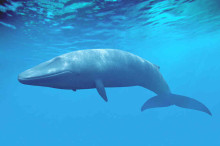
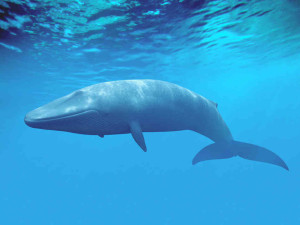
The sheer size of a blue whale (30 metres) or a sperm whale (15 metres) is astonishing. Several skeletons were on display at the museum. A model of the sperm whale’s heart – about the size of a Mini Cooper – serves as an indication as to what these giants of the sea need to survive from an anatomical and physiological perspective. What they don’t need to survive was evident in photos showing the flesh of whales sliced through from the blades of a shipping container’s propeller. The mysterious mass beach strandings, fishing nets, oil spills, the Japanese “Research
Back in 1748, William Cullen invented the first known refrigeration system at the University of Glasgow. Today, the refrigerator is something many take for granted. Probably, not much thought is given to refrigeration, but when you pause and think about it, heating and cooling has made one of the biggest contributions to modern society and in particular, society’s ability to be mobile.
In the early 20th century, (and way before that, too) people lived near towns and villages and went to the market daily for their meats, cheeses and eggs; items that would spoil if not eaten soon. A relationship developed with the shopkeepers – they conveyed knowledge of foodstuffs, preparation and daily news. Employment centers were located where food was available. Fast forward to 1916 when Clarence Saunders opened the first supermarket, Piggly Wiggly, and the world became both smaller and larger at the same time (however perishable food items were not available till the 1920s). With the ability to keep food cool (temperature food usually kept at), people could move further out and store food in their new Frigidaires. Grocery stores could open and cater to new villages and towns. So in a way, the frozen food section has contributed to suburban expansion. For better or for worse. Refrigeration meant workers and their families could move further outside the town limits. Cities grew; suburbs grew.
But it suddenly (within the past 5 or so years) seems hip to do things the old fashioned way. Although I don’t think city dwellers will return to storing their frozen food in ice houses down by the East River. At least I hope not. There is a sweep of urban agriculture casting its net across NYC and many other urban areas across the states. Even corporations like Whole Foods are getting in on the act. I grew up on a farm in the Midwest, one that raised soybeans, wheat, and hogs; so this rooftop farming seems more like industrial gardening to me. Spinach, lettuce, and other crudité are taking to the skies, bathing in hydroponics or even aeroponics in some setups.
I see the benefits – trying to encourage and promote fresh produce in diets, especially for children and in low-income areas; transportation costs are cut since fruits and vegetables don’t have to be trucked or flown in; and emissions, such as greenhouse gases are reduced. I question how big of a dent rooftop gardening could have on transportation costs and deliveries at this stage. And how clean is the food sitting up on a rooftop in a dirty, smoggy city?
Photo: James Baigrie; Styling: Lindsey Beatty, via myrecipes.com
A bigger issue I think we have to tackle is that of food waste. Mayor Mike Bloomberg has challenged restaurants to participate in a new city program designed to reduce the amount of food waste sent to landfills. More than 100 restaurants have signed on so far.
Food security is a concept that many nations, including developed nations such as Australia and the United States are dealing with. In the U.S., one in four kids are hungry and do not have enough to eat. A film that really drives home the current status of food policy in America was released this past March. It’s called A Place at the Table and was produced by Top Chef star, Tom Colicchio. I highly encourage you to check it out, whether you live in Australia, Spain, Turkey, Kenya or the U.S., food is an issue central to people around the globe.
The Food and Agriculture Organization of the United Nations released a report entitled The State of Food and Agriculture 2013. It attempts to address the attire by shining light on nutrition, production, the supply chain, and even the governance of food systems. As the report states, “Malnutrition in all its forms – undernutrition, micronutrient deficiencies, and overweight and obesity – imposes unacceptably high economic and social costs on countries at all income levels.
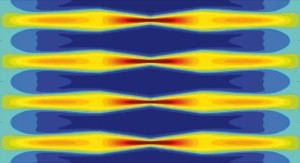
Light waves, shown evolving in time in this simulation, create a cloaking effect at the middle where the light intensity goes to zero. via Nature.com
Happy June! Happy World Oceans Day! Hard to believe it is June already. I finally have some time on my hands and caught up on some reading this week. So you’ll see two articles below that are from April. It’s a little bit of everything… so grab your coffee, tea or chocolate milk, head to the sofa or venture out to the veranda if it’s nice weather, and enjoy this edition of Weekly Science Picks!
Cyber security, data breaches, governments listening in on the phone calls of their citizens (oh wait, the U.S. claims it’s just unique identifiers…), are all hot topics in this age of data immersion that we found ourselves. Well, read about the ‘time hole’. Engineers are doing some pretty cool things in this realm.
Electrical engineers have used lasers to create a cloak that can hide communications in a ‘time hole’, so that it seems as if they were never sent.
Brain games are everywhere lately, whole startup companies are devoted to trying to entertain your neurons and increase your brain elasticity. I admit, I like a good competition of Words With Friends, but I’m pleased to see some research has been done on this topic.
It seems brain-training games—online tests, quizzes, games, or flash cards designed to improve attention, memory, creativity, and concentration—are everywhere. But do they work? Arecent study published in the journal PLoS ONE says … maybe not.
City mouse, country mouse; city bird, country bird. Lately, there appears to be a slate of ‘unique’ research going on in the Animal Kingdom. A lot of it has been appearing on BBC News. Perhaps this research will lead to some exciting new developments in city health technologies.
City living could have a major impact on the biological clocks of humans and animals, a new study has found.
An ever greater number of people are able to ‘climb’ to the top of Mt. Everest and it is wreaking havoc on the conservation of that area. The terms have changed because the technology and the gear has improved to make it to the summit. Is there a solution? Not without putting some infrastructure and some hard policies in place.
Figures from Nepal’s ministry of tourism figures show that the peaks Ama Dablam and Everest, both in the Khumbu region of eastern Nepal, see the largest number of expeditions, more than 30 every year.
Another story involving hidden data, only this time it’s the kind that we would like to have out in the open and be able to access.
Scientists from around the globe, specializing in subjects as diverse as plate tectonics, plankton evolution, oceanography, and climate change, are decrying a growing void of research that has spread across hundreds of thousands of square miles of the Indian Ocean near the Horn of Africa—an immense, watery “data hole” swept clean of scientific research by the threat of Somali buccaneering.
Something a little different to close out Weekly Science Picks – watch the video.
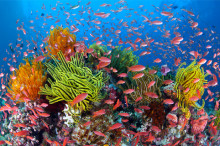
Good morning Australians and to the rest of the world! Today is World Oceans Day and to celebrate this important day, a special, world first, 12-hour event will broadcast live from the Great Barrier Reef! Richard Fitzpatrick, a marine biologist and Emmy award-winning underwater cinematographer, along with other marine experts and reef ambassadors will take you on a journey as they showcase the diverse beauty and awe that is the Great Barrier Reef. The event starts 7 June 10:00 AM (AEST). The countdown is on and you can watch here at Queensland’s YouTube Channel!
You’ll see live underwater broadcasts that include sharks, whales, manta rays and turtles. 30-minute panel sessions will take not only underwater at the reef, but from Lady Elliot Island and Reef HQ Aquarium. The panel discussion will feature both local and international marine biologists and experts who will highlight why protecting our oceans is so important.
And why is it so important? Well, Australians, if you haven’t seen the news from yesterday, listen up.
A new CSIRO study, reported by the Herald Sun, finds the ocean is littered with rubbish, 74 per cent of it is plastic and it is impacting sea creatures, including turtles, sea birds and whales. There are 5.2 pieces of debris for every person in Australia and 3.2 pieces of rubbish for every metre of beach. The waste is not coming from other countries, it is coming from cities and other major areas in Australia. And while Australia does have great waste management practices, It’s important to note that more must be done to keep the beaches and waters pristine. Take action on this World Oceans Day. Find a beach clean up, join a surf life saving club, volunteer at a conservation park – do something to help protect the ocean which is vital both to our global economies and societies.
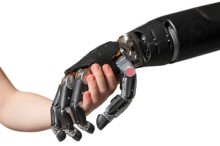
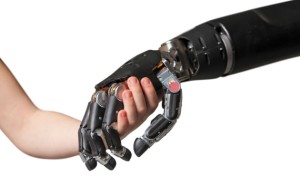
The Modular Prosthetic Limb will help patients to feel and manipulate objects just as they would with a native hand. JOHNS HOPKINS UNIV. APPLIED PHYSICS LAB.
These were the science stories that resonated the most for me this week. Gene snipping, CO2 alarms, and brain-controlled prosthetics – an array of stories touching on the impossible, and yet, totally possible.
Given the way budgets and financing have always dominated the path of scientific research and with the rise of start-ups and crowdsourcing dominating many a young entrepreneurs dream, this story is important for many reasons. It raises the questions of safety, ethics and regulatory responsibility. It is a must read.
This edition of weekly science picks is going to be a little different… it’s a smorgasbord of intriguing facts ranging from corporate ownership of our DNA to recycling building materials. Let’s get started.
This first story represents the line between scientific research and corporate profits that sometimes leaves the ethical, human components as an afterthought. Hopefully on Monday, 15 April, the US Supreme Court rectifies this when they hear oral arguments on a case concerning the patent of human genes.
Today, Salk would be shocked to find that your DNA belongs not to you but rather to many companies and institutions that have patents on the DNA from your cells. Forty-one percent of the genes in your genome are not legally yours, according to a long list of gene patents that have been granted since the 1980s. These patents cover thousands of human genes and restrict a doctor’s ability to look at your DNA and plan your medical treatment. These patent claims contradict an intuitive sense that your DNA is no less yours than your lungs or kidneys.
As if Google wasn’t involved in our daily lives enough, they want to be their in death too. Don’t get me wrong, Google is great, I use their products every day. Although this story is a little creepy to think about, where to store or what happens with all that data we create while alive and breathing, is important.
Google announced today that users of its myriad digital services can control how their data is handled while they’re taking a dirt nap.
If you’re fascinated by buildings and building materials, you’ll enjoy this next story I came across on Arup’s website. Arup is a design, planning, and engineering firm with offices around the globe. (They designed and engineered the Sydney Opera House.)
Take glass, for example. Glass from buildings is not widely recycled because it’s not as straightforward as taking empty bottles to the bottle bank. There are issues such as contamination from silicone sealants to consider, for example. But when Arup worked on refurbishing the Lloyd’s of London building, we showed it could be done.
And the last pick for this week is an update on another legal case soon to be heard in The Hague. The UN Court will hear oral arguments from representatives of both Australia and Japan over the Japanese whale research programme in Antarctica. The case is scheduled for 26 June to 16 July.
“Australia will now have its day in court to establish, once and for all, that Japan’s whaling hunt is not for scientific purposes and is against international law,” Australia’s attorney-general, Mark Dreyfus, said.
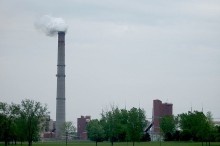
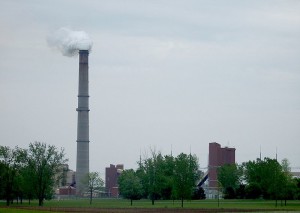
Coal power plant in NY. Photo credit: Matthew D. Wilson, Wikimedia Commons
The Bargaining Table
Does anyone think this 2-degree goal is achievable? You know, that we can keep global temperatures from increasing 2°C? It’s time to admit that it cannot be. It’s time to set new goals. Goals not based on single-digit bargaining at the next climate convention. Some of the world’s nations agreed to limiting global warming to 2°C (3.6°F) over pre-industrial temperature levels four years ago; a voluntary goal. Our approach to tackling climate change has been to put, what seems to be, arbitrary limits on CO2 emissions while not seeking to take accountability for the issues causing those emissions. This goes for both the developed world and the emerging market economies. The industrial world must make amends with the top tier industrial economies assuming the responsibility to assist the 2nd and 3rd tier economies. Look at Beijing, China, the smog that engulfs that city. While pushing new boundaries to emerge on the global stage as an economic powerhouse is respectable and we can all argue that London, New York, Berlin did this when they were coming of age in the industrial revolution, the result of living in cities was grim then and it is grim for Beijing now in terms of the pollution that confronts citizens.
CO2 levels are rising, as a result of a global economy pushing forward, full steam ahead. Pieter Tans of The U.S. National Oceanic and Atmospheric Administration (NOAA) has said CO2 levels increased by 2.67 parts per million (ppm) in 2012 to 395 ppm. This marks the second highest rise in carbon emissions since recordkeeping began back in 1959. Cleaning up the way business does business is the first order of business in tackling climate change. Returning to the bargaining table year after year is not getting us anywhere.
Tipping the Balance
Coal-burning power plants, particularly in the emerging economies are the main culprit behind the continuing rise of CO2 emissions. For more detailed information, see IEA Statistics report, CO2 Emissions from Fuel Combustion, Highlights, 2012 edition. In countries such as the U.S., Australia and Denmark, conservation and clean energy research and implementation have begun to show small declines in CO2 emissions. But again, it is that see-saw balancing act – fair play – in order for developing nations to get on the economical playing field, they should have an allowance to pollute as did the U.S. and the rest of the G-20. Instead of taking this “fair is fair
Google celebrated International Women’s Day with a Doodle Source: Google
Women. This is the theme of this edition of Weekly Science Picks. Yesterday, in case you missed it, was International Women’s Day. And it is important to note the achievements of women in careers such as teaching, neuroscience and engineering because women are still in a tightly contested race with the male counterpart. But who doesn’t enjoy a little competition?
The articles selected this week touch on another issue that is being hotly debated in the U.S. as of late – the question of if women can have it all. Many of you have perhaps heard that Sheryl Sandberg, COO of Facebook, has started down a path of empowering women with her new book released this week, “Lean In: Women, Work, and the Will to Lead”, accompanied by the creation of Lean In Circles, a social networking group to help women express issues of dealing with work and family. I’m not going to get into a debate about this right now, except to encourage some discussion of this topic among our readers, female or male, and think how it applies to life in the sciences.
This first pick deals with exactly this topic. It is a selection of women in science from around the globe, tackling incredible and exciting challenges in the lab, and outside of it with families.
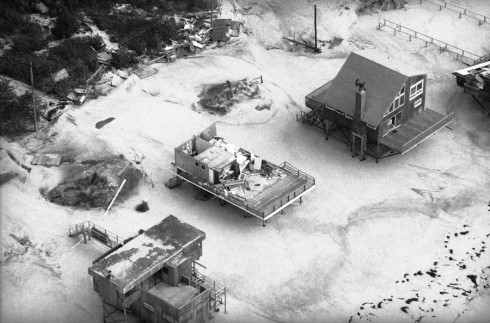
Hurricane Gloria devastation on Fire Island, New York, 28 Sept 1985. (AP Photo/Rick Maiman)
Climate Change
Last week I listened to a webinar on climate change discussing findings of the draft report from the National Climate Assessment and Development Advisory Committee. Not much has changed from the year 2000 report, or the 2009 report. Well, a few changes: the science has improved, climate change is now being stated directly as a result of human activity and the report is more accessible and understandable to the public at large. The public that actually takes the time to read it, that is. How communities engage with science and government is a hot topic and will continue to be. The idea of citizen scientists was mentioned during the webinar and it has been in the news quite a bit. I’ve written about it here, but after today’s presentation, it triggered some new thinking and I pondered it a bit more in terms of climate change and planning resilient communities.
Engineering Community Resilience
With the recent round of floods and bush fires, particularly in Queensland, Victoria and Tasmania, and with Hurricane Sandy in the northeastern United States, I’ve been thinking more about how we engineer our communities and our transportation networks to withstand the dramatic stresses placed on them by natural disaster events such as these. In the face of extreme and more frequent weather events, we must begin to look at how we protect investments, not how do we avoid it, but how do we work with it once faced with the situation; how can our societal networks “adapt” to natural events. After hitting the power-on button after a disaster, how long does it take before we are up and running at full speed? It’s definitely not automatic and there is a lag time, but the mission should be to reduce that lag time as much as possible. We can do that through better planning of our communities, both urban and rural, from top to bottom.
Outdated Planning Manual
Jane Jacobs in her book, The Life and Death of Great American Cities, wrote the way we plan cities is outdated. Those thoughts were from the late 1950s; I wonder what she would think at the progress, or lack of, made now. While Ms. Jacobs was not an urban planner, she was an astute observer of city life. We have been planning to the same model for years, basing our land use and transportation plans on activity centers and primary uses as if these things were completely and utterly independent. When in reality, today more so than ever, emphasis should be placed on the connections between and among uses, from primary to tertiary uses and beyond. Emphasis should also be placed on addressing aging infrastructure. Outdated, roads, buildings, bridges, sidewalks, subways, telephone lines, sewers; all of these facets of modern society that once made life convenient can actually make life more inconvenient if technology does not keep up with the pace of increasing population and demand. It is a tough task to balance the needs of a community, of a nation, but attention to rediscovering and reengineering our primary uses to connect with present and future day society has to be part of this century’s new planning paradigm.
Community Communication
How does this national climate assessment report actually impact individuals? What does the public need to know? What does government and science need to tell people? I think ultimately that people have a desire to know what goes on in their communities; but they’re busy, they elect people and trust them to hire staff that will get the job done. And there is this mentality that they just want things to work and society grows cranky when things don’t work. Think about water pipes. An invisible zigzagging network buried underground. Much thought isn’t given them until they burst and the faucets run dry. Adding to the problem is that the public doesn’t understand how antiquated our infrastructure is, be it water pipes, bridges, or telephone lines. And public refusal to pay for a system’s upgrading because water has always been cheap just adds to the complex ability to make change happen. But I believe it can.
It all boils down to communication, at the basic, most simplistic level. That’s why it is critical governments do a better job at explaining and giving information to citizens when disasters strike AND details about the recovery and clean up process OR explaining why adaptation and mitigation measures need to be taken because not everyone understands why systems that date back to the 19th century can’t handle pressures from the 21st century. I can’t speak for other countries, but the “red tape” political pomp and circumstance on parade in the U.S. needs to shift toward a “green tape” common sense implementation attitude. Waiting over three months for recovery funds to come through after Hurricane Sandy hit inhibits community rebuilding and cuts to the psychological core of those affected.
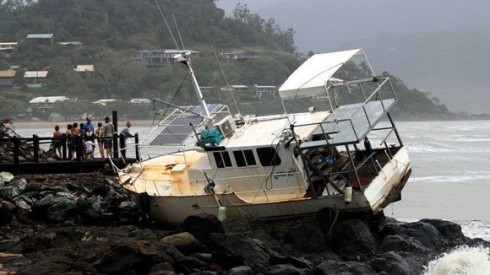
Cyclone Oswald, Eastern Australia, 29 Jan 2013. (itv.com, Photo: Reuters)
Citizen Scientists Participation
Popularity of science among the masses is growing and should be engaged. So how can citizen scientists help? With all this talk of using ordinary citizens to collect data for large-scale research projects and as budgets tighten and staffs decrease, I think there will be a greater role for the community at large to help provide answers to research questions. To start with, our scientific organizations will need to use the cerebral thought process of corporations. The scenario is not that citizen scientists will be out there running amok with data; a trained scientist would no doubt be in charge. Like a project manager would in a big corporation, they would have people reporting to them, following the protocols, procedures and plans they have discussed to achieve a certain goal. I think this is the way science will have to move in order to stay somewhat viable as we attempt to solve the looming problems we face in the future.
Science, the community, government and private industry all need to be present and active partners communicating as we move forward designing our cities and countrysides in a certainly uncertain world. Policy choices should have been made 10 plus years ago as an attempt to deal with climate change, but hindsight is always 20/20.While this piece speaks mainly to the developed world, we shouldn’t ignore therapid urbanization that is sweeping across the developing world, with many key urban issues not being fully explored. The municipal level has an opportunity to be a catalyst of change. As cities think about how to assess their risks and incorporate resiliency measures into their town planning, the population may actually be able to ebb and flow with climate disruptions.
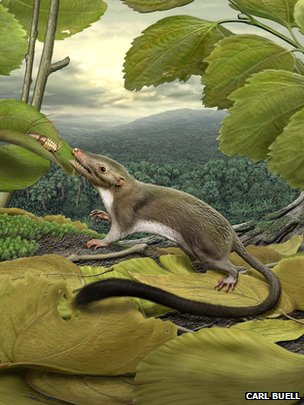
It’s been an interesting week in the world of science, with the predominant story focused on just who our mammalian ancestor might be. Everyone has been covering this, the BBC, the New York Times and national Geographic. But some other newsworthy notes include new developments on graphene, a discussion on just how big the universe really is, and biodiversity 10,047 meters below the sea’s surface.
Scientists are on a never ending quest to pinpoint exactly where we came from and this past week may have shown some significant process in that endeavor. And the story reported on by BBC below highlights some fascinating elements in the work of phylogeny. One of the most intriguing points of the story is in the tools scientists now have at their disposal for evolutionary research – MorphoBank.
But the new work tackles the question of placental mammals in unprecedented detail, taking six years to develop a database of physical and genetic data some 10 times larger than any used previously – and taking a decidedly modern take on it.
Exfoliation…and we’re not talking about ladies skin cleansing here. This next piece from our very own Markus Hammonds highlights exciting new research for the use of graphene in making high grade electronics.
By using a process called exfoliation, the layers in this material are a mere 11 nm thick, and electrons are able to move freely through it without any scattering from impurities in the material (one of the main limiting factors in any system of electronics). Free from such obstructions, electroncs can flow through this new material at high speeds.
Will we ever get our heads around how big the universe is? Astronomer Pete Edwards of the University of Durham seems to think not. See what you think in this video featured on The Guardian.
Instead of wondering where things are going, says Rushkoff, people have started to wonder about where things are right now. Around the time of the dotcom era, people became obsessed with speculating about the present. ” I think we have moved out of linear time and the historic sensibility altogether,” says Rushkoff, “and our current stress stems more from the simultaneity and instantaneity of the digital media environment, as well as the loss of narrative and other connections to organic time.”
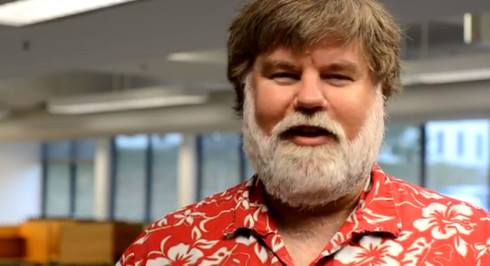
Australian Science travelled to Canberra for the linux.conf.au (Linux Conference Australia) last week and had the opportunity for exclusive one-on-one interviews with a number of the keynote speakers. You may have been a little hesitant reading the first word of the title of this article, ‘Linux’, but perhaps the ‘Open Source Ecosystem’ in the latter part put your mind at ease. We are a computing world, a society heavily dependent upon computers. Computers, in their many shapes and sizes, are touching even greater areas of our lives and reaching a far greater number of people than ever before. Open source is revolutionizing the way we communicate. So while we all may not understand coding and app development, we can understand the end products that allow us digital consumers to produce and share our experiences and stories. The person who has had a tremendous impact in the Linux world is Bdale Garbee. And this is his open source ecosystem.
Bdale Garbee is a computer genius. Although he retired in 2012 after a long career with HP, serving as Open Source and Linux Chief Technologist, he shows no signs of slowing down. Quite the contrary, his workload may be picking up with the number of projects he is involved with, such as serving on the boards of The Freedombox Foundation and The Linux Foundation.
“Linux – euphemism for entire open source ecosystem and idea of collaborated development and maintenance of software and related data
I find myself spending a lot of time thinking about the future of our society and planet – how we can solve problems of today and prevent those of tomorrow. Quite often I draw up battle plans on scrap paper in preparation for those policy battles we don’t even know exist yet, those looming around the corner. Thinking I knew the CSIRO website in and out, you can imagine my delight when I stumbled upon CSIRO Futures. This forward thinking, strategic planning group is dedicated to helping government and industry make the tough, and smart, choices that will be critical given our uncertain future.
Wanting to learn more about this group’s work and impact, I reached out to Dr Stefan Hajkowicz, the Theme Leader for CSIRO Futures. This is our digital conversation about science, education, energy, and what Australia must do to secure its future.
Can you provide some historical background on CSIRO Futures? What was the impetus for the creation of this unit? How and when did it come about?
The birth of CSIRO Futures was somewhat serendipitous. In 2009 we started a small internal think-piece to inform CSIRO strategic planning. It wasn’t ever intended for the outside world. However, at a major Industry and Government conference in Melbourne a video link to Boston Consulting Group (BCG) broke down. That was our lucky break. Someone from BCG was going to deliver a talk on “megatrends”. When the video link broke I was asked to step in and cover the session with our own homegrown megatrends. The audience loved the fact this work was also being done down-under and we subsequently received heaps of offers to present the work in boardrooms and at conference keynotes. We later received requests to do foresight research/consulting projects for industry sectors. So that’s when we set up CSIRO Futures. It’s now running pretty well. We’ve delivered a bunch of projects and more are in the pipeline. Our aim is to inform, engage and from time-to-time entertain.
Can you describe your role as theme leader at CSIRO and the impact this role has had (or will have) on the future of science?
This is an interesting role in CSIRO. In fact – I love it. I was appointed in July 2012 and it’s been fascinating and productive. This role is having impact in many ways. One way is that it’s making science accessible to people in industry, government and the community. For many people CSIRO means evidence-based, robust and well-researched information. When the CSIRO logo is mixed with imaginative stories about the future of the world there’s much interest. The aim is to mix science fact with science fiction to inform people’s decision making.
The role of gender has arisen in many a conversation in my science social circles as of late. Friend and fellow contributor to Australian Science Danielle Spencer sent the video “Science: It’s a Girl Thing!” a few weeks back. (You can view it below.) I had never seen it, but is has sure stuck with me. It’s an eyebrow raiser in my opinion. Viewing this well-produced, glossy video conjured up images of a James Bond feature film opener. (It is a European Commission production.) Smoke and mirrors, silhouettes, high heels, seems more of a teenybopper fashion show. Where is the relationship to science?
I see beakers for measuring liquids, microscopes, and atomic elements and verbally hear the word science, but references to makeup and the overuse of pink cascading across the screen as a spilled bottle of nail lacquer might, I fail to see the relevance.
Though to be fair, chemistry plays a quite a significant role in the production of cosmetics. And it is a $200+ billion dollar global industry. I got quite the kick out of teasing my brother who after college worked at P&G testing lipstick and diapers to ensure the products did not cause allergic reactions. (His role was in quality control and documenting participants’ feedback.) It’s an important role in the consumer products industry, to be sure.
If the goal was to increase interest in and motivate girls to pursue careers in science, I think the video falls short. Sure it exudes fun, but fun about what? Fun in being a marine biologist? Fun in pursuing a career in biopharmaceutical research? Fun in developing advanced robotics for use in outer space?
The clip has more of a cheerleader appeal than it does in the effort to encourage girls in their science education. (But, everyone can use someone in his or her corner cheering him or her on now and then.) It’s no wonder the video was taken down due to numerous complaints. I personally do not think science is a girl thing, or a boy thing, in the bigger picture, it has been and should remain to be a thing for humankind. Yes, men largely dominate the field. Women make choices to pursue science or another field for employment. What we need to do is to ensure that girls, and boys, are exposed to and supported in their science studies at an early age. Because science, it’s a fun thing.
Image: Varying views of women’s role in science. Photo Attribution: By Merwart [Public domain], via Wikimedia Commons
It was a cloudy day, but we headed down the M1 towards the Gold Coast. Arriving at our destination around 9/9:30AM. Destination: OzBall.
It was about a year ago I had seen video of this amazing, thrilling ride. A weatherman on Sunrise 7 strapped inside a huge plastic ball rolled down a hill. This is called zorbing. Apparently it has been around for decades and can be found in quite a few countries. I knew I must try this on my next trip to Australia. Despite bewildered looks and headshakes from my family, I was going zorbing.
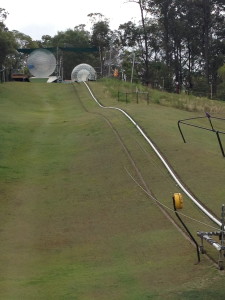
We left the car in the car park and walked through a field to the entrance to OzBall Park. It’s a little off the beaten track. But there it was, a huge grassy hill, the zorb shining in all its glory at the top. Beckoning, if we dare.
OzBall has two zorbs. One is the Hydro Ride where 1-3 riders slosh around in water within the zorb. To me, it’s what being trapped in the washing machine on the delicate cycle would look like. The other is the Harness Ride. The real deal; where you’re strapped to the wall of the zorb facing your fellow zorber, all zany-eyed and excited because you’re a self-described thrill seeker! Little did I know that ride was to exert every known (and unknown) calculable physical force on my body. There was no line or wait for the harness ride. Hmmm.
The Zorb (The Hamster Ball)
You enter the zorb by pulling yourself through a tunnel-like entrance. The zorb is massive – measuring about 3 metres (10 ft) in diameter. Tucked inside is an inner orb about 2 metres (6 ft 7 in). The space between the two orbs creates a shock absorbing, air cushion, connected by hundreds of small nylon strings. The tough, durable plastic is approximately 0.8 millimetres (0.03 in) thick. Shackled securely in my seat by 3 safety mechanisms: the chest harness, lap belt and ankle restraints; I felt completely safe.
The Ride
140 metres (459 ft) is not a long distance. And the speed seemed along the lines of a kid’s carnival ride, reaching up to 30 KPH (19 MPH). I didn’t factor into account the slope of the hill. And it’s not merely an up and down motion, but a side-to-side motion as well. I think you can see where I am going with this. I got way more than the adrenaline rush I bargained for. No projectile vomit or anything of the sort. Just a lot of screaming and wishing for it to be over. It seemed an eternity had passed. The zorb paused. The zorb started moving again. More screaming. The only words I could get out of my mouth were, “Oh, it’s not over yet!” Rolling down the hill, eyes open, eyes shut, trying to stare out the porthole at the grass to fixate my glaze on a constant sight. Finally. The. Zorb. Stopped.
Lawnmower martini. Not sure what that is, but that’s what I felt like. I could hardly speak, but got out of that zorb as fast as possible. Slight dizziness, wobbly, and an insane amount of belching from all the air trapped inside my stomach. The OzBall operators offered us a free hydro ride for being such good sports. I politely declined the invitation.
Why Zorbing?
The point of this story is that it is an incredible opportunity for learning about physics! And how fun science can be when applied to wacky and crazy ideas! I always wanted to go to the theme park on a field trip to ride roller coasters and learn about the forces at work. OK, I really just wanted to ride roller coasters. Man, some science classes were so lucky!
Whether it’s an activity like zorbing, or riding roller coasters, biking, skiing or skateboarding, science is involved. Tools working in tandem with the human body for the benefit of amusement. How far you decide to delve into the science behind each is up to you. I believe that is how to keep science fun and entertaining and keep the kids coming back from more. Education could take a cue from zorbing’s playbook – just let go and roll down the hill.
As for me, I’m glad I tried it; ticked the zorbing experience box. If you saw that episode of Modern Family where Phil does everything in his power to remain a roller coaster fanatic so he can retain that bond with his son, Luke; then you know what I’m talking about. But I’m going to lock this one away and slowly try to rebuild my street cred. (Thank goodness we didn’t opt for the video!)
Warning: Zorbing has been labelled an “adventure sport”, like bungee jumping or skydiving and can be dangerous if the right precautions are not taken. Even riding a roller coaster can sometimes end in tragic results. Deaths from zorbing have occurred, one in Russia just last week. A grassy hill with a catch containment system at the bottom is much different than going down a snowy, rocky mountain. Exercise your best judgement and caution if you are going to attempt zorbing.