Author: Markus

  • Weekly Science Picks

    Weekly Science Picks

    Another week, another collection of weekly science picks! Those of us over here in Northern Europe have been enjoying snowy weather this past few days, with more expected on the way. At the same time, many of us have been keeping a concerned eye on the recent events in Australia – the bush fires being among them.
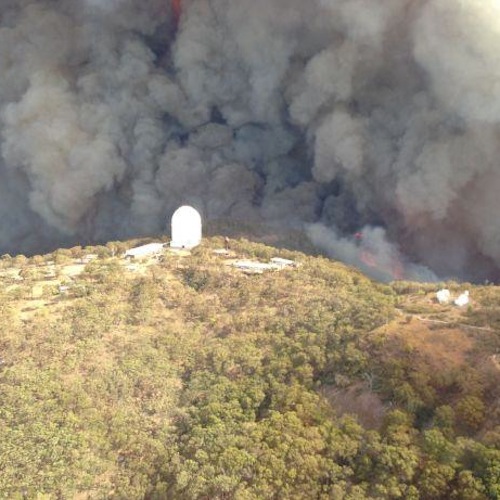
    The Anglo-Australian Telescope in peril

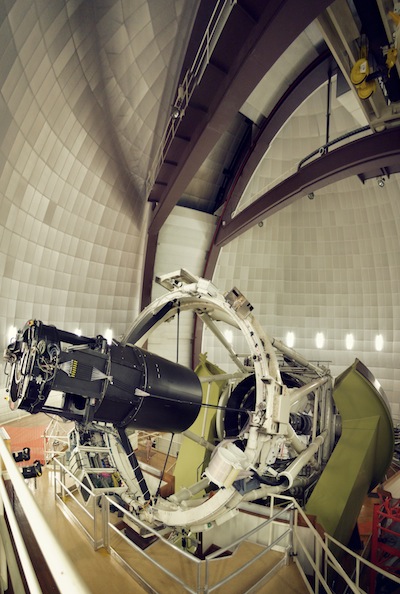
    Among the many areas hit by the fires was Siding Spring Observatory. While some buildings were destroyed and others damaged, all of the telescopes appear to be ok. Details on the entire event from a first hand perspective are given by astronomer Amanda Bauer on her blog, Astropixie.

    SSO: As the smoke clears

    from all accounts i’ve received, heard, and read, the area surrounding coonabarabran  is a “disaster zone,” which is heart-breaking news.  fire service crews will be working overnight, taking advantage of milder conditions, to put containment lines around the edges of the fire, hoping to protect coona before the winds change.


    Orion, the spacecraft being developed to replace the Space Shuttle and ease the pressure on Russia’s Soyuz craft, has been a troubled undertaking. As with virtually all NASA projects lately, it’s been hampered by repeated budgetary problems. The latest development in the story is that Europe has now formally agreed to assist in developing the Orion craft, with the long term goal of deep space missions, to the Moon and Mars.


    Europe and US agree details for Orion astronaut spacecraft


    The current plan calls for Europe to build the prototype module for 2017 and a number of components that would be needed for the second vehicle in 2021, although a formal go-ahead to complete this additional model is some years off.


    Depressingly, there is still an obvious gender gap in science, though it’s at least heartening to know that this is an issue which some are paying serious attention to. Many are going what they can to fix the problem, while others are disappointingly willing to argue that nothing should be done. One article which caught my eye this week was written by an anonymous senior scientist, arguing that we should be taking a more aggressive approach to tackling this problem. I for one, wholeheartedly agree!


    Sexual discrimination in science: why we must act now


    Can it be that women are treated less fairly than men? A deceptively simple piece of research led by Jo Handelsman at Yale University has recently suggested that they are… I should point out here that there was no statistically significant difference between the responses from male or female faculty, nor were there differences between levels of faculty, suggesting this is not a hierarchical bias.


    Back in space, new plans for the International Space Station involve blowing something up. Nevada-based Bigelow Aerospace have been contracted to develop an inflatable habitat module for the space station, with the intention of using the new SpaceX Dragon craft to send it up into orbit. Private companies are evidently becoming major players in human spaceflight.


    NASA buys blow-up habitat for space station astronauts


    Bigelow hopes the tests done in orbit will prove that inflatable capsules are safe and reliable for space tourists and commercial research, an idea almost as old as NASA itself. The space agency began investigating the concept of expandable spacecraft in 1958. Space stations like this would be easier to launch and assemble than those with metal components, so would be cheaper.


    On a final note, while many of us tend to consider invertebrate animals as being inferior, there’s evidence that some of them may be more self aware than we give them credit for. While some research has concluded that fish don’t feel pain in any meaningful way, crustaceans like crabs and prawns probably do. It’s probably about time we extended the laws on humane treatment of animals to cover invertebrates too.


    Why crustaceans might be feeling crabby


    A study has revealed that the shore crab, a close relative of the species we use for food, responds to electric shocks and then goes on to avoid them. Previous research has shown that prawns and hermit crabs also react to painful situations.

    Snow!

    Whether you’re dealing with fire or ice nearby, stay safe and have a good week!

    Image credits:
    Top – NSW Rural Fire Service
    Bottom – Electron Microscopy Unit, Beltsville Agricultural Research Center, Maryland.
    Featured – ESA

  • Unknown Corals of the Deep

    Unknown Corals of the Deep

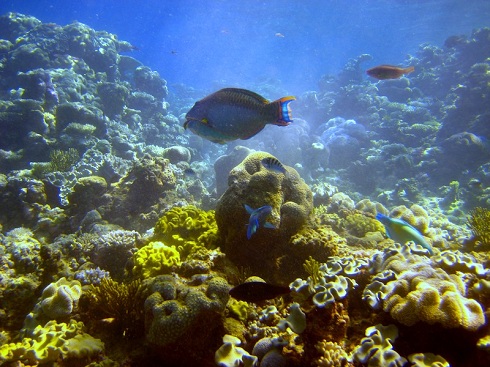
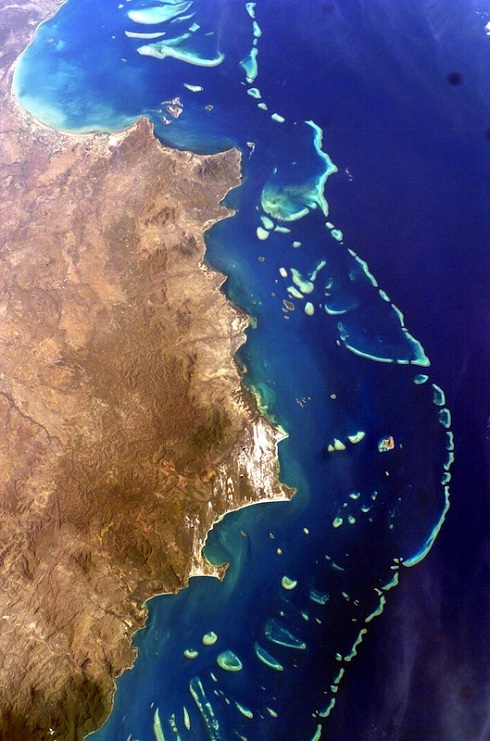
    Corals are some of the most beautiful things to be found under the sea, blossoming in clusters like gardens off tropical coasts worldwide. Easily the grandest display is to be found in Australia with the Great Barrier Reef, and it seems that the reef may contain even more diversity than was once thought. The latest surveys have found Australian corals thriving at depths far greater than was ever before thought possible.

    The Ribbon Reef lies near the Torres Strait at the edge of the Australian continental shelf, and certain parts of it are normally very difficult to get to. The University of Queensland’s Seaview Survey has been fastidiously charting the waters off the Australian coast with a diving robot, and were extremely fortunate to be able to use an unusually calm day to explore the windward side of the reef – normally a perilous exercise due to huge waves and cyclones. Exploring the depths of the reef, they found a huge surprise.

    While deepwater corals are known in other parts of the world, their appearance in the waters here was a surprise. At a depth of 125 metres, in dark waters where very little sunlight ever reaches, they found corals. Corals which had only been recorded at depths of 70 metres previously, giving Ove Hoegh-Guldberg, the chief scientist of the team, reason to suspect that the finding may be able to give a deeper understanding of how coral reefs spawn and grow.

    Hoegh-Guldberg is also quoted as saying, “What’s really cool is that these corals still have photosynthetic symbionts that supposedly still harvest the light,” which is especially remarkable because the waters in which these corals have been found are so inky and dark that human divers would have trouble seeing without artificial illumination. As well as photosynthesis, shallow water corals have reproductive cycles which are synchronised by the phases of the moon. With so little moonlight being able to penetrate to the depths at which these corals live, their spawning patterns are presently a complete mystery. It could be that these corals lead a lifestyle very different to their shallow water brethren.

    The deepwater corals have also fared far better in the storms which have caused massive damage to the shallower parts of the reef. The team are now investigating how conditions such as ocean acidification and global warming are affecting these deeper reef dwellers.

    The Seavew Survey has proven to be extremely successful so far, with a number of specimens which they’re currently investigating. Some species they’ve found are thought to be previously unknown in Australia, and others may even be newly discovered species. Hoegh-Guldberg summed up the team’s discoveries quite succinctly with the statement, “We are yet to discover many corners of the Earth.” Indeed we are. It’s exciting to know that there’s still more for us to discover about our planet!

    Image credit: InvaderXan/flickr

  • The Oldest Fossils in the World

    The Oldest Fossils in the World

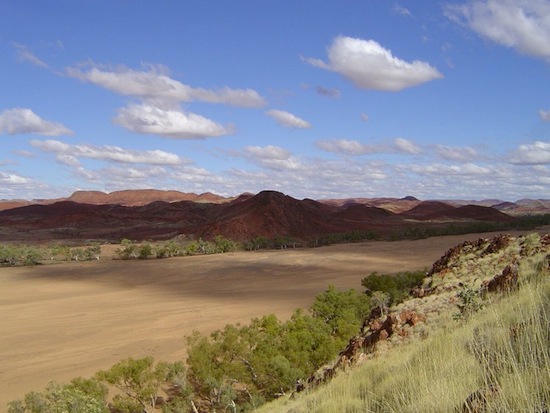
    Life has existed on planet Earth for a long time. Precisely how long, however, is a question which many are still searching for an answer to. The most recently discovered piece in that puzzle may put us another step closer to finally answering that. Discovered in Pilbara, Western Australia, are what are quite probably the oldest fossils discovered on Earth so far!

    At approximately 3.49 billion years old, these fossils come from a time long before complex organisms like us existed. Before evolution forged living things into the structures we recognise around us today, and before distinctions like “plant” and “animal” had even been drawn, our world was populated by bacteria and other single celled life. In fact, on a cosmological timescale, this wasn’t long after our planet had formed.

    Being left by bacteria, these fossils appear as little more than patterns left behind in sandstone, but after careful analysis they’ve been found to very definitely be fossils and not simply mineral formations. Discovered in some of the best preserved sedimentary rocks on Earth, at Strelley Pool in Pilbara, these fossils offer a fascinating glimpse at some of the oldest known life on Earth. Excitingly, as well as the discovery of this life, these is some evidence that it may have had some organisation to it as well.

    Found preserved in quartz sand grains, the fossils show several cell-like structures all of a similar size, much like bacterial colonies still found on Earth today. The age of these fossils can also be estimated with some precision, due to the rocks in which they were found. These particular rocks were formed between two volcanic successions, which means that their age can be determined down to a few tens of millions of years!

    Interestingly enough, any life this old would have been living without any oxygen – oxygen wasn’t abundant in Earth’s atmosphere until around 2.4 billion years ago. It’s quite likely then, that these bacteria had a metabolism based around sulfur, just like bacteria found in marshes and other oxygen-poor environments in the world today.

    The most exciting implications behind this find are those for life on other planets. If life could form so soon on planet Earth, it means that life might well have existed on other planets in the solar system too. Venus before it developed its hellish greenhouse effect and Mars before it lost all of its water, may have been home to similar primitive life. While few are hopeful of finding life on our neighbouring planets today, it still gives hope of discovering fossils as we continue to explore them. For astrobiologists hoping to find life on planets outside our solar system, it means that where life develops, it may occur quite soon after planets form.

    Some of the oldest rocks on Earth

    Image credits: Top – D. Wacey/UWA, Bottom – Abigail Ailwood

  • The Higgs: An Unexpected Boson

    The Higgs: An Unexpected Boson

    The interesting thing about research is that the most interesting results are always the ones which are unexpected. This is particularly true out in the frontiers of physics where, frequently, no one really knows quite what to expect. While news reporters were swift to leap to the conclusion that the Higgs boson had been discovered back in July, the scientists at the CERN press conference were noticeably hesitant to make any such claims outright. Interestingly, it seems that they were wise to do so – in light of the more recent findings, their apprehension has been proven to be well advised. Simply but confusingly, the CERN experiments seem to have yielded two bosons for the price of one.

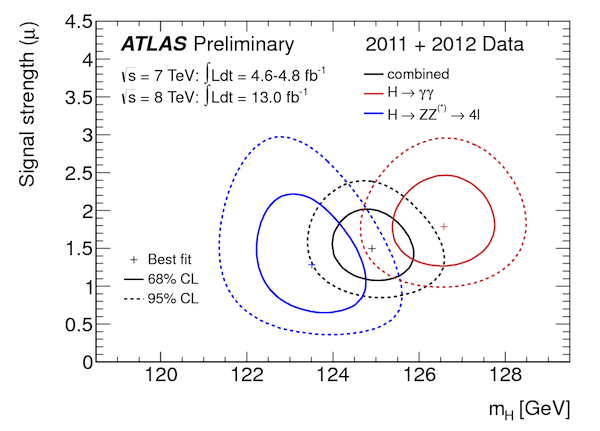
    A huge experiment like any of those taking place at the Large Hadron Collider (LHC) collects a lot of data, and believe me when I say that analysing and interpreting the data you can collect from any experiment is not an easy task. A lot of effort needs to be made in order to make sure you understand everything you’re seeing. Back in July, there were a few obvious things which were uncertain. For one, the “Higgs-like particles” observed at CERN appeared to be breaking up and decaying into photons more rapidly than predicted. This was the first clue that something unexpected was going on with the LHC data. However, on closer inspection, the results were so unexpected that there was thought to be a fault with the equipment. Everyone was hoping to find a peak for the Higgs boson, but no one expected there to be two! With one signal detected at 123.5 GeV and a second at 126.6 GeV, there’s a statistically significant difference of 3.1 GeV between the two. While the data have been checked and re-checked throughout November, they appear to be perfectly sound. As far as anyone can tell, these are two genuine detections of two particles.

    An unexpected boson?

    What exactly this means is very much an open question. Assuming these data are correct, aren’t any existing theories which explain why there would be two Higgs-like signals so close together. Some hypotheses predict multiple Higgs bosons, but none predict them to be so close together. What’s more, these two particles seem to fragment into different products – the 123.5 GeV particle decays into two Z-particles (a different, more familiar variety of boson), while the 126.6 GeV particle decays into photons. So what’s going on?

    Physicists are interesting folk, and I’m sure some would be fascinated if this turned out to be something new. Fabiola Gianotti, director of the ATLAS experiment at CERN has appeared noticeably excited before by the prospect of new and unknown physics being discovered. However, the other thing about physicists is that by their nature, they need to be highly skeptical, particularly when it comes to their own work. Adam Falkowski, a Paris-based particle physicist, states what most researchers are probably thinking on his blog Résonaances – that the result is most likely due to a “a systematic problem”. In other words, a problem in the apparatus such as a poorly calibrated detector. To date, there is no explanation from CERN for the unusual data. So is it a glitch, or could there really be two particles being detected here?

    Whatever is being seen here, it certainly appears to be at least subtly different to what the theories predict. Even if the second detection turns out to be a fault in the detectors at CERN, the fact that the original detection appeared to decay into photons more readily than it should is still unusual – though as noted by Matt Strassler in his blog, Of Particular Significance, “the excess is still not yet 3 standard deviations. Deviations of this size do come and go.  And we don’t have confirmation from CMS.  So the situation remains tantalizing but unfortunately not yet very convincing.” Right now, we still need to wait for official confirmation from CERN. Personally, I suspect that isn’t likely to happen until they know more about it themselves. A further announcement is currently scheduled for March 2013.

  • Weekly Science Picks

    Weekly Science Picks

    By now, I think it’s safe to say that if you’re reading this, it means the world didn’t end on Friday. Which is rather a good thing, because a lot of interesting things have been happening recently! Even though I’ve been busy as can be, writing papers and trying to finish off a thesis there have still been a few fascinating little gems to catch my eye in the news this week…


    Firstly, NASA have announced a new prototype space suit, with new and improved technology. Intended to be easier to put on, amongst other things, the most exciting part of the news is that these new suits are intended for deep space missions, focussing on safety “during spacewalks and potential surface activities”! Oh, but there’s just one thing which everyone’s noticed…

    Nasa’s New Space Suit Looks Exactly Like Buzz Lightyear

    NASA-Z1-suit

    Nasa said one of the key differences was that the new suit has a one-piece design, into which the wearer crawls in through a hole in the back, as opposed to the trousers-top-helmet version currently in use on the International Space Station.


    Meanwhile, in Switzerland, physicists have been puzzled by the results they’ve seen from the LHC. While there’s now little doubt that they’ve detected a signature which matches what they’d expect from “a Higgs-like boson”, it seems like there’s more going on than they realised…

    Two Higgs Bosons? CERN Scientists Revisit Large Hadron Collider Particle Data

    Yesterday researchers at the Atlas experiment finally updated the two-photon results. What they seem to have found is bizarre—so bizarre, in fact, that physicists assume something must be wrong with it. Instead of one clean peak in the data, they have found two.


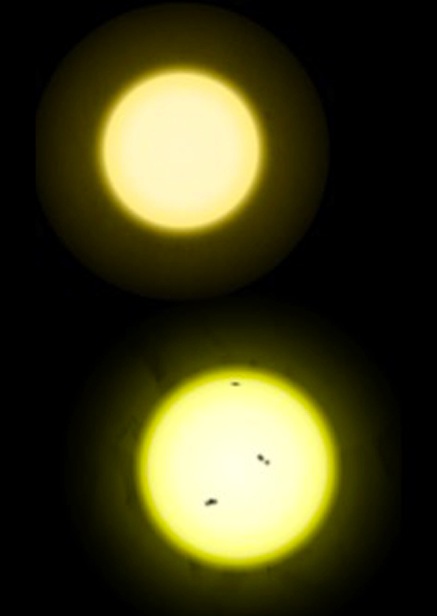
    The Sun, compared to Tau Ceti
    The Sun, is slightly larger and more active than Tau Ceti. Credit: R.J. Hall/Wikimedia Commons

    Finally, one star near to Earth which has always garnered much attention from science fiction writers is Tau Ceti – right in our neighbourhood at a mere 12 light years away. For a long time, many have speculated on the potential for life-sustaining worlds around the Sun’s slightly more orange neighbour, and now it looks like there may well be. While we’re still waiting for confirmation, there may be 5 planets around Tau Ceti, and two of those might be candidates for sustaining life!

    Nearby Tau Ceti may host two planets suited to life

    The highlight of this alien solar system is Tau Ceti e, which has a mass of over four Earths and a year just under half as long as ours. It orbits in the star’s habitable zone, the region where liquid water is thought to exist. “It is in the right place to be interesting,” says [Hugh] Jones.


    Short but sweet, that’s all for this week. I hope everyone has a lovely Christmas (or whichever of this season’s holidays and festivals you choose to celebrate). See you next time!

  • Weekly Science Picks

    Weekly Science Picks

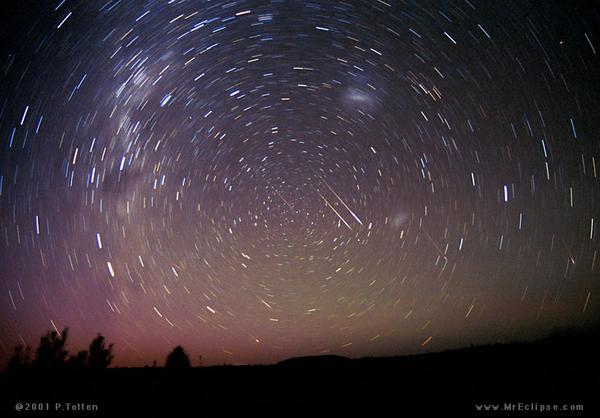
    Ah, the weekend! Time to kick back, relax, and look back over everything that’s happened over the past few days. And I’m rather happy to say that some quite interesting things have happened, including the Leonid meteor shower which peaked on Friday night (though if you step outside after dark and watch the sky, you may still see a few stragglers). So what else has caught my eye this week, science-wise?

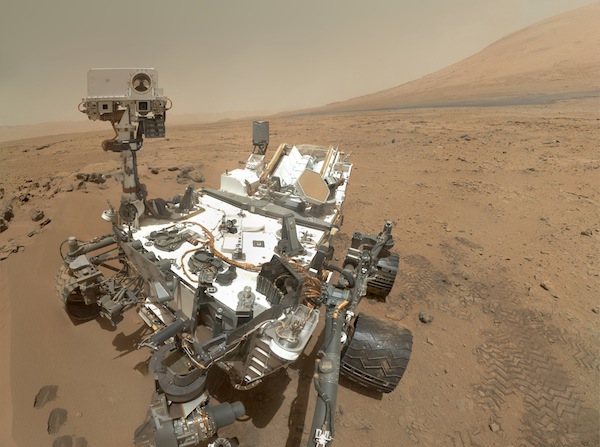
    Well first off, the Curiosity Rover has been busy over on the planet next door. I can’t help but find everything about the Curiosity rover exciting, especially as it’s paving the way for actual manned exploration to another planet. As many people will agree, no matter how sophisticated a rover can be, it will never be as good as a team of properly equipped geologists exploring a site in person. As it turns out, this idea just came a step closer to being reality…

    Astronauts Could Survive Mars Radiation, Curiosity Rover Finds

    The findings demonstrate that Mars’ atmosphere, though just 1 percent as thick as that of Earth, does provide a significant amount of shielding from dangerous, fast-moving cosmic particles.


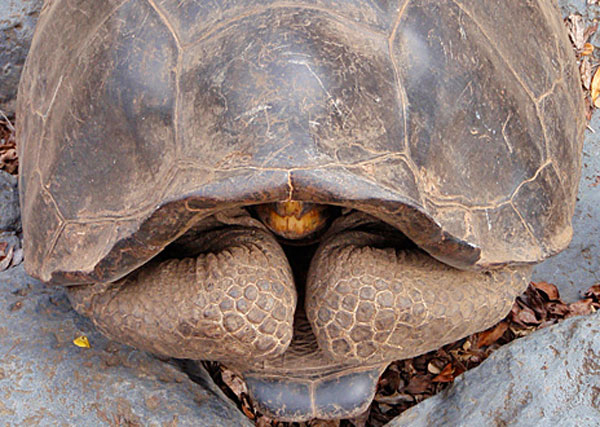
    Some people may recall the death of an aged tortoise nicknamed Lonesome George, so called because he was thought to be the last surviving member of his species. I know I do, and was rather saddened by it. While it may be an inescapable part of the way life on our planet works, there’s something quite humbling about being forced to simply watch a species go extinct and not be able to do anything about it. But then, was George’s death really the end of the story? As it happens, perhaps not…

    DNA tests show Lonesome George may not have been last of his species

    “These giant tortoises are of crucial importance to the ecosystems of the Galapagos Islands, and the reintroduction of these species will help preserve their evolutionary legacy,” said Danielle Edwards, postdoctoral research associate at Yale and lead author on the study.


    Lisa Grossman at New Scientist discusses the phenomenon of rogue planets – planets roaming interstellar space after being forcibly ejected from their home systems. It’s a concept which I’ve thought about in great detail in the past, as have many others, including astrophysicists, astrobiologists, and science fiction authors.

    Astrophile: Lonely planet roams with stellar outcasts

    The wanderers are no longer gravitationally linked, but they are headed in the same direction. “Like when you kick a clod of sand, the grains don’t stick together anymore but they have the same common motion,” Delorme says.


    In chemistry, I’ve always held a certain fascination with noble gas compounds. Molecules formed from atoms which aren’t supposed to react and form molecules always seemed rather exotic and curious. Several of these compounds have been predicted involving Xenon, one of the heaviest noble gasses. And there may be a lot of Xenon trapped inside the Earth this way…

    Professor predicts stable compounds of oxygen and ‘inert’ gas xenon

    “In addition to providing a likely solution to the missing xenon paradox and clarifying essential aspects of xenon chemistry, our study may result in practical applications,” says [Artem R.] Oganov. “For example, the ability of xenon to form strong chemical bonds with oxygen and other elements, and to be trapped in crystalline defects, suggests their use as non-classical luminescence centers and active sites for catalysis”.


    And to end on a humourous note, XKCD wrote a comic this week describing the Apollo Spacecraft and Saturn V rockets using only the 1000 most commonly used words in the English language. The result was slightly hilarious and rather enlightening about how often writers like myself use words which aren’t in that top 1000. A testament to XKCD’s popularity is how many people in the online space and astronomy communities mentioned it – including at least one astronaut!

    xkcd: Up Goer Five

    Lots of fire comes out here. This end should point toward the ground if you want to go into space. If it starts pointing toward space you are having a bad problem and you will not go into space today.


    Hope you’re having a good weekend!


  • Great danger for the Great Barrier Reef

    Great danger for the Great Barrier Reef

    The Great Barrier Reef is easily among the world’s great natural wonders. A world heritage site since 1981, it’s known everywhere as a showcase for the beauty which Earth’s oceans are capable of producing. The world’s largest system of coral reefs, it’s actually composed of over 2900 smaller reefs, stretching along Australia’s coastline for 2600 kilometres. In modern times, it’s a major tourist attraction, and for a lot longer, it’s been part of the culture of Aboriginal Australian people. Unfortunately, the modern world hasn’t been kind to the Great Barrier Reef. A variety of environmental factors are conspiring to make the future for these Australian corals look rather bleak.

    Alarmingly, in a study run by the US National Academy of Science earlier this year, it was found that over the past 27 years, the Great Barrier Reef has lost 50% of its corals. Half of the corals in the sites surveyed have disappeared since 1985, and it’s unlikely to be any better in any other locations. Alarmingly, two thirds of the corals lost, have been lost since 1998. Instead of slowing down, it seems that the damage is becoming more rapid over time.

    The Great Barrier Reef is, in effect, the Amazon Basin of the Ocean. It’s a huge and bustling hub of biodiversity, rich with all manner of aquatic plant and animal species. Like a land-based rainforest, a vast number of self-contained ecosystems can be found within the reef, and many vulnerable and endangered species make their homes there. Species known to depend on the reef include turtles, crocodiles, dugongs, and sharks, as well as thousands of species of fish and invertebrate – including, of course, the corals themselves.

    Climate conditions have been increasingly harrowing for the denizens of the reef, however. Inclement weather, including tropical cyclones, can cause severe damage to coral growths. Global warming is having a lethal effect on corals living near the edge of the reef, which are already at the high end of their temperature tolerance. The warm waters cause corals to expel their zooxanthellae (the symbiotic organisms with live with the coral, photosynthesising and providing around 90% of the coral’s energy requirements) resulting in coral bleaching and, eventually, death as the corals die of starvation. And then there’s the crown of thorns starfish, a natural predator of corals which has seen a sharp increase in numbers in recent years. While the starfish is actually in indigenous inhabitant of the reef, some suspect that overfishing of the starfish’s natural predators has contributed to their recent population explosion.

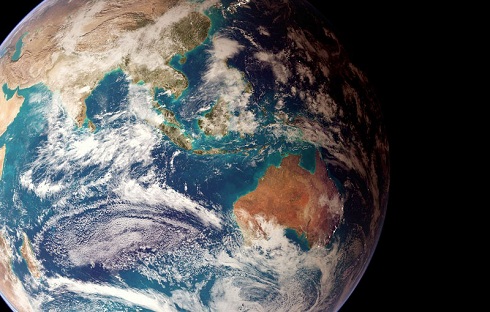
    In light of the troubling findings, Australia’s Environment Minister, Tony Burke, said in an interview to ABC news that “We’ve all heard about damage to the reef over the years, but that 50 per cent figure, I think, rang a warning bell loud and clear for many people.” He also admitted that “there’s no doubt that there’s been a level of neglect for decades which, if it had been dealt with otherwise, we’d be in a much better situation now,” which is at least a sign that the problem is being given the recognition it deserves.

    Australia has, in fact, put together its Reef Rescue programme over the past 5 years, spending millions of dollars on protecting the reef from human activities such as run off from land. While there’s not much which can be done about the cyclones which have done the most damage, work is also underway to cull the starfish which are currently the reef’s second biggest threat. Unfortunately, this is painstaking work, as each starfish has to be individually removed by hand. There’s simply no other suitable method.

    The question then is how to safeguard the reef in the long term and hopefully help it to recover to its former glory? With one of the biggest future threats to the reef is global warming and the warmer waters which it causes, the method to be used to protect the reef is still under debate. Natalie Ban, who works for the ARC Centre of Excellence in Coral Reef Studies, is reported as saying, “In some areas summer is coming earlier and lasting longer; in others, both summers and winters are warmer than in the past.” Currently, there are two schools of thought on how to go about this – some argue that the most protection should be given to the areas which have suffered least, so that they can act as a haven for reef animals to help repopulate the area; while others would prefer the most vulnerable reef areas to receive the most protection.

    Whatever means is chosen, it’s safe to say that Ban speaks for many of us in saying that she hopes for the best way of managing and protecting the reef during “what will undoubtedly be momentous environmental change.”

    Images:
    Top – Eric Johnson/NOAA
    Middle – NASA
    Bottom – Toby Hudson/Wikimedia Commons

  • Breaking plates

    Breaking plates

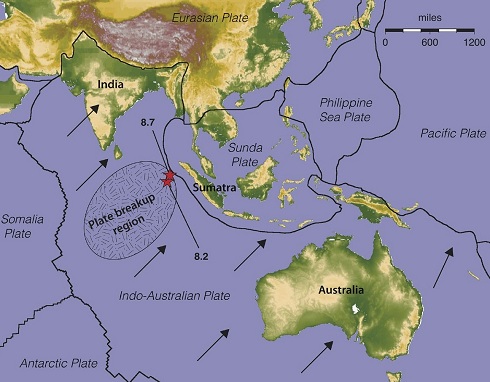
    What do Australia and India have in common? The answer is that they both share one of Earth’s tectonic plates – the drifting eggshell-like pieces of Earth’s crust, on which all of our planet’s continents sit. However, the Indo-Australian Plate is a slightly unusual one, and the two countries may not share it for much longer. Recent Earthquakes beneath the Indian Ocean suggest that this plate may be in the process of breaking in two.

    We generally think of the surface of our planet as being fixed and unchanging. The reality though, is that this isn’t true. Earth’s continents and the tectonic plates which make them up are not fixed at all, drifting slowly across the planet’s surface. For instance, as you’re reading this, most of Africa is moving slowly to the North West and quietly tearing the beginnings of a new ocean into Earth’s surface. Meanwhile, Hawaii is moving at a speed of about 7cm per year which is about as fast as your fingernails are growing.

    Of course, these movements are tiny, compared to the size of the Earth and its continents, but they still cause pressure to build up in Earth’s surface. Sometimes, seemingly without warning, that pressure continues to build up and– SNAP! Something in Earth’s crust cracks or ruptures. This jostles the plates and can cause earthquakes which rattle entire countries. Any places situated at the edges of tectonic plates are particularly prone to earthquake activity, with California and Japan being high profile examples. With enough quakes, however, dramatic changes can happen in Earth’s crust. On rare occasions, larger tectonic plates can sometimes break apart into smaller ones – and that’s exactly what’s happening somewhere beneath the Indian Ocean right now.

    Breaking point – where the Indo-Australian plate is starting to rupture and split

    April 11 this year saw two massive earthquakes strike west of Indonesia in quick succession, measuring 8.7 and 8.2 on the Richter scale. The result was a dramatic quadruple fault rupture in Earth’s crust (a rare event which is more or less exactly what it sounds like!) which caused shockwaves to reverberate around the whole planet. Around a week later quakes occurred across the world as the whole planet shivered in response.

    Geologists, alarmed by what could have caused such a major event, took to analysing the quake. What they found was remarkable. Within roughly 160 seconds, four fault lines (existing fractures in the rock) tore apart under pressure. Remarkably though, this wasn’t at a plate boundary where this kind of  activity is expected. It was right in the middle of the Indo-Australian plate. To the geologists looking at this data, this was like a smoking gun. A telltale sign that, as many had suspected, this particular tectonic plate is starting to fracture and split into two.

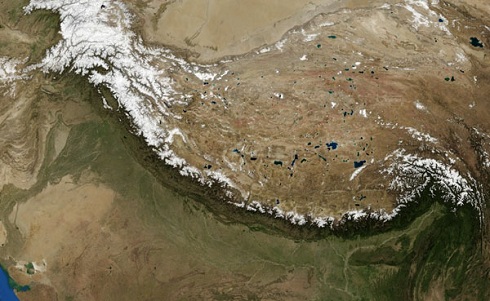
    The Indo-Australian tectonic plate is already a bit of an oddity, being a rather thin and unusual shape compared with the others. The reason being that it was formed some 43 million years ago when two smaller plates (carrying the landmasses which would eventually become India and Australia) fused together. Since then though, it’s collided with the much more massive Eurasian plate. That collision has already caused enough pressure in Earth’s crust to create the Himalayas, one of the world’s most impressively tall mountain ranges. However, the Indo-Australian plate is still trying to move northwards. The  western part of the plate is still pushing against the Himalayas, moving at about 3.7 centimetres per year, but the eastern part, including the entire continent of Australia, is moving at a much faster speed of around 5.6 centimetres per year. This is causing the whole tectonic plate to quite literally buckle, which is the root cause behind all of the quakes in the region over the past decade.

    So what does this mean for anyone who happens to be living on that plate? Well, there are not going to be any sudden apocalyptic changes. After all, according to theories, this is not actually a new event – the Indo-Australian plate began to deform around 10 million years ago! Over millions of years, a new tectonic plate boundary will start to form under what is currently the Indian Ocean. This will cause thousands of similarly large earthquakes, but over such a length of time that they won’t be much more regular than they already are for those living around South-East Asia. All the same, planetary scientists are likely to continue watching this region with interest over the coming years.

    Satellite view of the Himalayan mountain range – perhaps the most dramatic example of the force with which the Indo-Australian plate is pushing into the Eurasian plate!

    Image credits:
    Top – NASA Goddard
    Middle – Keith Koper/Uni. Utah Seismograph Stations
    Bottom –  NASA World Wind

  • Weekly Science Picks

    Weekly Science Picks

    Doesn’t time fly? I don’t know about anyone else, but my week has absolutely flown past. As I take a moment to relax and consider picking a few favourite topics from this week’s news, I realise that perhaps this is because it’s been an exciting week, full of interesting discoveries and unusual events. In fact, I’ve had quite a lot to choose from, but I eventually managed to trim it down to these few articles which particularly caught my eye…



    First and foremost, a planet has been discovered in our neighbouring star system, Alpha Centauri. This is something which I find thrilling for various personal reasons. An interesting discussion of the discovery itself and some of its implications are given by Paul Gilster in the blog Centauri Dreams:

    There was a sense of exhilaration in the air on Tuesday as the buzz around an Alpha Centauri planet built, and when the embargo was lifted, reports of the find filled the social media as the early articles began to appear online. Just how big a deal is Centauri B b? A skeptic could point out that while finding an Earth-mass planet is significant, it must still be confirmed, and in any case, this is an Earth-mass planet that is nothing like a clement, habitable world.


    From a neighbouring star to a neighbouring planet, the Curiosity rover has been finding some very curious shiny objects in the martian soil. Wired Science gives a brief overview of what’s been happening on the red planet:

     NASA’s Curiosity rover took three scoops from a small Martian sand dune and found several bright particles in the soil. Scientists think these are unrelated to the odd bright object that Curiosity saw last week, which turned out to be plastic that fell from the probe, and are probably indigenous Martian mineral flecks.


    Closer to home, this week saw a world record being broken by Austrian skydiver Felix Baumgartner, who leapt from a balloon at an altitude of 39 km. A fantastic achievement and a daredevil stunt! However, could more of an effort have been made to add some depth to the stunt and give us all some more background about it? Science historian Amy Shira Teitel at Vintage Space takes a detailed look at the full background and a few tricks which were missed with respect to communicating the science behind such a stunt:

    In the 1960s, pilots were pushing the envelope of supersonic flight at high altitudes. But this was a dangerous approach. While it’s easy to fly fast in the thin upper atmosphere it’s harder to control an aircraft. With no air for control surfaces to push against, aircraft tend to tumble, and when aircraft tumble pilots tend to eject. Tests with dummies showed that when falling from high altitudes, human bodies tended to get into a flat spin. It would be like rolling down a hill really fast but without the hill, and the G-forces would certainly be fatal.

    Image: AP Photo/Red Bull Stratos, Luke Aikins

    And finally, there was a rather informative little discussion piece by Dave Hone in the blog Lost Worlds. In emphasising some of the difficulties faced in palaeontology, he poses a rhetorical question – did Tyrannosaurus Rex have feathers?

    Note that there is a rather important scientific distinction here, no facts have changed since the 70s, but we have many more facts. And the best interpretation of all of the available data is now a little different to that which we had before. The fossil record is incomplete and we have to extrapolate from the available evidence and apply parsimony the best way we can.


    I hope you’re having a good weekend!

  • Snappy meals for a hungry plant

    Snappy meals for a hungry plant

    Image: SatuSaro/WIkimedia Commons

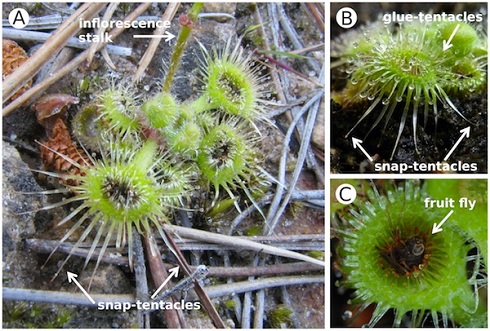
    I’m a big fan of carnivorous plants. Seriously, they’re plants which eat animals, placing them oddly higher up the food chain than other plants – That always fascinated me. But a recent study on one Australian sundew has shown it to be even more fascinating than was previously thought.

    This sundew, with the rather poetic latin name of drosera glanduligera, has an edge over other sundew species. Most sundews wait patiently for insects to be lured to their sticky doom on those drops of “dew” on the plant’s glue tentacles. In the meantime though, they don’t have much other choice than to sit and wait for their meals to arrive. D. glanduligera here, has an added bonus to its traps – dubbed snap tentacles, which serve to keep this plant particularly well fed by helping to ensnare prey.

    Fast motion in plants is an exceptionally rare trait. Most people will be familiar with venus flytraps, or the “sensitive plant” mimosa pudica. With sundews, only the tropical species move particularly fast – sundews in colder climates are in no hurry to digest their doomed prey. But for a long time, d. glanduligera was something of a mystery. The exact purpose of the long tentacles, with their curious jerking motions, growing on the undersides of the traps was difficult to fully fathom. Difficult, that is, until a recent study showed that these snap tentacles are extremely efficient catapults which help this hungry little plant survive by flinging the plant’s prey directly into the gaping maws of those traps.

    The reason for d. glanduligera’s unusual traps are because this plant needs to be active to survive. It grows fast and lives for only a year, so it needs a good supply of nutrients and can’t afford for its food to get away. Thomas Speck, a co-author on the paper, pointed out how this plant’s catapult system is so effective that the insect virtually never escapes, joking that were the plant a hundred times larger he’d rather not walk around South Australia! What’s more, its environment is steady and unchanging, allowing this plant to become such a specialist without the fear of any surprises. It’s a rather fantastic little example of the sort of things evolution can come up with when it has the chance.

    Image: Poppinga et al (2012)/PLOS One

    Snap tentacles make this sundew much more deadly than most other carnivorous plant species. They’re highly sensitive and have a response time of around 400 milliseconds making them among the fastest traps known – faster than our beloved venus flytraps. Before an insect knows what’s happening, it’s already too late. Once catapulted into the glue tentacles on the upper side of the plant’s leaves, the insect’s fate is sealed. Those glue tentacles, also remarkably fast for a sundew, rapidly move the insect to the centre of the trap, where it is digested by the plant. If you’re curious, you can even watch a video of the plant in action!

    It’s amazing what plants can be capable of, given the right opportunities. The full study is published for all to see, through PLOS One, doi:10.1371/journal.pone.0045735.g001

    Image: MFdeS/Wikimedia Commons
  • For sale: One world class infrared telescope

    For sale: One world class infrared telescope

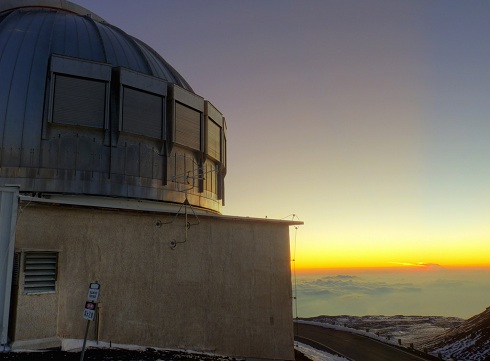
    Image © Tom Kerr/A Pacific View

    The world’s largest and most productive dedicated infrared observatory just went on the market in an unprecedented attempt to try and prevent it from being shut down and dismantled. In a bold move, the directors of the United Kingdom InfraRed Telescope (UKIRT), based on Mauna Kea in Hawaii, have just released a prospectus detailing the telescope’s impressive achievements and capabilities in the hopes that they can find sponsorship and save the observatory from certain doom. That may sound melodramatic, but doom genuinely is the most fitting description.

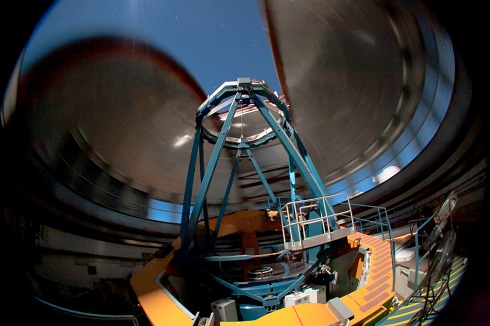
    The Anglo-Australian Telescope, also abandoned by the UK, but still safe in the care of the Australian government. (Image Credit: Ahilan Parameswaran/Wikimedia Commons)

    UKIRT’s death knell has, in fact, already been tolled. At the start of Summer, the UK’s Science and Technology Facilities Council announced that it would be terminating funding and that all telescope operations were to cease by September 2013. The UKIRT board released an official statement explaining their grim disappointment over the decision, and morale has been low for everyone involved with the telescope ever since.

    Unfortunately, since their formation in 2007, the STFC have seemingly been determined to rid the UK of its telescope access. Another casualty was the Anglo-Australian Telescope (AAT). Constructed at Siding Spring Observatory in New South Wales, the AAT was originally built and operated in partnership between Australia and the UK, but since it’s 36th birthday in 2010 it has been owned and funded solely by Australia. The AAT is still the largest optical telescope in Australia and it continues to the crown jewel of the Australian Astronomical Observatory. Sadly, the future for UKIRT looks rather more bleak.

    Should they fail to find funding to continue it’s operation, then in September 2013 UKIRT will have to be dismantled and erased from Mauna Kea. Under the agreement originally made with the Hawaiian government, any telescope no longer in operation must be removed, and the mountain must be returned to its natural state. This once proud telescope will simply be no more – a heartbreaking prospect in the eyes of a great many astronomers worldwide.

    The most tragic part is that UKIRT is actually at its most productive right now. After being the world’s largest dedicated infrared observatory for over three decades, UKIRT is currently boasting a record level of productivity. Being as it’s exceptionally cheap to run and maintain (compared to other world-leading telescopes, it costs little more than pocket change), it’s easily one of the most productive telescopes in the world. And the directors are quite literally offering it to anyone in the world who may have the money to finance it. A dramatic move – no world class telescope has ever been simply offered up for sale on the global market before. Now, all the astronomical community can do is to hope that someone is willing to buy it.

    Whether you happen to be a billionaire playboy philanthropist interested in owning a telescope, or just curious to know more about UKIRT, their prospectus is online for all to see.

    Image © Tom Kerr/A Pacific View
  • A long time ago in a galaxy far, far away

    A long time ago in a galaxy far, far away

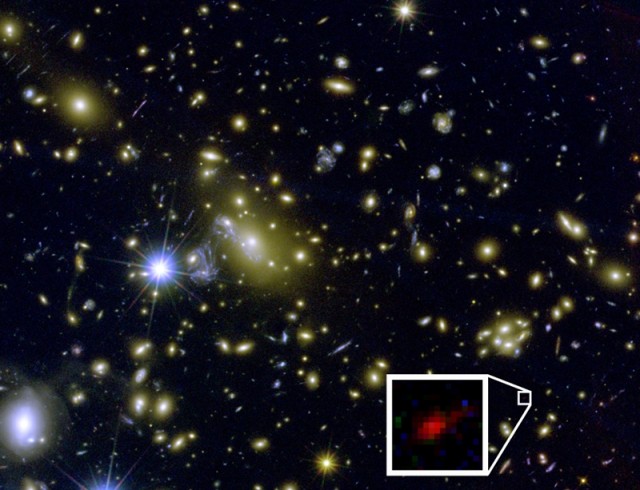
    Feast your eyes on this image…

    Image credit: The CLASH team/Space Telescope Science Institute

    The tiny object in that inset may not look like much. A blurry smudge of red pixels. Not nearly as dramatic as the stunning bouquet of galaxies all around it. But in astronomy, not everything is quite so straightforward. That small red smudge is probably the most exciting thing in this whole image. You see, it too is a galaxy. An unimaginably ancient one.

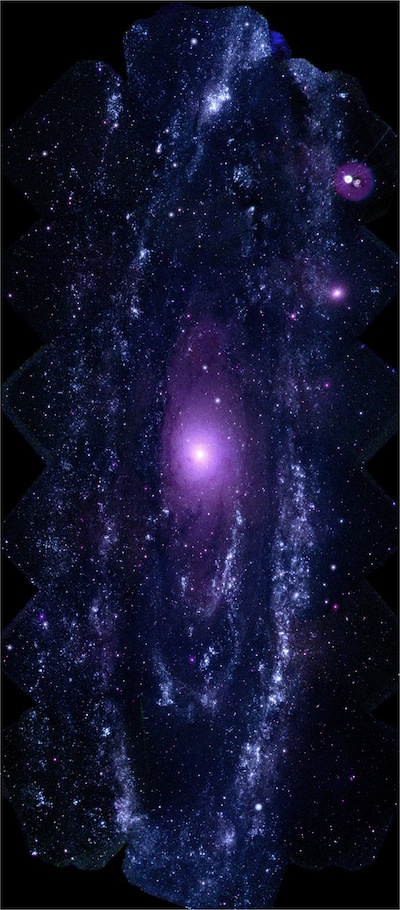
    An ultraviolet image of the nearby Andromeda Galaxy – possibly similar to what we might see of MACS 1149-JD if we could get a more detailed view… Credit: NASA/Swift/Stefan Immler (GSFC) and Erin Grand (UMCP)

    The light that made this unassuming red dot left its source less than 500 million years after the Big Bang and the birth of the Universe. The photons that make up that light have been travelling for over 13.2 billion years. This galaxy was blazing brightly as the oldest known stars in our own galaxy, the Milky Way, were just starting to shine. Back when the gas which would one day become the Sun was still drifting silently amongst stars which are now long dead, and before planet Earth was even a whisper of interstellar dust. Before a massive star forged the iron atoms in your blood, and before a supernova scattered those atoms into space. Before anything we know from the world around us existed, even the stars we see as we look up to the night sky, this galaxy was shining in the dark.

    The Universe was a much smaller place back then. Over the billions of years these photons have been travelling, the Universe itself has expanded with them in the midst of it – stretching them out, redshifting them to longer and longer wavelengths. The light we see here as red was probably ultraviolet once, when it left the galaxy which created it.

    Ancient galaxies like these are difficult to see, purely because they’re so distant. So few photons make it this far that only the most sensitive telescopes can make them out, and even then they need a helping hand. The bloom of galaxies in this image is a massive galaxy cluster called MACS J1149+2223. A collection of galaxies bound together by gravity, clusters like these are some of the largest and most massive objects in the Universe. With that much mass gathered together, gravity starts to do some interesting things, and one of the most interesting is gravitational lensing. Because the gravity of all of those galaxies distorts spacetime, it actually causes the space around the galaxies to act like a titanic lens. A gravitational lens. The ancient red galaxy in this image is only visible because it’s magnified, not only by the Hubble Space Telescope, but by that gravitational lens too.

    It would be naive to assume that this galaxy, dubbed MACS 1149-JD, is special somehow. Instead, it’s most likely to be one of a huge number of primordial galaxies. Except that this one just happened to be in the right place at the right time. A whole population of these ancient galaxies were likely shining brightly at the time, full of hot stars which were driving the reionisation epoch – the time when the Universe went from being an opaque, dark fog, to a clear place where photons could travel long distances. The photons in this image may well have been some of the first photons to have travelled through that ancient and newly transparent Universe.

    The scientific paper is available from Nature – DOI: 10.1038/nature11446

  • Weekly Science Picks

    Weekly Science Picks

    It’s been an interesting week for science news, and I’ve been lucky enough to be asked to give this week’s science picks! This made me spend a little while sipping contemplatively on a cup of vanilla iced coffee and wondering where to even start…


    The articles I’ve selected are, of course, slanted towards my own (rather geeky) interests, but all the same I hope you find them all as fascinating as I did!


    First up, the news that Star Trek style warp drives may actually be possible, at least in theory, made me exclaim “Oh wow!” out loud. Fortunately, people who spend any time with me are generally used to me talking to myself while staring at a computer screen…

    Warp Drive May be More Feasible than Thought

    “Everything within space is restricted by the speed of light. But the really cool thing is space-time, the fabric of space, is not limited by the speed of light.”
    – Richard Obousy, president of Icarus Interstellar


    Artists impression of Mimivirus, the first giant virus to be discovered. Image Credit: InvaderXan/Wikimedia Commons

    From the vastness of space to life under the microscope, biologists have been debating for years whether or not viruses qualify as a form of life. The latest evidence is that they may indeed be a life form in their own right, and an old one at that!

    Giant Viruses are Ancient Living Organisms

    They found that many of the most ancient protein folds in living organisms were present in the giant viruses, which “offers more evidence that viruses are embedded in the fabric of life,” Caetano-Anollés said.


    Heritage Daily had a fascinating article about the archaeology of the future, and what precisely our distant descendents may one day think of us and the way we lived…

    The Archaeology of the Future

    The point is that most of what survives will not be determined by conscious decisions on our part. This may not be for want of trying, as shown by the current popularity of time capsules. The most impressive of these must be the KEO satellite, due to be launched in 2014 and to return to Earth 50,000 years later.


    And speaking of what we know of the past, it’s been shown again and again that our primitive relatives, the neanderthals, were likely not the brainless savages they’re often depicted to be. Evidence suggests that neanderthals liked to collect bird feathers as ornaments.

    Neanderthals Used Feathers as ‘Personal Ornaments’

    “I think this is the tip of the iceberg,” said Prof Finlayson: “It is showing that Neanderthals simply expressed themselves in media other than cave walls. The last bastion of defence in favour of our superiority was cognition.” Neanderthals, he said, may have been “different”, but “their processes of thinking were obviously very similar”.


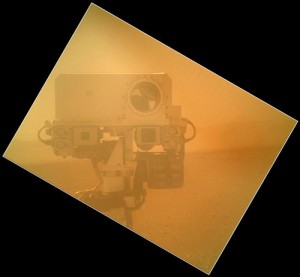
    Curiosity self-portrait. Image Credit: NASA/JPL-Caltech/Malin Space Science Systems

    As the Curiosity rover settles into its new home in Gale Crater on our neighbouring planet, one small worry is growing in the backs of the minds of certain NASA scientists. Could a blunder on the part of some engineers lead to Curiosity contaminating the surface of Mars with Earth life?

    Drill Bits on Rover Could Contaminate Mars

    John D. Rummel, a professor of biology at East Carolina University, said, partly in jest: “It will be a sad day for NASA if they do detect ice or water. That’s because the Curiosity project will most likely be told, ‘Gee, that’s nice. Now turn around.’ “


    And finally, planet hunters are scouring the sky for exoplanets. Astrobiologists are hoping to soon be able to look into the atmospheres of those planets in search of life signs, in the form of certain molecules created by living organisms. But could they be fooled by those molecules coming from somewhere else?

    Meteors Might Add Methane to Exoplanet Atmospheres

    One key gas astrobiologists looking for extraterrestrial life would concentrate on would be oxygen […] Another possibility would be methane, a colorless, odorless, flammable organic gas that microbes on Earth produce. Seeing both together in an exoplanet’s atmosphere might be an especially significant sign of life, since they would both ordinarily remove each other from the atmosphere without something like life to constantly replenish them.


    Have a good weekend!

  • The Mathematics of War

    The Mathematics of War

    Scientists often exercise a certain detachment when doing their work. I’ve often seem friends and colleagues get “lost in the numbers” and forget precisely what it is they’re looking at and what those numbers actually mean. However, in some cases this may not be a bad thing. For instance, in the analysis of conflict data.

    Putting aside any personal reactions and moral implications of what you’re really looking at may not be easy for everyone, but analysis of conflict data is important in predicting the behaviour of wars and potentially minimising risks and harm in the future. Technology is marching on, and as a result the amount of data being collected from war zones is huge. With the state of social media, internet resources like Twitter and Facebook have proven to be valuable sources of information, providing a quick way to share information with people trapped in the middle of troubled areas – a remarkably significant use which I’m sure no one could have ever predicted when these services originally started up. The problem for researchers lies in how exactly to use that data. Constructing a model of how a conflict will unfold and making predictions from it may be vital in stopping things from escalating out of control. Unfortunately, such predictions aren’t easily made.

    The idea that the movements of masses of people could be predicted is not a new one. In fact, in his typically insightful manner, the idea was first devised by Isaac Asimov who created the fictional science of psychohistory, featured in his 1951 novel Foundation. Asimov’s ideas weren’t without firm basis in reality, and while the details may be different, it seems like the concept of psychohistory may not be quite so fictional after all.

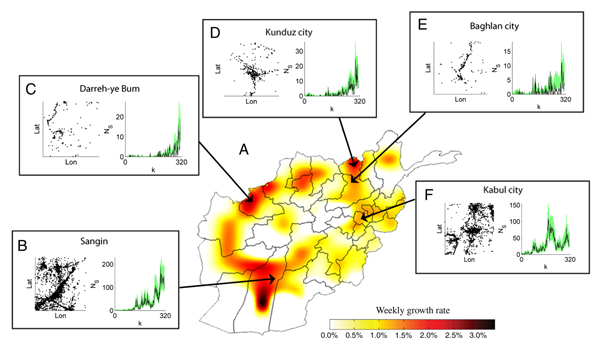
    Predicting the Afghan War Diaries

    The Afghan National Army at Kabul Military Training Centre (2009)

    Between then, a group of researchers based in Edinburgh and Sheffield in the UK and New York decided to try a different approach. They noted that most of the data analysed previously didn’t go beyond simply visualising what had been seen and recorded. Actual predictions had proved too challenging, not least because it hadn’t been clear how to actually model the data available.

    This group of researchers, led by Guido Sanguinetti, constructed a set of methods to use statistical dynamic modelling to make predictions on conflicts such as the recent war in Afghanistan. They needed to look at the times and locations, as well as how information was transported from place to place. They decided that the best way to analyse how a conflict unfolded was to treat it the way other researchers model environmental events and the spread of infectious diseases. In many ways, these events proceed in ways very similar to outbreaks of violence during conflicts.

    In this case though, Sanguinetti and his colleagues had an ace up their sleeve. Courtesy of the now infamous whistleblowers at WikiLeaks, a huge disclosure of US military logs from the Afghan conflict had been made in 2010. Known as the Afghan War Diary, this set of records drew a lot of attention internationally on its release and also served to be the ideal way of testing the effectiveness of any predictions. Essentially, Sanguinetti and the others could use their models to make predictions on the conflict and then check against the released reports to see how accurate they’d been.

    Conflict climates

    Remarkably, based entirely on written reports between 2004 and 2009, they were able to predict with impressive accuracy, what events would occur in 2010. In short, using nothing but some clever mathematics, the researchers could tell what would likely happen next. Where conflicts would increase in intensity and where things would remain quiet. And this isn’t even a comprehensive model yet. There are many adjustments which can still be made to improve the accuracy still further. Even accounting for sudden changes, like the dramatic increase of US forces in Afghanistan in 2010, the predictions remained accurate. Evidently, events will continue unabated despite any large military offensives which may be taking place.

    The war in Afghanistan has not been of the traditional type between two armies. Instead, the conflict there has been irregular, involving a huge number of loosely connected groups. This may be the reason why a relatively simple model works so well in predicting the behaviour of those groups – where and when violence would escalate. This sort of behaviour is typically the sort that large scale armies have trouble in countering due to the lack of any centralised organisation. Mathematically speaking, it genuinely becomes a lot like trying to predict the weather.

    To me, this kind of work offers some hope in resolving serious conflicts as quickly as possible. Being a pacifist myself, I abhor violence of any kind, and the ability to predict and avoid any serious bloodshed is certainly a good thing. Whatever your feelings on it, the ability to predict violence in conflict situations the same way meteorologists predict the weather has some potentially very useful possibilities.

    A visualisation of the increasing number of events recorded in the Afghan War Diaries (A) compared with predictions of events occurring (B-F).