Tag: science

  • Science Weekly Picks

    Science Weekly Picks

    Being responsible for picking the week’s most interesting science stories is a fun and fascinating challenge. It pushes to me to look beyond my own interests and explore what others find compelling. So I trust you find my ‘science making news’ selection of interest and delight; explore the quantum, human, off-world and mathematical highs of the week.

    On the human scale an international team of scientists has been investigating the antibiotic properties of sweat. More precisely they discovered how a natural antibiotic called dermcidin, produced by our skin when we sweat, is a highly efficient tool to fight tuberculosis germs and other dangerous bugs.

    Their results could contribute to the development of new antibiotics that control multi-resistant bacteria.

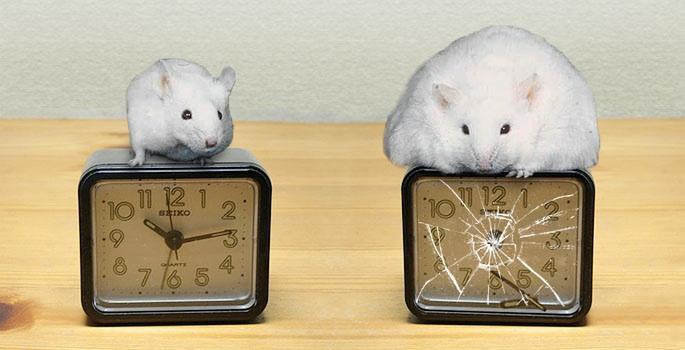
    The benefits of a good nights sleep once again are news. Researchers have shown that the disruption in the body’s circadian rhythm can lead not only to obesity, but can also increase the risk of diabetes and heart disease.

    Our study confirms that it is not only what you eat and how much you eat that is important for a healthy lifestyle, but when you eat is also very important.
    130221091829-large
    Disruption of body’s circadian clock increases risk of obesity, diabetes and heart disease. (Credit: Daniel Dubois, Vanderbilt University)

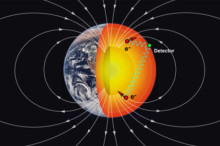
    At the quantum scale, the particle physicists are at it again. Not content with discovering the Higgs Boson they are shedding light (pardon the pun) on a possible 5th force in nature. In a breakthrough physicists have established new limits on what scientists call “long-range spin-spin interactions” between atomic particles. These interactions have been proposed by theoretical physicists but have not yet been seen. If a long-range spin-spin force is found, it not only would revolutionize particle physics but might eventually provide geophysicists with a new tool that would allow them to directly study the spin-polarized electrons within Earth.

    The most rewarding and surprising thing about this project was realizing that particle physics could actually be used to study the deep Earth.

    The latest news from Mars is that curiosity has relayed new images that confirm it has successfully obtained the first sample ever collected from the interior of a rock on another planet.

    Many of us have been working toward this day for years. Getting final confirmation of successful drilling is incredibly gratifying. For the sampling team, this is the equivalent of the landing team going crazy after the successful touchdown.

    To wrap up with one further piece of geek excitement. On January 25th at 23:30:26 UTC, the largest known prime number, 257,885,161-1, was discovered on Great Internet Mersenne Prime Search (GIMPS) volunteer Curtis Cooper’s computer. The new prime number, 2 multiplied by itself 57,885,161 times, less one, has 17,425,170 digits. With 360,000 CPUs peaking at 150 trillion calculations per second, 17th-year GIMPS is the longest continuously-running global “grassroots supercomputing”project in Internet history.

    Until next week’s Australian Science review, go geekily crazy and enjoy your weekend.
  • Connecting the Quantum Dots

    Connecting the Quantum Dots

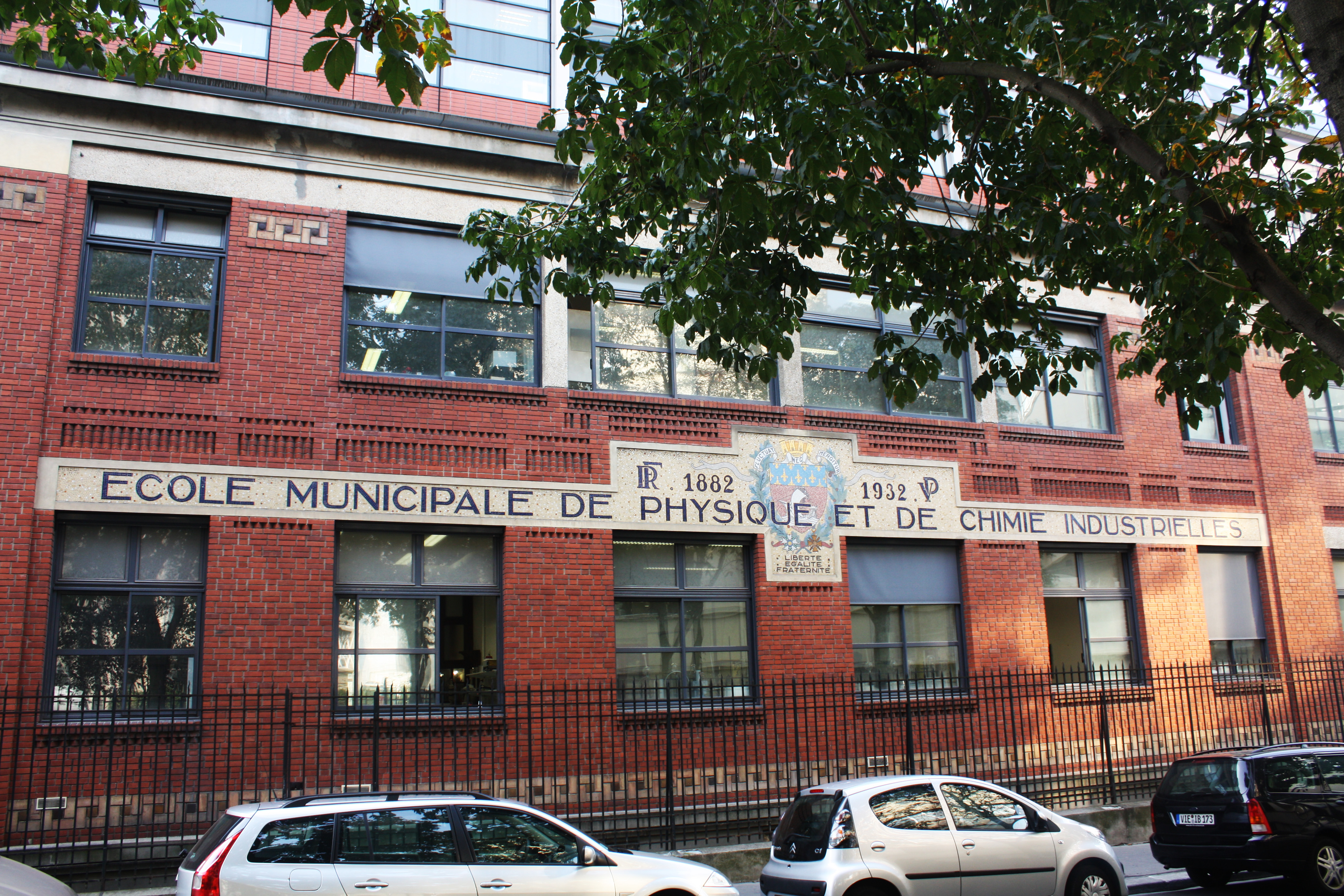
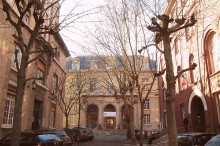
    Last week, after I spent a couple of days  in Brest, Brittany at a ESF, EU workshop/seminar brainstorming with other internet and scientific researchers on interesting topics related to  internet science and innovation,  I got myself back to Paris. I visited a French national institute with an international reputation for  scientific excellence – ESPCI (École supérieure de physique et de chimie industrielles) and the CNRS department of Physics, Quantum Foundations – a group dedicated to  research on quantum effects in materials. Also, I took the opportunity to meet up with two Australian Science writers who reside in Paris: Rayna, and Charles.

     ESPCI Paris Tech stands for Physics and Chemistry Higher Educational Institution (a French “Grande École d’ingénieurs”). Founded in 1882, ESPCI is a major institution of higher education – an internationally renowned research center, gathering  leading scientific innovators like Nobel Prize laureates Pierre and Marie Curie, Paul Langevin, Frédéric Joliot-Curie, Pierre-Gilles de Gennes, and Georges Charpak.

    ESPCI ParisTech
    ESPCI ParisTech

    At ESPCI, I met with Arjen Dijksman, a physicist and researcher interested in tiny semiconductive nanoparticles, known as “quantum dots

  • Talking the Language of Science

    Talking the Language of Science

    I have mentioned before that part of the reason why I like science so much is that you get to play with stuff. It might come as no surprise then that I begin each year with a game called “Mrs Spencer Says

  • Australia’s National Science Agency – Focused on the Future

    Australia’s National Science Agency – Focused on the Future

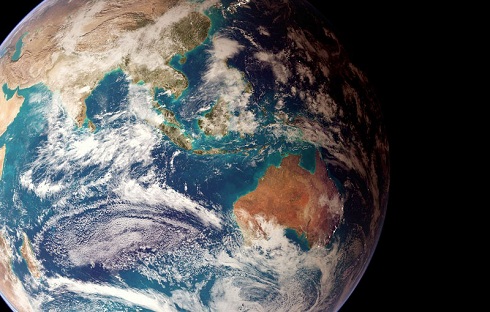
    Our little blue marble...I find myself spending a lot of time thinking about the future of our society and planet – how we can solve problems of today and prevent those of tomorrow. Quite often I draw up battle plans on scrap paper in preparation for those policy battles we don’t even know exist yet, those looming around the corner. Thinking I knew the CSIRO website in and out, you can imagine my delight when I stumbled upon CSIRO Futures. This forward thinking, strategic planning group is dedicated to helping government and industry make the tough, and smart, choices that will be critical given our uncertain future.  

    Wanting to learn more about this group’s work and impact, I reached out to Dr Stefan Hajkowicz, the Theme Leader for CSIRO Futures. This is our digital conversation about science, education, energy, and what Australia must do to secure its future.

    Can you provide some historical background on CSIRO Futures? What was the impetus for the creation of this unit? How and when did it come about?

    The birth of CSIRO Futures was somewhat serendipitous. In 2009 we started a small internal think-piece to inform CSIRO strategic planning. It wasn’t ever intended for the outside world. However, at a major Industry and Government conference in Melbourne a video link to Boston Consulting Group (BCG) broke down. That was our lucky break. Someone from BCG was going to deliver a talk on “megatrends”. When the video link broke I was asked to step in and cover the session with our own homegrown megatrends. The audience loved the fact this work was also being done down-under and we subsequently received heaps of offers to present the work in boardrooms and at conference keynotes. We later received requests to do foresight research/consulting projects for industry sectors. So that’s when we set up CSIRO Futures. It’s now running pretty well. We’ve delivered a bunch of projects and more are in the pipeline. Our aim is to inform, engage and from time-to-time entertain.

    Can you describe your role as theme leader at CSIRO and the impact this role has had (or will have) on the future of science?

    This is an interesting role in CSIRO. In fact – I love it. I was appointed in July 2012 and it’s been fascinating and productive. This role is having impact in many ways. One way is that it’s making science accessible to people in industry, government and the community. For many people CSIRO means evidence-based, robust and well-researched information. When the CSIRO logo is mixed with imaginative stories about the future of the world there’s much interest. The aim is to mix science fact with science fiction to inform people’s decision making.

    The report “Our Future World: Global megatrends that will change the way we live

  • New leader of CSIRO Astronomy and Space Science division

    New leader of CSIRO Astronomy and Space Science division

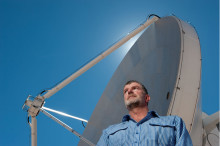
    CSIRO’s astronomy, spacecraft tracking and space science activities will be headed up by a new leader, with the announcement today that Dr Lewis Ball has been appointed as the incoming Chief for CSIRO’s Astronomy and Space Science (CASS) division.

    Dr Ball returns to CSIRO from his present role as Deputy Director at the Atacama Large Millimeter/sub-millimeter Array (ALMA) located in Chile. There he has led the successful commencement of ALMA’s scientific operation, currently the world’s largest and most complex astronomical observatory and a partnership involving 20 countries.

    “I look forward to enhancing and building on CSIRO’s national and international reputation in the fields of radio astronomy and space science. I’m excited and honoured to be leading such a world-class team and thrilled to be a part of the international SKA effort.”

    Previous to his ALMA appointment, Dr Ball had been with CSIRO for nine years in a number of management roles including leadership of CSIRO’s astronomy division from February 2009 to May 2010, first as Acting Director of the Australia Telescope National Facility (ATNF) and then as Acting Chief of Astronomy and Space Science.

    As the new CASS Chief, Dr Ball will lead approximately 280 staff and be responsible for a world-class national research facility for radio astronomy that includes three existing radio telescopes, as well as the 36-dish Australian Square Kilometre Array Pathfinder which begins operations this year.  Dr Ball will also be responsible for driving CSIRO’s contribution to the first phase of the Square Kilometre Array telescope in Australia and for heading up, on behalf of NASA, the Canberra Deep Space Communications Complex based at Tidbinbilla.

    Dr Ball’s appointment fills the role made vacant by Dr Phil Diamond, who left CSIRO in October 2012 to take up the position of Director General of the SKA Organisation.

    Group Executive for CSIRO’s Information Sciences, Dr David Williams, welcomed Dr Ball’s appointment.

    “Following an international recruitment search, we are delighted to see Lewis returning to CSIRO. Lewis has had enormous success in his career so far and we’re thrilled to have someone of such high calibre joining our leadership team,” Dr Williams said.

    Dr Ball added, “I look forward to enhancing and building on CSIRO’s national and international reputation in the fields of radio astronomy and space science. I’m excited and honoured to be leading such a world-class team and thrilled to be a part of the international SKA effort.”

    Dr Ball will commence as Chief of CSIRO’s Astronomy and Space Science division on March 18, 2013 and will be based at Marsfield in Sydney.

    Source.

    Image: Dr Lewis Ball has been appointed as the incoming Chief for CSIRO’s Astronomy and Space Science (CASS) division. Photo credit: ALMA(ESO/NAOJ/NRAO), M. Alexander (ESO)

  • Sometimes it’s hard to be a woman (in science)

    Sometimes it’s hard to be a woman (in science)

    Obtaining a senior academic position for any aspiring young academic is one of those uphill struggles with roads lined with self doubt, setbacks and sacrifice. Some call it the way to tenure-track, in my mind it’s one of those ill-defined paths through a potentially haunted forest inhabited with monsters, gigantic poisonous spiders and creepy people who communicate by screaming. It can be harder still to even reach that point, particularly for young women. While the number of women professors in Europe, N. America and Australia has increased over the last decade, universities still have a disproportionately small number of women in senior professorial positions.

    forest
    (more…)

  • Weekly Science Picks

    Weekly Science Picks

    Last weekend in January brought exciting and interesting events, reports, and readings.  Monthly editorial is coming out next week, don’t miss wonderful readings written by Australian Science writers and bloggers. Enjoy in this week science picks, and have a great weekend!

    Library services in the digital age  – new report by the Pew Internet Research

    The internet has already had a major impact on how people find and access information, and now the rising popularity of e-books is helping transform Americans’ reading habits. In this changing landscape, public libraries are trying to adjust their services to these new realities while still serving the needs of patrons who rely on more traditional resources. In a new survey of Americans’ attitudes and expectations for public libraries, the Pew Research Center’s Internet & American Life Project finds that many library patrons are eager to see libraries’ digital services expand, yet also feel that print books remain important in the digital age.

    In the past generation, public libraries have reinvented themselves to become technology hubs in order to help their communities access information in all its new forms,

  • Zorbing: Adventures in a Hamster Ball

    Zorbing: Adventures in a Hamster Ball

    OzBall - Zorbing on the Gold Coast
    OzBall – Zorbing on the Gold Coast

    Zorbing

    It was a cloudy day, but we headed down the M1 towards the Gold Coast. Arriving at our destination around 9/9:30AM. Destination: OzBall.

    It was about a year ago I had seen video of this amazing, thrilling ride. A weatherman on Sunrise 7 strapped inside a huge plastic ball rolled down a hill. This is called zorbing. Apparently it has been around for decades and can be found in quite a few countries. I knew I must try this on my next trip to Australia. Despite bewildered looks and headshakes from my family, I was going zorbing.

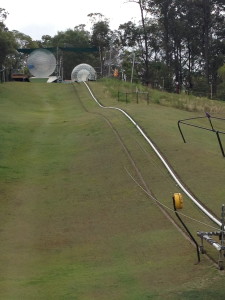
    We left the car in the car park and walked through a field to the entrance to OzBall Park. It’s a little off the beaten track. But there it was, a huge grassy hill, the zorb shining in all its glory at the top. Beckoning, if we dare.

    OzBall has two zorbs. One is the Hydro Ride where 1-3 riders slosh around in water within the zorb. To me, it’s what being trapped in the washing machine on the delicate cycle would look like. The other is the Harness Ride. The real deal; where you’re strapped to the wall of the zorb facing your fellow zorber, all zany-eyed and excited because you’re a self-described thrill seeker! Little did I know that ride was to exert every known (and unknown) calculable physical force on my body. There was no line or wait for the harness ride. Hmmm.

    The Zorb (The Hamster Ball)

    You enter the zorb by pulling yourself through a tunnel-like entrance. The zorb is massive – measuring about 3 metres (10 ft) in diameter. Tucked inside is an inner orb about 2 metres (6 ft 7 in). The space between the two orbs creates a shock absorbing, air cushion, connected by hundreds of small nylon strings. The tough, durable plastic is approximately 0.8 millimetres (0.03 in) thick. Shackled securely in my seat by 3 safety mechanisms: the chest harness, lap belt and ankle restraints; I felt completely safe.

    The Ride

    140 metres (459 ft) is not a long distance. And the speed seemed along the lines of a kid’s carnival ride, reaching up to 30 KPH (19 MPH). I didn’t factor into account the slope of the hill. And it’s not merely an up and down motion, but a side-to-side motion as well. I think you can see where I am going with this. I got way more than the adrenaline rush I bargained for. No projectile vomit or anything of the sort. Just a lot of screaming and wishing for it to be over. It seemed an eternity had passed. The zorb paused. The zorb started moving again. More screaming. The only words I could get out of my mouth were, “Oh, it’s not over yet!” Rolling down the hill, eyes open, eyes shut, trying to stare out the porthole at the grass to fixate my glaze on a constant sight. Finally. The. Zorb. Stopped.

    Lawnmower martini. Not sure what that is, but that’s what I felt like. I could hardly speak, but got out of that zorb as fast as possible. Slight dizziness, wobbly, and an insane amount of belching from all the air trapped inside my stomach. The OzBall operators offered us a free hydro ride for being such good sports. I politely declined the invitation.

    Why Zorbing?

    The point of this story is that it is an incredible opportunity for learning about physics! And how fun science can be when applied to wacky and crazy ideas! I always wanted to go to the theme park on a field trip to ride roller coasters and learn about the forces at work. OK, I really just wanted to ride roller coasters. Man, some science classes were so lucky!

    Whether it’s an activity like zorbing, or riding roller coasters, biking, skiing or skateboarding, science is involved. Tools working in tandem with the human body for the benefit of amusement. How far you decide to delve into the science behind each is up to you. I believe that is how to keep science fun and entertaining and keep the kids coming back from more. Education could take a cue from zorbing’s playbook – just let go and roll down the hill.

    As for me, I’m glad I tried it; ticked the zorbing experience box. If you saw that episode of Modern Family where Phil does everything in his power to remain a roller coaster fanatic so he can retain that bond with his son, Luke; then you know what I’m talking about. But I’m going to lock this one away and slowly try to rebuild my street cred. (Thank goodness we didn’t opt for the video!)

    Warning: Zorbing has been labelled an “adventure sport”, like bungee jumping or skydiving and can be dangerous if the right precautions are not taken. Even riding a roller coaster can sometimes end in tragic results. Deaths from zorbing have occurred, one in Russia just last week. A grassy hill with a catch containment system at the bottom is much different than going down a snowy, rocky mountain. Exercise your best judgement and caution if you are going to attempt zorbing.


  • The Highlights of 2012

    The Highlights of 2012

    As 2012 draws to a close and the new year begins, now is a good time to wrap things up and recapitulate the year just passed. It’s been an exciting year with plenty of interesting happenings in science, technology, and education. Despite the fact that we aren’t especially keen on top 10 lists (because all of our authors are fantastic and inspirational), here are a few of the highlights from the past year. We hope you enjoy them!

    Mr Boson, I presume…? / A Brand New Boson

    The news that CERN had detected a signature matching the much sought after Higgs boson was the biggest news this year in physics. While physicists at the LHC still aren’t 100% certain what they’ve found, one thing is for certain – they’ve definitely discovered something never before seen, and it definitely seems to match what’s expected for the Higgs boson. Now it’s up to the theorists to work out if this will confirm existing theories, or if it will require brand new physics to be devised to explain it!

    “It’s a bit like spotting a familiar face from afar,

  • Weekly Science Picks

    Weekly Science Picks

    Cosmic Evolution Connectedness
    Cosmic Evolution Connectedness

    It’s that time again! Time for Weekly Science Picks! Let’s dive in.

    This is interesting. This could really make things interesting. You just need to read this article on climate change and emissions that appeared in The Australian. It opens up a whole can of worms for debate, which I may tackle later, so feel free to leave a comment. I’d love to hear some thoughts on this.

    Doha sets up $3bn hit for taxpayers as climate deal fails to deliver on emissions targets by David Crowe

    “We can’t be allowed to free ride off the suffering of others,” he said yesterday. – John Connor, chief executive, Climate Institute


    This is one of those stories that gets you excited and makes you wish you were part of that research team on assignment. I am anxiously awaiting the results. Earlier this week, drilling began at Lake Ellsworth in Antarctica. This project is testing the environments of where life is possible and has implications for future space exploration and discovery.

    Drilling begins at lake hidden beneath Antarctic by David Shukman

    “Exploring for life in such an extreme environment – in pitch-black conditions under high pressure beneath the ice-sheet – could open up possibilities for life on other worlds such as Jupiter’s moon Europa.” – Professor Martin Siegert, chief scientist


    There’s so much focus and emphasis on space these days, that we forget about that big blue thing that covers 71% of our planet and is in need of some major TLC…ah, the ocean! The Argo data program started in the late 1990s and has since been put to use in weather and climate models. It’s also playing a major role in ocean forecasting, such as responding to environmental emergencies, helping the shipping industry and promoting safety at sea.

    Ocean science robot revolution hits symbolic millionth milestone by CSIRO

    “The world’s deep ocean environment is as hostile as that in space, but because it holds so many clues to our climate future exploring it with the Argo observing network is a real turning point for science. – Dr Susan Wijffels, Argo co-Chair and CSIRO Wealth from Oceans Flagship scientist


    And tying it all back to the source of what’s important, the kiddos. This last pick comes from one of our very own Australian Science authors, Danielle Spencer. Here Danielle examines the importance of play-based learning in the science classroom.

    We’re Just Playing, Science by Stealth by Danielle Spencer

    Play-based learning is highly sanctioned in early year’s curriculum, but why do we need to stop? Ask any child who doesn’t like science and it’s about too much writing, too much theory, too much bookwork. Maybe, we just should let them play some more.


    Stay thirsty for knowledge, my friends. Stay thirsty.

  • Best of Australian Science: November 2012

    Best of Australian Science: November 2012

    It’s the last day of November, my research project is getting into its final stage, and  here I’m wrapping up this exciting month with plenty of wonderful science and technology stories, events, and new sci-blogging contributors.  We have new female bloggers joining the Australian Science knowledge and sci-blogging community. The initiative I had in mind couple of weeks ago, to invite and encourage girls and women in science, technology, and education, is coming to fruition. We started a Women in Science section, encouraging young female scientists and bloggers to write, interact, and get their ideas and voice heard.
    Also, we started the new initiative called Education Thursdays (hashtag #EducationThursdays) where teachers and  curriculum leaders at different levels of education blog and write about their experiences and share their ideas on gender issues in science, STEM, participation, and engagement. I invite here, both students and teachers/educators, if interested, to write and join our team and, each Thursday, contribute and share with others.

    Take a look at the wonderful stories and articles on neuroscience, space, genetics, biology, environment,  astrobiology, cosmic evolution, physics, quantum mechanics, education, publishing, and technology. The best of Australian Science for November 2012:

    Tasting colours and seeing sound: Synaesthesia by Lauren Fuge

    One hears a sound but recollects a hue, invisible the hands that touch your heartstrings,

  • Hands on Science in the Early Years

    Hands on Science in the Early Years

    Hands on science activities to engage students in scientific inquiry and investigation are key in the early years to develop skills and knowledge in all areas of science. No one knows this better than Mrs Suzanne Clarke who is the founder of the mini-scammers science club at Mitchelton State School, a feeder club for SC@M (Science Club at Mitchie).

    Hands on learning in the early years.

    Established just this year, the junior science club encourages students in the early years to formulate hypothesis, carry out experiments and discuss their findings with their peers directly mirroring the similar process used in later years. Student work in multi-aged groups to manipulate materials and equipment, generate solutions and compare their results. As Mrs Clarke highlights “this method of discovery learning engages all children and promotes the use of multiple intelligences

  • Is India a nation of geeks?

    Is India a nation of geeks?

    Angela Saini, in her book Geek Nation: how Indian science is taking over the world, wants to convince us that Indian science is taking over the world. Now any well read student of the physical and mathematical sciences will be able to provide you with notable scientific contributions. Even the Indian constitution abjures: “It shall be the duty of every citizen of India to develop the scientific temper”. Does “Indian science” exist, and if so what makes it special?

    First, pause and contemplate the following statistics. India is the world’s largest democracy: with a population over 1.23 billion (more than 1 in 6 of the world’s 7.14 billion total population are Indian). India has 415 living languages, with 22 having more that 1 million native speakers – 41% of the population speak Standard Hindi – India’s official language. Some states have their own language as the sole language; Maharashtra (capital Mumbai) has 72 million native Marathi speakers. There are 28 Indian states, the smallest Arunachal Pradesh has 1.3 million people, while the largest, the Hindi speaking Uttar Pradesh, has 199.6 million people, and includes the growing cities of of Lucknow and Kanpur. India is also birthplace to four of the world’s major religions, of which Hinduism has 80.5% of the Indian population as followers. India has a large Muslim following at 13.4% of its population, the third largest Muslim population in the world. Despite so many languages the 2010 adult literacy is 63%, with 8% internet users and a staggering 61 mobile phones per 100 of population. With an improved 88% having satisfactory water facilities only 31% of the population has satisfactory sanitation facilities.

    These statistics underlie what a competent revelation Saini’s book is. The diversity of topics is to be applauded. Saini has a breezy, almost whimsical style in introducing topics and providing Indian settings for an perspective of each topic.

    In particular I liked her mature handling of two hot-button topics: nuclear power and genetically modified foods. To many in the developed world energy and food security are lifestyle discussions – in India they are of life-and-death importance for many millions of the population, both now and the future.

    Saini manages a well-reasoned discussion of the energy option for India – looking in detail at one important option. A visit to the Bhabha Atomic Research Centre provides a first hand glimpse of India’s nuclear aspirations, and reasoning behind it. The ensuing discussion on the indigenous development of thorium based nuclear technologies was both fascinating and compelling. From an economic point of view this development would seem to be a necessity if India is to manage its growth and not burn coal and become a major polluter such as the USA or China. They see this as a crucial intermediate step to a solar energy future. My caution is that India is yet to sign either nuclear ratification or nuclear weapons non-proliferation treaties, a point the author fails to mention.

    Similarly a trip around the markets provides a great introduction into genetically modifies crops. India is by both legislation and custom a country of small rural-family run farms. These rural communities are poor and very much at the mercy of the elements. Saini presents a reasoned and sensitive discussion on the development of genetically modified crops (such as a long-life banana) that are relevant to ordinary Indians. There is a greater acceptance of these crops amongst the rural farmers than you first might imagine – provided they are cheap and preferably developed in India.

    In addition Saini provides a fascinating look at the development of tuberculosis drugs, the use of electronic documents to speed up the notoriously slow bureaucratic and legal systems of India, as well as electronics and information systems companies. We are taken to the Vikram Sarabhai Space Centre to get a first-hand update on the Indian space program and aspirations. Saini comments, “There’s something unimaginably ambitious about the speed and scale of India’s space programme, as if it’s no longer content fulfilling its early goals of sending up satellites so ordinary people could have colour television and cheaper mobile phone connections. Now it seems India has something else to prove.” With a successful first moon-shot India has established itself as a space power – only lacking a manned mission.

    In amongst all of this excellent investigation and examination there was one discordant section. “The mindreading machine” discusses a the use of an Indian lie-detector test based on brain wave measurements. The test has been used as legal evidence in cases, including one of murder, in Indian courts. Saini voices disquiet at this ‘science’ yet at no stage does she state the obvious – that this is not science. There are no theories supporting its claims, no peer review nor double-blind tests to give any credence to the claims. I expect that a science writer would point this out, explicitly; Saini doesn’t.

    Including this item in the book highlights a very fascinating aspect of what Saini sees as quintessential Indian science. Indian science nurtures the nutty, allowing questions to be asked and curiosity to be followed before they are shouted down by a conservative mainstream view of what is appropriate science. Interesting scientific and technological achievements aside this for me, is the book’s the defining point – India is having an impact far beyond the scientific statistics and measures. Saini’s book is a welcome and worthwhile look at the the idiosyncrasies and successes of the scientific and technological side of India. I’m not convinced it will take over the world, it will certainly influence and impact the direction of science and technology – that will be interesting to participate in.

  • Best of Australian Science: October 2012

    Best of Australian Science: October 2012

    October was a busy month with plenty of events, meet-ups,  moving, research progress, writings, beautiful change of season, new members of the sci-blogging community, and other exciting things. Also, lot of wonderful writings by Australian Science authors, science bloggers, and new intiatives and design of the site that we are working on for some time now.

    Check out our great stories on astronomy, genetics, biology, environment, physical geography, seismology, genetic engineering, public policy, biodiversity, marine biology, oceanography, education, publishing, and technology. The best of Australian Science for October 2012:

    My mega grab-bag of astronomy resources for teachers, students, telescope beginners and space fans by Alan Kerlin

    Whether you are a parent, teacher, student or simply an interested enthusiast, here are a number of interesting sites, podcasts, and social media people for you to draw on as you get going in amateur astronomy. Podcasts provide an amazing resource – all free. Most are available via iTunes, the original publishers’ websites, or a raft of other podcast aggregators. There are very good apps to allow you to download podcasts to your smartphone for listening when suitable. Read more>>>

    For sale: One world class infrared telescope by Markus Hammonds

    The world’s largest and most productive dedicated infrared observatory just went on the market in an unprecedented attempt to try and prevent it from being shut down and dismantled. In a bold move, the directors of the United Kingdom InfraRed Telescope (UKIRT), based on Mauna Kea in Hawaii, have just released a prospectus detailing the telescope’s impressive achievements and capabilities in the hopes that they can find sponsorship and save the observatory from certain doom. That may sound melodramatic, but doom genuinely is the most fitting description. Read more>>>

    The evolution of human mortality by Charles Ebikeme

    How long until we live forever? The general consensus is that we are getting older and living longer. Despite consequences and kryptonite, it is getting easier to stay alive. Heaven can wait, it seems. Every year each baby born is expected to live 3 months longer than its predecessor of the previous year. This has been the case for the last 160 years. A stunning display of the ability we humans have to prolong the length of life. Read more>>>

    Ada Lovelace Day: celebrating women in science, technology, engineering and maths by Jessie MacAlpine

    In the 1800s, Ada Lovelace, an English mathematician, worked with inventor Charles Babbage on a plan for an “analytical engine.