
Tag: science

  • Interview with Joanne Manaster – a multipassionate scientist

    Interview with Joanne Manaster – a multipassionate scientist

    jored2Joanne Manaster is a cell and molecular biology lecturer at the University of Illinois. She currently works as an online course developer and lecturer of science courses for the School of Integrative Biology. Prior to this current position, Joanne has taught histology, cell biology, and tissue engineering laboratories to biology and bioengineering students for nearly 20 years. Beside her academic career, she is a science writer and communicator, science video host, and STEM advocate. Joanne has run a girls’ bioengineering camp, and helped with the iGEM synthetic biology team and other outreach activities. She also makes video reviews of popular science books as well as whimsical science experiments with cats, cookies, gummy bears and make-up.

    Joanne writes about science at her website, Joanne Loves Science and also at Scientific American blogs. She has been named by Mashable as having one of the 25 Twitter Accounts That Will Make You Smarter. You can find her on Twitter as ScienceGoddess.

    Welcome to Australian Science! Would you, please, tell our readers a little bit more about yourself? What is your scientific background, and your professional scope? 

    Thank you for asking me to join you!

    I am a faculty lecturer at the University of Illinois. I initially started my college studies with plans to head to medical school but through my course of studies I found I really clicked with cell and molecular biology and was very adept at lab work. Through various opportunities, I also discovered I had a knack for explaining scientific concepts so eventually changed my path to teach at the university level. I studied muscle development at the microscopic level in grad school and eventually transitioned to teaching cell biology and histology.

    How did you initially get interested in science? When did you start to express your curiosity for science? 

    I always loved nature and had a fascination with human health. I spent a lot of time in nature and did a lot of reading on science topics. I didn’t know any scientists. I knew they existed from reading textbooks, but the whole field seemed shrouded in mystery. However, I understood what doctors did and thought that becoming a physician would be a valid way to pursue my passion for science. As I mentioned above, it wasn’t until college that I realized how scientists did their work, and could then consider that as a career path.

    It is interesting to mention that you are a former international model, back in the days of your adolescence. Did you find something scientific in the world of modeling and fashion?

    As far as modeling goes, I was discovered while I was in high school. Initially, I wasn’t enthusiastic about it but realized it would be a great way to earn money for medical school. While I was modeling, I wasn’t thinking about it in any scientific manner as I was learning to interact with a very new and somewhat foreign world.  It wasn’t until I completed my science training in college did I really start to see how science explained just about everything. In my course of teaching students, I also began to see the value in piquing their interest by talking about things they could relate to in terms of science, and that extends to my online outreach!

    Would you tell us more about your role within executing online courses for current and future science teachers?

    After many years of giving lectures and running laboratory classes which overlapped with my online outreach, I realized that I could apply my ability to communicate online to my instructing position so I transitioned to teaching cutting edge biology through my online program for middle school and high school teachers who want to obtain their Master of Science Teaching. I have designed and executed three courses for this program so far: The Human Genome and Bioinformatics, Evolution and Medicine and Emerging Infectious Diseases. I enjoy mixing primary scientific literature with popular science communication to both train the teachers and to give them resources for their classrooms. Teachers make the best students!

    You have a very unique approach for science book reviews using video as a format for presentation, encouraging everyone to read. Other videos are an interesting and whimsical introduction to the world of science disguised in everyday items. How did you get inspired to make such videos?

    Book reviews are a natural for me. I love to read and I love science! The gummi bear videos began from a question asked by one of my college students. He asked if a gummy bear could be liquefied through the process of sonication (using high frequency sound waves). I then considered how I could subject the gummy bears to other lab techniques!

    One of my favorite videos is Cats In Sinks, which was inspired by a fun website that showed numerous cats in sinks and it made me think I could talk about theoretical vs. experimental science by trying to figure out how many cats could fit in my large lab sink.

    I also really enjoyed using cookies as my models of blood cells to create a series about those cells called “Blood Cell Bakery


  • A Secret Code to the Cosmos is Hidden in the Light

    A Secret Code to the Cosmos is Hidden in the Light

    Are you watching the new Cosmos: A Spacetime Odyssey – the scientific documentary television series? I am, and I’m thoroughly enjoying it! The series is a follow-up to the 1980 television series Cosmos: A Personal Voyage, which was presented by Carl Sagan. The all new Cosmos: A Spacetime Odyssey science documentary consists of thirteen episodes and just like the original program, continues to use a storytelling approach to present complex astronomy and science concepts in an accessible and entertaining manner. The episodes feature the latest information which has been updated since the 1980 series and uses substantial computer-generated special effects and animation to illustrate and enhance the narration.

    The series is hosted and presented by astrophysicist and science communicator Neil deGrasse Tyson, who was inspired by Sagan as a college student. He created a new version of the series, aiming to reach a wider audience and not just those specifically interested in the sciences.

    The entire Cosmos: A Spacetime Odyssey series is dedicated to exploring how we discovered different laws of nature and explaining how scientists found our Earthly coordinates in space and time in relation to the universe and created a vision of the cosmos. Listening to the great narratives, watching the stars, and contemplating the scale of space and time relative to Earth, is enough to humble any scientifically curious soul.

    My favourite episode, called “Hiding in the Light

  • The Science of Translation

    The Science of Translation

    Language is a fascinating and complex part of human society. Not even the most esteemed linguists can put a number on how many languages there are in the world – not to mention the various dialects within those languages (Linguistic Society, 2014).

    What’s most interesting – and what poses the biggest challenges for translators – is that words don’t always have the same meaning in every language. As such, words are not ‘just words’ – they have a cultural and historical background, that only those who grew up immersed in the language can truly understand.

    This ambiguity across languages and dialects is a huge challenge for scientists, in particular, and has been the focus of several research projects. If a scientific study is in French, how can one be certain that its English or Chinese counterpart, for example, holds the same meaning as the original author intended?

    Studies into Translation

    Naturally, a lot of scientific translations have been done. Almost every significant study or piece of research done around the world is likely to have been translated into another language for scholars to read.

    Several studies have looked at the discrepancies, and consequences, that have arisen from poor translation.  Examples include a study conducted in 2011 (Shuttleworth, M.) investigated the translations of 1354 sections of text published across 62 Scientific American articles in several different languages, while Sharkhas (2009) did a quality assessment of English-Arabic translations in popular science. Both found that the key discrepancies related to cultural variations and semantic differences.

    The Translator journal published a very interesting special issue that looked at some of the key studies surrounding science and translation in 2011, which included Shuttleworth’s study.

    Machine translations

    Millions, perhaps billions, of dollars have been thrown into computer-generated translators over the past few decades. But you only need to have a little experience of using the popular Google Translate tool to know that there is still a long way to go. Unfortunately we’re still not at a stage where scientists can put full faith into automated translators.

    Despite how incredibly far we have come over the last 40 years, the same problems exist in translation – language is just too complex.  Philipp Koehn, a machine translation researcher at the University of Edinburgh School of Informatics told the BBC, “Language is always ambiguous, so you can’t always use rules, and new vocabulary is always coming in, so you need someone to continually maintain those rules.” (BBC, 2012)

    The future of translation

    Considering how much has been achieved in the science of translation over the past few decades, there is no doubting we are moving forward and getting closer to more accurate translations.

    There is still a while to go until scientists can fully trust computer-generated translations, however, because in many cases there can significant consequences to poor translations. Imagine if a medical textbook given to new doctors mixed up some key theories?

    So, while travelers, businesses and language students already have access to fantastic tools for everyday translations that are close to reliable, scientists will keep on researching and developing for many years to come.

    Other useful References:
    http://www.simpletranslation.com/
    http://www.ncbi.nlm.nih.gov/pmc/articles/PMC3204888/

  • The Highlights of 2013

    The Highlights of 2013

    This year our writers churned out a host of fantastic articles, including a series of posts dedicated to women in space, written by Sharon Harnett. One of the most notable of the series was all about Valentina Tereshkova, the first woman astronaut. This year was the 50th anniversary of her historic spaceflight. We also had a few great interviews, including one with Henry Reich, creator of the YouTube series Minute Physics.  We’ve managed a number of achievements. We’ve helped several science writers gain exposure and reputation world wide, we’ve appeared on ABC’s Newsline, and we’ve been listed in TED’s top 10 science and technology websites.

    So, in no particular order, here are ten of our favourite articles from 2013. We hope you’ll enjoy these stories. Stay curious and scientifically passionate!

    A Tale of Two STEM Women by Buddhini Samarasinghe

    When I first read this story, I was struck by how often we focus on happy stories like Marie Curie’s, and how the story of someone like Clara Immerwahr remains largely forgotten. She had a tremendous amount of potential, as evidenced by her being the first female to receive a Ph.D at the University of Breslau, an endeavor that is certainly not for the faint-hearted even now. One can only wonder at the ‘might-have-beens’ if she had had the same support and encouragement that Marie Curie did, if she had not married Haber, or if Haber had been a different kind of person. These examples highlight that talent alone is not enough; we need to encourage that talent by promoting equality and recognizing our own biases when it comes to women in STEM. Read more>>


    Sometimes it’s hard to be a woman (in science) by Amy Reichelt

    Obtaining a senior academic position for any aspiring young academic is one of those uphill struggles with roads lined with self doubt, setbacks and sacrifice. Some call it the way to tenure-track, in my mind it’s one of those ill-defined paths through a potentially haunted forest inhabited with monsters, gigantic poisonous spiders and creepy people who communicate by screaming. It can be harder still to even reach that point, particularly for young women. While the number of women professors in Europe, N. America and Australia has increased over the last decade, universities still have a disproportionately small number of women in senior professorial positions. Read more>>


    Spiders on Mars? No, An Australian Radio Telescope! by Elizabeth Howell

    The MWA is a powerful telescope in its own right, but what is even more exciting is it will form part of a larger project in the coming years. The Square Kilometre Array will link radio telescopes on two continents — Australia and Africa — to get a fine look at the sky in radio wavelengths. MWA is just one part of this array. There will also be dish receptors in eight countries in Africa, with the core and some mid-frequency aperture arrays in South Africa’s Karoo desert. Read more>> 


    Hopeful results in latest HIV vaccine trial, but many hurdles to overcome yet by David Borradale

    A HIV vaccine, known as SAV001-H has shown promising results in an early clinical trial, with no adverse effects reported and importantly, a significant increase reported in HIV specific antibodies in participants who received the vaccine. In this trial, 33 HIV positive participants were randomly allocated to one of two groups: half into a treatment group receiving the vaccine and half into a placebo group who did not receive the vaccine. The participants were followed up at regular periods, testing safety of the vaccine and antibody response over a one year period. Read more>>

    Are Australians Really Getting Dumber? by  Magdeline Lum

    The Australian Academy of Science has found that when it comes to science Australians are getting dumber in its latest report on science literacy. Compared to three years ago, less people in Australia know that the Earth’s orbit of the sun takes one year. Among 18-24 year olds 62% surveyed knew the correct answer, a fall from 74% three years ago. Other results would also send scientists into a tail spin of despair, with 27% of respondents saying that the earliest humans lived at the same time as dinosaurs, though an improvement from 30% of respondents in 2010 who thought this. What does this all say? If you take the face value of the press release and the ensuing media coverage, Australians are getting dumber. Read more>>

    From fables to Facebook: Why do we tell stories? by Lauren Fuge

    Storytelling is one of our most fundamental communication methods, for an obvious reason: narrative helps us cognise information. Telling intelligible, coherent stories to both ourselves and others helps our brains to organise data about our lives and our world. But when we askwhy stories are so effective at helping us cognise information, the answers are surprising: it seems that somewhere in the otherwise ruthless process of natural selection, evolution has wired our brains to prefer storytelling over other forms of communication. Read more>>


    Plastic’s Reach by Kelly Burnes

    Plastic. Seems it has extended its reach into the farthest corners of the universe. An earliest post described how plastic has changed our lives, for better…and for worse. ADD link to earlier post. That post largely reflected on the growing problem of plastic in the oceans and the effect on plant and animal life. Now, it seems that plastic threatens our freshwater lakes now too. Read more>>


    Postcard from Spitzer: weather on 2M2228 is hot and cloudy by Kevin Orrman-Rossiter

    Long distance weather reports are now a commonality. The report for 2MASSJ22282889-431026 is somewhat unusual. It forecasts wind-driven, planet-sized clouds, with the light varying in time, brightening and dimming about every 90 minutes. The clouds on 2MASSJ22282889-431026 are composed of hot grains of sand, liquid drops of iron, and other exotic compounds. Definitely not the first place to spend a summer holiday. Not that 2MASSJ22282889-431026 (or 2M2228 as it is known in The Astrophysical Journal Letters) will appear on a travel itinerary anytime soon. For 2M2228 is a brown dwarf, 39.1 light years from earth. Read more>>


    The bacteria that live inside hurricanes by Charles Ebikeme

    Seven miles above the Earth’s surface, where the weather is born, lies the troposphere – the lowest layer of Earth’s atmosphere. Up there, where the clouds dance around, are bacteria that can make it rain, and are important for the formation of clouds. The atmospheric microbiome is a concept and field of study that is gaining importance. As we come to grips with a changing climate and environment, understanding more and more our Earth ecosystem remains vital. With hurricane damage in the US and elsewhere seemingly on an exponential increase in recent decades, it is important to mitigate for the worst. Read more>>


    Quantum computing: Australian researchers store data on a single atom! by Markus Hammonds

    Computing is also an incredibly fast moving field of technology, and research is finally taking us towards the exciting world of quantum computing! Quantum computers will work using quantum bits, or qubits for short, which are analogous to the digital bits used in computers like the one which you’re using to read this article. Recently, a team of engineers at the University of New South Wales (UNSW) has successfully demonstrated, for the first time ever, how a single atom can be act as a qubit, effectively showing the first step in building an ultra fast quantum computer. And they might just have created the best qubit ever made. Read more>>

    Happy 2014 from Markus, Charles, Kevin, Kelly, and Danica!

  • The Future of Fertility Treatment: Advanced Embryo Selection

    The Future of Fertility Treatment: Advanced Embryo Selection

    It is incredible just how far science and technology have come over the last few decades. In the past, men and women with fertility problems had very few options. Nowadays, there are more options than ever before and fertility treatments are becoming increasingly advanced and reliable.

    The latest breakthrough in fertility treatments is here in Australia, where a new technique in preimplantation genetic diagnosis (PGD) technology, called Advanced Embryo Selection has shown promising results in reducing a woman’s risk of miscarriage.


    What is Advanced Embryo Selection (AES)?

    Up to 70 per cent of embryos created are abnormal, meaning that they will not result in a healthy baby being born. AES is a form of preimplantation genetic diagnosis, which refers to genetic profiling of embryos prior to transfer into a patient. Advanced Embryo Selection is a new, more advanced PGD technique that allows scientists to select the best embryos for implantation in advance, decreasing the risk of miscarriage and increasing IVF pregnancy rates by up to 65%.


    How does Advanced Embryo Selection Work?

    Prior to implantation, all 24 chromosomes of a developing embryo are screened to determine whether or not there are any extra or missing chromosomes, which would inhibit a successful pregnancy.

    By studying the individual chromosomes, scientists can identify whether or not a particular embryo would potentially result in a miscarriage, would not initiate a pregnancy at all or might result in birth defects such as Down Syndrome.

    It takes approximately 36 hours to do the tests that will determine the potential success rate of an embryo. It is claimed to be the world’s fastest and most precise embryo selection test available.


    Benefits of Advanced Embryo Selection

    While typical non-selective lVF treatment is more than suitable for a lot of women, there are a range of benefits to using Advanced Embryo Selection as a preferred/additional technique.

    The key benefit of AES is that chromosomes are accurately assessed prior to implantation, minimising the risk of miscarriage and failed pregnancies. It can mean less stress for the women involved and the process can be completed overnight so that embryos do not need freezing while results are pending.

    Additionally, a patient’s IVF cycle can continue uninterrupted while the AES process is happening, largely due to the quick turn around time for results.

    The tests on embryos are done from a single cell, which is biopsied on day three of embryo growth. This means that a patient will have more embryos available for testing.


    Who is Advanced Embryo Selection for?

    Advanced Embryo Selection is suitable for a lot of people with fertility problems, however it can be particularly beneficial for women who fit the following criteria:

    However, it is best to speak to your GP or fertility specialist about whether or not AES is suitable for your circumstances.


    What is the Advanced Embryo Selection Process?

    As mentioned above, the AES process involves a single-cell analysis from a three day old embryo. This single cell’s DNA is then multiplied thousands of times using comparative genomic hybridization technology, which is placed on a DNA chip.

    This DNA is then assessed against normal male and female DNA. It is at this stage that scientists can detect whether or not an embryo is suitable for transfer. Only those that have a normal, healthy chromosomal profile will be chosen.


    Further reading:

    http://ivf.com.au/fertility-treatment/genetic-testing-pgd/advanced-embryo-selection

    http://qfg.com.au/fertility-treatment/genetic-testing-pgd/advanced-embryo-selection

    http://www.carefertility.com/genetics-programme-sc2/what-is-pgd-what-is-genetic-diagnosis-sj1/

    Image credit: Flickr

    PDF Resource Credit: Dr Michael Flynn

  • Weekly Science Picks

    Weekly Science Picks

    Hello everyone. I hope you’ve all had a good week! It’s a balmy Autumn evening here in the UK where I sit as I write this – and I must say, this week’s science picks include something quite historic…

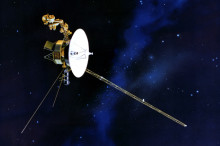
    Anyone with half an eye on the science news recently should know by now that it’s been officially confirmed that NASA’s Voyager 1 probe is has now been confirmed as being in interstellar space. It is no longer within the Sun’s heliosphere and no longer feels the solar wind. To Voyager, the Sun is now simply another star in the sky. Though as Phil Plait points out, being in interstellar space is not technically the same thing as leaving the solar system.

    Voyager 1 Reaches Interstellar Space. But Has It Left the Solar System? Wellllll…

    However, there’s more to our solar system’s far-flung suburbs than errant electrons and protons. Even out there, over 120 times farther from the Sun than the Earth’s orbit, there are more substantive objects: huge, frozen chunks of ice that are essentially giant comets… It’s like walking outside the front door of your house and saying you’ve left your property. While you’ve left your house, there’s still the yard all around you. You have a ways to go yet.


    Citizen Science has been around for a while now, as a fun and interesting way of getting internet users to casually help scientists analyse vast amounts of data. So the latest idea is to use online gaming and social media platforms like Facebook to bolster the effort…

    How Facebook and gaming could help scientists battle disease

    One example, a smartphone game set for release later this year, is currently called “GeneGame”. Players of the game, developed by Cancer Research UK, will be contributing to the identification of cancer-causing genetic faults from tumour samples. In a crucial difference to the Galaxy Zoo experiment, the scientific research will be a indirect consequence of the gameplay, rather than the explicit focus of the gameplay.


    From a long departed craft, to one of the most recent, NASA’s LADEE vehicle is currently en route to the Moon, to study its tenuous atmosphere (and the word “Atmosphere” is used rather loosely here, believe me). But as the probe was launched, there was an unfortunate amphibian casualty. You see, the launch pads at NASA’s Wallops facility are built in rather swampy areas…

    Frank the Frog Sacrificed Himself for LADEE Launch

    From NASA: “A still camera on a sound trigger captured this intriguing photo of an airborne frog as NASA’s LADEE spacecraft lifts off from Pad 0B at Wallops Flight Facility in Virginia. The photo team confirms the frog is real and was captured in a single frame by one of the remote cameras used to photograph the launch. The condition of the frog, however, is uncertain.

  • The Best of Australian Science: August 2013

    The Best of Australian Science: August 2013

    This month, we’d like to welcome our new writer Buddhini Samarasinghe, who is a molecular biologist, with experience in cancer research. Some of her upcoming stories will be bringing us fascinating contributions about the molecular mechanisms of cancers.
    As well, here is our usual monthly roundup.  A wonderful variety of science and technology stories, covering astronomy, education, technology, health, environment, and more!
    Stay curious and scientifically passionate!


    Life of an epidemic: Australian dengue by Charles Ebikeme

    It is always a bad sign when crowds gather. On the morning of Wednesday March 21 in the year 1900, a crowd began to gather in Sydney. A thousand people had gathered outside the offices of the Board of Health in Macquarie Street. They had gathered because bubonic plague had broken out. People had already started to die from the Black Death. Panic was the only course of action.

    The Government had stockpiled Haffkine’s serum (named after the Russian bacteriologist that developed it in a makeshift laboratory in a corridor of Grant Medical College) — a new plague vaccine, and had used it to inoculate front

  • Weekly Science Picks

    Weekly Science Picks

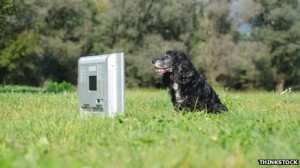
    Stay tuned for top science stories! Photo credit: Thinkstock, via BBC News
    Stay tuned for top science stories! Photo credit: Thinkstock, via BBC News

    Welcome to this edition of Weekly Science Picks.

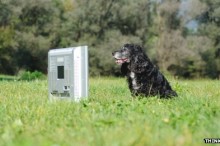
    What a busy news week – with the markets up, the transportation incidents with planes and trains, major flooding in China…well, there’s been a lot going on. And there were numerous stories of scientific importance reported on as well. So I’ve listed the stories I’ve found significant this week. Topics include climate change, space, physics, public health, girls in education, and dogs watching TV. Yes, dogs watching TV. There’s a little something for everyone. So kick back, with your favorite beverage in hand and soak up some knowledge.

    TOP STORIES

    Distant quakes ‘can trigger wastewater-site temblors’ by Jason Palmer

    The notion of natural earthquake triggering is not new; in hydrothermal and volcanic areas, tremors can be triggered by large, distant earthquakes. But the new study suggests what is in effect a new category: natural triggering of seismic events primed by human activity.

    If you’d like to read the full paper, you can check it out on Science: Injection-Induced Earthquakes by William L. Ellsworth


    NASA Warned to Go Slow On Asteroid Capture Project by Richard A. Kerr

    NASA’s plan to retrieve a tiny asteroid as a steppingstone for astronauts on the way to Mars in the 2030s could be just the exciting project that the space agency needs to garner public support in these severe budgetary times, speakers at a workshop held yesterday in Washington, D.C., said.


    Climate Change Will Cause More Energy Breakdowns, U.S. Warns by John M. Broder

    Every corner of the country’s energy infrastructure — oil wells, hydroelectric dams, nuclear power plants — will be stressed in coming years by more intense storms, rising seas, higher temperatures and more frequent droughts.


    NEWS TO BE AWARE OF

    ScienceShot: Sterilizing Human Waste, No Electricity Required by Lizzie Wade

    Thanks to a new invention, all you need is some sunshine, a little water, and a dash of gold nanoparticles.


    Optical lattice atomic clock could ‘redefine the second’ by Rebecca Morelle

    The devices, called optical lattice clocks, lost just one second every 300 million years – making them three times as accurate as current atomic clocks.


    At UN, Malala Yousafzai rallies youth to stand up for universal education by UN News Centre

    “Let us pick up our books and our pens. They are our most powerful weapons. One teacher, one book, one pen, can change the world,

  • Weekly Science Picks

    Weekly Science Picks

    A happy Science Sunday to everyone!  As usual there’s been a lot happening in the world of science, so lets take a peek of the most interesting picks for the past week!

     Interface Region Imaging Spectrograph (IRIS) to launch!

    At the end of this month, NASA will launch IRIS.  IRIS will watch the Sun and provide NASA with information on the Sun’s atmosphere and the interface region.  This will give scientists a better understanding of how the Sun’s energy powers the solar wind!

     NASA and the Italian Space Agency (ASI) to explore Mercury

    NASA Administrator Charles Bolden and Italian Space Agency (ASI) President Enrico Saggese signed a Memorandum of Understanding for cooperation on the European Space Agency (ESA) led BepiColombo mission to Mercury

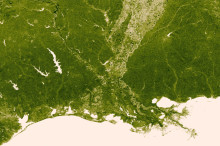
    Earth’s plant life shown in Hi Res imaging

    NASA’s Suomi NPP Satellite shows Earth’s vegetation mapped at a higher resolution than ever before.

    A new three-dimensional map, aptly called BigBrain is the most detailed ever constructed!  Scientists hope it will lead to a more accurate picture of how the brain’s different regions function.

    Can high energy y-ray astronomy be done from Earth?

    Traditionally astronomers have relied on space telescopes to conduct high-energy y ray astronomy because Earth’s atmosphere is a very efficient shield for y rays.  However, in early July at the International Cosmic Ray Conference in Rio de Janeiro, Brazil, indicate that γ-ray astronomers are betting their future on an ambitious ground-based telescope.

    What drives mammals to extinction?

    Australian researchers say that it’s not bad luck that drives mammals to extinction over geological time, but their failure to keep pace with a deteriorating environment.
  • Wind power: renewable energy for the cities of the future

    Wind power: renewable energy for the cities of the future

    Renewable energy? I’m a big fan! Unfortunately, so are modern wind turbines, which are the subject of intense arguments and criticism despite their many benefits. However, this view might be changed somewhat, by a new innovation by Farzad Safaei at the University of Wollongong (UOW) – a new type of wind turbine known as PowerWINDows.

    I’m actually going to come straight out and drop the neutral viewpoint on this article, because this is important. I am very much a supporter of renewable energy, and I find it quite preposterous that anyone would even think about arguing against it. Very recently, carbon dioxide levels in the atmosphere have reached 400 parts per million for the first time in recorded history. This may not seem like a lot, but Earth’s atmosphere hasn’t seen this much carbon dioxide for over 3 million years. It may sound like a cliché to say, but by continuing to burn fossil fuels we’re doing some permanent damage to our planet. And speaking as an astronomer, I can say with some authority – this is the only planet we’ve got.

    Lots of people argue against wind turbines. In my not-so-humble opinion, this is ridiculous. Nonetheless, it happens. People claim that they’re “a blight on the landscape”, that they generate noise, that they affect local wildlife, and that they have a negative impact on health. Most of these criticisms are unsubstantiated and have no basis in fact. Let’s think rationally here: all of the same things are probably true of any other form of power station. And when other power stations go wrong, the effects can be significantly worse than a broken propeller blade. Hopefully then, innovations like PowerWINDows might help to both silence the critics and make wind energy a more easily attainable power source.

    Just imagine how much power the Petronas towers could generate...

    The basic idea with PowerWINDows is that there are none of the large rotating blades which people claim to be dangerous. The smaller, compact design allows PowerWINDows turbines to be installed on tall buildings such as skyscrapers and apartment blocks. All in all, the newly designed turbines are cheaper, quieter, and more convenient than existing wind turbine technology.

    After four years of design and testing work, UOW have signed a deal with Birdon, one of Australia’s top engineering companies, to build and test a prototype suitable for commercial production. If all goes according to plan, the new turbines may go into production sometime in the future. Just imagine how much additional power could be generated if every large city had wind turbines installed on every tall building!

    Professor Safaei’s inspiration for the idea was a desire to improve on existing wind turbines and any of their shortcomings – i.e. the criticisms made against them. His goal was to enable modular manufacturing, reduce noise and land usage, and allow easier transportation and installation. “I wanted to create a wind turbine that better integrated with living environments

  • Seriously, NAPLAN to include Science?

    Seriously, NAPLAN to include Science?

    In the last few weeks in Australian politics there have been critical discussions regarding the inclusion of science in NAPLAN (the National Assessment Program in Literacy and Numeracy).  Without entering too much into the debate regarding the reported advantages or disadvantages of NAPLAN, it is heartening to hear that science is at the forefront of political agenda.

    NAPLAN is a series of standardised testing given to all Australian students in Grades 3, 5, 7 and 9. Beginning in 2008, these pencil/pen and paper tests assess children in set skills relating to reading, language conventions, writing and numeracy. ACARA, Australian Curriculum Assessment and Reporting Authority, claim that “NAPLAN tests identify whether all students have the literacy and numeracy skills that provide the critical foundation for their learning, and for their productive and rewarding participation in the community

  • Weekly Science Picks

    Weekly Science Picks

    It’s been rather a turbulent week, all told. There’s been a lot going on in the news, both good and bad. Hopefully, this little handful of science news items will help you finish the last week and begin this next one on a lighthearted note!


    NASA’s Kepler mission has found a star system which has not one, but two possibly terrestrial planets in its habitable zone.

    Kepler-62: A Star System With Two Earths?

    Whether either or both of Kepler-62’s optimally positioned planets actually has water is beyond the technical capabilities of the Kepler and other telescopes. Kepler works by detecting the very slight dips in light coming from a star caused by a planet passing by, relative to the telescope’s line of sight.


    Sometimes the best way to learn more about nature is to try and recreate it. That happens to be exactly what happened when a group of roboticists were looking at insects…

    Roboticists discover the secret of insect flight, and it’s not wings

    They found that the moth moved its abdomen in direct response to its shifting visual environment. “If the pattern is rotating up (clockwise), the moth would raise its abdomen up (counterclockwise),” says study co-author Jonathan Dyhr, a University of Washington biologist. “The moth was raising or lowering its abdomen to counteract the movement.”

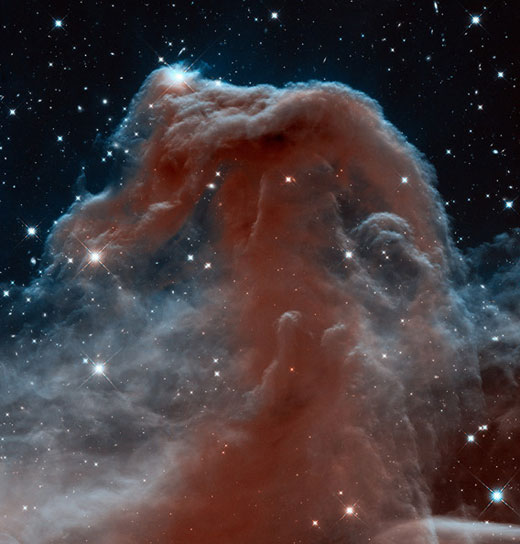
    The Horsehead Nebula

    To celebrate the 23rd anniversary of the Hubble Space Telescope’s launch into orbit, NASA have released a brand new and frankly beautiful image of the iconic Horsehead Nebula. Phil Plait explains more…

    Hubble’s Knight to Remember

    The Horsehead itself is the site of ongoing star formation. The dense gas and dust inside the nebula is collapsing to form stars, and, at the same time, the edges are being eroded away by the fierce ultraviolet light of Sigma Orionis. The top of the Horsehead is acting a bit like a shield, protecting the material beneath it, which is why it’s taken on that umbrella-like shape. You can see more sculpted pillars of material around the sides, too, like sandbars in a stream.


    Ants are fascinating little creatures, and a team of Swiss researchers have been studying the goings on inside a colony of them – by tracking them with barcodes!

    Barcodes let scientists track every ant in a colony

    Analyzing the color codes, they found that younger ants were more likely to work nursing the young, and older ants were more likely to be foragers. In general, they watched ants transition from nursing to cleaning to foraging as they age, but there’s a lot of individual variation in how quickly these transitions took place.

    Chris Hadfield. Being awesome from orbit.

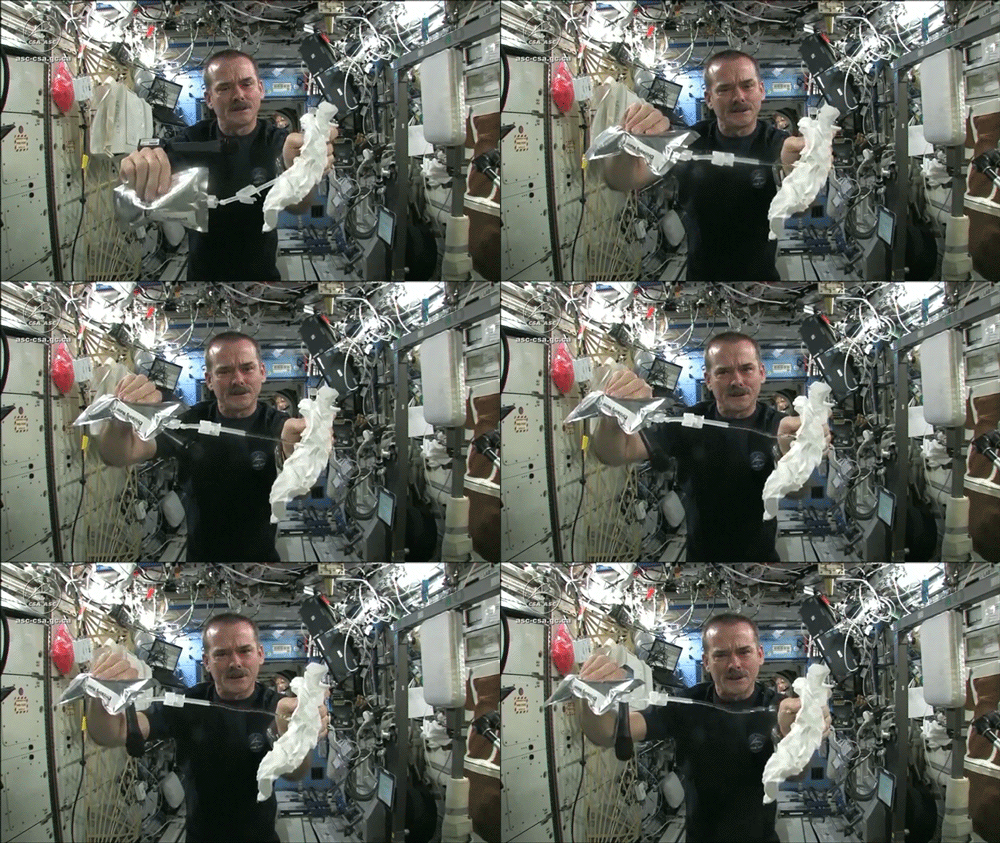
    Finally, everyone’s favourite astronaut, Commander Chris Hadfield aboard the ISS answers an interesting question. What happens if you wring out a wet cloth in zero gravity? Click the link to watch the video!

    What happens when you wring out a washcloth in space?

    Two Nova Scotia high school students, Kendra Lemke and Meredith Faulkner, submitted this experiment to Canadian Space Agency and got to see astronaut Chris Hadfield actually test it out on the ISS. The results are seriously extraordinary and you need to see them.

  • Postcard from Spitzer: weather on 2M2228 is hot and cloudy

    Postcard from Spitzer: weather on 2M2228 is hot and cloudy

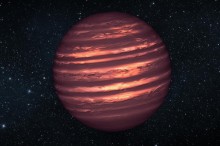
    Long distance weather reports are now a commonality. The report for 2MASSJ22282889-431026 is somewhat unusual. It forecasts wind-driven, planet-sized clouds, with the light varying in time, brightening and dimming about every 90 minutes. The clouds on 2MASSJ22282889-431026 are composed of hot grains of sand, liquid drops of iron, and other exotic compounds. Definitely not the first place to spend a summer holiday.

    Not that 2MASSJ22282889-431026 (or 2M2228 as it is known in The Astrophysical Journal Letters) will appear on a travel itinerary anytime soon. For 2M2228 is a brown dwarf, 39.1 light years from earth. Brown dwarves form out of condensing gas, as stars do, but lack the mass to fuse hydrogen atoms and produce energy. Instead, these objects, which some call failed stars, are more similar to gas planets, such as Jupiter and Saturn, with their complex, varied atmospheres. Although brown dwarves are cool relative to other stars, they are actually hot by earthly standards. This particular object is about 600 to 700 degrees Celsius.

    The atmosphere of 2M2228

    Astronomers using NASA’s Spitzer and Hubble space telescopes have probed the stormy atmosphere of this brown dwarf, creating the most detailed “weather map” yet for this class of cool, star-like orbs. “With Hubble and Spitzer, we were able to look at different atmospheric layers of a brown dwarf, similar to the way doctors use medical imaging techniques to study the different tissues in your body,” said Daniel Apai, the principal investigator of the research at the University of Arizona in Tucson.

    But more surprising, the team also found the timing of this change in brightness depended on whether they looked using different wavelengths of infrared light.

    This artist’s illustration shows the atmosphere of a brown dwarf called 2MASSJ22282889-431026, which was observed simultaneously by NASA’s Spitzer and Hubble space telescopes. The results were unexpected, revealing offset layers of material as indicated in the diagram. For example, the large, bright patch in the outer layer has shifted to the right in the inner layer. The observations indicate this brown dwarf — a ball of gas that “failed” to become a star — is marked by wind-driven, planet-size clouds. The observations were made using different wavelength of light: Hubble sees infrared light from deeper in the object, while Spitzer sees longer-wavelength infrared light from the outermost surface. Both telescopes watched the brown dwarf as it rotated every 1.4 hours, changing in brightness as brighter or darker patches turned into the visible hemisphere. At each observed wavelength, the timing of the changes in brightness was offset, or out of phase, indicating the shifting layers of material. Image credit: NASA/JPL-Caltech.

    These variations are the result of different layers or patches of material swirling around the brown dwarf in windy storms as large as Earth itself. Spitzer and Hubble see different atmospheric layers because certain infrared wavelengths are blocked by vapors of water and methane high up, while other infrared wavelengths emerge from much deeper layers.

    The new research is a stepping-stone toward a better understanding not only of brown dwarves, but also of the atmospheres of planets beyond our solar system.

    Into the red: the Spitzer space telescope

    The Spitzer Space Telescope is the final mission in NASA’s Great Observatories Program – a family of four space-based observatories, each observing the Universe in a different kind of light. The other missions in the program include the visible-light Hubble Space Telescope, Compton Gamma-Ray Observatory, and the Chandra X-Ray Observatory.

    The Spitzer Space Telescope consists of a 0.85-meter diameter telescope and three cryogenically-cooled science instruments which perform imaging and spectroscopy in the 3 – 180 micron wavelength range. Since infrared is primarily heat radiation, detectors are most sensitive to infrared light when they are kept extremely cold. Using the latest in large-format detector arrays, Spitzer is able to make observations that are more sensitive than any previous mission. Spitzer’s mission lifetime requirement was 2.5 years, then extended this to 5-years. Spitzer .

    Launched on August 25, 2003 Spitzer is now more than 9 years into its mission, and orbits around the sun more than 100-million kilometers behind Earth. It has heated up just a bit – its instruments have warmed up from -271 Celsius to -242 Celsius. This is still way colder than a chunk of ice at 0 Celsius. More importantly, it is still cold enough for some of Spitzer’s infrared detectors to keep on probing the cosmos for at least two more years; the project funding has been extended to 2016.

    Spitzer seen against the infrared sky. The band of light is the glowing dust emission from the Milky Way galaxy seen at 100 microns (as seen by the IRAS/COBE missions). Image credit NASA/JPL

    Spitzer is the largest infrared telescope ever launched into space. Its highly sensitive instruments allow scientists to peer into cosmic regions that are hidden from optical telescopes, including dusty stellar nurseries, the centres of galaxies, and newly forming planetary systems. Spitzer’s infrared eyes also allows astronomers see cooler objects in space, like brown dwarves, extrasolar planets, giant molecular clouds, and organic molecules that may hold the secret to life on other planets.

    Instead of orbiting Earth itself, the observatory trails behind Earth as it orbits the Sun and drifts away from us at about 1/10th of one astronomical unit per year.

    This innovative orbit lets nature cool the telescope, allowing the observatory to operate for around 5.5 years using 360 litres of liquid helium coolant. In comparison, Spitzer’s predecessor, the Infrared Astronomical Satellite, used 520 litres of cryogen in only 10 months.

    This unique orbital trajectory also keeps the observatory away from much of Earth’s heat, which can reach 250 Kelvin (-23 Celsius) for satellites and spacecraft in more conventional near-Earth orbits.

    More scientific duets: the asteroid belt of Vega

    Like a gracefully aging rock star Spitzer is reveling in duets. It has also teamed up with the European Space Agency‘s Herschel Space Observatory. Using data from both astronomers have discovered what appears to be a large asteroid belts around the star Vega, the second brightest star in northern night skies.

    The data are consistent with the star having an inner, warm belt and outer, cool belt separated by a gap. The discovery of this asteroid belt-like band of debris around Vega makes the star similar to another observed star called Fomalhaut. Again this formation is similar to the asteroid and Kuiper belts in our own solar system.

    Astronomers have discovered what appears to be a large asteroid belt around the bright star Vega, as illustrated here at left in brown. The ring of warm, rocky debris was detected using NASA’s Spitzer Space Telescope, and the European Space Agency’s Herschel Space Observatory. In this diagram, the Vega system, which was already known to have a cooler outer belt of comets (orange), is compared to our solar system with its asteroid and Kuiper belts. The relative size of our solar system compared to Vega is illustrated by the small drawing in the middle. On the right, our solar system is scaled up four times. The comparison illustrates that both systems have inner and outer belts with similar proportions. The gap between the inner and outer debris belts in both systems works out to a ratio of about 1-to-10, with the outer belt 10 times farther away from its host star than the inner belt. Astronomers think that the gap in the Vega system may be filled with planets, as is the case in our solar system. Image credit: NASA/JPL-Caltech.

    What is maintaining the gap between the warm and cool belts around Vega and Fomalhaut? The results strongly suggest the answer is multiple planets. Our solar system’s asteroid belt, which lies between Mars and Jupiter, is maintained by the gravity of the terrestrial planets and the giant planets, and the outer Kuiper belt is sculpted by the giant planets.

    “Our findings (accepted for publication in the Astrophysical Journal) echo recent results showing multiple-planet systems are common beyond our sun,” said Kate Su, an astronomer at the Steward Observatory at the University of Arizona, Tucson.

    Vega and Fomalhaut are similar in other ways. Both are about twice the mass of our sun and burn a hotter, bluer color in visible light. Both stars are relatively nearby, at about 25 light-years away. Fomalhaut is thought to be around 400 million years old, but Vega could be closer to its 600 millionth birthday. For comparison our sun is 4,600 million years old. Fomalhaut has a single candidate planet orbiting it, Fomalhaut b, which orbits at the inner edge of its cometary belt.

    The Herschel and Spitzer telescopes detected infrared light emitted by warm and cold dust in discrete bands around Vega and Fomalhaut, discovering the new asteroid belt around Vega and confirming the existence of the other belts around both stars. Comets and the collisions of rocky chunks replenish the dust in these bands. The inner belts in these systems cannot be seen in visible light because the glare of their stars outshines them.

    It would seem that Spitzer has quite a bit more productive and novel scientific life, including duets, left in it yet.

  • Climate Change, Resilience, Communication

    Climate Change, Resilience, Communication

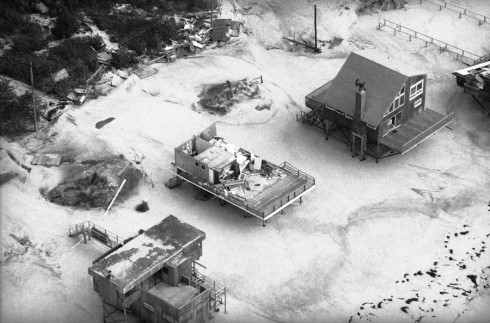
    Hurricane Gloria devastation on Fire Island, New York, 28 Sept 1985. (AP Photo/Rick Maiman)
    Hurricane Gloria devastation on Fire Island, New York, 28 Sept 1985. (AP Photo/Rick Maiman)

    Climate Change

    Last week I listened to a webinar on climate change discussing findings of the draft report from the National Climate Assessment and Development Advisory Committee. Not much has changed from the year 2000 report, or the 2009 report. Well, a few changes: the science has improved, climate change is now being stated directly as a result of human activity and the report is more accessible and understandable to the public at large. The public that actually takes the time to read it, that is. How communities engage with science and government is a hot topic and will continue to be. The idea of citizen scientists was mentioned during the webinar and it has been in the news quite a bit. I’ve written about it here, but after today’s presentation, it triggered some new thinking and I pondered it a bit more in terms of climate change and planning resilient communities.

    Engineering Community Resilience

    With the recent round of floods and bush fires, particularly in Queensland, Victoria and Tasmania, and with Hurricane Sandy in the northeastern United States, I’ve been thinking more about how we engineer our communities and our transportation networks to withstand the dramatic stresses placed on them by natural disaster events such as these. In the face of extreme and more frequent weather events, we must begin to look at how we protect investments, not how do we avoid it, but how do we work with it once faced with the situation; how can our societal networks “adapt” to natural events. After hitting the power-on button after a disaster, how long does it take before we are up and running at full speed? It’s definitely not automatic and there is a lag time, but the mission should be to reduce that lag time as much as possible. We can do that through better planning of our communities, both urban and rural, from top to bottom.

    Outdated Planning Manual

    Jane Jacobs in her book, The Life and Death of Great American Cities, wrote the way we plan cities is outdated. Those thoughts were from the late 1950s; I wonder what she would think at the progress, or lack of, made now. While Ms. Jacobs was not an urban planner, she was an astute observer of city life. We have been planning to the same model for years, basing our land use and transportation plans on activity centers and primary uses as if these things were completely and utterly independent. When in reality, today more so than ever, emphasis should be placed on the connections between and among uses, from primary to tertiary uses and beyond. Emphasis should also be placed on addressing aging infrastructure. Outdated, roads, buildings, bridges, sidewalks, subways, telephone lines, sewers; all of these facets of modern society that once made life convenient can actually make life more inconvenient if technology does not keep up with the pace of increasing population and demand. It is a tough task to balance the needs of a community, of a nation, but attention to rediscovering and reengineering our primary uses to connect with present and future day society has to be part of this century’s new planning paradigm.

    Community Communication

    How does this national climate assessment report actually impact individuals? What does the public need to know? What does government and science need to tell people? I think ultimately that people have a desire to know what goes on in their communities; but they’re busy, they elect people and trust them to hire staff that will get the job done. And there is this mentality that they just want things to work and society grows cranky when things don’t work. Think about water pipes. An invisible zigzagging network buried underground. Much thought isn’t given them until they burst and the faucets run dry. Adding to the problem is that the public doesn’t understand how antiquated our infrastructure is, be it water pipes, bridges, or telephone lines. And public refusal to pay for a system’s upgrading because water has always been cheap just adds to the complex ability to make change happen. But I believe it can.

    It all boils down to communication, at the basic, most simplistic level. That’s why it is critical governments do a better job at explaining and giving information to citizens when disasters strike AND details about the recovery and clean up process OR explaining why adaptation and mitigation measures need to be taken because not everyone understands why systems that date back to the 19th century can’t handle pressures from the 21st century. I can’t speak for other countries, but the “red tape” political pomp and circumstance on parade in the U.S. needs to shift toward a “green tape” common sense implementation attitude. Waiting over three months for recovery funds to come through after Hurricane Sandy hit inhibits community rebuilding and cuts to the psychological core of those affected.

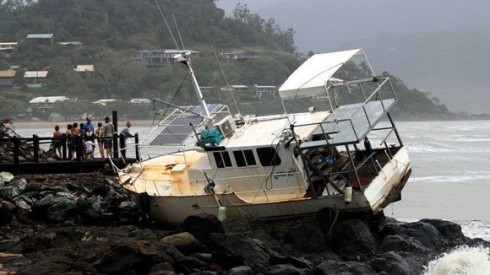
    Cyclone Oswald, Eastern Australia, 29 Jan 2013. (itv.com, Photo: Reuters)
    Cyclone Oswald, Eastern Australia, 29 Jan 2013. (itv.com, Photo: Reuters)

    Citizen Scientists Participation

    Popularity of science among the masses is growing and should be engaged. So how can citizen scientists help? With all this talk of using ordinary citizens to collect data for large-scale research projects and as budgets tighten and staffs decrease, I think there will be a greater role for the community at large to help provide answers to research questions. To start with, our scientific organizations will need to use the cerebral thought process of corporations. The scenario is not that citizen scientists will be out there running amok with data; a trained scientist would no doubt be in charge. Like a project manager would in a big corporation, they would have people reporting to them, following the protocols, procedures and plans they have discussed to achieve a certain goal. I think this is the way science will have to move in order to stay somewhat viable as we attempt to solve the looming problems we face in the future.

    Science, the community, government and private industry all need to be present and active partners communicating as we move forward designing our cities and countrysides in a certainly uncertain world. Policy choices should have been made 10 plus years ago as an attempt to deal with climate change, but hindsight is always 20/20. While this piece speaks mainly to the developed world, we shouldn’t ignore the rapid urbanization that is sweeping across the developing world, with many key urban issues not being fully explored. The municipal level has an opportunity to be a catalyst of change. As cities think about how to assess their risks and incorporate resiliency measures into their town planning, the population may actually be able to ebb and flow with climate disruptions.