If I let go a hammer on a planet having a positive gravity, I need not see it fall to know that it has, in fact, fallen. – Spock, “Court Martial,” Star Trek, stardate 2948.9.
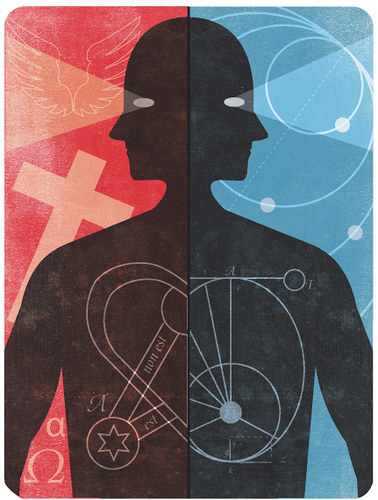
I recently viewed the film Salmon Fishing in the Yemen. Dr. Jones, (brilliantly played by Ewan McGregor), has been ordered by the Ministry of Fisheries to undertake this farfetched project of introducing salmon into the Yemen River, wholeheartedly, or be out of a job. Dr. Jones reluctantly agrees but continuously ridicules this idea based on his years of research and meticulous study of salmon. He casts doubt every chance he gets that this project will actually work. And what we actually have here is a case of policy dictating science; in the name of a heartfelt, goodwill story meant to assuage the voting public’s uneasiness with the war. (A totally different issue of debate, which I will not touch on here.) It’s not until Dr. Jones meets Sheikh Muhammed, a deeply spiritual man of faith that he begins to open up to another way of thinking, one that defies all his principles of scientific reasoning. And he embraces that this plan just might work, with farmed salmon no less. But what causes the radical reversal of the scientist’s viewpoint from staunch biological reasoning to faith that this project might actually be possible?
Science and religion have had something of a love-hate relationship, intertwined for centuries and often at direct odds with each other. Popes and bishops issued condemnations and accused some great scientific minds of heresy in the Middle Ages. The work of Galileo, Conrad Gessner and Charles Darwin also come to mind, having caused quite a ruckus of controversy in their day. And well Darwin may always be at odds with some folks.
From my own experience growing up Catholic and pursuing biology and chemistry in college, I found it difficult to compartmentalize science and religion. But there have been and still are a few scientists out there who can separate their scientific beliefs from their religious practice. Copernicus was a Catholic clergyman; Gregor Mendel was an Augustinian friar; and Georges Lemaitre, who first proposed the Big Bang Theory, a Belgian priest. They seemed to have been able to separate their work from their spiritual beliefs. Perhaps they had truly find enlightenment? Or maybe that’s exactly what it is; just a spiritual belief, for right or wrong, that has nothing to do with science.
As with most conflicts, it seems that the bitter clashes between science and religion arose primarily due to a different interpretation over the definition of ‘science’. Secular philosophers considered science in the sense of natural science; while theologians took the view that all science is based on demonstrations – according to the St. Thomas Aquinas viewpoint. The shift toward science becoming the top dog, so to speak, over religion seems to have occurred as Europe and North America experienced greater secularization. The political power and influence of the church relating to scientific research has gradually decreased. According to the Catechism of the Catholic Church: “Methodical research in all branches of knowledge, provided it is carried out in a truly scientific manner and does not override moral laws, can never conflict with the faith, because the things of the world and the things the of the faith derive from the same God. The humble and persevering investigator of the secrets of nature is being led, as it were, by the hand of God in spite of himself, for it is God, the conserver of all things, who made them what they are”. I will leave it up to the reader to ponder that and agree or disagree.
But let’s explore the concept of faith for a moment. The word faith is thought to date back to the early 13th century, around the time of some budding scientific discoveries. Formally, faith is a belief in one or more gods or in the doctrines of religion. Buddhism, Christianity, Judaism, Sikh, Hinduism, Islam – all of these religions have some concept of faith stationed at the root of their core beliefs. Informally, it can mean a trust or belief without proof, a hope. And this is where the criticism starts, over this very definition of faith, and how it can seem at odds with science.
Critics argue that faith is opposed to reason, while advocates argue that faith addresses questions that cannot be settled by evidence. The evolutionary biologist, Richard Dawkins stated, “Faith is the great cop-out, the great excuse to evade the need to think and evaluate evidence. Faith is belief in spite of, even perhaps because of, the lack of evidence.
Dr. Josef Theurer is nominated in the category Lifetime achievement for his railway track-laying machines
Dr. John O’Sullivan and team nominated by European Patent Office for paving the way for Wi-Fi. Australian scientists laid world standard in modern communication and licence out their invention all over the globe.
Battistelli: “The innovation led by Dr. O’Sullivan and team has impacted on our daily life to an extent that only few inventions have achieved before.
We hear…but do we comprehend? What connection does our brain make to statements transmitted through our auditory canal such as global warming is increasing at 0.13°C per year? Or there are 495 dead zones covering 95,000 square miles of our world’s oceans as a result of increased runoff from agriculture? We see…but are those images stored in our brain, to recall in decision making when confronted with a particular behavior choice? For instance when the image of a little girl sifting through a rubbish pile looking for a bite to eat burns onto our retinas, do we remember that later when we casually toss out half our dinner plate in a Styrofoam takeout container? How many of us in the developed world actually comprehend that our actions contribute directly to global warming?
Until every human makes this connection and takes steps to modify behavior, only then will we see the beginnings of a response to addressing this issue of global warming. Easier said than done, right? Many organizations have started to tackle this problem; how do we solve it?
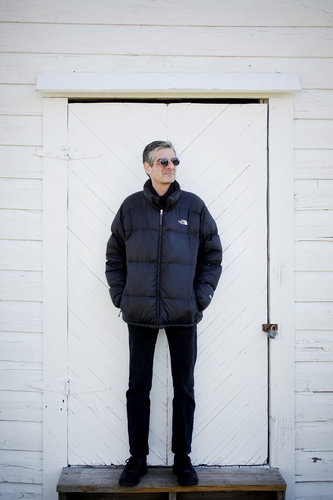
Jean Cocteau once said that the art is science made clear, but what he didn’t indicate is that the science is creating different forms of art including the art of connecting people and communicating science. Bora Zivkovic is a unique, energetic, technologically-savvy, and multidisciplinary scientist, connector, and blogger. I met Bora twice: during the Science Online 2009 and Science Online 2010 conference in Raleigh NC, USA, and on many other occasions online, and he would always motivate me with incredible energy and passion for science and people. I would say that Bora is the real science connector, not only communicating and articulating science in its many forms but also connecting people, networks, and the scientific communities world wide.
Born in Belgrade, former Yugoslavia (now Serbia), Bora’s studies of veterinary medicine were interrupted by the 1990s war in the Balkans, when he arrived in the USA. He went to graduate school at North Carolina State University where he studied how bird brains measure time of day (circadian rhythms) and time of year (photoperiodism). He started A Blog Around the Clock in 2004 as a prolific science blogger. He was the online Community Manager for the open access journal PLoS ONE. He is now the editor of Scientific American’s blog network, organizes the annual ScienceOnline conference, and is the editor of The Open Laboratory, an annual collection of the best writing from science blogs.
He even interviewed me once, as a host of a series of interviews with various scientists, bloggers, educators, and journalists; and now is my turn to ask Bora questions I always wanted to ask him. I had an opportunity to interview him and here are the questions and perceptive, knowledgeable, and fun responses.
Welcome to Australian Science! Recently the Science Online 2012, #scio12 has finished, and impressions are still spreading online among scientists, bloggers, journalists by sharing blog posts, videos, tweets. How do you feel after this year’s conference? Do you think that some things and social dynamics during this conference have changed comparing to previous conferences? I’ve seen familiar names tweeting online, people I met in person in 2009 and 2010. What has changed in the conference dynamics since then?
We were very aware that growing a meeting by 50% can change the dynamics. We spent the entire year discussing strategies for ensuring that the intimate atmosphere of the meeting does not vanish. I wrote quite a lot about this in my long blog post after the event, especially about the need to make sure that so many new people feel welcome and instantly included into the community – including all the fun parts of the event. We completely changed the daily schedule in order to foster more informal interractions, we (really, Karyn Traphagen) designed the Cafe Room with this in mind, and we put quite a lot of effort in our communications on the blogs (including my post which was recommended to all to read beforehand), emails and social media, to prepare everybody for the unconference format and for the unique blend of serious discussions and crazy fun of ScienceOnline. For the most part, judging from what people are saying on their blogs and in our feedback forms, we were successful.
You are an influential leader of the scientific blogging network community – I may say – worldwide. You have a lot of experience in the curating, managing, coordinating scientific events, scientific blogs, and online communities. You’ve been organizing the ScienceOnline conference for the past 6 years and also serve as series editor for The Open Laboratory anthology. You’ve worked as PLoS online community manager and now work in the role of Editor at the Scientific American blogs. What are the best strategies for building and maintaining blog network (out of scratch)?
Building a blog network from scratch is actually a wonderful experience – one gets to turn one’s vision into reality. Of course, building a network hosted on the Scientific American website is not exactly “from scratch”, as the power of the brand (as well as the resources of the organization) almost guarantee visibility and traffic from the start. I spent several years as a blogger at Scienceblogs.com so I could experience (and later analyze) many aspects of the community building at that site – definitely insights I used in building the SA network later on. Also, just before Scientific American hired me, I was briefly involved in the planning and early organization of the PLoS Blogs and Scientopia blogs. In both of these, my voice was one of several. At Scientific American I was hired specifically to do this, so I had more freedom to build exactly the kind of network I wanted to.
The key to the success of a network are its people. I had the luxury of having nine long months to think about it. I dug through the archives and started following literally thousands of science blogs. I used Twitter to ask for suggestions for even more blogs, especially blogs that do a particular ‘thing’, e.g,. writing about a particular topic in a particular style. What I was looking for was to assemble a team, rather than produce a “best of” list. I wanted a group of people who will be joy to work with, who will have fun communicating with each other in the backforums and in their blogs’ comment sections, and who will be naturally inclined to feel as members of a community, not just writers for hire.
Of course, there are many people like that, so I also made sure that, within the limits of size and budget, I include quite a lot of diversity. When I say ‘diversity’ I am not talking just about coverage of as many topics and scientific disciplines as we can accommodate, but also diversity in voices. I wanted to have people on the network who can speak to different audiences, so I wanted to find people of varied backgrounds (geography, career path, age, gender, race/ethnicity, etc.), with different writing styles, writing at different “reading levels”, etc, in order to capture as broad and varied audience for the network as a whole. Inclusion of several bloggers who communicate well using media other than text was also very important to me, as art, illustration, video, music, photography, cartoons, animations, infographics and other ways of communicating science are just as important as good text writing for extending our reach and capture new audiences.
It is also important to understand that a blog network is not static. Bloggers come and go. It is OK – life and career sometimes force people to take different directions, which may entail stopping blogging temporarily or permanently, or taking one’s blog in a completely different direction. It is important to make these transitions smoothly without disrupting the community and the overall tone of the network.
As a science blogger and network community manager, what’s the one piece of advice you would give to people who want to curate and manage their local and national blogging communities? And what is your advice to bloggers, scholars, scientists, educators, and journalists who want to write for those scientific online networks? I have noticed that relationships, people and linking matter the most, I would like to hear your thoughts.
Analyze the audience. Make a vision that fits it (and expands to other audiences you want to attract). Then – ignore personal friendships! Both you and I have thousands of friends in the science blogging circles. Many of them are fantastic bloggers whose blogs I read religiously. Yet I did not invite them to the network because their blogging topics and styles do not fit the vision I have for the network. Some of the bloggers who ended up on the network happen to be my friends, but they are here because of what they do and how they do it. Other bloggers on the network I only first encountered when I started looking around really hard – I liked their writing, I started communicating with them online, perhaps “tested” them on the Guest Blog, and decided they were a good fit. I also deliberately chose a few bloggers who are veterans, people who have experience, reputation and authority, people who can help on a bad day when trolls are all over a bloggers’ comment section, or if there are uncertainties in the troops (and of course, they already have many regular readers who will follow their blogs onto the new hosting network). But most are relatively new or young bloggers who I thought had great talent and potential. Most have more than repaid my trust in them and grew into tremendous forces of high-quality blogging.
You are an avid twitterer and I remember you used FriendFeed a lot. What social web tools are you using these days the most besides Twitter? What social media tools help you now for promoting the work and networking and which one do you use for professional development?
Twitter is still my main social network where I spend the most time and do most of the interraction – this is where I discover stuff, promote stuff, and talk with people. I also post links to most of my bloggers’ posts on my Facebook and Google Plus pages. If interraction there happens, and it often does, I am happy to go there as well to reply, but these are definitely not taking up much of my time. I am only very superficially exploring the worlds of Tumblr, Posterous, Quora and Pinterest, am studiously avoiding LinkedIn (though I have a profile there – and probably everywhere), have pretty much abandoned FriendFeed since it was bought by Facebook, and use other sites (e.g., YouTube and Flickr) mainly as repositories rather than places where I expect to get much interraction. I see quite a lot of potential in Google Plus which, I sometimes joke, is how FriendFeed would look like if it continued developing.
I have a feeling that the new social web paradigm in science, technology and education cannot sustain without building relationships and links. Do you find the human factor and the power of community prevailing over machines and tools we are using? Are we finally getting to the point that despite McLuhan’s “that tools will be using us
Being one of the International judges for the International Science Video Competition, I have talked with Brendan O’Brien, the convenor of the “60 second science“.
What is “60 second science”?
60SecondScience is a fully online International Video Competition sponsored by the Department of Education (DEECD-Innovation Next Practice Division), Victoria, Australia. Since its first iteration in 2008, it has enjoyed relentless growth and appeal, from 30 Victorian school-only participants, to over 300 science videos uploaded in 2011, with over 400 registering from 22 countries. The competition links directly to required student outcomes over a number of Science, Citizenship and ICT Standards. Valuable prizes are distributed each year, as determined by a prestigious International panel of judges.
Why is this competition used in the Science Classrooms?
Teachers can engage the interests and skills of students in a way that increases the depth of their science knowledge as they hone their multimedia skills. Many of today’s students are an entrenched part of the ‘youtube generation’ and are more than comfortable with being producers of content, whereas other generations were comfortable as mere consumers of content. Many students are ‘over’ powerpoint reports by the time they get to secondary settings, and are happy to shoot video on their smart-phones, flipcams, videocameras or webcams. The competition is easily adapted to be used not as an add-on, but as a contingent element withinthe existing science curriculum.
How is this Video competition used in Secondary/High School Science Classrooms?
A. Teachers give students the option of making a 60second video to demonstrate their understanding of a topic or unit of work they are studying/researching in any area of the secondary science curriculum. Eg Newton’s Laws, The States of Matter, Forces, Chemistry. Projectile Motion, Chemical Bonding, This is often done as an alternative to producing a written report, poster or Powerpoint.
B. Teachers give the student teams the option to make a ‘prac report video’ instead of the standard ‘written’ prac report. Eg. The Law of Reflection, Heart-rate, Thermal expansion, Displacement Reactions.
In both cases, students are required to research deeply and collaborate closely to refine their understandings and condense their knowledge to convey their key concepts and ideas into the 60second format.
There are several divisions such as International Open – for professional/amateur film-makers, teachers, non-school-age citizens, International primary / elementary school division, International secondary / high school division, International LOTE – with English sub-titles and spoken in a Language Other Than English; as well as the Best Cinematography – for videos in any Division, Best Animation – for videos in any Division and for the others. The ‘Winner’ gets a Certificate and an offer of free online video production and science workshop for teachers and students.
You can register for the competition by 1 August 2012, and upload videos by 26 August 2012. Please find all other details and contact the convenor on the official web site.
Open access databases, archives, repositories are hopefully present, for almost a decade, in technology, education, science, and the iron gates systems are slowly behind us; we can say that the technology, science, and academia are striving to be more and more open.
There is an international movement that uses the Internet to throw open the locked archives, libraries, online databases, information flow in general, that once hid and restricted knowledge.
One of the definitions of ‘open’ denotes ‘a piece of knowledge is open if you re free to use, reuse, and redistribute it.
 If I let go a hammer on a planet having a positive gravity, I need not see it fall to know that it has, in fact, fallen. – Spock, “Court Martial,” Star Trek, stardate 2948.9.

 We hear…but do we comprehend? What connection does our brain make to statements transmitted through our auditory canal such as global warming is increasing at 0.13°C per year? Or there are 495 dead zones covering 95,000 square miles of our world’s oceans as a result of increased runoff from agriculture? We see…but are those images stored in our brain, to recall in decision making when confronted with a particular behavior choice? For instance when the image of a little girl sifting through a rubbish pile looking for a bite to eat burns onto our retinas, do we remember that later when we casually toss out half our dinner plate in a Styrofoam takeout container? How many of us in the developed world actually comprehend that our actions contribute directly to global warming?
 Being one of the
 Open access databases, archives, repositories are hopefully present, for almost a decade, in technology, education, science, and the iron gates systems are slowly behind us; we can say that the technology, science, and academia are striving to be more and more open.