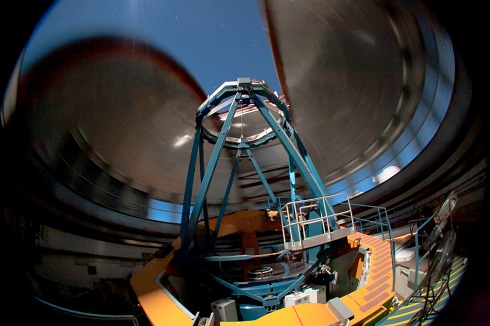
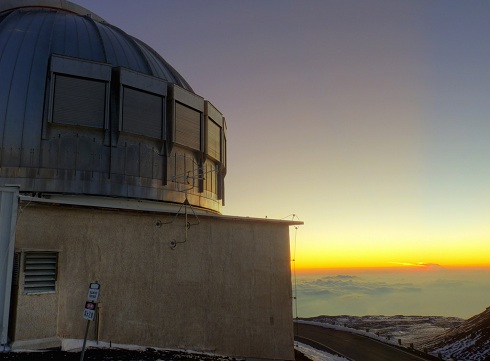
The world’s largest and most productive dedicated infrared observatory just went on the market in an unprecedented attempt to try and prevent it from being shut down and dismantled. In a bold move, the directors of the United Kingdom InfraRed Telescope (UKIRT), based on Mauna Kea in Hawaii, have just released a prospectus detailing the telescope’s impressive achievements and capabilities in the hopes that they can find sponsorship and save the observatory from certain doom. That may sound melodramatic, but doom genuinely is the most fitting description.
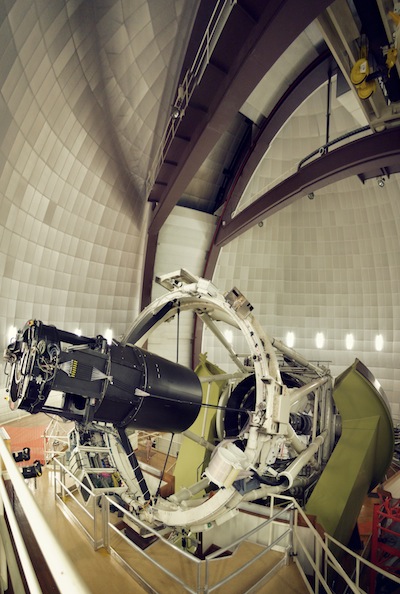
The Anglo-Australian Telescope, also abandoned by the UK, but still safe in the care of the Australian government. (Image Credit: Ahilan Parameswaran/Wikimedia Commons)
UKIRT’s death knell has, in fact, already been tolled. At the start of Summer, the UK’s Science and Technology Facilities Council announced that it would be terminating funding and that all telescope operations were to cease by September 2013. The UKIRT board released an official statement explaining their grim disappointment over the decision, and morale has been low for everyone involved with the telescope ever since.
Unfortunately, since their formation in 2007, the STFC have seemingly been determined to rid the UK of its telescope access. Another casualty was the Anglo-Australian Telescope (AAT). Constructed at Siding Spring Observatory in New South Wales, the AAT was originally built and operated in partnership between Australia and the UK, but since it’s 36th birthday in 2010 it has been owned and funded solely by Australia. The AAT is still the largest optical telescope in Australia and it continues to the crown jewel of the Australian Astronomical Observatory. Sadly, the future for UKIRT looks rather more bleak.
Should they fail to find funding to continue it’s operation, then in September 2013 UKIRT will have to be dismantled and erased from Mauna Kea. Under the agreement originally made with the Hawaiian government, any telescope no longer in operation must be removed, and the mountain must be returned to its natural state. This once proud telescope will simply be no more – a heartbreaking prospect in the eyes of a great many astronomers worldwide.
The most tragic part is that UKIRT is actually at its most productive right now. After being the world’s largest dedicated infrared observatory for over three decades, UKIRT is currently boasting a record level of productivity. Being as it’s exceptionally cheap to run and maintain (compared to other world-leading telescopes, it costs little more than pocket change), it’s easily one of the most productive telescopes in the world. And the directors are quite literally offering it to anyone in the world who may have the money to finance it. A dramatic move – no world class telescope has ever been simply offered up for sale on the global market before. Now, all the astronomical community can do is to hope that someone is willing to buy it.
Whether you happen to be a billionaire playboy philanthropist interested in owning a telescope, or just curious to know more about UKIRT, their prospectus is online for all to see.
Lot of events happening this September and I’m looking forward to share with you some wonderful articles and interesting posts, interviews for you to read. We have weekly science blogging picks with the guest editor each week, now it’s almost a tradition called #ScienceSunday, you can search for it on Google Plus as well. We are coming out soon with the new design for the Australian Science and some new interesting initiatives.
Contact us if you’d like to join our team of science and tech bloggers and authors – please read the Editor’s note, also if you’re interested in Weekly Science Picks scroll down the article to find about it more. The Australian Science recap of the September 2012:
Let’s think about the role of imagination in science. The process of imagination is on display everywhere in an early childhood classroom. But by the time they reach middle school, students seem to burn out and tire of science. Where is the imagination? What is driving the curiosity?
McIntyre indicated that in addition to exposing children to science, it’s also essential “to develop the attributes of curiosity that are necessary to the investigations around science.
Image credit: The CLASH team/Space Telescope Science Institute
The tiny object in that inset may not look like much. A blurry smudge of red pixels. Not nearly as dramatic as the stunning bouquet of galaxies all around it. But in astronomy, not everything is quite so straightforward. That small red smudge is probably the most exciting thing in this whole image. You see, it too is a galaxy. An unimaginably ancient one.
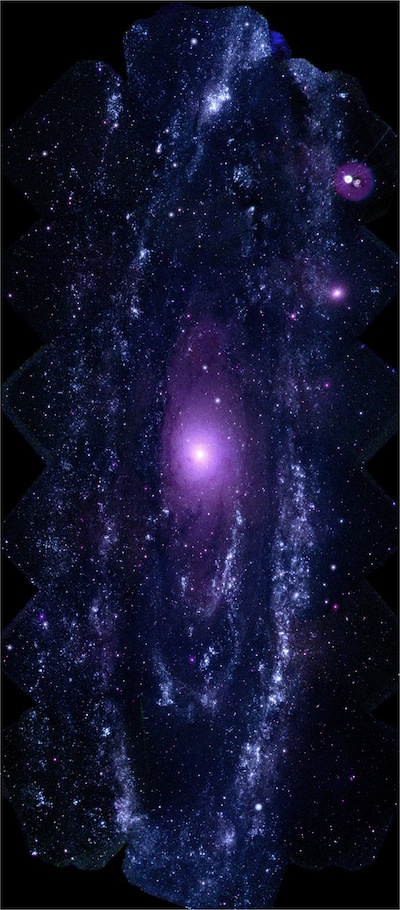
An ultraviolet image of the nearby Andromeda Galaxy – possibly similar to what we might see of MACS 1149-JD if we could get a more detailed view… Credit: NASA/Swift/Stefan Immler (GSFC) and Erin Grand (UMCP)
The light that made this unassuming red dot left its source less than 500 million years after the Big Bang and the birth of the Universe. The photons that make up that light have been travelling for over 13.2 billion years. This galaxy was blazing brightly as the oldest known stars in our own galaxy, the Milky Way, were just starting to shine. Back when the gas which would one day become the Sun was still drifting silently amongst stars which are now long dead, and before planet Earth was even a whisper of interstellar dust. Before a massive star forged the iron atoms in your blood, and before a supernova scattered those atoms into space. Before anything we know from the world around us existed, even the stars we see as we look up to the night sky, this galaxy was shining in the dark.
The Universe was a much smaller place back then. Over the billions of years these photons have been travelling, the Universe itself has expanded with them in the midst of it – stretching them out, redshifting them to longer and longer wavelengths. The light we see here as red was probably ultraviolet once, when it left the galaxy which created it.
Ancient galaxies like these are difficult to see, purely because they’re so distant. So few photons make it this far that only the most sensitive telescopes can make them out, and even then they need a helping hand. The bloom of galaxies in this image is a massive galaxy cluster called MACS J1149+2223. A collection of galaxies bound together by gravity, clusters like these are some of the largest and most massive objects in the Universe. With that much mass gathered together, gravity starts to do some interesting things, and one of the most interesting is gravitational lensing. Because the gravity of all of those galaxies distorts spacetime, it actually causes the space around the galaxies to act like a titanic lens. A gravitational lens. The ancient red galaxy in this image is only visible because it’s magnified, not only by the Hubble Space Telescope, but by that gravitational lens too.
It would be naive to assume that this galaxy, dubbed MACS 1149-JD, is special somehow. Instead, it’s most likely to be one of a huge number of primordial galaxies. Except that this one just happened to be in the right place at the right time. A whole population of these ancient galaxies were likely shining brightly at the time, full of hot stars which were driving the reionisation epoch – the time when the Universe went from being an opaque, dark fog, to a clear place where photons could travel long distances. The photons in this image may well have been some of the first photons to have travelled through that ancient and newly transparent Universe.
It’s been an interesting week for science news, and I’ve been lucky enough to be asked to give this week’s science picks! This made me spend a little while sipping contemplatively on a cup of vanilla iced coffee and wondering where to even start…
The articles I’ve selected are, of course, slanted towards my own (rather geeky) interests, but all the same I hope you find them all as fascinating as I did!
First up, the news that Star Trek style warp drives may actually be possible, at least in theory, made me exclaim “Oh wow!” out loud. Fortunately, people who spend any time with me are generally used to me talking to myself while staring at a computer screen…
“Everything within space is restricted by the speed of light. But the really cool thing is space-time, the fabric of space, is not limited by the speed of light.”
– Richard Obousy, president of Icarus Interstellar
Artists impression of Mimivirus, the first giant virus to be discovered. Image Credit: InvaderXan/Wikimedia Commons
From the vastness of space to life under the microscope, biologists have been debating for years whether or not viruses qualify as a form of life. The latest evidence is that they may indeed be a life form in their own right, and an old one at that!
They found that many of the most ancient protein folds in living organisms were present in the giant viruses, which “offers more evidence that viruses are embedded in the fabric of life,” Caetano-Anollés said.
Heritage Daily had a fascinating article about the archaeology of the future, and what precisely our distant descendents may one day think of us and the way we lived…
The point is that most of what survives will not be determined by conscious decisions on our part. This may not be for want of trying, as shown by the current popularity of time capsules. The most impressive of these must be the KEO satellite, due to be launched in 2014 and to return to Earth 50,000 years later.
And speaking of what we know of the past, it’s been shown again and again that our primitive relatives, the neanderthals, were likely not the brainless savages they’re often depicted to be. Evidence suggests that neanderthals liked to collect bird feathers as ornaments.
“I think this is the tip of the iceberg,” said Prof Finlayson: “It is showing that Neanderthals simply expressed themselves in media other than cave walls. The last bastion of defence in favour of our superiority was cognition.” Neanderthals, he said, may have been “different”, but “their processes of thinking were obviously very similar”.
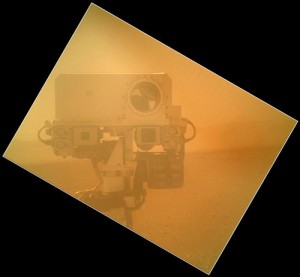
Curiosity self-portrait. Image Credit: NASA/JPL-Caltech/Malin Space Science Systems
As the Curiosity rover settles into its new home in Gale Crater on our neighbouring planet, one small worry is growing in the backs of the minds of certain NASA scientists. Could a blunder on the part of some engineers lead to Curiosity contaminating the surface of Mars with Earth life?
John D. Rummel, a professor of biology at East Carolina University, said, partly in jest: “It will be a sad day for NASA if they do detect ice or water. That’s because the Curiosity project will most likely be told, ‘Gee, that’s nice. Now turn around.’ “
And finally, planet hunters are scouring the sky for exoplanets. Astrobiologists are hoping to soon be able to look into the atmospheres of those planets in search of life signs, in the form of certain molecules created by living organisms. But could they be fooled by those molecules coming from somewhere else?
One key gas astrobiologists looking for extraterrestrial life would concentrate on would be oxygen […] Another possibility would be methane, a colorless, odorless, flammable organic gas that microbes on Earth produce. Seeing both together in an exoplanet’s atmosphere might be an especially significant sign of life, since they would both ordinarily remove each other from the atmosphere without something like life to constantly replenish them.
A young scientist on the brink of discovery during National Science Week
In my last post, I talked about the role of imagination in science and early childhood education and the U.S. efforts on encouraging students to pursue careers focused on STEM (Science, Technology, Education and Mathematics). I also mentioned that I would be featuring a primary school in Brisbane, Australia to gain an understanding of their science curriculum. If Australia was worried about their place in the global rankings of science and math test scores and working to get kids interested in science at an early age, they only need look at the example being set by Mitchelton State School. It starts with passionate and committed teachers.
SC@M
The Science Club at Mitchelton (SC@M) came about as an initiative of teacher Ms. Danielle Spencer. After completing an Education Queensland scholarship-funded Graduate Certificate in Primary Science, she wanted to start a club at Mitchelton dedicated to promoting students’ interest and involvement in science, and particularly to encourage girls to participate. With the support of Principal Roger Sheehan, Ms. Spencer worked collaboratively with Ms. Katie McIntyre, Head of Curriculum, and the two educators laid out the objectives for the new science club:
1) Promote science and a love of scientific enquiry within Mitchelton State School.
2) To provide opportunities and facilities that support scientific interest.
3) To liaise with external groups with similar objectives and aims.
4) To encourage girls interest in science.
To join SC@M, students were asked to submit an application containing a series of questions about their views on science, why they wanted to join and what they wanted to do in the science club. For some of the questions they were asked whether they agreed with a statement and why or why not. For example, ‘Science has too much math in it’ and ‘Men are better at science jobs than women’. I find it fascinating the children were questioned about their views on the gender imbalances in science. This area is a personal research interest for Ms. Spencer. Once the application portion was complete, students agreed to commit, with the support and consent of their parents, to attend each week for one lunch break and participate fully (and safely) in all activities.
Each term would be dedicated to a different area of scientific knowledge including physics, biology, chemistry and earth science driven by the children’s interests. To ensure that student activities are developmentally appropriate for the students, Mitchelton established SC@M to focus on Years 4 to 7. However, they are finding the younger kids want to join the science club too; so discussions are underway to assess the feasibility of adding a second period to the week allowing them to participate in activities geared toward their age and comprehension level. Less than two months old, I’m not sure the school was prepared for the level of enthusiasm displayed by the students to participate in SC@M once National Science Week came around and more children applied for the club. Thirty-nine children are now participating in the science club, and if numbers keep increasing they may have to initiate a cut off and place children on a waiting list.
National Science Week
National Science Week started 15 years ago, but this was Mitchelton’s first year participating in the nationwide event (August 11-19th) and to really shine the spotlight on it, they organised a Science Expo at the school to run for the whole week. The event included hands-on activities allowing the students to investigate the properties of slime, rocks and sound; exploring world‘s not seen by the naked eye with microscopes; and discovering natural events such as tornadoes in a bottle and exploding volcanoes. The entire school took part in the Science Expo with a poster design contest, a competition to name the school’s new skeleton, and a scientist dress-up day. The kids listened to a brief presentation from one of the SC@M coordinators and then were free to explore and interact with the exhibits for 45 minutes. Many of the children were having so much fun they did not want to leave when their time was up.
Mitchelton opened up the Science Expo to the public for two afternoons so parents and members of the community could engage in scientific exploration with their children and others. Here the SC@M members chaired the different science stations and provided their expertise and scientific rationale to the public. In addition, the school invited members of the high school community to share the experience by presenting a Science Show to the students and hosted a representative of the Young Scientists Association. On the final day of Science Week, a group of visiting scientists presented science demonstrations at a school-wide event. These activities involving the high school students and the visiting scientists clearly demonstrate Mitchelton’s holistic thinking on identifying and building the scaffolding necessary to show students that a pathway to continue their pursuit of science does exist.
The science club is the highlight of my week, just love it! – Danielle Spencer, Teacher at Mitchelton State School
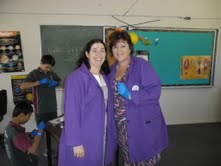
Teachers' commitment to science: Ms. Katie McIntyre (left) and Ms. Danielle Spencer
Australia Places National Emphasis on Early Childhood and Science
I wanted to know if the same emphasis on early childhood instruction is placed on teachers, kids and schools in Australia, as in the U.S. Ms. McIntyre stated, “There is certainly a huge emphasis placed on early childhood development, and in more recent times, Queensland education has focused on increasing students participation in a pre-prep program similar to other states.” This has resulted in the establishment of a large number of independently run pre-prep centres housed in primary schools. She went on to say teachers are finding that the Australian Curriculum is expecting more of students at a younger age and they are adapting their teaching practice to this requirement. While the prep curriculum remains play-based, there is a growing emphasis on explicit instruction in literacy and numeracy. This is similar to what is happening with the early childhood curriculum in the U.S., though I will have to leave my compare/contrast analysis for another posting and get back to science.
Both Ms. Spencer and Ms. McIntyre agree the Australian Curriculum endorses and provides a hands-on approach to engage children in science and develop that passion for it. Ms. McIntyre indicated that in addition to exposing children to science, it’s also essential “to develop the attributes of curiosity that are necessary to the investigations around science.” One way Mitchelton incorporates this active learning involves activities from CSIRO – The Commonwealth Scientific and Industrial Research Organisation. Ms. Spencer has used numerous activities from CSIRO, (e.g. The Helixand Scientriffic magazines) in her classroom and feels CSIRO provides a valuable resource for science teachers in Australia. She appreciates that the activities are enquiry-based and directly linked to the different strands of the Australian Curriculum. Having that link between CSIRO and the national curriculum is vital. I believe this level of collaboration demonstrates a complete feedback loop where the local level works with the state and national levels to influence and advance the science curriculum and grow the interest and passion for careers in science.
It’s inspiring to hear and see the students at Mitchelton wanting to be involved and, in fact, demanding more science in their school day. In addition to joining SC@M, several students who displayed an increased aptitude for scientific enquiry were encouraged to enter national science competitions such as the 60Second Science Video Competition (organised by Brendan O’Brien and sponsored by the Department of Education and Early Childhood Development in Melbourne, Victoria), and the NATA Young Scientist of the Year Award. At this writing, I am pleased to report that Mitchelton swept the primary school award category for the entire state of Queensland. The winners and notable mentions are:
1st Place: Xanthe Czerniawski
Runner-Up: Jessamy Bryant, Jacob Schofield & Hunter Griffiths
Highly Commended: Amelia Czerniawski
Highly Commended: Amelia & Claudia Czerniawski
Well done, kids!
How Australia Must Inspire its Young Scientists
The Australian Curriculum has identified science and math as two of the core priorities to prepare students for further study in science and technology careers, though Ms. Spencer worries the problem Australia faces “is the declining involvement in math and science carers.” She states this is particularly notable with girls and has been the basis for numerous national studies and strategic reports. Both Ms. McIntyre and Ms. Spencer feel that the primary school setting could use more resources and funding as they are limited to the types of scientific experiments they can instruct children in. We all understand budgets are tight, but earlier exposure to quality science activities could raise the interest level of children, providing long-term benefits. Where do you put the money for the greatest return on long-term investment?
The other investment that must be made is in teachers. Teachers who continue their professional development, who pass their love of learning for exploration and discovery in the pursuit of science, (and any discipline, really) is how kids will continue on with careers in science and technology. It’s not a guarantee of course, but teachers are that spark to the kindling that starts the fire of learning in students. It’s up to the students to carry the torch. It would be interesting to follow up later and see how many of this inaugural group of SC@M members are working to cure diseases, attempting to solve our energy problems and tackling our food security issues. Or maybe they go on to design buildings, work in government to protect our natural resources with laws and regulations, or use their social media gadgets to communicate the stories of science to others. But we’ll have to wait a few years for that. In the meantime, let’s hope their curiosity in learning continues and prepares them well for the avenues they choose to travel. They have a head start at Mitchelton.
Special thanks to Mitchelton State School staff – Roger Sheehan, Danielle Spencer, and Katie McIntyre – for their gracious participation in the Q&A and photos for this article and the commitment they demonstrate in providing an enriched, quality education for the children in the community they serve.
Mars is full of secrets and mysteries. The classic definition of a desert world, our planet’s arid sibling is a parched wilderness of dunes and planetwide dust storms. With a thin carbon dioxide atmosphere and only 38% the gravitational pull of Earth, there are a lot of puzzles about this cold and frosty little planet, and a lot of scientists who are longing to solve them.
El Dorado, Gusev Crater. Mars is a world of dust and dunes…
By now, anyone keeping up with the news is bound to have heard that NASA’s Curiosity rover made a flawless descent through the atmosphere of Mars and is now busy eyeing up its new home in the Gale Crater. As was discussed previously here on Australian Science, a big question still on everyone’s mind is the same one which David Bowie sang about back in 1971. Is there life on Mars? However, it seems that NASA’s plans are not to answer this question directly. John Grotzinger, project scientist for the Curiosity mission, is quoted as saying; “Curiosity is not a life detection mission. We’re not actually looking for life; we don’t have the ability to detect life if it was there.” Instead, the main objective of Curiosity is to look for signs of life.
The trouble is that looking for life directly is a difficult task. Back here on Earth, new discoveries are still being made frequently, with life being found in environments and habitats where no one was expecting. There’s a lot which we still don’t fully understand about life here on our own world. When we’re talking about another planet, it’s safe to say that all bets are off. As a result, Curiosity’s goal is to look for the various elements and chemical compounds which life might use – or might have used once upon a time when the planet may have been more hospitable. The focus has shifted from the search for life on Mars right now, to life which may once have lived there.
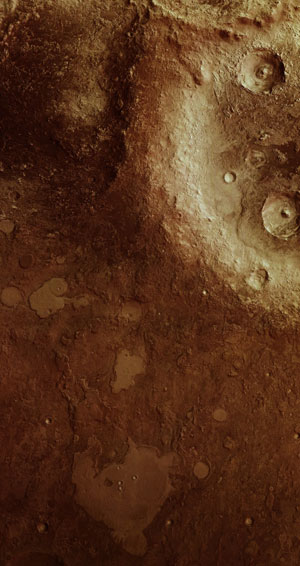
Arabia Terra – one of the three locations on Mars where methane plumes have been spotted.
One point which is worth remembering right now, however, is that there’s one big unsolved mystery about Mars. A gaseous mystery. Large quantities of methane have been detected in the martian atmosphere, which gives rise to a real puzzle. Methane is destroyed by sunlight, and with the thin atmosphere found on Mars, any methane should be rapidly broken apart by solar ultraviolet. The only possible conclusion is that the methane seen on Mars is being replenished somehow. There are only really two possibilities for how this might happen.
One scenario sees the martian methane caused by a geological process called serpentinisation. This is where a type of mineral known as olivine (more familiar to us as the gemstone peridot) chemically reacts with water and carbon dioxide. The reaction creates methane and a green mineral called serpentine (commonly found in certain parts of Western Australia and Tasmania), and releases methane gas. If this is the process which is occurring, it would mean that not only is there a suitable amount of water somewhere under the surface of Mars, but there must also be geological activity for that water to continue being brought into contact with further olivine to react with. This would suggest that there are things which we don’t know about current geological processes on Mars.
The other possibility, more radically, is that this methane is being produced by life. Here on Earth, bacteria known as methanogens are responsible for most of the methane present in Earth’s atmosphere. In fact, on Earth, methane is so regularly produced by living organisms that it can used as an indicator of biological activity.
When three distinct plumes of methane were discovered on Mars in 2009, it was noted that there was an equal probability of either of those two scenarios being the source of the methane – and that both would be huge revelations in our understanding of our neighbouring world. So maybe the Curiosity rover isn’t set up to hunt for life, and maybe it won’t be directly looking for it. But I, for one, do hope it finds some clues about the origin of the mysterious martian methane. Just as any scientist should, I love a good mystery!
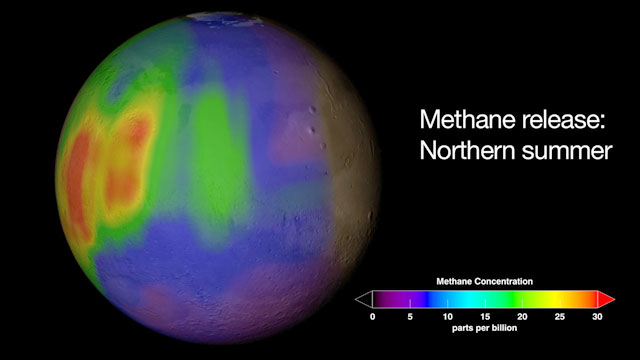
The three methane plumes seen on Mars at South-East Syrtis Major, Nili Fossae and Arabia Terra.
Image credits:
Top – NASA JPL/Cornell
Middle – ESA/DLR/FU Berlin (G. Neukum)
Bottom – NASA
Imagine yourself for a moment waiting for a meal at your favourite restaurant, local takeaway store or at home counting down the time until the oven buzzer sounds. You know you’re hungry, but we seldom think or care about the complex series of processes that go on inside our bodies that drive that hunger.
And why should we care?
In the developed world, for the lucky majority at least, calorie-dense food has never been more accessible. Want a pizza? Just use an app from your smartphone to order one delivered any time, day or night. The one big problem with this–human appetite has evolved over tens of thousands of years when food was tough to come by, and we had to work physically hard for a meal, now we just go to the fridge. However the series of long developed processes that drive appetite have not caught up in this time of plenty thereby contributing to the modern day upsurge in obesity.
Obesity as a global problem
Obesity is a global disease on the increase, the World Health Organisation estimates that by 2015 there will be an astounding 700 million adults classified as obese. From a health viewpoint this is particularly worrying as obesity is a major risk factor for cardiovascular diseases, Type-2 diabetes and some cancers.
Also concerning, is the number of people in developing countries at risk, where the bane of obesity joins established under-nutrition. Dr Ranjan Yajnik, the director of the diabetes unit at King Edward Memorial Hospital in Pune, was recently reported by ABC News saying, “Populations which have faced under-nutrition for a long time are now exposed to the over-nutrition of the modern world through globalisation and westernisation”.
In short, it’s the modern world and how we live in it which is driving up rates of obesity.
An unbalanced system?
In broad terms, the body is wired to protect against starvation and low food availability, by increasing biological and sensory processes that promote the need to eat. This makes sense, after all starvation is an immediate threat to survival and was by far one of the greatest concerns of our ancient ancestors. As excessive food was less of a concern, the regulatory processes to protect against excess consumption and weight gain appear less effective, leading to the body favouring weight gain over weight loss.
Combine this with the increased availability of highly palatable foods, and the ability to stop eating when full is increasingly difficult. According to Dr. Joanne Harrold and colleagues, in a recent paper published in the journal Neoropharmacology, this may be especially true for many obese people, who may “possess an over-responsiveness to the reward effects of eating, which results in the appetite system of these people being effectively overwhelmed
Science is but a perversion of itself unless it has as its ultimate goal the betterment of humanity – Nikola Tesla
One of the greatest people in the history of science, and the greatest inventor of the post industrial society, Nikola Tesla, is the visionary that many people have never even heard of or about his work. He could visualise the future inventions with the greatest facility. Numerous articles have been published, books have been written related to this magician of the science. There are manysources about this man who lit the world, and his developments.
Among many Tesla’s inventions, the most relevant that influence directly our everyday life include: radio, wireless telegraphy, remote control, robotics. He even photographed the bones of the human body. But the high point was the realisation of a childhood dream: harnessing the raging powers of Niagara Falls, and bringing light to the city. Tesla has over 700 patents to his name: invented the World First AC Generator which led to electrical development and enlightment of the world. This high frequency high volatage electricity is used today in many communication devices.
Also, Tesla’s Wireless power System including certain devices is now considered to be an untouched method to transmit electrical current without wires. Extraterrastrial Radio Transmitter – Teslascope, radio transceiver designed with the intention of communicating with extraterrestrial life on other planets. It received publicity after Tesla’s statement on the device was published by Time magazine in their July 20, 1931 issue celebrating Tesla’s 75th birthday.
We should mention here Tesla’s Earthquake Machine invention that probably many people never heard of. This is an excerpt from the New York World Telegram, July 11, 1935:
“Nikola Tesla revealed that an earthquake which drew police and ambulances to the region of his laboratory at 48 E. Houston St., New York, in 1898, was the result of a little machine he was experimenting with at the time which “you could put in your overcoat pocket.
Originally conceived over 20 years ago, there’s a project being undertaken by scientists and engineers across the whole world to help us all better understand the mysteries of the galaxy and the very beginnings of the Universe. It’s estimated to be completed by around 2024,costing $1.85 billion AUS (€1.5 billion). Once completed, it’s set to be the most complex and technologically advanced machine ever built by humanity. It will use enough optic fibre to wrap twice around the Earth and will need a computer capable of performing 10^18 operations per second – about three million times the number of stars in our galaxy. It will produce over 980 Exabytes of data every day (equivalent to about 15 million 64GB iPods) and to cope with that, it will need to handle data transfer rates over 10 times as high as the current global internet traffic. No, it isn’t a starship. But it might just be the next best thing.
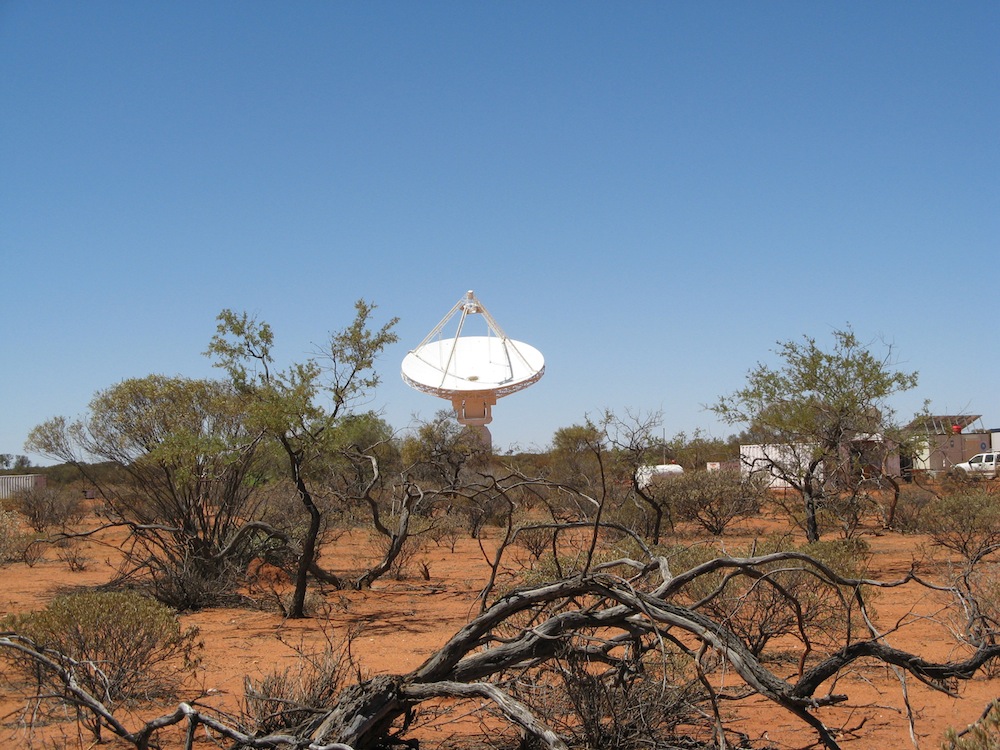
One of the first components of the SKA, constructed in Western Australia. Credit: Dave DeBoer, CSIRO.
The Square Kilometre Array (SKA) is one of the most ambitious scientific projects ever devised, and when completed it will comprise a huge number of telescope antennae which will work as one to form a single radio telescope so powerful that it could detect an airport radar on a planet 50 light years away. The sensitivity of any telescope is defined by the area it uses to collect data. With optical telescopes, this is the size of the mirror, and with radio telescopes it’s typically the size of the dish. The SKA gets its name because when fully constructed, all of the detectors and antennae that make it up will have a combined area of one square kilometre, or one million square metres. To put that properly into perspective, the Green Bank Telescope is currently the largest steerable single dish radio telescope, and its area is just under 8000 square metres.
Being astronomy’s answer to the large hadron collider, the SKA is a staggeringly large international collaboration. I was lucky enough to attend a major meeting regarding the planning of the SKA (the headquarters are to be based here in the UK in Manchester), and the myriad different languages and nationalities represented was impressive to say the least. Over 24 major organisations from countries spanning 5 continents are involved in the project, ranging from universities to industrial engineering companies. New technologies, both software and hardware, are still being developed as a result of this project. Based on the huge data storage and transfer requirements of a machine as complex as the SKA, many of those new technologies are likely to feed straight back into society by offering profound improvements to computing resources like the internet. In fact, as the world’s largest project for sorting and storing data, the SKA is expected to be literally bigger than Google!
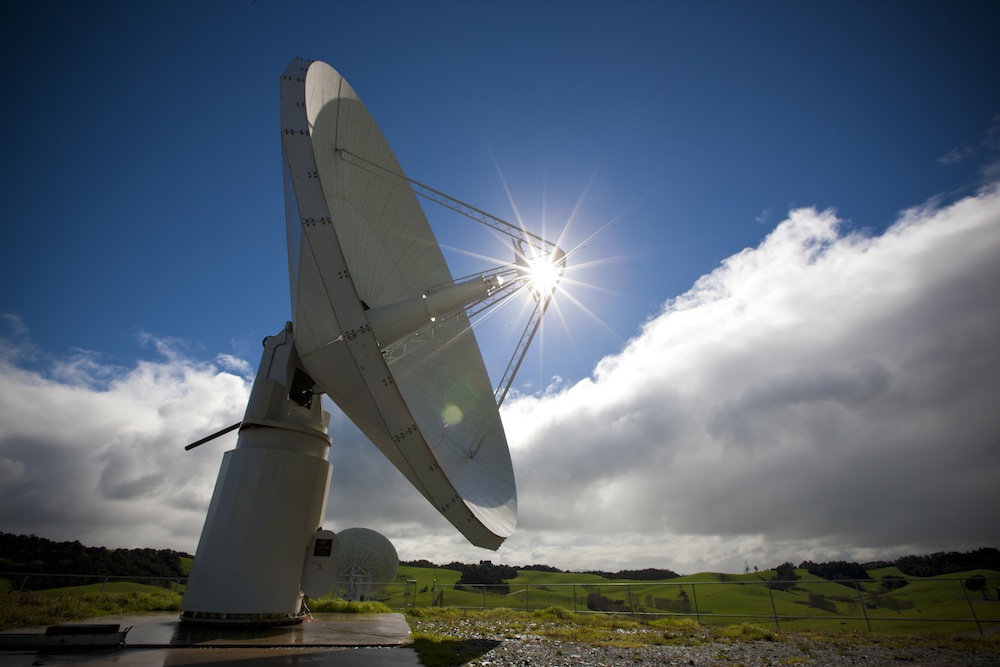
The Warkworth antenna in New Zealand – an important part of early SKA science. Credit: Alex Wallace.
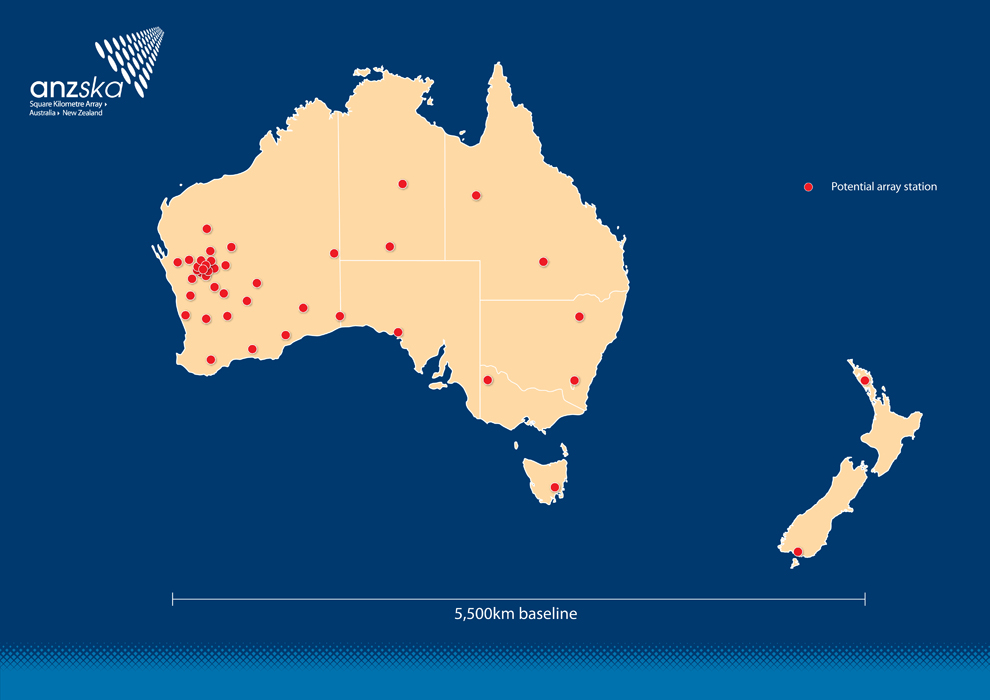
The most difficult decision, understandably, has been where precisely to build it. Humanity has an unfortunate tendancy to fill the atmosphere of our planet with noise, bouncing radio waves to and fro and filling the air with radio frequency chatter. A radio telescope array this sensitive needs to be placed somewhere quiet to gain the full benefits, and the most recent decision has been to effectively split the SKA into two components, to be built in Southern Africa and Australia. While this may seem like an odd thing to do, it actually makes perfect sense. The SKA actually has three types of antenna operating at different frequencies. Intended to cover a huge range of radio frequencies (from 70 to 100000 MHz), three types of antenna are needed, because no single technology can actually operate across such a wide range. So the decision was made to build the lowest frequency detectors across Australia, centred at Murchison in outback Western Australia. Murchison is blessed with being one of the few places on our planet which isn’t flooded with FM radio at the low end of the frequency scale. From a radio astronomer’s point of view, it’s the quietest place on Earth.
This is set to be complemented by the higher frequency steerable dishes which are set to be constructed across Africa. Both South Africa and Australia have put extensive efforts into developing the SKA, and Australian-developed technology is still set to be implemented in the African telescopes. This will mean a huge influx to the African astronomical community and numerous African nations won’t lose out on the economic boost from contributing to such a prestigious project. It’s an ideal situation where everyone wins.
All in all, it’s an exciting time to be an astronomer. An epic project like this is likely to attract all manner of researchers from across the world to both continents. Just maybe, it could also finally help us to answer the really big questions, like how the galaxy formed, how the Universe began, and whether or not there’s anyone else out there.
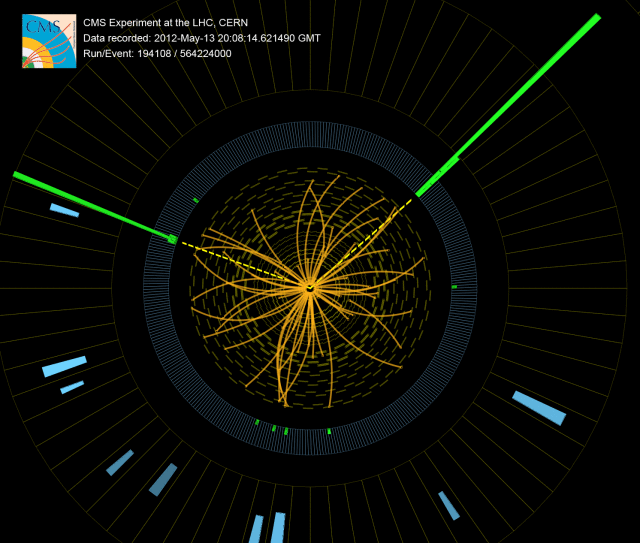
It’s official. As was the subject of a press conference here in Europe this morning, the LHC has discovered a new particle. Is it the much talked about Higgs boson? Evidently it’s far too early to say with certainty. But whatever it is, it’s a brand new subatomic particle, it’s consistent with a Higgs boson signature, and it’s enough to make CERN physicists quite excited.Whatever it may turn out to be, it’s brand new and never seen before.
This is physics at its most fundamental. The standard model of particle physics is probably our best depiction of how the universe operates at subatomic scales, but our picture is incomplete. A jigsaw puzzle with missing pieces which must still be searched for. One of those pieces is a piece so basic that for a long time it was simply overlooked. Why do objects have mass at all? The existence of the Higgs boson in the Standard Model seeks to address that question. It posits that all the universe is filled with a so-called Higgs Field. Any particles, protons or neutrons for instance, passing through that field will interract with it, and it will interract via Higgs bosons. Any particle which exists in this field will effectively be surrounded by a cluster of these Higgs bosons. The more bosons, the stronger the interraction, and the more massive that particle will be.
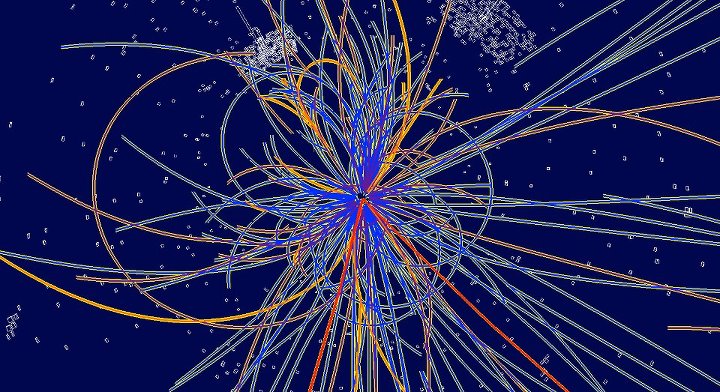
Simulation of Higgs Boson decay.
But exactly what it is that’s been discovered is still being analysed. Amid a press conference full of journalists asking pointed questions about “the Higgs boson”, scientists were noticeably hesitant to outright say that this is what they’ve discovered. And for good reason too, because science doesn’t work like that, no matter how many people might want to run through the streets naked shouting ‘Eureka’. In all of this, only one thing is certain – a new particle has been discovered with a mass of approximately 126 giga electron volts (126 GeV), with a statistical significance of 4.9 standard deviations (4.9 σ).
Peter Higgs himself, declined to make any comment twice during the conference, simply stating that it would not be appropriate to answer detailed questions at this stage. The other members of the panel too, agree that it’s very difficult to say anything definitively right now and that “Higgs-like” would be a better description of what they’ve found. It’s compatible with a Higgs boson detection, but the “uncertainties are still large”. While definitely being “consistent with a Higgs boson”, interestingly it’s noted that they cannot say if this is the Higgs boson (i.e. the one required by the Standard Model), rather at this stage it may be a Higgs boson. Scientifically speaking, it’s far better to only make statements on what’s known to be true, rather than to make brash announcements which may prove to be incorrect a few months later.
Whatever happens after the months of data analysis which are due to follow is that we’re set to unravel a lot more about the fundamentals of the universe. This discovery is on the very edge of human understanding. It may help to refine our knowledge of the Standard Model of particle physics, or it may hint that this particular Higgs boson is not a part of the standard model – a prospect which ATLAS experiment director Fabiola Gianotti seemed visibly quite excited by.
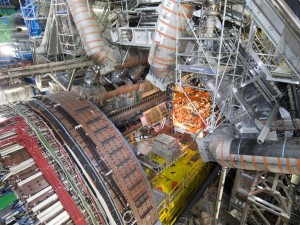
The ATLAS instrument, a detector in the LHC.
Rolf Heuer stressed the fact that the most exciting thing here is the fact that they have a discovery of something brand new, perhaps suggesting that we shouldn’t get too caught up in our expectations and simply enjoy the excitement of there being something never before seen in physics in the process of being analysed. Moreover, this could be the very first fundamental scalar particle, and the first gauge boson which actually has any mass. If it does turn out to be a Higgs boson, then this holds the additional thrill that this particle has a relationship to the state of the universe itself, embodying the substance to all other particles which exist.
In the meantime, as the LHC prepares to power down for a couple of years of maintenance, this discovery will certainly stoke the fires of curiosity in thousands of scientists worldwide. The data are still being picked apart too, for things which are completely unknown. Perhaps even more brand new physics is still waiting to be found. It’s an exciting time in physics right now!
Australian researchers helped design and build parts of the ATLAS detector and helped analyse the results.
Researchers using two huge detectors at the Large Hadron Collider announced the results of their searches at a joint scientific seminar in Geneva and Melbourne, where the International Conference on High Energy Physics is being held.
In a joint seminar today at CERN and the “ICHEP 2012
Winner of the 2011 Picture of the Year: A view of Lake Bondhus in Norway, and in the background of the Bondhus Glacier, part of the Folgefonna Glacier.
Wikimedia Commons have just announced their three best images from 2011. Commons is an online repository of media freely licensed and available for anyone to use and repurpose. Every year the Commons community highlights the best media submitted over the course of the previous 12 months, in what has become the Picture of the Year Contest. This year, German Wikipedian Heinrich Pniok is the winner of the Sixth Annual contest for his picture of Lake Bondhus in Norway. You can read the complete story behind the 2011 Picture of the Year inthis excellent article by User:Tony1 from the 25 June 2012 issue of the Wikipedia Signpost.
Australian Science Editorial Board’s favourite photo is a self portrait of Tracy Caldwell Dyson in the Cupola module of the International Space Station observing the Earth below during Expedition 24, featured in the article Networking the Solar System.
Tracy Caldwell Dyson on the International Space Station
This week we have seen beautiful Venus transiting directly between the Earth and the Sun, which brought plenty of the media attention, and yesterday one of the greatest science fiction writers Ray Bradburydied during Venus transit. He was best known for his dystopian novel Fahrenheit 451 and for the science fiction stories collection The Martian Chronicles. Both the Earth and Mars lost one of their most famous citizens.
Speaking of Venus, Mars, science fiction and non-fiction, I want to share something with you that a colleague of mine drew the attention to, the other day. It is a private space start up from the Netherlands called the Mars One project, whose goal is to send four volunteer astronauts on a one-way journey to Mars. Take a look at the promotional video to get the sense of this endeavor.
The idea of the privately financed Dutch company is to establish the first human colony on Mars by 2023. ‘’A habitable settlement will be waiting for the settlers when they land. The settlement will support them while they live and work on Mars the rest of their lives.
Minister for Innovation, Services and Small Business Louise Asher today announced applications are now open for the 2012 Victoria Prize for Science and Innovation, and the 2012 Victoria Fellowships.
Ms Asher said the Victorian Coalition Government was committed to supporting discovery and development in research and innovation, and had doubled the number of Victoria Prize and Victoria Fellowships on offer. “The Coalition Government believes there is immense scientific and research talent to reward and promote in Victoria and that is why we made an election commitment to double the number of awards,

 Contact us if you’d like to join our team of science and tech bloggers and authors – please read the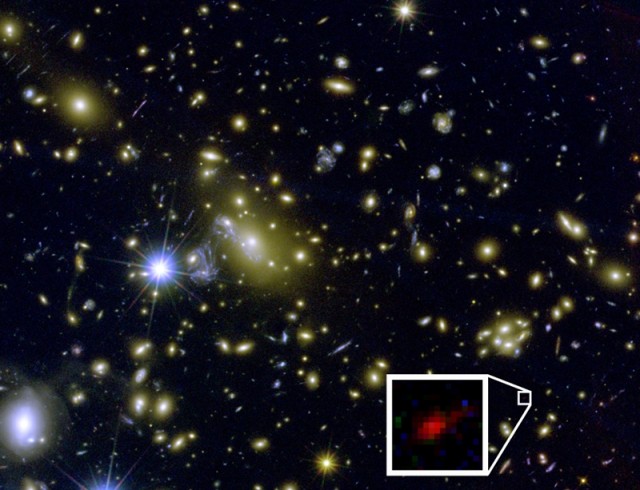

 It’s been an interesting week for science news, and I’ve been lucky enough to be asked to give this week’s science picks! This made me spend a little while sipping contemplatively on a cup of vanilla iced coffee and wondering where to even start…



 Imagine yourself for a moment waiting for a meal at your favourite restaurant, local takeaway store or at home counting down the time until the oven buzzer sounds. You know you’re hungry, but we seldom think or care about the complex series of processes that go on inside our bodies that drive that hunger.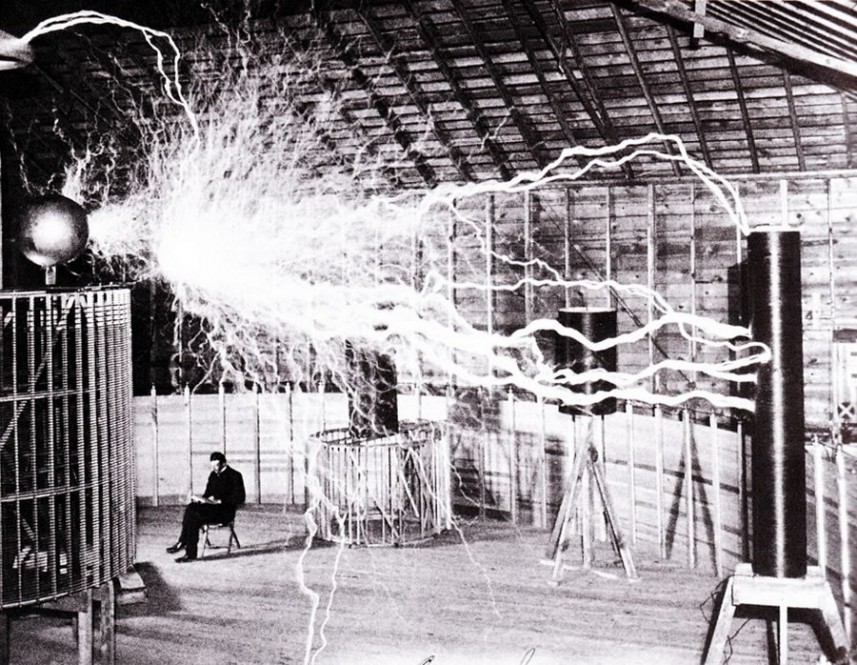




 Minister for Innovation, Services and Small Business Louise Asher today announced applications are now open for the 2012 Victoria Prize for Science and Innovation, and the 2012 Victoria Fellowships.