Category: News

  • Weekly Science Picks

    Weekly Science Picks

    It is with a heavy heart that I must say, this is my final set of Weekly Science Picks here on Australian Science. In fact, it’s to be the final set of Weekly Science Picks. Unfortunately, running a site like this one is a costly affair, and it’s been an honour to be a writer here over the past year and a half. Scientific progress will, of course, always carry on and I hope there will always be places to discuss new findings, implications, and effects of it on human culture and society.

    So, proudly then, here are the final set of news stories which caught my eye this week. Make no mistake – there’s been some pretty cool news recently!


    Firstly, and in my opinion most excitingly, is a medical breakthrough which could actually revolutionise surgery in the future. And anyone who knows me will know that I don’t use words like “revolutionise” lightly. Quite simply, the device is a small pen, developed by the Australian Research Council Centre of Excellence for Electromaterials Science (ACES), which will be able to deposit stem cells and growth factors directly into injuries. This means that this pen could help injured tissue – bones, muscle, and even nerves – to regrow. Oh, and did I mention it works using 3D printing technology?

    BioPen to rewrite orthopaedic implants surgery

    The BioPen prototype was designed and built using the 3D printing equipment in the labs at the University of Wollongong and was this week handed over to clinical partners at St Vincent’s Hospital Melbourne, led by Professor Peter Choong, who will work on optimising the cell material for use in clinical trials.


    For a long time humans were considered unique in that we use tools where other animal species don’t. But since that old idea, more and more animals – from birds to octopodes – have been shown to use tools in their daily lives. The most recent addition to this collection of smart creatures is the crocodile which has been found to use lures while hunting. Perhaps this might help show that reptiles are smarter than we give them credit for!

    Alligators and Crocodiles Use Tools to Hunt, in a First

    Relatively less is known about crocodiles and alligators than many animals, because, as large predators, they are difficult to raise in the lab and study up close in the wild. Their cold-bloodedness also makes them slow. “They operate on a different time scale; they do things more slowly,” Burghardt said. “Sometimes we don’t have the patience to let them strut their stuff, as it were … so this kind of study is important.”


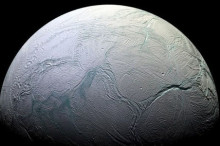
    A huge plume of water has been spotted, gushing from the surface of Enceladus, Saturn’s tiny snowball moon. While the exact source of Enceladus’ warmth is still something of a mystery, this sighting means that its activity is quite clear – this water plume is reaching an altitude of around 201 km above the surface of the tiny world. That’s nearly ten times as high as Olympus Mons, the solar system’s largest mountain (which itself dwarfs Everest, the heighest mountain on Earth).

    Hubble Space Telescope Sees Evidence of Water Vapor Venting off Jupiter Moon

    “By far the simplest explanation for this water vapor is that it erupted from plumes on the surface of Europa,


  • The source of creativity

    The source of creativity

    Every creative writer was asked the question at least once at a social event with non-writers: “Where do you get your ideas?

  • Bridging our big broadband gap

    Bridging our big broadband gap

    New research report reveals the impact of next generation broadband for Australian households and businesses.

    Despite living in the ‘Digital Age’, Australia is currently not prepared to fully take advantage of the services afforded by next generation broadband according to a new groundbreaking research report released today.

    Developed by the Australian Centre for Broadband Innovation (ACBI) and CSIRO’s Digital Productivity and Services Flagship, the ‘Broadband Impact and Challenges’ report provides fresh insights and evidence to better understand the impact and opportunities offered by next generation broadband as well as advice on the necessary steps needed to mitigate the associated risks. The report was compiled out of key findings from comprehensive community surveys, interviews with businesses and thought leaders as well as detailed analyses of existing data sources and peer-reviewed economic and social research.

    “Although we are living in an increasingly ‘Digital Age’ full of smart devices, tele-working and social networks, one in five Australian adults still do not use the internet,” said Colin Griffith, Director of the Australian Centre for Broadband Innovation.

    “Recognising that more and more government and business services are delivered online, a key focus of our research is to understand the behaviour and capabilities of adoption and use of next generation broadband. Across the board we have found that giving more people and businesses the skills and confidence to use these broadband services effectively, will not only have a positive impact on their quality of life and business success, but also create broader economic benefits.”

    Interviews with industry and government stakeholders cited a lack of certainty about the future rollout of Australia’s broadband infrastructure as being a significant barrier in helping them prepare for the future.

    “Like other major Australian infrastructure projects such as the Snowy River Mountain Scheme and the Sydney Harbour Bridge Harbour Bridge, the debate around our national broadband infrastructure has predominately focused on cost and scale. While these are important discussions, our research highlighted that government, industry and the community need to invest in capability building through training and investment programs if we are to fully realise the benefits of next generation broadband,” said Mr Griffith.

    The report also includes a number of key insights to help government and businesses prepare for some of the potential threats which next generation broadband may bring.

    “Along with its many benefits, next generation broadband will also create challenges for Australia, accelerating disruption to businesses, jobs and services. If we are to mitigate the potential threats than active leadership at all levels of society and across different organisations is needed to ensure that there is strategic investment in capacity building and innovation to help safeguard our digital future,” said Mr Griffith.

    “Ultimately, it is the capabilities of every person and business that will determine the overall level of benefit realised for Australia in terms of jobs, improvement in productivity and quality of life.”

    The ‘Broadband Impact and Challenges’ report was officially launched to a group of industry and government stakeholders at an event in Sydney this morning.

    Source and image.

  • It’s electricity, but not as we know it

    It’s electricity, but not as we know it

    Australia’s electricity landscape could change significantly in the future and consumers will be deciding just what that future will look like.

    A new report from the Future Grid Forum, Change and choice: The Future Grid Forum’s analysis of Australia’s potential electricity pathways to 2050, looks at a range of opportunities and presents four scenarios, not predictions, through which we can view potential futures for our national electricity system.

    CSIRO Energy Flagship Chief Economist, Paul Graham, said recent declining demand, higher electricity prices and strong adoption of roof-top solar panels have changed the industry’s view of what is plausible in the future and trained a focus on affordability challenges.

    “All of the choices in the Future Grid Forum scenarios have consequences for the price of electricity, something that has significantly impacted consumers in recent years with the average household electricity price increasing by two-thirds between 2007 and 2012,” Mr Graham said.

    “Electricity will not get cheaper in the coming decades, but bills can be reduced through the adoption of energy efficiency, peak demand management and on-site generation.

    “These steps, in combination with general wages growth, means the share of income average households spend on electricity is projected to be similar – shifting marginally from 2.5 per cent in 2013 to between 2.3 and 2.9 per cent in 2050 depending on the scenario.”

    The Forum also projected that technology will allow more sophisticated ways of managing household demand during peak times through the introduction of devices such as smart air conditioners and in-home storage systems.

    “Better strategies for peak demand management could save two cents per kilowatt hour or $1.4 billion per annum on distribution costs for households,” Mr Graham said.

    Electricity has traditionally been a service with which consumers have not proactively engaged, but the Forum’s scenarios present a number of ways for people to take greater control of how they consume and produce electricity.

    “This proactive shift could potentially influence the business model for the electricity sector, encouraging the emergence of new services to supply an individually tailored product – not dissimilar to the telecommunications industry shift from a one-size-fits-all landline telephone system to a wide variety of mobile and associated data and entertainment services,” Mr Graham said.

    “One of the Forum’s scenarios looks at the option for around a third of consumers to disconnect from the electricity grid through the use of on-site generation using technologies like rooftop solar panels and battery storage; and this is projected to be economically viable from around 2030 to 2040.

    “Under the full range of scenarios Australia could see on-site generation grow from the current figure of 8 per cent to reach between 18 and 45 per cent of total generation by 2050, but mostly while staying connected and using the grid as an electricity trading platform,” Mr Graham said.

    The Forum findings are a starting point from which all stakeholders can begin to understand, manage and benefit from changes to the electricity system.

    “This is an extraordinary time of change for Australia’s electricity industry and the Forum partners see the release of this report as an opportunity to begin a national conversation to decide the right answers for the sector, its stakeholders and, most importantly, all Australians,” Mr Graham said.

    Source and image.

  • Weekly Science Picks

    Weekly Science Picks

    Builder Bees - photo via Gizmodo.com
    Builder Bees – photo via Gizmodo.com

    Welcome to Weekly Science Picks!

    Here are some of the top science stories that caught my eye this past week. A smorgasbord of science stories, if you will. Topics include farming in the African desert, the publish or perish dilemma of academia, the wiring patterns of the male and female brains and skilled builder bees. Hope you enjoy.


    Sudan hopes technology will transform farming by James Copnall

    The idea is to produce hundreds of Sudanese “super cows” that will produce much more milk than local breeds.


    Peter Higgs: I wouldn’t be productive enough for today’s academic system by Dekka Aitkenhead

    Peter Higgs, the British physicist who gave his name to the Higgs boson, believes no university would employ him in today’s academic system because he would not be considered “productive” enough.


    How Men’s Brains Are Wired Differently Than Women’s by Tanya Lewis and LiveScience

    The research, which involved imaging the brains of nearly 1,000 adolescents, found that male brains had more connections within hemispheres, whereas female brains were more connected between hemispheres. The results, which apply to the population as a whole and not individuals, suggest that male brains may be optimized for motor skills, and female brains may be optimized for combining analytical and intuitive thinking.


    These genetically-modified bees make concrete instead of honey – Original post by GEOFF MANAUGH on GIZMODO

    For an ongoing collaborative project, New York-based architect John Becker and I have been looking at the possibility of using bees that have been genetically modified to print concrete as architectural printheads.
    Until next time, stay thirsty for knowledge.
  • Helping miners find the right water balance

    Helping miners find the right water balance

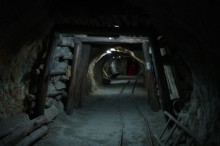
    The coal mining industry will be better equipped to manage water and deal with extreme weather events, thanks to a new model developed by CSIRO.

    The model, to be unveiled at the 20th International Congress on Modelling and Simulation (MODSIM2013), aims to forecast future mine water needs and will help the industry address the challenges of both excessive water and insufficient water on mine sites. The research was conducted in Queensland’s Bowen Basin, home to Australia’s largest coal reserves, and one of the most highly variable climates in the world.

    Professor Damian Barrett, head of CSIRO’s Water in the Resources Sector research, said a key challenge for the industry is to maintain mine water storage at an optimal level to ensure water security for mine operations during drought but also to eliminate unregulated discharges during flood periods.

    “The coal mining industry is accountable for managing its mine water use, including complying with discharge regulations,” said Professor Barrett. “Our research is demonstrating how to reach the ‘Goldilocks’ state in water management. That is, not having too much or too little water but having just the right amount of water on mine sites for when it is needed.”

    The model is depicted through three perspectives: the business perspective capturing the mine operation practices within a mine or across several mines or companies; the environmental perspective representing all the climate change patterns such as rainfall and catchment histories and weather forecast data; and the decision perspective which considers tradeoffs by demonstrating how to develop strategies to best meet business needs while considering environmental constraints and opportunities.

    “We applied the scenario model to a number of constructed case studies including single mine sites and multiple mines sites, with the multiple mine site case studies exploring water sharing and trading opportunities among mine sites,” said Professor Barrett. “This methodology provides a rigorous and objective technique for developing management strategies and assessing risk.”

    The model was developed as part of a suite of broader CSIRO research in the coal mines of the Bowen Basin. Research in the region is providing strategies to help the industry forecast mine water quantity and quality, improve water use efficiency onsite and improve understanding of the impacts of mine water use on regional water.

    “Through improved seasonal climate forecasts, the assessment of the effectiveness of water sharing and trading among multiple sites and the cost benefit analysis of establishing water management infrastructure, our research is helping to guide the coal industry towards better water management that balances the needs of business with the needs of the environment,” said Professor Barrett.

    The comprehensive suite of work undertaken by CSIRO through its Water for a Healthy Country Flagship to improve water resource management in the mining sector will be presented at MODSIM on Thursday 5 December. MODSIM runs from Sunday 1 to Friday 6 December 2013 at the Adelaide Convention Centre, Adelaide, South Australia. The MODSIM theme for this year is ‘Adapting to change: the multiple roles of modelling’ and is expected to attract in excess of 800 national and international delegates.

    Source and image.

  • Get the conversation started

    Get the conversation started

    Ever wondered how vaccines work, why whales strand themselves or if luck really exists? The Explainer: From Déjà Vu to Why the Sky is Blue and Other Conundrums is a collection of straightforward, accessible, and engaging explanations from those in the know on those everyday concepts that may have made you stop and wonder.

    Written by academic experts with deep subject expertise, the book shares knowledge on diverse topics: from animals and agriculture, climate and energy, the body and medical myths, technology and more. Curious readers will discover accessible answers to questions such as: what is gravity? Can you pay-off a sleep-debt? What is dreaming, forgetting, depression?

    Managing Editor of The Conversation, Misha Ketchell, said: “This book makes the knowledge of academic experts available to everyone. It’s full of fascinating facts that can inform public debate or just be enjoyed for their own sake. The Explainer is perfect for indulging curiosity, settling bets or sparking a conversation.”

    CSIRO’s Dr Mark Lonsdale said: “Armed with this book you can do more than simply start the discussion – you can marshal the explanatory information to help inform it.”

    The book is a collaboration between CSIRO PUBLISHING and The Conversation, Australia’s largest independent news and commentary sites, where the articles were originally published.

    Source and image.

  • Indian Ocean phenomenon helping to predict extreme weather

    Indian Ocean phenomenon helping to predict extreme weather

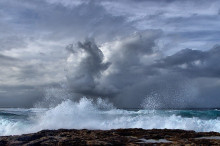
    A phenomenon in the Indian Ocean that affects events in southeast Australia is helping to predict extreme weather up to six months in advance.

    The phenomenon, the Indian Ocean Dipole, is the difference in sea-surface temperatures between the western and eastern part of the Indian Ocean, and until recently has been one of the most influential but the least understood natural forces affecting Australia’s climate.

    An international team of scientists, led by CSIRO Wealth from Ocean Flagship’s Dr Wenju Cai, confirmed the link and have published their findings in the journal Nature Geoscience.

    A better understanding of the relationship between the Indian Ocean Dipole and extreme weather events will enable farmers, industry, communities and governments to better anticipate and prepare for droughts and increased bushfire risk, up to six months in advance of the event.

    Just as the El Niño Southern Oscillation (ENSO) affects weather patterns across the Pacific Ocean, the Indian Ocean Dipole influences weather and extreme events across the Indian Ocean. While ENSO fluctuates between ‘El Nino’, ‘neutral’ and ‘La Nina’ phases, the Dipole fluctuates between ‘positive’, ‘neutral’ and ‘negative’ phases approximately every three to eight years.

    The positive phase is characterised by greater-than-average sea-surface temperatures, more rain in the western Indian Ocean region and cooler waters in the eastern Indian Ocean. It tends to cause droughts in East Asia and Australia, and flooding in parts of the Indian subcontinent and East Africa.

    Positive Dipole activity has, to date, preconditioned major wildfires in southeast Australia, caused coral reef death across western Sumatra, and exacerbated malaria outbreaks in East Africa.

    Dr Cai said the findings provide greater confidence in predicting extreme weather up to two seasons in advance, and furthermore, projecting positive IOD events into the future.

    “Over the past 50 years, the Dipole has been trending upwards, increasing the number of positive events, occurring an unprecedented 11 times over the past 30 years,

  • The smart software fighting fire with fire

    The smart software fighting fire with fire

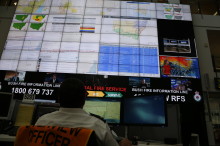
    Australia’s key disaster management agencies have joined forces to tackle the problem of how to access and interpret information gathered during bushfires, and other natural disasters to help emergency services save lives and property.

    “Currently, there are many ways emergency services and the community accesses official, crowd sourced and social media information during natural disasters,

  • Weekly Science Picks

    Weekly Science Picks

    That time of the week again, where we run down some of the more interesting science happenings on the internets.

    ISON is dead, long live ISON!

    Back at the start of this year, in mapping out what the new year would have in store for the science stories to come, comet ISON topped our list.

    “October it will pass very near Mars and possibly be visible to rovers and orbiting spacecraft. The newly discovered comet could develop a spectacular tail, becoming as bright as the full Moon as it passes by our Sun. The comet is currently falling toward the Sun from between the orbits of Jupiter and Saturn. There is a chance it won’t survive this encounter. Whatever survives will then pass nearest the Earth in late 2013 December.

  • How does the first “selfie

    How does the first “selfie

    On November 19, the Oxford Dictionaries announced that “selfie

  • Weekly Science Picks

    Weekly Science Picks

    Well, it’s my turn to pick my favourite science news this week on Australian Science. And I must apologise for being slightly late with this. The reason is that I’ve only just got home to Tokyo after spending all week in Taipei for a conference on interstellar dust! As with any good conference, it’s been fun and fascinating but also rather tiring. If anyone’s curious to know more about what went on, the twitter hashtag #lcod2013 is where myself and others were giving internet commentary over the past week.

    Also, between talks, twitter is where I heard most of this week’s worldwide science happenings. So here are a few of the things which caught my eye…


    Firstly, Katie Mack (a long term inspiration to me) wrote an article for The Research Whisperer on the perils of the academic lifestyle and being a science nomad – and how that affects your personal life. Being still very recently relocated to Japan myself, this strikes something of a chord with me. It’s worth reading for anyone considering a science career themselves. while I personally rather enjoy the nomadic nature of this job, it’s certainly not for everyone. And I have yet to see how I feel about it a couple more years down the line…

    Academic scattering

    As for me, I confess I haven’t figured it out. I have two years left on my contract in Australia and no idea whatsoever which country I’ll end up in next. I’m applying broadly, and there’s no guarantee I’ll have a choice about location if I want to stay on the path toward becoming tenure-track faculty at a major research institution. When it’s not unusual for a single postdoc job to have 300 applicants, and faculty jobs are even more selective, getting even one offer is considered a huge win.


    Moving on to life of a different kind, a brand new species has been discovered in the waters off the coast of California. And anyone who’s been reading my articles awhile will know how exciting I find the discovery of new species! This time around, it’s a somewhat scary looking new species of crustacean. Don’t worry though. It only eats copepods.

    New Alien-like Crustacean Species Identified in California Waters

    The frail crustacean, which is only a few millimeters in length, was discovered by scientists from the University of Seville in Spain and the Museum of Natural History in Canada, who had published a taxonomic description of the new species in the journal Zootaxa.


    Meanwhile in space… When people talk of space stations and lasers, a lot of us will immediately think of Star Wars. Or whatever other sci fi we might prefer. However, up in orbit around Earth, our own space station is preparing to use lasers for a rather less destructive purpose – to transmit video back to use down here on the ground.

    Pew! Pew! Laser On The Space Station Will Beam Video To Earth

    “Optical communications (also referred to as ‘lasercomm’) is an emerging technology wherein data is modulated onto laser beams, which offers the promise of much higher data rates than what is achievable with radio-frequency (RF) transmissions.

  • The one Toolie that’s welcome at Schoolies

    The one Toolie that’s welcome at Schoolies

    Over 28,000 students will descend on the Gold Coast for the start of schoolies this week, and while the party may be chaos, emergency departments on the Gold Coast already know how many patients will be coming through the door.

    Thanks to CSIRO technology hospitals will also know how serious the cases will be and if they will be admitted to hospital.

    Dr James Lind, Director of Access and Patient Flow at Gold Coast Health says using CSIRO’s Patient Admission Prediction Tool (PAPT) has been crucial for dealing with big events such as Schoolies, helping to reduce waiting times and ensure schoolies get the best treatment where and when they need it.

    “We know in this first week of the Schoolies festival there will be around 2700 presentations to our emergency department in total and around 20 per cent of these will be schoolies,

  • Weekly Science Picks

    Weekly Science Picks

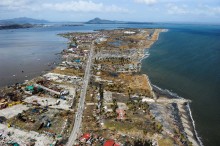
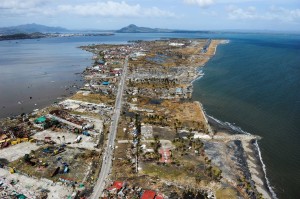
    Destruction in the Philippines. Photograph by Bullit Marquez, AP, via National Geographic

    Good morning. Or good afternoon, or evening, depending on your time zone. But it’s time for Weekly Science Picks, so let’s take a look at some of the stories making headlines in the world of science this week.

    CLIMATE.

    2013 ‘one of warmest’ on record by Roger Harrabin

    Dr Steve Rintoul, research team leader at Australia’s CSIRO Marine and Atmospheric Research division, said: “A more significant point is that global-average temperature in each of the last three decades has been warmer than any prior decade dating back to 1850, as reported in the recently released IPCC report. It provides compelling evidence that human activities are primarily responsible for the warming over the last 50 years.”


    In the light of climate, why the need for action is so dire.

    5 Reasons the Philippines Is So Disaster Prone by Dan Vergano

    From earthquakes to volcanic eruptions to previous super typhoons, death tolls following cataclysmic events in the Philippines tend to be high. Here are 5 reasons why:


    I recall the movie “A Beautiful Mind” when the term schizophrenia comes up. It’s a beautiful movie about the life of John Nash,a mathematician working in differential geometry, game theory and partial differential equations. It depicts the highs and lows of a mental rollercoaster. This next article sheds light on new research, theories, and a little bit of controversy.

    Forget the headlines – schizophrenia is more common than you might think by Daniel Freeman and Jason Freeman

    We tested the level of paranoia among the general public by asking volunteers to take a virtual reality tube train ride, during which they shared a carriage with a number of computer-generated “avatars”. These avatars were programmed to behave in a strictly neutral fashion, yet over 40% of participants reported that the avatars showed hostility towards them.

    Here’s the perfect story to read over breakfast! Pancakes and Maths anyone?

    Flipping pancakes with mathematics by The Guardian, Notes&Theories, Dispatches from the Science Desk

    Thus the so-called pancake sorting problem was born. How many flips are required to turn a disordered stack of pancakes into an ordered stack?


    It’s amazing how the designs architects draft on paper come to being before our eyes. Check out this gallery of slinky-esque buildings.

    These Skytwisters Are the 21st Century’s Answer to the Skyscraper by  Vince Miklos 

    We live in the age of the twisty, twirly, spun-up skyscraper. From the pages of conceptual architectural journals, to the streets of many cities, these eye-boggling wonders look like some of the most futuristic buildings in the world.


    Hope you enjoyed this week’s edition. Have a great weekend. And stay thirsty for knowledge.