Category: News

  • Weekly Science Picks

    Weekly Science Picks

    It’s Sunday again. Time for some science-y goodness from around the globe!!

    Mouse eats scorpion, feels no pain.

    The discovery that a type of mouse feels no pain from scorpion venom has revealed a new strategy for developing pain-killing drugs.

    Hubble to get boost from gravitational lensing

    Astronomers are attempting to boost the imaging prowess of the Hubble Space Telescope by taking advantage of naturally occurring zoom lenses in space.

    More animals discovered in the Amazon – including a purring monkey!

    At least 441 new species of animals and plants have been discovered over a four year period in the vast, underexplored rainforest of the Amazon, including a monkey that purrs like a cat.

    Microbiologists and Astrobiologists work with kids to discover new microbes!

    Extremophiles are microbes that have adapted to extreme environments, such as Utah’s Great Salt Lake. But new microorganisms can be found in everyday places, and scientists are showing school kids how to discover and name their own new species.

    Ozone hole smaller than average this year

    The ozone hole that forms each year in the stratosphere over Antarctica was slightly smaller in 2013 than average in recent decades, according to NASA satellite data.

    ESA volunteers slacking off for science

    ESA’s volunteers recently finished their third and last session lying in bed in the interest of spaceflight and science. They can return to their normal lives after spending their last 21 days in bed with their feet up – once their bodies have recuperated from the experience.


  • Reddit: Google’s Semantic Data-Mining Opportunity

    Reddit: Google’s Semantic Data-Mining Opportunity

    Look at this perfectly looped image sequence. It’s link building, chain making, Futurama, factory… it’s satisfying, and hypnotic. Google, however, won’t be able to link these concepts well enough unless it’s fed structured semantic data. They must find creative ways to correlate “strings

  • European Patent Convention celebrates 40th anniversary

    European Patent Convention celebrates 40th anniversary

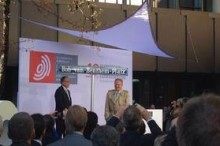
    At a celebration attended by Herman Van Rompuy, President of the European Council, the European Patent Office marked the 40th anniversary of the European Patent Convention (EPC). On 5 October 1973, the EPC was signed in Munich, establishing a legal framework for the transnational grant of patents in Europe.

    The Convention was inspired by the vision of a group of convinced Europeans, who had personally suffered from the war and thought, like the founding fathers of the European Economic Community, that the establishment of a supranational patent system would significantly strengthen the European economy, forge closer bonds between Europeans and help to shape a peaceful and prosperous Europe.

    “After forty years, we can say that the EPC, which created the European Patent Office, has provided the ground for building a real success, not only from a technical point of view but also in its European and political dimension,” declared EPO President Benoît Battistelli. “The high quality of products and services delivered by the EPO is acknowledged across the globe. Ever since it was set up, the EPO has played an active role in fostering innovation and has given Europe a strong voice in its ongoing dialogue with the other world leaders in technology,” he added.

    The European patent system will be further improved by two major projects recently adopted by the EU institutions: the unitary patent and the Unified Patent Court. “The unitary patent marks the end of a forty-year odyssey and opens new horizons for European entrepreneurs,” said Herman Van Rompuy, President of the European Council.

    The European Patent Organisation, starting with seven member states, now comprises 38 countries, including all the 28 EU members. It represents a single entry point to a market of 600 million inhabitants. This framework has proved capable of integrating countries which differ widely in terms of size, economic significance and industrial development.

    The growth in the number of patent applications filed has been dramatic, from 4 000 in 1978 to some 260 000 in 2012. Moreover, most of the electronic tools and services developed by the European Patent Office to conduct patent activities – such as prior art search engines, machine translation facilities and classification for technical documents – have become world standards and are used by dozens of patent offices around the world. The international reputation of the EPC system, based on the unique expertise of the EPO, significantly strengthens Europe’s position in co-operation with other major regions, such as the US and Asia.

    Source and image.

  • Gravitational waves “know” how black holes grow

    Gravitational waves “know” how black holes grow

    A paper in recent issue of the journal Science [18 October] pits the front-running ideas about the growth of supermassive black holes against observational data — a limit on the strength of gravitational waves from pairs of black holes, obtained with CSIRO’s 64-m Parkes radio telescope in eastern Australia.

    The study was jointly led by Dr Ryan Shannon, a Postdoctoral Fellow with CSIRO, and Mr Vikram Ravi, a PhD student co-supervised by the University of Melbourne (Australia) and CSIRO.

    “For the first time, we’ve used information about gravitational waves as a tool in astrophysics,” said Dr Shannon.

    “It’s a powerful new tool. These black holes are very hard to observe directly, so this is a new chapter in astronomy.”

    “One model for black-hole growth has failed our test and we’re painting the others into a corner. They may not break, but they’ll have to bend,” said Mr Ravi.

    Einstein predicted gravitational waves — ripples in space-time, generated by bodies changing speed or direction. Bodies, for instance, such as pairs of black holes orbiting each other.

    When galaxies merge, their resident central black holes are doomed to meet. They first waltz together then enter a desperate embrace and merge.

    “Theorists predict that towards the end of this dance they’re growling out gravitational waves at a frequency we’re set up to detect,” Dr Shannon said.

    Played out again and again across the Universe, such encounters create a background of gravitational waves, like the noise from a restless crowd.

    Astronomers have been searching for gravitational waves with the Parkes radio telescope and a set of 20 small, spinning stars called pulsars.

    Pulsars act as extremely precise clocks in space. We measure when their pulses arrive on Earth to within a tenth of a microsecond.

    As gravitational waves roll through an area of space-time, they temporarily swell or shrink the distances between objects in that region. “That can alter the arrival time of the pulses on Earth,” said Dr Michael Keith of the University of Manchester in the UK.

    The Parkes Pulsar Timing Array (PPTA) project and an earlier collaboration between CSIRO and Swinburne University together provide nearly 20 years’ worth of timing data.

    “We haven’t yet detected gravitational waves outright, but we’re now into the right ballpark to do so,” said the project leader, CSIRO’s Dr George Hobbs.

    Combining pulsar-timing data from Parkes with that from other telescopes in Europe and the USA — a total of about 50 pulsars — should give us the accuracy to detect gravitational waves “within ten years”, he said.

    Meanwhile, the PPTA results are showing us how low the background rate of gravitational waves is.

    The strength of the gravitational wave background depends on how often supermassive black holes spiral together and merge, how massive they are, and how far away they are. So if the background is low, that puts a limit on one or more of those factors.

    Armed with the PPTA data, the researchers tested four models of black-hole growth. They effectively ruled out black holes gaining mass only through mergers, but the other three models “are still in the game”, said Dr Sarah Burke-Spolaor of California Institute of Technology (Caltech).

    Source and image.
  • 3D printed horseshoe to improve racing performance

    3D printed horseshoe to improve racing performance

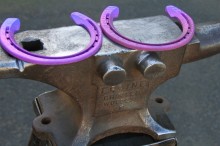
    CSIRO scientists have custom made and 3D printed a set of titanium shoes for one Melbourne race horse in a first for the sport.

    The horse, dubbed by researchers as ‘Titanium Prints’, had its hooves scanned with a handheld 3D scanner this week.

    Using 3D modelling software, the scan was used to design the perfect fitting, lightweight racing shoe and four customised shoes were printed within only a few hours.

    “3D printing a race horseshoe from titanium is a first for scientists and demonstrates the range of applications the technology can be used for.”

    Mr John Barnes, Titanium Technologies Theme Leader, CSIRO Future Manufacturing Flagship

    Traditionally made from aluminium, a horseshoe can weigh up to one kilogram but the horse’s trainer, John Moloney, says that the ultimate race shoe should be as lightweight as possible.

    “Any extra weight in the horseshoe will slow the horse down. These titanium shoes could take up to half of the weight off a traditional aluminium shoe, which means a horse could travel at new speeds.

    “Naturally, we’re very excited at the prospect of improved performance from these shoes,

  • Weekly Science Picks

    Weekly Science Picks

    I’m loath to begin a weekly roundup on a low note, and I’m truly sorry to have to, but this most certainly needs to be discussed. It’s been a turbulent week this week in the science blogging world. Turbulent and full of raised concerns over the state of things for those in a science communication career. Basically, there have been two sexual harassment scandals in the news – the first concerning Urban Scientist Danielle Lee and her terrible treatment by an editor at biology online, and the second around playwright and author Monica Byrne and some downright shameful behaviour on the part of Bora Zivkovic, blogs editor at Scientific American.

    Both women, after being given rather distasteful treatment, decided to go public with the matter. This has rightfully sparked some quite heated discussions across the online science writing community. The entire matter is summarised quite well by Priya Shetty at the Huffington Post and Laura Helmuth at Slate. I’d recommend reading Dr Isis’ perspective on all of this too. My personal opinion is that the behaviour of “Ofek” at biology online (who has been fired since the incident in question) and of Zivkovic (who has since resigned from the board of directors and Science Online) is an utter disgrace and humiliation to all of us involved in the science communication community. While it’s reassuring to know that neither of these recent events has occurred without repercussions, it raises the huge concern of precisely how often events like these occur and simply go unreported.

    I feel it’s of prime importance to all of us to show our support to Lee and Byrne, not only for their sake but for the sake of all others out there who’ve been similarly marginalised. They need to know that they have our support and that we will listen if they choose to make the remarkably difficult decision to speak out about experiences like these. That is, after all, what a community is all about. Personally, I’d like all of online scicomms to be an open and welcoming forum for discussion of all kinds. I’m not sure if I feel it can be, knowing that things like this are occurring beneath the surface, but I truly hope that such nasty incidents can someday be a thing of the past.

    Now… Scandals aside, there have also been some rather remarkable happenings this week in science.

    Perhaps most remarkable is the news that amputees may be able to have their sense of touch restored with technology. Much like Luke Skywalker in The Return of the Jedi, people left disabled due to amputations may soon be able to not only control prosthetic limbs directly with their brains, but also feel them. Needless to say, the implications of this are just wonderful!

    Prosthetic wired to the brain could help amputees feel touch

    In my lab at the University of Chicago, we’re working to better understand how the sensory nervous system captures information about the surface, shape and texture of objects and conveys it to the brain. Our latest research creates a blueprint for building touch-sensitive prosthetic limbs that one day could convey real-time sensory information to amputees and tetraplegics via a direct interface with the brain.


    Recognising threats is a vital skill in the natural world, and has been a mainstay of evolution in animals since the Precambrian era. And some creatures have evidently gone to great lengths. Latest research shows that the rainbowfish, a fairly humble seeming species, can smell predators when they’re still embryos, a mere 4 days after fertilisation!

    The nose knows: Rainbowfish embryos ‘sniff out’ predators

    Jennifer Kelley, a scientist with the University of Western Australia, explains that predator recognition is required at such an early age because responding to predator cues is absolutely crucial for early survival. For example, detection of “alarm cues” suggests that other fish in the vicinity have been attacked by predators.


    Seeming like something taken straight out of Michael Crichton’s Jurassic Park, blood has been discovered inside a fossilised mosquito for the first time ever. While most likely not from a dinosaur, it’s fascinating to finally have concrete proof of such an audacious science fiction concept.

    First Blood-Filled Mosquito Fossil Makes Jurassic Park Feel More Real

    Even if it doesn’t bring us closer to getting an amusement park of death and delight, this is a pretty exciting discovery. We never knew that blood could last so long inside of a mosquito! What other kinds of surprises are hiding underneath Montana?


    And finally, as an avid Instagram user myself, I find it rather interesting that a study has found that photographing your dinner can actually make the meal less enjoyable. While this doesn’t look to be a particularly big study, it exposes an interesting little facet of human psychology. And for the record, no, I don’t normally Instagram my food. Though I know a few people who do.

    New research shows how ‘Instagramming’ a meal can ruin your appetite

    Basically, when we look at photos of say, fish and chips over and over before we eat it, our senses become ‘bored’. The photos ruin your appetite by making you feel like you’ve already experienced eating the fish and chips before… This sensation is measured in levels of satiation, a scientific term for the ‘drop in enjoyment with repeated consumption’. Consumption, in this case can just be viewing a photo of food, not actually eating a food.


    And finally, let’s end with something pretty. For some gorgeous botanical images, Botanartist is a brand new blog full of some really rather charming photographs of plants, both close up and extremely close up through a microscope. If you want to enjoy some cool macro photography and scientific explanations of what you’re seeing, you’ll probably find all of this just as marvellous as I do!

    I hope everyone has a great week. Until next time, DFTBA and stay curious!

  • Brain Control Interfaces – The Future of Computing

    Brain Control Interfaces – The Future of Computing

    Twenty years ago we could never imagine using computers as extensively in our daily lives as we do today. With technology evolving at such a fast pace, what could possibly be next? Many believe that brain control interfaces (BCI) are the future of computing – that’s right, we could soon be controlling computers with the power of our minds. Mind blowing, huh?!

    What are brain control interfaces?

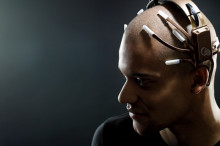
    As the name suggests, brain control interfaces (also known as brain-computer interfaces) work by measuring electrical impulses from the brain, interpreting their meaning and converting these into real. In the latest and most impressive study, researchers at the University of Washington managed to get one person to move another person’s finger using only the power of their brain (and some pretty fancy equipment).

    How do brain control interfaces work?

    Brain control interfaces work by tapping into the brain’s electrical signals and essentially redirecting them through a computer. Every time we think, electrical pulses are sent between neurons in our brain, most of which are insulated but some do escape – and it’s these ones that we can capture that allow BCI to work. This is best explained in this TED Talk by Tan Le:

    While hospitals have been using a piece of equipment called an electroencephalograph (EEG), which can detect brain signals in the brain from the outside, for many years, scientists have now taken it further by attaching electrodes into the inside of the brain.

    Regardless of where the equipment is placed – inside or outside of the brain – the process is the same; electrical pulses between the neurons are detected and a computer converts these signals into energy or movement.

    What can it be used for?

    This technology is already being used for a variety of purposes, including the creation of the bionic eye and brain-controlled human prosthetics. As well as medical purposes, BCI technology could eventually make it into our everyday lives — you can use your own imagination to think about what it could be used for. Computer game lovers could have a field day, and the games are already in development.

    Who might it benefit?

    The main reason so much time and money is being pumped into the development of BCI technology is the potential benefits it could have for the severely disabled. Already, a form of the technology has been used to create the bionic eye, which has seen positive results in low vision patients.

    There are a huge range of exciting possibilities that could lead to significantly better quality of life for the disabled. For example, a quadriplegic who could control a computer mouse cursor with their mind would have a world of possibilities open up to them.

    Prosthetics that are controlled by the brain are one of the leading areas of research. While prosthetic limbs have come a long way, there is hope that soon patients will be able to have full control of a new body part in the same way that they would of a fully functioning part.

    Not only could BCI technology help the physically disabled, but it could be used with children with ADHD or learning difficulties. With studies already showing that computer games can be used to help improve concentration in children, BCI could further enhance the potential to overcome these problems.

    One such game developed by OpenVibe and CLARTE, requires players to focus on a series of tasks in a classroom situation. In the game, there’s an out of focus cartoon playing. In order to view the cartoon the student has to focus on the screen. If they don’t focus, the screen become blurred.

    What are the risks?

    Until very recently, the only effective way to achieve a useable form of mind control was by first having invasive surgery to implant sensors onto the brain, which naturally posed a lot of risks. Now, with promising research into non-invasive BCI techniques, are there still risks?

    Some have called it ‘brain hacking’, which automatically has negative connotations. Comparing it to something out of X-men, they have warned that going forward, BCI technology could be used to steal people’s thoughts. It might sound outlandish now, but then again, 20 years ago, so did the idea of downloading music onto your phone!

  • Herbicide runoff reduced by 90 per cent in Great Barrier Reef sugarcane crops

    Herbicide runoff reduced by 90 per cent in Great Barrier Reef sugarcane crops

    An innovative new approach to sugarcane plantation weed management trialled in select Great Barrier Reef (GBR) catchments have shown a dramatic 90 per cent reduction in runoff of highly soluble herbicides into waterways.

    In the lower Burdekin region of northern Australia, scientists from CSIRO’s Water for a Healthy Country Flagship trialled a new technique for applying herbicides to raised beds of furrow irrigated sugar cane by using a specially adapted shielded sprayer. The technique minimises the likelihood of PSII herbicides such as diuron, atrazine, ametryn and hexazinone coming into contact with irrigation water.

    “The conventional application of herbicides in furrow-irrigated sugarcane production is to broadcast spray across the whole field using boom sprayers, which applies herbicides to both beds and furrows. Irrigation water then carries the herbicides with the tail water into the drainage channels, into nearby creeks and rivers and potentially into the GBR lagoon”, said CSIRO research leader, Dr Rai Kookana.

    CSIRO scientist Ms Danni Oliver said “The geography of the region means that almost the entire flow from the Burdekin River Irrigation Area in the dry season (from July to January) is made up exclusively of irrigation water from sugarcane and other cropping.”

    According to Jon Brodie of James Cook University, “the amount of some herbicides in creek and estuarine waters during this period regularly exceeds Australian water quality guidelines and could potentially affect, for example, coastal seagrass.”

    Many of the herbicides used in the region are PSII herbicides that are known to negatively impact reef ecosystems. These waters discharge into the internationally recognised Great Barrier Reef World Heritage Area and subsequently into the Great Barrier Reef Marine Park. Improved farming techniques such as the shielded sprayer help keep herbicides on-farm have potential to have a significant and positive impact on water quality in the GBR.

    “The trials show that while there will certainly be some herbicide loss following the first irrigation or rainfall event, the marked decreases in losses documented in this study – a reduction of to 90 per cent – could lead to significant improvements in off-site water quality, particularly during the dry season”, said Ms Oliver.

    “Given the importance of improving GBR water quality additional testing and demonstration of these technologies across different soil types, farming systems – and possibly with different combinations of chemicals – would provide valuable additional testing of the approach from an industry perspective”, said Dr Kookana.

    “These trial results are extremely encouraging, and clearly demonstrate that the use of precision herbicide application technologies by the industry, including using shielded sprayers for furrow-irrigated sugarcane cultivation, can be highly effective in reducing herbicide run-off.”

    The results of the study have been published in the international journal Science of the Total Environment.

    Source and image.

  • Australia and India to collaborate on clean fuel production

    Australia and India to collaborate on clean fuel production

    In a time when Australia’s liquid transport fuel supplies are declining and our transport needs are growing, a research partnership between Australia and India could provide a solution to a number of energy concerns and ultimately reduce the reliance of both countries on imported fuels. 

    The widespread introduction of a clean-burning synthetic fuel, dimethyl ether (DME), is a step closer following the announcement of a A$6 million partnership between CSIRO and its Indian equivalent, the Council of Scientific and Industrial Research (CSIR).

    The project will focus on improving processes involved in the production of DME, which is a liquid fuel produced from natural gas (NG), coal, biomass, or even directly from carbon dioxide.

    Both Australia and India are currently unable to meet demand for petroleum products with domestic production alone. DME could help meet demand and consequently reduce both nations’ reliance on imported petroleum products.

    According to CSIRO’s Dr Nick Burke, “There are over half a million vehicles currently using liquefied petroleum gas (LPG) in Australia – all of which could be powered using DME. The fact that DME can be used as a blend in existing LPG engines makes it an effective transitional fuel

  • What Can Happen if You Say NO, Thank You And You Are a Science Writer?

    What Can Happen if You Say NO, Thank You And You Are a Science Writer?

    This weekend happened something that attracted our attention. Namely, Danielle N. Lee, Ph.D, the Urban Scientist blogger at Scientific American, has been mistreated twice: once by the blog editor at biology-online.org and now by SciAm itself. The blog editor asked Dr. Lee to contribute a blog post at Biology-Online, and when she declined, the blog editor asked her whether she was ‘an urban scientist or an urban whore.’ Then, SciAm deleted her blog post, in which she wrote about the incident.  Below is her original post with the video response.

    wacjemshe-hao-hao-kwangu-mtapoa

    I got this wrap cloth from Tanzania. It’s a khanga. It was the first khanga I purchased while I was in Africa for my nearly 3 month stay for field research last year. Everyone giggled when they saw me wear it and then gave a nod to suggest, “Well, okay

  • Weekly Science Picks

    Weekly Science Picks

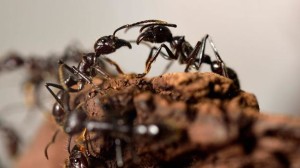
    Close-up view Giant ants (Paraponera Clavata), appearing at the exhibition "Mille milliards de fourmis" at the Palais de la Decouverte in Paris. (Copyright: Getty Images)
    Close-up view
    Giant ants (Paraponera Clavata), appearing at the exhibition “Mille milliards de fourmis” at the Palais de la Decouverte in Paris. (Copyright: Getty Images)


    Welcome to this edition of Weekly Science Picks!


    Here’s a great little story to get us started about how one scientist found out about his Nobel Prize win this past week. He doesn’t carry a mobile.

    Prof Peter Higgs did not know he had won Nobel Prize by BBC News

    Nobel Prize-winning scientist Prof Peter Higgs has revealed he did not know he had won the award until a woman congratulated him in the street.


    It’s now the 11th day of the US Government Shutdown. This past week I attempted to go to the Census Bureau website for research on population demographics near a development project I’m working on. No dice. This next story shows the impact that government funding has on science. The implications could be huge.

    Fears for science amid US shutdown by David Shukman

    Imran Khan, chief executive of the British Science Association, said: “The biggest lesson we should take from this week’s Nobel Prizes is that science doesn’t belong to one nation; it’s an international and collaborative human enterprise.


    One could spend hours, even days pondering the origins of our solar system. Some devote their life’s work to it. Check out this story about comets and presolar grains.

    First Evidence Found of a Comet Strike on Earth by Andrew Fazekas

    “Because there is no sign of an impact crater, it has been a mystery as to what kind of celestial event actually could have caused this debris field, but a small, black stone found lying in the middle of the glass area caught our attention,” said study co-author David Block, an astronomer at Wits University in Johannesburg, South Africa.


    Balancing the needs of economic development with conservation principles is not easy. Governments do have hard choices to make. Sustainable management of resources, both natural and economic, is not a choice; it should be a top policy priority.

    In Indonesia, Environmentalists See a Disaster in the Making by Sara Schonhar

    Now conservationists say the rapid clearing of virgin forest is paving the way for environmental catastrophe, turning critically endangered orangutans, tigers and elephants into refugees, and triggering landslides and flash floods.


    These next two links speak for themselves. You know that line, “a picture is worth a thousand words”. The power of communication, through both photos and words, assists scientists in developing and proving theories and solving problems of the modern world. Enjoy your weekend. Maybe grab a camera, or your smartphone, and capture some scientific snapshots of your own.


    Awesome Photos of NASA Equipment Tests by Vincze Miklos


    The best science and technology pictures of the week by BBC Future


  • Study Finds That Reading Tolstoy & Other Great Novelists Can Increase Your Emotional Intelligence

    Study Finds That Reading Tolstoy & Other Great Novelists Can Increase Your Emotional Intelligence

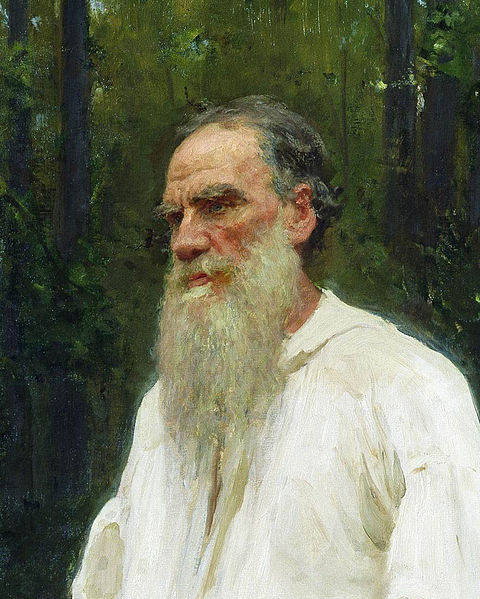
    tolstoy-social-intelligence

    A new study published this month in Science concludes that you may get something unexpected from reading great literary works: more finely-tuned social and emotional skills.

    Conducted by Emanuele Castano and David Comer Kidd (researchers in the psych department at the New School for Social Research), the study determined that readers of literary fiction (as opposed to popular fiction or non-fiction) find themselves scoring better on tests measuring empathy, social perception and emotional intelligence. In some cases, it took reading literary fiction for only a few minutes for test scores to improve.

    The New York Times has a nice overview of the study, where, among other things, it features a quote by Albert Wendland, an English professor at Seton Hall, who puts the relationship between literature and social intelligence into clear terms: “Reading sensitive and lengthy explorations of people’s lives, that kind of fiction is literally putting yourself into another person’s position — lives that could be more difficult, more complex, more than what you might be used to in popular fiction. It makes sense that they will find that, yeah, that can lead to more empathy and understanding of other lives.

  • The Podcast Project: a tool for fun and sustainable language learning

    The Podcast Project: a tool for fun and sustainable language learning

    A bad night´s sleep, a nervous stomach and sweaty hands. This scenario that students typically face before their obligatory English exam may be a thing of the past at the University of Wismar, Germany. Since June 2012, over 90 students from various degree programmes have produced podcasts – or vodcasts – as part of their assessed course requirements in the ESP module (English for Specific purposes). The result? Involvement, enthusiasm and students who confess to enjoying their learning.  And what´s more, engaging and educational teaching and learning material for the following courses. 

    The project was kick-started by our increasing frustration with the lack of stimulating, authentic teaching and learning material in the field of ESP. Motivated by the success of a method called ‘learning through teaching’, in which students address a certain topic and give so-called mini-lessons for their peers, we started wondering whether students couldn’t also create tailor-made language learning content themselves.

    How ESP podcasts are produced

    Groups of two to four students are tasked with producing a ten-minute video podcast. It has to feature both specific vocabulary and skills practised in the English course, such as negotiating, managing discussions, intercultural communication etc. Students are free to choose the podcast’s format: whether they decide on news productions, talk and reality shows, role-plays and educational lectures – the main objective is for the podcast to be both educational and engaging.

    To prepare, students gather information on content and language, create a storyline and practise dialogues. Using props, pictures, background images and sound effects to enrich the impact, the story is adapted as a screenplay and outlined in a storyboard.

    For the podcast recording, we are lucky enough to be able to offer students a real studio experience on our production site for elearning applications (PELA). Many students use the studio to record their podcasts, where they get a 90-minute recording slot as well as support in the postproduction process. But you do not need a studio to produce impressive results. We have seen some great productions from students using just a smart phone!

    Finally, students are asked to reflect on the results: they provide feedback on their peers’ podcasts and submit a written analysis of their own. Grading creative group work is not easy. But clear structures and transparent criteria go a long way. We are using a concept for productassessment, which differentiates between information, subject-specific quality, which in this case is mainly the language, and design, which is the creative aspect. We also apply a mix of individual and group assessment.

    Benefits

    For me personally, there are two extremely valuable aspects of the project. First there is the educational and fun value of tailor-made teaching and learning content for future generations of students, as the material produced can be reused again. Secondly, and perhaps most importantly, students really enjoy the project, as these two comments show:

    “This exciting and fun project combines many aspects: text, speaking, organisation, preparation and group processes. We are still talking about the project many months later and enjoy the memories.

  • Peter Higgs awarded Nobel Prize in Physics

    Peter Higgs awarded Nobel Prize in Physics

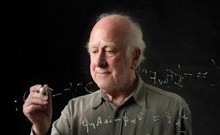
    King’s College London is celebrating the award of the 2013 Nobel Prize for Physics to its alumnus, Fellow and Honorary Doctor Professor Peter Ware Higgs CH CBE FRS FRSE FKC, jointly with François Englert.

    The award is the 11th Nobel Prize awarded to a member of King’s or its associated institutions, and it also highlights the remarkable tradition of discoveries in physics by members of the College, starting with James Clerk Maxwell in the 1860s.

    Peter Higgs came to King’s as an undergraduate in 1947 to read natural sciences in the field of physics. After graduating with a first-class BSc in 1950 he took an MSc in physics in 1952 and studied for his doctorate in molecular physics under the supervision of Charles Coulson and Christopher Longuet-Higgins. He was awarded his PhD in 1954 for a thesis entitled ‘Some problems in the theory of molecular vibrations’: a work that signalled the start of his life-long interest in the application of the ideas of symmetry to physical systems. He was a senior student at King’s and had already published four scientific papers by the time he left the College in 1954 to take up a post at the University of Edinburgh.

    Among the many honours and awards Professor Higgs has received are the Fellowship of King’s in 1998 and the College’s Honorary Doctorate of Science in 2009.

    The College’s tradition of world-changing discoveries in physics began in the19th century. In particular, the great 19th-century physicist James Clerk Maxwell was Professor of Natural Philosophy at King’s from 1860 to 1865. During this time he demonstrated that magnetism, electricity and light were different manifestations of the same fundamental laws, taking a major step towards a theory unifying the forces of nature.

    150 years later, the discovery in July 2012 by teams at CERN of a new particle consistent with the Higgs boson followed pioneering research on this particle by King’s current James Clerk Maxwell Professor of Theoretical Physics, John Ellis CBE FRS. Professor Ellis is considered one of the UK’s most influential and eminent particle physicists, and he has also made important contributions to astrophysics, cosmology and quantum gravity. He has been influential in setting CERN’s strategic direction over recent decades.

    In 2012 King’s inaugurated an annual Higgs Lecture in the School of Natural & Mathematical Sciences, with Professor Higgs giving the inaugural Higgs lecture on the theme ‘Putting Maxwell in his place’ on 10 December 2012 at the Strand Campus to an audience of King’s staff and students, science professionals and colleagues from other universities, and engaging in a lively question and answer session. A short video of the highlights and the full length video can beviewed online.

    Professor Sir Richard Trainor, Principal of King’s, said: ‘This is wonderful news and we send our warmest congratulations to Professor Higgs. King’s is extremely proud and honoured that our alumnus has been awarded the world’s greatest scientific prize, and we look forward to being able to congratulate him in person in the near future.’

    Professor John Ellis said: ‘In 1964 Peter Higgs was among the theoretical physicists who discovered a way to give masses to elementary particles. This is now the basis for the Standard Model that describes immensely successfully all the visible matter in the Universe. Peter Higgs pointed out that this theory required the existence of a new kind of particle, commonly called the Higgs Boson, which was discovered by the ATLAS and CMS experiments at CERN in 2012, providing dramatic experimental confirmation of his theoretical ideas.

    ‘We are proud that Peter Higgs was a student in the King’s Physics Department, and that his links with King’s continue. Research on the properties of the Higgs Boson and related aspects of particle physics is an active theme of research in the King’s Physics Department.’

    Source and image.