
Category: News

  • Big Data…Big Deal

    Big Data…Big Deal

    Data is everywhere. Via CRN.
    Data is everywhere. Via CRN.

    Data is everywhere. It touches and informs every aspect of our lives.

    You go to the doctor, and your medical records are electronic on a computer screen before your eyes.

    You bank online.

    The stock market is all done by computers.

    We are living in The Data Age.

    I grew up in a time where the word data seemed to be only used in science classrooms. Now, it’s data this, data that, data here, data there. Consumer technology and social media have shot data out of a cannon. We want to pinpoint the minutiae of every day life down to the smallest factoid so that a story can be told from it. And this is not such a bad thing, but it does make me wonder what the next 50 years will bring. How much more can we manipulate and manufacture data into other ‘life’ forms?

    It seems as though modern times are placing a huge expectation upon big data; mainly, that it will solve all of our problems. And while there is this potential to help us make informed decisions, we cannot expect data to tell us what the decisions are that need to be made. Creativity is the first ingredient in the blender.

    This creativity emerges again in the processing of the data and figuring out the best means to present the data in a way that paints a story that is easily understandable. Many are not literate in data and this divide is very clear in different populations of students and communities. How we teach data literacy in schools is and will be increasingly important. How kids learn the very act of searching the Internet will be crucial in helping them understand data and how to present that data.

    A good example of teaching data literacy comes from within my own family. A 70-year old man wanted to learn how to use the Internet. His sons tried, became frustrated at the process. The sons passed him onto the grandsons, who became frustrated as granddad paused to write down every step so he could get online by himself. One of the sons, a principal at a primary school tried something different. He brought his dad to school and set him down in the computer class with the 8-year-olds. There he learned everything he needed to know – how to get online, how to search. Now he’s planning trips to the Italian Alps, keeping up on the golf scores, staying in touch with his children over email, reading history books online.

    The Internet of Everything is expanding. Machines are connected globally. Data has gotten big, really big. Data illiteracy and a lack of computer basics will continue to divide populations. However, with the right instruction, generational gaps can be bridged. Fundamentally how we learn is the same; it’s just the tools that are changing. Big data is changing the world.
     

  • Stanford’s Virtual Human Interaction Lab

    Stanford’s Virtual Human Interaction Lab

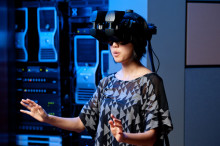
    Go behind the scenes and take a virtual tour of Stanford’s Virtual Human Interaction Lab. The lab aims to research psychological experimentation in the virtual world, according to Associate Professor of Communication Jeremy Bailenson. “We integrate three virtual senses in a way that’s very psychologically persuasive — sight, sound and touch.

    The state-of-the-art lab also offers a glimpse of the near future in household entertainment. “We’re using this cutting-edge lab to try to think ahead by a few years to predict what household technology is going to be like and how that’s going to affect people,” Bailenson said.

    The VHIL VR Lab integrates technology that can stimulate three of the human senses at once —spatialized sound, virtual touch (haptics), and three-dimensional imagery. The lab features cutting edge equipment for tracking motion, rendering graphics, and displaying visual, aural, and haptic information. Kornberg Associates Architects have collaborated with Worldviz LLC, the world’s leading virtual reality creators, and Stanford University to renovate all aspects of the lab.

    The lab includes a multisensory room that allows participants to explore a 20 by 20 foot space with spatialized sound, floor shakers, and a new head-mounted display (HMD). The HMD is tethered to a ceiling mount and allows an unrestricted range of motion in the multisensory room. In addition, the spatialized sound system makes sounds “move” around the lab space and allows users to hear natural and realistic aural information without relying on headphones. Surface motion is incorporated into experiments through the installation of floor shakers. Controlled vibrations give users the sensation of movement, which will increase the compelling nature of the virtual world. At one moment, a user may feel immersed in an earthquake simulation, while the next moment the sensations may simulate crossing a suspension bridge.

    Read more and take a tour: http://vhil.stanford.edu/tour/

    Image source.

  • A Planetary Perspective: With Landsat and Google Earth Engine

    A Planetary Perspective: With Landsat and Google Earth Engine

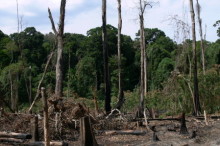
    Since July 1972, NASA’s Landsat satellites have gathered images over the entire land surface of the Earth, creating the most complete record ever assembled. These images, archived at USGS, reveal dynamic changes over time due to human activity (deforestation, urbanization) and natural processes (volcanic eruptions, wildfire). Now, Google Earth Engine allows scientists, researchers and the public to easily view and analyze this treasure trove of planetary data. http://earthengine.google.org.

  • Weekly Science Picks

    Weekly Science Picks

    Flying virus carrier. Photo credit: Jonathan H. Epstein/ EcoHealth Alliance
    Flying virus carrier. Photo credit: Jonathan H. Epstein/ EcoHealth Alliance

    Well, it’s a new day in Australia with the election of Tony Abbott. It will be interesting to see what changes may be ahead for environmental laws and science.

    But this is Weekly Science Picks and not a political roundup at the moment, so let’s get started on some of the fascinating stories in the world of science this week.

    With H.I.V., SARS, and now MERS, a virus catalog seems like a good resource to have for future and potentially deadly epidemics.

    A Catalog for All the World’s Viruses? by Carl Zimmer

    In a new study published in the journal mBio, Dr. Anthony and his colleagues have taken an initial step toward such a catalog by exhaustively searching for all the viruses that infect a single species of mammal — a bat known as the Indian Flying Fox. They found 55 viruses, 50 of which are new to science.

    If you had hopes of escaping planet Earth and heading to your lunar estate for some peace and quiet…well, you might need to think again.

    Why we might not be able to live on the Moon by Philip Ball

    A new paper in the journal Geophysical Research Letters drives another nail into the coffin of lunar living. It suggests that what was at first taken to be bright, reflective ice in the Shackleton crater is in fact more likely to be white rock.

    An intriguing story about land, mining and the afterlife.

    Inside the Battle Over a Strip-Mine Cemetery by Pat Walters

    To your rear will be 40 graves—old men and women, small children, veterans of conflicts from the Civil War to World War II—surrounded by a white, split-rail fence and a thin ring of trees. Underfoot: approximately four billion dollars’ worth of coal.

    To cap off this week’s edition, a story by Australian Science’s own, Danielle Spencer. What an incredible job to engage children in science and guide them on their journeys of exploration and discovery of the world around them! Take a look at Danielle’s latest post about teaching a unit on space to her students.

    Where does the Sun Go at Night? by Danielle Spencer

    Now other than being highly entertaining to read, identifying children’s misconceptions is an important part of science teaching. Whilst admittedly some of the above responses may have been guesses, the children were asked to provide their best reason. The responses included here are a sample of the wide variety provided by the children.

  • Plasma-treated nano filters help purify world water supply

    Plasma-treated nano filters help purify world water supply

    The study paves the way for the next generation of portable water purification devices, which could provide relief to the 780 million people around the world who face every day without access to a clean water supply.

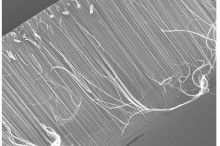
    An international team of researchers – led by Associate Professor Hui Ying Yang from Singapore University of Technology and Design – showed that water purification membranes enhanced by plasma-treated carbon nanotubes are ideal for removing contaminants and brine from water.

    The team included Dr Zhaojun Han and Professor Kostya (Ken) Ostrikov from CSIRO’s world-leading Plasma Nanoscience Laboratories.

    According to Dr Han, these membranes could be integrated into portable water purification devices the size of a tea pot that would be rechargeable, inexpensive and more effective than many existing filtration methods. Contaminated water would go in one end, and clean drinkable water would come out the other.

    “Small portable purification devices are increasingly recognised as the best way to meet the needs of clean water and sanitation in developing countries and in remote locations, minimising the risk of many serious diseases,” Dr Han says.

    “The large industrialised purification plants we see in other parts of the world are just not practical – they consume a large amount of energy and have high labour costs, making them very expensive to run.”

    Dr Han acknowledges that some smaller portable devices do already exist. However, because they rely on reverse osmosis and thermal processes, they are able to remove salt ions but are unable to filter out organic contaminants from the briny water found in some river and lake systems.

    “For people in remote locations, briny water can sometimes be the only available water source,” he says. “That’s why it’s important to not only be able to remove salts from water, but to also be able to put it through a process of purification.”

    “Our study showed that carbon nanotube membranes were able to filter out ions of vastly different sizes – meaning they were able to remove salt, along with other impurities,” he says.

    According to Professor Ostrikov, the other downside of existing portable devices is that they require a continuous power supply to operate their thermal processes. “On the other hand, the new membranes could be operated as a rechargeable device.”

    Professor Ostrikov attributes the success of the new membranes to the unique properties of plasma treated carbon nanotubes.

    “Firstly, ultralong nanotubes have a very large surface area that is ideal for filtration. Secondly, nanotubes are easy to modify, which allows us to tailor their surface properties through localised nanoscale plasma treatment,” he says.

    Now that the researchers have proven the effectiveness of the method, they plan to extend their research to investigate the filtration properties of other nanomaterials. They will begin by looking at graphene, which has similar properties to carbon nanotubes, but could be made considerably denser and stronger.

    The study ‘Carbon nanotube membranes with ultrahigh specific capacity for water desalination and purification’ is a collaborative work between Singapore University of Technology and Design, CSIRO, Massachusetts Institute of Technology (MIT), the University of Sydney, and Hong Kong Polytechnic University.

    Yang HY, Han ZJ, Yu SF, Pey KL, Ostrikov K, Karnik R. 2013. Carbon nanotube membranes with ultrahigh specific adsorption capacity for water desalination and purification [external link]. Nature Communications. 2220. doi:10.1038/ncomms3220.

    Source and image.

  • Australia’s big broadband ‘app-ortunity’

    Australia’s big broadband ‘app-ortunity’

    Alarms which send you mobile alerts warning of smoke detected in your house and tele-health systems which help to measure home-based breathing exercises for patients suffering from chronic disease are just some of the potential applications available over next generation broadband networks, according to a new report released today by the Australian Centre for Broadband Innovation (ACBI).

    Informed by range of expert industry perspectives on how future services will be offered in health, education, energy, business and media, the ‘App-trepreneur’s Guide to Broadband Connected Services’, outlines opportunities for the development of new broadband-enabled applications.

    “We are on the dawn of a new ‘App Age’, where next generation broadband networks will allow us to better manage our home energy use, support the elderly living independently at home as well as providing us with more personalised entertainment content by connecting people in their homes with services enabled by sensors and cloud computing,” said Colin Griffith, Director of ACBI.

    “With predictions that by 2020 the average person will own six smart devices connecting us to over 37 billion ‘things’, from cows in the field, to our car, to our washing machine, it’s clear that a better broadband infrastructure will revolutionise the way we access services in the home.”

    In April this year, ACBI in conjunction with its industry partners Intel, iiNet, Foxtel, Pottinger, NSW Trade and Investment, NBN Co, CSIRO and NICTA announced the Apps4Broadband competition for developers to create new ideas for applications which run over next generation broadband networks. The ‘App-trepreneur’s Guide to Broadband Connected Services’ report also highlights case studies of winners from the competition as examples of these future services.

    “The Apps4Broadband competition was designed to help Australians better understand what is possible through the smart use of broadband as well as accelerate the ability of Australian developers to realise new business opportunities by connecting with service providers, technology partners and end users to build game-changing apps,” said Mr Griffith.

    “We’ve had a great response from developers who have come up with some really interesting and new ways for people to access health, energy, education, retail, security, entertainment and many more services. The diversity of these ideas not only demonstrates the tangible benefits of broadband to the public but also suggests that we have only scratched the surface in identifying future business models and services which leverage our national broadband infrastructure. The ‘app-ortunity’ for innovation really is endless from here,” he said.

    The winners of the Apps4Broadband competition include:

    • TutorBee: A platform that allows tutors to give interactive lessons to students in their homes.
      • Winner of Best App sponsored by NSW Trade and Investment,
      • Winner Best Business-to-Business App sponsored by Pottinger and
      • Joint Winner of Best Health, Education and Social Services App sponsored by Intel.
    • Pepster: A home based breathing exercise app and device for Cystic Fibrosis patients.
      • Joint winner of Best Health, Education and Social Services App sponsored by Intel.
    • Pass the Popcorn: a second screen app for synchronising watching on-demand television and chatting with friends.
      • Winner of Best Media and Entertainment App sponsored by Foxtel.
    • The Bop Smoke Alarm: A smoke detector and app for managing alerts, false alarms and the need to replace batteries.
      • Joint winner of Best Smart Appliances, Security and Energy App sponsored by iiNet.
    • Senograph: A sensor management platform and prototype sensor for home air quality and detection of carbon monoxide.
      • Joint winner of best smart appliances, security and energy app sponsored by iiNet.

    For more information on the future trends in broadband applications and for a full list of winners from the Apps4Broadband competition, download ACBI’s ‘App-trepreneur’s Guide to Broadband Connected Services’ by visiting http://www.csiro.au/acbi-book/

    Source: http://www.csiro.au/Portals/Media/Australias-big-broadband-app-ortunity.aspx

  • Weekly Science Picks

    Weekly Science Picks

    Sundays. They were meant for science. Without any further ado…

    For all those who have always thought about doing what we here at Australian Science do — science blogging — here are some word-shaped pearls of wisdom.

    Should you write a science blog?

    “I used to think there should really be more scientists blogging. That’s because for me science journalism not so much a source of information but a source of news. It tells me where the action is and points into a direction. If it seems interesting I’ll go and look up the references, but if it’s not a field close to my own I prefer if somebody who actually works on the topic offers an opinion. And I don’t mean a cropped sentence with a carefully chosen adjective and politically correct grammar. In some research areas, quantum gravity one of them, there really aren’t many researchers offering first-hand opinions. Shame on you.

  • CSIRO telescope marks 25 years of success

    CSIRO telescope marks 25 years of success

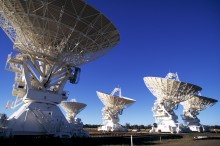
    One of the world’s most successful astronomy observatories, CSIRO’s Australia Telescope Compact Array near Narrabri, NSW, turns 25 years of age on 2 September.

    The Universe is a huge natural laboratory and astronomers study it to observe nature at its most extreme.

    “Every possible experiment is being played out somewhere in the Universe,” said Dr Jamie Stevens, CSIRO’s Senior Systems Scientist for the Compact Array.

    The Compact Array has given us the first 3D picture of the radiation belts around Jupiter … the first good evidence linking exploding stars with flashes of gamma rays … and the first image showing how gas churns in interstellar space.

    The telescope is so sensitive that it would see a mobile phone on the Moon as a very strong radio source. It can be pointed with an accuracy of better than two arcseconds — about the width of a finger seen one kilometre away.

    The Compact Array is to astronomy what the Australian swimming team is to sport: a world-class achiever for many years. It is among the top three telescopes of its kind by both publication numbers and citations. After the race, it would be standing on the podium!

    About 500 scientists from around the world use the telescope each year.

    The telescope has become better and better over time, as upgrades have made it more sensitive to faint radio signals and allowed it to capture more of the radio spectrum.

    In 2012 Compact Array data led to 76 refereed science papers — more than in any previous year of the telescope’s history.

    “I never tire of observing with the Compact Array,” Dr Stevens said.

    “It’s a factory for discovery.”

    The telescope was funded as a project for Australia’s Bicentennial in 1988, and was opened by the then Prime Minister, Bob Hawke. It boosted Australia’s international standing in radio astronomy, enabling CSIRO to develop the Australian SKA Pathfinder in Western Australia and Australia to win the right to co-host the international Square Kilometre Array telescope.

    CSIRO will celebrate the anniversary with a public Open Day at the telescope site on 1 September, then a formal ceremony and a scientific meeting.

    Source.

    The Compact Array is a set of six dishes that work together as one much larger radio telescope. It lies between the towns of Narrabri and Wee Waa in northwest NSW, about 500 km from Sydney, at CSIRO’s Paul Wild Observatory.

    Black holes, exploding stars, magnetic fields in space, galaxies at the edge of the observable Universe … the Compact Array studies them all.

  • Weekly Science Picks

    Weekly Science Picks

    It’s that time of the week again. Time for some science-y goodness from around the globe!!

    NASA Spitzer Telescope celebrates 10 years in space!

    Ten years ago the Spitzer Space Telescope was launched about a Delta II rocket from Canaveral, Florida.  Spitzer is an infrared telescope and is the fourth of the NASA’s four Great Observatories in space, Hubble, Chandra, Compton and Spitzer.

    Precision atomic clock sets new record

    The most precise clocks in the world have been built in the US.  Two clocks made from ytterbium (serioulsy I’ve not heard of this element before!) and could be used for technological advancements beyond timekeeping, such as navigation systems, magnetic fields and temperature.  Apparently the clocks’ ticking rate varies less than two parts in one quintillion, or 10 times better than any other atomic clock. Sounds great! But does it stop me being late for work?

    NASA prepares for LADEE launch

    The Lunar Atmosphere and Dust Environment Explorer (LADEE) is a robotic mission that will orbit the moon to gather detailed information about the structure and composition of the thin lunar atmosphere and determine whether dust is being lofted into the lunar sky.  LADEE will help us better understand the moon, and other objects including asteroids and other planetary moons.

    Want to boost your testosterone level? Try chopping wood…

    A new study by the Institute of Social, Behavioural and Economic Research at the University of California, Santa Barbara has found that chopping wood to clear land and feed the family produces more testosterone in men than competitive activities like sport.

    Plankton may spread oyster herpes virus

    Plankton may be spreading a herpes-like virus that has been devastating Pacific oyster farms in countries ranging from France, UK, Spain and the US.

    Bacteria can cause pain on their own

    Bacteria can directly trigger the nerves that sense pain, suggesting that the body’s own immune reaction is not always to blame for the extra tenderness of an infected wound.

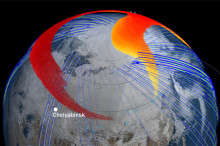
    Map tracks path of dust plume from Russian Chelyabinsk meteor

    Watch this video that shows the dust path left behind the 11,000-metric-ton meteor as it ripped through Earth’s atmosphere on February 15, 2013.


  • The Forgotten Home of Coffee

    The Forgotten Home of Coffee

    Coffee is one of the world’s favourite drinks, one of the most important commercial crop-plants, and the second most valuable international commodity; Arabica coffee is considered to produce the finest coffee beans. Production of coffee helps support the livelihood of 25 million farming families around the world and it is estimated that around 32 pairs of hands are involved in bringing coffee from the plantation to the cup.

    A study conducted by scientists at the Royal Botanic Gardens, Kew, in collaboration with scientists in Ethiopia, reports that climate change alone could lead to the extinction of wild Arabica coffee (Coffea arabica) well before the end of this century. Wild Arabica is considered important for the sustainability of the coffee industry due to its considerable genetic diversity.

    The Arabicas grown in the world’s coffee plantations are from very limited genetic stock and are unlikely to have the flexibility required to cope with climate change and other threats, such as pests and diseases. In Ethiopia, the largest producer of coffee in Africa, climate change will also have a negative influence on coffee production. The climate sensitivity of Arabica is confirmed, supporting the widely reported assumption that climate change will have a damaging impact on commercial coffee production worldwide. These are worrying prospects for the world’s favourite beverage – the second most traded commodity after oil, and one crucial to the economies of several countries.

    This film was produced as part of Kew Gardens’ IncrEdibles festival; a celebration of fascinating edible plants which runs until September 1st, 2013.

    Find out more at: http://www.kew.org/incredibles

    Source and image.


  • Hyperloop – A Reality for Commuters?

    Hyperloop – A Reality for Commuters?

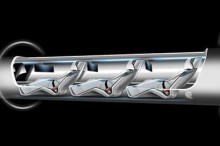
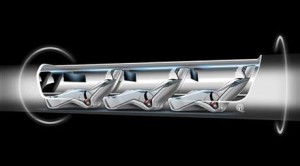
    Hyperloop concept. Via AP Photo/Tesla Motors
    Hyperloop concept. Via AP Photo/Tesla Motors

    As many of you may have heard, Elon Musk – founder of Tesla Motors, PayPal and SpaceX – released his plans for an extraordinary new mode of transportation, the Hyperloop.

    Whether they are ‘his’ plans, and if it is a ‘new’ idea, is up for debate. But we’ll leave it there and focus on the idea itself.

    So what is the Hyerloop? Remember those pneumatic tubes that transport capsules stuffed with paperwork in older buildings or drive-thru banks? That’s essentially what it is, a capsule moving through a tube. You would enter this capsule (the claustrophobic might want to find an alternative means of commuting), settle in, and then a force of acceleration would blast you through the tube. The capsules would be pulled down the line by magnetic attraction. Each capsule floats on a cushion of air, like a puck on an air hockey table. To reduce friction, a fan located at the front of the capsule would suck air to the rear in the already nearly air-free tube, creating a turbulence free ride to your destination. The system brings to mind that of Walt Disney’s Tomorrowland.

    And will it work? Is it feasible?

    Marc Thompson, a professor of electrical engineering at Worcester Polytechnic Institute in Massachusetts told ABC News that the core principles behind the Musk design should work, but travelling in pressurized tubes while encased in a pod went beyond core principles.

    Ernst Frankel, an emeritus mechanical engineering professor at MIT (who also designed a tube-based high-speed public transit system in the mid ‘90s linking Boston to New York, and some might say where Elon Musk took inspiration for his idea) said the over 700 MPH speed Musk proposes runs risks. While trains have broken the sound barrier, we still don’t run passenger trains above that speed.

    But can it actually be built?

    Sure, it could be built, but I’m not sure if any of the barriers or obstacles Musk’s system might encounter were considered in this pie-in-the-sky presentation. First, there are the mountains in the Central Valley of California to get over, or under. Second, there are the land use and zoning laws and property rights to consider when building an elaborate system stretching approximately 381 miles from San Francisco to Los Angeles. Where’s it going to go? Third, Musk mentioned that his Hyperloop system would never crash and would be immune to weather. Never say never. Where a system is operated by humans, there will be likely be human error. And the weather? Perhaps not so much a concern, but what about the seismic activity prevalent in the San Andreas Fault? Furthermore, if the system is underground, how exactly will it be solar-powered? Fourth is the cost. The price tag for the system is between $6 and $10 billion. Unrealistic.

    Many big cities and suburbs are facing a transportation breakdown. We eventually get to where we need to go, but often not without congestion, increasing pollution and oftentimes a headache. It’s no wonder engineers, scientists and tinkerers are looking for the next big thing in transportation.

    Hopefully, some feasible solutions are just around the corner.

  • Water, water everywhere?

    Water, water everywhere?

    Gulf of Carpentaria showing Flinders River in north Queensland. Department of Natural Resources via www.abc.net.au
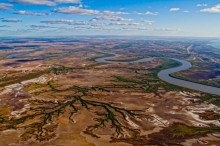
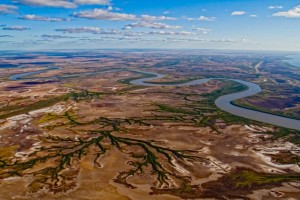
    Gulf of Carpentaria showing Flinders River in north Queensland. Department of Natural Resources via www.abc.net.au

    We often don’t plan for water in the broader sense when we think of developing communities and towns. The water pipes are underground, sure, and they flow to the water and sewer treatment plant, and we have water whenever we command the faucet to release it. But when you think about it, the water cycle is lost on the ground. The holistic concept of it being a cycle is washed away. Water is seen more as a nuisance, a problem, something to be taken care of rather than a resource. This is the real problem. While water is a need, and a serious one globally for clean water, water is treated more as an expectation, a guarantee of service.

    In order to create more sustainable and resilient developments, we need better management and regulation of water resources. Better governance. Water efficiency, water quality, conservation, drought prevention, supply and demand issues, these are topics that local, state and national governments must tackle, and soon. Water is critical to economic development in terms of manufacturing and technology.

    Population distribution is skewed as cities and towns dot the coastlines. Over half of the world’s population lives within 200 kilometres (120 miles) of the coast. As we’ve seen increasingly over the past few years, extreme weather events such as cyclones, hurricanes and the resulting floods can cause great devastation to civilisation.

    There are design elements that can enhance a community’s relationship with water. Creating driveways and sidewalks out of permeable surfaces rather than bitumen; installing green roofs; rain barrels and gardens to collect water are just a few solutions. Harvesting runoff from buildings (rain barrels) can be used to flush toilets or recycled water for watering lawns and washing. Integrating water into town planning can minimize damage to infrastructure during extreme weather events.

    Better water management, which means integrating the water cycle with the urban environment, will produce more sustainable communities in the future. Can you imagine the alternative if we didn’t? A world without water would not last long. The human body can last about 3 days without water. Water and sanitation is a human right, with 3.4 million fighting for their survival each year for clean water. With the global economy’s current fixation on innovation, if we don’t recognize the basic resources needed to allow creativity to flourish, it will all be for nought.

    Please check your local conservation office for water resources and other conservation practices you can adopt. These websites will also give you more information and ways to make a difference.

    http://www.environment.gov.au/water/index.html

    http://water.org/

    http://www.charitywater.org/


  • Pulsars make a GPS for the cosmos

    Pulsars make a GPS for the cosmos

    CSIRO scientists have written software that could guide spacecraft to Alpha Centauri, show that the planet Nibiru doesn’t exist … and prove that the Earth goes around the Sun.

    Dr George Hobbs (CSIRO) and his colleagues study pulsars — small spinning stars that deliver regular ‘blips’ or ‘pulses’ of radio waves and, sometimes, X-rays.

    Usually the astronomers are interested in measuring, very precisely, when the pulsar pulses arrive in the solar system. Slight deviations from the expected arrival times can give clues about the behaviour of a pulsar itself, or whether it is orbiting another star, for instance.

    “But we can also work backwards,” said Dr Hobbs. “We can use information from pulsars to very precisely determine the position of our telescopes.”

    “If the telescopes were on board a spacecraft, then we could get the position of the spacecraft.”

    Observations of at least four pulsars, every seven days, would be required. “Each pulsar would have to be observed for about an hour,” Dr Hobbs said. “Whether you can do them all at the same time or have to do them one after the other depends on where they are and exactly what kind of detector you use.”

    A paper describing in detail how the system would work has been accepted for publication by the journal Advances in Space Research.

    Spacecraft within the solar system are usually tracked and guided from the ground: this is the role of CSIRO’s Canberra Deep Space Communication Complex, for instance. But the further out the craft go, the less accurately we can measure their locations.

    For voyages beyond the solar system, spacecraft would need an on-board (‘autonomous’) system for navigation. Gyroscopes and accelerometers are useful tools, but the position information they give becomes less accurate over time.

    “Navigating with pulsars avoids these problems,” said Deng Xinping, PhD student at the National Space Science Center in Beijing, who is first author on the paper describing the system.

    Scientists proposed pulsar navigation as early as 1974. Putting it into practice has recently come closer, with the development of fairly small, lightweight X-ray detectors that could receive the X-ray pulses that certain pulsars emit. NASA is exploring the technique.

    “For deep-space navigation, we would use pulsars that had been observed for many years with radio telescopes such as Parkes, so that the timing of their pulses is very well measured,” said CSIRO’s Dr Dick Manchester, a member of the research team. “Then on board the spacecraft you’d use an X-ray telescope, which is much smaller and lighter.”

    Dr Hobbs and his colleagues have made a very detailed simulation of a spacecraft navigating autonomously to Mars using this combination of technologies and their TEMPO2 software.

    “The spacecraft can determine its position to within about 20 km, and its velocity to within 10 cm per second,” said Dr Hobbs. “To our knowledge, this is the best accuracy anyone has ever been able to demonstrate.”

    “Unlike previous work, we’ve taken into account that real pulsars are not quite perfect, they have timing glitches and so on. We’ve allowed for that.”

    The same pulsar software can be used to work out the masses of objects in the solar system.

    In 2010 Dr Hobbs and his colleagues used an earlier version of the software to ‘weigh’ the planets out as far as Saturn — to six decimal places.

    The Earth is travelling around the Sun, and this movement affects exactly when pulsar signals arrive here. To remove this effect, astronomers calculate when the pulses would have arrived at the Solar System’s centre of mass, around which all the planets orbit.

    “If the pulsar signals appear to be coming in at the wrong time, we know that the masses of the planets that we are using in the equations must be wrong, and we can correct for this,” Dr Hobbs explained.

    The new version of the software lets the astronomers rule out unseen masses, including any supposedly undiscovered planets, such as the notorious Nibiru.

    “Even if a planet is hard to see, there’s no way to disguise its gravitational pull,” Dr Hobbs said. “If we don’t detect the gravitational pull, then there’s no planet there. Full stop.”

    And what about showing that the Earth goes around the Sun? Yes, they can do that too.

    “This was nailed a couple of hundred years ago,” said Dr Hobbs. “But if you still need proof, we’ve got it.”

    Publication

    Deng XP, Hobbs G, You XP, Li MT, Keith MJ, Shannon RM, Coles W, Manchester RN, Zheng JH, Yu XZ, Gao D, Wu X, Chen D. 2013. Interplanetary spacecraft navigation using pulsars [external link]. Advances in Space Research. arXiv:1307.5375.

    Source and image.

  • The Psychology of First Impressions

    The Psychology of First Impressions

    Though one must not judge a book by its cover, a job candidate only has thirty minutes to prove his or her worth to a hiring manager. Thus an interviewee’s cover must be able to represent the qualifications and potential that lies within. Since the job market is full to the brim, it is not realistically possible for hiring agencies to allocate equal amounts of time and resource to each candidate. If a candidate wishes to stand out in such a situation, he or she must understand the psychology behind first impressions.

    Ann Demarais and Valerie White together wrote a book titled First Impressions: What You Don’t Know About How Others See You. The book helps one to understand how he or she can best present themselves in any situation. Though a first impression will never tell the whole story, it is the only thing that a stranger has to judge someone. Of course the mood of the interviewer does play a crucial role but according to the book, three characteristics namely speech, body language and confidence play an equally important role in this regard.

    A first impression is like a filter. People absorb initial information by noticing your body language and assessing what you say. This information helps them determine what you are like and how you would react to situations in the future. Thereafter they keep seeing you through this filter because everyone likes to believe that they knew what you were like from the first moment they met you. While some interviewees may have to go through several rounds of interview to finally get a job, the impression that he or she makes the first time is the one that the interviewer is most likely to stick by.

    According to a study published in the Journal of Experimental Psychology, the first impression is likely to dominate regardless of how a person may contradict it by new experiences at different times. If you can impress an interviewer at the first meeting, you are likely to maintain that image but if on the other hand you come off poorly at an interview, it might be close to impossible to change that impression.

    How can you use the first impression to your advantage?

    Here is a list of tips that will help you create a great first impression and increase your chances of getting that job you have always wanted!

    · Be on time – Research shows that for every second you arrive late at an interview, you lose some traction with the interviewer and you will never be able to regain this loss. For an interview, ten to fifteen minutes before time is considered to be on time. Behaviour is often associated with personality so if you reach early your interviewer will also assume you have good organisational skills.

    · Look fresh – Appearance is very important. Some physical characteristics can determine the final outcome of the first impression. Your eyes should be bright and open. Avoid averting them as that will make you appear insecure. Get a good night’s sleep before your interview so that you appear fresh. A lack of smile will make you appear disinterested so remember to smile just enough to convey eagerness and emit warmth. Always attend an interview in conservative clothing even if the company you are applying to is alternative and funky. It is the safest option that will keep you from being judged.

    · Be personable – Remember to seem simple but be confident at the same time. Work on your chemistry with the interviewer while making sure you are polite. If the interviewer tries to lighten up, maintain a professional distance so that you seem poised and sincere.

    · Practice – If you are not sure how you will seem at your interview, it is a good idea to practice a few times. Prepare a list of your strengths and weaknesses so that you can handle any question that is thrown at you. Run a search about the company so that you have adequate information about where you are headed. Basically all you need to do is anticipate your interview and prepare accordingly.

    Once you lock in an interview, you are obviously moving towards the right direction. You were chosen from a much larger pool of applicants for an interview so have faith in your education, experience and skills. If you impressed them without seeing them, there is little that could go wrong when you meet them in person. Be confident and comfortable and let your personality show. Since you won’t get another chance to make a first impression, give your best shot at this interview.