
The days of stalling online purchases in fear of products “not quite looking like they did on the model
Category: News
-

Australia’s Marine National Facility to farewell its research vessel Southern Surveyor
The Director of the Marine National Facility, Mr Ron Plaschke, said the research achievements onboard Southern Surveyor have not only been to Australia’s benefit, but also understanding the global importance of our surrounding seas and oceans.
“Southern Surveyor has made a major contribution to Australia’s blue-water research effort,” Mr Plaschke said.
On board Southern Surveyor, scientists from a diverse range of universities, institutions and government organisations have, among many other things:
Discovered massive submarine volcanoes between Fiji and Samoa, offering evidence of mineral deposits such as copper, zinc and lead. This research is helping us understand the origins of our continent and how geological resources are formed, which in turn guides exploration activities.
Played an important role in the deployment and recovery of buoys as part of the Australian Tsunami Warning System.
Deployed the Integrated Marine Observing System (IMOS) moorings in the oceans around Australia, which have been pivotal in collecting data for Australian and international weather and climate research.
Observed changes to our ocean currents that influence rainfall, weather patterns and in turn fisheries, from the Indian, to the Pacific and Southern Oceans and also helped to uncover the southward movement of the East Australian Current.
Mapped our seafloor – only 12 per cent of Australia’s Exclusive Economic Zone has been mapped.
Discovered the final resting places of historically significant shipwrecks, like the MV Limerick and HMAS Australia.
“The 42 year old Southern Surveyor is a former North Sea trawler converted into a research vessel and, while being well maintained, the ability to carry a wide range of scientific equipment and larger scientific teams is becoming increasingly limiting,” Mr Plaschke said.
“It will be a sad day when Southern Surveyor is sold and departs from Hobart, but there is growing excitement about the upcoming arrival of the replacement vessel Investigator,” Mr Plaschke said.
Source and image: http://www.csiro.au/en/Portals/Media/Australias-Marine-National-Facility-to-farewell-its-research-vessel-Southern-Surveyor.aspx
-

Weekly Science Picks
It’s been a slow week, but science never stops. Let’s have a quick look at some of the interesting science-related happenings over the past seven days.
Eileen Pollack, a professor of creative writing at the University of Michigan, is writing a book about women in the sciences, and has a long piece in the New York Times. Worth the read.
Why Are There Still So Few Women in Science?
“Mostly, though, I didn’t go on in physics because not a single professor — not even the adviser who supervised my senior thesis — encouraged me to go to graduate school. Certain this meant I wasn’t talented enough to succeed in physics, I left the rough draft of my senior thesis outside my adviser’s door and slunk away in shame. Pained by the dream I had failed to achieve, I locked my textbooks, lab reports and problem sets in my father’s army footlocker and turned my back on physics and math forever.”
Sciencemag and their “sting” operation that exposed severe lack of even cursory peer review among open-access scientific journals. It seems an alarming number of the publications tested (by submitting a conspicuously flawed paper by a non-existent author from a non-existent third-world institution) seem to be making money at the expense of authors and not even bothering to look at submitted papers.
Who’s Afraid of Peer Review?
“On 4 July, good news arrived in the inbox of Ocorrafoo Cobange, a biologist at the Wassee Institute of Medicine in Asmara. It was the official letter of acceptance for a paper he had submitted 2 months earlier to the Journal of Natural Pharmaceuticals, describing the anticancer properties of a chemical that Cobange had extracted from a lichen. In fact, it should have been promptly rejected. Any reviewer with more than a high-school knowledge of chemistry and the ability to understand a basic data plot should have spotted the paper’s short-comings immediately. Its experiments are so hopelessly flawed that the results are meaningless. I know because I wrote the paper. Ocorrafoo Cobange does not exist, nor does the Wassee Institute of Medicine.”
The ever-present, ever-vocal George Monbiot in the pages of the Guardian.
For scientists in a democracy, to dissent is to be reasonable
“It’s as clear and chilling a statement of intent as you’re likely to read. Scientists should be “the voice of reason, rather than dissent, in the public arena”. Vladimir Putin? Kim Jong-un? No, Professor Ian Boyd, chief scientific adviser at the UK’s Department for Environment.”
PopularScience.com will no longer accept comments on new articles. The comments, they feel, are bad for science.
Why We’re Shutting Off Our Comments
“Comments can be bad for science. That’s why, here at PopularScience.com, we’re shutting them off. It wasn’t a decision we made lightly. As the news arm of a 141-year-old science and technology magazine, we are as committed to fostering lively, intellectual debate as we are to spreading the word of science far and wide. The problem is when trolls and spambots overwhelm the former, diminishing our ability to do the latter.”
Until next time…
-

World authority leads ocean energy research
One of the world’s authorities on offshore oil spill countermeasures has taken the helm of CSIRO’s Wealth from Oceans National Research Flagship.
Dr Ken Lee will head a multidisciplinary team of over 200 CSIRO scientists and technical staff to provide the science to support the healthy and sustainable coexistence of the ocean energy industry with all other marine industries and communities.
Dr Lee, a Canadian, was formerly the Executive Director of Canada’s Centre for Offshore Oil, Gas and Energy Research, a Centre for Expertise in the Canadian Department of Fisheries and Oceans.
He is internationally recognised for his expertise on the environmental impacts of offshore oil and gas production and oil spill counter-measures.
Dr Lee led the Canadian contingent helping to deal with the 2010 Deepwater Horizon, BP oil spill in the Gulf of Mexico. He contributed to a recent report on the oil spill by the US National Research Council which noted the importance of understanding the wider economic and social impacts of the spill, in addition to immediate ecological and environmental damage.
Dr Lee said Australia has the potential to lead the world in ocean energy research and setting environmental protection standards. To achieve this,
his research team plans to increase its collaboration with the Australian and international oil and gas industry.“Offshore oil and gas will play a critical part in Australia’s future energy needs,
-

New study finds one in three jobs in Europe generated by IPR-intensive industries
The European Commission welcomed the publication of the first-ever EU-wide study of the impact of Intellectual Property Rights (IPR) on the European economy in terms of GDP, employment, wages and trade.
Carried out jointly by the Office for Harmonization in the Internal Market (OHIM) acting through the EU Observatory on Infringements of Intellectual Property Rights and the European Patent Office (EPO), the study finds that about 40% of total economic activity in the EU (some €4.7 trillion annually) is generated by IPR-intensive industries, and approximately 35% of all employment in the EU (77 million jobs) stems from such industries that have a higher than average use of IP rights. The report also finds that average remuneration in IPR-intensive industries is more than 40% higher than in other industries.
Internal Market and Services Commissioner Michel Barnier said: “I am convinced that intellectual property rights play a hugely important role in stimulating innovation and creativity, and I welcome the publication of this study. It will help us to further underpin our evidence-based policy making. What this study shows us is that the use of intellectual property rights in the economy is ubiquitous: from high-tech industries to manufacturers of sports goods, games, toys and computer games, all are making intensive use of not just one, but often several types of IP rights.”Benoît Battistelli, President of the European Patent Office (EPO) said: “This report shows that the benefits of patent and other IPRs is not just economic theory. For innovative companies intangible assets have become extremely important. Especially for SMEs, but also research centres and universities, patents often open the door to capital and business partners. In order to remain competitive in the global economy, Europe needs to encourage even further the development and use of new technology and innovations.”
António Campinos, President of the Office for Harmonization in the Internal Market (OHIM) said: “This study is the result of a detailed collaboration between experts drawn from different agencies and countries, using a transparent and replicable methodology. It tackles the fundamental question of the extent to which IPR-related industries matter to jobs, GDP and trade in the EU. We now have a clear answer. They do matter, they matter a lot.”
The study, “Intellectual Property Rights intensive industries: contribution to economic performance and employment in Europe”, takes into account all the major IP rights: patents, trademarks, designs, copyrights and geographical indications. It focuses on the EU economy and covers a total of 321 IPR-intensive industries, identified as such either because they register more Intellectual Property Rights per employee than other industries, or because the use of IPR is an intrinsic characteristic of the industry’s activity. These industries were selected at EU-level, i.e. using EU-wide measures of IPR intensity.
According to the report, about half of all EU industries are IP-intensive, with engineering, real estate, financial and insurance activities, manufacture of motor vehicles, retail, computers and pharmaceuticals among the top 20 IPR intensive industries in Europe. Another finding is that IP-intensive industries account for approximately 90% of the EU’s trade with the rest of the world.
A list of all IPR-intensive industries is included in the Appendix to the report.
This research follows on the heels of a similar study carried out in 2012 by the US Patent and Trademark Office together with the Economics and Statistics Administration, which resulted in comparable findings for the US economy. The share of employment and GDP in IPR-intensive industries is even higher in Europe than in the US.
Further information:
Study on the website of the European Patent Office
Study on the website of the Office for Harmonization in the Internal Market (OHIM)
-
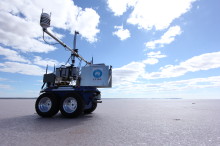
Outback Rover helps sharpen satellite signals
A prototype autonomous vehicle, or rover, developed by CSIRO is helping scientists improve the accuracy of Earth observation satellites that provide valuable data to our mining and agricultural industries.
Just as the Mars Rover Curiosity is gathering information about our neighbouring planet, CSIRO’s affectionately nicknamed ‘Outback Rover’ is helping to calibrate satellites that provide clues to Earth’s soil condition, mineralogy and vegetation.
Accompanied by researchers from Japan, China, Israel and France, CSIRO scientists recently took the rover prototype on a mission to Lake Lefroy – a huge salt lake in remote Western Australia – to see if they can automate the satellite calibration process.
Professor Arnold Dekker, Director of Earth Observation and Informatics at CSIRO, explains that this is where information gathered by satellites is matched against measurements taken on-ground and compared for accuracy.
“Satellite data is used for resource exploration, environmental monitoring and agricultural management such as soil mapping. So it must be regularly cross-checked to ensure that observations are accurate.
“This process is called vicarious calibration and is undertaken by ground crews who walk in grids or transects, taking measurements with hand-held devices known as spectrometers as satellites travel overhead,
-

Advances in health technologies: Saunas
For many, saunas are the epitome of health and wellbeing luxury. Originating in Scandinavia, they are now a staple in day spas and gyms around the world.
However, new health technologies are coming out all the time, many offering similar health benefits to saunas but often at inflated prices. The question is, are we better off sticking to the tried and tested benefits of saunas or should we be seeking out more advanced technologies? Here are the facts.
Health benefits of saunas
With a sauna’s dry heat reaching temperatures of around 80C, pushing skin temperature up to 40C within minutes, are these warm, cosy rooms actually good for you?
Studies by naturopathic physician, Dr Walter Crinnion, showed that sauna-induced sweating can help to lower blood pressure and assist with a range of chronic and acute health problems.
Sauna therapy for chronic heart failure
Several researchers and health practitioners praise the benefits of sauna therapy for a range of health problems.
A study by Takashi Ohori (2011) and colleagues found that repeated sauna use could help patients with chronic heart failure. Heart failure occurs when the heart can’t pump enough blood around the body, resulting in fatigue and shortness of breath. Saunas help to increase the heart’s ability to pump blood.
Common cold prevention
A study by Ernst et al (1990) found that regular sauna use could probably help reduce the prevalence of the common cold. Although the authors concluded that more research was necessary, it was a good step forward in potentially preventing the thousands of deaths that occur each year from the common cold, most of which are elderly patients.
Weight loss
There are varying opinions on the benefits of saunas for weight loss. Most people will lose approximately one pint of sweat during an average sauna session, which can give the illusion of almost immediate weight loss. However, this weight will go back on as soon as you consume any food or fluids (JAMA, 1981).
However, it can cause weight loss in another way. When the body is exposed to high heats, it causes the pulse rate to increase by 30 per cent or more. This causes an increase in metabolism, resulting in more calories being burned per minute than if you were sitting in front of the television, for example (Harvard University, 2005).
Your increased metabolic rate will also continue after the sauna should you then exercise, meaning a better result from a workout.
Muscle pain relief
When put in a warm environment, a body’s blood circulation is increased causing strained muscles to relax. After a workout, the heat of a sauna can help relax muscles and prevent the buildup of lactic acid and potential strains.
Flushes toxins
Toxins can build up in our bodies over time and one of the best ways to remove them is through deep sweating. While normal sweating will contain almost only water, deep sweating, which can be achieved in a sauna, may allow the release of chemicals such as lead, copper, zinc, nickel and mercury. These toxins get into the skin just by being surrounded by our everyday environment.
However, some argue that although you sweat a lot in a sauna, the toxins stay in the body. Professor Donald Smith from the University of California said that almost all toxins are excreted through urine and feces, and only 1 per cent through sweat (LA Times, 2008).
Neck and head pain reduction
New Zealand researchers found that saunas could help ease neck and head pain in chronic sufferers. The study, led by Dr Giresh Kanji, concluded that not only could sauna sessions minimise the intensity of a headache, but could shorten its duration too.
In his analysis, Dr Kanji said that saunas could be more effective than painkillers as they helped to treat the cause of the pain rather than mask it.
Additional Sources:
http://www.finnleo.com/pages/health-and-wellness.aspx#q4
http://www.globalhealingcenter.com/natural-health/7-dangers-of-the-sauna/
http://informahealthcare.com/doi/abs/10.3109/07853899009148930
-
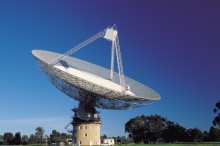
Astronomers find missing link pulsar
An international team of astronomers has used X-ray telescopes in space and ground-based telescopes, including two of CSIRO’s, to identify a pulsar that switches between emitting X-rays and emitting radio waves. This is the first direct evidence of one kind of pulsar turning into another.
An international team of astronomers using CSIRO radio telescopes and other ground and space-based instruments has caught a small star called a pulsar undergoing a radical transformation, described today in the journal Nature.
“For the first time we see both X-rays and extremely fast radio pulses from the one pulsar. This is the first direct evidence of a pulsar changing from one kind of object into another – like a caterpillar turning into a butterfly,” said Dr Simon Johnston, Head of Astrophysics at CSIRO’s Astronomy and Space Science division.
The cosmic drama is being played out 18,000 light-years away, in a small cluster of stars (M28) in the constellation of Sagittarius.
The pulsar (called PSR J1824-2452I) has a tiny companion star, with about a fifth the mass of the Sun. Although small, the companion is fierce, pounding the pulsar with streams of matter.
Normally the pulsar shields itself from this onslaught, its magnetic field deflecting the matter stream into space.
But sometimes the stream swells to a flood, overwhelming the pulsar’s protective ‘force field’. When the stream hits the pulsar’s surface its energy is released as blasts of X-rays.
Eventually the torrent slackens. Once again the pulsar’s magnetic field re-asserts itself and fends off the companion’s attacks.
“We’ve been fortunate enough to see all stages of this process, with a range of ground and space telescopes. We’ve been looking for such evidence for more than a decade,” said Dr Alessandro Papitto, the Nature paper’s lead author. Dr Papitto is an astronomer of the Institute of Space Studies (ICE, CSIC-IEEC) of Barcelona.
The pulsar and its companion form what is called a ‘low-mass X-ray binary’ system. In such a system, the matter transferred from the companion lights up the pulsar in X-rays and makes it spin faster and faster, until it becomes a ‘millisecond pulsar’ that spins at hundreds of times a second and emits radio waves. The process takes about a billion years, astronomers think.
In its current state the pulsar is exhibiting behaviour typical of both kinds of systems: millisecond X-ray pulses when the companion is flooding the pulsar with matter, and radio pulses when it is not.
“It’s like a teenager who switches between acting like a child and acting like an adult,” said Mr John Sarkissian, who observed the system with CSIRO’s Parkes radio telescope.
“Interestingly, the pulsar swings back and forth between its two states in just a matter of weeks.”
The pulsar was initially detected as an X-ray source with the European Space Agency’s INTEGRAL satellite. X-ray pulsations were seen with another satellite, ESA’s XMM-Newton; further observations were made with NASA’s Swift. NASA’s Chandra X-ray telescope got a precise position for the object.
Then, crucially, the object was checked against the pulsar catalogue generated by CSIRO’s Australia Telescope National Facility, and other pulsar observations. This established that it had already been identified as a radio pulsar.
The source was detected in the radio with CSIRO’s Australia Telescope Compact Array, and then re-observed with CSIRO’s Parkes radio telescope, NRAO’s Robert C. Byrd Green Bank Telescope in the USA, and the Westerbork Synthesis Radio Telescope in The Netherlands. Pulses were detected in a number of these later observations, showing that the pulsar had ‘revived’ as a normal radio pulsar only a couple of weeks after the last detection of the X-rays.
The astronomers involved in these investigations work at institutions in Australia, Canada, Germany Italy, The Netherlands, Spain, Switzerland, and the USA.
Source and image: http://www.csiro.au/en/Portals/Media/Astronomers-find-missing-link-pulsar.aspx
-
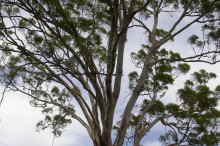
Seeing more than carbon for the trees
Schemes that offer economic incentives for growing trees for carbon present an opportunity to reverse trends in land clearing but also to restore ecosystem services – such as pest control, pollination, soil and water conservation.
‘Best practice’ carbon farming that considers more than just the carbon in trees is needed if the full benefits of trees in the landscape are to be realised by farmers, landholders, and the community.
CSIRO-led research confirms that tree plantings in rural lands have significant potential to remove carbon dioxide from the atmosphere and, if done well, can provide a stream of other benefits to farmers, local communities and the environment.
“Schemes which offer economic incentives for growing trees for carbon present an opportunity to reverse trends in land clearing but also to restore ecosystem services – such as pest control, pollination, soil and water conservation – that provide important benefits to farmers and the broader community,” according to CSIRO’s Dr Brenda Lin.
Past removal of trees have disrupted many natural processes such as refuges for native insects that control pests, pollination, carbon sequestration, organic matter accumulation and water and soil conservation that are important for sustainable farming and the environment.
“The ability of carbon tree plantings to restore some of these other benefits that support agricultural production may be a key factor in encouraging farmers and landholders to take up this type of carbon farming,” Dr Lin said.
“Land-use models show that policies aimed solely at maximising carbon storage may not produce additional agricultural and environmental benefits and may even produce unwanted outcomes for farmers, landowners and communities.
“For example, studies of past revegetation in agricultural landscapes show that in some locations intensive single-species (or monoculture) plantations can affect water flows, increase invasive pests and lead to biodiversity loss, be fire prone and have poor growth rates. Poorly located vegetation could reduce the availability of land for food production.”
Alternatively, there are many opportunities for tree plantings, if planned and implemented properly, to provide additional benefits to the farmer beyond just carbon.
“By revegetating unused, marginal or degraded cropping land, using multiple species of trees and shrubs, we could see improvements to pest control, pollination and water quality, increased wind protection and reduced soil erosion and salinity,” Dr Lin said.
“For example, we know that remnant native vegetation patches that currently persist in agricultural landscapes, if they are well managed and contain few weed species, support a range of insect and spider predators and parasitic wasps that can attack pests of grain crops.”
The benefits for local communities and the public could include increased water quality, reduced pesticide use, more habitat for species such as birds, and other cultural benefits.
The research, published in the American BioScience journal, highlights the need to better understand these private, public and shared benefits and tradeoffs so that future policies and initiatives encourage ‘best practice’ tree plantings that maximise the positives while also storing carbon.
-

Science Weekly: dinosaurs, global time bomb, shy birds, proof of alien life
Welcome to Science Weekly!! It’s been a busy week so we’ve got some great picks for you today.
Most of us know we have 5 taste receptors… but did you know we can smell ten different ‘categories’ of odours?
Dino model shows the glide path to flight
Scientists using a wind tunnel and a full-scale model have shed light on how feathery dinosaurs adapted to the skies.
E-waste is a ‘global time bomb’
International expert urges nations to act over our planet’s ever-expanding pile of toxic electronic waste.
According to recent research shy birds stick together and gain courage through numbers, whereas bold birds go it alone.
Understanding the Southern Ocean
It appears NASA satellites have not accurately estimated the important life-giving microscopic phytoplankton population that lives in the Southern Ocean and Antarctica.
Proof of alien life? More evidence please!
Could life really exist on other planets? The most positive scientific answer we can offer is: well, maybe, but we do not yet have enough evidence for or against.
New nano material is on the way…
A new nano material with applications that could include reducing condensation in airplane cabins and enabling certain medical tests without the need for high tech laboratories has been developed by researchers at the University of Sydney.
-
Weekly Science Picks
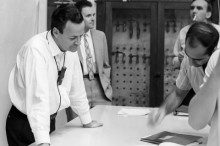
Bring out your bongo drums and beat in celebration of the entirety of Volume One of The Feynman Lectures is available online thanks to a partnership between Caltech and The Feynman Lectures Website making this possible. Richard Feynman was a brilliant physicist reknown for making physics and indeed science accessible to people outside of the scientific community. He also played the bongo drums.
This work is based lectures Feynman delivered at Caltech to undergraduate physics students. Fear not though because the words are easy to read and understand. In my opinion it is a very good example of science communication. It’s also an excellent resource material for teachers and students. The lectures have been compiled into three volumes of books before but now Volume One is freely available and designed to be able to be read on any device with the ability to zoom in on figures and equations.
Palaeontologists have applied physics to show how feathery dinosaurs adapted to flight. There is growing acceptance that birds evolved from small feathered dinosaurs but no one knows how. Researchers from the University of Southampton built a full scale model of Microraptor, a four winged dinosaur, and put it to the test in a wind tunnel.
The blue whale is the undisputed largest known living animal on the Earth ever. However, it is not the largest known living organism ever. Confused? MinuteEarth took time to explain in the latest video offering.
-

3D Mapping a ‘Pisa’ Cake by Australian Scientists
Australian researchers have created the first ever interior 3D map of Italy’s iconic Leaning Tower of Pisa by using a breakthrough mobile laser mapping system.
Developed by the CSIRO, Australia’s national science agency, the Zebedee technology is a handheld 3D mapping system incorporating a laser scanner that sways on a spring to capture millions of detailed measurements of a site as fast as an operator can walk through it. Specialised software then converts the system’s laser data into a detailed 3D map.
While the tower’s cramped stairs and complex architecture have prevented previous mapping technologies from capturing its interior, Zebedee has enabled the researchers to finally create the first comprehensive 3D map of the entire building.
“This technology is ideal for cultural heritage mapping, which is usually very time consuming and labour intensive. It can often take a whole research team a number of days or weeks to map a site with the accuracy and detail of what we can produce in a few hours,
-
Feynman Lectures on Physics: The New Online Edition as HTML5
Caltech and The Feynman Lectures Website have joined forces to create an online edition of Richard Feynman’s famous lectures on physics. First presented in the early 1960s as part of a two-year introductory physics course given at Caltech, the lectures were eventually turned into a book that became a classic reference work for physics students, teachers and researchers.
Created with HTML5, the new site gives readers access to “a high-quality up-to-date copy
-
Weekly Science Picks
Hello everyone. I hope you’ve all had a good week! It’s a balmy Autumn evening here in the UK where I sit as I write this – and I must say, this week’s science picks include something quite historic…
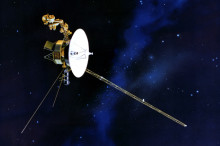
Anyone with half an eye on the science news recently should know by now that it’s been officially confirmed that NASA’s Voyager 1 probe is has now been confirmed as being in interstellar space. It is no longer within the Sun’s heliosphere and no longer feels the solar wind. To Voyager, the Sun is now simply another star in the sky. Though as Phil Plait points out, being in interstellar space is not technically the same thing as leaving the solar system.
Voyager 1 Reaches Interstellar Space. But Has It Left the Solar System? Wellllll…
However, there’s more to our solar system’s far-flung suburbs than errant electrons and protons. Even out there, over 120 times farther from the Sun than the Earth’s orbit, there are more substantive objects: huge, frozen chunks of ice that are essentially giant comets… It’s like walking outside the front door of your house and saying you’ve left your property. While you’ve left your house, there’s still the yard all around you. You have a ways to go yet.
Citizen Science has been around for a while now, as a fun and interesting way of getting internet users to casually help scientists analyse vast amounts of data. So the latest idea is to use online gaming and social media platforms like Facebook to bolster the effort…
How Facebook and gaming could help scientists battle disease
One example, a smartphone game set for release later this year, is currently called “GeneGame”. Players of the game, developed by Cancer Research UK, will be contributing to the identification of cancer-causing genetic faults from tumour samples. In a crucial difference to the Galaxy Zoo experiment, the scientific research will be a indirect consequence of the gameplay, rather than the explicit focus of the gameplay.
From a long departed craft, to one of the most recent, NASA’s LADEE vehicle is currently en route to the Moon, to study its tenuous atmosphere (and the word “Atmosphere” is used rather loosely here, believe me). But as the probe was launched, there was an unfortunate amphibian casualty. You see, the launch pads at NASA’s Wallops facility are built in rather swampy areas…
Frank the Frog Sacrificed Himself for LADEE Launch
From NASA: “A still camera on a sound trigger captured this intriguing photo of an airborne frog as NASA’s LADEE spacecraft lifts off from Pad 0B at Wallops Flight Facility in Virginia. The photo team confirms the frog is real and was captured in a single frame by one of the remote cameras used to photograph the launch. The condition of the frog, however, is uncertain.