Category: News

  • Black hole jets pack a powerful punch

    Black hole jets pack a powerful punch

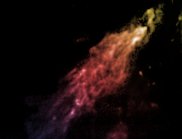
    High-speed ‘jets’ spat out by black holes pack a lot of power because they contain heavy atoms, astronomers have found.

    Black-hole jets recycle matter and energy into space and can affect when and where a galaxy forms stars.

    “Jets from supermassive black holes help determine a galaxy’s fate — how it evolves,” said CSIRO’s Dr Tasso Tzioumis, a member of the research team.

    “So we want to understand better the impact jets have on their environment.”

    The work, led by Dr María Díaz Trigo of the European Southern Observatory, is published in the journal “Nature” today.

    Astronomers have known for decades that black-hole jets contain electrons, which are low-mass particles.

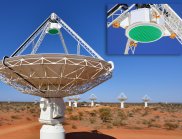
    But using the European Space Agency’s XMM-Newton space telescope and CSIRO’s Compact Array radio telescope in northwest NSW, the research team found the first evidence of heavy atoms — iron and nickel — in the jets from a ‘typical’ black hole known as 4U1630-47.

    An iron atom is about 100,000 times more massive than an electron. When a massive particle is moving it carries more energy than a lighter particle moving at the same speed.

    “Heavy atoms have been seen in jets from one other system, SS433, but that’s a very unusual system, an oddball, whereas this system is quite typical, much more likely to represent black holes in general,” Dr Tzioumis said.

    While 4U1630-47 is a small black hole, a few times the mass of the Sun, the physics of black holes “is scalable”, he said, meaning that the finding would apply to larger black holes.

    The discovery suggests that jets are powered by the black hole’s accretion disk — a belt of hot gas swirling around the black hole — and not by the spin of the black hole itself, which would be more likely to produce jets containing only light particles.

    The jets from 4U1630-47 are travelling fast, at two-thirds the speed of light.

    When such fast-moving jets containing heavy particles smash into matter in space, they could generate gamma rays and neutrinos, which might be detectable with current and future telescopes.
    Source and image.

  • Lead role in Square Kilometre Array telescope R&D

    Lead role in Square Kilometre Array telescope R&D

    CSIRO will play a lead role in the next stage of the development of the world’s largest radio telescope, the Square Kilometre Array (SKA), to be located in Australia and in Africa.

    This follows the SKA Organisation (SKAO) announcement that it has allocated R&D ‘work packages’ to consortia from around the world. The consortia, involving science institutes and industry, will progress the design and validation processes of the SKA to a stage that will enable tendering and build of the telescope from 2017.

    CSIRO will head up the largest of these consortia, the SKA Dish Array Consortium, and will be responsible for the design work relating to the SKA’s 2500 antenna dishes and receivers, and the development of innovative receivers known as phased array feeds (or PAFs).

    In addition, CSIRO will lead the Infrastructure Australia Consortium in charge of designing and costing critical SKA infrastructure at the Australian SKA site (the Murchison Radio-astronomy Observatory in Western Australia). This would include the provision of power, communications, buildings, water and access to the site.

    “The SKA is an international project, with global scale and huge scientific ambition,

  • CSIRO Snapshot: November 2013

    CSIRO Snapshot: November 2013

    Today we provide a brief review of top CSIRO news published in the previous period. There was everything – from gum leaves to bushfires.  Hope you will enjoy this journey.

    Spotlight – gum leaves rich in gold

    While money doesn’t grow on trees per se, we’ve found that precious gold does. We have revealed that gum trees from the Western Australian goldfields draw up tiny particles of gold via their roots and it ends up in their leaves and branches.

    Finding new gold deposits is not just about bling’it is vital for industry. In the past 10 years the discovery of new gold deposits around the world has decreased by over 45 per cent. Gold is one of the most important minerals used by industry. It is used in electronics, dentistry, medicine, aerospace, glassmaking, computers and mobile phones.

    So mineral explorers need to find new ore deposits. Novel exploration techniques are required to find the more difficult deposits hidden beneath sediments. Read more and watch the video on CSIRO’s blog.

    Top of the news

    Bushfire help at hand

    Bushfires have the potential to affect every Australian in one way or another. And this season is looking to be a bad one. Over the last few weeks we’ve been working hand in hand with the NSW Rural Fire Service (RFS) at its headquarters to provide advice on fire behaviour. We used the best tech to produce maps showing likely fire progress and to monitor Twitter feeds to find hot spots of developing fire emergency. The RFS is also using new apps we developed for the first time to assess the impact of the fires on property. More on the Climate Response blog.

    Does my virtual forehead look big in this?

    The online retail sphere is rapidly growing, with more people using their smart phones and tablets to make everyday purchases. But we’re taking online shopping to a completely new level by teaming up with online eyewear retailer Glasses.com. Using our Smart Vision technology, Glasses.com has developed a new iPad app that allows customers to virtually try on specs from the comfort of their own home. The Smart Vision software allows the app to produce a true-to-life 180′ view of the user’s face showing how each pair fits in 3D. Read more and watch the video on CSIRO’s blog.

    It’s like Jimmy Choo – for horses

    Spring Racing Carnival fever has hit- and our scientists are not immune. In a horse-ome titanium 3D printing first, we have scanned a race horse’s hooves using a handheld scanner and then, with sophisticated modelling software, designed the perfect fitting, lightweight racing shoe. And the shoes are pinkurple. Why did we bother? We think 3D printing will have broad application potential. We’re already researching how it can be used in biomedical implants and even things like automotive and aerospace parts. More on  this blog.

    Making a clean-burning synthetic fuel, Indian style

    Impressive cricket skills aren’t the only thing us Aussies have in common with India. Both nations face pretty similar energy challenges in that neither country can meet current fuel demands with domestic production alone. Enter dimethyl ether (DME), stage left. DME is a fuel that can be produced from natural gas, coal, biomass, or directly from carbon dioxide. It generates significantly less pollution than conventional fuels when burnt, making it more environmentally friendly. So we’ve teamed up with friends in India to progress the research around use of DME. More on this blog.

    In the business

    Leading R&D for SKA

    If you haven’t heard of the Square Kilometre Array, then let us tell you it will be the world’s largest radio telescope and it will be located in Australia and Africa. It’s just been announced that we will head the largest R&D consortia for the project, the SKA Dish Array Consortium. We will be responsible for the design work relating to the SKA’s 2500 antenna dishes and receivers, and the development of innovative receivers known as phased array feeds (or PAFs). More on the Universe blog.

    Source and image.

  • Let’s fly through 17th century London!

    Let’s fly through 17th century London!

    Six students from De Montfort University have created a stellar 3D representation of 17th century London, as it existed before The Great Fire of 1666.

    The three-minute video provides a realistic animation of Tudor London, and particularly a section called Pudding Lane where the fire started. As Londonist notes, “Although most of the buildings are conjectural, the students used a realistic street pattern [taken from historical maps] and even included the hanging signs of genuine inns and businesses

  • Facts about Mars sample container

    Facts about Mars sample container

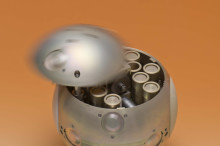
    This spherical container has been engineered to house the most scientifically valuable cargo imaginable: samples brought back from the Red Planet.

    Still probably many years in the future and most likely international in nature, a Mars sample-return mission is one of the most challenging space ventures possible for robotic exploration. A robust, multifunctional sample container is an essential link in the long technical chain necessary to make such a mission successful.

    Weighing less than 5 kg, this 23 cm-diameter sphere is designed to keep martian samples in pristine condition at under -10*C throughout their long journey back to Earth.

    First, the sample container must be landed on Mars, along with a rover to retrieve a cache of samples carefully selected by a previous mission, according to current mission scenarios. The container seen here hosts 11 sealable receptacles, including one set aside for a sample of martian air.

    Then, once filled, it will be launched back up to Mars orbit. There it will remain for several days until a rendezvous spacecraft captures it. To ease the process of rendezvous, the sample container carries a radio emitter and retroreflectors for close-up laser ranging.

    Before being returned to Earth, the container will be enclosed in another larger bio-sealed vessel to ensure perfect containment of any returned martian material. This container will then be returned to Earth for a high-speed entry.

    “Because there is the potential, however remote, that the samples contain alien life, we have to comply with strict planetary protection protocols not to bring them into contact with Earth’s biosphere,” explained Benoit Laine, Head of ESA’s Thermal Analysis and Verification section, who oversaw the sample container project.

    “In effect, the parachute technology is not reliable enough – which means the container must be able to withstand a crash landing without parachute.

    “The mission design therefore does not include any parachute, and the capsule literally falls from Mars onto Earth, decelerated only by the pressure on the heatshield through Earth’s atmosphere, and by the impact at landing.”

    While the sample container is a proof-of-concept design rather than actual mission hardware, it is fully functional and has undergone testing in simulated thermal conditions, including a 400 g shock test.

    “This challenging project drew on the expertise of multiple ESA specialists,” added Benoit. “It incorporates mechanical systems covering structural, thermal and mechanisms engineering but also communications, antennas and power – it has of course to incorporate a highly reliable battery.”

    The prime contractor for the project, which was supported through ESA’s Aurora programme, was French company Mecano I&D. Activities to prepare for a Mars sample mission continue, including a refinement of the sample container design, coordinated by the future missions preparatory office of ESA’s Directorate of Science and Robotic Exploration.

    Source and image.

  • What would an astronaut do on Earth?

    What would an astronaut do on Earth?

    As Commander of the International Space Station, Chris Hadfield “captivated the world with stunning photos and commentary from space.

  • Robot rings in Phar Lap trifecta

    Robot rings in Phar Lap trifecta

    For the first time, the body of Australia’s most famous racehorse Phar Lap will be brought together virtually using CSIRO’s Museum Robot at the National Museum of Australia.

    For many years Australia’s most famous horse has been in pieces. Phar Lap’s heart — currently preserved in a jar of formaldehyde – is at the National Museum of Australia (NMA) in Canberra, his hide is in the Melbourne Museum, and his skeleton is at the Museum of New Zealand Te Papa Tongarewa.

    Today, students from three schools in Willunga, South Australia, Mornington Peninsula, Victoria and Townsville, Queensland will have the chance to see the legendary horse’s heart and hide and skeleton at the same time, while speaking to museum experts about the three exhibits. And they won’t even have to leave the classroom.

    The students will be led by an expert guide from the NMA, through CSIRO’s museum robot.  Logging in through their classroom smart board or local library computers, students will control their own unique view using the 360 degree panoramic camera on the robot’s head and can click on items in the exhibit to bring up images and more information.

    “While the classroom sweep can be a bit of fun on Melbourne Cup day, we are giving students a much richer cultural and educational experience that they’ll hopefully remember for a long time,

  • Weekly Science Picks

    Weekly Science Picks

    Halloween week and we have a collection of scientific goodies for you to dig your teeth into. Some scary, others not, (does not contain smarties).

    Halloween’s Debt to a Demonic Virus

    “Our demons have their origins in our dread of death and the unknown. Today is Halloween, a time for costuming ourselves and confronting those fears (and, most importantly, for outsized consumption of sweets). For those of us celebrating Halloween disguised as vampires, werewolves and zombies, we owe a great debt to one of the world’s deadliest and most feared zoonotic viruses, rabies. This past summer I wrote about the fascinating microbial origins of some of our most enduring humanoid monsters in “The Bestial Virus: The Infectious Origins of Werewolves, Zombies & Vampires.

  • Bats confirmed as SARS origin

    Bats confirmed as SARS origin

    A team of international scientists has isolated a very close relative of the Severe Acute Respiratory Syndrome coronavirus (SARS-CoV) from horseshoe bats in China, confirming them as the origin of the virus responsible for the 2002-3 pandemic.

    The SARS-CoV pandemic killed 774 people of the 8094 people infected, a case fatality ratio of almost 10 per cent. With cases diagnosed across the world, the pandemic had an impact on international travel and trade.

    The research team, led by Professor Shi Zhengli from Wuhan Institute of Virology, Chinese Academy of Sciences and including CSIRO and Duke-NUS scientist Professor Linfa Wang, have just had their breakthrough results published in the prestigious journal Nature.

    While researchers globally have previously used genetic sequencing to demonstrate that bats are the natural reservoirs of SARS-like CoVs, this is the first time that live virus has been successfully isolated from bats to definitively confirm them as the origin of the virus.

    The team successfully isolated a SARS-like CoV, named SL-CoV WIV1, directly from faecal samples of Chinese Horseshoe bats using the world renowned bat virus isolation methodology developed by scientists at CSIRO’s Australian Animal Health Laboratory in Geelong.

    The results will help governments design more effective prevention strategies for SARS and similar epidemics.

    Horseshoe bats are found around the world, including Australia and play an important ecological role. Their role in SARS-CoV transmission highlights the importance of protecting the bat’s natural environment so they are not forced into highly populated urban areas in search of food.

    PHOTO: The SARS virus appears to have originated in horseshoe bats from China.(Guangdong Entomological Institute/South China Institute of Endangered Animals)

    Source.

  • Plastic’s Reach

    Plastic’s Reach

    Ocean Cleanup Array by Boyan Slat via inhabitat.com
    Ocean Cleanup Array by Boyan Slat via inhabitat.com

    Plastic. Seems it has extended its reach into the farthest corners of the universe. An earliest post described how plastic has changed our lives, for better…and for worse. ADD link to earlier post. That post largely reflected on the growing problem of plastic in the oceans and the effect on plant and animal life. Now, it seems that plastic threatens our freshwater lakes now too. LINK here.

    But wait. It doesn’t stop there. Plastic particles have been found on Saturn’s moon, Titan. The Cassini Probe has detected propene, or propylene on Titan.

    It is the first definitive detection of the plastic ingredient on any moon or planet, other than our home world, says the US space agency (Nasa).

    What does this mean for the oceans, lakes and rivers? What does it mean for outer space?

    With the vast engineering knowledge present around the globe, you’d think we could solve this problem. And we can. We have ambitious engineers. It will take some financing from some courageous and gusty entrepreneurial types. Those aren’t hard to find. It will take people who have an undying passion for the environment and the drive to protect it. We have those. So why can’t we get started on this problem? Any company wanting good PR, this would be an easy ticket to kudos and celebratory high fives.

    So realistically, what can be done?

    Here’s something that could be a real contender, a real solution to the problem.

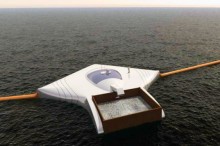
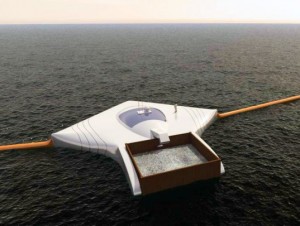
    Check out Boyan Slat’s idea on this TEDxDelft video. He was just 18 years old at the time. He’s since gone on to found his own non-profit organization, The Ocean Cleanup Foundation. His idea is an ocean cleanup array that could remove 7,250,000 tons of plastic from the world’s oceans.

    Sounds easy, right? Not only that, it also sounds possible.

    Plastic in the oceans, lakes and rivers on this planet is a problem that must be solved. It must be solved now. And then the problem of plastic from satellites or space junk will then need to solved. Of course, managing plastic, and preventing plastic from escaping into natural environments, is the first step.

    There’s always work to do. Ending plastic’s reach could very well be within reach.


  • Alternative therapies – the facts

    Alternative therapies – the facts

    People have been using alternative therapies for thousands of years, long before scientific-based medicine became the norm. Defined as any form of medical treatment not covered by top medical school courses, alternative therapies come under many guises, from acupuncture and chiropractic to homeopathy and naturopathy.

    Many people will only use alternative therapies whereas others believe in a complementary approach, whereby elements of conventional and alternative therapies are used to get the desired result.

    Are alternative therapies a safe and effective choice? Here are the facts.

    Types of alternative therapies

    There are dozens of types of alternative therapies, which range from practitioner-based to therapies that can be completed in the home. Many of these therapies are closely aligned with each other, whereas others have very different thoughts and methods of diagnosis and treatment.

    Some of the more common types of therapies used in the developed world, as listed by the National Centre for Complementary and Alternative Medicines, include acupuncture, hypnosis, diet-based therapies (e.g. Atkins diet, South Beach diet), massage, meditation, naturopathy, yoga, chiropractic and energy healing therapy.

    Alternative therapies today

    In an American study, the 2007 National Health Interview Survey, it was found that 38 per cent of adults and 12 per cent of children had used some form of complementary or alternative therapy in the 12 months prior to the survey.

    Additionally, the survey found that Americans had spent $33.9 billion on alternative therapy services and products. As an increasing amount of funding is put into researching the benefits of alternative therapies, more people, including medical doctors, are taking it seriously.

    As an example of the effects that research can have on the uptake of an alternative medicine in the general public, in 2002 the most commonly used natural product was echinacea. By 2007, echinacea had dropped to third place and omega 3 fish oil use had drastically increased. This came after several positive studies proved the benefits of fish oil and the mainstream media jumped on it (NCCAM, 2008).

    What can alternative therapies help with

    Alternative therapies can offer relief from a wide range of health problems, and can also assist in the prevention of illness. While many of the types of alternative therapies can offer a very broad spectrum of health benefits (e.g. naturopathy), others are much more specific (e.g. chiropractic for spine-related pain relief)

    The most commonly used alternative therapies are used to treat back and neck pain, largely through the use of a chiropractor. Arthritis, anxiety, insomnia and head or chest colds are also on the list of commonly treated illnesses. (NCCAM, 2008).

    Scientific evidence

    The main problem that has always inhibited the large-scale uptake of alternative therapies is the lack and quality of scientific evidence. Instead, a lot of the claims made by providers of services and products are anecdotal.

    The popularity of alternative therapies in recent years has demanded for a more serious, scientific look into their benefits. In a positive move for the industry, the National Centre for Contemporary and Alternative Medicines (NCCAM) was established in 1999 to help fund detailed scientific-based research into the safety and efficacy of alternative and complementary therapies.

    Since then, a range of therapies have been endorsed and scientifically proven. For example, several studies into the benefits of chiropractic therapy found that spinal manipulation could provide mild-to-moderate relief from low-back pain and was proven to be as effective as conventional medical treatments (Rubinstein et al, 2011).

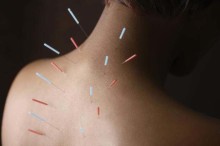
    Additionally, women are turning to acupuncture as a fertility and miscarriage prevention treatment, even more so now after scientific evidence has proven it helpful. Manheimer et al (2008) found that women who are using IVF treatment could benefit from the use of specialist fertility acupuncture.

    5 Quick facts about alternative therapies

    1. Between 60 and 80 per cent of the world’s population rely on alternative therapies as their primary choice of health care (World Health Organization, 2005)
    2. Almost 20 per cent of Fortune 500 companies offer alternative therapies as part of their health care packages for employees
    3. The National Institute of Health (NIH) currently invests about $40 million per year in complementary and alternative medicine related research (NCBI, 2012)
    4. Studies have shown that regular yoga practice can improve a variety of health problems including back pain, headaches and stress, as well as improve quality of life (Lipton, 2008)
    5. Omega 3 is the most commonly used natural product among adults in the United States, followed by glucosamine and echinacea (NCCAM, 2008)

    Additional Sources:
    http://www.sciencebasedmedicine.org/the-facts-of-the-alternative-medicine-industry/

    http://report.nih.gov/nihfactsheets/ViewFactSheet.aspx?csid=85


  • Bushfire in Australia

    Bushfire in Australia

    Bushfire has been part of the Australian landscape for millions of years but while we consider it a threat, some of our flora and fauna depend upon it.

    Much of Australia’s vegetation has evolved with fire and curiously, like the vegetation in other harsh dry environments, it has developed characteristics that promote the spread of fire:

    1. Eucalypt litter is coarse and decays slowly, ensuring that after several years there will be an abundant build-up to carry the next fire.

    2. The bark of many species is flammable and loosely attached to the trees, making ideal firebrands to carry fire across natural barriers.

    3. The green leaves contain highly flammable oils and resins that act as a catalyst to promote combustion before the leaves are fully dry.

    All the potentials are there and sooner or later, in some part of Australia, weather patterns will occur so that strong, hot, dry winds will blow from the centre of the continent after the fuel has been preconditioned by drought.

    All that is needed is a spark to produce a conflagration that simply cannot be stopped until the weather moderates.

    Fire is not the foreigner in this country – people are.

    Since European settlement, the total amount of fire in the landscape has declined.

    The first inhabitants of this country learnt that they had to break up the fuel to survive.

    They burnt extensively and often.

    They learnt the responses of the plants and animals to burning and took advantage of these responses to coexist.

    The bushland areas and particularly those around Sydney, New South Wales, have thickened and accumulated more fuel.

    As a result, the infrequent fires that now occur under extreme weather burn much more intensely and have a significant impact on the built environment.

    Fragmentation of the bush by different land use practices, such as urbanisation and agriculture, means that the Aboriginal fire regime is no longer possible or desirable.

    However, our flora and fauna came from this regime. If we want to maintain the biodiversity in our native areas we have to accept that fire is a process that must be used to manage our native bushland.

    We need to accept fire for what it is – an ecological process that determines the composition of our flora and fauna.

    Fire is as natural as the sun and the rain.

    Nothing else can replace it completely.

    Nothing else produces the chemicals in the ash to stimulate new growth – or in the smoke to stimulate the flowering and regeneration of particular species.

    Nothing else produces the heat pulse that removes growth-inhibiting toxins in the litter, or opens tightly-closed fruits to release new seed, or penetrates deep into the soil to stimulate the germination of long-buried seed.

    Nothing else produces the succession of plant development to which our native fauna have adapted to meet their requirements for food, shelter and reproduction.

    If we want to reduce fire intensity and make fire suppression safer and easier we need to accept that it is the dry undergrowth and dead leaf, bark and twig litter that provides the fuel for bushfires, and use prescribed fire to reduce fuel loads.

    If we want to secure our homes and property we need to zone our bushland areas so ecotypes that require frequent fire regimes are adjacent to assets of high value and thereby reduce the impact of wildfires and promote biodiversity.

    We need to support the fire service and the land management agencies when there is no emergency and accept the minor inconvenience of smoke in the air when fire is prescribed for hazard reduction, forest regeneration or biodiversity management.

    Finally, we need to individually take responsibility for managing the fuels we own and maintain our property and garden so that they do not burn in summer.

    Source and image.

  • CSIRO discovers gold grows on trees

    CSIRO discovers gold grows on trees

    Scientists from CSIRO made the discovery and have published their findings in the journal Nature Communications.

    “The eucalypt acts as a hydraulic pump – its roots extend tens of metres into the ground and draw up water containing the gold. As the gold is likely to be toxic to the plant, it’s moved to the leaves and branches where it can be released or shed to the ground,” CSIRO geochemist Dr Mel Lintern said.

    The discovery is unlikely to start an old-time gold rush – the “nuggets” are about one-fifth the diameter of a human hair. However, it could provide a golden opportunity for mineral exploration, as the leaves or soil underneath the trees could indicate gold ore deposits buried up to tens of metres underground and under sediments that are up to 60 million years old.

    “The leaves could be used in combination with other tools as a more cost effective and environmentally friendly exploration technique,” Dr Lintern said.

    “By sampling and analysing vegetation for traces of minerals, we may get an idea of what’s happening below the surface without the need to drill. It’s a more targeted way of searching for minerals that reduces costs and impact on the environment.

    “Eucalyptus trees are so common that this technique could be widely applied across Australia. It could also be used to find other metals such as zinc and copper.”

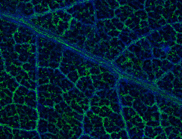
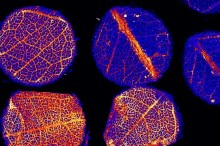
    Using CSIRO’s Maia detector for x-ray elemental imaging at the Australian Synchrotron, the research team was able to locate and see the gold in the leaves. The Synchrotron produced images depicting the gold, which would otherwise have been untraceable.

    “Our advanced x-ray imaging enabled the researchers to examine the leaves and produce clear images of the traces of gold and other metals, nestled within their structure,” principal scientist at the Australian Synchrotron Dr David Paterson said.

    “Before enthusiasts rush to prospect this gold from the trees or even the leaf litter, you need to know that these are tiny nuggets, which are about one-fifth the diameter of a human hair and generally invisible by other techniques and equipment.”

    CSIRO research using natural materials, such as calcrete and laterite in soils, for mineral exploration has led to many successful ore deposit discoveries in regional Australia. The outcomes of the research provide a direct boost to the national economy.

    Source and image.