After the Perseid meteor shower last weekend, it seems that lots of exciting things have been discussed this week. Here are a few of the things which caught my eye.
The first of my picks is homegrown here on Australian Science, if you’ll pardon the pun. A sustainable food source for space travellers and outposts is one which has a lot of scientists and engineers scratching their chins, as does dealing with waste products. Which makes the prospect of using a form of bacteria to recycle waste and generate a food supply a very interesting one…
Bacteria offer an attractive ingredient for space food. Quick and easy to grow, exponentially and to large numbers, and can provide the basic nutrients. And it was in search for astronaut space food that another discovery was made.
There’s been a lot of talk this week about the Hyperloop – a high speed transit system conceived by everyone’s favourite space entrepreneur, Elon Musk. I must say, the concept looks quite exciting.
The design of Hyperloop has been considered from the start with safety in mind. Unlike other modes of transport, Hyperloop is a single system that incorporates the vehicle, propulsion system, energy management, timing, and route. Capsules travel in a carefully controlled and maintained tube environment making the system is immune to wind, ice, fog, and rain. The propulsion system is integrated into the tube and can only accelerate the capsule to speeds that are safe in each section. With human control error and unpredictable weather removed from the system, very few safety concerns remain.
Poor Voyager 1. For a startlingly long time now, we’ve been unsure about whether or not it’s actually left the Solar System and the protective influence of the Sun’s solar wind. In fairness, this is because it’s truly an explorer and, in a manner which would make any Star Trek fan proud, going where no one has gone before. All the same, the most recent buzz is that Voyager 1 may have indeed left the Solar System. In fact, it looks like it did so last year. (Though this study will no doubt remain contentious, there are a few of us who suspected this was the case).
“It’s a somewhat controversial view, but we think Voyager has finally left the solar system, and is truly beginning its travels through the Milky Way,” lead author Marc Swisdak of the University of Maryland said in a statement.
Interestingly though, some recent archaeological discoveries suggest that, despite the achievements of human technology, the first technology wasn’t created by modern humans at all. The exact nature of our extinct cousins, the neandertals, is shrouded in mystery, but it looks as though the first specialised bone tools ever created on Earth were made by them, and not us homo sapiens.
How widespread this new Neandertal behavior was is a question that remains. The first three found were fragments less than a few centimeters long and might not have been recognized without experience working with later period bone tools. It is not something normally looked for in this time period. “However, when you put these small fragments together and compare them with finds from later sites, the pattern in them is clear,” comments Shannon McPherron. “Then last summer we found a larger, more complete tool that is unmistakably a lissoir like those we find in later, modern human sites or even in leather workshops today.”
I hope everyone has a good week!
Image: A luminous Perseid meteor over the McDonald Observatory, Texas. Credit and copyright: Sergio Garcia Rill/SGR Photography.
On Friday night I was lucky enough to be able to attend National Science Week’s Event ‘Memes, blogs and videos: how social media has transformed the way we communicate science‘ in Canberra. The event was a panel discussion between some of the most prominent and influential social media science communicators around the globe. The panel included:
Phil Plait – (AKA @BadAstronomer) an astronomer, writer and popular science blogger, Elise Andrew – Creator of I Fucking Love Science on Facebook; Henry Reich – Creator of MinutePhysics and MinuteEarth YouTube channels; Mitchell Moffit & Gregory Brown – Creators of AsapSCIENCE YouTube channel; Destin Sandlin – Creater of SmarterEveryDay YouTube channel; and Chris Cassella – Managing Director of Science Alert.
It really was a stellar ‘cast’ who have a combined social media reach of well over 100 million people per week. So what did these ‘giants’ of social media have to say about science communication? Well they said a lot, so I can only cover the highlights here. For a start – they all agreed – anyone can be a ‘science communicator’. You don’t have to be a scientist, or journalist or writer to be an effective science communicator, you just need to have a passion for science, and the time and ability to pass that information onto others. So what do the panel members think makes their science communication successful, and what can they suggest to someone interested in science communication?
Let’s start with Phil Plait, astronomer, author and science blogger who thinks that ‘all science is entertaining’! Phil selects topics for his blog based on what he’s excited by, not so much on what he thinks others want to see. Phil explained that his philosophy is that if he’s excited about it, other people will be excited about it. He recognises that people are often interested in the scary stuff, so he wrote ‘Death from the Skies’, where he talks about all the stuff that could kill us; blackholes, magnetic flares, supernovas, and killer asteroids. He recommends putting your own spin on a topic, if every one else is talking about it, you need differentiate yourself from everyone else.
Phil Plait (Image courtesy of www.badastronomer.com)
In contrast to Phil, Elise Andrews, creator of the enormously popular I Fucking Love Science Facebook page, really didn’t start off with an idea of ‘doing’ social media. Elise manages a page with 6.4 million followers on her own, and admits that the task takes up all of her time. Elise’s tip is to use the Facebook scheduling function, which helps dramatically with maintaining content in a global 24 hour information cycle. She stressed that the viral nature of social media means that it’s one of the few ways we have to get the message of science and science communication in front of people who wouldn’t normally seek out science-related material. When asked about the contentious name of her page, Elise responded ‘the name of your page is important, you need a name you can’t not look at!’
Minute Physics creator Henry Reich has a background in physics, so that’s why he focuses on physics – he understands it and he wants others to understand it. Henry believes that traditional teaching of physics/science is classical and boring to most people, which is a shame, because right now current physics is focused on really cool stuff like the big bang, string theory, quantum theory, etc. When deciding on a topic Henry tries to focus on the cool stuff, he then tries to explain it in a way that is simple and fun – but remains true to the science. Minute Physics videos are restricted to a minute or two – that makes Henry focus on what is important and condenses the message – there’s no room for extraneous material or ‘fluff’, and that keeps the attention of the viewer.
A clip from Minute Physics: Albert Einstein, The size and existence of atoms (Source: Minute Physics)
AsapSCIENCE creators Mitchell and Gregory, who also have a YouTube channel agree that the traditional way of teaching science can be seen as boring and dry. They believe the message in traditional classroom learning is ‘goal focused’ rather than focusing on the details of the science. So when they pick a topic, they ask a question like ‘Why do we age?’ rather than starting with detailed descriptions of cell division and DNA replication, etc.. This makes the message more relatable, rather than what often happens in a classroom setting with it being very dry and overwhelming. Incorporating entertainment is a vital part of effectively communicating the message – it helps to overcome the reputation of science as being dry and boring, and overly serious.
The third member of the panel that has his own YouTube channel is Destin Sandlin, creator of Smarter Every Day. Although Destin has an engineering background – B.Sc. in Mechanical Engineering, M.Sc. in Aeronautical Engineering – he takes the approach that he’s just an average guy who is trying to figure something out that he doesn’t know. This allows him to take his viewers on a journey from unknowing to discovery to knowing. In crafting his videos he looks for the “Aha!” moment – the point at which you go from not-knowing to knowing how something works or what caused it to happen. Destin’s videos are progressive – each one starts off with simple concepts, gets progressively harder, until it spikes with a serious point, before it reaches its conclusion. He believes that each video needs to cater for all levels of viewer and should have something interesting for everyone.
Lastly, Science Alert Managing Director Chris Cassella, says that Science Alert started as a website promoting Australian science, since Australian scientific accomplishments are under-represented in the media and community awareness. Chris started to use Facebook to drive traffic to the website, although things didn’t quite work out that way. The Facebook page didn’t drive much traffic to the website, but there was fantastic engagement on Facebook – he then realised that Facebook itself was a better delivery medium. He recommends that sites mix up the serious science content with humorous memes, jokes, etc which breaks up the stream and helps keep people engaged.
During the Q&A session at the end of the panel, an audience member asked the panel for their advice to scientists on what they can do to help assist science popularisers to get the message out about new research. The immediate and very strong message from all panelists was, “publish your results in open access journals!” So often, they would love to link to new research, but linking to a paywalled paper or article creates a deluge of complaints from their audience – so they can’t do it.
So there’s a lot of information to take away from this group of committed science enthusiasts and communicators, but here’s a few tips:
– Be passionate about the science you love, whether it’s biology, physics, astronomy or chemistry – if you’re passionate about it, your enthusiasm will be passed on to your listeners/viewers.
– The advent of social media and platforms like Facebook, Twitter and YouTube means that you no longer need to have a lot of money or resources to be an effective science communicator, you can start with a laptop and internet connection and you’re on your way.
– You don’t need top notch equipment, ‘Hollywood’ style special effects or eye-wateringly expensive graphics to produce your own YouTube videos.
– Make sure you get your science facts right, but if you make a mistake, correct it, be transparent about it, and move on.
If you’d like to see more of the panelists check out these links for further tour dates during National Science Week: Phil Plait, IFLS Live, and National Science Week.
Australian soils are losing about 1.6 million tonnes of carbon per year from wind erosion and dust storms affecting agricultural productivity, our economy and carbon accounts, according to new research.
Top soil is rich in nutrients and carbon but is increasingly being blown away by events such as the ‘Red Dawn’ in Sydney in 2009.
When wind lifts carbon dust into the atmosphere it changes the amount and location of soil carbon.
Some carbon falls back to the ground while some leaves Australia or ends up in the ocean.
CSIRO research scientist Dr Adrian Chappell and an international team of experts in wind erosion and dust emission recently calculated the extent of these carbon dust emissions.
“Carbon stored in our soils helps sustain plant growth. Our modelling shows that millions of tonnes of dust and carbon are blowing away, and it is uncertain where all that ends up,
The magenta exoplanet, Illustration courtesy S. Wiessinger, NASA, via BBC
What a week in the world of science! Let’s dive right in!
I’m currently re-reading the Ultimate ‘ Guide by Douglas Adams. This next story got me to thinking of custom designed planet building. What a lovely shade of pink!
In a new study announcing the magenta gas giant, researchers were able to directly image this exoplanet using the Subaru telescope on Hawaii. The color of this blushing body indicates it has less cloud cover than other observed exoplanets, meaning researchers can peer even deeper into its atmosphere to divine its components.
The professor said the meat was made up of tens of billions of lab-grown cells. Asked when lab-grown burgers would reach the market, he said: “I think it will take a while. This is just to show we can do it.”
This next story highlights a growing global problem… teaching and STEM.
The government’s new School Direct scheme is recruiting too few trainee teachers in key subjects, says Oxford Brookes university’s Prof John Howson.
There is a mystery disease attacking the bottlenose dolphin population. It won’t be easy to pinpoint the source, but let’s hope some real progress is made soon.
Federal wildlife officials raised a formal alarm on Thursday over the deaths of scores of bottlenose dolphins in waters off the east coast, saying that a fast-spreading infection could be attacking dolphin populations from New York to Virginia.
Another fish tale… though this one may have leave a bad taste in the mouth with some viewers and readers.
The Discovery Channel, which bills itself as the “#1 nonfiction media company” opened this year’s Shark Week with a fictional “documentary”.
I think this last “story” is a perfect capstone to this edition of Weekly Science Picks. Discovering new planets, investigating unusual mortality events in an animal population, even creating edible meat from stem cells; that’s all real science. And we need teachers to teach the subjects of maths and science to youngsters and to dispel these myths and sensationalism that media companies are hyping with outrageous headlines. It’s not just Discovery; the History Channel and National Geographic have departed from their traditional core programming, presumably to keep pace in the ratings race. And if that’s what viewers want more of, entertainment, well that’s one thing. But science should not be compromised at any cost.
CSIRO has announced the appointment of Dr Bronwyn Harch as chief of its newest research division with a focus on data-driven computational and information sciences.
The new research division, CSIRO Computational Informatics (CCI), will work in partnership with the organisation’s National Research Flagship program to address key national challenges across the information and decision making value chain. It will also work closely with a range of external partners and collaborators to create a capability hub in key research areas including next generation data analytics, autonomous robotics, complex systems modelling, and decision making under uncertainty.
“From pioneering the development of digital image analysis for agriculture in the 1980s to securing the landmark patent to Wireless LAN technology in the 1990s, CSIRO has always been at the forefront of technology-related research which tackles the nation’s toughest challenges,” said Dr Harch.
“The proliferation of smart devices and increasing access to next generation broadband has caused an explosion in the volume, velocity and variety of data and information. With predictions, that by 2020 the average person will own six different smart devices[1] connecting us to over 37 billion ‘things’, from cows in the field to our car to our fridge door through the Internet[2], it is clear the amount of data we produce will continue to grow at an exponential rate,” said Dr Harch.
“We have responded to the information and data challenges facing Australia with the formation of this new CSIRO Computational Informatics (CCI) Division. Our integrated and strengthened capabilities in this division will enable us to remain at the forefront of global developments in key research areas that transform the information and decision making workflows of industry, government and the innovation sectors.”
A recent McKinsey Institute report[3] on the future of ‘disruptive technologies’ shows a reduced focus on new gadgets and gizmos and an increased emphasis on the impact of technologies which require advanced data analytics. The same report predicts that by 2025 the potential economic contribution of new disruptive technologies such as mobile Internet, advanced robotics and 3D printing are expected to return between $14 trillion and $33 trillion globally each year.
Dr Harch believes the new Division’s focus on data-driven science will help CSIRO to increase the economic and social well-being of the nation by tackling some of the biggest challenges facing Australia including our declining productivity and ageing population.
“Through our Preventative Health Flagship, we are already leading the way in transforming advanced data analytics to pinpoint the genes that could lead to a simple blood screening test for Alzheimer’s disease before it takes hold. We’re also working on another project, with our Digital Productivity and Services Flagship and Australian Centre for Broadband Innovation (ACBI), which leverages next generation broadband networks to monitor health data and help older Australians to live in their own homes longer, independently and safely.”
However, it’s not just the healthcare industry reaping the rewards from this explosion of data. In an impressive debut, research from the CSIRO Computational Informatics Division has earned a staggering 13 nominations across multiple categories from environmental science to the services industries at this year’s iAwards, Australia’s premier technology accolades.
These projects include:
Zebedee: a handheld 3D mapping device which doesn’t rely on GPS and can be used underground or inside buildings.
ReMoTe: allows a remote expert to guide in real-time an onsite technician using gestures and voice to increase productivity and assist in up-skilling the workforce.
Smarter, Safer Homes: a platform which uses home sensors and video conferencing to support older Australians to live in their own homes safely and independently.
Environmental Linked Data: which produced Australia’s first set of open-linked long-term climate data.
Sense-T Aquaculture Decision Support System: a platform which helps to ensure public food safety by supplying the Tasmanian Shellfish Quality Assurance Program with real-time environmental awareness to simplify decisions regarding when to close shellfish farms.
Patient Flow Research: analytics to predict requirements and optimise configurations for hospital beds.
Automated Disease Grading and Clinical Decision Support: an automatic disease grading and clinical decision support system for diabetic retinopathy level grading.
Computer-aided Ocular Biomarker Suite: an eye test for early detection of Alzheimer’s disease 15-20 years before diagnosis is usually possible.
SensorDB Virtual Laboratory: used for storing, analysing and looking for patterns in distributed sensor data for plant phenomics in the field. This work received two Australian Capital Territory categories iAwards.
Medtex: a software platform that unifies the language across narrative medical reports and extracts clinically relevant information to aid decision support.
Lung Anatomy Trainer (eLAnT): a web-based program that uses an online lung anatomy and nomenclature training tool for teaching the complex and variable human lung anatomy seen from a fibre-optic inspection tool.
Starbug: Jeremy Breen, a University of Tasmania and CSIRO student, won a postgraduate tertiary award for autonomous analysis of marine sediment chemistry using an underwater robot.
The winners of this year’s iAwards will be announced during a ceremony in Melbourne on 8th August 2013.
For more information about the CSIRO Computational Informatics Division please visit www.csiro.au/cci.
Warming oceans are impacting the breeding patterns and habitat of marine life, effectively re-arranging the broader marine landscape as species adjust to a changing climate, according to a three-year international study published today in Nature Climate Change.
The international team led by CSIRO’s Climate Adaptation Flagship and University of Queensland marine ecologists Elvira Poloczanska and Anthony Richardson, based their findings on a review of peer-reviewed literature from around the world, identifying more than 1 700 changes, including 222 in Australia.
CSIRO’s Dr Poloczanska said marine species are shifting their geographic distribution towards cooler regions and doing so much faster than their land-based counterparts.
Despite the ocean having absorbed 80 per cent of the heat added to the global climate system, the ocean’s thermal capacity has led to surface waters warming three times slower than air temperatures over land.
“The leading edge or ‘front line’ of a marine species’ distribution is moving towards the poles at the average rate of 72 kilometres per decade, which is considerably faster than terrestrial species moving poleward at an average of six kilometres per decade,” said Dr Poloczanska.
“This is despite sea surface temperatures warming three times slower than land temperatures.”
Dr Poloczanska said winter and spring temperatures, over both the ocean and land, are warming fastest, which might advance phenological events such as the start of growing seasons and the timing of reproduction. In addition, anthropogenic carbon dioxide uptake by the oceans is altering seawater carbonate chemistry, which can impact some marine organisms.
“Given these findings, we expect marine organisms to have responded to recent climate change, with magnitudes similar to or greater than those found for terrestrial species,” she said.
The research team also considered changes in species’ life cycle, such as breeding times, to find these are also changing as seas warm.
Associate Professor Richardson explained that the timing of breeding and migration are, on average, occurring much earlier in the sea with marine species advancing by 4.4 days each decade which is also much faster than land based species which are breeding around 2.3 – 2.8 days earlier each decade.
Although the study reported global impacts, there is strong evidence of change in the Australian marine environment.
Dr Poloczanska said that in Australia’s south-east tropical and subtropical species of fish, molluscs and plankton are shifting much further south through the Tasman Sea. In the Indian Ocean, there is a southward distribution of sea birds as well as loss of cool-water seaweeds from regions north of Perth.
“Essentially, these findings indicate that changes in life events and distribution of species indicates we are seeing widespread reorganisation of marine ecosystems, with likely significant repercussions for the services these ecosystems provide to humans.
“For example, some of the favourite catches of recreational and commercial fishers are likely to decline, while other species, not previously in the area, could provide new fishing opportunities,” Dr Poloczanska said.
The international team included 19 researchers from Australia, USA, Canada, UK, Europe and South Africa.
Source and image: http://www.csiro.au/en/Portals/Media/Marine-life-spawns-sooner-as-oceans-warm.aspx
Hard to believe Curiosity has been on Mars for twelve short months. Here at Australian Science we’ve covered the tinyrover that couldsince the start. Now, NASA’s Jet Propulsion Lab have given us a rover’s eye view of driving, scooping and drilling during Curiosity’s first year on Mars, from August 2012 through July 2013.
Sad and shocking news coming out of the University of Pittsburg where a professor of neurological surgery at the School of Medicine was charged on with criminal homicide in connection with the death of his wife.
“Authorities say that Ferrante poisoned Klein by mixing cyanide with creatine, CBSNews reports. According to Ferrante’s online biography, his work “has provided the basis for human trials” using creatine. Klein consumed the drink because Ferrante told her it would help them conceive a child. Police said that Ferrante had purchased cyanide with a university credit card days before and had it shipped to his lab overnight, and that he had enlisted the assistance of a lab member in buying the cyanide.
ABC Mobile Studio Caravan – Australian Broadcasting Corporation
The Australian Broadcasting Corporation is intertwined with the Australian identity since the 1920s. For Australians living in regional and remote locations away from the bright city lights of capital cities the ABC had been the only constant media and information source until recently when commercial media stations invested on capturing this audience. Growing up in the 1980s and 1990s in regional Western Australia, the ABC was the go to media outlet for information about the world outside of the town I was in. Sometimes there was no other media outlet.
It was the ABC that taught me about story telling with the broadcast of Sesame Street and Play School. It was also through these mediums that I got my first tastes of science. I did not know what it was at the time but I enjoyed finding out why things worked the way they did and how things could be categorised. All this during the formative years of my education and especially helpful when I was having to learn English at school on top of writing, reading, and mathematics. I don’t think I’m alone in growing up with the ABC.
Now the ABC is wanting our opinions on their science coverage. I don’t know of any other media outlet in Australia who wants to listen to the opinion of their audiences, let alone their audience’s opinion on science coverage. They are also asking for honest feedback. A few weeks ago I was invited to an ABC Community Science Forum in Perth to talk about just this in a room that included the ABC Advisory Council.
It was honest. People talked about the things that they liked and what they did not like about the ABC’s Science Coverage. We did not get much of a description of the event before the forum and I admit to being hesitant in attending. I was concerned about the process being more of a marketing ploy than a feedback session. By the end of the session I felt that it had been well worth attending and that I shared some of the concerns raised in the discussion. What I especially liked was that no member of the ABC staff came on the defensive when criticisms were aired by participants.
I turn to the ABC for so many things today, interviews with notable people of their field, documentaries, investigative journalism, and of course the latest news. What I adore is the coverage of science. It percolates through many things that the ABC programmes and I think this is unique and should be applauded. No other media outlet in Australia comes close to this. This is the only Australian media outlet that does not make a special case out of science except in the case of specialised science shows. The most notable example that I cannot get enough of at the moment is Conversations with Richard Fidler which brings a variety of people for interviewing. These people are all part of our community no matter what their day job may be.
There is dedicated science content on radio, television, and online and with this has come the invitation for the public to interact with the ABC. It has especially grown with the explosion of social media. With the Australian Curriculum being implemented across the nation, ABC has created ABC Splash which is a collection of multimedia resources for use in the classroom and also for young people to explore. It is in its infancy and still being fully fleshed out but yet again it is another example of how ABC is the only media outlet going it alone working to provide science content to the Australian public.
After 30 years of consuming products from the ABC, the act of inviting me to a feedback forum in an area I am passionate about has cemented the love I have for Australia’s public broadcaster. It demonstrates commitment in my pet area of interest and that they are not going to let their science coverage fall by the wayside. This is why I am also working on a written submission to the ABC Advisory Council, not because I want to see more science content but because they really are taking all opinions into consideration.
If you have an opinion about the ABC’s science coverage, let them know. They want to know about it.
The automobile. If you have one, it is the largest computer you own. When you think about the rate of changes made from the Model T to the present day 4-door family sedan, the evolutionary rate of development has been extraordinary. It’s data and computers and sensors that inform what’s running right with your car, from the fuel consumption to the brakes. And it’s data and technology that continue to make cars more efficient, durable and safer.
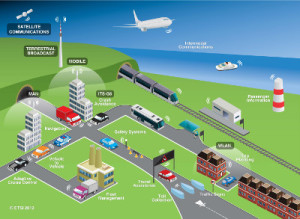
Intelligent Transport Systems
The idea behind Intelligent Transport Systems (ITS) is to increase safety and mobility: allowing you and I to get where we need to quicker and safer. How’s this possible? One component of ITS is IEEE 802.11p, a variant of Wi-Fi, or Dedicated Short-Range Communications (DSRC). This technology is responsible for vehicle-to-vehicle and vehicle-to-infrastructure communications; basically cars can talk to each other and to buildings. An Australian company, Cohda Wireless, is at the forefront of this new frontier.
Cohda is part of a pilot project sponsored by the US Department of Transportation. The $15 million grant equips 3,000 cars with Wi-Fi based transmitters for vehicle-to-vehicle and vehicle-to-infrastructure communications. It works like this: each car is outfitted with a GPS receiver and DSRC radio, which exchanges speed and position data with other vehicles nearby. A computer integrates the vehicle-to-vehicle information with onboard data to determine how drivers respond to warnings, such as lane-change and collision avoidance. Of course, it is ultimately up to the person in the driver’s seat to react in time, and correctly, to avoid an incident.
Other Options
And if it’s incidents we want to avoid, why not just have robotic cars? Perhaps you’ll recall the Google driverless car. With over $200,000 worth of equipment in the vehicle, it’s unlikely these will be parked in family garages any time soon.
The other reason robotic cars may not catch on is for the basic fact that people love to drive. Many of us long for the open road with the wind in our face as we chase down new adventures. For many rural and small towns and suburbia, driving is a way of life. A subway system or light rail facility is either a dream or a nightmare, if it were to happen, for many municipalities.
But if you are in the big city, then public transit systems are in many ways ‘driverless’ – in that when you step on board, you don’t have to worry about the driving.
Given the number of train derailments occurring in the past few weeks (with incidents in the United States, Canada, France, and most recently, Spain), we may want to think about equipping our commuter trains with IEEE 802.11p. If this technology could identify debris on the tracks, or misaligned tracks up ahead, or signals that are not responding to its sensors, or if a train is approaching a curve with too great a speed, it could very well minimize train derailments and incidents; resulting in far fewer fatalities, property damage and disruption to transportation networks. (Note: there is GSM-R, (Global System for Mobile Communications – Railway) technology in operation in Europe, China, Africa and Australia. This technology is a voice and data communications platform reliant on humans to signal a warning.)
After 120 years on the road and over 200 years on the tracks, we still don’t have this commuting problem worked out; and it will likely never be perfect. If we utilise ITS in more projects, both on the road and the rails, we may near that safer, more mobile level of transport we all desire.
We’ve known for some time that electrons in the heart of the Van Allen Radiation Belts are accelerated to almost the speed of light. But until now we didn’t know why…..
This sounds like the plot of about a half a dozen sci-fi movies… but researchers have attempted to implant false memories in mice and the results are very interesting!
Picking up extremely weak signals from exploring spacecraft, such as Gaia and BepiColombo requires cooling a detector to within a few degrees of absolute zero. Recently ESA upgraded 3 of their deep space tracking antennas with the new technology.
Doctors have known for a while that patients with diabetes who undergo gastric bypass surgery often don’t require insulin shots after surgery. They assumed it was the result of weight loss and change of diet, as it turns out that’s not the full picture…
Images snapped by the Hubble Space Telescope suggest that gold may have been generated by a violent neutron star collision that also yielded lead, platinum, uranium and other heavy elements.
Federal wildlife officials plan to dispatch armed bird specialists into forests of the Pacific Northwest starting this fall to shoot one species of owl to protect another that is threatened with extinction.
Legalising doping in sports leaves no winners at the finsih line. Photo credit: Athletics tracks finish line by Petey21, via Wikimedia Commons
The 100th edition of Le Tour de France came to a close yesterday evening in Paris. It was a spectacular 3 weeks of racing. The battling of teams, riders positioning for stage wins, fans in fancy (and quite often strange) dress, stunning scenery – all made for a memorable tour indeed.
I’ve watched a lot of NBCSN’s Tour de France coverage this year because for one; it’s one of the greatest athletic competitions on this planet, and two; I was curious if this year was going to be any different. Probably as a result of instructions from broadcast corporations, there had been no mention of the American cyclist that ruined himself, Lance Armstrong, by name; just the scandal that rocked cycling. There were a lot of changes to this year’s course – twice up the Alpe d’Huez, the uphill finish on Mont Ventoux, the nighttime finish in Paris on the Champs-Élysées. Changes such as these, along with fresh, young riders such as Nairo Quintana and Andrew Talansky – the future of cycling – will help to lift the tarnish of this truly great, test of sporting endurance.
There is a rampant drug problem in the US sports – baseball, football (not soccer), track and field, cycling. I’m not talking about athletes using and abusing drugs such as cocaine and alcohol; no, this is the pre-meditated plotting to use performance-enhancing drugs to gain an unnatural competitive advantage. Olympic swimming programs in the 1980s were no strangers to steroid cocktails. Wrestling and weightlifting are also sports to have experimented with drugs to push the boundaries.
And to level the playing field there has been a lot of talk lately about legalising doping ‘since everyone is doing it.’ The argument that everyone is doing it is absurd. Granted both the business and science of sport has escalated with huge sums on the line. The money involved with stadium building, superstar contracts and ticket and concession prices is staggering. So too is the amount of funding that goes into exercise physiology equipment for training and recovery and nutrition for these athletes. But to go down the road where athletes shoot up, inhale, drink up, or cycle blood in and out of their body to win in order to beat records and earn more money and endorsements should not be the future of sport.
It’s impossible to know how many are or are not cheating by taking drugs. But there has to be a zero tolerance enforcement policy in place, with much more stringent consequences for those that are caught. Sebastian Coe, the London 2012 chairman, makes an excellent point in this BBC article. Four-year bans would do more harm to an athlete’s career: two-year bans make it too easy for athletes to bounce back. To legalise doping in sport, as this article from The Conversation advocates, would indeed be a tragedy. It would change sport to sport entertainment: two very different things.
Australia is deep in the throes of this debate. You can read about and watch what two Australian sporting icons, Shane Gould and Peter FitzSimons, have to say on the issue of athletes using performance enhancing drugs here. Weigh in and let us know what you think.
In the meantime, let’s hope indeed, that this is one Maillot jaune that will not be compromised.
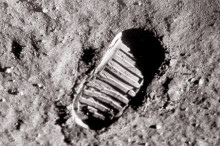
I hope everyone’s enjoying a nice weekend! It’s my turn again for the weekly science picks, and this week is the 44th anniversary of the Apollo 11 moon landing. On July 20th 44 years ago, human beings took their first small steps onto the surface of an object in the solar system other than the Earth. While we may not have returned to the Moon since NASA’s Apollo program, it’s important to realise the leaps and bounds which human technology and scientific knowledge have made since then.
And speaking of those leaps and bounds…
Astronomers have managed to determine the colour an exoplanet would appear if were able to see it with our own eyes. Planet HD 189733b, one of the most well studied worlds out there in our galaxy, is a beautiful azure blue planet. But don’t let the similarity to our own planet’s colour fool you. The blue colour of HD 189733b is because it’s a hot jupiter, orbiting scorchingly close to its parent star, and that colour is because the rain on this world is made of glass!
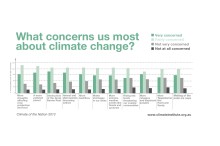
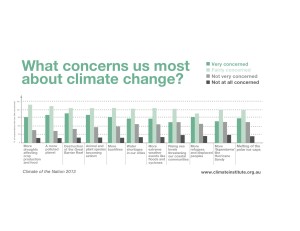
The issues of climate change and carbon pricing have been caught in a purgatorial pinball game over the past 12 months. No wonder there is confusion, doubt and general misunderstanding on climate change among the populace considering the political battle lines drawn between parties in state houses, parliament buildings and capitols worldwide. But a recent study put forth by The Climate Institute, titled Climate of the Nation 2013: Australian attitudes on climate change, seeks to elevate the dialogue. The authors of the report actually talked to people to get their views on climate change. They asked questions, they listened and they documented the responses. Perhaps politicians could add that tactic to their constituent playbook.
Highlights from the report include:
Two-thirds of Australians think that climate change is occurring and almost all of them believe that it is impacting Australia now. People are genuinely worried about the cost impacts of climate change on crop production and food supply, insurance premiums, water shortages and climate refugees.
More people want to give carbon pricing a go than get rid of it. And, more Australians want greater action and leadership than in recent years.
Results from the focus groups and poll behind Climate of the Nation 2013 indicate acceptance that climate change is happening and that humans are contributing to it. Twice as many trust the science than don’t.
Give the report a look; it’s a quick read and the information is presented in a way that connects with people. The authors did a great job because they took a deeper look by diving into demographics – age, gender, and dwelling location to give a realistic snapshot of the population’s views on climate change.
The Australian government says its plan to scrap an unpopular carbon tax will cost A$3.8bn ($3.5bn; £2.3bn).
I wonder whom Kevin Rudd spoke with before deciding to take such action. Did he speak with the people? Could their views have changed over the course of the past year?
The carbon tax, introduced in a somewhat controversial about face on the part of then Prime Minister Julia Gillard in 2012 did leave Australian businesses and families shaking their heads. But Australians place a high importance on the environment and their quality of life. Understanding that Australia is the worst polluter per capita in the developed world is something that most Australians, I think would want to see change. Expecting the worst-polluting firms to pay a tax on each tonne of greenhouse gases they emit is not unreasonable. However, the way the carbon tax policy was structured in Australia by including subsidies was a lose-lose, except of course for the corporations doing the polluting. Based on the information from the survey and work The Climate Institute put forward, perhaps politicians will consider “re-tooling” the carbon tax. The elections are due to take place in September. It will be an interesting to see which party comes out on top and the course of action the government takes on carbon emissions.
The Climate Institute is an independent research organization with offices in Sydney and Melbourne. Their vision is for a “resilient Australia, prospering in a zero-carbon global economy, participating fully and fairly in international climate change solutions.“ That’s a vision the international community can embrace.
NASA is exploring peaceful civilian space applications for ATLAS-related technologies. Atlas is a new humanoid robot 6 foot, 2 inches tall weighing 330 pounds. Atlas is initially being designed to provide humanitarian assistance in disaster response/crisis situations.
NASA’s Johnson Space Center (Valkyrie) and Jet Propulsion Laboratory(RoboSimian) teams are participating in the DARPA Robotics Challenge (DRC) focused on developing innovative software to control the robot’s functions. Last month, DARPA awarded funds and an Atlas robot to 7 teams who competed in a software challenge leading up to the first leg of the Robotics Challenge, which kicks off in December 2013.
According to the project website, the goal of the DARPA Robotics Challenge is to create robotic systems that can work “in tandem with their human counterparts, in order to reduce casualties, avoid further destruction, and save lives.”
Atlas can travel through rough terrain outdoors and climb using its hands and feet. The robot features two fully working hands with four fingers, including opposable thumbs, 28 hydraulically actuated joints, a “head” with LIDAR and stereo sensors, automatic crash protection, and an on-board, real-time control computer. In a demonstration video, Atlas easily avoided obstacles, maintaining a steady gait despite unexpected changes to the terrain, and even maintained its balance when struck by a large object.
“Articulated, sensate hands will enable Atlas to use tools designed for human use,” Boston Dynamics says. “Atlas includes 28 hydraulically actuated degrees of freedom, two hands, arms, legs, feet, and a torso.”
Its head includes stereo cameras and a laser range finder. It’s currently tethered to an off-board, electric power supply which limits its range for the moment.
Specifications:
– Six feet, two inches tall (1.88m)
– 330 pounds (150kg)
– On-board real-time control computer
– On-board hydraulic pump and thermal management
– Tethered for networking & 480-V three-phase power at 15 kW
– Two arms, two legs, a torso and a head
– 28 hydraulically actuated joints
– Carnegie Robotics sensor head with LIDAR and stereo sensors
– Two sets of hands, one provided by iRobot and one by Sandia National Labs
Defense Advanced Research Projects Agency (DARPA) is an agency of the United States Department of Defense responsible for the development of new technologies for use by the military.
Boston Dynamics is an engineering and robotics design company best known for the development of the humanoid robot ATLAS and BigDog, a quadruped robot, both designed for the U.S. military with funding from DARPA. The company was spunoff from the Massachusetts Institute of Technology (MIT).
The DRC groups are not starting from scratch: thanks to the physical modeling of the DRC Simulator, the software algorithms successfully employed by teams in the previously held Virtual Robotics Competition (VRC) should transfer relatively easily to the ATLAS hardware, according to DARPA officials. The teams will be presented with tasks for ATLAS, such as driving a utility vehicle, walking over uneven terrain, clearing debris, breaking through a wall, closing a valve, and connecting a fire hose.
Ultimately, despite its advanced nature, ATLAS is essentially a physical shell awaiting its software brains that, along with the actions of a human operator, will guide the suite of sensors, actuators, joints and limbs through a series of tasks.
In order to accomplish this, the winning teams will receive funding from DARPA and ongoing technical support from Boston Dynamics, the developer of ATLAS.
Dr. GIll Pratt, Program Manager for the challenge, said DARPA is investing in an open-source simulation package to advance the state of the art in robotic simulation. “In particular, we want to have these tools outlast the program and be the foundation for catalyzing the field of robotics, particularly helping to make the design of robots move from an art to a science,” he said. DARPA is also funding the Open Source Robotics Foundation to further develop a preexisting simulator that will use cloud computing for quick and easy scalability.













 NASA’s Johnson Space Center (Valkyrie) and Jet Propulsion Laboratory(RoboSimian) teams are participating in the DARPA Robotics Challenge (DRC) focused on developing innovative software to control the robot’s functions. Last month, DARPA awarded funds and an Atlas robot to 7 teams who competed in a software challenge leading up to the first leg of the Robotics Challenge, which kicks off in December 2013.