Category: News

  • Celebrated Dairy Leader Announced As New AIFST President

    Celebrated Dairy Leader Announced As New AIFST President

    Acclaimed dairy expert and champion of leadership opportunities for women, Dr Anne Astin, has been officially announced as President of the Australian Institute of Food Science and Technology (AIFST).

    Inducted last night for a two-year term at the 46th AIFST Convention in Brisbane, Dr Astin’s appointment follows two years as AIFST President Elect. Dr Astin is the former CEO of Dairy Food Safety Victoria, a leading government dairy authority, and has more than 20 years experience at a senior executive and board level. Outgoing President Jo Davey said that Dr Astin is passionate about food safety and maintaining Australia’s enviable food industry reputation. “She has been widely praised for her commitment to empowering people to reach their full potential – a dedication that aligns perfectly with AIFST’s most important role of supporting the professional development of its members,

  • Weekly Science Picks

    Weekly Science Picks

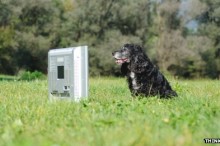
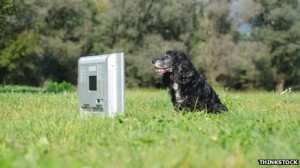
    Stay tuned for top science stories! Photo credit: Thinkstock, via BBC News
    Stay tuned for top science stories! Photo credit: Thinkstock, via BBC News

    Welcome to this edition of Weekly Science Picks.

    What a busy news week – with the markets up, the transportation incidents with planes and trains, major flooding in China…well, there’s been a lot going on. And there were numerous stories of scientific importance reported on as well. So I’ve listed the stories I’ve found significant this week. Topics include climate change, space, physics, public health, girls in education, and dogs watching TV. Yes, dogs watching TV. There’s a little something for everyone. So kick back, with your favorite beverage in hand and soak up some knowledge.

    TOP STORIES

    Distant quakes ‘can trigger wastewater-site temblors’ by Jason Palmer

    The notion of natural earthquake triggering is not new; in hydrothermal and volcanic areas, tremors can be triggered by large, distant earthquakes. But the new study suggests what is in effect a new category: natural triggering of seismic events primed by human activity.

    If you’d like to read the full paper, you can check it out on Science: Injection-Induced Earthquakes by William L. Ellsworth


    NASA Warned to Go Slow On Asteroid Capture Project by Richard A. Kerr

    NASA’s plan to retrieve a tiny asteroid as a steppingstone for astronauts on the way to Mars in the 2030s could be just the exciting project that the space agency needs to garner public support in these severe budgetary times, speakers at a workshop held yesterday in Washington, D.C., said.


    Climate Change Will Cause More Energy Breakdowns, U.S. Warns by John M. Broder

    Every corner of the country’s energy infrastructure — oil wells, hydroelectric dams, nuclear power plants — will be stressed in coming years by more intense storms, rising seas, higher temperatures and more frequent droughts.


    NEWS TO BE AWARE OF

    ScienceShot: Sterilizing Human Waste, No Electricity Required by Lizzie Wade

    Thanks to a new invention, all you need is some sunshine, a little water, and a dash of gold nanoparticles.


    Optical lattice atomic clock could ‘redefine the second’ by Rebecca Morelle

    The devices, called optical lattice clocks, lost just one second every 300 million years – making them three times as accurate as current atomic clocks.


    At UN, Malala Yousafzai rallies youth to stand up for universal education by UN News Centre

    “Let us pick up our books and our pens. They are our most powerful weapons. One teacher, one book, one pen, can change the world,

  • Deep-space flashes light up a new face of Nature

    Deep-space flashes light up a new face of Nature

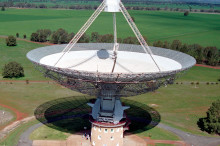
    CSIRO’s Parkes radio telescope has detected brief flashes of radio emission from the distant Universe. Their origin is unknown.

    CSIRO’s Parkes radio telescope in eastern Australia has detected mysterious ‘flashes’ of radio energy from the distant Universe that may open up a whole new area of astrophysics. The surprising finding, made by a team of scientists from ten institutions in Australia, the USA, UK, Germany and Italy, is published in today’s issue of the journal Science.

    “Staggeringly, we estimate there could be one of these flashes going off every ten seconds somewhere in the sky,” said research team member Dr Simon Johnston, Head of Astrophysics at CSIRO Astronomy and Space Science.

    Four flashes were detected, each from a different direction and each lasting for only a millisecond (a thousandth of a second).

    The characteristics of the radio signal — how it is ‘smeared out’ in frequency from travelling through space — indicate that the flashes came from up to 11 billion light-years away.

    No gamma rays or X-rays were detected in association with the flashes, and the astronomers have ruled out the flashes being from phenomena such as gamma-ray bursts, the merger of two neutron stars, merging black holes, or evaporating black holes.

    Dan Thornton, a PhD student with the University of Manchester and CSIRO, is the lead author on the Science paper. “A single burst of radio emission of unknown origin was detected outside our galaxy about six years ago but no one was certain what it was or even if it was real,” he said. “So we have spent the last four years searching for more of these explosive, short-duration radio bursts.”

    That original radio flash, known as the ‘Lorimer burst’ after its discoverer, was also found with CSIRO’s Parkes telescope.

    “Finding these things requires both a sensitive telescope and spending enough time looking, and that’s what we’ve done with Parkes,” said Dr Johnston.

    CSIRO’s Australian SKA Pathfinder telescope, now under construction in Western Australia, will be running a major survey for transient radio sources like the ones just found with Parkes.

    “With the ability to detect these very fast sources we are opening up a whole new area of astrophysics,” said Dr Johnston.

    Image: CSIRO’s 64-m Parkes radio telescope. Credit: John Sarkissian, CSIRO.

    Source.


  • Weekly Science Picks

    Weekly Science Picks

    Happy Sunday, Happy Science. Without further ado, here’s the list…

    We start with one of our own. Pluto, the dwarf planet that has probably gone through more drama than any other palnetary body in our solar system is back in the news as well. What do Spock and Pluto have in common?

    Pluto’s new moons named: Spock still homeless

    “The dwarf planet, Pluto, can still generate plenty of public interest – if the naming of its two recently discovered moons is anything to go by. After their discovery, the leader of the research team, Mark Showalter, called for a public vote to suggest names for the two objects. The on-line contest, aptly named ‘Pluto Rocks!‘, concluded with Vulcan as the outright favorite, after a William Shatner led push by Star Trek fans. The names Cerberus and Styx ranking second and third respectively.  The International Astronomical Union (IAU) has announced that the names Kerberos and Styx have officially been recognised for these fourth and fifth moons of Pluto. A decision that is probably correct, even if it proves not to be the most popular.”


    Science has promised us many things in its long history. Jetpacks and the promise of immortality to name just two. News this week tells us that at least science has not completely forgotten about promises made (hint: its not jetpacks). The possibility of building components of ourselves in a laboratory that will allow us to eventually live forever.

    Building a Liver From Stem Cells

    “Reporting in the journal Nature, researchers say they have created a functional liver using induced pluripotent stem cells. The team of scientists first created “liver buds” and transplanted those into mice, where the buds grew into tissue resembling the adult liver. Anthony Atala of the Wake Forest Institute for Regenerative Medicine, who was not affiliated with the work, describes what was done and whether whole, functioning, transplantable organs might be created in this way.”


    Why is the ultimate question. Search no further for a simpler answer to the universe than Ethan Siegel’s explainer on Scienceblogs.

    Why did the Universe start off with Hydrogen, Helium, and not much else?

    “This primordial, unprocessed material has actually been detected observationally, and is one of the three cornerstones of the Big Bang, along with Hubble expansion and the cosmic microwave background. And that’s where all the elements in the Universe started from! Everything you are, everything you know, and every material object you’ve ever interacted with came from this primordial sea of protons and neutrons, and was once a mere collections of hydrogen and helium atoms. And then the Universe happened…”


    And finally, over at PLoS Blogs we have an indepth look at the HPV vaccine. Something Michael Douglas should be reading.

    HPV goes up, HPV goes down, and America struggles with the vaccine’s image problem

    “It’s the “your teenage girl will have sex

  • Deserts ‘greening’ from rising CO2

    Deserts ‘greening’ from rising CO2

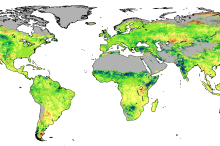
    Increased levels of carbon dioxide (CO2) have helped boost green foliage across the world’s arid regions over the past 30 years through a process called CO2 fertilisation, according to CSIRO research.

    In findings based on satellite observations, CSIRO, in collaboration with the Australian National University (ANU), found that this CO2 fertilisation correlated with an 11 per cent increase in foliage cover from 1982-2010 across parts of the arid areas studied in Australia, North America, the Middle East and Africa, according to CSIRO research scientist, Dr Randall Donohue.

    “In Australia, our native vegetation is superbly adapted to surviving in arid environments and it consequently uses water very efficiently,” Dr Donohue said. “Australian vegetation seems quite sensitive to CO2 fertilisation.

    This, along with the vast extents of arid landscapes, means Australia featured prominently in our results.”

    “While a CO2 effect on foliage response has long been speculated, until now it has been difficult to demonstrate,” according to Dr Donohue.

    “Our work was able to tease-out the CO2 fertilisation effect by using mathematical modelling together with satellite data adjusted to take out the observed effects of other influences such as precipitation, air temperature, the amount of light, and land-use changes.”

    The fertilisation effect occurs where elevated CO2 enables a leaf during photosynthesis, the process by which green plants convert sunlight into sugar, to extract more carbon from the air or lose less water to the air, or both.

    If elevated CO2 causes the water use of individual leaves to drop, plants in arid environments will respond by increasing their total numbers of leaves. These changes in leaf cover can be detected by satellite, particularly in deserts and savannas where the cover is less complete than in wet locations, according to Dr Donohue.

    “On the face of it, elevated CO2 boosting the foliage in dry country is good news and could assist forestry and agriculture in such areas; however there will be secondary effects that are likely to influence water availability, the carbon cycle, fire regimes and biodiversity, for example,” Dr Donohue said.

    “Ongoing research is required if we are to fully comprehend the potential extent and severity of such secondary effects.”

    This study was published in the US Geophysical Research Letters journal and was funded by CSIRO’s Sustainable Agriculture Flagship, Water for a Healthy Country Flagship, the Australian Research Council and Land & Water Australia.

    Source.

     

  • Cassini in Motion: Spectacular In Saturn’s Rings First Official Teaser

    Cassini in Motion: Spectacular In Saturn’s Rings First Official Teaser

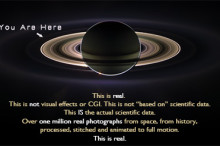
    In Saturn’s Rings is a non-profit giant-screen space art film that takes audiences on a journey of the mind, heart and spirit from the big bang to the near future via the Cassini-Huygens Mission at Saturn.

    Composed entirely of still photographs using innovative visual techniques developed by the filmmaker, In Saturn’s Rings stretches the boundaries of the motion picture form. The film will feature powerful music by Ferry Corsten, William Orbit, Samuel Barber and melds non-narrative visual poetry & science documentary into a rich experience for audiences.

    In Saturn’s Rings is a film that’s both personal and universal, experimental and sincere, science and spirit , narrative and documentary. The goal is to use large screen imagery, synchronized to powerful but moving music, to create an experience for those who see it, hear it and feel it.

    Using hundreds of thousands of still images manipulated to create full motion, using “2.75D” photographic fly-through technology. The film will be presented in beyond Hollywood quality 5.6K resolution on massive screens and concert-level surround systems to audiences in giant screen institutions, IMAX™ theaters, planetariums, museums and select 4k digital cinemas.

    “‘In Saturn’s Rings’ is a film that’s both personal and universal, experimental and sincere, science and spirit , non-narrative and documentary. The goal is to use large screen imagery, synchronized to powerful but moving music, to create an experience for those who see it, hear it and feel it.

  • Weekly Science Picks

    Weekly Science Picks

    A happy Science Sunday to everyone!  As usual there’s been a lot happening in the world of science, so lets take a peek of the most interesting picks for the past week!

     Interface Region Imaging Spectrograph (IRIS) to launch!

    At the end of this month, NASA will launch IRIS.  IRIS will watch the Sun and provide NASA with information on the Sun’s atmosphere and the interface region.  This will give scientists a better understanding of how the Sun’s energy powers the solar wind!

     NASA and the Italian Space Agency (ASI) to explore Mercury

    NASA Administrator Charles Bolden and Italian Space Agency (ASI) President Enrico Saggese signed a Memorandum of Understanding for cooperation on the European Space Agency (ESA) led BepiColombo mission to Mercury

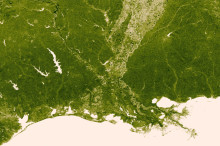
    Earth’s plant life shown in Hi Res imaging

    NASA’s Suomi NPP Satellite shows Earth’s vegetation mapped at a higher resolution than ever before.

    A new three-dimensional map, aptly called BigBrain is the most detailed ever constructed!  Scientists hope it will lead to a more accurate picture of how the brain’s different regions function.

    Can high energy y-ray astronomy be done from Earth?

    Traditionally astronomers have relied on space telescopes to conduct high-energy y ray astronomy because Earth’s atmosphere is a very efficient shield for y rays.  However, in early July at the International Cosmic Ray Conference in Rio de Janeiro, Brazil, indicate that γ-ray astronomers are betting their future on an ambitious ground-based telescope.

    What drives mammals to extinction?

    Australian researchers say that it’s not bad luck that drives mammals to extinction over geological time, but their failure to keep pace with a deteriorating environment.
  • What does the Great Barrier Reef mean to you?

    What does the Great Barrier Reef mean to you?

    What does the future hold for the Great Barrier Reef and what part will we play? In the most extensive social study to date, CSIRO is asking 5000 locals, visitors to the reef and businesses how they use, relate to and value the Great Barrier Reef.

    It will be the first scientific survey of this scale about people’s perceptions for the whole of the Great Barrier Reef, covering marine tourism, traditional owners, ports and shipping, aquaculture, mining, residents and coastal communities.

    CSIRO social scientist and project lead Dr Nadine Marshall said decision makers need as much information as possible to understand the role people will play in the future of the Great Barrier Reef.

    “It’s the first time personal thoughts and feelings about the reef are being comprehensively collected,” Dr Marshall said.

    “Years of data exist on the economic, ecological and environmental dimensions of the reef and now we’re closing the loop and including the hardest dimension of all – people.

    “We want to understand what the Great Barrier Reef means to those who live nearby, work around it or visit the area.”

    The findings will provide vital information to reef managers, businesses and the government to help them make decisions that reflect the needs of the people who interact with the Reef.

    Over the next two months CSIRO will be approaching 5000 people from Cooktown to Bundaberg, to take part in the study. People could be approached at a shopping mall, on the beach or at a tourist hot spot. Local businesses will be contacted over the telephone.

    Results will be published towards the end of the year when a snapshot of 2013 will be released. It is hoped that the study will be updated annually.

    The three-year, A$2 million study is a collaboration between CSIRO’s Wealth from Oceans Flagship, the National Environment Research Program, James Cook University and the Great Barrier Reef Foundation.

    For more information visit about the project visit Understanding our perceptions about the Great Barrier Reef.

    Source.

  • Intel International Science and Engineering Fair 2013

    Intel International Science and Engineering Fair 2013

    As a five-time alumnus of the Canada-Wide Science Fair, I believed I had a thorough understanding of young scientists and their capabilities. However, my previous STEM experiences could not prepare me for the Intel International Science and Engineering Fair.
    As the largest pre-college competition for young scientists, this event brings together over 1600 students from 70 countries. Setting aside language and cultural barriers, students are brought together through their shared insatiable curiosity and passion for science and innovation. This year, Intel ISEF took place in Phoenix, Arizona from May 12-17.
    Team Canada arrived in Phoenix on May 11 after attending a media training event in Toronto. From the moment we stepped off the plane we were greeted by friendly volunteers and the excited Brazilian team. Our first encounter with each of the Intel ISEF finalists took place at the lively and exciting pin trading event. Being able to interact with passionate young scientists from around the world evoked a sense of pride in both our country and our generation. Every student in that ballroom was already changing the world, and it was exiting to imagine what they would accomplish in the future. Despite only knowing how to speak English and French, the Canadian team (myself included) immensely enjoyed interacting with other finalists and learning about the cultural differences between each participating country.
    At the opening ceremonies, each finalist arrived with a heart full of national pride and many flags to hold high. The Canadian team paraded around the arena, cheering and singing with the other countries. During the “international shout out

  • Weekly Science Picks

    Weekly Science Picks

    I hope everyone’s had a good week! Personally, mine’s been rather tiring, having to take care of various academic shenanigans and with plenty to write about. And I have a couple of research fellowships still to apply for. Eek! But enough about me, because there have been some genuinely exciting things happening in science over the past few days. Here are the stories which managed to catch my eye…


    One of the most interesting pieces of science news this week was that, for the first time ever, a fluorescent protein was discovered in a vertebrate animal – specifically, the Japanese freshwater eel. I also like that the protein has been named unaG – 鰻, or “unagi” is the Japanese word for eel!

    First fluorescent protein identified in a vertebrate

    “I don’t think anyone would have thought that eels would have such a bright fluorescent protein,

  • A world of ocean research awaits RV Investigator

    A world of ocean research awaits RV Investigator

    Just over a year ago construction of Australia’s Marine National Facility research vessel Investigator began with flat sheets of steel, and now the blue-water research vessel looks amazing.

    The Executive Director for CSIRO’s Future Research Vessel Project, Toni Moate, said Investigator, is challenging the way ocean and atmospheric research has been undertaken globally, as it will support scientists across a range of disciplines – oceanographic, climate, geological, fisheries and ecosystem research.

    “As much as possible, Investigator must be all things to all Australian marine scientists, as Australia has only one blue-water research vessel and this diverse and complex approach to marine and atmospheric science is unique to ocean research globally,” Ms Moate said.

    The 93.9 metre Investigator has room onboard for up to 40 scientists, who can stay at sea for up to 60 days and cover up to 10 000 nautical miles in a single voyage and will replace the Marine National Facility’s current vessel, Southern Surveyor, later this year when it’s delivered to Hobart.

    The contract to design, build and commission the vessel was awarded to Teekay Holdings Australia, which partnered with Sembawang Shipyard Pte Ltd in Singapore because of its track record and strong commitment to new technologies and innovation.

    “Investigator’s capabilities will allow for the rapid advancement of ocean dynamics and air-sea interactions and their implications for weather and climate, and scientists will be able to accurately describe marine ecosystems and enable more effective management of biodiversity and fisheries,” Ms Moate said.

    The vessel’s design will feature a core backbone of permanently fitted systems for sampling, data acquisition, management, and communication including winches, acoustic mapping and environmental monitoring instruments including:

    • a sonar and radar system housed under the ship that can map the seafloor to 7 000 metres
    • a deep water coring capability off the side deck which can take cores 24 metres long at a depth of 7 000 metres
    • the approximately 2 tonne radar will gather data from storms and clouds towering 20 kilometres over the tropical ocean to cold ice storms in the Antarctic, in a 300 kilometre diameter around the ship, and it will have a broad range of research applications
    • the dual drop keels can deploy scientific equipment four metres below the vessel’s hull, enabling acoustic instruments to be well below the bubble zone generated by the ship moving through the water
    • the ship is being built to comply with DNV-Silent-R, to minimise the noise from all the machinery on board. This will increase the range and resolution of seabed mapping, sub-surface imaging, and marine ecosystem monitoring instruments and it will allow scientists to provide better estimates of the number of fish and other species in the marine environment
    • research teams will be able to add purpose-built systems to support their own investigations, such as radiation and trace metal laboratories, deep-water dredging, coring and drilling devices, fishing nets, towed camera systems and remotely operated vehicles.

    In 2009 the Australian Government committed A$120 million to the purchase of a new research vessel for the Marine National Facility. The project is an initiative of the Australian Government being conducted as part of the Super Science Initiative and financed from the Education Investment Fund.

    Sea time onboard Australia’s Marine National Facility research vessel is available to all Australian scientists. The National Facility is operated by CSIRO on behalf of the nation.

    Source.

  • Weekly Science Picks

    Weekly Science Picks

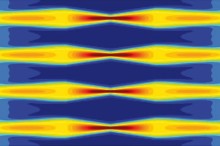
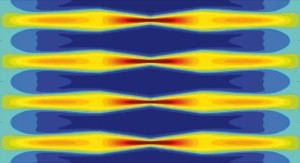
    Light waves, shown evolving in time in this simulation, create a cloaking effect at the middle where the light intensity goes to zero. via Nature.com
    Light waves, shown evolving in time in this simulation, create a cloaking effect at the middle where the light intensity goes to zero. via Nature.com

    Happy June! Happy World Oceans Day! Hard to believe it is June already. I finally have some time on my hands and caught up on some reading this week. So you’ll see two articles below that are from April. It’s a little bit of everything… so grab your coffee, tea or chocolate milk, head to the sofa or venture out to the veranda if it’s nice weather, and enjoy this edition of Weekly Science Picks!


    Cyber security, data breaches, governments listening in on the phone calls of their citizens (oh wait, the U.S. claims it’s just unique identifiers…), are all hot topics in this age of data immersion that we found ourselves. Well, read about the ‘time hole’. Engineers are doing some pretty cool things in this realm.

    Temporal cloak erases data from history by Zeeya Merali

    Electrical engineers have used lasers to create a cloak that can hide communications in a ‘time hole’, so that it seems as if they were never sent.


    Brain games are everywhere lately, whole startup companies are devoted to trying to entertain your neurons and increase your brain elasticity. I admit, I like a good competition of Words With Friends, but I’m pleased to see some research has been done on this topic.

    Brain Games Versus Nature Documentaries by Rachel Kaufman

    It seems brain-training games—online tests, quizzes, games, or flash cards designed to improve attention, memory, creativity, and concentration—are everywhere. But do they work? A recent study published in the journal PLoS ONE says … maybe not.


    City mouse, country mouse; city bird, country bird. Lately, there appears to be a slate of ‘unique’ research going on in the Animal Kingdom. A lot of it has been appearing on BBC News. Perhaps this research will lead to some exciting new developments in city health technologies.

    Biological clocks ‘beat quicker’ in cities by BBC News

    City living could have a major impact on the biological clocks of humans and animals, a new study has found.


    An ever greater number of people are able to ‘climb’ to the top of Mt. Everest and it is wreaking havoc on the conservation of that area. The terms have changed because the technology and the gear has improved to make it to the summit. Is there a solution? Not without putting some infrastructure and some hard policies in place.

    Nepal Himalayas: ‘Decentralising’ mountaineering remains uphill task by Navin Singh Khadka

    Figures from Nepal’s ministry of tourism figures show that the peaks Ama Dablam and Everest, both in the Khumbu region of eastern Nepal, see the largest number of expeditions, more than 30 every year.


    Another story involving hidden data, only this time it’s the kind that we would like to have out in the open and be able to access.

    A Hidden Victim of Somali Pirates: Science by Paul Salopek

    Scientists from around the globe, specializing in subjects as diverse as plate tectonics, plankton evolution, oceanography, and climate change, are decrying a growing void of research that has spread across hundreds of thousands of square miles of the Indian Ocean near the Horn of Africa—an immense, watery “data hole” swept clean of scientific research by the threat of Somali buccaneering.


    Something a little different to close out Weekly Science Picks – watch the video.

    The Lego House is going to be Lego paradise by Rob Bricken

    Stay thirsty for knowledge my friends. Stay thirsty.

  • World Oceans Day – 7 June 2013, Live Event

    World Oceans Day – 7 June 2013, Live Event

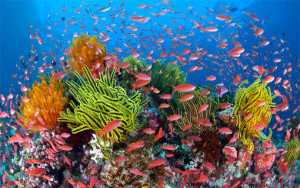
    The Great Barrier Reef, © Gary Bell/Oceanwidelmages.com, via Australian Conservation Foundation website
    The Great Barrier Reef, © Gary Bell/Oceanwidelmages.com, via Australian Conservation Foundation website

    Good morning Australians and to the rest of the world! Today is World Oceans Day and to celebrate this important day, a special, world first, 12-hour event will broadcast live from the Great Barrier Reef! Richard Fitzpatrick, a marine biologist and Emmy award-winning underwater cinematographer, along with other marine experts and reef ambassadors will take you on a journey as they showcase the diverse beauty and awe that is the Great Barrier Reef. The event starts 7 June 10:00 AM (AEST). The countdown is on and you can watch here at Queensland’s YouTube Channel!

    You’ll see live underwater broadcasts that include sharks, whales, manta rays and turtles. 30-minute panel sessions will take not only underwater at the reef, but from Lady Elliot Island and Reef HQ Aquarium. The panel discussion will feature both local and international marine biologists and experts who will highlight why protecting our oceans is so important.

    And why is it so important? Well, Australians, if you haven’t seen the news from yesterday, listen up.

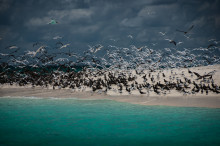
    A new CSIRO study, reported by the Herald Sun, finds the ocean is littered with rubbish, 74 per cent of it is plastic and it is impacting sea creatures, including turtles, sea birds and whales. There are 5.2 pieces of debris for every person in Australia and 3.2 pieces of rubbish for every metre of beach. The waste is not coming from other countries, it is coming from cities and other major areas in Australia. And while Australia does have great waste management practices, It’s important to note that more must be done to keep the beaches and waters pristine. Take action on this World Oceans Day. Find a beach clean up, join a surf life saving club, volunteer at a conservation park – do something to help protect the ocean which is vital both to our global economies and societies.

  • CSIRO Chairman announces extension to Chief Executive contract

    CSIRO Chairman announces extension to Chief Executive contract

    CSIRO Chairman Mr Simon McKeon has announced that Chief Executive Dr Megan Clark has agreed to extend her term with CSIRO to the end of 2014.

    “The Board has full confidence in Dr Clark and supports the continuing execution of the CSIRO strategy which is focused on answering big questions and increasing Australia’s productivity through the organisation’s world class science capability,” Mr McKeon said.

    Dr Megan Clark, Chief Executive and CSIRO Board member.
    Dr Megan Clark, Chief Executive and CSIRO Board member.

    Under Dr Clark’s leadership over the past four and half years CSIRO has significantly increased its engagement with industry and the community. Dr Clark has set the CSIRO vision of building five global innovation precincts for Australia in plant and agricultural, resource, environmental, human life and materials and manufacturing sciences. She has also led a strong focus on ensuring the safety and welfare of CSIRO people and affiliates and embedding a values-based culture. Dr Clark will continue to implement the 2011-15 strategic objectives including providing a platform for the organisation under a future new Chief Executive to lead the development and implementation of the 2015-2020 Strategic Plan.

    “I am very proud of the impact that CSIRO is delivering to the nation under Megan Clark,” Mr McKeon said.

    “We’ve seen the Hendra virus vaccine developed and brought to market in three years, fast Wireless Local Area Networks are now licensed for use in billions of devices worldwide.These and many other examples are a demonstration of passionate leadership with a deep commitment to applied science.

    “CSIRO is well positioned to continue its 87-year role as a trusted advisor to the community, governments and industry.”