Category: News

  • The CO2 Bargaining Business

    The CO2 Bargaining Business

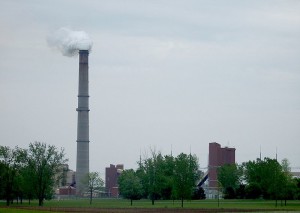
    Coal power plant in NY. Photo credit: Matthew D. Wilson, Wikimedia Commons
    Coal power plant in NY. Photo credit: Matthew D. Wilson, Wikimedia Commons

    The Bargaining Table

    Does anyone think this 2-degree goal is achievable? You know, that we can keep global temperatures from increasing 2°C? It’s time to admit that it cannot be. It’s time to set new goals. Goals not based on single-digit bargaining at the next climate convention. Some of the world’s nations agreed to limiting global warming to 2°C (3.6°F) over pre-industrial temperature levels four years ago; a voluntary goal. Our approach to tackling climate change has been to put, what seems to be, arbitrary limits on CO2 emissions while not seeking to take accountability for the issues causing those emissions. This goes for both the developed world and the emerging market economies. The industrial world must make amends with the top tier industrial economies assuming the responsibility to assist the 2nd and 3rd tier economies. Look at Beijing, China, the smog that engulfs that city. While pushing new boundaries to emerge on the global stage as an economic powerhouse is respectable and we can all argue that London, New York, Berlin did this when they were coming of age in the industrial revolution, the result of living in cities was grim then and it is grim for Beijing now in terms of the pollution that confronts citizens.
    CO2 levels are rising, as a result of a global economy pushing forward, full steam ahead. Pieter Tans of The U.S. National Oceanic and Atmospheric Administration (NOAA) has said CO2 levels increased by 2.67 parts per million (ppm) in 2012 to 395 ppm. This marks the second highest rise in carbon emissions since recordkeeping began back in 1959. Cleaning up the way business does business is the first order of business in tackling climate change. Returning to the bargaining table year after year is not getting us anywhere.
    Tipping the Balance
    Coal-burning power plants, particularly in the emerging economies are the main culprit behind the continuing rise of CO2 emissions. For more detailed information, see IEA Statistics report, CO2 Emissions from Fuel Combustion, Highlights, 2012 edition. In countries such as the U.S., Australia and Denmark, conservation and clean energy research and implementation have begun to show small declines in CO2 emissions. But again, it is that see-saw balancing act – fair play – in order for developing nations to get on the economical playing field, they should have an allowance to pollute as did the U.S. and the rest of the G-20. Instead of taking this “fair is fair

  • Weekly Science Picks

    Weekly Science Picks

    Science Sunday! My first since the death of Google Reader. Let’s dive straight in.

    Viet Le, the scientific amasian, has a nice piece on genetically modified crops. Perhaps the time has come to have another debate on the issue of GMOs, too often dismissed out of hand.

    An “Acceptable

  • A Robot Revolution: When Robots Come to Life

    A Robot Revolution: When Robots Come to Life

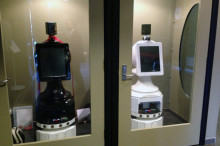
    A day at the museum has come to life. Our latest robots are roaming the galleries of the National Museum of Australia. They’re using high speed broadband to allow remote visitors to control their own view of museum exhibits while interacting with a museum educator.

    The stars of Museum Robot project, B1 and B2, will use telepresence technology to roam the galleries of the National Museum of Australia. Using high speed broadband, the robots will allow remote visitors to control their own view of museum exhibits while interacting with a museum educator.

    “The Museum Robot is a fantastic initiative and a perfect example of some of the applications made possible by the NBN. This kind of rich and interactive experience, nationally accessible, depends on the type of synchronous communication made possible by high speed broadband,

  • CSIRO and the ANU launch biodiversity research centre

    CSIRO and the ANU launch biodiversity research centre

    An initiative that will help Australia harness cutting-edge advances in biological sciences to inform better environmental management decision making will be announced on Wednesday 3 April at the official launch of the Centre for Biodiversity Analysis, Canberra.

    The Centre is a joint initiative established in partnership with CSIRO and the Australian National University (ANU).

    “The Centre is drawing on CSIRO and ANU’s world class expertise, and harnessing new and emerging technologies in biodiversity science to improve our knowledge of Australia’s biodiversity and enable governments and conservation NGOs to translate policy into meaningful actions,” said Professor Craig Moritz, Director of the Centre for Biodiversity Analysis.

    “The Centre is drawing on CSIRO and ANU’s world class expertise, and harnessing new and emerging technologies in biodiversity science to improve our knowledge of Australia’s biodiversity and enable governments and conservation NGOs to translate policy into meaningful actions.”

    Professor Craig Moritz, Director, Centre for Biodiversity Analysis

    “It’s estimated that Australia is home to over half a million unique living species, many of which are found nowhere else on Earth, but of these only about one third are known to science.”

    “Improved knowledge of Australia’s biodiversity – how many species, where they are, and how they evolve across environments and through time – will be especially important to ensure sustainable development and production, to maximize ecosystem benefits, and to protect our unique diversity in the face of rapid environmental change,” he said.

    CSIRO and ANU have joined forces to address this challenge.

    “The Centre will promote collaborative biodiversity science by hosting conferences and workshops, forming ANU-CSIRO working groups, supporting collaborative projects, connecting students and researchers with managers and policy makers, and facilitating the collation and connection of biodiversity information in the ANU-CSIRO Canberra Precinct,” said Professor Moritz.

    The Centre also provides an early example of the value of the developing Canberra Global Research Precinct, which will focus on plant and environmental sciences. Like the Centre, the Precinct will be built on CSIRO-ANU collaboration, and will utilise its location in the national capital to promote the uptake of research outputs by government agencies.

    The launch will also mark the opening of the Centre’s inaugural conference which brings together Australian and international biodiversity scientists to discuss recent advances in biodiversity genomics.

    “Genomics is an exciting and rapidly expanding field that has the potential to significantly improve the efficiency of environmental assessments and monitoring, and the speed at which new species can be identified,” said Professor Moritz.

    “It is also providing important new insights into the ability of species to adapt to climate change.”

    Media are invited to attend the launch and associated conference.

    Location: CSIRO Discovery Centre, Clunies Ross St, Black Mountain, ACT

    Time: Conference start 9.00am, launch 10.00am – 10.30am, Wednesday 3 April 2013

    Conference presentations include:

    • How genome sequencing technologies are helping in the fight against Tasmanian devil facial tumour disease.
      Devil facial tumor disease (DFTD) is threatening the iconic Tasmanian devil with extinction in the wild within the next few decades. Genome sequencing has highlighted the low levels of genetic diversity within the population and the importance of selecting individuals for the careful maintenance of genetic diversity within conservation insurance colonies. Genomic technologies are allowing rapid progress to be made in our understanding of the disease.
    • Combining genomics and evolutionary theory to understand how species respond to climate change.
      There has been much recent debate about the potential for evolutionary changes to enable species to adapt to the stressful effects of climate change. We will discuss the current body of evidence supporting this, how genomic techniques can provide valuable insights into evolutionary adaptation, how evolutionary approaches can be used to predict future changes in biodiversity, and what the implications are for conservation strategies.
    • Mining genomic data from museum collections to understand how species change over time.
      Biological collections-based research is poised at another exciting transition because of research avenues made possible by the tools of genomics. Traditional museum collections are large repositories of dormant genetic data. This treasure trove of taxonomic, spatial and temporal data is now within reach thanks to genomic technologies. The insights gained are providing valuable contributions to our knowledge and, in-turn, the preservation of Australia’s biodiversity.

    Source

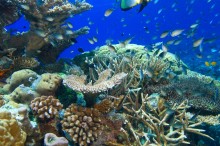
    Image: Research undertaken by the Centre for Biodiversity Analysis will help to inform the sustainable management of Australia’s unique ecosystems, such as the Great Barrier Reef. (Image: Marie Davies)

  • Groundbreaking healthcare conference to take place in Brussels

    Groundbreaking healthcare conference to take place in Brussels

    The first ‘World Research and Innovation Congress – Pioneers in Healthcare’ conference takes place at Steigenberger Grandhotel, Brussels on the 5 and 6 June, 2013. 

    The two day event will bring together over 500 of the world’s top scientific health professionals to discuss future challenges and strategies on the key issues facing health research today.

    Speakers include:

    • Professor Anne Glover, Chief Scientific Advisor to the President of the European Commission
    • Dr
  • DNA technology set to speed up species discovery

    DNA technology set to speed up species discovery

    Scientists from CSIRO and the University of Western Australia have teamed up with Kimberley Traditional Owners to test a new molecular technique that has the potential to revolutionise the discovery of new species, particularly those living in remote and poorly studied parts of the world.

    Working in the virtually inaccessible rainforest vine thickets of Australia’s National Heritage-listed Kimberley region, the team are using a technique known as ‘ecogenomics’ to survey the area’s insect biodiversity, and rapidly describe what are expected to be hundreds of unique and rare species. The technique involves identifying species based on their DNA and morphology, and is much faster and more cost effective than traditional taxonomic approaches.

    “Using ecogenomics, we will be able to understand what is there and how unique it is in months rather than decades,” said CSIRO’s Dr Owain Edwards, the project leader.

    “Identifying, or describing, new species is the first step towards ensuring their ongoing survival. However, with millions of undescribed species around the world, this is no small task, particularly as many of these species will likely be found in remote locations.”

    “Faster ways of surveying biodiversity are essential if we are going to effectively manage the world’s unique ecosystems.”

    The remote and hard to access nature of the rainforest pockets of northwest Kimberley, as well as their isolation from each other, mean that the insect life there is some of the least known on the planet and is likely to be highly endemic (which means unique to that area). This provided the ideal location for the team to put ecogenomics to the test.

    “Over the coming months we’ll be analysing the DNA of about 300 000 insect specimens collected from 36 isolated rainforest pockets across the Kimberley and screening them for the presence of endemic species,” said Professor Raphael Didham, an invertebrate expert that holds a joint position with CSIRO and the University of Western Australia.

    “We’re hoping to find hundreds of new species. It’s pretty exciting work.”

    The technique also has the potential to improve the efficiency of environmental impact assessments and conservation management.

    “The speed and accuracy at which we’ll be able to assess a given site, even a really remote one, will greatly improve the efficiency of evaluating possible biodiversity impacts,” said Dr Edwards.

    The scientists and Indigenous rangers from the Wunambal Gaambera and Dambimangari Aboriginal Corporations carried out the wet-season insect surveys over a one month period in January, at a time when the Kimberley is in its active growing season.

    The team clocked up over 7000 kilometres in a helicopter accessing the isolated rainforest pockets across a 21 000 square kilometre region of the northwest Kimberley.

    On-the-ground training provided to rangers as part of the project will mean insect sampling activities can continue in the Kimberley in the future.

    The research is supported by the Science and Industry Endowment Fund.

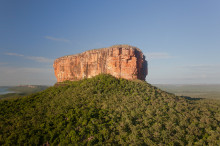
    Source, and image: Approaching Mt Trafalgar, northwest Kimberley. The team surveyed the rainforest patch visible (dark green) in the lower left corner of the photo: http://www.csiro.au/en/Portals/Media/DNA-technology-set-to-speed-up-species-discovery.aspx

  • Weekly Science Picks

    Weekly Science Picks

    Science Sunday! Our recurring collection of some of the week’s blogs and science articles that you may have missed.

    What a week! So much science! Let’s start with mosquitoes….

    The beat the mosquito’s heart didn’t miss…

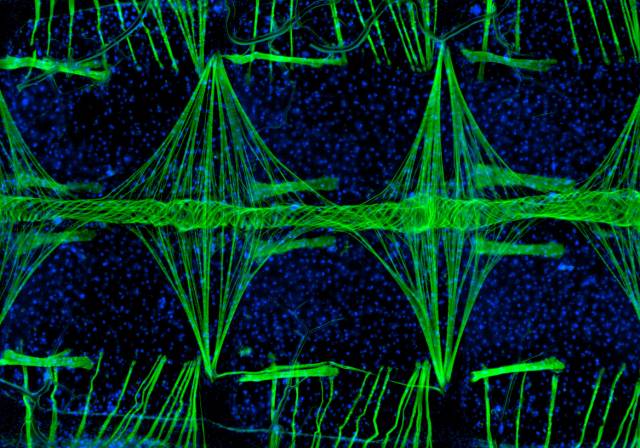
    Frankly I’ve not given much thought to the heartbeat of mosquitoes.  I’m usually much more worried that mine will continue will continue to beat for many more years to come. But Charles Ebikeme’s article covering the research done by Dr Julian Hillyer and his team at Vanderbilt University, Nashville, Tennesee, is fascinating.01_Place_17961_1_Kingb_main

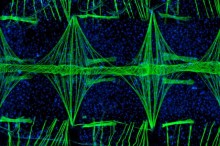
    “A mosquito’s heart is very different — without veins or arteries, it pumps a clear liquid called hemolymph. The hemolymph flows from the heart into the abdominal cavity and eventually cycles back through the heart. The heart runs along the insects body as an unbranched tube, no thicker than three tenths of a millimeter. Helical twists of muscle fibres support the central tube. Their sequential contractions makes the heart in a wave-like peristaltic action. A peristaltic action that has the ability to run in both directions.”

    As an insect that carries various diseases that wreaks havoc on the human population, mosquitoes are a significant concern for health authorities.  Hillyer’s research is just one more step in understanding the pest and developing effective control strategies.

    FishMap – Mapping Australian Fish

    Millions of Australians are recreational fishers, there’s a large commercial seafood and aquaculture industry, and plenty of us who like to eat fish!! So who wouldn’t be interested in an online mapping tool that allows us to check out where our favourite marine fish are hiding?

    “With FishMap you can find out what fish occur at any location or depth in the waters of Australia’s continental shelf and slope. You can also create species lists for any region that include photographs and illustrations, distribution maps and current scientific and common names.”  

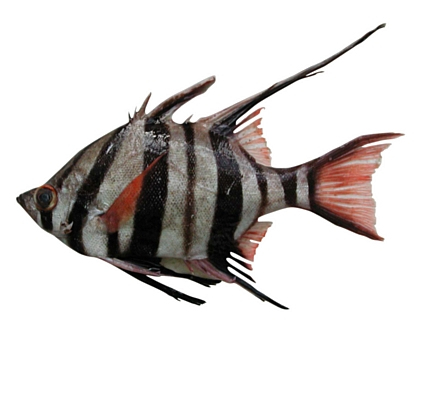
    FishMap is a pretty cool tool – and you’d be surprised how much time you can spend looking at fish….old-wife

    Creative Commons announces ‘School of Open’ project

    The “School of Open” offers courses on the meaning, application, and impact of “openness

  • Weekly Science Picks

    Weekly Science Picks

    Ahhh, the end of the week again. It seems that every time it’s my turn to give the weekly science picks, it’s been an interesting week in science. This leads me to believe that every week is an interesting week in science! Amongst other things, this week was the birthday of Albert Einstein – March the 14th. Which, to those who use American date formats, might also be known as Pi Day. But enough irrational trivia. Here are the things which caught my eye this week…

    Probably the biggest news this week was the fact that those lovely people at CERN have officially confirmed that the particle which they announced last summer is indeed the much acclaimed Higgs boson!

    Physicists Say They Have Found a Higgs Boson

    “To me it is clear that we are dealing with a Higgs boson, though we still have a long way to go to know what kind of Higgs boson it is,” said Joe Incandela, a physicist who heads one of the two main teams at CERN, each involving about 3,000 scientists.


    Meanwhile, Colossal shows some rather impressive trickery with water, sine waves, and a video camera set to the right frame rate. I can’t really do justice to this one with words. Just… have a look.

    This is What Happens When You Run Water Through a 24Hz Sine Wave

    What!? How is this even possible? Because science, my friends. Brusspup’s latest video explores what happens when a stream of water is exposed to an audio speaker producing a loud 24hz sine wave. If I understand correctly the camera frame rate has been adjusted to the match the vibration of the air (so, 24fps) thus creating … magic zigzagging water. Or something.

    Wibbly wobbly water!


    On a more serious note, good news in the medical world! A device has been created which can enable human livers available for transplant to survive outside the body for a whole day – something utterly without precedent. Something like this is most certainly going to save lives!

    Donor livers kept alive outside the body for 24 hours

    Donated livers can survive for at least a day outside the body thanks to a new device which keeps the organ ticking over as if it hadn’t been removed. The machine is likely to more than double the availability of livers for transplant.


    A lot further from home, this week saw a science meeting to celebrate the 20th anniversary of the Keck observatory on Mauna Kea, Hawaii. Among all the lovely new science presented at the meeting, UC Berkeley’s Geoff Marcy announced new findings which suggest than a whopping 23% of Sun-like stars have at least one Earth-sized planet in orbit around them. Pretty amazing…

    Quarter of Sun-Like Stars Host Earth-Size Worlds

    “I’ll say that again, because that number really surprised me: 23 percent of sun-like stars have a nearly-Earth-sized planet orbiting in tight orbits within 0.25 AU of the host stars,

  • Weekly Science Picks

    Weekly Science Picks

    Source: Google Doodle
    Google celebrated International Women’s Day with a Doodle
    Source: Google

    Women. This is the theme of this edition of Weekly Science Picks. Yesterday, in case you missed it, was International Women’s Day. And it is important to note the achievements of women in careers such as teaching, neuroscience and engineering because women are still in a tightly contested race with the male counterpart. But who doesn’t enjoy a little competition?

    The articles selected this week touch on another issue that is being hotly debated in the U.S. as of late – the question of if women can have it all. Many of you have perhaps heard that Sheryl Sandberg, COO of Facebook, has started down a path of empowering women with her new book released this week, “Lean In: Women, Work, and the Will to Lead”, accompanied by the creation of Lean In Circles, a social networking group to help women express issues of dealing with work and family. I’m not going to get into a debate about this right now, except to encourage some discussion of this topic among our readers, female or male, and think how it applies to life in the sciences.

    This first pick deals with exactly this topic. It is a selection of women in science from around the globe, tackling incredible and exciting challenges in the lab, and outside of it with families.

    From the frontline: 30 something science, What’s being female got to do with anything, ask the scientists who are starting labs and having kids by Heidi Ledford, Anna Petherick, Alison Abbott & Linda Nordling

    “I never thought that my life had to be limited to anything, and I want to set that example for my daughter.

  • The Story of a River

    The Story of a River

    Every now and then you do a lesson that sticks. ‘The Story of a River’ is a simple interactive demonstration lesson, yet it provides a provocative view on environmentalism and sustainable practices.  The original version “Who Polluted the Potomac

  • Science Expo: Enrich, Empower, Explore

    Science Expo: Enrich, Empower, Explore

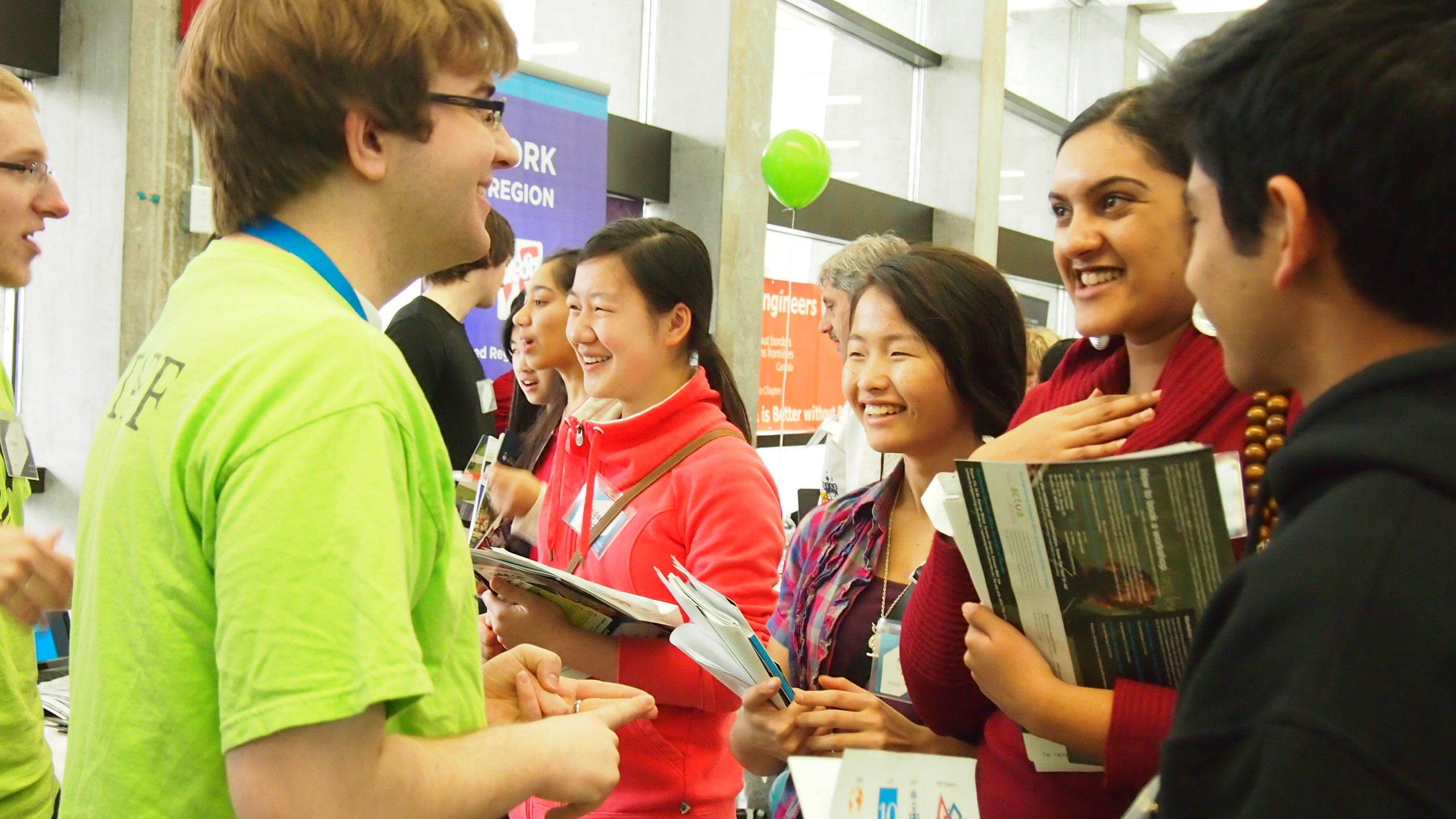
    Students interact with enrichment exhibitors at Science Expo 2013: Derive and Integrate.
    Students interact with enrichment exhibitors at Science Expo 2013: Derive and Integrate.

    The Science Expo Youth Empowerment Group (SEYEG) is a student run, non-profit organization which aims to connect youth to innovators and enrichment opportunities in science, technology, engineering and mathematics (STEM). SEYEG was founded by five students who met at the Canada-Wide Science Fair in 2009. In 2010, the first Science Expo, a 2-hour conference held in Guelph, Ontario, brought together over 200 students, teachers and parents. Today, SEYEG includes a student and teacher outreach program, an alumni mentorship program (EXPOtential) and a creative competition (meriSTEM) in addition to an annual conference.
    Science Expo 2013: Derive and Integrate, Science Expo’s fourth annual conference, took place this past Saturday at the Ontario Science Centre in Toronto, Canada. The conference brought together over one hundred high-achieving students from across the province interested in pursuing STEM enrichment opportunities. With guest speakers, networking workshops and STEM challenges, the day was a huge success and the delegates returned home with a renewed passion for discovery.
    The morning began with a delightful science magic show, where Mr. Chamberlain and Mr. Oslinger showed off their impressive comedic and chemistry skills. A literal ice breaker followed, in which delegates were challenged to melt a bag of ice as fast as they could without using body heat. Students were even seen holding ice to light bulbs in the ceiling!
    During lunch, delegates were given the chance to interact with exhibitors from various STEM programs. Youth Science Canada, Shad Valley, the University Ontario Institute of Technology, Engineers Without Borders and Australian Science are a few of the organizations with which students could get involved.
    Guest speakers this year included:
    • Dr. Steve Mann, the father of wearable computing
    • Dr. Brad Brass, co-recipient of the 2007 Nobel Peace Prize
    • Paul Nazareth, business advisor
    • Laura Suen, Canada’s Smartest Person, runner-up
    Each presentation was inspirational and insightful, demonstrating important life lessons to attendees. Dr. Mann touched on the importance of thinking outside of the box when approaching a scientific concept, while Paul Nazareth and Dr. Bass illustrated the power of networking. Laura Suen mentioned the concept of happy accidents through the presentation of her past successes.

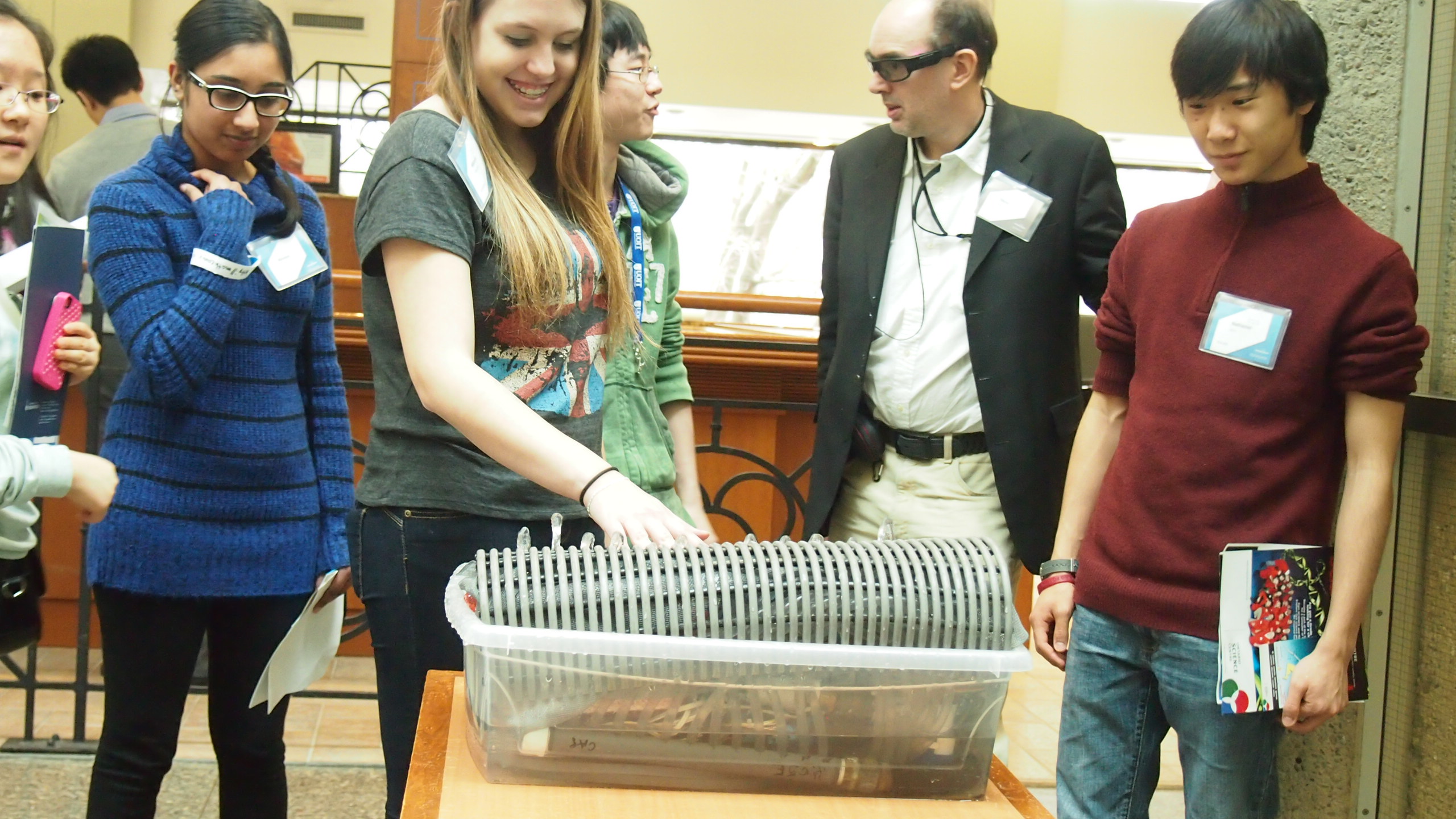
    Delegates at Science Expo 2013 play with the Hydraulophone, a liquid instrument invented by Dr. Steve Mann.
    Delegates at Science Expo 2013 play with the Hydraulophone, a liquid instrument invented by Dr. Steve Mann.

    The day also included presentations from the finalists of the meriSTEM competition. In its foundational year, meriSTEM is a competition that allows participants to create anything which captures an interesting aspect of STEM. Five finalists presented these creative projects, with the winner receiving a $500 scholarship.
    For more information on Science Expo’s initiatives and how you can get involved, please send an e-mail to info@science-expo.org or check out their website at www.science-expo.org .

  • Weekly Science Picks

    Weekly Science Picks

    Welcome to some of this week’s best science happenings on the interweb space!

    The first question is simple: can you name a female statistician? Epidemiologista answers its own question with a nice profile of Dr Janet Lane-Claypon: epidemiologic pioneer.

    Can you name a female statistician?

    “We read about statistics every day: be it the predicted winner of a football league, the association between the weather and mortality, or a newly discovered link between an inanimate object and cancer. Statistics are everywhere. And perhaps even more so this year, as 2013 has been hailed as the International Year of Statistics. Despite all this attention for numbers, we generally don’t know a lot about the people hiding behind their computers churning them out. With media attention for people like Nate Silver and Hans Rosling, some are now able to name at least one statistician, but, stepping it up a level, could you name a female statistician?

  • Science Weekly Picks

    Science Weekly Picks

    Being responsible for picking the week’s most interesting science stories is a fun and fascinating challenge. It pushes to me to look beyond my own interests and explore what others find compelling. So I trust you find my ‘science making news’ selection of interest and delight; explore the quantum, human, off-world and mathematical highs of the week.

    On the human scale an international team of scientists has been investigating the antibiotic properties of sweat. More precisely they discovered how a natural antibiotic called dermcidin, produced by our skin when we sweat, is a highly efficient tool to fight tuberculosis germs and other dangerous bugs.

    Their results could contribute to the development of new antibiotics that control multi-resistant bacteria.

    The benefits of a good nights sleep once again are news. Researchers have shown that the disruption in the body’s circadian rhythm can lead not only to obesity, but can also increase the risk of diabetes and heart disease.

    Our study confirms that it is not only what you eat and how much you eat that is important for a healthy lifestyle, but when you eat is also very important.

    130221091829-large
    Disruption of body’s circadian clock increases risk of obesity, diabetes and heart disease. (Credit: Daniel Dubois, Vanderbilt University)

    At the quantum scale, the particle physicists are at it again. Not content with discovering the Higgs Boson they are shedding light (pardon the pun) on a possible 5th force in nature. In a breakthrough physicists have established new limits on what scientists call “long-range spin-spin interactions” between atomic particles. These interactions have been proposed by theoretical physicists but have not yet been seen. If a long-range spin-spin force is found, it not only would revolutionize particle physics but might eventually provide geophysicists with a new tool that would allow them to directly study the spin-polarized electrons within Earth.

    The most rewarding and surprising thing about this project was realizing that particle physics could actually be used to study the deep Earth.

    The latest news from Mars is that curiosity has relayed new images that confirm it has successfully obtained the first sample ever collected from the interior of a rock on another planet.

    Many of us have been working toward this day for years. Getting final confirmation of successful drilling is incredibly gratifying. For the sampling team, this is the equivalent of the landing team going crazy after the successful touchdown.

    To wrap up with one further piece of geek excitement. On January 25th at 23:30:26 UTC, the largest known prime number, 257,885,161-1, was discovered on Great Internet Mersenne Prime Search (GIMPS) volunteer Curtis Cooper’s computer. The new prime number, 2 multiplied by itself 57,885,161 times, less one, has 17,425,170 digits. With 360,000 CPUs peaking at 150 trillion calculations per second, 17th-year GIMPS is the longest continuously-running global “grassroots supercomputing”project in Internet history.

    Until next week’s Australian Science review, go geekily crazy and enjoy your weekend.

  • Rock lobster fishery balances lifestyle and livelihood

    Rock lobster fishery balances lifestyle and livelihood

    CSIRO researchers are studying the Torres Strait tropical rock lobster fishery to develop a scientific approach to integrate cultural factors into natural resource management.

    “Fisheries management traditionally involves balancing commercial gain and sustainability, but for Indigenous communities cultural and lifestyle factors can be just as important and these factors are more difficult to measure,” says Dr Eva Plaganyi of CSIRO’s Wealth from Oceans Flagship.

    “Globally, small-scale fisheries employ around 38 million people and it’s important to look at the impact of natural resource management practices on their livelihood,” she says.

    “Often research into fisheries management has focused on commercial businesses and overlooked the unique characteristics of Indigenous fishers. We wanted focus on economic needs as well as socio-cultural rights and values.”

    Dr Eva Plaganyi, CSIRO Wealth from Oceans Flagship

    The Torres Strait tropical rock lobster fishery has many stakeholders, including non-Indigenous commercial fishers and Indigenous fishers who fish for reasons ranging from subsistence to commercial. The social objectives of the fishery are spelled out in a treaty between Australia and Papua New Guinea that acknowledges and protects the traditional fishing practices of Indigenous people.

    “Often research into fisheries management has focused on commercial businesses and overlooked the unique characteristics of Indigenous fishers. We wanted focus on economic needs as well as socio-cultural rights and values,” says Dr Plaganyi.

    The multidisciplinary team of researchers brought together a range of sophisticated methods, from mathematics and modelling to social science interviews. Their results allow managers to understand the potential trade-offs when making a management decision that affects not only a resource but also the people who depend on it.

    “Market-based management options might score highly in a capitalistic society, but we found that two key social indicators, namely equity and a sense of self-determination, underpin successful management,” says Dr Plaganyi.

    “Indigenous communities have aspirations and cultural considerations that are simultaneously unique and important, and their communities are often communalistic rather than being driven solely by economic considerations. We have developed an objective scientific approach that reflects this and can be applied to natural resource management beyond fisheries,” she says.

    The research described here is underpinned by extensive consultations with Indigenous fishers, as well as other sectors and managers. It builds on a long history of involvement in the Torres Strait, with CSIRO divers planning the 25th annual lobster survey this year.

    This research was funded by Australian Fisheries Management Authority and CSIRO.

    ‘Integrating Indigenous Livelihood and Lifestyle Objectives in Managing a Natural Resource’will be published this week in the online early edition of Proceedings of the National Academy of Sciences.

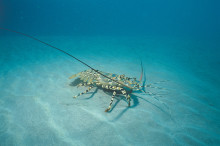
    Image: Panulirus ornatus, the tropical rock lobster.

    Source.