Category: News

  • Weekly Science Picks

    Weekly Science Picks

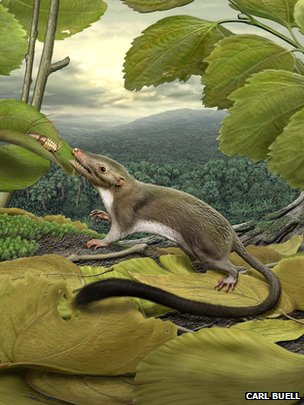
    Our long-lost ancestor... Photo Credit: Carl Buell
    Our long-lost ancestor… Photo Credit: Carl Buell

    It’s been an interesting week in the world of science, with the predominant story focused on just who our mammalian ancestor might be. Everyone has been covering this, the BBC, the New York Times and national Geographic. But some other newsworthy notes include new developments on graphene, a discussion on just how big the universe really is, and biodiversity 10,047 meters below the sea’s surface.

    Scientists are on a never ending quest to pinpoint exactly where we came from and this past week may have shown some significant process in that endeavor. And the story reported on by BBC below highlights some fascinating elements in the work of phylogeny. One of the most intriguing points of the story is in the tools scientists now have at their disposal for evolutionary research – MorphoBank.

    Earliest placental mammal ancestor pinpointed by Jason Palmer

    But the new work tackles the question of placental mammals in unprecedented detail, taking six years to develop a database of physical and genetic data some 10 times larger than any used previously – and taking a decidedly modern take on it.


    Exfoliation…and we’re not talking about ladies skin cleansing here. This next piece from our very own Markus Hammonds highlights exciting new research for the use of graphene in making high grade electronics.

    Could the next generation of electronics be made with graphene? by Markus Hammonds

    By using a process called exfoliation, the layers in this material are a mere 11 nm thick, and electrons are able to move freely through it without any scattering from impurities in the material (one of the main limiting factors in any system of electronics). Free from such obstructions, electroncs can flow through this new material at high speeds.


    Will we ever get our heads around how big the universe is? Astronomer Pete Edwards of the University of Durham seems to think not. See what you think in this video featured on The Guardian.

    How big is the universe…compared to a grain of sand?

    10,000 galaxies in a patch of sky the size of a grain of sand held at arm’s length…


    Is future shock real? Is it over? It’s all relative, I think, but makes for an interesting story about how we look at our past, present and future.

    How can you tell if you are suffering from Future Shock? by Charlie Jane Anders

    Instead of wondering where things are going, says Rushkoff, people have started to wonder about where things are right now. Around the time of the dotcom era, people became obsessed with speculating about the present. ” I think we have moved out of linear time and the historic sensibility altogether,” says Rushkoff, “and our current stress stems more from the simultaneity and instantaneity of the digital media environment, as well as the loss of narrative and other connections to organic time.”
  • Australia’s National Science Agency – Focused on the Future

    Australia’s National Science Agency – Focused on the Future

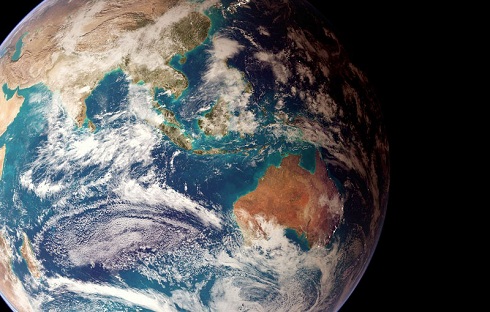
    Our little blue marble...I find myself spending a lot of time thinking about the future of our society and planet – how we can solve problems of today and prevent those of tomorrow. Quite often I draw up battle plans on scrap paper in preparation for those policy battles we don’t even know exist yet, those looming around the corner. Thinking I knew the CSIRO website in and out, you can imagine my delight when I stumbled upon CSIRO Futures. This forward thinking, strategic planning group is dedicated to helping government and industry make the tough, and smart, choices that will be critical given our uncertain future.  

    Wanting to learn more about this group’s work and impact, I reached out to Dr Stefan Hajkowicz, the Theme Leader for CSIRO Futures. This is our digital conversation about science, education, energy, and what Australia must do to secure its future.

    Can you provide some historical background on CSIRO Futures? What was the impetus for the creation of this unit? How and when did it come about?

    The birth of CSIRO Futures was somewhat serendipitous. In 2009 we started a small internal think-piece to inform CSIRO strategic planning. It wasn’t ever intended for the outside world. However, at a major Industry and Government conference in Melbourne a video link to Boston Consulting Group (BCG) broke down. That was our lucky break. Someone from BCG was going to deliver a talk on “megatrends”. When the video link broke I was asked to step in and cover the session with our own homegrown megatrends. The audience loved the fact this work was also being done down-under and we subsequently received heaps of offers to present the work in boardrooms and at conference keynotes. We later received requests to do foresight research/consulting projects for industry sectors. So that’s when we set up CSIRO Futures. It’s now running pretty well. We’ve delivered a bunch of projects and more are in the pipeline. Our aim is to inform, engage and from time-to-time entertain.

    Can you describe your role as theme leader at CSIRO and the impact this role has had (or will have) on the future of science?

    This is an interesting role in CSIRO. In fact – I love it. I was appointed in July 2012 and it’s been fascinating and productive. This role is having impact in many ways. One way is that it’s making science accessible to people in industry, government and the community. For many people CSIRO means evidence-based, robust and well-researched information. When the CSIRO logo is mixed with imaginative stories about the future of the world there’s much interest. The aim is to mix science fact with science fiction to inform people’s decision making.

    The report “Our Future World: Global megatrends that will change the way we live

  • Weekly Science Picks

    Weekly Science Picks

    #Scio13

    This week Science Online kicked off in Raleigh, North Carolina. The unconference that brings together communicators of science in all their ilks — writers, bloggers, scientists themselves, filmmakers etc — the list goes on.

    “I write fiction in the form of grant proposals…

  • New leader of CSIRO Astronomy and Space Science division

    New leader of CSIRO Astronomy and Space Science division

    CSIRO’s astronomy, spacecraft tracking and space science activities will be headed up by a new leader, with the announcement today that Dr Lewis Ball has been appointed as the incoming Chief for CSIRO’s Astronomy and Space Science (CASS) division.

    Dr Ball returns to CSIRO from his present role as Deputy Director at the Atacama Large Millimeter/sub-millimeter Array (ALMA) located in Chile. There he has led the successful commencement of ALMA’s scientific operation, currently the world’s largest and most complex astronomical observatory and a partnership involving 20 countries.

    “I look forward to enhancing and building on CSIRO’s national and international reputation in the fields of radio astronomy and space science. I’m excited and honoured to be leading such a world-class team and thrilled to be a part of the international SKA effort.”

    Previous to his ALMA appointment, Dr Ball had been with CSIRO for nine years in a number of management roles including leadership of CSIRO’s astronomy division from February 2009 to May 2010, first as Acting Director of the Australia Telescope National Facility (ATNF) and then as Acting Chief of Astronomy and Space Science.

    As the new CASS Chief, Dr Ball will lead approximately 280 staff and be responsible for a world-class national research facility for radio astronomy that includes three existing radio telescopes, as well as the 36-dish Australian Square Kilometre Array Pathfinder which begins operations this year.  Dr Ball will also be responsible for driving CSIRO’s contribution to the first phase of the Square Kilometre Array telescope in Australia and for heading up, on behalf of NASA, the Canberra Deep Space Communications Complex based at Tidbinbilla.

    Dr Ball’s appointment fills the role made vacant by Dr Phil Diamond, who left CSIRO in October 2012 to take up the position of Director General of the SKA Organisation.

    Group Executive for CSIRO’s Information Sciences, Dr David Williams, welcomed Dr Ball’s appointment.

    “Following an international recruitment search, we are delighted to see Lewis returning to CSIRO. Lewis has had enormous success in his career so far and we’re thrilled to have someone of such high calibre joining our leadership team,” Dr Williams said.

    Dr Ball added, “I look forward to enhancing and building on CSIRO’s national and international reputation in the fields of radio astronomy and space science. I’m excited and honoured to be leading such a world-class team and thrilled to be a part of the international SKA effort.”

    Dr Ball will commence as Chief of CSIRO’s Astronomy and Space Science division on March 18, 2013 and will be based at Marsfield in Sydney.

    Source.

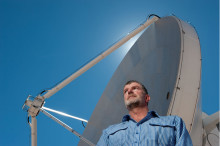
    Image: Dr Lewis Ball has been appointed as the incoming Chief for CSIRO’s Astronomy and Space Science (CASS) division. Photo credit: ALMA(ESO/NAOJ/NRAO), M. Alexander (ESO)

  • Research gives digital economy a boost

    Research gives digital economy a boost

    CSIRO will today launch Australia’s largest publically-funded research initiative focused on the digital economy.

    The Digital Productivity and Services Flagship, CSIRO’s tenth National Research Flagship, is a A$40 million research initiative focusing on the services sector and optimising the full value of national broadband infrastructure.

    The Digital Productivity and Services Flagship, CSIRO’s tenth National Research Flagship, is a A$40 million research initiative focusing on the services sector and optimising the full value of national broadband infrastructure.

    The Director of the Flagship Dr Ian Oppermann says the new Flagship is focused on helping Australia transition from being a predominantly resource-focused nation by developing and delivering more efficient and innovative digitally-enhanced services.

    “Australia is faced with the challenge of maintaining a competitive economic edge in an increasingly complex and resource-limited world,” Dr Oppermann says.

    “Our labour productivity has declined from around 92 per cent relative to the US in 1998 to around 84 per cent in 2010, meaning Australia’s economic prospects beyond the current resources boom will deteriorate significantly if the decline in our productivity growth performance is not reversed.

    “A successful digital economy is essential for Australia’s economic growth and to maintain our international standing.  The services sector represents about 80 per cent of Australia’s GDP, so if we are to help Australia grow, we must help businesses and government deliver services in new, faster and better ways.

    “CSIRO’s expertise in cybersecurity, broadband technologies and services science positions us as the key organisation to take on this research. While some of our work will be in labs, most of it will happen out in businesses and departments across Australia; finding ways to apply technology to improve the way they deliver their services.”

    Dr Oppermann says the Flagship has the potential to transform a range of areas – from the way health services are delivered to the way banks manage their funds.

    “For example, we are working to reduce hospital waiting times and identify bottlenecks in Queensland hospitals by predicting how many patients will turn up in emergency departments, and when.

    “By investing in our services sector we aim to help Australia remain competitive in the global economy, now and into the future. We are looking forward to working with our government and industry partners to help Australia grow through the digital economy.”

    The Flagship builds on CSIRO’s successful track record in health service delivery, logistics, finance and communications. The Flagship will initially focus on four key research areas:

    Government Services – develop efficient and effective information use, government services and systems through improved decisions, coordination and customer centricity.

    Commercial Services – with a strong focus on financial services, develop efficient and effective commercial services and systems through better use of capital and improved service delivery models and processes across supply chains.

    Smart, Secure Infrastructure – extending and securing Australia’s physical and cyber infrastructure, including the extension of wireless broadband services.

    Health Services – improving the safety, quality and efficiency of health services for all Australians by delivering technology in partnership with all State Health Departments.

    The Australian Centre for Broadband Innovation (ACBI) is also a key platform for facilitating new research projects within the Flagship. The goal of ACBI is to develop and test innovative broadband-enabled services, applications and technologies and their use in real world situations.

    Senator the Hon. Stephen Conroy, Minister for Broadband, Communications and the Digital Economy, will officially launch the Flagship with guests from industry, government and innovation sector, at an event in Sydney today. This will also feature a key-note presentation by Sir Tim Berners-Lee, inventor of the World Wide Web, in his first public appearance in Australia in 15 years.

    For more information, please visit  www.csiro.au/dpas

  • Greenland ice core records provide a vision of the future

    Greenland ice core records provide a vision of the future

    Ice cores drilled in the Greenland ice sheet, recounting the history of the last great warming period more than 120,00 years ago, are giving scientists their clearest insight to a world that was warmer than today.

    In a paper published on January 24th 2013, in the journal Nature, scientists have used a 2,540 metre long Greenland ice core to reach back to the Eemian period 115-130 thousand years ago and reconstruct the Greenland temperature and ice sheet extent back through the last interglacial. This period is likely to be comparable in several ways to climatic conditions in the future, especially the mean global surface temperature, but without anthropogenic or human influence on the atmospheric composition.

    The Eemian period is referred to as the last interglacial, when warm temperatures continued for several thousand years due mainly to the earth’s orbit allowing more energy to be received from the sun. The world today is considered to be in an interglacial period and that has lasted 11,000 years, and called the Holocene.

    “The research results provide new benchmarks for climate and ice sheet scenarios used by scientists in projecting future climate influences.”

    Dr Mauro Rubino, CSIRO Marine and Atmospheric Research

    “The ice is an archive of past climate and analysis of the core is giving us pointers to the future  when the world is likely to be warmer”, says CSIRO’s Dr Mauro Rubino, the Australian scientist working with the North Greenland Eemian ice core research project.

    Dr Rubino says the Greenland ice sheet is presently losing mass more quickly than the Antarctic ice sheet. Of particular interest is the extent of the Greenland continental ice sheet at the time of the last interglacial and its contribution to global sea level.

    Deciphering the ice core archive proved especially difficult for ice layers formed during the last interglacial because, being close to bedrock, the pressure and friction due to ice movement impacted and re-arranged the ice layering.  These deep layers were “re-assembled

  • Telescope takes temperature of Universe

    Telescope takes temperature of Universe

    CSIRO telescope takes temperature of Universe Astronomers using a CSIRO radio telescope have taken the Universe’s temperature, and have found that it has cooled down just the way the Big Bang theory predicts.

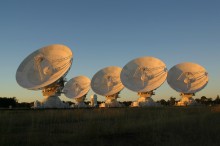
    Using the CSIRO Australia Telescope Compact Array near Narrabri, NSW, an international team from Sweden, France, Germany and Australia has measured how warm the Universe was when it was half its current age.

    “This is the most precise measurement ever made of how the Universe has cooled down during its 13.77 billion year history,” said Dr Robert Braun, Chief Scientist at CSIRO Astronomy and Space Science.

    “This is the most precise measurement ever made of how the Universe has cooled down during its 13.77 billion year history.”

    Dr Robert Braun, Chief Scientist, CSIRO Astronomy and Space Science

    Because light takes time to travel, when we look out into space we see the Universe as it was in the past — as it was when light left the galaxies we are looking at. So to look back half-way into the Universe’s history, we need to look half-way across the Universe.

    How can we measure a temperature at such a great distance?

    The astronomers studied gas in an unnamed galaxy 7.2 billion light-years away [a redshift of 0.89].

    The only thing keeping this gas warm is the cosmic background radiation — the glow left over from the Big Bang.

    By chance, there is another powerful galaxy, a quasar (called PKS 1830-211), lying behind the unnamed galaxy.

    Radio waves from this quasar come through the gas of the foreground galaxy. As they do so, the gas molecules absorb some of the energy of the radio waves. This leaves a distinctive “fingerprint” on the radio waves.

    From this “fingerprint” the astronomers calculated the gas’s temperature. They found it to be 5.08 Kelvin (-267.92 degrees Celsius): extremely cold, but still warmer than today’s Universe, which is at 2.73 Kelvin (-270.27 degrees Celsius).

    According to the Big Bang theory, the temperature of the cosmic background radiation drops smoothly as the Universe expands. “That’s just what we see in our measurements. The Universe of a few billion years ago was a few degrees warmer than it is now, exactly as the Big Bang Theory predicts,” said research team leader Dr Sebastien Muller of Onsala Space Observatory at Chalmers University of Technology in Sweden.

    Publication “A precise and accurate determination of the cosmic microwave background temperature at z=0.89”, by S. Muller et al. Accepted for publication in the journal Astronomy & Astrophysics; online at

    http://arxiv.org/abs/1212.5456

    Source: News@CSIRO blog

  • Australian scientists may have found ‘potential cure for AIDS’

    Australian scientists may have found ‘potential cure for AIDS’

    Australian scientists say they have made a breakthrough that could lead to a potential cure for AIDS, modifying a protein in HIV so it prevents against replication and instead protects against the infection.

    A FORM of gene therapy developed by researchers at the Queensland Institute of Medical Research may provide hope to sufferers of HIV, preventing the virus from crippling the immune system by manipulating its genetic structure and turning HIV into a weapon against itself.

    Dr David Harrich, a naturalised Australian citizen, has utilised a technique that alters the proteins that enable the HIV virus to replicate throughout the body. By modifying the proteins that make up HIV into a mutated form, referred to as Nullbasic, Harrich’s research team have determined that it is possible to block the process of reverse transcription that allows HIV to damage the immune system. This would ultimately render the virus inert, preventing the condition of those infected with HIV from deteriorating further.

    Harrich began studying the HIV virus in 1989 while completing his doctorate in experimental pathology at the University of California – Los Angeles. This project explored the issue of genetic expression and the replication of the HIV virus, a research concept he would continue to pursue after moving to Australia in 1997. The initial breakthrough in Harrich’s research occurred in 2007, with the discovery that Nullbasic had the ability to inhibit the spread of HIV.

    Harrich told Australian Times: “With money running out, I had my PhD student try one more experiment in late 2007. The experiment was to test ifNullbasic could render HIV non-infectious. The student came back and said it worked, so I told him to do it again and again and again. It works every time.

  • Weekly Science Picks

    Weekly Science Picks

    Another week, another collection of weekly science picks! Those of us over here in Northern Europe have been enjoying snowy weather this past few days, with more expected on the way. At the same time, many of us have been keeping a concerned eye on the recent events in Australia – the bush fires being among them.

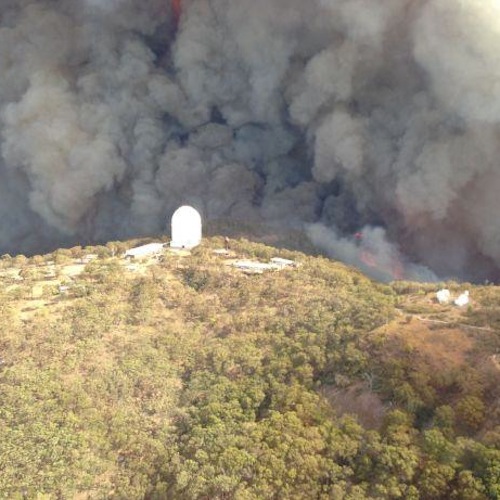
    The Anglo-Australian Telescope in peril

    Among the many areas hit by the fires was Siding Spring Observatory. While some buildings were destroyed and others damaged, all of the telescopes appear to be ok. Details on the entire event from a first hand perspective are given by astronomer Amanda Bauer on her blog, Astropixie.

    SSO: As the smoke clears

    from all accounts i’ve received, heard, and read, the area surrounding coonabarabran  is a “disaster zone,” which is heart-breaking news.  fire service crews will be working overnight, taking advantage of milder conditions, to put containment lines around the edges of the fire, hoping to protect coona before the winds change.


    Orion, the spacecraft being developed to replace the Space Shuttle and ease the pressure on Russia’s Soyuz craft, has been a troubled undertaking. As with virtually all NASA projects lately, it’s been hampered by repeated budgetary problems. The latest development in the story is that Europe has now formally agreed to assist in developing the Orion craft, with the long term goal of deep space missions, to the Moon and Mars.


    Europe and US agree details for Orion astronaut spacecraft


    The current plan calls for Europe to build the prototype module for 2017 and a number of components that would be needed for the second vehicle in 2021, although a formal go-ahead to complete this additional model is some years off.


    Depressingly, there is still an obvious gender gap in science, though it’s at least heartening to know that this is an issue which some are paying serious attention to. Many are going what they can to fix the problem, while others are disappointingly willing to argue that nothing should be done. One article which caught my eye this week was written by an anonymous senior scientist, arguing that we should be taking a more aggressive approach to tackling this problem. I for one, wholeheartedly agree!


    Sexual discrimination in science: why we must act now


    Can it be that women are treated less fairly than men? A deceptively simple piece of research led by Jo Handelsman at Yale University has recently suggested that they are… I should point out here that there was no statistically significant difference between the responses from male or female faculty, nor were there differences between levels of faculty, suggesting this is not a hierarchical bias.


    Back in space, new plans for the International Space Station involve blowing something up. Nevada-based Bigelow Aerospace have been contracted to develop an inflatable habitat module for the space station, with the intention of using the new SpaceX Dragon craft to send it up into orbit. Private companies are evidently becoming major players in human spaceflight.


    NASA buys blow-up habitat for space station astronauts


    Bigelow hopes the tests done in orbit will prove that inflatable capsules are safe and reliable for space tourists and commercial research, an idea almost as old as NASA itself. The space agency began investigating the concept of expandable spacecraft in 1958. Space stations like this would be easier to launch and assemble than those with metal components, so would be cheaper.


    On a final note, while many of us tend to consider invertebrate animals as being inferior, there’s evidence that some of them may be more self aware than we give them credit for. While some research has concluded that fish don’t feel pain in any meaningful way, crustaceans like crabs and prawns probably do. It’s probably about time we extended the laws on humane treatment of animals to cover invertebrates too.


    Why crustaceans might be feeling crabby


    A study has revealed that the shore crab, a close relative of the species we use for food, responds to electric shocks and then goes on to avoid them. Previous research has shown that prawns and hermit crabs also react to painful situations.

    Snow!

    Whether you’re dealing with fire or ice nearby, stay safe and have a good week!

    Image credits:
    Top – NSW Rural Fire Service
    Bottom – Electron Microscopy Unit, Beltsville Agricultural Research Center, Maryland.
    Featured – ESA

  • Zorbing: Adventures in a Hamster Ball

    Zorbing: Adventures in a Hamster Ball

    OzBall - Zorbing on the Gold Coast
    OzBall – Zorbing on the Gold Coast

    Zorbing

    It was a cloudy day, but we headed down the M1 towards the Gold Coast. Arriving at our destination around 9/9:30AM. Destination: OzBall.

    It was about a year ago I had seen video of this amazing, thrilling ride. A weatherman on Sunrise 7 strapped inside a huge plastic ball rolled down a hill. This is called zorbing. Apparently it has been around for decades and can be found in quite a few countries. I knew I must try this on my next trip to Australia. Despite bewildered looks and headshakes from my family, I was going zorbing.

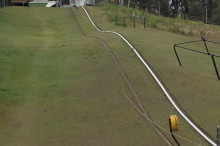
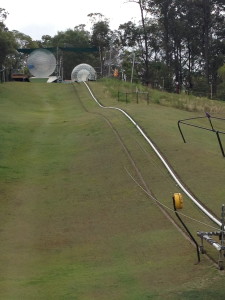
    We left the car in the car park and walked through a field to the entrance to OzBall Park. It’s a little off the beaten track. But there it was, a huge grassy hill, the zorb shining in all its glory at the top. Beckoning, if we dare.

    OzBall has two zorbs. One is the Hydro Ride where 1-3 riders slosh around in water within the zorb. To me, it’s what being trapped in the washing machine on the delicate cycle would look like. The other is the Harness Ride. The real deal; where you’re strapped to the wall of the zorb facing your fellow zorber, all zany-eyed and excited because you’re a self-described thrill seeker! Little did I know that ride was to exert every known (and unknown) calculable physical force on my body. There was no line or wait for the harness ride. Hmmm.

    The Zorb (The Hamster Ball)

    You enter the zorb by pulling yourself through a tunnel-like entrance. The zorb is massive – measuring about 3 metres (10 ft) in diameter. Tucked inside is an inner orb about 2 metres (6 ft 7 in). The space between the two orbs creates a shock absorbing, air cushion, connected by hundreds of small nylon strings. The tough, durable plastic is approximately 0.8 millimetres (0.03 in) thick. Shackled securely in my seat by 3 safety mechanisms: the chest harness, lap belt and ankle restraints; I felt completely safe.

    The Ride

    140 metres (459 ft) is not a long distance. And the speed seemed along the lines of a kid’s carnival ride, reaching up to 30 KPH (19 MPH). I didn’t factor into account the slope of the hill. And it’s not merely an up and down motion, but a side-to-side motion as well. I think you can see where I am going with this. I got way more than the adrenaline rush I bargained for. No projectile vomit or anything of the sort. Just a lot of screaming and wishing for it to be over. It seemed an eternity had passed. The zorb paused. The zorb started moving again. More screaming. The only words I could get out of my mouth were, “Oh, it’s not over yet!” Rolling down the hill, eyes open, eyes shut, trying to stare out the porthole at the grass to fixate my glaze on a constant sight. Finally. The. Zorb. Stopped.

    Lawnmower martini. Not sure what that is, but that’s what I felt like. I could hardly speak, but got out of that zorb as fast as possible. Slight dizziness, wobbly, and an insane amount of belching from all the air trapped inside my stomach. The OzBall operators offered us a free hydro ride for being such good sports. I politely declined the invitation.

    Why Zorbing?

    The point of this story is that it is an incredible opportunity for learning about physics! And how fun science can be when applied to wacky and crazy ideas! I always wanted to go to the theme park on a field trip to ride roller coasters and learn about the forces at work. OK, I really just wanted to ride roller coasters. Man, some science classes were so lucky!

    Whether it’s an activity like zorbing, or riding roller coasters, biking, skiing or skateboarding, science is involved. Tools working in tandem with the human body for the benefit of amusement. How far you decide to delve into the science behind each is up to you. I believe that is how to keep science fun and entertaining and keep the kids coming back from more. Education could take a cue from zorbing’s playbook – just let go and roll down the hill.

    As for me, I’m glad I tried it; ticked the zorbing experience box. If you saw that episode of Modern Family where Phil does everything in his power to remain a roller coaster fanatic so he can retain that bond with his son, Luke; then you know what I’m talking about. But I’m going to lock this one away and slowly try to rebuild my street cred. (Thank goodness we didn’t opt for the video!)

    Warning: Zorbing has been labelled an “adventure sport”, like bungee jumping or skydiving and can be dangerous if the right precautions are not taken. Even riding a roller coaster can sometimes end in tragic results. Deaths from zorbing have occurred, one in Russia just last week. A grassy hill with a catch containment system at the bottom is much different than going down a snowy, rocky mountain. Exercise your best judgement and caution if you are going to attempt zorbing.


  • Phantom fishing targets turtles in northern Australia

    Phantom fishing targets turtles in northern Australia

    14 January 2013

    Phantom fishing targets turtles in northern Australia CSIRO scientists working with GhostNets Australia and Indigenous rangers are identifying hotspots where lost fishing nets are threatening our marine biodiversity.

    Worldwide, around 640 000 tonnes of fishing gear is lost or discarded each year. These ‘ghostnets’ can continue fishing for decades, entangling huge numbers of marine animals, including threatened and commercially valuable species.

    “Our research goes beyond discovering where ghostnet fishing is taking place, to actually estimating its impact on biodiversity, in particular on threatened marine turtles.”

    Dr Denise Hardesty, CSIRO Ecosystem Sciences

    Ghostnets, originating mainly from fisheries in Asia and Australia, are a particular problem in Australia’s Gulf of Carpentaria, where they can reach densities of up to three tonnes/km, among the highest recorded worldwide.

    “Our research goes beyond discovering where ghostnet fishing is taking place, to actually estimating its impact on biodiversity, in particular on threatened marine turtles,” Dr Denise Hardesty of CSIRO said.

    “Using a model of ocean currents and data collected by Indigenous rangers on the number of ghostnets found during beach cleanups, we simulated the likely paths ghostnets take to get to their landing spots on beaches in the Gulf of Carpentaria,” Dr Hardesty said.

    “Combining this with information about the occurrence of turtles in the area, we found that entanglement risk for turtles is concentrated in an area along the eastern margin of the Gulf and in a wide section in the southwest extending up the west coast,” she said.

    “Most ghostnets enter the Gulf from the northwest and move clockwise along its shore. This means we can help protect biodiversity in the region by intercepting nets as they enter the Gulf, before they reach the high density turtle areas along south and east coastlines,” she said.

    Australia is home to six of the world’s seven threatened species of marine turtle. During a recent cleanup of ghostnets on beaches in the Gulf, 80 per cent of animals recorded in nets were marine turtles, including Olive Ridley, Hawksbill, Green and Flatback turtles.

    “Our predictions of the distribution of turtles washing ashore entangled in ghostnets matched the actual frequencies of turtles found in ghostnets during beach surveys, suggesting our model is accurate,” Dr Hardesty said.

    Ghostnets are a global problem, capturing seabirds, marine mammals and sea turtles worldwide. Lost or abandoned fishing gear makes up only 20 per cent of marine debris but has a disproportionate effect because it is designed to capture wildlife.

    “Our research shows that combining models of marine debris with species occurrence data could identify global hot spots for impact, helping pinpoint where prevention and clean-ups could really make a difference to biodiversity,” Dr Hardesty said.

    This research used information on ocean currents generated by the BLUElink Ocean Data Assimilation System to simulate the paths of ghostnets.

    Ghostnet impacts on globally threatened turtles, a spatial risk analysis for northern Australia [external link]‘ was published by CSIRO and GhostNets Australia in the January 2013 online early issue of Conservation Letters [external link].

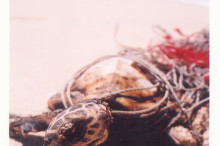
    Image: A turtle washed ashore caught by a ghostnet (Image: Alistair Dermer)

  • Weekly Science Picks

    Weekly Science Picks

    datatunnelI’ve just returned from a fantastic holiday in Australia (sad I had to leave). The great thing about travel is that it opens your mind and exposes your senses – elevates it to a higher level of thinking, thinking that is clear and uninterrupted. The not so great thing about travelling to far away places is the resulting jet lag…that can lead to not so clear and uninterrupted bouts of thinking at 3AM. What follows is a hodgepodge of the collection of science stories I encountered over the past week.
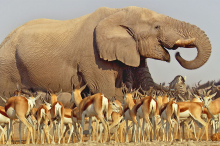

    This first article opens up a much-needed debate on the policy of biodiversity and species preservation. Whether it is rhinos, right whales, snow leopards, I think it’s time we had a conversation on how present day society moves forward with species interaction.

    Rhino poaching in South Africa reaches record levels by Matt McGrath

    “Rhinos are being illegally killed, their horns hacked off and the animals left to bleed to death,” says Traffic’s director of advocacy Sabri Zain, “all for the frivolous use of their horns as a hangover cure.”


    While in Brisbane, I had the great pleasure to meet with the director of Australian Science, Dan Petrovic. We had an hour-long conversation about artificial intelligence. I’m not sure how much interaction I want with my search engine in the future, but the beauty of his story is in the intricate details and the possibilities that may soon be reality. This story technically wasn’t from last week, but that is when I read it. So if you haven’t given it a read, sit yourself down with a cup of coffee or tea and do so. We would love to host a Google+ hangout and get some reader feedback on this topic.

    Conversations with Google by Dan Petrovic

    This article explores the future of human-computer interaction and proposes how search engines will learn and interact with their users in the future.


    I love science. How did I not know about io9? No idea. But thank goodness I have added it to my weekly reading list. (Thanks Dan!) This next story is about humour more than anything. And in science, a sense of humour is an important character trait to have. The U.S. may not be building a Death Star, but kudos to them for the response and taking the opportunity to highlight STEM. My nieces in Ohio are hard at work on building the Lego Death Star they received from Santa. So in a way, the U.S. is getting a Death Star and two aspiring scientists. Maybe thousands!

    The White House will not build a Death Star, tells us in hilariously geeky fashion by Lauren Davis

    If you do pursue a career in a science, technology, engineering or math-related field, the Force will be with us! Remember, the Death Star’s power to destroy a planet, or even a whole star system, is insignificant next to the power of the Force. –  Response from Paul Shawcross, Chief of the Science and Space Branch at the White House Office of Management and Budget


    Apparently Shell experienced an incident with its Arctic drilling on New Year’s Eve, with no catastrophic consequences. Arctic drilling seems like a horror movie. You’re sitting on the couch watching TV, the music is loudening, suspense is growing, you know something bad is about to happen at any second…

    An energy analyst from the Brookings Institution mentions in the article that oil and gas companies don’t have a choice when it comes to Arctic exploration and drilling. In order to remain competitive, they have to go up there.

    In Kulluk’s Wake, Deeper Debate Roils on Arctic Drilling by Traci Watson

    Fortunately for the energy industry, the Arctic has become more hospitable to drilling just as other locations have become more hostile. The Arctic sea ice melted away to a record low in 2012, according to the U.S. National Oceanic and Atmospheric Administration, spelling easier access for drill ships, though melting ice also brings new problems.

    Fortunate. Back to the drawing board. So many plans and policies, so little time.

    As always, stay thirsty for knowledge.

  • Weekly Science Picks

    Weekly Science Picks

    With 2012 firmly behind us, with no more reflections and no more top ten lists, let’s begin…

    The BBC. As warm and comforting as mother’s milk. A beacon for the rest of the world to follow. Journalistic integrity, and more bang for your buck than any other establishment I can think of. There is nothing the BBC does so well as documentaries, namely nature documentaries. BBC Africa is the latest in the long line of documentaries, in the grand tradition of nature documentaries. Then there is David Attenborough. A man no one can find fault with. And the voice of Mother Nature! If you have a chance to catch this series, do not miss it. If your country is not fortunate enough to be bestowed with the British Broadcasting Corporation… then emigrate!

    This time of year that virus from Norwalk is always in the news. I’ve written about it before. Norovirus is the perennial winter vomiting bug. It seems, this year’s outbreak was particularly one of note — causing over 1 million cases in the UK alone. Carl Zimmer explains why it is “possibly the best pathogen

  • 2013: The Year to Come

    2013: The Year to Come

    The 21st century is now a teenager. We prospered. We suffered. But most of all, we survived. Here’s to 2012 and the year ahead. 2012 was a remarkable year, especially for science. There were world firsts and breakthroughs. The story of the Higgs boson definitely made the top of many lists. The relentless march of scientific progress is always long and 2013 will mark another chapter.

    Where will the science firsts and breakthroughs come from? Of course we can never predict where the big science stories will come from. And that is part of the beauty. But at least 2012 has told us where to look.

    The NASA Mars rover Curiosity still treks on. NASA’s Mars Science Laboratory Project is using Curiosity during a two-year prime mission to assess whether areas inside Gale Crater ever offered a habitable environment for microbes. So there are still much to discover on the red planet. Curiosity explores the Glenelg region during the early part of the year. Then it will venture on, a 6 to 9 month journey across the martian landscape taking in the sights and seeing what is there to discover.

    In 2013 expect the comet Ison to garner some column inches towards the back end of the year. In early 2013 October it will pass very near Mars and possibly be visible to rovers and orbiting spacecraft. The newly discovered comet could develop a spectacular tail, becoming as bright as the full Moon as it passes by our Sun. The comet is currently falling toward the Sun from between the orbits of Jupiter and Saturn. There is a chance it won’t survive this encounter. Whatever survives will then pass nearest the Earth in late 2013 December.

    In 2012, disaster relief made prime time news. In our ever-changing climate, disasters are becoming more of a recurring topic. Hopefully, 2013 will give us a little bit more foresight in this department. We have to mitigate better, and lessen the damage and destruction of human life.

    In 2013, we shall eradicate guinea worm. Polio is also on the list, but progress is slow on that one. Smallpox, rinderpest, and guinea worm makes three. More remarkable than the other two because we will do it without any cure or drug treatment. Our science has produced no miracle cure, no vaccine, no treatment, and yet guinea worm will be gone.

    We are constantly at the frontiers of science and we don’t know quite what to expect. What we can be sure of is that as the news breaks, the science will be covered by bloggers and journalists, at both ends of this new media scale. The science writing ecosphere has seen very little change in 2012. The furniture was rearranged as some writers found new homes for their blogs. But for the most part, the living room stayed the same. If anything there was a proliferation of new voices to add to the mix. PLoS Blogs added a nice mix of public health bloggers to their roster. Mind the Science Gap continues to prove to be a great experiment in letting new voices into the science writing game. A new batch of bloggers takes to its site in January for another 10 week stint. Certainly here at Australian Science we’ve added a long list of new bloggers. Expect this to continue.

    So here’s looking forward to what 2013 has in store.