That time of the week again. Time to kick back with a sunday newspaper… but since newspapers are dead we bring you a weekly run-down of all things sciencey!
We begin in space, with aliens. Australian Science’s Markus has a piece at Discover News on the search for extra-terrestial life and the feeling of finding it.
“SETI, the search for extraterrestrial intelligence, has seen astronomers scouring the sky for decades in hopes of receiving artificially generated radio signals sent by alien civilizations. But then, there’s a good chance we’ve already found just such a signal. And 1977 saw the most tantalizing glimpse ever.
Change is a-coming! In 2050 CSIRO predicts that our homes and businesses could be powered by over 20 different energy sources and technologies. Together with our partners we are helping Australia’s electricity sector prepare for the monumental make-over required to undergo the transformation.
This week in Sydney, CSIRO announced a A$13 million research collaboration between CSIRO and four leading Australian universities – University of Sydney, University of Newcastle, University of Queensland and University of New South Wales – to develop the nation’s capacity to plan and design the most efficient, low emission electricity grid for Australia.
Launching the Future Grid Cluster today, Dr Tom Hatton, CSIRO Energy Group Executive, said the electricity sector is undergoing a huge transformation, a change not seen since the industrial revolution.
“The Future Grid Cluster brings together Australia’s best research capabilities and provides a framework the electricity sector needs to make A$240 billion worth of decisions in the next two decades.”
Dr Tom Hatton, CSIRO Energy Group Executive
“We are facing unprecedented change in the electricity system over the next 20 to 30 years. We’re talking about change to a system that has seen stability for decades and has used technologies and energy sources that are predictable and controllable. Moving away from that is going to require a great deal of effort and capacity building,” Dr Hatton said.
“The Future Grid Cluster brings together Australia’s best research capabilities and provides a framework the electricity sector needs to make A$240 billion worth of decisions in the next two decades.”
Leader of the research program, University of Sydney’s Professor Tony Vassallo, said “Each university will contribute specialist knowledge and expertise and will work with CSIRO to develop a new suite of tools to understand, develop and optimise energy grids of the future.
“This will assist decision makers in their choices about future grid development,”said Professor Vassallo.
The project is supported by A$10 million worth of in-kind contribution from university partners and a A$3.2 million grant from the CSIRO Flagship Collaboration Fund – established to enable the skills of the wider Australian and global research community to be applied to the major national challenges targeted by CSIRO’s Flagship research program.
More information on CSIRO’s Future Grid Cluster
The research will build on CSIRO’s broad electricity sector and energy management work, including the industry-led Future Grid Forum that began in 2012.
The research cluster launched today will draw together engineering, economic and policy aspects of grid development and optimisation with four major areas covered in the research:
– Improved understanding of impacts of different loads, generation sources and energy storage on system security, led by University of Sydney
– planning and co-optimisation of electricity and gas networks, led by University of Newcastle
– economics of alternative network development paths and estimates of total cost and price impacts, led by University of Queensland
– policy measures and regulatory changes to facilitate a smooth transition to a de-carbonised future grid, led by University of NSW.
The Australian Institute of Food Science and Technology (AIFST) has announced the recipients of their prestigious merit and innovation awards ahead of the 46th Annual AIFST Convention.
The Keith Farrer Award of Merit, which acknowledges achievement in food science and technology and contribution to furthering the aims of the Institute’s objectives, has been awarded to Professor Ian Brown.
Professor Ian Brown, Managing Director and CEO of Clover Corporation
Professor Brown’s 32-year career spans technical and commercial roles across the cereal, ingredient, food and nutrition industries both internationally and locally. In furthering his personal research activities and applying them collaboratively between companies and the scientific sector, Professor Brown has been successful in commercialising key food and nutritional ingredients including Hi-Maize®, the world’s first commercial source of resistant starch.
Professor Brown is currently the CEO and Managing Director of the Australian publicly listed company Clover Corporation, which under his leadership has experienced an increase in profits from $465,000 to $4.4 million. In addition, Professor Brown is a Special Visiting Professor at the University of Colorado and an Adjunct Professor at the Flinders University of South Australia.
President of the AIFST, Jo Davey, said, “It is unique in the food sector to see an individual that holds full-time senior industry positions with such an impressive scientific record of published papers, book chapters and keynote presentations. Additionally, he has also been awarded a PhD by one of Japan’s leading universities and is listed on 24 patents. Professor Brown has a long list of truly outstanding achievements.
European Inventor Award 2013 goes to outstanding inventors from Austria, France, Sweden, Switzerland, Spain and the US
· European Patent Office honours pioneering inventors of LCD technology, nano-capsules for cancer treatment, pyrosequencing, USB, and ‘Blumotion’ damper system for doors
· EPO President Benoît Battistelli: “These inventors have been truly exemplary, not only in coming up with ingenious solutions to the challenges of our time, such as healthcare and climate change, but also in improving people’s lives through the quality of the products and services that we are using every day, and by creating jobs to promote economic wealth”
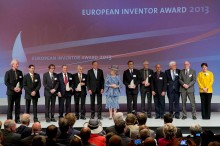
Amsterdam, 28 May 2013 — The European Patent Office today announced the winners of the European Inventor Award2013, which honours outstanding inventors for their contribution to social, economic and technological progress.
Some 500 guests attended the award ceremony at the Beurs van Berlage in Amsterdam, including Her Royal HighnessPrincess Beatrix of the Netherlands, Sander Dekker, the Netherlands State Secretary for Education, Culture and Science, and Michel Barnier, the European Commissioner for Internal Market and Services.
The 2013 awards were presented in five categories, in addition to the Popular Prize:
· Lifetime Achievement: Martin Schadt (Switzerland), inventor of the world’s first flat-panel liquid crystal display, better known as LCD. Schadt’s technology has paved the way for the low-energy devices, such as flat screens, tablet computers and mobile phones, now used by millions of people worldwide.
· Industry: Claus Hämmerle and Klaus Brüstle (Austria) from Austrian manufacturer Julius Blum for their invention of a damper system for soft closing of furniture doors, drawers and wall cabinets. ‘Blumotion’ has seen enormous market success worldwide and has become an industry standard.
· Small and Medium-Sized Enterprises: Pål Nyrén (Sweden) for inventing pyrosequencing ─ a far faster, less complicated and cheaper method of sequencing DNA strands. Its combination of lower costs and greater speeds has revolutionised the study of the building blocks of life, and opened up new avenues for research into personalised treatments and cures for life-threatening diseases such as cancer.
· Research: Patrick Couvreur, Barbara Stella, Véronique Rosilio, Luigi Cattel (France, Italy), a team at Paris-Sud University, for their invention of nano-capsules – 70 times smaller than red blood cells and protected by a biodegradable coating – which destroy cancer cells without harming healthy tissue.
· Non-European Countries: Ajay V. Bhatt, Bala Sudarshan Cadambi, Jeff Morriss, Shaun Knoll, Shelagh Callahan (USA), for creating and developing Universal Serial Bus (USB) technology, one of the most important advances in computing since the silicon chip. An industry standard today, USB not only allows users to more easily connect devices to a computer, it also streamlines work for hardware and software developers. It is found in billions of electronic devices all over the world, from webcams to cell phones and memory sticks.
José Luis López Gómez (Spain), winner of the Popular Prize award on the stage of the European Inventor Award 2013
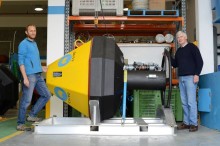
· The winner of the Popular Prize was José Luis López Gómez (Spain), whose invention to use a unique ‘independent guided’ wheel design rather than a standard axle on high-speed passenger trains makes those trains some of the most comfortable and safe in the industry. The new technology also helps to reduce energy consumption, premature wear and costs of maintenance. An electronic system monitors the speed at which the wheels are rotating. Due to the wheels’ slightly conical shape and the difference in length between the inner and outer tracks on a curved section of track, the system can determine the wheels’ exact contact point. Pneumatic struts attached to the wheels then move the wheels to the best position.
“Innovation holds the key to safeguarding quality of life and economic prosperity in Europe,” said EPO President Benoît Battistelli at the award ceremony. “All of the inventors honoured here today have been truly exemplary, not only in coming up with ingenious solutions to challenges of our time, such as healthcare and climate change, but also in improving people’s lives through the quality of the products and services that we are using every day, and by creating jobs to promote economic wealth. They demonstrate Europe’s creative drive and inventive spirit, and the role played by patents in supporting this.”
About the European Inventor Award
Launched in 2006, the European Inventor Award is presented annually by the European Patent Office. The Award honours inventive individuals and teams whose pioneering work provides answers to the challenges of our age and thereby contributes to social progress, economic growth and prosperity. Nomination proposals are submitted by the public, and by patent examiners at the EPO and Europe’s national patent offices. Fifteen finalists and, subsequently, the winners are chosen from among the nominees by a high-profile international jury which includes experts from business, politics, media, academia and research. The Award is presented in five categories: Industry, Research, Small and Medium-Sized Enterprises (SMEs), Non-European Countries, and Lifetime Achievement. This year, for the first time, the general public was invited to vote for the Popular Prize from among the 15 finalists.
A happy Science Sunday to everyone! As usual there’s been a lot happening in the world of science, so lets take a peek of the best picks for the past week!
If you’re into astronomy, a planetary conjunction is something to celebrate! This week is one for the observers. Just after dusk for the next few days you can see the unusual and stunning alignment of Jupiter, Venus and Mercury.
‘Three planets Jupiter, Venus and Mercury — can be now be seen in the western sky at dusk, weather permitting, in a rare and beautiful gathering that changes from night to night. Astronomers call a meeting of objects in the night sky a conjunction, but this planet parade is better described as a “Grand Conjunction.”
Also in the news this week. Cockroaches. Yes. Cockroaches. Apparently they’re cutting back on the sugary stuff, for good reason.
Sugar-free diets aren’t just making headlines in the human world. Cockroaches have joined the anti-sugar trend. Research published in the US journal ‘Science’ today shows cockroaches will eat anything, except sugar. The researchers show that cockroaches have learned to detect and avoid a certain kind of glucose that is commonly used in commercial traps.
Citizen scientists solved a decades-old puzzle by assisting astronomers to make the most accurate distance measurements yet for an important star system.
The new research, reported in the in the journal Science found the distance to the binary system SS Cygni in the constellation Cygnus the Swan, is 372 light-years. That’s far closer than previous measurements of 520 light-years made by the Hubble Space Telescope, according to the study’s lead author Dr James Miller-Jones of Curtin University and the International Centre for Radio Astronomy Research.
This article took me by surprise. I know we can tell a lot from looking at skeletons, and fossilised teeth but how long a mother breastfed for?
The debate on how long to breastfeed now has a Neanderthal spin with analysis of a fossilised tooth suggesting primitive mothers breastfed exclusively for just seven months. The claim is based on an analysis of barium concentration in different layers of tooth enamel, which also reveals the Neanderthal child was completely weaned at 1.2 years.
Greetings one and all, and a very happy science Sunday to you! This week’s generally been quite interesting. We’ve had good news, bad news, a little heated discussion… All the kind of things which keep the science community vibrant and interesting. As for specifically what that news was, well. Please do read on…
First up this week, sad news. After exemplary service ever since its launch in 2009 and a mission extension last year, the Kepler telescope has finally broken down. Kepler spots transiting exoplanets by staring unblinkingly at the same patch of sky, and in order to do that it needs to keep very still. Sadly, two of its four gyroscopes are out of action, meaning that Kepler may be shutting down for good.
“Frankly, I’m absolutely delighted that we’ve got all this data, that we have been so successful, that we have found so many thousands of planetary candidates,
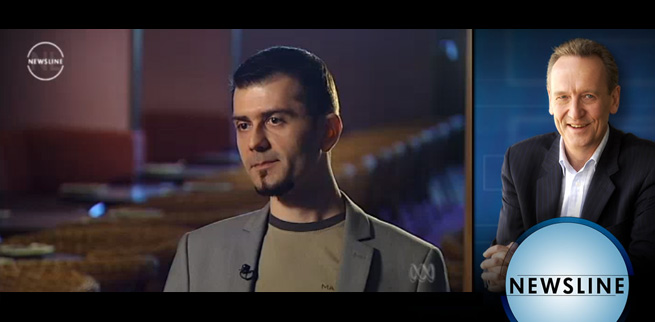
Dan Petrovic appeared on ABC’s Newsline as a representative of Australian Science and one of the first five sponsors of Mars One initiative. The interview also features comments from the founder Bas Lansdorp, Jonathan Nally from SpaceInfo and Dr. Graham Phillips from ABC.
Report by: Kesha West for Newsline by Jim Middleton
The Modular Prosthetic Limb will help patients to feel and manipulate objects just as they would with a native hand. JOHNS HOPKINS UNIV. APPLIED PHYSICS LAB.
These were the science stories that resonated the most for me this week. Gene snipping, CO2 alarms, and brain-controlled prosthetics – an array of stories touching on the impossible, and yet, totally possible.
Given the way budgets and financing have always dominated the path of scientific research and with the rise of start-ups and crowdsourcing dominating many a young entrepreneurs dream, this story is important for many reasons. It raises the questions of safety, ethics and regulatory responsibility. It is a must read.
“This curious looking setup is the pitch drop experiment. Some people reading this will undoubtedly know of it. Set up at the University of Queensland in 1927 by Professor Thomas Parnell, this experiment may take a few of your ideas about what a liquid actually is and turn them on their heads. Pitch, you see, is a liquid. But if you were to see some of it up close, you might not think so. To our eyes and senses, it appears to be a solid. It’s a black, waxy looking substance, a derivative of tar which ship builders used to use to waterproof boats. You can think of it more or less like a liquid which moves in slow motion. Extremely slow motion! Pitch is so viscous and flows so slowly that you can quite easily pick up a piece of it and hold it in your hands. You can snap pieces of it off, and if you hit it with a hammer, it will even shatter. But make no mistake – pitch is not a solid.
It’s been rather a turbulent week, all told. There’s been a lot going on in the news, both good and bad. Hopefully, this little handful of science news items will help you finish the last week and begin this next one on a lighthearted note!
NASA’s Kepler mission has found a star system which has not one, but two possibly terrestrial planets in its habitable zone.
Whether either or both of Kepler-62’s optimally positioned planets actually has water is beyond the technical capabilities of the Kepler and other telescopes. Kepler works by detecting the very slight dips in light coming from a star caused by a planet passing by, relative to the telescope’s line of sight.
Sometimes the best way to learn more about nature is to try and recreate it. That happens to be exactly what happened when a group of roboticists were looking at insects…
They found that the moth moved its abdomen in direct response to its shifting visual environment. “If the pattern is rotating up (clockwise), the moth would raise its abdomen up (counterclockwise),” says study co-author Jonathan Dyhr, a University of Washington biologist. “The moth was raising or lowering its abdomen to counteract the movement.”
To celebrate the 23rd anniversary of the Hubble Space Telescope’s launch into orbit, NASA have released a brand new and frankly beautiful image of the iconic Horsehead Nebula. Phil Plait explains more…
The Horsehead itself is the site of ongoing star formation. The dense gas and dust inside the nebula is collapsing to form stars, and, at the same time, the edges are being eroded away by the fierce ultraviolet light of Sigma Orionis. The top of the Horsehead is acting a bit like a shield, protecting the material beneath it, which is why it’s taken on that umbrella-like shape. You can see more sculpted pillars of material around the sides, too, like sandbars in a stream.
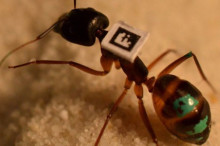
Ants are fascinating little creatures, and a team of Swiss researchers have been studying the goings on inside a colony of them – by tracking them with barcodes!
Analyzing the color codes, they found that younger ants were more likely to work nursing the young, and older ants were more likely to be foragers. In general, they watched ants transition from nursing to cleaning to foraging as they age, but there’s a lot of individual variation in how quickly these transitions took place.
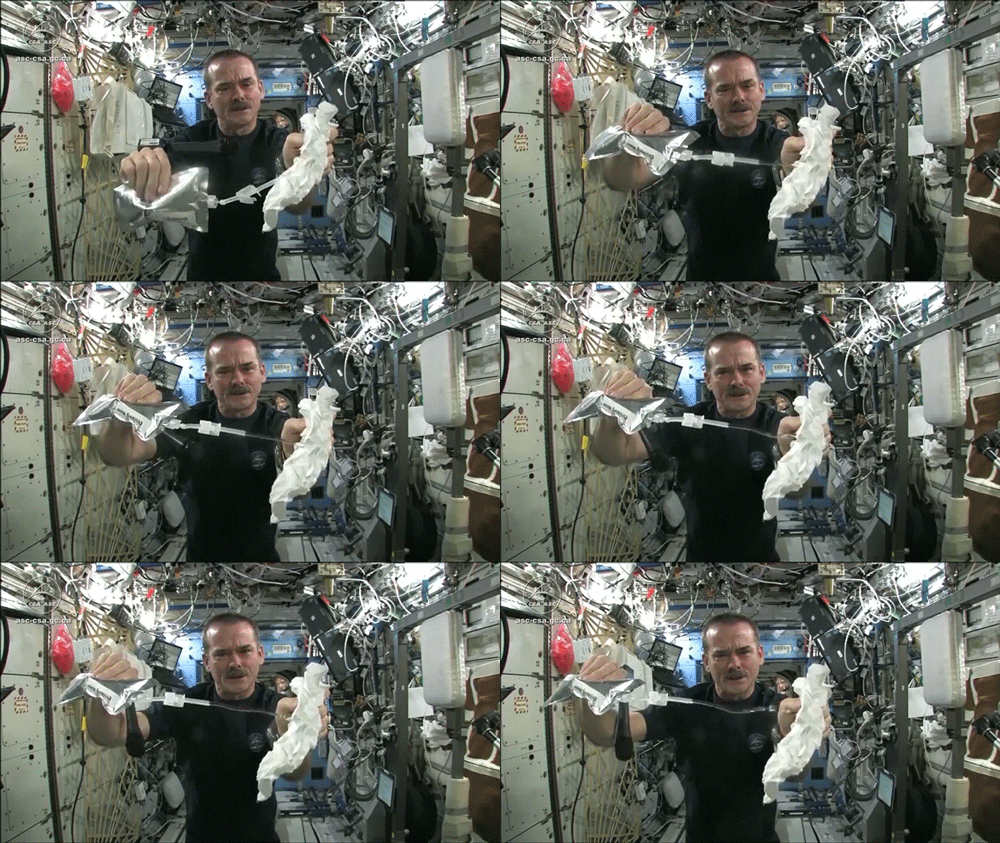
Finally, everyone’s favourite astronaut, Commander Chris Hadfield aboard the ISS answers an interesting question. What happens if you wring out a wet cloth in zero gravity? Click the link to watch the video!
Two Nova Scotia high school students, Kendra Lemke and Meredith Faulkner, submitted this experiment to Canadian Space Agency and got to see astronaut Chris Hadfield actually test it out on the ISS. The results are seriously extraordinary and you need to see them.
A key facility in an international observing network to detect increasing ocean acidification is monitoring carbon cycling in the Tasman Sea from a site near Maria Island.
The A$150,000 mooring with its suite of environmental sensors is one of three in Australia’s Integrated Marine Observing System (IMOS) that are included in the international network in which Australian scientists at CSIRO and the Australian Institute of Marine Science are playing a central role.
Others are located on the western side of Kangaroo Island, South Australia, and on the central Great Barrier Reef near Townsville. Extending the IMOS observations into the Southern Ocean is the French Antarctic supply ship l’Astrolabe and the Australian ice breaker, Aurora Australis. The vesselsprovide a platform for at-sea monitoring during return voyages from October to March between Hobart and the Antarctic bases they visit.
The observations made by the new mooring will provide data to determine the ocean acidification change and will fill a key need in assessing how the marine ecosystems of our region might be impacted.
Leading the acidification research is Dr Bronte Tilbrook from CSIRO’s Wealth from Oceans Flagship, who said the uptake and storage of carbon dioxide by the ocean is causing changes in the seawater chemistry and increasing acidity levels of surface waters.
The potential for impacts from the tropics to the polar oceans is large, and the resilience of ecosystems to these changes is poorly known.
“Elevated levels of carbon dioxide in the atmosphere have made the oceans about 30 per cent more acidic in the past 200 years.
“The ocean takes up about 25 per cent of annual carbon dioxide emissions generated by human activity. The ocean uptake is a great benefit because it removes human-generated emissions, but it comes at the cost of increased acidification of ocean waters.”
“Australia contains many ecosystems that may be sensitive to ocean acidification, including the extensive coral reefs of Northern Australia and down to the polar regions.
“Predicted impacts range from a decline in the growth of shells and skeletons of important species including corals and some shellfish, to shifts in the structure and dynamics of ecosystems,” he said.
Dr Tilbrook said the Australasian region contains some of the world’s most extensive carbonate-based ecosystems, ranging from the coral reefs of the Great Barrier Reef and Indo-Pacific, to the earth’s largest cool-water carbonate platform along the southern Australian shelf.
The surface waters of the Southern Ocean are where some of the most profound shifts in carbonate chemistry will occur by mid-century, potentially influencing the survival of deep-sea coral communities and calcifying pelagic species.
The Maria Island and Great Barrier Reef sites are part of a growing international network of moorings, and are located to characterise changes down the east coast of Australia and the influence of the East Australian Current. The Kangaroo Island mooring monitors deeper waters that can seasonally upwell onto the South Australian continental shelf. The upwelled waters are expected to have higher carbon dioxide concentrations that could accelerate the exposure of ecosystems to acidification earlier than in other regions.
Sensors on the Maria Island mooring also measure temperature, salinity, oxygen, chlorophyll and turbidity, while water samples are taken each month for plankton and nutrients. Basic measurement samples have been collected at Maria Island by CSIRO technicians monthly since 1944, providing scientists with an enviable ocean monitoring record.
You’ve heard of the Ice Age but have you heard of the ‘App Age’? A new report compiled by CSIRO’s Australian Centre for Broadband Innovation (ACBI) has revealed the next generation of broadband-enabled applications will be more about connecting households to new sensors and cloud services than checking emails and social media invites.
The ‘Broadband Connected Homes’ report describes the changing environment of the Australia’s homes, the technologies that are affecting it, and its capacity to support new applications and services.
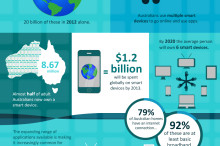
“When considering over 3.5 million Australians now a use smart device to access the internet and that app downloads are predicted to rise above 40 billion globally in 2013, it’s very clear our love affair with apps has come a long way in few short years. We are now looking at the next era of development by experimenting with what our homes will look like when broadband-enabled apps connect data with multiples sensors and new business services,” said Colin Griffith, Director of ACBI.
“These apps will provide new ways for people to access health, energy, education, retail, security, entertainment and many more services. They will allow people to access, discover, share and contribute to media content personalised for us. Broadband apps will also allow us to do old things in new ways such as managing our home energy use through a centralised communications hub as well as enabling non-invasive monitoring and support systems which allow elderly people to live independently in their own homes,” he said.
In conjunction with the release of the report, ACBI is also opening entries for a new Broadband4Apps competition to provide developers with the opportunity to build and demonstrate applications that are enabled by next generation broadband services. With up to $50,000 available in prize money, entrants will be invited to develop prototypes or working applications that address emerging opportunities for delivering services into broadband connected homes.
The competition will be open to individuals and companies that can demonstrate a consumer facing software application which uses the distinctive features of next generation broadband services in Australia’s home.
“The competition will help Australians better understand what is possible through the smart use of broadband. It will also help accelerate the ability of Australian developers to realise these new business opportunities and connect with service providers, technology partners and end users to build game-changing apps,” said Mr Griffith.
ACBI will be hosting two hack days (one in Sydney on 11th May and one in Melbourne on 18th May) to offer entrants the opportunity to workshop their ideas with peers and be mentored by key professionals in the industry including CSIRO, Intel, NBN Co and NICTA.
About ACBI:
The Australian Centre for Broadband Innovation (ACBI) is a national research initiative connecting people to the benefits of broadband through innovative services. It is led by CSIRO in conjunction with National ICT Australia (NICTA), NBN Co with funding support from the NSW and Tasmanian Governments.
ACBI provides unique opportunities to create innovative broadband-enabled services demonstrate their use in real world situations and evaluate their potential commercial and social value. ACBI connects people and business to the benefits of game-changing services and applications enabled by next generation broadband technologies.
About CSIRO:
CSIRO is Australia’s national science agency and has been pushing the edge of what’s possible for more than 85 years. Today, the organisation has close to 6,500 people working out of 58 centres in Australia and internationally. These people work closely with industry and communities to leave a lasting legacy across five broad areas: food, health and life science industries; energy; environment; information and communications; and manufacturing, materials and minerals. ACBI is part of CSIRO’s Digital Productivity and Services Flagship that is a $40 million research initiative to improve Australia’s productivity, deliver innovative services that improve people’s wellbeing and prosperity.
About the Broadband Connected Homes report:
Commissioned by ACBI, the report is designed to help businesses, government agencies and software developers better understand the potential to design new applications and services that can be used in homes that are being connected to next generation broadband services such as the National Broadband Network (NBN).
It describes the changing environment of the broadband connected home, the technologies that are affecting it, and its capacity to support new applications and services. This includes the new capabilities and features of NBN and home networks, the increasing range of connected devices being used in the home, and some of the development platforms for applications. It is the ability to leverage all these different aspects of a connected home that will enable successful new applications and services.
This edition of weekly science picks is going to be a little different… it’s a smorgasbord of intriguing facts ranging from corporate ownership of our DNA to recycling building materials. Let’s get started.
This first story represents the line between scientific research and corporate profits that sometimes leaves the ethical, human components as an afterthought. Hopefully on Monday, 15 April, the US Supreme Court rectifies this when they hear oral arguments on a case concerning the patent of human genes.
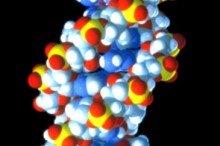
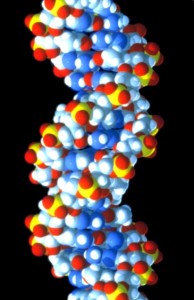
Today, Salk would be shocked to find that your DNA belongs not to you but rather to many companies and institutions that have patents on the DNA from your cells. Forty-one percent of the genes in your genome are not legally yours, according to a long list of gene patents that have been granted since the 1980s. These patents cover thousands of human genes and restrict a doctor’s ability to look at your DNA and plan your medical treatment. These patent claims contradict an intuitive sense that your DNA is no less yours than your lungs or kidneys.
As if Google wasn’t involved in our daily lives enough, they want to be their in death too. Don’t get me wrong, Google is great, I use their products every day. Although this story is a little creepy to think about, where to store or what happens with all that data we create while alive and breathing, is important.
Google announced today that users of its myriad digital services can control how their data is handled while they’re taking a dirt nap.
If you’re fascinated by buildings and building materials, you’ll enjoy this next story I came across on Arup’s website. Arup is a design, planning, and engineering firm with offices around the globe. (They designed and engineered the Sydney Opera House.)
Take glass, for example. Glass from buildings is not widely recycled because it’s not as straightforward as taking empty bottles to the bottle bank. There are issues such as contamination from silicone sealants to consider, for example. But when Arup worked on refurbishing the Lloyd’s of London building, we showed it could be done.
And the last pick for this week is an update on another legal case soon to be heard in The Hague. The UN Court will hear oral arguments from representatives of both Australia and Japan over the Japanese whale research programme in Antarctica. The case is scheduled for 26 June to 16 July.
“Australia will now have its day in court to establish, once and for all, that Japan’s whaling hunt is not for scientific purposes and is against international law,” Australia’s attorney-general, Mark Dreyfus, said.
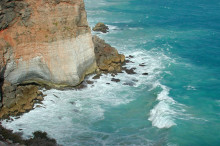
A unique Collaborative Research Science Program to improve understanding of the environmental, economic and social value of the Great Australian Bight was today announced by BP Developments Australia (BP), CSIRO and Marine Innovation Southern Australia (MISA).
The A$20 million Science Program aims to obtain information about the unique marine environment and potential marine resources within the Great Australian Bight (GAB), and will provide information to decision makers to support sustainable development in the region and monitor possible future impacts.
“The Science Program will be one of only a few whole-of-ecosystem studies undertaken in Australia,” Dr David Smith of CSIRO’s Wealth from Oceans Flagship stated. “It will focus on collating information about the marine resources of the Great Australian Bight and providing vital knowledge to inform future decisions for sustainable development in the region.”
The research officially started on 4 April 2013, with scientists setting sail for the GAB aboard the RV Southern Surveyor to collect water and seafloor sediments from depths three kilometres below the surface. These will be the deepest set of samples ever taken from the Bight and will provide an insight into the distribution, diversity and ecology of the deepwater species of animals, plants and microbes which reside in the central and eastern GAB.
“BP is already undertaking a range of studies to ensure environmentally responsible operations in the GAB. This additional multidisciplinary research program will build on these and other studies to improve the understanding of how the GAB ecosystem functions,