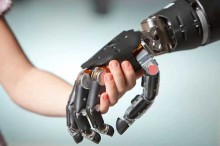
Les Baugh, a bilateral shoulder-level amputee from Colorado, US, entered history as the first man who simultaneously controlled two Modular Prosthetic Limbs (MPL) only with the help of his thoughts. Today, 40 years after the electrical accident that took both his arms, Baugh regained control over his limbs and successfully performed a series of tasks after a relatively short period of training. The Modular Prosthetic Limbs that Baugh used were developed by Johns Hopkins University Applied Physics Laboratory (APL) as part of the Revolutionizing Prosthetics Program.
Before training, Baugh had to undergo a targeted muscle reinnervation, a surgical procedure pioneered by Todd Kuiken, MD, PhD, director of the Neural Engineering Center for Artificial Limbs (NECAL) at the Rehabilitation Institute of Chicago (RIC) in Illinois. This surgery enables patients to regain sensory feedback and control sophisticated, motorized prosthetic limbs and it’s especially beneficial for above-elbow amputees. The aim of the surgery is transferring nerves into separate regions of the muscle, recording and using the EMG signals to control a prosthetic device.
APL prosthetist Courtney Moran looks on as Les Baugh tests out the Modular Prosthetic Limbs
Dr. Albert Chi, Johns Hopkins Trauma Surgeon, gave a detailed explanation of the procedure in the news release: “It’s a relatively new surgical procedure that reassigns nerves that once controlled the arm and the hand. By reassigning existing nerves, we can make it possible for people who have had upper-arm amputations to control their prosthetic devices by merely thinking about the action they want to perform. We use pattern recognition algorithms to identify individual muscles that are contracting, how well they communicate with each other, and their amplitude and frequency. We take that information and translate that into actual movements within a prosthetic.
Christmas is here – that wonderful time of year reserved for family gatherings, delicious meals and being lazy in front of the telly. Not surprisingly, most people experience dozing off while watching their favorite Christmas show due to all those sweets and warm blankets. However, there is a solution for all the TV addicts that don’t want to give up on their sweet naps but still want to know what happened on their show without waiting for a rerun. It’s a brand new gadget named KipstR – a wristband that “notices
“Watch therefore, for ye know not the day nor the hour,” could be still an actual description of our ability to predict asteroid threats to Earth.
The sentence from the Bible (Matthew 25:13) sound like a reminder of a vast number of more than 1,500 currently potentially hazardous objects, floating in space, meandering around in the Solar System. Some of them may be destined to pay our planet a close visit someday, unexpectedly, Chelyabinsk-style, as the one that hit Russia in February 2013, causing serious damages and injuring about 1,500 people. Who would have predicted that? Lately, one of the potentially hazardous asteroids, named 2014 UR116, created quite a buzz when various media reported that the 370-wide space rock may hit Earth. Its impact would cause an explosion 1,000 times greater than the Chelyabinsk meteor. But the discoverer of 2014 UR116, Vladimir Lipunov, a professor at Moscow State University, becalms the public. “This asteroid will not collide with Earth during the next 100 years,” Lipunov told astrowatch.net.
Potentially Hazardous Asteroids (PHAs) are space rocks larger than approximately 100 m that can come closer to Earth than 0.05 AU. Currently none of the known PHAs is on a collision course with our planet, although astronomers are finding new ones all the time.
Lipunov said it is difficult to calculate the orbit of big rocks like 2014 UR116 because their trajectories are constantly being changed by the gravitational pull of other planets. He noticed that the scientists can’t say precisely when the asteroid will approach the Earth. “We should track it constantly. Because if we have a single mistake, there will be a catastrophe. The consequences can be very serious,
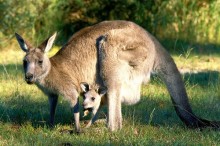
Large numbers of kangaroos are threatening an endangered species and are eating some lizards out of house and home, new research has found.
Australian National University (ANU) researcher Brett Howland has found large kangaroo numbers destroy the grassland habitats of reptiles.
“When there are too many kangaroos, they over-graze grasslands until they are like a lawn, which leaves lizards with no shelter,” said Mr Howland, from the Fenner School of Environment and Society.
“Just because kangaroos are native doesn’t mean they don’t do damage. We have to regulate their numbers if we want to retain a variety of reptiles,” he said.
Mr Howland studied lizard populations, which provide a good yardstick for the health of grasslands. Lizards depend on grass cover for both food and shelter, they are an important part of food webs, they are food for birds and small mammals, and provide pest control by eating insects.
“Grass over 20 centimetres tall housed the greatest number of reptiles,” Mr Howland said.
“The current number of kangaroos in some of Canberra’s parklands, over 300 per square kilometre, removes all tall grass. We should be controlling kangaroo numbers to at most 100 kangaroos per square kilometre in grasslands on average, and even less in treed areas.”
The study found that in areas where the grass was higher than 20 centimetres there were more than twice as many reptiles, and nearly three times as many species of reptile, than when grass was short.
“Many reptiles are under threat – species such as the striped legless lizard are on the vulnerable list. They face possible extinction in the near future,” Mr Howland said.
“However, there are millions of eastern grey kangaroos in Australia, making them one of the most populous large mammals in the world.”
Without threats from Indigenous hunters and native predators such as the dingo, kangaroo numbers have skyrocketed, Mr Howland said.
“We are still coming to grips with managing biodiversity,” he said.
“You can’t lock a reserve up and throw away the key, that doesn’t work.”
It’s Sunday! It’s a perfect day for your holiday, relaxation and joy. The good thing about every Sunday is nothing will force you to get up that early in the morning as you do during the working week. Well, that’s why this day is our opportunity to summarise what have happened over the last 7 days. So, let us review with you the best moments of this week!
A remarkable international effort to map out the avian tree of life has revealed how birds evolved after the mass extinction that wiped out the dinosaurs into more than 10,000 species alive today. More than 200 scientists in 20 countries joined forces to create the evolutionary tree, which reveals how birds gained their colourful feathers, lost their teeth, and learned to sing songs.
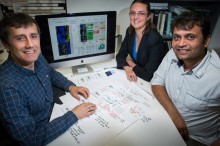
Imagine you’re back at school, and one day the teacher has something for show and tell. Someone, actually. A real live scientist, or mathematician, or ICT specialist. And not just the once.
ESA’s Rosetta spacecraft has found the water vapor from its target comet to be significantly different to that found on Earth. The discovery fuels the debate on the origin of our planet’s oceans. One of the leading hypotheses on Earth’s formation is that it was so hot when it formed 4.6 billion years ago that any original water content should have boiled off. But, today, two thirds of the surface is covered in water, so where did it come from? In this scenario, it should have been delivered after our planet had cooled down, most likely from collisions with comets and asteroids.
Eyesight is an easy thing to take for granted, but our ability to see is one of the human body’s most incredible senses. And there’s a lot more to it than simply discerning objects in the distance. Our eyes are capable of dealing with huge variations in contrast, for example.
Hope you have enjoyed this week’s selection. Please stay curious and scientifically passionate. New stories are coming soon!
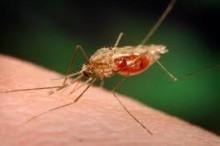
The number of people dying from malaria has fallen dramatically since 2000 and malaria cases are also steadily declining, according to the World malaria report 2014. Between 2000 and 2013, the malaria mortality rate decreased by 47% worldwide and by 54% in the WHO African Region – where about 90% of malaria deaths occur.
New analysis across sub-Saharan Africa reveals that despite a 43% population increase, fewer people are infected or carry asymptomatic malaria infections every year: the number of people infected fell from 173 million in 2000 to 128 million in 2013.
International scientists have carried out the most detailed study of how specialised body cells can be reprogrammed to be like cells from the early embryo.
The findings are a major advance in stem cell science and could help usher in a new era of regenerative medicine, where a small sample of a patient’s cells could be used to grow new tissues and organs for transplant.
“This kind of work will speed up the development of treatments for many illnesses that currently have no cure,
It is with much regret that Australian Science and its sponsors have decided to withdraw their support of European science organisation, CROSCI. The educational website based in Croatia has revealed many fascinating studies and pieces of research with the aim of advancing science and inspiring the next generation seeking careers in academia.
We wish CROSCI, its contributors and followers all the best and hope to read about many more exciting scientific discoveries in the future.
No matter the terminology used, right now educators worldwide are attempting to integrate new ways of thinking into the curriculum. This is no easy task, as timetable pressures, teacher training concerns and equipment funding shortages all make introducing a complex subject all the more difficult.
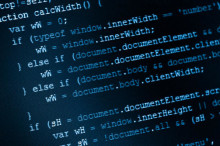
Instead of seeing Computational Thinking as a problem subject to be integrated, it is regretful that we can’t embrace it as an opportunity to change how we view many projects. Rather than a dry exploration of syntax and logic, Computational Thinking skills could enable students to build interactive narratives to teach literature and language skills, games to assess maths and spelling and unleash the digital creativity skills we desire in our graduates. A student versed in coding has better design skills than a student who only consumes information, better development skills than a student who never attempts to build anything, and better debugging skills than a student who has never had to fix a broken program.
In essence, we must continue teaching the 3 Rs, reading, writing and arithmetic, but also consider teaching the 3 Ds: Design, Develop and Debug. This is not without its challenges, namely what do we teach and how do we teach it? Before suggesting some of the tools that we use to promulgate Computational Thinking, let us preface it with the fact that these are mostly Microsoft technologies. Writing as the Microsoft Ireland Academic Team, this will not be a surprise to you, but please note they are also free technologies and you do not have to pay to enjoy and use them in the classroom.
Probably the most popular programming language for teaching younger students is Scratch from MIT. A block based language that eschews typing complex syntax structures in favour of a Lego-esque design, Scratch is loved by students aged 7 to 77. For students that have reached a high level of competency in Scratch, Kinect for Windows can be added to the mix. The Kinect is a special camera that can track the human body in 3D space. We developed free software called Kinect2Scratch that enables Kinect games and fitness programs to be developed in Scratch with ease.
For students who want to explore more complex computer science concepts, TouchDevelop is a simple but powerful programming language that avoids typing errors by allowing users choose commands from a palette of contextually aware commands. It works best on a touch screen tablet or laptop, and is compatible with virtually all tablet OS, including iOS, Android & Windows. It can also run on traditional laptops and PCs with a keyboard and mouse, but really excels when used on a touch screen. It is free and available from www.TouchDevelop.com.
Finally, if students enjoy Minecraft and learning through creative world building, introduce them to programming through Project Spark. A beautiful rendering interactive game creation tool, Project Spark hides a deep and powerful Computational Thinking environment under the guise of a game creation and playing tool. Available free on Xbox One and Windows 8, download it from the Windows Store to start building and learning. We developed a free course for all Project Spark learners.
In an increasingly information-oriented world maximising the speed of data transfer and download are crucial to competitiveness in the workplace. Needless to say, not all cables are the same, even though they may feature the same input – e.g. USB or HDMI. The material they are made of will have a major impact on reliability, durability and speed.
Common Cable Types
Different types of telecommunications cables include copper, aluminum, and fibre optic cables. Aluminum and copper are the cheapest type of cable with copper being more durable and flexible than the former. Aluminum is significantly cheaper than copper cable, though copper is faster and has become the standard for telecommunications companies, particularly prior to the gradual switch over to fibre optic cables, and the age of high speed broadband.
Whilst copper and aluminum cable are made by bundling pairs of copper or aluminum strands together before jacketing them, the fibre optic cable is made of glass or plastic fibres through which light is transmitted allowing for even greater speeds of data transmission.
Factors Affecting Speed of Copper Cable
Ethernet cable consists of several twisted pairs of copper wiring, which cancel out the interference. This interference would otherwise produce background noise during telephone or internet communications.
Ethernet cable is divided into categories, which currently run from Cat.4 through to Cat7.a, with categories 8.1 and 8.2 under development. Level1, Level2 and Cat.3 and Cat.4 twisted pair cables run from 0.4 to 20 Mhz, which is relatively slow, and are suitable for telephone calls and slow dial-up connections only. Of these only Cat.3 is commonly used.
The cables most likely to be in use for data communications run from Cat.5 to Cat.6a, with Cat.5e (an enhanced version of the Cat.5 cable) and above used on all new cable installations. Cat.5 is suitable for large scale data transfer over short distances, though Cat.5e is better for high speed Gigabit Ethernet. Whilst both categories have a bandwidth of 100 Mhz, Cat.5e has features designed to deal with ‘crosstalk’, which is the undesirable phenomenon whereby two wires which are paired together interfere with each other’s signals.
Cat.6 performs at up to 250 Mhz and has further features to deal with crosstalk, whilst Cat.6a (or augmented category 6) performs at 500 Mhz. Other factors which affect twisted pair cable categorisations include the length at which a wire can be run between terminals and its durability.
Advantages of Fibre Optic over Copper Cable
While copper is capable of high speed data transfer and is likely to be used for many years to come, making it an ideal choice for your home or office network, fibre optic cable is set to become the standard over time.
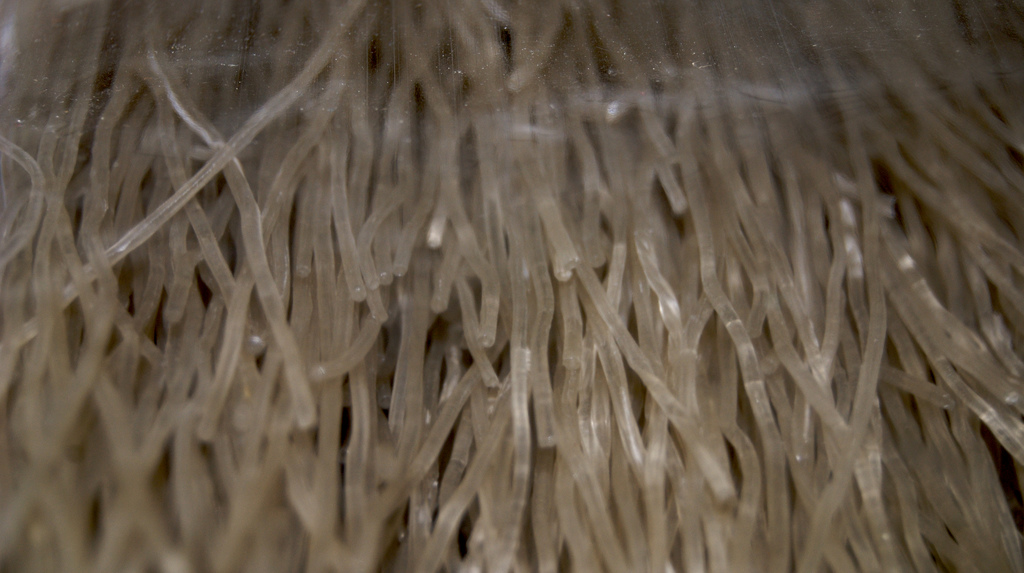
Fibre optic cable carries visible light or infrared signals which are bounced across the inside of the cable through a process of ’internal reflection’, at an even frequency, reducing interference and delivering data in an even manner. A fibre optic cable consists of thousands of hair-width glass fibres bundled together.
Although fibre optic cable is in most cases more expensive than copper cable, it is less expensive to maintain and can be installed over greater distances. It also has a higher bandwidth making it a popular choice choice for telecommunications companies. It is more secure, being difficult to ‘tap into’, not least as any resulting interference from a third party would involve an obvious loss of light, causing the system to fail. Additionally, fibre optic is less subject to environmental factors such as changes in temperature and can make contact with water without risk, reducing the need for excessive insulation.
Scientists in New Zealand have recently produced a new fibre optic cable capable of delivering the entire world’s internet traffic down one cable due to their having inserted several cores in each hair-like glass fibre. Whilst such speed has little application in daily or business computing, they do point to the superiority of fibre optic cable in the long run.
The ANU and CSIRO have joined forces in a new collaborative precinct to help build a sustainable future for the environment, agriculture and global food supplies.
The National Agricultural and Environmental Sciences Precinct (NAESP) was launched by the Minister for Industry the Hon Ian Macfarlane MP.
The NAESP will bring together the best research brains from ANU and CSIRO to foster research and innovation essential to food security and environmental stewardship in the face of global population growth, land degradation and climate change.
“The collaboration will transform the way agricultural and environmental research and innovation is conducted in Australia,
Nature announced that it will make all of its articles free to view, read, and annotate online. That applies to the historic science journal (launched in 1869) and to 48 other scientific journals in Macmillan’s Nature Publishing Group (NPG). Other titles include Nature Genetics, Nature Medicine and Nature Physics.
But there are a whole lot of caveats. The press release reads:
All research papers from Nature will be made free to read in a proprietary screen-view format that can be annotated but not copied, printed or downloaded… The content-sharing policy … marks an attempt to let scientists freely read and share articles while preserving NPG’s primary source of income — the subscription fees libraries and individuals pay to gain access to articles.
But wait, there are a few more caveats. The archives will be made available to subscribers (e.g., researchers at universities) as well as 100 media outlets and blogs, and they can then share the articles (as read-only PDFs) with the rest of the world. This is all part of a one-year experiment.
An international team of scientists has discovered the earliest known engravings from human ancestors on a 400,000 year-old fossilised shell from Java.
The discovery is the earliest known example of ancient humans deliberately creating pattern.
It’s the end of one more amazing week, so it’s our time to recapitulate what have happened during the last 7 days. This Sunday, we bring you the best stories from space industry, psychology, medicine and physics, environmental science and much more. So, let’s begin our tour!
Using the Hubble space telescope, they have discovered a distant galaxy in which star formation is itself driving the raw materials for more stars out into space at two million miles per hour – and in the process slowing future star production.
If I asked you to sit down and remember a list of phone numbers or a series of facts, how would you go about it? There’s a fair chance that you’d be doing it wrong.
Science textbooks say we can’t see infrared light. Like X-rays and radio waves, infrared light waves are longer than the light waves in the visual spectrum. But an international team of researchers has found that under certain conditions, the retina can sense infrared light after all.
As a global energy superpower, Australia can and should play a significant role in ensuring that its exports contribute as few greenhouse emissions as possible. Exporting ideas, technologies and solutions can play an important part in achieving this outcome.
Quite exciting journey, you would agree with us, ha? Well, if you keep following us, you will find out much more.
 APL prosthetist Courtney Moran looks on as Les Baugh tests out the Modular Prosthetic Limbs