
Are you one of those who suffer from aerophobia – fear of flying? Then you won’t be too thrilled to read about the new breakthrough in the aerospace industry.Otherwise, you will probably be intrigued by the new windowless planes, planned to set off in a decade. The term “windowless planes
Blog
-

Life – Evolved
What is a life form? Most of us, if asked, will think of an animal or a human being-in other words, a multicellular organism. However, life itself evolved in cells, single cells of various types that existed and propagated independently. What are, then, the factors that led cells to collaborate together and give rise to complex organisms? Collaboration is possible only if there are no cheaters -cells that exploit the collaboration of others- and cheaters always arise. How is possible, then, for a multicellular organism to develop? Do the cheaters need to be eliminated –an evolutionary impossibility- for complex organisms to occur? This seems the classic common sense response. However, new and unexpected findings by a team of scientists working in New Zealand and the US, suggest the opposite: that the presence of cheaters can be instrumental to the formation of self-generating groups of cells, or collectives.
Evolution can be studied in many ways; fossil examination is a well-known example. However, for researchers looking to have results in a quicker fashion –and with the added bonus of controlling variables within their experiments- bacterial models are the gold standard. Bacteria are used as they grow fast, in most cases multiple generations in one day, and their visible characteristics (their “phenotype
-

Weekly Science Picks
Here we are at the end of one more exciting and fascinating week. It’s our time to summarise what have happened during the previous 7 days. The focus of today’s editor’s selection would be on psychology, neuropsychological and medical research. So, let’s start our journey!
Psychology: How many senses do we have?
We often talk of having five senses as a universal truth. In reality, there may be more – or fewer – depending on the way you look at the question. Christian Jarrett explains the controversy.
Smokers learn to cut down while they sleep
Any smoker can tell you how hard it is to kick the habit. Nicotine is one of the most addictive drugs that we know of, and smoking is one of the deadliest of habits, killing more than 5 million annually. Smokers are well aware of the risks, and every year more than one third of them make at least one attempt to stop, but only 2-3% manage to do so.
Training can lead to synesthetic experiences: Does learning the ‘color of’ specific letters boost IQ?
A new study has shown for the first time how people can be trained to ‘see’ letters of the alphabet as colors in a way that simulates how those with synesthesia experience their world.
Less Talk, More Therapy
Settled on her table that first day, I explained to her that I’d had many intractable physical problems in the last several years, the most recent being a pain in my knee that no medical professional could make heads or tails of. I couldn’t sit cross-legged on the floor or rise up out of a full squat, and I’d feel a sharp stab whenever I slipped that leg into my jeans. Some yoga practitioners that my husband knew had recommended I see her about this.
Thank you so much for your attention. We are coming with new stories soon!
-

Finding new ways to make drugs
Chemists have developed a revolutionary new way to manufacture natural chemicals and used it to assemble a scarce anti-inflammatory drug with potential to treat cancer and malaria.
The breakthrough could lead to new and cheaper ways to produce rare drugs in large quantities.
“We took small molecules and clipped them together like Lego,
-

Charles & Ray Eames’ A Communications Primer Explains the Key to Clear Communication in the Modern Age (1953)
You might think that a movie about information from 1953 couldn’t possibly be relevant in the age of iPhone apps and the Internet but you’d be wrong. A Communications Primer, directed by that power couple of design Charles and Ray Eames, might refer to some hopelessly quaint technology – computer punch cards, for instance – but the underlying ideas are as current as anything you’re likely to see at a TED talk. You can watch it below.
In fact, the film made for IBM was the result of the first ever multi-media presentations that Charles Eames developed for the University of Georgia and UCLA. Using slides, music, narration and film, Eames broke down some elemental aspects of communications for the audience. Central to the film is an input/output diagram that was laid out by Claude Shannon, the father of information theory, in his 1949 book, The Mathematical Theory of Communication. As the perhaps overly soothing narrator intones, any message is transmitted by a signal through a channel to its receiver. While in the channel, the signal is altered and degraded by noise. The key to effective communication is to reduce “noise
-

How to Get Skills in Cyber Security?
We were talking before, though our cyber security sessions, that a career in cyber defence is the quite challenging one and it requires a lot of hard work and time to put your skills and expertise at a competitive level. So, the question here would get addressed to problems related to education and work experience in cyber security. Today it’s not sufficient to have a degree in some field; very often it’s more important to gain a proven track record as an evidence you are capable of doing some job. In this brief talk, we plan to discuss all the possibilities that a cyber defence career can offer to us and also review some common requirements you need to satisfy in order to get successful in such a business.
Why is Cyber Career so Challenging?
As mentioned before, cyber security or simply cyber is related to computers, web and mobile technologies. It is well-known that the entire IT sector relies on very skilled and highly competitive people. But, what is the case with cyber?
In cyber, you need someone who is familiar with computers, web and mobile devices, but not only that. Such a person must know how to protect all of these from threats, risks and attacks. So, you need extremely bright individuals to contribute here.
It is also well-known that people are not born with such a skill; they need to master their fields of interest through their lives. That’s exactly the case with cyber! Requirements are high, every single day something new appears and what you need to have for such a career is an excellent learning curve which will allow you to cope with the change and successfully adopt and apply new things.
So, cyber is a quite challenging area and it needs a lot of effort and time in order to expertise everything, but for someone who has an affinity for such a job, it can become a life-long passion.
What is also good to get mentioned here is the fact that there is a big cyber skill shortage in the world. We live in a cyber era; everything is getting so cyber; the need for cyber experts is great and very often people are hesitating to choose that career, because they are aware it requires a lot of hard work and serious involvement.
On the other hand, this could be encouraging to young people who are talented for computers to try to find their place in cyber, because such a career can offer them a very competitive environment, a good position on the Lobar Market and a suitable financial compensation to their efforts.
How Important is an Educational Background in Cyber?
The educational background is pretty significant everywhere, but as you know it is not necessary of crucial importance when it comes to your career. Sometimes skills are more important than your degree.
Good schools and good high education providers can affect your future work experience and help you develop some skills and work habits. Here we would like to highlight a significance of education in everyone’s life as well as in cyber profession.
For instance, the majority of skills in cyber career can be gained through hard work, but what would make you outstanding in your job is a constant capacity to learn which can be easily adopted through education in your childhood.
Later, in your life and career, you can get recognized through your practical experience and efforts, but even then you need to be capable to study and use your mind for problem-solving tasks.
So, your education can be seen as a good preparation to your career, but if you stop working hard after finishing your school, then your education will mean nothing though your life.
Could Your Hard Work get Recognized?
Cyber field is amazing because it offers you an opportunity to develop a lot of skills through your work experience and to get approved for that. There are many cyber certificates that can make an internationally recognized expert out of you and they can make you competitive at global Lobar Market.
The best known certificate in cyber area is so called “Certified Information Systems Security Professional
-
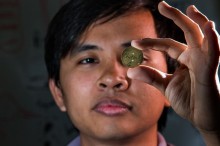
Spiral laser beam creates quantum whirlpool
Physicists at ANU have engineered a spiral laser beam and used it to create a whirlpool of hybrid light-matter particles called polaritons.
“Creating circulating currents of polaritons – vortices – and controlling them has been a long-standing challenge,
-

WHO warns that progress towards eliminating measles has stalled
WHO warned recently that progress towards the elimination of measles has stalled. The number of deaths from measles increased from an estimated 122 000 in 2012 to 145 700 in 2013, according to new data published in the WHO Weekly Epidemiological Report and the Centers for Disease Control and Prevention’s (CDC) Morbidity and Mortality Weekly Report. The estimated number of measles deaths in 2013 represents a 75% decline in mortality since 2000, significantly below the target of a 95% reduction in deaths between 2000 and 2015.
“Poor progress in increasing measles vaccination coverage has resulted in large outbreaks of this highly contagious disease, throwing the 2015 elimination targets off-track,
-
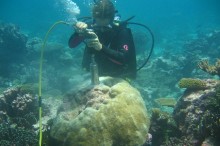
Ocean primed for more El Niño
The ocean is warming steadily and setting up the conditions for stronger El Niño weather events, a new study has shown.
A team of US, Australian, and Canadian researchers sampled corals from a remote island in Kiribati to build a 60-year record of ocean surface temperature and salinity.
“The trend is unmistakeable, the ocean’s primed for more El Niño events,
-

Weekly Science Picks
Welcome at the end of one more exciting and this time, we could say, historically amazing week. Namely, these days we are witnessing a highly interesting ESA’s mission called Rosetta. For such a reason, this week’s review will be dedicated to that mission and some space science and industry stories. So, let’s go through the top news of this week.
Are we sending aliens the right messages?
By broadcasting formulae of aromatic chemicals, she says, aliens could reconstruct all sorts of whiffs that help to define life on Earth: animal blood and faeces, sweet floral and citrus scents or benzene to show our global dependence on the car. This way intelligent life forms on distant planets who may not see or hear as we do, says Paterson, could explore us through smell, one of the most primitive and ubiquitous senses of all.
Philae lander sends back first ever image from comet
The picture shows the cracked, bumpy surface in monochrome, with one of Philae’s three legs in the bottom left of the frame. It is not yet clear whether the leg in the image is actually touching the surface. What is certain is that Philae is not level, and may be wedged into a pit.
The Adventures of Rosetta and Philae
The giant antenna dishes of the Canberra Deep Space Communication Complex are supporting the European Space Agency’s Rosetta spacecraft, relaying data that the refrigerator-sized Philae probe has commenced its descent to the unknown surface of Comet 67-P Churyumov-Gerasimenko.
Intergalactic ‘wind’ is stripping galaxies of star-forming gas
Astronomers have provided the first direct evidence that an intergalactic ‘wind’ is stripping galaxies of star-forming gas as they fall into clusters of galaxies. The observations help explain why galaxies found in clusters are known to have relatively little gas and less star formation when compared to non-cluster or ‘field’ galaxies.
These would be all for this week. Thank you so much for your attention. We are coming with new stories soon!
-
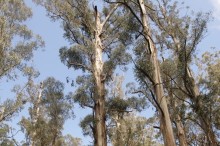
Protecting native forests more valuable than logging
New research has found Mountain Ash forests provide more value to the community and the global climate when protected and not logged.
Research scientists at the ANU, in partnership with information and communication technologists at Fujitsu Laboratories in Japan, have used long-term field data from the Central Highlands in Victoria to calculate the social, economic and environmental values of the forests after wildfire and after logging.
“Quantifying natural resources and the services they provide for human wellbeing is important in evaluating land management decisions,
-

Mark Twain Predicts the Internet in 1898: Read His Sci-Fi Crime Story, “From The ‘London Times’ in 1904
Most people know that Mark Twain wrote about Jim and Huckleberry Finn navigating down the Mississippi. Less well known is that he occasionally dabbled in the burgeoning genre of science fiction. His 1898 short story “The Great Dark
-

New global Malaysian studies network at ANU
A new agreement between the ANU and the National University of Malaysia (UKM) will deepen links between Australia and Malaysia, and boost the studies of Malaysia in both Australia and around the globe.
Witnessed by Malaysia Deputy Prime Minister YAB Tan Sri Dato’ Haji Muhyiddin Bin Haji Mohd Yassin, the Memorandum of Understanding was signed by ANU Vice-Chancellor Professor Ian Young AO in a ceremony on Wednesday.
The MOU will increase educational links and collaboration between Australia and Malaysia, as well as pave the way for a new Global Malaysian Studies Network at the University.
While acting as a Malaysian studies base in Australia, the network will also provide a coordination point for other universities across the globe.
“Australia has more long-standing institutional and people-to-people ties with Malaysia than with any other Asian neighbour,
-
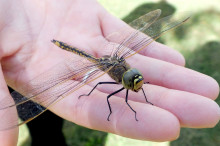
Scientists reveal secrets of insect evolution
Using genetic analysis, scientists have for the first time been able to conclusively establish that insects originated approximately 480 million years ago, and that they developed the ability to fly approximately 80 million years later.
Published last week in Science, the study, which involved more than 100 researchers from 16 countries including five from Australia’s CSIRO, answers long-held questions about the evolution of the world’s largest and most diverse group of living things – insects.
“Our research shows that insects originated at the same time as the earliest land-based plants, about 480 million years ago. These first insects were probably similar to today’s silverfish,