Professor Carola Vinuesa from the John Curtin School of Medical Research has been awarded the inaugural CSL Young Florey Medal for her research into how the immune system produces antibodies to fight disease.
“I’m very honoured and flattered,
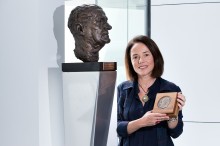
Professor Carola Vinuesa from the John Curtin School of Medical Research has been awarded the inaugural CSL Young Florey Medal for her research into how the immune system produces antibodies to fight disease.
“I’m very honoured and flattered,
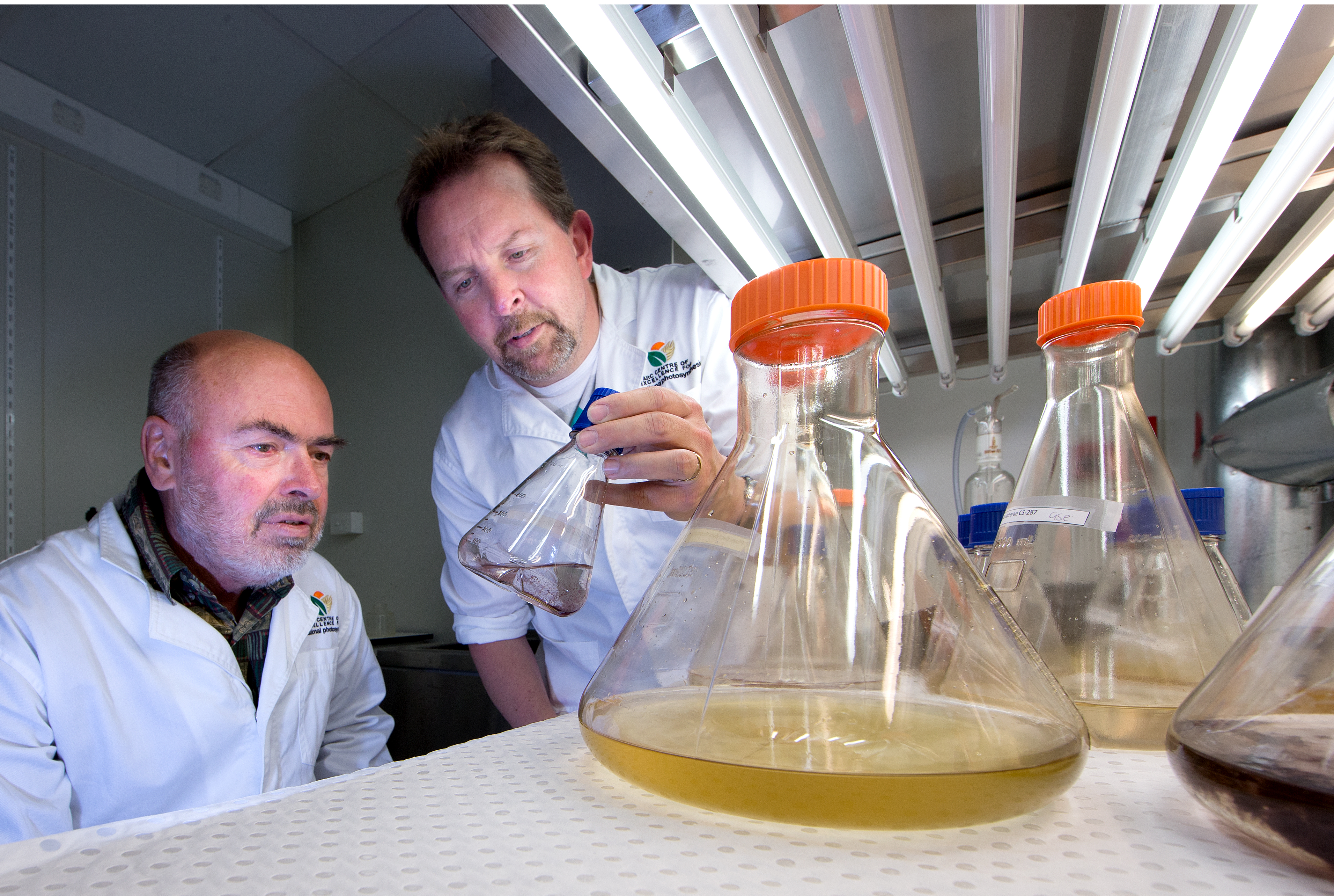
A research centre exploring new technologies for improving crop yields to secure food supply has been launched at the Research School of Biology.
The Australian Research Council (ARC) Centre of Excellence (CoE) for Translational Photosynthesis seeks to increase yields of major crops such as wheat and rice by improving the way that plants capture the sun’s energy through photosynthesis.
“This is an underexploited area of science that could enable us to feed future populations. By 2050, nine billion people are expected to survive on earth with the food resources produced by plants; today’s agricultural methods will struggle to meet these demands,

When it comes to matters of broad scientific consensus, I’m generally inclined to offer provisional assent. Like everyone else, I have to rely on the expertise of others in matters outside my ken, and in many cases, this rational appeal to authority is the best one can do without acquiring the relevant qualifications and years of experience in highly specialized scientific fields.
In the case of evolution, I happen to find the evidence and explanations nearly all biologists proffer much more persuasive than the claims—and accusations—of their mostly unscientific critics. But as we know from recent survey data, a very large percentage of Americans reject the theory of evolution, at least when it comes to humans, though it’s likely a great many of them—like myself—do not know very much about it.
But as a layperson with an admittedly rudimentary science education, I’m always grateful for clear, simple explanations of complex ideas. This is precisely what we get in the video series Stated Clearly, which harnesses the power of web animation as an instructional tool to define what the theory of evolution is, and why it explains the observable facts better than anything else. Stated Clearly’s tagline is “science is for everyone,

Here we are with new fascinating stories for this week. This time we plan to concentrate on mind and learning phenomena. You will see how new technologies affected our brains, how our mind stays stable during learning, what the point of mind games is and much more. So, please come with us and enjoy this amazing journey.
“This discovery of yours will create forgetfulness in the learners’ souls, because they will not use their memories,
Laser physicists have built a tractor beam that can repel and attract objects, using a hollow laser beam that is bright around the edges and dark in its centre.
It is the first long-distance optical tractor beam and moved particles one fifth of a millimetre in diameter a distance of up to 20 centimetres, around 100 times further than previous experiments.
“Demonstration of a large scale laser beam like this is a kind of holy grail for laser physicists,
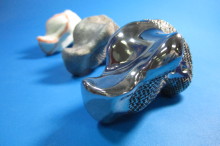
CSIRO, St Vincent’s Hospital and Victorian biotech company Anatomics have joined together to carry out world-first surgery to implant a titanium-printed heel bone into a Melbourne man.
Printed using CSIRO’s state-of-the-art Arcam 3D printer, the heel bone was implanted into 71-year-old Len Chandler, a builder from Rutherglen Victoria, who was facing amputation of the leg below the knee following a diagnosis of cancer of the calcaneus, or heel bone.
St Vincent’s Hospital surgeon Professor Peter Choong was aware of CSIRO’s work in titanium 3D after reading about our work producing an orthotic horseshoe in 2013, and contacted CSIRO’s John Barnes in early June about his vision for a metallic implant which would support the body’s weight.
At the time, CSIRO happened to be working with the Victorian-based biotech company Anatomics on metallic implant technology and CSIRO brought Anatomics into the discussion with Professor Choong to draw on their experience as a certified custom medical device manufacturer.
Working from Anatomics’ schematics for the calcaneus heel bone, teams at Anatomics and CSIRO developed the design requirements with Professor Choong’s surgical team. Included in the design were smooth surfaces where the bone contacts other bone, holes for suture locations and rough surfaces to allow tissue adhesion. Anatomics and CSIRO produced three implant prototypes in the days before the surgery.
In the space of two weeks, from first phone call to surgery, CSIRO and Anatomics were able to custom-design and present an implant part to the St Vincent’s surgical team, in time for the surgery on the second week of July.
Mr Chandler returned to St Vincent’s Hospital this week for a check-up and said he was recovering well, and able to place some weight on his implant.
“The customisation of 3D printing is good in emergency situations such as these,” a member of CSIRO’s titanium printing team Dr Robert Wilson said.
“Custom designed implants mean job opportunities in this area as these types of surgeries become more commonplace.”
CSIRO is working with a number of major companies and SMEs across Australia to build capacity in biotech and manufacturing.
“3D printing is a local manufacturing process, meaning Australian companies produce implants for our own patients for our own doctors to use. We would no longer have to rely on imported parts that slow the process down and is less personal for the patient,” CSIRO’s Director of High Performance Metal Industries John Barnes said.
“At some point in the future we expect that local for-profit businesses will have the capacity to work on projects like this, and meanwhile the CSIRO is here to help local industry grow and build momentum.

With college tuitions ballooning to the point of implosion, and free educational content proliferating online, the future of education is a scorching hot topic.
So where are we heading?
Coursera and Khan Academy? Video game-based curricula? Experience-driven microlearning?
Or school buildings that moonlight as candy?
So suggested one of the younger participants in a workshop led by the University of Wisconsin’s Assistant Professor of Interdisciplinary Creativity, cartoonist and author Lynda Barry (aka Professor Long-Title).
Barry’s messianic embrace of the arts has proved popular with students of all ages. When the university’s Counterfactual Drawing Board Project invited faculty, staff, and others to consider what the “appearance, purpose, atmosphere and community of the campus
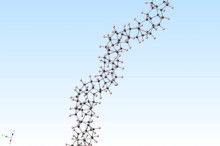
A recent discovery by a research team at Penn State University and the Carnegie Institution of Washington reminded us of the amazing, but still unrealized idea of constructing space elevators. A team of researchers discovered a new material and they say it may be used for anything – even for a space elevator.
This unbelievable discovery thrilled scientists around the world and assured them that they will finally be able to undertake space elevator construction. Until recently, building space elevators has been in the realm of science fiction. However, thanks to this discovery, it is slowly moving out of science fiction and into reality.
Nanotechnology breakthrough
John Badding, professor of Chemistry at Penn State University and Thomas Fitzgibbons, his student, announced they have discovered a way of making extra thick and strong diamond nanothreads. This material is stronger, thinner and stiffer than any other known fibers, including nanotubes and polymers.
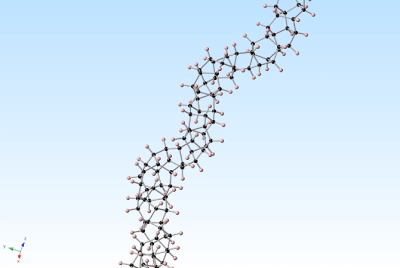
A unique, ultra thin diamond nanothread structure (Credit: John Badding lab, Penn State Univeristy)
Professor Badding and Fitzgibbons used a specialized device which compressed benzene up to 200,000 atmospheres. This caused benzene to polymerize into carbon atoms which are arranged to form the fundamental unit of a diamond’s structure. The atoms are linked in all three dimensions and linked again to four carbon atoms, forming a tetrahedron.
This is an incredible discovery, given almost a century of failed attempts to create such a strong nanomaterial. Previous carbon nanotubes were too weak and they wouldn’t have been able to make a reliable elevator ribbon (cable). These diamond nanothreads are more than 20,000 times thinner than a human hair, but just a few centimeters long. So, the next step for researchers is to create nanothreads that will be longer and more practical.
The development of the idea
Who is the first person that created the concept of space elevators? Yuri N. Artsutanov, Russian engineer, is best known as one of the pioneers of the space elevator idea. He first discussed it in 1960 in his article “To the Cosmos by Electric train
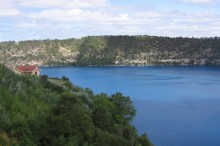
Scientists have solved a long-standing mystery surrounding Australia’s only active volcanic area, in the country’s southeast.
The research explains a volcanic region that has seen more than 400 volcanic events in the past four million years.
The 500 kilometre long region stretches from Melbourne to the South Australian town of Mount Gambier, which surrounds a dormant volcano that last erupted only 5,000 years ago.
“Volcanoes in this region of Australia are generated by a very different process to most of Earth’s volcanoes, which occur on the edges of tectonic plates, such as the Pacific Rim of Fire

The sixth session of the Conference of the parties (COP6) to the WHO Framework Convention on Tobacco Control (FCTC) concluded recently in Moscow. Several landmark decisions were adopted in the course of the six-day session, regarded as one of the most successful in the WHO FCTC’s history.
In her opening speech, WHO Director-General Dr Margaret Chan said that “as implementation of the Framework Convention reaches new heights, the tobacco industry fights back, harder and through every possible channel, no matter how devious those channels and practices are.
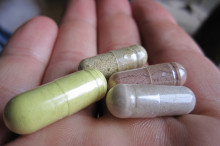
In 1935, Percy L. Julian (1899-1975) synthesized physostigmine, the compound that was only available in its natural source, the Calabar bean, now used in the treatment of glaucoma. This pioneering research opened a door to widespread usage of chemical materials; however, it also started a “synthetic versus natural
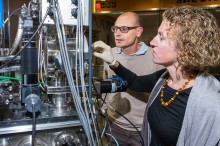
Scientists have found evidence for a huge mountain range that sustained an explosion of life on Earth 600 million years ago.
The mountain range was similar in scale to the Himalayas and spanned at least 2,500 kilometres of modern west Africa and northeast Brazil, which at that time were part of the supercontinent Gondwana.
“Just like the Himalayas, this range was eroded intensely because it was so huge. As the sediments washed into the oceans they provided the perfect nutrients for life to flourish,

New Sunday, new editor’s choices! In comparison with the previous one, which brought us heaps of Nobel awards, this one seems as quite peaceful and usual. But, is it? Throughout today’s selection, we will hear more about the future of Mars One project, we will also get familiar with the cyber threats of the coming times, we will learn that the kangaroos of the past were ‘made’ to walk, not jump and much more. So, let’s start this exciting journey!
In March 1989 Sir Tim Berners-Lee wrote a memo that led, eventually, to the web. That was 25 years ago this year. Back in the 1980s, even the simple concept of documents which could be hyperlinked was difficult to understand. So what will digital life be like another 25 years from now? How dramatically will things have changed by 2040?
When do they launch? Well, Mars One, the Dutch non-profit foundation behind the mission, says all the technology already exists, and it reckons it can launch the first preliminary expeditions in 2018. The first four settlers will take off in 2024, and land in 2025 after a seven-month journey.
To know how much more fossils fuels we can burn while avoiding dangerous levels of climate change, we need to know how these “carbon sinks
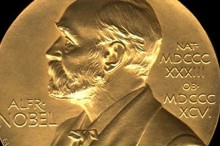
Winning a Nobel Prize has its perks. When you talk, people listen. And you end up doing a lot of talking. And travelling.
Reflecting on how the Nobel Prize changed his life, Walter Gilbert (1980 winner in Chemistry) commented, “You can find yourself spending years travelling and talking right after winning.