Blog

  • A sexless union to bear great fruit

    A sexless union to bear great fruit

    We have received a $14.5 million grant from the Bill & Melinda Gates Foundation to improve the productivity and incomes of smallholder farmers across Sub-Saharan Africa.

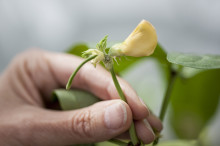
    This five year humanitarian project will develop tools to generate self-reproducing hybrid cowpea and sorghum crops to help millions of farmers become more self sufficient with higher yielding crops.

    CSIRO will use the grant to partner with other world leading research teams from Switzerland, USA, Germany and Mexico to achieve this goal.

    “Sorghum and cowpea originated in Africa and are important staple food crops, but suffer from low yields,

  • Weekly Science Picks

    Weekly Science Picks

    We came to the end of one more brilliant scientific week. What this weekly review brought us are the questions as follows. Can virtual reality make us better people? Could engineers mimic the amazing camouflage abilities of the octopus? How would Australia and STEM deal? And, finally, why wet feels wet? Please stay with us and you will discover these and much more in our newest editor’s selection.

    Can virtual reality make you a better person?

    I’m here at the Virtual Human Interaction Lab at Stanford University to see for myself just how powerful virtual reality technology has become, and I’m soon to find out that there’s some truth to the notion that virtual environments can change the way people behave in the physical world. In the day ahead, I’ll be both utterly terrified and behaving like a superhero – and the effects on my behaviour will linger for days afterwards.

    Engineers mimic the amazing camouflage abilities of the octopus

    At first glance, the thumbnail-size grids of 256 minuscule black squares seem to have nothing to do with the octopus, squid and cuttlefish that inspired them. But these hi-tech microconstructions of polymers, semiconductors, light sensors and heating elements are what you get when scientists attempt to replicate the camouflaging ability of the animal world.

    Making STEM deadly

    That’s why we’ve partnered with BHP Billiton Foundation to deliver a new education project for Aboriginal and Torres Strait Islander students that aims to increase their participation and achievement in science, technology, engineering and mathematics (also known as STEM).

    Why wet feels wet: Understanding the illusion of wetness

    Though it seems simple, feeling that something is wet is quite a feat because our skin does not have receptors that sense wetness. UK researchers propose that wetness perception is intertwined with our ability to sense cold temperature and tactile sensations such as pressure and texture.

    This week brought us great things. Hope the next one will be that amazing, too. Until the next time, please stay curious and scientifically passionate.

  • The Science of Lucid Dreaming and How to Learn to Control Your Dreams, Animated

    The Science of Lucid Dreaming and How to Learn to Control Your Dreams, Animated

    Trekking the continuum of sleep and wakefulness in a journey into metaconsciousness.

    As if the science of sleep and the emotional function of dreaming weren’t fascinating enough in and of themselves, things get even more bewildering when it comes to lucid dreaming — a dream state in which you’re able to manipulate the plot of the dream and your experience in it. But how, exactly, does that work and can you train yourself to do it? Count on AsapSCIENCE — who have previously explored such mysteries as how music enchants the brain, the neurobiology of orgasms, and the science of procrastination — to shed some light:

    (Then again, the probability that you are dreaming this very minute might be one in ten, so it might all be moot.)

    For a deeper dive into the scientific nitty-gritty of lucid dreaming, see Stephen LaBerge and Howard Rheingold’s 1991 bible Exploring the World of Lucid Dreaming and LaBerge’s follow-up, Lucid Dreaming: A Concise Guide to Awakening in Your Dreams and in Your Life.

    Then, treat yourself to this fantastic and mind-bending Radiolab episode about how one man cured himself of a recurring nightmare by learning lucid dreaming:

    Source and image.

  • Ancient sea levels give clues to natural sea rise

    Ancient sea levels give clues to natural sea rise

    Scientists have produced the first detailed record of sea levels over the past 500,000 years and spanning five ice ages, using microfossils from sediments in the Red Sea.

    The team determined accurate dates for the sea levels by linking wind-blown dust in the sediments to a climate record from stalagmites from caves in China. The research is published in the latest edition of Nature Communications.

    The more precise dating method gives scientists new insights into natural rates of sea level rise.

    “When large ice sheets melted at the end of ice ages, sea levels rose dramatically, up to 5.5 metres per century,

  • $28.8 million adds up for Indigenous students

    $28.8 million adds up for Indigenous students

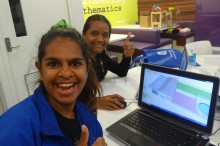
    Closing the gap in Aboriginal and Torres Strait Islander achievement and employment in science, technology, engineering and mathematics (STEM) is the aim of a new CSIRO education program, funded by the BHP Billiton Foundation.

    Launched today at Parliament House by the Hon Ian Macfarlane MP, Minister for Industry, the $28.8 million, five-year project will deliver education programs, excellence awards, mentoring, summer schools and tailored university degrees, reaching students and schools across Australia.

    CSIRO Chief Executive, Dr Megan Clark said the new program would support students from primary school through to tertiary education, providing a pathway to increase Aboriginal and Torres Strait Islander representation in STEM related professions.

    “CSIRO has delivered education initiatives across Australia for over 35 years and in parallel to this, we have a dedicated Indigenous science program that not only aims to get more Indigenous scientists working in CSIRO, but also delivers science projects for Indigenous communities,

  • New app offers relief for hay fever sufferers

    New app offers relief for hay fever sufferers

    Hay fever and asthma sufferers in Canberra will soon be able to receive daily counts and forecasts of pollen levels thanks to a free app released by ANU researchers.

    Project leader Professor Simon Haberle says Canberra is a hot-spot for allergy-causing pollen, with up to one-in-five Canberrans affected.

    “Canberra pollen sufferers are in for a tough time this year, with extreme pollen counts predicted for the late October and early November period,

  • The Best of Australian Science: September 2014

    The Best of Australian Science: September 2014

    It’s the end of September, 2014 and it our time to review the top headlights for this month.

    These would be our selection for the previous period.

    A Brief Talk with Andrea Morello, a Leading Australian Quantum Physicist by Milica Djekic

    Let us introduce you a leading Australian quantum physicist and probably one of the most promising scientists in the world. His name is Andrea Morello. He is an electrical engineer and a quantum physicist. At the moment he is Associate Professor in Quantum Nanosystems at University of NSW and a Program Manager in the ARC Centre of Excellence for Quantum Computation and Communication Technology (CQC2T). His research is focused on building a quantum computer based on single spins in silicon. In addition to the research, Andrea is actively engaged in science outreach and education. So, let’s start with our talk.

    Guide to the Most Important Green Building Certification Systems in the World by Dunya

    Here in Australia, the GBCA are working towards a greener and more sustainable future. The past decade has seen tremendous growth within the building industry, as companies such as the GBCA and others have been working towards designing and creating a greater percentage of buildings that are certified as green and sustainable. When looking at how this has been accomplished, there are a plethora of green building certification systems throughout Australia and all over the world that have helped to create a new standard of quality within the industry. Here’s a brief look at what some of these systems are.

    Fun Facts about Baking Soda and Its Uses by Josip

    Sodium bicarbonate or sodium hydrogen carbonate, better known as baking soda is a chemical compound with the formula NaHCO3 . It is primarily used in cooking and baking as a leavening agent, and as a very effective cleaning agent.

    How to protect your critical information? by Milica Djekic

    A modern cyber security can be defined as a process of maintaining an acceptable level of cyber risk. So, security is about a risk management. It’s a never-ending process which requires you to invest new and new efforts in order to keep thing secure. Bad guys will always do bad things and good guys should find a way to respond to all of that. There are a lot of malicious persons in a cyber world – hackers, criminals, terrorist and security is the one which would be ahead of all in order to protect us from harm.

    Kids love the volcano experiment by Josip

    Experiments are great. What better way is there to spend time with your kids, have fun with them and teach them a thing or two about science? Even better when they’re messy and dramatic like the “volcano experiment

  • China’s New Facial Recognition Payment System: Is it REALLY Near Perfect?

    China’s New Facial Recognition Payment System: Is it REALLY Near Perfect?

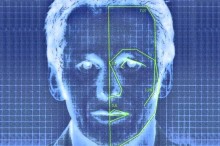
    Chinese scientists at the Chinese Academy of Science (CAS) have recently developed a facial-recognition payment system, which has been dubbed “with a near-perfect accuracy

  • Marie Curie on Curiosity, Wonder, and the Spirit of Adventure in Science

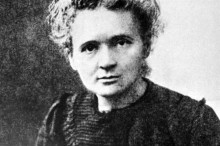
    Marie Curie on Curiosity, Wonder, and the Spirit of Adventure in Science

    A short manifesto for the vitalizing power of discovery.

    “Few persons contributed more to the general welfare of mankind and to the advancement of science than the modest, self-effacing woman whom the world knew as Mme. Curie.

  • Weekly Science Picks

    Weekly Science Picks

    New Sunday, new editor’s selection stories. This week brought the spring to the Southern Hemisphere and the fall to the Northern Hemisphere. It also encouraged us with a lot of new research efforts, studies and discoveries. Right now we would like to present you how the spacecraft of the future would appear, how beautiful Australia’s nature is, why we should believe in an artificial intelligence and much more. So, let’s begin our journey!

    What the inside of a spaceship might really look like

    The starship Enterprise has got to be one of the most beautiful fictional spacecraft ever created. But imagine beaming aboard (and I bet many BBC Future readers have) and living there. At first the pristine corridors, groovy minimalist furniture, view screens and food replicators would seem impossibly exciting.

    ‘Gravitational waves’ may have been space dust

    Researchers at Harvard University called a press conference in March to reveal that they had spotted the cosmic signature of ripples in space left over from the spectacular expansion of the early universe. The dramatic claim was hailed as one of the most important scientific discoveries of the century and promised a new era of physics.

    Mining and biodiversity: are they getting along?

    The greatest threats to biodiversity from mining come from the cumulative impacts of the infrastructure required for mining operations—roads, ports, pipelines, shipping etc. Science can help to assess any potential implications for biodiversity from mining development so that impacts can be better managed and rehabilitation and offsetting efforts can be more effective.

    Artificial intelligence that imitates children’s learning

    The computer programs used in the field of artificial intelligence (AI) are highly specialized. They can for example fly airplanes, play chess or assemble cars in controlled industrial environments. Scientists have now created an AI program that can learn how to solve problems in many different areas. The program is designed to imitate certain aspects of children’s cognitive development.

    Hope you have enjoyed this weekly review as we did. Until the next meeting, please stay thirsty and scientifically driven.

  • Study warns swift action needed to curb exponential climb in Ebola outbreak

    Study warns swift action needed to curb exponential climb in Ebola outbreak

    Investigation of new data expands information on spread of outbreak and case fatality rate.

    Unless Ebola control measures in west Africa are enhanced quickly, experts from the WHO and Imperial College, London, predict numbers will continue to climb exponentially, and more than 20 000 people will have been infected by early November, according to a new article in the New England Journal of Medicine released 6 months after WHO was first notified of the outbreak in west Africa.

    In the article, public health epidemiologists and statisticians reviewed data since the beginning of the outbreak in December 2013 to determine the scale of the epidemic, better understand the spread of the disease, and what it will take to reverse the trend of infections.

    Scale of epidemic

    Although WHO was first notified of the outbreak on 23 March 2014, investigations retroactively revealed the outbreak started in December 2013. Between 30 December 2013 and 14 September 2014, a total of 4507 cases were reported to WHO.

    The data in the study help clarify some details of who is most affected by this outbreak. For example, there have been mixed reports on whether women might be harder hit because they are more likely to care for sick, or whether it would be men who might be more likely to bury the highly-infectious dead bodies.

    “This study gave us some real insight into how this outbreak was working, for example, we learned there is no significant difference among the different countries in the total numbers of male and female case patients,
  • A Brief Talk with Andrea Morello, a Leading Australian Quantum Physicist

    A Brief Talk with Andrea Morello, a Leading Australian Quantum Physicist

    Let us introduce you a leading Australian quantum physicist and probably one of the most promising scientists in the world. His name is Andrea Morello. He is an electrical engineer and a quantum physicist. At the moment he is Associate Professor in Quantum Nanosystems at University of NSW and a Program Manager in the ARC Centre of Excellence for Quantum Computation and Communication Technology (CQC2T). His research is focused on building a quantum computer based on single spins in silicon. In addition to the research, Andrea is actively engaged in science outreach and education. So, let’s start with our talk.

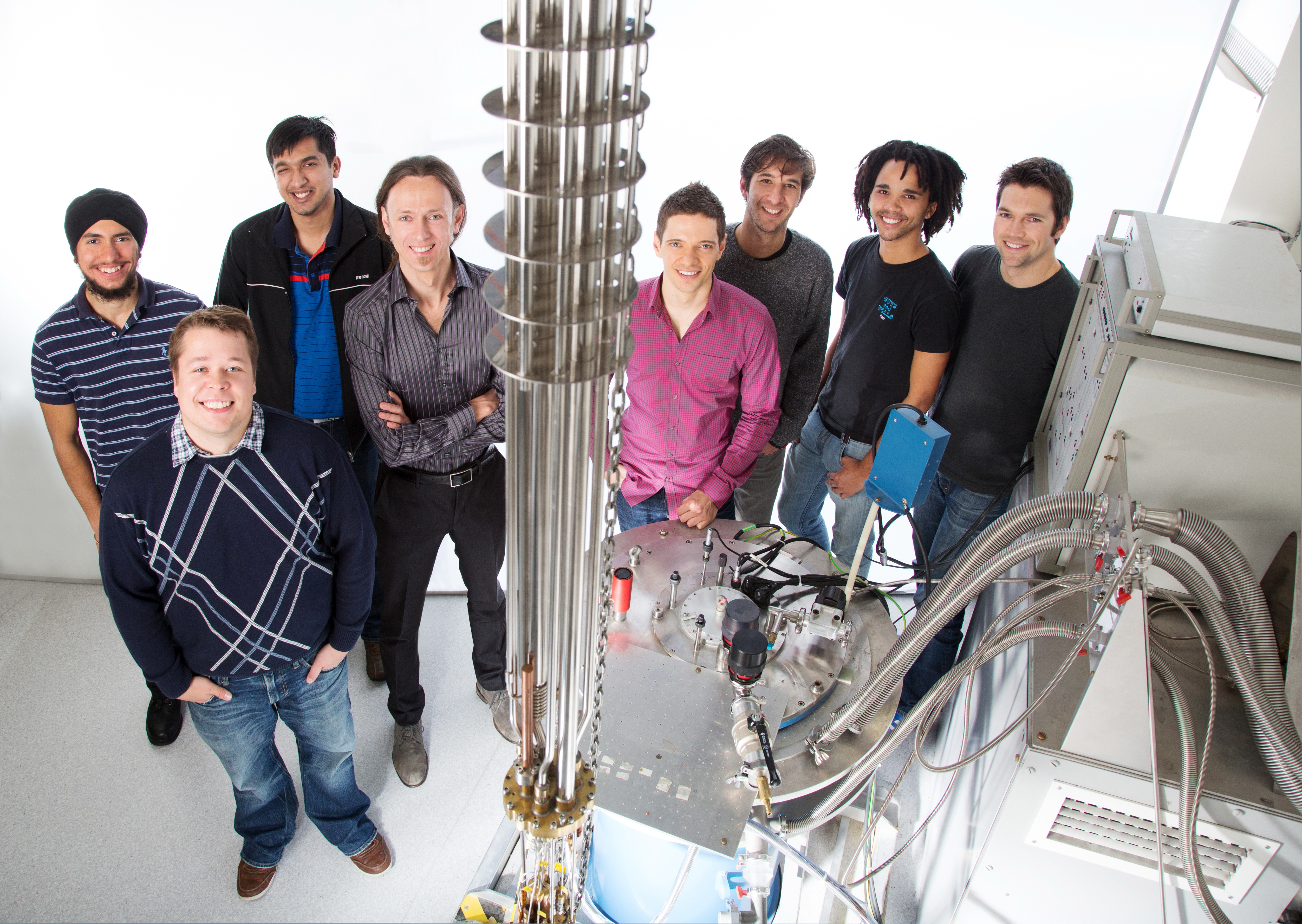
    Morello Team - No-21

    (1) Well, Andrea, we had a brief conversation before this interview and you introduced something about the projects you work on. Could you, please, take a closer look at what you do and explain to our audience what a quantum computing is and how quantum systems work?

    A quantum computer is a machine that performs calculations, but stores and elaborates the information into “quantum-bits

  • Building trust is key to mining’s ‘social licence’

    Building trust is key to mining’s ‘social licence’

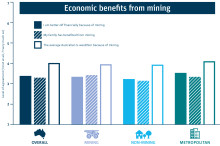
    Australians have endorsed the important role mining plays in the prosperity of the nation but there is still much to be done to bolster the industry’s acceptance, trust and support, according to a CSIRO report released today.

    Released at the International Mining and Resources Conference in Melbourne, the Australian attitudes toward mining report is based on a survey of more than 5000 people Australia-wide.

    According to lead researcher, Dr Kieren Moffat, the survey provides insights and data on community attitudes and possible ways for the sector to build its future opportunities and ‘social licence to operate’.

    A key finding is that, Australians consider that mining is a worthwhile pursuit when you weigh up all the associated benefits and costs,