Blog

  • Foodborne illness on the decline

    Foodborne illness on the decline

    New Australian National University research has found the incidence of foodborne illness has declined slightly and that one quarter of the 16 million cases of gastroenteritis each year are caused by food contamination.

    The research tracked the changes in foodborne illness in Australia between 2000 and 2010.

    It found the number of cases of foodborne illness fell by 17 per cent, but the number of cases of the two leading causes of hospitalisation, Salmonella and Campylobacter, increased by 24 per cent and 13 per cent respectively.

    “On average, each Australian has an episode of foodborne gastroenteritis once every five years,

  • Take Big History: A Free Short Course on 13.8 Billion Years of History, Funded by Bill Gates

    Take Big History: A Free Short Course on 13.8 Billion Years of History, Funded by Bill Gates

    Last month, The New York Times Magazine published a long piece called “So Bill Gates Has This Idea for a History Class …

  • Efficiency and Benefits of Massage Therapy

    Efficiency and Benefits of Massage Therapy

    When health is absent…Wisdom cannot reveal itself
    Art cannot become manifest
    Strength cannot be exerted
    Wealth is useless and reason is powerless.
    Heraphilies

    The advancements in medicine have provided numerous cures and treatments for diseases that were terminal just a hundred years ago. And while there is a pill that can solve many problems, there isn’t one that can give you what a simple old-fashioned massage can – a total relaxation. But, there is more to it.

    Massage is so simple: it is natural, there are no chemicals involved and the person receiving the treatment needs to do absolutely nothing in order to feel the full effect. It has become a part of various aspects of everyday life, from free time to medicine, sports and even beauty treatments.

    Illness is the most heeded of doctors:
    to goodness and wisdom we only make promises;
    pain we obey.
    Marcel Proust

    As one of the main alternative treatments, massage therapy is recommended and used for different problems, from coping with pain, cancer, fibromyalgia, HIV/AIDS and infant care to other conditions. Massage styles mostly performed today are Swedish, Deep tissue, Sports massage, Trigger point massage, Esalen, Pre-Natal, Acupressure, Shiatsu, Counterstrain, Ortho Bionomy, Reflexology and others.

    Endocrine System. It is scientifically proven that massage regulates and stimulates hormone levels in the organism. Hormones such as serotonin, dopamine, epinephrine, oxytocin, cortisol and growth hormone are released into the organism during a massage session and they affect metabolism, mood, body temperature, the pituitary, thyroid, parathyroid, adrenal, pancreas, reproductive glands, as well as kidneys, liver, heart and gonads. For example, high cortisol levels, associated with depression, are reduced while serotonin levels increase. More than 12 studies, mentioned in the Journal of Clinical Psychiatry in 2010, indicate that massage reduces anxiety levels, as well as symptoms of depression, up to 50%.

    Immune system. Massage enhances lymphocyte production, resulting in heightened immune response. Researchers in Cedars-Sinai’s Department of Psychiatry and Behavioral Neuroscience carried out a study with 29 participants. The results showed that a 45-minute session of deep-tissue Swedish massage decreases cortisol levels, while it increases white blood cells.

    Muscles. Another research, published in “Science Translational Medicine

  • Some Thoughts on “Privilege

    Some Thoughts on “Privilege

    To assume that one’s voice and cultural contribution don’t count because one was born into “privilege

  • How the Internet Has Changed the World

    How the Internet Has Changed the World

    The Internet revolutionised the way we live, learn, communicate and the way we do our business.Today, most of us can’t and won’t imagine our lives without it and we take the existence of the Internet for granted. Younger generations may not be aware of this fact – but us who were born in the 70s and 80s had no other means of communication except letters, telegrams and bulky desk phones when we were teenagers! No Wikipedia, MMO games, email, YouTube videos, social networks, liking, sharing and online courses – just good old books, face to face socialising and playing movies on our VHS player. The Internet has become an ultimate worldwide broadcast “entity

  • A Futuristic Review of Cyber Defence

    A Futuristic Review of Cyber Defence

    Cyber age has begun in the previous century and includes everything related to the web, computers and mobile technologies. As cyberspace has been developing, some security concerns have appeared. The future of computing technologies is clear – we are going quantum. But, how would be the future of cyber defence? Let’s say, we will get all those ultra fast, quantum-based computers in the coming decades, but how would we make them be a secure place for us? There is a lot of theories, but we will present you only some of them. So, let’s start our overview.

    Whatever Your Cyber Defence is, Make it a Good One

    Today’s cyber environment is very often harmful due to a lot of threats, risks and attacks that may occur there. What we have in mind first, when we say a cyber threat, are some sorts of criminal and terrorist groups. All they normally communicate with each other through the web. But, what is quite interesting, it’s pretty difficult to break into their communication. Why is that a case?

    The answer to this question is so simple. They use a Darknet or a Deep Web to share the information, ideas and content with each other. So, what would be a Deep Web? The Deep Web is the part of the Internet that is usually invisible for regular search engines such as Google, Yahoo and so on. These search tools simply cannot index those fragments of cyberspace. That means all the communications, sharing and activities stay undetected using a normal mean of communication break ins. Luckily, there are special tools that may allow you to see what is going on under the surface. That’s what the law enforcement institutions use nowadays to gather evidence regarding these sorts of crime.

    A good defence usually include a good understanding of threats. For that reason, it is vitally important to gather as much information as you can about your harmful opponent and to understand those information at both – tactical and strategic level. An appropriate tactic normally involve identifying and linking the actors of the criminal situation, while a strategy goes below the surface and must see a background of such a situation. Only with both components included, your defence can be a good one.

    Do not Forget to be Aware of a Situation

    A good problem management requires a good understanding of a situation that happens. Many researchers believe that a situational awareness is the art we need so much in security nowadays. The situational awareness has 3 phases in its data gathering and analysis process. These are (1) perception, (2) interpretation and (3) prediction. Let us explain these better.

    The first step in a situation awareness methodology is perception. This step includes identifying and gathering the information regarding a case that has been investigated. The accuracy of such a obtained information can seriously affect the next two steps. Sometimes it’s quite complicated and time consuming to gather precise information due to disturbing environmental conditions. For that reason, it’s very important to have experienced and trained people who would be capable to deal with these.

    Once the information have been gathered, you should start with their analysis or interpretation. This phase require very skilled staffs who are able to see the meaning of and also the links between such a collected information.

    Finally, the last step here would be a prediction. It’s a quite strategic part of the task and strongly depends on how successful the previous two steps have been resolved. The prediction allows us to see the causes and effects of the situation and also understand the trends that may occur in the future.

    Quantum Computing Seeks Quantum Encryption

    From today’s perspective, our future seems as very quantum. At the moment, many scientists in the world are trying to build up the first quantum computers ever. There are many theories and research that suggest it’s feasible to make such a great innovation.

    So, if a quantum computing is getting our reality of at least something that will become a part of our lives in the coming decades, does that mean our security will also follow this trend and become quantum as well? Experts say – Yes! We will be able to do a very powerful encryption at quantum level. In other words, it will be possible to encrypt the smallest pieces of the particle. Sounds like we will be in position to encrypt a nature itself. Well, that’s exactly what the current stage of the human’s development suggests.

    The Future Relies on Intelligence

    In the previous articles here, we were discussing how the future of cyber security could look like. What we see as crucially important at this stage are intelligence led or intelligence driven systems. Many researchers predict that such an intelligence-based concept should find its place in a software engineering and computer science world. There are indications that a software of the future would be capable to provide an active self-defence. As it is known, a defence, in its essence, is about a risk management. So, it’s not that hard to imagine a cyber solution of the future which will rely on intelligence and be able to protect itself.

    Reference:

    [1] 2014 Internet Organised Crime Threat Assessment (iOCTA), The European Cybercrime Centre (EC3) at Europol, 2014

  • What Books Do for the Human Soul: The Four Psychological Functions of Great Literature

    What Books Do for the Human Soul: The Four Psychological Functions of Great Literature

    “Writers open our hearts and minds, and give us maps to our own selves.

  • Weekly Science Picks

    Weekly Science Picks

    What an amazing week? The week of the Nobel prize in physics! How great is that? It’s really great, especially because the award goes for advancements in LED technologies. A team from the US and Japan share this prestigious prize. What was also funny this week is a good article on how to make a delicious pizza. That was seriously exciting although we do not have news from food science that often. So, let us tell you all these and much more through the coming stories.

    Food: How mozzarella became the perfect pizza cheese

    When you bake a batch of brownies from a box or pop a frozen pizza in the oven, you’re experiencing the work of dozens of scientists. Most people don’t think of their food as being particularly technical, but to get brownies that rise in the middle instead of slumping, or pizza that browns on top instead of turning into a sea of oil is not as simple as it might seem, especially when the food is intended to be consumed weeks or months after it’s packaged. Your dinner is the result of detailed experimentation.

    Lightbulb moment for Nobel physicists: prize awarded for inventing blue LEDs

    Shuji Nakamura, 60, at the University of California, Santa Barbara, shares the coveted prize – and 8m Swedish kronor (£690,000) – with Isamu Akasaki and Hiroshi Amano of Japan for “the invention of efficient blue light-emitting diodes which has enabled bright and energy-saving white light sources.

  • Australia examines its strengths and sees its future in iManufacturing

    Australia examines its strengths and sees its future in iManufacturing

    Australia needs to play to its strengths and transition from traditional manufacturing into new areas of competitive advantage.

    CSIRO proposes the direction for such a move in its discussion paper Equipping Australian Manufacturing for the Information Age: iManufacturing – Is Australia Ready? which aims to generate discussion among Australian industry to prepare them for the move away from 20th Century modes of production and allow them to compete on the world market.

    The CSIRO said opportunities exist both domestically and internationally in the market for high valued, niche manufactured goods and associated services produced here if Australian industry were to adopt and utilise modern information technology and develop the associated skills to make best use of it.

    Recognising the worldwide trend towards smaller batches of production, customised products, rapid prototyping, agile manufacturing processes and an emphasis on increased ‘servitisation’, the report’s authors warn that Australian manufacturers must develop appropriate business models and prepare themselves for increasingly innovative and competitive offerings in terms of price and flexibility in their domestic and international market niches.

    The discussion paper talks about businesses growing and evolving from the use of traditional IT-based technologies and into eManufacturing (dependent on cloud-based services) or progress further into iManufacturing (or informatics-linked manufacturing).

    To compete globally, the report says, enterprises need to have the right skills and tools to do business, adapt to the future, including:

    (1) develop workers which combine not only eSkills (general computer/internet abilities) but also iSkills (understanding data, connectedness, the Internet of Things, servitisation) and manufacturing expertise

    (2) encourage and develop Materialisation technologies that more rapidly turn digital, customised data into physical outputs

    (3) develop collaborations and networks at local and global scales that are not only engaged at the human communications level but are sharers of data, resources, and processes

    (4) improve supply chain interoperability and material flow efficiencies Move manufacturing industries increasingly into the service spaces – the servitisation of Manufacturing

    (5) develop appropriate business models that maximise the potential that these new technologies provide.

    Source and image.

  • Microbiota and us – we feed our bacteria even when we are sick!

    Microbiota and us – we feed our bacteria even when we are sick!

    There are good bacteria and bad bacteria. For millennia, we humans never made a distinction: bacteria were associated with diseases and death, no exception. It was known that we are carrying along a large assortment of microbes in our gut, but this was considered to be an evolutionary accident or a coincidence rather than a lucky occurrence for us. Recently, in the last 10-15 years, the scientists’ view on the bacteria living in our gut has changed drastically. Now we know that they are good for us in ways that we are just beginning to understand. What is already clear is that, without the bugs in our gut, we would be way worse off than we are.

    Let us start with some numbers to put things in proportion: bacteria make up 1 to 3% of our body mass, which does not seem much. However, in absolute number, it means that we have approximately 10X more bacteria than we have cells in our body, which by itself is quite remarkable. The bacteria we carry around are also so diverse, belonging to literally hundreds of different species, that it is very hard to figure out the exact composition of one person’s bacterial population in detail. Not only they are more than “us

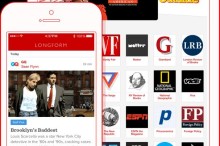
  • Longform’s New, Free App Lets You Read Great Journalism from Your Favorite Publishers

    Longform’s New, Free App Lets You Read Great Journalism from Your Favorite Publishers

    Let us introduce you a great educational tool, which name is Longform’s New. 

    If you have managed to keep your attention span intact during this distracting information age, then you’re almost certainly familiar with Longform.org, a web site that makes it easy to find something great to read online, especially if you like reading informative, well-crafted works of non-fiction.

    Last week, Longform enhanced its service with the release of a new, free app for iPhone and iPad. It’s the “only 100% free app that filters out the internet junk and delivers nothing but smart, in-depth reads.

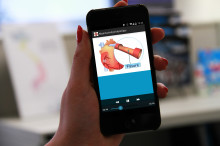
  • Smartphone app a life saver for heart attack patients

    Smartphone app a life saver for heart attack patients

    Patients recovering from heart attacks are far more likely to complete life-saving rehabilitation if they have access to a new smartphone app developed by CSIRO, research has shown.

    A clinical trial found that cardiac patients who undertook rehabilitation in their own homes via the smartphone app were almost 30 per cent more likely to take part in their rehab program than those who had to travel to an outpatient clinic or centre.

    What’s more, those who used CSIRO’s smartphone home care delivery model – known as the Care Assessment Platform – were 40 per cent more likely to adhere to the program and almost 70 per cent more likely to see it through to completion.

    The trial results, which showed that the Care Assessment Platform model was just as clinically effective as traditional rehab, were so successful that the next generation version of the platform will soon be offered in a number of Queensland hospitals including Ipswich, Metro North and West Moreton Hospital and Health Services.

    According to Dr Mohan Karunanithi from CSIRO’s Digital Productivity Flagship, studies have clearly shown that patients who successfully complete cardiac rehabilitation following a heart attack have much better health outcomes.

    They are less likely to have another cardiac event, be readmitted to hospital or die from their condition.

    “These programs traditionally take the form of group-based exercise and educational activities and are designed to help patients return to an active, satisfying life,” Dr Karunanithi said.

    Despite the benefits, uptake is generally poor due to factors such as time constraints, accessibility, lack of referral and patient motivation.

    “The smartphone app offers another choice, overcoming one of the key barriers to patient participation and recovery. By integrating rehab with a patient’s daily life, they are more likely to complete the program and make their new healthy lifestyle permanent,” Dr Karunanithi said.

    The app features health and exercise monitoring tools, delivers motivational materials through text messages and contains multimedia that educates patients about disease symptoms and management.

    With cardiovascular disease killing one Australian nearly every 12 minutes, Rachelle Foreman, Health Director at the National Heart Foundation of Australia, is very optimistic about the potential for this new technology.

    “While more people are surviving their heart attacks, survivors need to understand they are not ‘fixed’ but are living with a chronic condition that needs to be actively managed,” Ms Foreman said.

    “Evidence shows cardiac rehabilitation programs play a huge part in helping people to recover from their heart attack, make lifestyle changes and adhere to medications to reduce their risk of another heart attack.

    “Unfortunately, more than half of patients are not referred to cardiac rehabilitation programs, so the system first needs to let patients know about the importance of such programs and then provide them with flexible options that suit their individual lifestyle and learning style.

    “Programs such as the Care Assessment Platform are great innovations that can improve access and outcomes in a cost effective way and be expanded for those in rural areas, and high risk groups including Aboriginal and Torres Strait Islander people.”

    The next step for the research team is to adapt the platform for rehabilitation for other chronic conditions such as pulmonary disease and diabetes.

    The clinical trial was conducted by CSIRO and Queensland Health through the Australian eHealth research Centre.

    It took place at The Prince Charles, Redcliffe and Caboolture hospitals and has been published in the journal Heart and reported in Nature Reviews Cardiology.

    Source and image.

  • Five Futuristic Substances We Have Today

    Five Futuristic Substances We Have Today

    It appears there are no limits to what human intelligence can achieve. Innovation has been the hallmark of every stage of human civilization, with new and exciting gadgets being produced that have drastically transformed our way of life. The seemingly impossible has been made possible through cutting-edge scientific research and advancements in technology. Here are five substances which will shape our conversations and thoughts for many years to come, and the sheer ingenuity that has gone into making them a reality will surprise you. (more…)

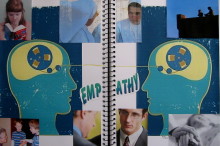
  • Jane Goodall on Empathy and How to Reach Our Highest Human Potential

    Jane Goodall on Empathy and How to Reach Our Highest Human Potential

    “Only when our clever brain and our human heart work together in harmony can we achieve our true potential.