Blog

  • Global carbon dioxide emissions reached 36 billion tonnes in 2013

    Global carbon dioxide emissions reached 36 billion tonnes in 2013

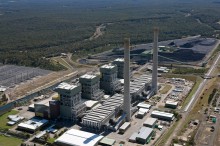
    Global emissions of carbon dioxide from the combustion of fossil fuels reached a new record of 36 billion tonnes last year.

    At the same time, the pace of emissions from burning fossil fuels continues to grow at a high rate.

    Executive-Director of the Global Carbon Project (GCP) and co-author of the 2014 report CSIRO’s Dr Pep Canadell said the carbon dioxide level was “unprecedented in human history”.

    Dr Canadell said fossil fuel carbon dioxide emissions are projected to increase 2.5 per cent this year, bringing the total carbon dioxide emissions from all sources above 40 billion tonnes.

    “Fossil fuel emissions in the past 10 years on average grew at 2.5 per cent per year, lower than the growth rate in the 2000s (which was 3.3 per cent per year) but higher than the growth rate in the 1990s (1 per cent),” Dr Canadell said.

    “The declining growth rate in recent years is associated with lower GDP growth compared to the 2000s, particularly in China.”

    The report shows that Australian emissions continued to decline in 2013, adding to a downward trend that began in 2009, largely due to the decline in electricity generation from coal power plants.

    The largest emitters in 2013 were China, USA, the European Union, and India, together accounting for 58 per cent of global emissions.

    Fossil fuel emissions are tracking the high end of emissions scenarios used by climate scientists to project climate change using global circulation models.

    The GCP provides an annual report of carbon dioxide emissions, land and ocean sinks and accumulation in the atmosphere, incorporating data from multiple research institutes from around the world.

    The full data and methods are published today in the journal Earth System Science Data Discussions, with associated papers in the journals Nature Geoscience and Nature Climate Change.

    Source and image.

  • A Crash Course on Psychology

    A Crash Course on Psychology

    Novelist, educator, and vlogger John Green has drawn a lot of press lately, including but not limited to a New Yorker profile by Margaret Talbot, in the wake of the film version of his popular young-adult novel The Fault in Our Stars.

    But we here can say we featured him before that magazine of cultural record did: in 2012 we posted his Crash Course in World History, and last October, his Crash Course on Literature. If you keep up with this site, you probably know Green less as a coming-of-age-tragedy-writing “teen whisperer

  • Weekly Science Picks

    Weekly Science Picks

    It’s amazing how diverse this week has been. It brought us a lot of exciting stories, but, for this occasion, we choose only several of them. For example, what especially attracted our attention are some news from physics, the science of mindfulness, the facts about Ebola and very surprising findings about a death of Richard III. Well, it’s our time to present you all these interesting information. Let’s start with our review.

    Resilience: How to train a tougher mind

    Tuesday, 11 September 2001. Lisa Siegman was in her first year as principal of Public School 3 (PS 3) in downtown Manhattan. Up on the fourth floor, the fifth-graders’ classroom looked directly towards the World Trade Center. “They had a perfect view of the towers,

  • The world’s first brain to brain communication established

    The world’s first brain to brain communication established

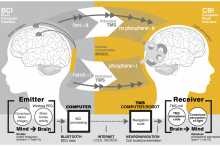
    For the first time ever in the entire world, a team of neuroscience research specialists have been able to successfully establish brain to brain communication between human beings over a long physical distance. Composed of four research experts between the age of 28 and 50 years old from the Harvard University’s medical school, Axilum Robotics in France and the Starlab Barcelona in Spain, the team was able to transmit simple messages over a 5000 mile distance, from one person located in India to three people in France. This was carried out without having to perform any form of surgery on the participants. (more…)

  • What the Science of “Sleep Paralysis

    What the Science of “Sleep Paralysis

    How a neurological nightmare illuminates the wondrous workings of the brain-body connection.

    “In both writing and sleeping,

  • How to protect your critical information?

    How to protect your critical information?

    In a today’s world of constantly increasing cyber threats, we should try to figure out how to stay secure and protected. Cyber systems are not the places which bring you benefits only; they can also be the cause of a lot of concerns. A modern world became too sensitive on cyber threats, so what we need at the moment are good strategies and techniques on how to handle all that. A novel cyber security proposes three steps in a good cyber defence. They are prevention, monitoring and incident response. We plan to discuss all these in the coming lines. So, let’s begin!

    Cyber Security – the Facts

    A modern cyber security can be defined as a process of maintaining an acceptable level of cyber risk. So, security is about a risk management. It’s a never-ending process which requires you to invest new and new efforts in order to keep thing secure. Bad guys will always do bad things and good guys should find a way to respond to all of that. There are a lot of malicious persons in a cyber world – hackers, criminals, terrorist and security is the one which would be ahead of all in order to protect us from harm.

    In a recent time, there are a lot of speculations in public on how potential cyber threats could affect us. There are more than 2 billions internet users in the world and from that point of view things are getting quite complicated. In the reality, everything based on emerging technologies can be affected – beginning from your PC, over electricity network, until satellite communications.

    For such a reason, a good defence is something that we vitally need. That defence must be capable to put threats under control. It’s a hard task; it requires an investment of a lot of efforts, but it’s the only one that can offer as a long-term solution to the problem. It’s like putting things into order within some disordered environment. An entropy is something that exponentionally increases in this Universe, so we are supposed to work hard to make some parts of our reality organised. The same analogy can be done with a cyber environment. If we let a cyber system deal on its own, it will get disordered and insecure.

    Why are Things Getting too Critical?

    There is an infrastructure that is especially sensitive to threat. We call such an infrastructure the critical or the vital one. If anything would happen to that infrastructure, that would be a harm to entire country or nation. Good examples of those are telecommunications systems, traffic infrastructure, data centres, electricity systems and so on. The problem with such systems is they are so important for a normal everyday life of some place. The threat to that infrastructure could affect lives of many people.

    In that sense, it is crucially significant to understand the threat in order to get protected from it. There are a lot of techniques and methods to get familiar with the issue. Modern security systems are mostly intelligence-driven, which means operations are well-prepared, information are well-analysed and strategies are well-developed. Things can appear as too critical at the beginning as there is not enough information provided, but as we are getting a better understanding of threat, our defence is getting clearer.

    The Protection Scenarios

    As mentioned above, there are three protection scenarios used nowadays. These are (1) prevention, (2) monitoring and (3) incident-response. A prevention is about avoiding bad things to happen to your system. On the other hand, a monitoring includes following and analysing what goes on within your environment, while an incident-response is the most complicated step and means how good you will react to protect your system as it is under attack.

    Only a cyber system with all three activities combined can say for itself it is secure enough. The majority of current cyber environments follow this pattern.

    Few Words at the End

    As threats in our world are developing, security systems are progressing and getting better and smarter. The task of a good security is to always stay ahead a threat. This can seem as challenging through some phases of defence, but, at the end, good guys beat bad guys.

    Reference:

    [1] Scott Charney, Rethinking the Cyber Threat: A Framework and Path Forward, Microsoft, 2009

  • Australian museums must innovate or risk becoming ‘digital dinosaurs’

    Australian museums must innovate or risk becoming ‘digital dinosaurs’

    Australia’s cultural institutions risk losing their relevance if they don’t increase their use of digital technologies and services, new research has shown.

    Released today by CSIRO, an analysis of Australia’s galleries, libraries, archives and museums (or GLAM industry) has revealed that digital innovation in the sector is inconsistent and isolated. The report provides a roadmap for the industry in order for it to maximise the potential of the digital economy.

    With Australia’s rapid uptake of online and mobile platforms, people are now choosing to access and share information in very different ways.

    According to Dr Michael Bruenig, Acting Director of CSIRO’s Digital Productivity Flagship, many of Australia’s cultural institutions have not kept pace with this change.

    “The report identified that only a few organisations have made fundamental changes to their operations that would allow them to place digital services at their core, rather than as an ‘add-on’ activity,” he said.

    The few cultural institutions that are embracing digital technology are reaping the benefits.

    “For example, it is now possible to visit the National Museum virtually via a guided robot. This innovation means school students in regional Australia are able explore exhibits and engage with the museum, when they otherwise would not have the opportunity to,” Dr Bruenig said.

    The report also showed that Australia is falling behind international best-practice in digitising over 100 million artworks, books and audio-visual items. According to Dr Bruenig, this slow progress means we risk losing public visibility of cultural and heritage material of significance.

    “The way Australia’s collections are managed varies considerably. Some progressive institutions have collections that are fully digitised and can be accessed virtually over the web. However unfortunately some of Australia’s collections are still managed through log books and card indices,” he said.

    The report outlines several recommendations that would allow the GLAM industry to take full advantage of digital technology. These include:

    (1) shifting to open access models and greater collaboration with the public

    (2) exploring new approaches to copyright management that stimulates creativity and supports creators

    (3) sharing skills, standards and approaches to digitisation building on aggregation initiatives like Trove and the Atlas of Living Australia

    (4) standardising preservation of ‘born digital’ material to avoid losing access to digital heritage

    (5) sharing capability, storage and networks between organisations in the sector, exploiting the potential of AARNet and the NBN for collection and collaboration.

    According to Dr Bruenig, by adopting these recommendations and building on some innovative examples in the sector, Australia’s GLAM industry will be in a position to embrace digital, rather than be engulfed by it.

    The report, conducted in partnership with the Smart Services CRC, is based on consultation with representatives from state, national and local galleries, libraries, archives and museums, researchers and international experts.

    Source and image.

  • New data show child mortality rates falling faster than ever

    New data show child mortality rates falling faster than ever

    New data released today by the United Nations show that under-five mortality rates have dropped by 49% between 1990 and 2013. The average annual reduction has accelerated – in some countries it has even tripled – but overall progress is still short of meeting the global target of a two-thirds decrease in under-five mortality by 2015.

    New estimates in “Levels and Trends in Child Mortality 2014” show that in 2013, 6.3 million children under five died from mostly preventable causes, around 200 000 fewer than in 2012, but still equal to nearly 17 000 child deaths each day.

    “There has been dramatic and accelerating progress in reducing mortality among children, and the data prove that success is possible even for poorly resourced countries,

  • Plastic on the coasts is ours

    Plastic on the coasts is ours

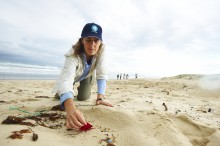
    The world’s largest collection of marine debris information has identified Australia’s coastal rubbish is mainly plastic from Australian sources.

    In a report released today, CSIRO scientist Denise Hardesty says her team surveyed sites approximately every 100 km along the Australian coastline.

    “We found about three-quarters of the rubbish along the coast is plastic,

  • Who is Jacque Fresco?

    Who is Jacque Fresco?

    Jack Fresco is an American futurist, a self-taught industrial design engineer, inventor, author, artist, and behavioral scientist. He was born on March 13, 1916 in Brooklyn, New York. He has worked as a designer and inventor in so many fields of science, and is well know for his innovative project ‘The Venus Project’. He had been praised for his intelligence and the immense love he showed for truth, and was called the modern Da Vinci, also described as an idealist, a dreamer, an utopist and even a prophet and a genius. (more…)

  • William Gibson Reads Neuromancer, His Cyberpunk-Defining Novel

    William Gibson Reads Neuromancer, His Cyberpunk-Defining Novel

    With 1984’s Neuromancer, William Gibson may not have invented cyberpunk, but he certainly crystallized it. The novel exemplifies the tradition’s mandate to bring together “high tech and low life,

  • Weekly Science Picks

    Weekly Science Picks

    Here we are at the end of one more amazing week. It’s Sunday again and we are supposed to review what happened during the last 7 days. For example, have you ever wondered how night shifts could affect you? This week is definitely a week of the museums. Did you know these days we had an Australian Museum Eureka Award or the Science Museum in London is to open a gallery devoted to mathematics? Finally, did you notice that media are too violent at present and all those can impact your mind? So, let’s begin!

    Is working at night bad for you?

    In some jobs, working the night shift is unavoidable. There are hospitals to run, planes to fly and shops to keep open as we move towards a 24-hour society. With careful planning and a bit of peace during the daytime, it is possible to work all night and still get eight hours sleep the follow day. Some people will even tell you they don’t mind and that they get used to working in this way. But can their bodies ever become fully accustomed to working to a clock turned upside down? And, more worryingly, is nocturnal labour bad for your health?

    Science Museum unveils £5m plan for ‘world’s foremost’ mathematics gallery

    The layout of the new permanent gallery, which will open in late 2016, is inspired by mathematical ideas. A plane will be suspended from the ceiling and the position of the displays will follow the lines of aerodynamic flow around it. Lines representing a turbulence field from the plane’s flight will form the basis of a curved surface dividing the gallery into different spaces.

    Eureka, they’ve done it

    More than 2 200 years ago, legend has it, Archimedes got into a bath and had a lightbulb moment. He worked out that you could use the amount of water it displaces to measure the volume of an irregularly-shaped object. He was supposedly so excited about this that he jumped out, and ran, dripping wet and naked, down the street yelling ‘Eureka!’ (Ancient Greek for ‘I’ve found it’).

    Impact of violent media on the brain: Depends on each individual’s brain circuitry, study finds

    With the longstanding debate over whether violent movies cause real world violence as a backstop, a study has found that each person’s reaction to violent images depends on that individual’s brain circuitry, and on how aggressive they were to begin with.

    Until the next meeting, please stay curious and scientifically passionate. The new stories are coming soon.

  • Montaigne and the Double Meaning of Meditation

    Montaigne and the Double Meaning of Meditation

    “There is no exercise that is either feeble or more strenuous … than that of conversing with one’s own thoughts.

  • Reshaping philanthropy with major gift to ANU

    Reshaping philanthropy with major gift to ANU

    Entrepreneurs Michelle Melbourne and Phillip Williamson are redefining the shape of modern philanthropy with a major new donation to the University.

    The couple, both ANU graduates, have given a gift in kind by donating high-technology software to help the University streamline its complex administration processes.

    The gift from their Canberra-based company Intelledox is worth more than $1 million, but has the potential to save the ANU millions more as the software is used to digitalise manual paper-based processes.

    “Phil and I are both passionate alumni, and it is such a great privilege and an honour to be able to share the technology we’ve invented with our alma mater,