Blog

  • Weekly Science Picks

    Weekly Science Picks

    New Sunday, new editor’s selections stories. Well, let us see what would be the most promising and exciting news of this week. This weekly presentation covers many different areas from Australia’s biodiversity, over the idea of artificial human blood, until a nice whale migration story. Sure you will enjoy this week’s review. So, let’s begin.

    Artificial blood that’s better than the real thing

    Each week on the BBC World Service programme The Forum, a global thinker from the worlds of philosophy, science, psychology or the arts is given a minute to put forward a radical, inspiring or controversial idea – no matter how improbable – that they believe would change the world.

    Been whale watching lately? Scientists want your snaps to tell migration story

    Scientists are studying the migration to better understand the recovering population. Peta Beeman, a researcher from Southern Cross University, is turning to citizen science to help gather data.

    Can we feed the world and save our species?

    There is a range of intensities of primary production in Australia today. Hunting and gathering and use of fire to manipulate the abundance of native species is at the lowest end of the spectrum, then livestock grazing of native pastures, right through to complete replacement of native species for intensive cropping and forestry plantation (the latter requiring inputs in the way of fertilisers, machinery, chemicals etc.). The more intensive the production method, the more food and fibre can be produced per unit area, but with greater impact on biodiversity. Less intensive production methods provide opportunities for native species to coexist with production.

    What lit up the universe?

    New research shows we will soon uncover the origin of the ultraviolet light that bathes the cosmos, helping scientists understand how galaxies were built. The study by cosmologists shows how forthcoming astronomical surveys will reveal what lit up the cosmos.

    Here we are at the end of one more amazing journey. Until the next time, please stay curious and scientifically passionate.

  • The Best of Australian Science: August 2014

    The Best of Australian Science: August 2014

    It’s the end of August, 2014 and it our time to review the top headlights for this month.

    This would be our selection for the previous period.

    From the caves to the classroom

    From classrooms around the country, students will embark on a digital journey exploring the iconic Jenolan Caves, an important scientific environment full of learning opportunities. As they progress through quests, the students will explore the surrounding environment and complete inquiry based learning tasks that test their core science skills.

    Genetic key to lupus shows potential of personalised medicine

    Medical researchers at the Centre for Personalised Immunology, based at the John Curtin School of Medical Research (JCSMR), sequenced the genes of a young girl who suffered a stroke when she was four as a result of her lupus.

    A Good Defence is about Understanding Cyber Threats by Milica Djekic

    In the era of the Internet and emerging technologies, we are supposed to deal with different sorts of cyber threats, risks and attacks. This modern time brought a lot of advantages to the Human Kind, but also some fast-spreading and increasing security issues. It seems we are connected with the risk more than ever before. Cyber environment may appear as so friendly and convenient, but for real it brings a lot of nightmares to its visitors. In this article, we discuss all the disadvantaging things you can face up in cyberspace and also suggest why cyber security and a good undersigning of the problem is so important for a good defence. So, let’s start.

    Multi-Coloured Vision by Lizz Rice

    Colour is our eye’s interpretation of light reflecting off objects. The different colours we see are different wavelengths of light. Colour-specific photoreceptors in the retina of our eyes, cones, translate the wavelengths into what we see as colour.

    Interview: Simon Phipps, a computer scientist and open source advocate by Danica Radovanovic

    One could call Simon Phipps a real eclectic geek, having in mind his background and activism globally: from campaigning for digital liberties, open data, open source software and political transparency, through his columns at InfoWorld to presidenting at the Open Source Initiative.

    That’s basically our choice for August. Please stay tuned, new stories are coming soon.

  • Interview: Simon Phipps, a computer scientist and open source advocate

    Interview: Simon Phipps, a computer scientist and open source advocate

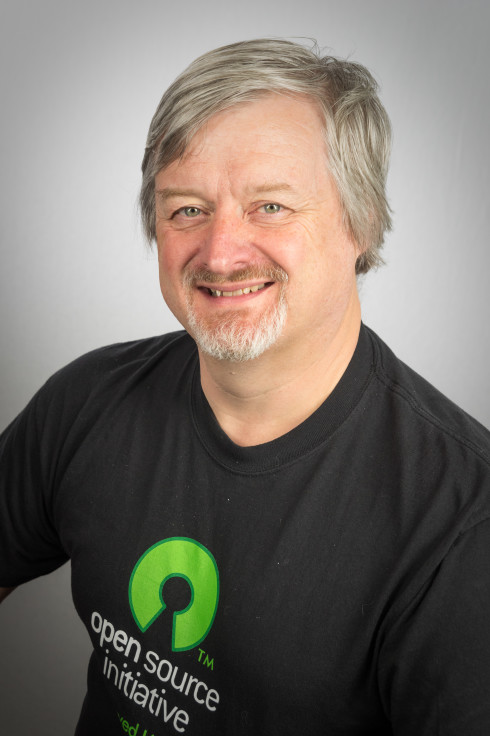
    Simon Phipps OSIOne could call Simon Phipps a real eclectic geek, having in mind his background and activism globally: from campaigning for digital liberties, open data, open source software and political transparency, through his columns at InfoWorld to presidenting at the Open Source Initiative.

    Simon studied electronic engineering at the University of Southampton, after which he worked for IBM, being involved in introducing the Java programming language, then he was leading Sun’s open source projects for Sun Microsystems – where he also worked on open source licenses. When Sun Microsystems and Oracle merged in 2010, Simon joined ForgeRock startup as Chief Strategy Officer. Now, he heads his own consulting company, Meshed Insights Ltd.

    He is the president of the Open Source Initiative (OSI) since 2012 –  the non-profit organisation that advocates for open source software and builds bridges between open source communities and maintains the open source licenses. Also, he is a board director at the Open Rights Group in the UK and on the advisory board of Open Source for America.

    Simon has been giving talks at many conferences on open source, free software, digital rights, etc. I had a chance to meet Simon couple of years ago in Oxford (UK), at the Transfer Summit conference on open innovation, development and collaboration, and ever since I’ve been following his work online and offline.

    Welcome to Australian Science. Would you, please, tell our readers a little bit more about yourself? Where do you come from, both geographically and philosophically?

    I’m originally from south London but have lived in Southampton for 35 years. I’ve been programming computers and making electronics since I was a teenager, with other interests in general science. I’ve always been fascinated by networks and the capacity for action at a distance, so my career has embraced many aspects of both.

    Back in the days of Sun Microsystems, you were leading Sun’s open source projects, and later got involved in the Open Source Initiative. How did you initially get interested in open source software? 

    At one point I ran a company that helped programmers create and distribute software as Shareware. I realised most people who use software could be trusted to support the developers behind it; our business was successful as a result! That opened my eyes to the deeper reality that underlies open source software. If you remove the obstacle of needing permission to contribute, a community will naturally collaborate to create what they need individually and share it with everyone else. So when I arrived at Sun from IBM, I already believed that open source was a crucial part of the new society emerging because of the Internet. At Sun I was privileged to oversee the relicensing of pretty much the whole of Sun’s software portfolio, including Java, identity management, Solaris, and much more. The legacy we created is still important, especially the code that has ended up as LibreOffice and the ongoing releases of Java under the GPL.

    Would you explain to our readers what do Open Source Initiative (OSI), beside promoting open-source software, do for the Internet, science, research, and academia?  

    OSI was formed in 1998 as the steward of the then-newly-coined “Open Source

  • Robots to ResQu rainforests from purple plague

    Robots to ResQu rainforests from purple plague

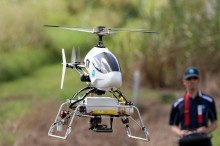
    Australia’s rare and precious rainforests, like the iconic Daintree, could have an unexpected aerial ally in the battle against weeds – autonomous helicopters.

    Two Project ResQu helicopters developed by CSIRO completed trial flights near Cairns, locating weeds like the dreaded ‘purple plague’, or Miconia calvescens, faster and more reliably than ever.

    Developed by robotics researchers at CSIRO, in partnership with Biosecurity Queensland, the unmanned helicopters found weeds using sophisticated imaging technology. The helicopters are safer and a more convenient way of mapping weeds in remote and difficult terrain.

    CSIRO Biosecurity Flagship Science Director, Dr Gary Fitt, said access to dense rainforests was difficult for people but all-too-easy for weeds which get carried in by animals or blown in from gardens or farms.

    “Miconia is among the worst of a number of weeds that pose a significant threat to Australia’s precious rainforest remnants,

  • Everyday Economics: A New Course by Marginal Revolution University Where Students Create the Syllabus

    Everyday Economics: A New Course by Marginal Revolution University Where Students Create the Syllabus

    In 2012, Tyler Cowen and Alex Tabarrok, two econ professors at George Mason University, launched Marginal Revolution University (otherwise known as MRUniversity) which delivers free, interactive courses in the economics space.

    During its early days, MRUniversity created courses on The Great Economists, Development Economics, International Trade, and The Economic History of the Soviet Union. And now it’s creating a somewhat unconventional new course called Everyday Economics. The course tries to show how economics impacts people’s day-to-day lives. And, rather suitably, MRUniversity is inviting its students — everyday people around the globe — to vote for topics the course should cover. It’s what’s called a “student-driven

  • Water and sunlight the formula for sustainable fuel

    Water and sunlight the formula for sustainable fuel

    An ANU team has successfully replicated one of the crucial steps in photosynthesis, opening the way for biological systems powered by sunlight which could manufacture hydrogen as a fuel.

    “Water is abundant and so is sunlight. It is an exciting prospect to use them to create hydrogen, and do it cheaply and safely,

  • How Rockets Really Work

    How Rockets Really Work

    The chemistry of ridable explosions.

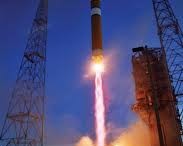
    In recounting the riveting experience of what it’s like to launch on a Space Shuttle, pioneering astronaut Sally Ride vividly recalled how “the shuttle leaps off the launch pad in a cloud of steam and a trail of fire.

  • Neanderthals and Modern Humans coexisted

    Neanderthals and Modern Humans coexisted

    Neanderthal groups lived alongside modern humans for several thousand years, an international team of scientists has found, overturning previous theories about the extinction of Neanderthals.

    The team applied a new radiocarbon dating method which revealed that Neanderthals across Europe did not all die out at one time as modern humans appeared.

    “The two groups lived in neighboring regions for several thousand years,

  • Weekly Science Picks

    Weekly Science Picks

    It seems we are around one more Sunday in this month. We left behind us one more fascinating and promising week and now, with the full confidence, we would like to recapitulate what have happened during the last 7 days. We are just wondering if anyone could predict that the amateur in genetics may give such a great contribution. What also dragged our attention is a story on how children’s drawing can affect their intelligence later in their life. Quite amazing, is not it? So, let’s start with our presentation of the previous week.

    The amateur geneticist who surprised science

    This was in 2002, and Kim, then 44 years old, was already an accomplished endurance athlete. She cycled, ran, climbed and skied through the Rockies for hours every day, and was a veteran of Ironman triathlons. She’d always been the strong one in her family. When she was four, she would let her teenage uncles stand on her stomach as a party trick. In high school, she was an accomplished gymnast and an ardent cyclist. By college, she was running the equivalent of a half marathon on most days. It wasn’t that she was much of a competitor, exactly – passing someone in a race felt more deflating than energising. Mostly Kim just wanted to be moving.

    Ebola-affected countries should start screening all passengers, says WHO

    There is a low risk of the Ebola virus being transmitted during air travel because unlike infections such as influenza or tuberculosis, it is not spread by breathing air and airborne particles from an infected person, the World Health Organisation said. Nonetheless, all travellers are urged to routinely wash their hands and anyone with an illness consistent with the virus should not be allowed to travel unless it is part of an appropriate medical evacuation.

    Ghostbusting in the Gulf

    The Gulf of Carpentaria off Australia’s northern coast has one of the highest rates of abandoned fishing nets, or so-called ghostnets, anywhere in the world. In fact, up to three tonnes of netting washes ashore each year for every kilometre of coastline.

    Children’s drawings indicate later intelligence, study shows

    How 4-year-old children draw pictures of a child is an indicator of intelligence at age 14, according to a new study. The researchers studied 7,752 pairs of identical and non-identical twins and found that the link between drawing and later intelligence was influenced by genes.

    These would be the end of our today’s talk. Hope you have enjoyed this trip as we did.

  • Genetic key to lupus shows potential of personalised medicine

    Genetic key to lupus shows potential of personalised medicine

    Medical researchers have used DNA sequencing to identify a gene variant responsible for causing lupus in a young patient.

    The development shows that for the first time, it is feasible for researchers to identify the individual causes of lupus in patients by using DNA sequencing, allowing doctors to target specific treatments to individual patients.

    Lupus is a chronic autoimmune disease that affects one in 700 Australians, predominantly young and middle aged women.

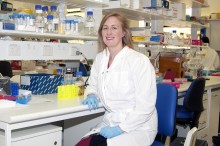
    Medical researchers at the Centre for Personalised Immunology, based at the John Curtin School of Medical Research (JCSMR), sequenced the genes of a young girl who suffered a stroke when she was four as a result of her lupus.

    “We can now target her specific disease, and make treatments that will benefit her throughout her life,

  • Stanford’s Robert Sapolsky Demystifies Depression

    Stanford’s Robert Sapolsky Demystifies Depression

    We know that depression affects people from all walks of life. Rich. Poor. Celebs. Ordinary Joes. Young. Old.

    But, somehow after the death of Robin Williams, there’s a renewed focus on depression, and my mind turned immediately to a lecture we featured on the site way back in 2009. The lecture is by Robert Sapolsky, a Stanford biologist, who has a talent for making scientific subjects publicly accessible. A recipient of the MacArthur genius grant, Sapolsky notes that depression — currently the 4th greatest cause of disability worldwide, and soon the 2nd — is deeply biological. Depression is rooted in biology, much as is, say, diabetes. As the lecture unfolds, you will see how depression changes the body. When depressed, our brains function differently while sleeping, our stress response goes way up 24/7, our biochemistry levels change, etc. You will see that biology is at work.

    Source and image.

  • From the caves to the classroom

    From the caves to the classroom

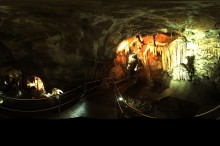
    The latest chapter in a long history of mapping technology innovation at Jenolan Caves will see students from around Australia explore the caves in virtual reality as part of Australia’s biggest school excursion.

    From classrooms around the country, students will embark on a digital journey exploring the iconic Jenolan Caves, an important scientific environment full of learning opportunities. As they progress through quests, the students will explore the surrounding environment and complete inquiry based learning tasks that test their core science skills.

    This virtual excursion is made possible by the partnership between computer scientists from CSIRO together with science education experts from 3P Learning to develop ‘immersive learning’ environments.

    It combines 3P Learning’s latest educational resource, IntoScience, with high-definition panoramic video and 3D models of real places scanned using CSIRO’s award-winning laser mapping technology, Zebedee. CSIRO’s technology is the first capable of mapping caves with lasers while continuously moving, which makes it more efficient and more detailed than traditional methods.

    Acting Flagship Director, Digital Productivity and Services, Dr Michael Bruenig said that scientists from CSIRO originally became involved in scanning the Jenolan Caves to assist ANSTO with their research into cave formation processes that required three-dimensional maps of the caves.

    “It’s exciting to see our cave models now brought to life as a virtual world that students can explore and perform their own scientific investigations in.

  • Laser makes microscopes way cooler

    Laser makes microscopes way cooler

    Laser physicists have found a way to make atomic-force microscope probes 20 times more sensitive and capable of detecting forces as small as the weight of an individual virus.

    The technique, developed by researchers in the Quantum Optics Group of the Research School of Physics and Engineering, hinges on using laser beams to cool a nanowire probe to minus 265 degrees Celsius.

    “The level of sensitivity achieved after cooling is accurate enough for us to sense the weight of a large virus that is 100 billion times lighter than a mosquito,

  • A Good Defence is about Understanding Cyber Threats

    A Good Defence is about Understanding Cyber Threats

    In the era of the Internet and emerging technologies, we are supposed to deal with different sorts of cyber threats, risks and attacks. This modern time brought a lot of advantages to the Human Kind, but also some fast-spreading and increasing security issues. It seems we are connected with the risk more than ever before. Cyber environment may appear as so friendly and convenient, but for real it brings a lot of nightmares to its visitors. In this article, we discuss all the disadvantaging things you can face up in cyberspace and also suggest why cyber security and a good undersigning of the problem is so important for a good defence. So, let’s start.

    What is Cyber Security?

    In the ancient China, there was the belief that our world had been governed by two opposite forces. Yin and Yang. The force of the offence and the force of the defence. It has been believed that world could be in harmony only if those two forces are in balance.

    Similarly, a modern experts see security as a balance between attack and defence. Cyber security is also about balance, but in cyber means. Sometime it may happen that a cyber system loses its balance. Some of the forces – either attack or defence can make advantage. In such a case, it is crucially important for a system to return its balance. That ability to return lost balance is called stability. This claim also has its origins in mathematics and can be proved through precise equations.

    So, what would be the point of cyber? How can we define that term? Cyber is everything about the web, mobile devices and computers. It’s quite commercial terms and means many different things to many different people. Basically, there is no universal definition of cyber. Very often, cyber security is named as cyber. Well, if we say cyber, we may mean cyber security by that. Quite exciting, is not it? Indeed. Let’s continue with our talk.

    Cyber Threats – How Bad are They?

    Some define cyber threat as a person or organization intending to cause harm at cyber level. It is usually believed that there can be a lot of cyber risks and attacks in cyberspace. The main risks that cyber community experience nowadays are (1) cyber crime, (2) cyber espionage, (3) cyber warfare and (4) activism. Further, we would try to illustrate and understand those sorts of threats.

    Let’s start with cyber crime. What is it? Cyber crime is every sort of illegal activity obtained on computer or network which aim is to get money. At the beginning of cyber era, cyber crime was about breaking into someone’s computer, making changes into that system and leaving. Right now, it’s about the money. It’s about stealing credit cards, confidential information, passwords and so on in order to take advantage. Cyber crime commonly can be discovered using cyber forensics diagnostics.

    On the other hand, cyber espionage is about information regarding someone’s activities which are gathered secretly through some sort of cyber devices. This sort of activity can have a different background and can be distinguished as economic and military. It’s obvious what would collecting of information in secret mean in terms of economic interest and what in terms of military goals.

    The next term to get explained here would be cyber warfare. Sounds spectacular, but it’s not. It’s something that occurs in the world every single day. There are a lot of state and non-state programs which aim is to do sabotage or cause harm to computers or equipment of certain individuals or groups. Also, there are a lot of such malware like viruses or worms in the world which are created to prevent the state or organization from terrorism, organized crime, hackers, etc. The well-known advanced threat of today are those which cannot be detected easily. Some of the examples are Stuxnet, Flame, Shamoon, and so on.

    Finally, we should say several words about activism. Activism is none of above. It’s also about computer breach, but with a goal to show that you are capable of doing that, to send some social or political message, to embarrass your target, etc. It’s about people who can do that and who will do that, just to show they can.

    Cyber Metrics – How it Matters?

    Cyber metrics can be defined as a set of measurements that can be applied in order to control, understand and, in terms of threat, defend your cyber system. It’s about finding a quantitative values of certain cyber parameters such as a number of infections, data breach rate, amount of viruses in the system and so on. Metrics can be expressed through numbers, percentages or averages.

    Once all the quantities of cyber system are detected and measured, it is possible to analyse those data and to present them through graphs, statistics or models. Cyber metrics is a great stuff because it can support us in controlling, understanding and defending a cyber environment. It’s, basically, the key factor in defence.

    In order to obtain a good cyber metrics, it is recommended to follow the best industrial practice which will support you in metrics and models preparation. For that purpose, the following steps could be applied: (1) defining the metrics program goals and objectives, (2) deciding which metrics to generate, (3) developing strategies for generating the metrics, (4) establishing benchmarks and targets and (5) determining how the metrics would be reported.

    Finally, threat metrics is about measuring threat. As given before, threat is an individual or organization which intends to do harm. It seems a bit of hard to measure such an abstract term. Maybe we should have a closer look at what cyber threat is for real. Basically, it’s about a potential or possibility to some cyber harm to occur. So, throughout that perspective we should observe cyber threat metrics and its modelling.

    Understanding and Defence – Why Can They Go Together?

    At the end, we should explain clearly why understanding of the problem and defence can go together. Well, this is something that we can get intuitively, is not it? Better we understand the issue, threat, risk, better we will find a way to protect against it. It’s similar like a warfare. If you understand your enemy, you will have a better chance to defeat him. Additionally, understanding is only a key thing, but your capabilities, technology, ability to learn and adopt will decide how will win the war.

    References:

    [1] Mark Mateski, Cassandra M. Trevino, Cynthia K. Veitch, John Michalski, J. Mark Harris, Scott Maruoka, Jason Frye, Cyber Threat Metrics, Sandia National Laboratories, 2012
    [2] Scott Charney, Rethinking the Cyber Threat: A Framework and Path Forward, Microsoft, 2009
    [3] Shirley C. Payne, A Guide to Security Metrics, SANS Institute, 2007