Blog

  • River red gum – more than just a tree

    River red gum – more than just a tree

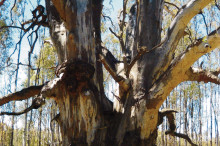
    So much more than just a tree, the river red gum has been central to the tensions between economic, social and environmental values of rivers and floodplain landscapes in Australia – perhaps more so than any other Australian plant or animal.

    Flooded Forest and Desert Creek: Ecology and History of the River Red Gum, a new CSIRO book, examines not only the ecology of one of the most iconic Australian trees, but how changes in attitudes towards it have reflected broader shifts in values of Australian society.

    Author, CSIRO’s Dr Matthew Colloff, said that given the prominence of the river red gum in Australian culture, we know surprisingly little about the ecology and life history of it.

    “The river red gum has been the subject of repeated government inquiries over its conservation, use and management. Despite this we know remarkably little about the basics of this species: its longevity; how deep its roots go; what proportion of its seedlings survive to adulthood; the diversity of organisms associated with it, and the nature of those associations,

  • Weekly Science Picks

    Weekly Science Picks

    What an amazing week! A lot of things have happened over the last 7 days. For instance, did you know that a woman won an outstanding Fields Medal in mathematics for the first time after 50 years? How brilliant is that? Also, we have noticed there is some progress in discovering an Ebola medication. In other words, there is still hope we will find that treatment and heal the sick around the world. In this weekly review, we also return to the time when the earliest animals lived and at the beginning of the Universe. So, let’s start with our newest journey.

    Big Bang: How the Universe was created

    “You just won’t believe how vastly, hugely, mind-bogglingly big space is,

  • Cuckoos trick other cuckoos in the race to own the nest

    Cuckoos trick other cuckoos in the race to own the nest

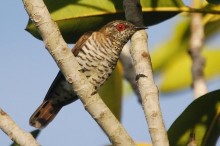
    Australian native cuckoos are engaged in an arms race, competing with each other to take over other species’ nests.

    The finding by Research School of Biology scientists gives new insights into the deceptive habits of cuckoos, which lay their eggs in other birds’ nests to dupe other mums into raising cuckoo chicks.

    “Previous research has focussed on how cuckoos try to trick their hosts,

  • Multi-Coloured Vision

    Multi-Coloured Vision

    Colour is our eye’s interpretation of light reflecting off objects. The different colours we see are different wavelengths of light. Colour-specific photoreceptors in the retina of our eyes, cones, translate the wavelengths into what we see as colour.

    Humans generally have three types of cone to do this. One responds to shorter waves of light (we see these as blues), one responds to longer waves of light (reds) and one responds to the middle lengths (greens). The cones work together to see other colours, such as purple.

    The three cone system is called trichromatic vision, but most other mammals, like dogs and cats, only have two types of cones. This is known as dichromatic vision.

    Some people only have dichromatic vision too. We call this colour blindness, somewhat misleadingly, as dichromats still have plenty of colours available to them.

    Rather, they struggle to make out some colours. They can be defined asprotanopes (total lack of red cones), deuteranopes (lack of green cones) or tritanopes (lack of blue cones).

    There is also another group of people called anomalous trichromats, who have all three cones but make odd judgements compared with the rest of us. The peak sensitivity of one of their cones shifts along the spectrum, so they need more or less of the wavelength to achieve the colour. For instance, people with deuteranomaly (the most common) find their green cone sensitivity shifts towards the red part of the spectrum, so they need fewer long waves of light to see red.

    It is rare to be born a tritanope, but around 8% of men and 0.5% of womenare affected by red or green colour blindness.

    It is so much more common in men because the gene responsible is carried on the X chromosome. Women (XX) are likely to have a normal copy to override the mutated gene, whereas men (XY), with only one X chromosome, have no other choice.

    It is also possible to acquire colour vision defects through problems like disease and injury.

    The visual world of the colour blind not only becomes less rich, but simple tasks like detecting sunburn, or determining ripe fruit becomes a struggle. Jay Neitz’s slideshow shows what living in a colour blind world might be like.

    There are advantages to dichromacy. Researchers have identified 15 shades of khaki that those with normal vision found almost impossible to tell apart, but those with deuteranomaly were able to easily distinguish.

    Their ability to discern camouflage may have provided an evolutionary benefit because a reduction in colour signals makes the differences in texture and brightness more apparent. This would explain why it is so prevalent in society.

    But they lack the ability to, say, spot a cherry on a cherry tree, which is possibly why we evolved trichromacy in the first place.

    Our world has been designed for trichromatics and living with colour deficiency can be detrimental to many areas of life: education, where colour-coding is extensively used, or pursuing careers, for example, as a firefighter, electrician or pilot.

    In the future it may be possible to use gene therapy to correct colour blindness. The idea has already been successfully applied to monkeys.

    Adult squirrel monkeys (Saimirisciureus) with red-green colour blindness were trained to touch the location of a coloured patch among grey dots. After treatment that added the missing visual pigment gene, the monkeys passed the test with flying colours.

    The success of these nervous systems to respond to a new sensory input indicates that, contrary to popular belief, the capacity for development does not end.

    It is not known how the human brain would respond to a new colour channel. Though there was no psychological distress observed in monkeys, the internal experience cannot be discerned. Safety also must be ensured before it can be considered for human use.

    There may be another way.

    Neil Harbisson hears colours. He is the wearer of an “eyeborg
  • Hear Michel Foucault’s Lecture “The Culture of the Self

    Hear Michel Foucault’s Lecture “The Culture of the Self

    Michel Foucault’s time in the United States in the last years of his life, particularly his time as a lecturer at UC Berkeley, proved to be extraordinarily productive in the development of his theoretical understanding of what he saw as the central question facing the contemporary West: the question of the self.

    In his 1983 Berkeley lectures in English on “The Culture of the Self,

  • How to Learn: Lewis Carroll’s Four Rules for Digesting Information and Mastering the Art of Reading

    How to Learn: Lewis Carroll’s Four Rules for Digesting Information and Mastering the Art of Reading

    “Mental recreation is a thing that we all of us need for our mental health.

  • Physicists create water tractor beam

    Physicists create water tractor beam

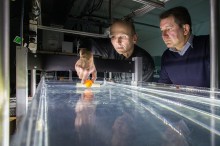
    Physicists at The Australian National University have created a tractor beam on water, providing a radical new technique that could confine oil spills, manipulate floating objects or explain rips at the beach.

    The group, led by Professor Michael Shats, discovered they can control water flow patterns with simple wave generators, enabling them to move floating objects at will.

    “We have figured out a way of creating waves that can force a floating object to move against the direction of the wave,

  • Allergy to Originality: Mark Twain and the Remix Nature of All Creative Work

    Allergy to Originality: Mark Twain and the Remix Nature of All Creative Work

    Why why all creative culture is built on “plagiarism, literary debt, appropriation, incorporation, retelling, rewriting, recapitulation, revision, reprise…

  • Weekly Science Picks

    Weekly Science Picks

    One more amazing week has finished and here we are to share with you the best stories by our selection. This week offers quite good news, but not that spectacular as we have from time to time. Through the following descriptions we intent to provide you with our this week’s choice. Hope you will enjoy this very interesting journey.

    The last man to walk on the Moon

    More than 40 years on, you might imagine Cernan has had enough of talking about the Moon. But it seems Apollo astronauts never retire and, at 80, he is still passionate about America’s past space glories and the future of human space exploration.

    Human brain subliminally judges ‘trustworthiness’ of faces

    Researchers in the US found that brain activity changed in response to how trustworthy a face appeared to be when the face in question had not been consciously perceived.

    Fighting back against species loss

    There are many troubling threats to our native biodiversity in Australia, two of the biggest being the loss and fragmentation of native habitats and the impact of invasive species. Native species also suffer as a result of poor grazing and fire management regimes, over harvesting, pollution and disease.

    Scientists change butterflies wing color in just six generations

    Scientists have chosen the most fleeting of mediums for their groundbreaking work on biomimicry: They’ve changed the color of butterfly wings. In so doing, they produced the first structural color change in an animal by influencing evolution. The discovery may have implications for physicists and engineers trying to use evolutionary principles in the design of new materials and devices.

    These would be all for this weekly review. Please stay curious and scientifically driven. We are coming with new stories soon.

  • 5-Minute Animation Maps 2,600 Years of Western Cultural History

    5-Minute Animation Maps 2,600 Years of Western Cultural History

    Working with his colleagues, Maximilian Schich, an art historian at the University of Texas at Dallas, took Freebase (Google’s “community-curated database of well-known people, places, and things

  • New collaborations seek to solve infectious disease challenges

    New collaborations seek to solve infectious disease challenges

    Many of Australia’s leading animal and human infectious disease experts are joining forces this week to identify challenges that might benefit from greater collaboration across Australia’s research institutions.

    The Forum will be held at the Geelong high-containment facility and is a joint initiative between CSIRO’s Australian Animal Health Laboratory (AAHL) and the National Health and Medical Research Council (NHMRC).

    Professor Warwick Anderson, CEO of the NHMRC said the Forum was an important step towards managing infectious disease in Australia.

    “More than 70 per cent of new and emerging infectious diseases originate in animals, so there are great benefits to merging the collective genius from both sides to address some of the nation’s greatest infectious disease challenges.”

    The Forum’s workshops will be lead by Australia’s Chief Medical Officer – Professor Chris Baggoley, Nobel Laureate – Professor Peter Doherty, and Director of the Sydney Institute for Emerging infectious Diseases and Biosecurity – Tania Sorrell.

    This meeting of the minds will discuss emerging zoonotic disease threats, comparative medicine, and medical countermeasures including anti-microbial resistance, diagnostics and treatments.

    The workshop structure of the program will enable researchers to tease out and prioritise issues that will deliver the greatest national and global impact by combining Australia’s collective biomedical research and infrastructure capabilities.

    Dr Kurt Zuelke, CSIRO Biosecurity Flagship Director and Executive Director, AAHL said “AAHL’s extensive Physical Containment Level 4 laboratories are some of the most sophisticated in the world, which when combined with the unique research tools, models and expertise available within the facility, have great potential for human health research as well as animal health.

    With funding through the National Collaborative Research Infrastructure Strategy, we hope to facilitate greater access to this facility for fellow infectious disease researchers.”

    Source and image.

  • The journey of integrating social media and apps in your classroom

    The journey of integrating social media and apps in your classroom

    We developed our 6 steps pedagogy of blended learning as a way to support the integration of social media and apps in lessons. The integration of social media and apps often happens nowadays though the use of tablets. The last few years we co-created with our customers a way of working with tablets using the 6 steps pedagogy of blended learning.

    In our journey with schools we train teachers in using social media and apps with their students using this pedagogy based on this 6 steps blended pedagogy. In this article we provide an example as to how this is done.

    At the start of the journey, the competence level of teachers concerning social media and ICT is checked by using an online scan and a telephone interview. At the same time we ask our participants their own learning question. What do they want to learn, what will define their level of satisfaction at the end of the course? These learning questions differ from getting to know which apps are available and how can I work with just a few tablets? How do I organise my classroom and how do I measure results using apps?

    In the first face-to-face meeting, everybody gets together and defines their own goal for development. Individual as well as collective goals are set, so schools’ general interests are also covered.

    The second step is to gather information and make a selection. Participants are facilitated by an APP-discovery session: they will get to know a few apps and start using these on a tablet right away, both as individuals as well as in groups. They also get some insight in how and where to find appropriate apps for their own classrooms. After this face-to-face session, teachers start experimenting in their own classroom. To make sure participants share their enthusiasm and ask questions, a learning platform is available to enable them to keep in touch and help one another. By doing so they use the learning platform to share ideas and to ask questions.

    In the next phase participants prepare a lesson based on the 6 steps blended pedagogy and share this with their colleagues using the learning platform. This is called learning interaction: important elements are sharing, working together, learning together and creating together. Of course, after preparing this lesson, the best way to see if it works is to actually use it and watch the reaction of the class. If possible participants of the course observe each other.

    After this process of creating and executing a lesson, a meeting is arranged in which experiences are shared by participants. Presentations show what apps and social media have been used and which didactical choices were made. Feedback during this meeting is very important. Based on this last session, a didactical repertoire for the school in total is created.

    Source and image.

  • Playing an Instrument Is a Great Workout For Your Brain

    Playing an Instrument Is a Great Workout For Your Brain

    Get me a piano teacher, stat! When I was a child, my father, enchanted by the notion that I might someday provide live piano accompaniment to his evening cocktails, signed me up for lessons with a mild-mannered widow who—if memory serves—charged 50¢ an hour.

    Had I only been forced to practice more regularly, I’d have no trouble remembering the exact price of these lessons. My memory would be a supremely robust thing of beauty. Ditto my math skills, my cognitive function, my ability to multitask.

    Instead, my dad eventually conceded that I was not cut out to be a musician (or a ballerina, or a tennis whiz…) and Mrs. Arnold was out a pupil.

    Would that I stuck with it beyond my halting versions of “The Entertainer

  • Case for a rate hike is building – Shadow RBA

    Case for a rate hike is building – Shadow RBA

    The case for the Reserve Bank of Australia to increase interest rates is building, although the central bank should leave rates unchanged after its August board meeting, The Australian National University RBA Shadow Board has found.

    “New inflation and growth data suggest that the RBA’s low interest rate setting ought to come to an end soon,