
“I probably worry less about the real future than the average person,
Blog
-
Weekly Science Picks
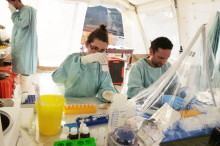
We are around the first Sunday in this exciting month of August. For this occasion, we have selected very interesting stories, but the main focus should be on the frightening fact that our world could suffer a new Ebola epidemic. The crucial problem is this sever and deathly illness could spread around through air travel. This is a very serious information which may concern all of us. So, let’s start with this week’s top news.
Ebola: How easily do germs spread on planes?
Are plane cabins hotbeds of disease? Frequent flyers are often on guard against sneezing or coughing co-passengers, in fear of catching what they have. And the possibility that much more serious epidemics or pandemics could spread by air travel has been a worry for years, whether it is avian flu, Sars or tuberculosis.
Secret language of penguins decoded
African penguins communicate feelings such as hunger, anger and loneliness through six distinctive vocal calls, according to scientists who have observed the birds’ behaviour in captivity.
Coal seam gas emissions lower than US: first Australian study
One of the most common questions Australians ask about coal seam gas is whether the gas wells leak – and if so, how much? In the first Australian study of its kind, new CSIRO research now gives an indication of how much those “fugitive emissions
-

Work begins on world-class health research facility
Queensland families will have better protection against tropical diseases with work under way to build a globally significant health research institute in north Queensland.
Science Minister Ian Walker said the new Australian Institute of Tropical Health and Medicine in Townsville would put Queensland at the forefront of tropical health nationally and internationally, part of the government’s strong plan to make Queensland Australia’s powerhouse state.
“This institute will strengthen our tropical health defences and ability to combat biosecurity risks,
-
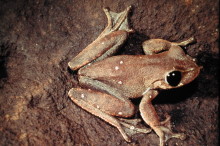
Townsville frog researcher awarded science grant
Seven frog species could be saved from extinction by a Townsville scientist thanks to a Queensland Government grant.
Science and Innovation Minister Ian Walkersaid Dr Alexandra Robertsfrom James Cook University’s College of Public Health, Medical and Veterinary Sciences, would use the $180,000 research grant to develop a treatment to stop a fungal disease killing the world’s frogs.
“Dr Roberts’project is one of 24 research projects in Queensland to share in $7.18 million in research grants funding under the Accelerate program,
-

Watch World War I Unfold in a 6 Minute Time-Lapse Film: Every Day From 1914 to 1918
World War I began 100 years ago, on 28 July 1914.
The initial trigger, the assassination of Archduke Franz Ferdinand of Austria, produced something of a “domino effect,
-

The Best of Australian Science: July 2014
Here we are at the end of one more exciting July and we would like to present you a brief review for this month. A lot of that have happened during the last 31 days and we would like to provide you with the top stories for the previous period.
Hope you will enjoy this journey. So, let’s start with our monthly review.
The Health of the Honey Bee by Lizz Rice
The delicate state of the European honeybee (Apismellifera) can be traced back to 2006, when the mysterious Colony Collapse Disorder (CCD) began wiping them out. Adult honey bees went missing from their hives, and no bodies were to be found. Since, apiaries have struggled – the US reports a yearly loss of about 30% – leaving the future of the honey bee in a precarious position.
Biological agent closing in on weedy rampant escapee
Sticky snakeroot, Mexican devil or Crofton weed – call it what you want – since the early 1900s this weed has been causing grief in Australia. But now the release of a new biological control agent brings some hope.
Australia’s ageing population poses budget risks
The report by the Australian Research Council Centre of Excellence in Population Ageing Research (CEPAR), based at the Crawford School of Public Policy, provides the first National Transfer Accounts (NTA) measure for Australia, based on figures from 2009-10.
How Mature is Your Cyber Security Model? by Milica Djekic
In the previous articles, we’ve been discussing cyber security throughout different angles and perspectives, but we’ve never talked about its maturity model and how it’s important in the modern world. First of all, we should define what the term cyber security means. As it is known, security represents a process of maintaining an acceptable level of risk. So, does that mean that, by the same definition, cyber security is a process of maintaining an acceptable level of cyber risk? Basically, that’s exactly what it does. In this article, we will try to define a cyber security maturity model, explain approaches to cyber operations and introduce some maturity levels. Well, let’s start with our story.
That would be all for this monthly editor’s selection. Please stay thirsty and scientifically passionate. The new stories are coming soon.
-

CSIRO releases Spanish version of free pesticide risk tool
Spanish-speaking farmers and regulators will be better equipped to manage the impacts of pesticides on water resources thanks to a new version of CSIRO’s popular Pesticide Impact Rating Index (PIRI) tool.
The Australian national science agency, the CSIRO, this month, released a Spanish version of the freely available software tool, which rates the potential pollution risk of pesticides to surface and ground waters based on different land uses or industry type, at both catchment and regional scales.
CSIRO project leader Dr Rai Kookana said that the new version of the tool vastly improves its accessibility across the globe.
“PIRI has been successfully used in Australia for nearly a decade and, impressively, has been downloaded for use in 59 countries,
-

How Mature is Your Cyber Security Model?
In the previous articles, we’ve been discussing cyber security throughout different angles and perspectives, but we’ve never talked about its maturity model and how it’s important in the modern world. First of all, we should define what the term cyber security means. As it is known, security represents a process of maintaining an acceptable level of risk. So, does that mean that, by the same definition, cyber security is a process of maintaining an acceptable level of cyber risk? Basically, that’s exactly what it does. In this article, we will try to define a cyber security maturity model, explain approaches to cyber operations and introduce some maturity levels. Well, let’s start with our story.
Introduction
At the beginning, we should try to explain why maturity is so important in terms of security or even cyber security. Also, we believe, at this stage, it’s not completely clear what we mean by maturity or its model. So, what do you think a maturity could represent in terms of cyber security? When we say something is mature, what we mean by that? In this case, a cyber security model has a certain level of maturity if it can obtain a high level of its operations in terms of its human recourses, processes and technology. Well, if we wish a high level of maturity of any cyber system, we need it being capable to provide highly controlled and reliable processes, get driven by highly skilled and motivated people and supported with the cutting-edge technology.
Further, what we could mention is that this is not the fact in the real world. In the reality, a lot of enterprises suffer some difficulties and they are not able to obtain a competitive level of cyber maturity. In fact, the reason for that is the world’s lobber market is facing up some sort of crisis if it comes to cyber professionals, so only small percentage of cyber systems can say for themselves that they are mature. Experts believe this gap can be covered only within few decades.
So, what are the challenges that we face up today? Firstly, a modern world has a lack of capable cyber professionals and, consequently, if we do not have experts to manage their tasks, our working process cannot be covered appropriately as well. In other words, developed countries have an advantage if we talk about modern technology, but if there are not enough competitive people to use those technological solutions and to maintain processes through them, the problem must get obvious. The reason why we suffer a cyber skills shortage is that a cyber security career is highly challenging and quite difficult and requires a lot of investment and hard work in order to get ready to contribute on the market.
The Best Approaches to Cyber Operations
As it is known, traditional approaches to Cyber Operations are proving to be inadequate against today’s increasingly sophisticated cyber threats. Too often, governments and businesses find themselves one step behind attackers, reacting to rather than anticipating each new threat. It is obvious that a new approach to Cyber Operations is required, one that is proactive, dynamic, adaptive, and recognizes that cyber security occurs within a cyber ecosystem of multiple, interdependent actors who also are potential partners in combating cyber threats.
That new approach to Cyber Operations builds on principles and practices of other communities to create a response lifecycle that integrates four operational functions:
(1) Anticipation. Understanding existing vulnerabilities and emerging threats to develop proactive contingency plans for responding in network time—seconds and minutes—to a cyber event.
(2) Awareness. Implementing automated systems and processes to provide a complete, accurate, real-time understanding of the health and status of networks.
(3) Action. Initiating response plans to anomalies and attacks by coordinating activities to achieve a unified, dynamic network defence that minimizes the impact and facilitates rapid recovery.
(4) After-Action. Determining what happened, who did it, how they did it, and incorporating the lessons learned to create future plans and responses that are adaptive.It is critical that organisations develop these essential functions to improve operational effectiveness. Once organisations have internally matured, they can more deeply collaborate externally with others in the cyber ecosystem.
What Do We Mean by Maturity Level?
Let’s start with the maturity levels in the cyber security. Each of the maturity levels in the cyber model have been assigned a name indicative of the types of threats and activities being addressed at the level.
The first level is labelled “Security Aware
-
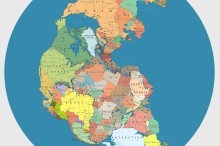
Map Showing Where Today’s Countries Would Be Located on Pangea
The supercontinent of Pangea formed some 270 million years ago, during the Early Permian Period, and then began to break up 70 million years later, eventually yielding the continents we inhabit today.
Pangea was, of course, a peopleless place. But if you were to drop today’s nations on that great land mass, here’s what it might look like. (Click on the image to view it in a much larger, high resolution format.) The map’s creator is Massimo Pietrobon, someone who playfully describes himself as “a famous explorer and cartographer of Atlantis,
-

Weekly Science Picks
It seems we came to the end of one more impressive and fascinating week. Just to summarise in brief – it was so exciting and amazing. For instance, did you know that Australia got so unique and special wildlife? Something that you cannot see anywhere else in the world. So, that’s the reason more to be proud because you are Australian. Secondly, there are some findings regarding human’s genetics which are very promising as well. And finally, did you know that there are some indications that you can learn while you are in sleep? So great, is not it? Well, let’s begin our today’s review.
Can you learn in your sleep?
The idea of learning as you sleep was once thought very unlikely, but there are several ways – both low- and hi-tech – to try to help you acquire new skills as you doze. While there is no method that will allow you to acquire a skill completely from scratch while you are unconscious, that doesn’t mean that you still can’t use sleep to boost your memory. During the night, our brain busily processes and consolidates our recollections from the day before, and there could be ways to enhance that process.
Less than 10% of human DNA has functional role, claim scientists
More than 90% of human DNA is doing nothing very useful, and large stretches may be no more than biological baggage that has built up over years of evolution, Oxford researchers claim.
How did Australia’s plants and animals get to be so unique?
Australia is known for its weird and wonderful critters and plant life – the kangaroo, platypus, Banksias, wattles, emu… the list could go on and on. But how did these icons come to evolve in the ways that they did? Science can help us piece together the story.
Pesticide linked to three generations of disease: Methoxychlor causes epigenetic changes
Researchers say ancestral exposures to the pesticide methoxychlor may lead to adult onset kidney disease, ovarian disease and obesity in future generations.
Hope you’ve enjoyed this journey as we did. Please stay tuned; new stories are coming very soon.
-

Australia’s ageing population poses budget risks
Australia’s public and private economy-wide deficit could blow out to more than $400 billion by 2050 due to the nation’s ageing population, a new Australian National University report has found.
The report by the Australian Research Council Centre of Excellence in Population Ageing Research (CEPAR), based at the Crawford School of Public Policy, provides the first National Transfer Accounts (NTA) measure for Australia, based on figures from 2009-10.
NTA measures how each age group produces, consumes, shares, and saves resources in the economy, and gives insight into how a country’s demographics will affect its economy and finances.
“The fiscal imbalance indicated in the 2009-10 NTA is not sustainable as the Australian population ages,
-

WHO welcomes global momentum on viral hepatitis
On World Hepatitis Day, 28 July, WHO welcomes new progress in tackling one of the world’s most serious diseases. Viral hepatitis – a group of infectious diseases known as hepatitis A, B, C, D, and E – affects millions of people worldwide, causing acute and chronic liver disease and killing close to 1.4 million people every year.
“For years, viral hepatitis has been largely neglected,
-

Stephen Fry Explains the Rules of Cricket in 10 Animated Videos
Founded in London in 1787, The Marylebone Cricket Club (MCC) began publishing The Laws of Cricket in 1788, and later became the governing body of the game.
More than two centuries later, the MCC has passed governing responsibilities to The International Cricket Council. But it still publishes The Laws of Cricket and helps young players and casual fans learn more about the bat-and-ball game that dates back to early 16th-century England, if not before. And let’s face it, if you didn’t grow up in a country that figured into the British Empire, you can probably use a primer. Or maybe 10 animated ones narrated by actor, writer, cricket lover and occasional umpire Stephen Fry. Click the play button on the video above, and you can watch the collection of animations, covering everything from what happens when a “wicket is down