Blog

  • New material puts a twist in light

    New material puts a twist in light

    A team from the Research School of Physics and Engineering have uncovered the secret to twisting light at will. It is the latest step in the development of photonics, the faster, more compact and less carbon-hungry successor to electronics.

    A random find in the washing basket led the team to create the latest in a new breed of materials known as metamaterials. These artificial materials show extraordinary properties quite unlike natural materials.

    “Our material can put a twist into light – that is, rotate its polarisation – orders of magnitude more strongly than natural materials,

  • Why Tattoos Are Permanent?

    Why Tattoos Are Permanent?

    For the last three decades my right ankle has been the site of a deeply botched tattoo. It was supposed to be a yin yang, but with every passing year, it looks more and more like a cancerous mole. The drunken Vietnam Vet who administered it barely glanced at the design taking shape on my once virgin skin as he chatted with a pal. I was too intimidated to say, “Um…is it just me or are you filling in the white circle?

  • Weekly Science Picks

    Weekly Science Picks

    Here we have a new great opportunity to present you the breaking stories of this week. We would proudly like to mention the things as follows. Firstly, did you know that mind reading technologies are becoming our reality? Sure you all are impressed with this fact. Also, we got some incredible news about malaria and its therapy. In conclusions, there are very exciting updates in terms of astronomy and cosmology. So, let’s begin this amazing journey.

    Neuroscience: ‘I can read your mind’

    Gallant, a researcher at the University of California, Berkeley, has a brain decoding machine – a device that uses brain scanning to peer into people’s minds and reconstruct what they’re seeing. If mind-reading technology like this becomes more common, should we be concerned? Ask Gallant this question, and he gives a rather unexpected answer.

    Breakthrough made in quest for new malaria drugs as resistance fears grow

    Australian researchers have made a major breakthrough in the race to find new medicines to eliminate malaria, as resistance increases to the only drug left to treat the disease.

    From critters to creeks – everything you need to know about our sunburnt country

    Whether it’s bagging a barramundi, eye-balling an emu, or sitting under a snow gum, Australians love getting out amongst nature, and our scientists are no different. For nearly 90 years we’ve been counting, tracking, measuring, recording, and analysing Australia’s amazing plants and animals. And in that time, you’ll be glad to hear we’ve learnt a thing or two. In fact, we’ve learnt so much we’ve written a whole book about them!

    Is the universe a bubble? Let’s check: Making the multiverse hypothesis testable

    Scientists are working to bring the multiverse hypothesis, which to some sounds like a fanciful tale, firmly into the realm of testable science. Never mind the Big Bang; in the beginning was the vacuum. The vacuum simmered with energy (variously called dark energy, vacuum energy, the inflation field, or the Higgs field). Like water in a pot, this high energy began to evaporate — bubbles formed.

    Indeed, it was a wonderful time to meet with you all again and to share this fascinating facts. Until the next meeting, please stay thirsty and scientifically curious.

  • Tour the World’s Street Art with Google Street Art

    Tour the World’s Street Art with Google Street Art

    By far the most enjoyable part of our recent family trip to London was the afternoon my young son and I spent in Shoreditch, groping our way to No Brow, a comics shop I had noticed on an early morning stroll with our hostess.

    Our route was evidence that I had forgotten the coordinates, the street name, the name of the shop… Eventually, I realized we were lost, and that is where the real fun began, as we retraced our steps using street art as bread crumbs.

    Ah right, there’s that rooftop mushroom installation!

    And there’s that Stik figure…

    After a while, a FedEx man took pity on us, ruining our fun by steering us toward the proper address..

    I’m not sure I could ever duplicate our trail, but I enjoy trying with Google Street Art. Armchair travelers can use it to project themselves to the heart of ephemeral, possibly illegal exhibitions all over the globe,.

    Bogotá… Paris… New York’s legendary 5 Pointz, before the landlord clutched and whitewashed the entire thing in the dead of night. Each up close photo bears a highly informational caption, much more than you’d find in the street itself. Think of it as an after-the-fact digital museum. It’s appropriate, given the ephemeral nature of the work. An online presence is its best shot at preservation.

    Those of us with something to contribute can add to the record with a user gallery or by tagging our photos with #StreetArtist.

    Source and image.

  • Space Engineering facility takes off

    Space Engineering facility takes off

    Australian space scientists will no longer need to go offshore to build satellites, following the completion of the Advanced Instrumentation and Technology Centre (AITC) at The Australian National University.

    The Minister for Industry, Ian Macfarlane officially opened the Centre.

    “Australia is doubly blessed because Mt Stromlo also has a long heritage of combining scientific and engineering excellence to design, manufacture and test the high precision instruments which support cutting edge research that I think we often take for granted in Australia but which we should always be proud of,

  • New theory turns cancer on its head

    New theory turns cancer on its head

    A new theory of how cancer works could lead to the next generation of treatments of the disease. The theory suggests that cancer forms when recently evolved genes are damaged, and cells have to revert to using older, inappropriate genetic pathways.

    Astrobiologists Dr Charley Lineweaver from The Australian National University and Professor Paul Davies from Arizona State University teamed up with oncologist Dr Mark Vincent from the University of Western Ontario to develop the new model.

    “The rapid proliferation of cancer cells is an ancient, default capability that became regulated during the evolution of multicellularity about a billion years ago,

  • The Health of the Honey Bee

    The Health of the Honey Bee

    The delicate state of the European honeybee (Apismellifera) can be traced back to 2006, when the mysterious Colony Collapse Disorder (CCD) began wiping them out. Adult honey bees went missing from their hives, and no bodies were to be found. Since, apiaries have struggled – the US reports a yearly loss of about 30% – leaving the future of the honey bee in a precarious position.

    It is thought the sudden collapse is caused by a number of factors working together in synergy, pounding bee’s immunity so they are no longer as resilient as they used to be.

    Exposure to pesticides has been afiercely debated and much publicised culprit. A group of neurotoxicants called neonicotinoids have been found to create an increased susceptibility to gut pathogens in honeybees. They have also been found to affect bee behaviour, learning and memory,crucial for them to forage, find their way home and relate the information to the colony.
    Much of this research has been performed in the laboratory, however, and it is questionable how well the findings can be applied outside of it. In this environment, bees exhibit differences in their physiology and stress levels, and studies tend to expose them to an unrealistic level of neonicotinoids.

    How much pesticides open the door to other threats is uncertain. Without improved field testing it is difficult to assess the amount of exposure honey bees are actually receiving and their reaction to the combinations and accumulations of pesticide smothered crops.

    The EU has frozen the use of neonicotinoids while a more accurate estimate of risks is developed.

    Despite not being native to Australia, the honey bee is well established, where feral colonies and hives managed by beekeepers are spread over most of the country.

    Neonicotinoids remain in extensive use in Australia. The Australian Pesticides and Veterinary Medicines Authority (APVMA) in 2013 concluded that these pesticides were less of a risk compared with those before.

    As beekeepers move away from the chemical-free sources of nectar and pollen found in native scrub and forest and into agricultural and horticultural pollination, there is a commensurate increase in exposure to agricultural chemicals.

    This means more rigorous testing of pesticides needs to be done, with improved labelling, regulation and guidance of products used in agriculture.

    Changes in land use, where flowering meadows and weeds have given way to agriculturally intense monocultures, mean that bee’s natural foraging habitats are disappearing.

    One study has analysed honey bee’s foraging preferences so as to establish which areas would cause them least amount of disruption. Their great foraging range and sensitive response to forage quality means they can be used as bioindicators to monitor large areas and inform environmental management.

    Pollen quality and diversity has a major influence on bee’s health and their ability to cope with pathogens, pesticides and parasites such as Varroa destructor.

    Varroa destructor is considered to be one of thedriving forces behind colony loss.The lifespan of adult workers in affected broods are reduced,so they cannot survive winter long enough to produce the next generation (Dooremalen etal, 2012).

    Varroahas spread all over the world with devastating effect, although whether it attacks immunity or it is the mite’s feeding activity that causes such problems is not yet clear. Of all the major honey producing countries, only Australia remains mite-free.

    Australia hosts a large number of feral honey bees due to a warm climate and plants rich in nectar. This high reliance on feral bee pollination means the impact of Varroa could be great, as Australia does not have the resources to offset the effects.

    Casey Cooper, president of the New South Wales Apiarist Association, stresses the importance of not letting Varroa get here in the first place.

    By increasing biosecurity, pests and diseases like Varroa mite are kept out of the country. Biosecurity includesmeasures such as port surveillance, where hives are kept at all ports and areas and monitored regularly.

    Australia is not reporting the huge losses that other countries are. Cooper, however, argues that his organisation has seen a 30% decrease in hives for registered beekeepers since 2006. He believes there is a looming food security crisis related to the decline of honeybees.

    Ian Zadow, Chairman of the Australian Honey Bee Industry Council, estimated that “one in three mouthfuls of food we eat relies on the honey bee for pollination of that food.
  • A Threat to Internet Freedom

    A Threat to Internet Freedom

    A couple weeks back, we mentioned that Brian Knappenberger had released his new documentary about Aaron Swartz, The Internet’s Own Boy, under a Creative Commons license, making it free to watch online.

    He now returns with a short op-doc for The New York Times. It’s called A Threat to Internet Freedom, and it explains why preserving Net neutrality remains “critically important for the future of Internet freedom and access.

  • Weekly Science Picks

    Weekly Science Picks

    Oh, dear! Can you imagine just few moments ago we were writing the last week’s review and right now we are at the beginning of one more exciting and fascinating editor’s selection? Time passes so quickly, does not it? We can not explain how suddenly we appeared into this Sunday. Well, it’s strange, but let’s start. Firstly, have you ever wondered why people bite their nails? A wired habit, is not it? The habit no one should be proud of. Or, for instance, did you know that antioxidants can accelerate cancers? These are only top stories for this week. We are coming with much more, so please enjoy our journey!

    Why do we bite our nails?

    Lately I’ve been wondering what makes someone an inveterate nail-biter like me. Are we weaker willed? More neurotic? Hungrier? Perhaps, somewhere in the annals of psychological research there could be an answer to my question, and maybe even hints about how to cure myself of this unsavoury habit.

    HIV ‘cure’ girl still has virus

    An American girl born with HIV and in remission for years despite stopping treatment is showing signs that she still has the virus and therefore is not cured. The news is a setback to hopes that very early doses of powerful drugs might eliminate the infection that causes Aids.

    Bush food, people, country and all things

    The Arrente people are the traditional owners of a vast expanse of land that surrounds Alice Springs, rich with mountain ranges, waterholes and gorges. Their long history with the region has given the Arrente community a deep knowledge and understanding of the landscape and natural environment.

    How antioxidants can accelerate cancers, and why they don’t protect against them

    Two cancer researchers have proposed why antioxidant supplements might not be working to reduce cancer development, and why they may actually do more harm than good. Their insights are based on recent advances in the understanding of the system in our cells that establishes a natural balance between oxidizing and anti-oxidizing compounds. These compounds are involved in so-called redox (reduction and oxidation) reactions essential to cellular chemistry.

    Until the next meeting, please stay thirsty and scientifically passionate. The new stories are coming soon!

  • Fusion energy facility promises clean energy

    Fusion energy facility promises clean energy

    The search for star power – fusion – has received a major boost with the launch of the Australian Plasma Fusion Research Facility (APFRF) at The Australian National University.

    The facility includes Australia’s largest fusion experiment, the newly upgraded H1, which will now be able to heat fusion experiments to temperatures hotter than the core of the sun.

    The facility also includes a new machine, MagPIE, which will accelerate research into extreme materials to be used in future experiments involving even higher temperatures and radiation levels.

    Senator Zed Seselja pressed the button to initiate a 30,000 degrees Celsius fusion experiment in H1 to conclude the launch.

    “This facility and its fine team have a reputation for world-class innovation and research excellence,

  • Read Online J.K. Rowling’s New Harry Potter Story: The First Glimpse of Harry as an Adult

    Read Online J.K. Rowling’s New Harry Potter Story: The First Glimpse of Harry as an Adult

    Quick note: Earlier this year, J. K. Rowling began writing new stories about the 2014 Quidditch World Cup Finals for Pottermore, the website for all things Harry Potter.

    Today, she followed up with a story that takes the form of an article published in The Daily Prophet: “Dumbledore’s Army Reunites at Quidditch World Cup Final

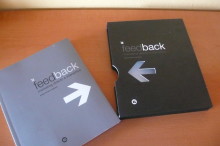
  • Could this revolutionise the way you give feedback?

    Could this revolutionise the way you give feedback?

    In 2000, I saw someone using screen capture software for the first time. Screen capture allows you to record the screen of your computer as if you had a camera pointing at the screen. It also records your voice.

    So you can open up your student’s work onto the screen, mark and highlight their work, turn on the screen capture software and then record yourself correcting their paper. The resulting video, can then be sent to students who can listen and watch the video. You will find some examples here and here. In 2006 I used the idea with a group of 11 students studying English. The feedback was very positive and I realised that the idea had enormous potential. My work was covered by the Times Higher and then led onto various awards, an appearance on TV and was even included in a report handed to the UK government. I have presented the idea in 26 countries around the world.

    My original work was done using Techsmith Camtasia but though it is a technology I use extensively, it is not ideal for the feedback idea. I prefer JING, which is a free tool and basically does the whole process of recording, compressing and making ready for distribution in one click. Research is growing and in Canada, Jérémie Sérror worked extensively with JING and found it be to very popular with his students. In Norway Peter Mathisen looked at using the idea across different subjects and in the UK the Open University used the idea on distance learning courses. They all highlight the following:

    [1] Much more feedback can be provided. Teachers are able to elaborate and develop points.
    [2] More personal. Students like hearing the voice.
    [3] Multimodal delivery. Perhaps useful for dyslexic students.
    [4] Very versatile. Can be used in a whole range of subjects and contexts.
    [5] Good for developing stronger bonds with students. Especially relevant to distance learning courses.

    JING is incredibly easy to use and you can download the software and start working with it in minutes. My help videos have been watched something like a 100,000 times. You do need a good internet connection and so do your students. Anyone can view the videos you create, so sharing is easy. I really suggest you give it a try; it can really impact on your teaching and learning.

    Source and image.

  • WHO targets elimination of TB in over 30 countries

    WHO targets elimination of TB in over 30 countries

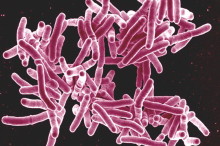
    WHO nowadays, together with the European Respiratory Society (ERS), presented a new framework to eliminate tuberculosis (TB) in countries with low levels of the disease. Today there are 33* countries and territories where there are fewer than 100 TB cases per million population.

    The framework outlines an initial “pre-elimination