Blog

  • New Dean for ANU College of Engineering and Computer Science

    New Dean for ANU College of Engineering and Computer Science

    Quantum optics specialist and ANU alumna Professor Elanor Huntington has been appointed Dean of the ANU College of Engineering and Computer Science (CECS).

    Professor Huntington is the current Head of the School of Engineering and Information Technology at UNSW Canberra, located at the Australian Defence Force Academy. She completed her PhD in experimental quantum optics at ANU in 2000.

    “I’m delighted to be joining ANU as Dean. It’s an exciting time to be joining the team,

  • Bush Capital could lose its old trees

    Bush Capital could lose its old trees

    The bush capital is losing its large old native trees so fast it may have none left within 120 years, an ANU study has found.

    Researchers have surveyed trees in green spaces across Canberra and projected their future numbers.

    “We predict there will be a considerable decline in the number of large old trees in the next few centuries under current tree management practices,

  • How to Draw Bugs Bunny?

    How to Draw Bugs Bunny?

    Bugs Bunny, that carrot-chomping, cross-dressing rascal, might have been created by Tex Avery in the 1940 cartoon A Wild Hare, but he really came into his own under the direction of Chuck Jones.

    In cartoons like What’s Opera, Doc and Rabbit Season, Jones refined Bugs’ character, turning him into someone who was witty, resourceful and, most of all, cool. Whether or not he was going up against Elmer Fudd, Yosemite Sam or Marvin the Martian, Bugs always seemed to have the upper hand. Jones once compared Bugs with his vain, self-aggrandizing rival Daffy Duck by saying, “Bugs is who we want to be. Daffy is who we are.

  • How the Great Barrier Reef survived colder temperatutes

    How the Great Barrier Reef survived colder temperatutes

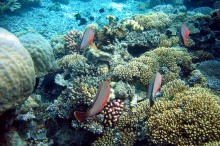
    The Great Barrier Reef grew during the last ice age, even though the water temperatures were four to five degrees colder than today, a team of international scientists has found.

    “It was right at the colder limit of what corals can take, but the reef grew and developed from there,

  • Weekly Science Picks

    Weekly Science Picks

    Here we are again! It’s our turn to provide you with the best highlights for the last week. A lot of things have happened during the last 7 days, but what have attracted our attention the most are the stories which come as follows. An interesting question we can notice here is related to the future of the robotics. Try to imagine that your boss is, for instance, a machine. How cool would that be? Sounds futuristic? Well, yes and no. We are already going that way… Let us show you how and much more. Fasten your seatbelts and we can start.

    Are we about to see the rise of robot bosses?

    The idea that robots and algorithms will take jobs is a common concern about the future. As Bill Gates argued earlier this year: “20 years from now, labour demand for lots of skill sets will be substantially lower.

  • Carl Jung Writes a Review of Joyce’s Ulysses and Mails It To The Author (1932)

    Carl Jung Writes a Review of Joyce’s Ulysses and Mails It To The Author (1932)

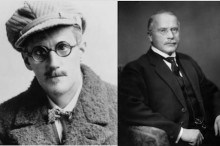
    Feelings about James Joyce’s Ulysses tend to fall roughly into one of two camps: the religiously reverent or the exasperated/bored/overwhelmed. As popular examples of the former, we have the many thousand celebrants of Bloomsday—June 16th, the date on which the novel is set in 1904.

    These revelries approach the level of saints’ days, with re-enactments and pilgrimages to important Dublin sites. On the other side, we have the reactions of Virginia Woolf, say, or certain friends of mine who left wry comments on Bloomsday posts about picking up something more “readable

  • Public health specialists on standby for disasters

    Public health specialists on standby for disasters

    A flying squad of public health specialists has been officially launched in Melbourne, bringing together Australia’s best experts who can rush to emergencies and disasters around the country and the world to stop the spread of infectious disease.

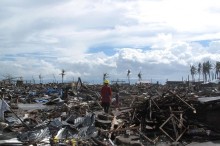
    The group of specialist epidemiologists has already shown its value, with several experts sent to respond to Typhoon Haiyan in the Philippines in 2013, where they played a key role monitoring community’s health and stopping epidemic-prone disease from spreading and killing more people.

    “The aftermath of a major disaster can often be a dangerous time,

  • A Testing Time for Future Teachers

    A Testing Time for Future Teachers

    By new regulations, all teaching students in NSW will have to pass a ”tough” literacy and numeracy test before they can graduate, because there are concerns some new teachers struggle to explain maths and grammar concepts to their students.

    The new online test will be introduced by 2016. Students who fail it will not be allowed to complete their final practical assessment in the classroom, which would stop them graduating.

    Education Minister Adrian Piccoli said he expected high standards of teaching graduates and the new test would ensure every student graduating from a teaching course in NSW had adequate literacy and numeracy skills.

    NSW would be the first state to set such a test, with a complete introduction planned for 2016 after trials this year and next. Students would be able to sit the test as many times as they wish – a little bit like your driver’s test. If students are failing because they don’t have the requisite knowledge, that would not be a reason to change the test.

    As part of improving teacher quality, students starting a teaching degree from school will also need three Band 5 Higher School Certificate results, one of which must be English.

  • A Dynamic Encryption – The Facts

    A Dynamic Encryption – The Facts

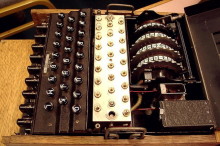
    As we live in a very dynamic and constantly changing world, where new information and ideas are appearing and disappearing at really fast pace, we should notice that data protection and critical information security play a crucial role in maintaining our everyday’s lives. For that reason, invoking the technique of dynamic encryption could be strategically important in this digital time. In this article we should attempt to provide the answers to the following questions. What is critical information? Are we going more intelligent? Why the concept of dynamic encryption matters? What could be the future of modern cyber security? Well, let’s begin.

    What is Critical Information?

    In security practice, it is very important to define critical information as an information or data that is strategically or vitally important for some information or communication system operations. The term of critical information is strongly connected to the concept of critical infrastructure. In reality, critical infrastructure relies on critical information. What is critical infrastructure for real? Well, it’s every infrastructure that strategically means for some nation or country. For instance, here, we could include power plants, airports, telecommunication systems, the government’s departments, information or cyber infrastructure, transportation systems and so on. In other words, everything that plays a vital role in everyday’s life of the country and its people.

    We would try to explain that critical information better? At this stage, it can appear as unclear what it could represent. Firstly, it’s very significant to understand how modern technical and information systems work, because they are the best indicators of critical infrastructure trends. As it is known from nowadays engineering and computer science experience, the operation of technical systems greatly depends on computers and digital information transmission. For example, in recent power plant systems there are the computers that maintain communication and information flow within the sub-systems and that are responsible for the production of electricity. If someone would cut off the signal or try to disturb it, it would cause a great damage to the power plant functioning. For that reason, we see that information transfer as critical or vital for the operation of critical infrastructure system such as, in this case, that power plant.

    Let us summarise this part of the article. Critical information is every information transfer within digital or cyber part of some critical systems on which that system depends. The lack of communication or data exchange inside the system can cause damage or even catastrophical consequences to critical infrastructure and do harm to entire nation.

    Are we going more intelligent?

    The answer to this question is yes. Modern security systems are going very intelligent. The concept of intelligence-driven security systems is gaining popularity nowadays. Well, it’s not only up to popularity, but rather to a quite good practical results it can offer. Let’s start explaining these.

    Today’s security systems relies on intelligence. By definition, intelligence is an information with some analysis applied. In the past, an information was the one which followed operations. The modern trend requires security service to produce some intelligence which will be capable to lead the operation. How these matters in the world of cyber security? Well, try to imagine a cyber system which depends on intelligence. That cyber system can be some computer set or an entire network. As it is known, computer systems are led by the set of rules or instructions. That set is better known as an algorithm. If we attempt to apply the concept of intelligence-driven security, we would notice that we have a system which is, in this case, an algorithm that is capable to adapt to or follow the information. As we know, the previous cyber systems had the algorithm leading the information, but today the set of rules is the one which is led by intelligence.

    We will explain in the coming parts of the article how these can affect the future of cyber security. But, in total, yes. We are getting more intelligent.

    Why Dynamic Encryption Matters?

    As we see, the modern world is a very dynamic place. We are going very digital and the information are getting a normal part of our lives. Everything changes very fast and sometimes it’s quite challenging to follow all those changes. If our world is going dynamic, the logical question should be as follows: “Do we need the protection that will go dynamic as well?

  • ‘Green’ treatment removes harmful metals from mining wastewater

    ‘Green’ treatment removes harmful metals from mining wastewater

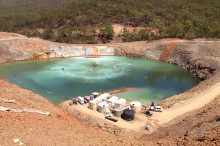
    A new cost-effective technology to treat mining wastewater and reduce sludge by up to 90 per cent has been used for the first time at a commercial mine.

    The technology, called Virtual Curtain, was used to remove metal contaminants from wastewater at a Queensland mine and the equivalent of around 20 Olympic swimming pools of rainwater-quality water was safely discharged.

    Sludge is a semi-solid by-product of wastewater treatment and reducing the amount produced has huge environmental and economic benefits.

    “Our treatment produced only a fraction of the sludge that a conventional lime-based method would have and allowed the mine water to be treated in a more environmentally sound way,

  • Weekly Science Picks

    Weekly Science Picks

    Have you ever thought how our world would appear if there would be an artificial intelligence to guide us? A quite futuristic statement, isn’t it? Well, not really! That sort of intelligence is becoming our reality. It this week’s editor selection we will talk more about that phenomenon and cover much more. Sure you will appreciate this weekly review. Let’s start.

    How online ‘chatbots’ are already tricking you

    Sometimes it’s the promise of sex that fools you. Sometimes it’s because they seem wise, friendly or just funny. The bots don’t really care how they trick you – their only objective is to make you think they’re human. In fact, if you use social media or spend any time online, it’s quite possible you’ve already been a victim.

    Don’t believe the science hype – we haven’t created true AI yet

    So has some AI milestone been reached? Is Eugene Goostman the best conversation program ever created? Turing argued in 1950 that if a computer could be substituted into the old guessing game of “Am I getting notes from a man or a woman?” and no one noticed, then we should just admit computers could think and stop worrying. But Turing was not proposing a test of any sort, and in his setup, the question “Is this a machine or a person?” is never asked, because one thinks one is answering a question about sex. Once you pose the human-or-machine question directly, things start to get very odd.

    Busting the megalodon myth: did a 3m shark get eaten by an even bigger shark?

    So, what can we make of the mysterious discovery of a CSIRO shark tag washed up on a beach that had some fairly typical data recorded on it? Some are incorrectly interpreting the data and speculating that this is evidence of the existence of a megalodon, an ancient extinct species of shark that lived millions of year ago. The megalodon was huge, around 15-24 metres in length… eek. White sharks grow up to 6 m in length.

    Mining data archives yields haul of ‘red nuggets’ galaxies

    The world of astronomy has changed. An astronomer used to have to travel to a remote location and endure long, cold nights, patiently guiding a telescope to collect precious photons of light. Now, a proliferation of online archives allows astronomers to make discoveries from the comfort of their own offices. By mining such archives, a team of astronomers has found a treasure trove of ‘red nugget’ galaxies.

    That would be everything for this weekly editor’s choice. Please stay thirsty and scientifically passionate! We are coming with new stories.

  • Unlocking the genetic code of the eucalypt

    Unlocking the genetic code of the eucalypt

    Scientists have sequenced the genetic code of the eucalypt for the first time, revealing how the Australian icon became the world’s favourite hardwood.

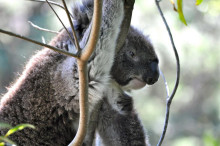
    The work also gives insights into the formation of the complex essential oils produced by eucalypts, which can help koala preservation efforts, minimise pest damage to plantations and could one day lead to eucalypt oils being a base for jet fuel.

    “The genetic code will help us understand a foundation species for the Australian eco-system and how it affects other species, from fungi through to the koala,

  • A telescope is born

    A telescope is born

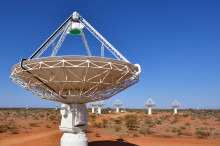
    It may look like just dots on a page, but an image of distant galaxies taken last week represents a huge step forward for CSIRO’s Australia SKA Pathfinder (ASKAP) radio telescope in Western Australia.

    ASKAP is developing and proving technologies for the international Square Kilometre Array (SKA) telescope, which will start construction in Australia and South Africa in 2018. The image shows that ASKAP is now working as a fully fledged radio telescope after just a few months of commissioning.

    Chief of CSIRO Astronomy and Space Science Dr Lewis Ball is leading a delegation of scientists and engineers presenting the results in Europe.

    “These ASKAP results are generating great excitement in the office of the SKA Organisation in Manchester, UK, and at an SKA science meeting currently taking place in Italy, because they clearly demonstrate the revolutionary potential of CSIRO’s new phased array feed technology,” Dr Ball said.

    Initial commissioning of ASKAP is being done with six of the telescope’s 36 antennas.

    “ASKAP is now functioning properly as an aperture-synthesis telescope,” CSIRO’s Dr David McConnell, who leads the ASKAP Commissioning and Early Science team, ACES, said.

    “We’ve never had a telescope like this before. We can see that the novel aspects of its design really do work, and that it will outperform a conventional telescope.”

    Dr McConnell said when the ASKAP commissioning team saw the new image, they “practically fell off their chairs”.

    The image, of a region of sky near the south celestial pole, is the equivalent of a black and white photo, but made from radio waves.

    This image covers 10 square degrees on the sky — 50 times larger than the full Moon — and was made from nine overlapping regions (‘beams’) captured simultaneously.

    The quality of the image vindicates ASKAP’s two novel features: ‘phased array feeds’ — new technology developed by CSIRO — and a special axis of rotation on each antenna.

    The phased array feeds act as ‘radio cameras’, allowing the telescope to see large areas of sky at once.

    “This image shows that the phased array feeds are stable over the 12 hours it takes to make an observation like this,” Dr McConnell said.

    “Now we can start to use the other advantages of phased array feeds, such as changing the beam size and shape for particular kinds of observations.”

    As the telescope tracks radio sources, the phased array feed is kept in a fixed orientation to the sky, thanks to a special axis of rotation built into each ASKAP antenna.

    “With a conventional telescope we would have expected artefacts from bright sources at the edges of each beam,” Dr McConnell said.

    “With ASKAP we don’t get that, because the phased array feed is held at a constant angle to the stars.”

    The dynamic range of the image was 50,000:1, which would be a good result from a mature telescope, let alone one in commissioning.

    Even at this early stage, ASKAP was able to make the new image twice as fast as any comparable telescope in the Southern Hemisphere.

    When completed, ASKAP will be able to survey the sky 25 times faster still, and will be the world’s premier survey telescope for centimetre-wavelength radio astronomy.

    ASKAP has also made a ‘snapshot’ of a single galaxy, NGC 253, from radio waves emitted by neutral atomic hydrogen gas (HI), the fuel for making stars. This is the telescope’s first image of the HI in a galaxy.

    The image captures both the intensity of the radio waves — how much HI is present in each region — and how the galaxy is rotating — which parts are approaching us, and which receding.

    “If the first image was like a black-and-white photo, this one could be compared to a colour photo,” Dr McConnell said.

    “What we’re looking for here is the equivalent of ‘colour balance’ — if there’s a proper balance of the radio waves at all the different frequencies used in the image.

    “Happily, that balance is good. The image compares very well with one made by our established Compact Array telescope.”

    Acknowledging CSIRO’s achievement with ASKAP, Australian SKA Project Director Professor Brian Boyle said “the future of radio astronomy has arrived”.

    The phased array feeds (PAFs) used for these commissioning tests are of the so-called ‘first generation’ design. Procurement is now under way for even better ‘second generation’ PAFs, which tests have shown will meet their ambitious performance targets. The PAF design last year won awards for innovation from Engineers Australia and the technology is expected to find applications outside radio astronomy.

    Source and image.