Blog

  • Internet Research: Skills Your Students Should Have

    Internet Research: Skills Your Students Should Have

    Internet research is the practice of using Internet information, especially free information on the World Wide Web, in research. Internet research has had a profound impact on the way ideas are formed and knowledge is created. Common applications of Internet research include personal research on a particular subject, students doing research for academic projects and papers, and journalists and other writers researching stories.

    Research is a broad term. Here, it is used to mean “looking something up on the Web“. It includes any activity where a topic is identified, and an effort is made to actively gather information for the purpose of furthering understanding. It may include some post-collection analysis like a concern for quality or synthesis. It is:

    (1) focused and purposeful (so not recreational browsing),
    (2) uses internet information or internet-based resources (like internet discussion forums),
    (3) tends towards the immediate (drawing answers from information you can access without delay),
    (4) and tends to access information without a purchase price.

    Search tools

    The most popular search tools for finding information on the internet include Web search engines, meta search engines, Web directories, and specialty search services. A Web search engine uses software known as a Web crawler to follow the hyperlinks connecting the pages on the World Wide Web. A Meta search engine enables users to enter a search query once and it runs against multiple search engines simultaneously, creating a list of aggregated search results. A Web directory organizes subjects in a hierarchical fashion that lets users investigate the breadth of a specific topic and drill down to find relevant links and content. Specialty search tools enable users to find information that conventional search engines and meta search engines cannot access because the content is stored in databases.

    Website Authorship

    When using the Internet for research, countless websites appear for whatever search query is entered. Each of these sites has one or more authors or associated organisations. Who authored or sponsored a website is very important to the accuracy and reliability of the information presented on the website.

    Top Online Research Skills

    At the end, we should mention some top internet research skills every student would have:

    1. Check Your Sources

    The Skill: Evaluating information found in your sources on the basis of accuracy, validity, appropriateness for needs, importance, and social and cultural context.

    The Challenge: While most students know not to believe everything they read online, the majority also don’t take the time to fully evaluate their sources.

    The Solution: The following benchmarks for evaluating a website should be discussed: currency (Is the information up to date?), security (Does the site ask for too much personal information or prompt virus warnings?), scope (Is the information in-depth?), and authority (Does the information come from a trusted expert?).

    2. Ask Good Questions

    The Skills: Developing and refining search queries to get better research results.

    The Challenge: Students will enter a search term, say, “Abraham Lincoln,

  • The Animals of Chernobyl

    The Animals of Chernobyl

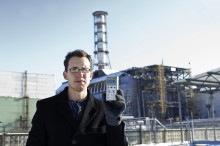
    In 1986, the number 4 reactor at the Chernobyl nuclear power plant blew up in what is now Ukraine.

    The site spewed a cloud of radioactive material that spread over much of Europe. The area immediately around Chernobyl received more than 400 times the radiation as Hiroshima and won’t be safely inhabitable for about 20,000 years. The government set up a 1,000 square mile exclusion zone around the site. While short visits to the zone are possible without too much danger, living there is not advisable. Cancer is a real problem for the couple hundred elderly stalwarts who still make the zone their home.

    Within the zone, nature has taken its own course, dismantling the Soviet-era brutalist tenements of the surrounding abandoned cities and turning it into what at first blush looks more and more like a prelapsarian Eden. The truth proves to be more complicated.

    Dr. Timothy Mousseau, a biologist from the University of South Carolina, has been examining the wildlife around Chernobyl for fifteen years. He’s discovered that the radiation that has been bathing the area for almost 30 years is changing nature. As you can see in the New York Times Op-Doc video above, birds are developing tumors, bugs have abnormal spots and spider webs seem much more freeform than usual.

    Source and image.

  • Security Challenges in Cloud Computing

    Security Challenges in Cloud Computing

    Although cloud computing can help companies accomplish more by breaking the physical bonds between an IT infrastructure and its users, heightened security threats must be overcome in order to benefit fully from this new computing paradigm that offers an innovative business model for organizations to adopt IT without upfront investment. Despite the potential gains achieved from the cloud computing, the model security is still questionable which impacts the cloud model adoption. The security problem becomes more complicated under the cloud model as new dimensions have entered into the problem scope related to the model architecture, multi-tenancy, elasticity, and layers dependency stack.

    1. Introduction

    Cloud Computing is a jargon, in other words a new computing model, in which the public Internet is used to connect to provider’s hosted network, infrastructure, platform and/or applications to leverage reliable services. Cloud has left all other distributed computing structures/mechanisms far behind both in competition and in terms of popularity and success.

    The primary reason is that, any service can be scaled up or down as and when required, based on customer’s needs. Cloud offers flexibility, quick to production model, and offers capital reduction by enabling organizations to port all their data, information and infrastructure to off-site provider hosted premises.

    Cloud Computing is essentially a combination of existing technologies that are succeeding in make a paradigm shift in building and maintaining distributed computing systems making use of, multiprocessor, virtualization technology, network based distributed data storage and networking. The cloud providers have Infrastructure as a Service (IaaS), Platform as a Service (PaaS), and Software as a Service (SaaS) and many more services to offer.

    2. Cloud Computing Security Problems

    The cloud system is running in the internet and the security problems in the internet also can be found in the cloud system. The cloud system is not different the traditional system in the PC and it can meet other special and new security problems.

    The biggest concerns about cloud computing are security and privacy. The traditional security problems such as security vulnerabilities, virus and hack attack can also make threats to the cloud system and can lead more serious results because of property of cloud computing. Hackers and malicious intruder may hack into cloud accounts and steal sensitive data stored in cloud systems. The data and business application are stored in the cloud center and the cloud system must protect the resource carefully.

    Cloud computing is a technology evolution of the widespread adoption of virtualization, service oriented architecture and utility computing. over the Internet and it includes the applications, platform and services. If the systems meet the failure, fast recovery of the resource also is a problem. The cloud systems hide the details of service implementation technology and the management. The user can’t control the progress of deal with the data and the user can’t make sure the data security by themselves. The data resource storage and operation and network transform also deals with the cloud system. The key data resource and privacy data are very import for the user.

    The cloud must provide data control system for the user. The data security audit also can be deployed in the cloud system. Data moving to any authorized place you need it, in a form that any authorized application can use it, by any authorized user, on any authorized device. Data integrity requires that only authorized users can change the data and confidentiality means that only authorized users can read data. Cloud computing should provide strong user access control to strengthen the licensing, certification, quarantine and other aspects of data management.

    In the cloud computing, the cloud provider system has many users in a dynamic response to changing service needs. The users do not know what position the data and do not know which servers are processing the data. The user do not know what network are transmitting the data because the flexibility and scalability of cloud system. The user can’t make sure data privacy operated by the cloud in a confidential way. The cloud system can deploy the cloud center in different area and the data can be stored in different cloud node. The different area has different law so the security management can meet the law risk. Cloud computing service must be improved in legal protection.

    3. Cloud Computing Approaches

    To achieve efficient utilization of resources, cloud providers need to increase their resource utilization while decreasing cost. At the same time consumers need to use resources as far as needed while being able to increase or decrease resources consumption based on actual demands. The cloud computing model meets such needs via a win-win solution by delivering two key characteristics: mulit-tenancy and elasticity. Both characteristics tum out to have serious implications on the cloud model security.

    Multi-tenancy implies sharing of computational resources, storage, services, and applications with other tenants. This sharing of resources violates the confidentiality of tenants’ IT assets which leads to the need for secure multi- tenancy. To deliver secure multitenancy there should be isolation among tenants’ data and location transparency where tenants have no knowledge or control over the specific location of their resources, to avoid planned attacks that attempt to co-locate with the victim assets. In IaaS, isolation should consider VMs’ storage, processing, memory, cache memories, and networks. In PaaS, isolation should cover isolatation among running services and APIs’ calls. In SaaS isolation should isolate among transactions carried out on the same instance by different tenants and tenants’ data.

    Elasticity implies being able to scale up or down resources assigned to services based on the current demand. Scaling up and down of tenant’s resources gives the opportunity to other tenants to use the tenant previously assigned resources. This may lead to confidentiality issues.

    For example, tenant A scaled down so it releases resources, these resources are now assigned to tenant B who in turn use it to deduce the previous contents of tenant A. Moreover, Elasticity includes a service placement engine that maintains a list of the available resources from the provider’s offered resources pool. This list is used to allocate resources to services. Such placement engines should incorporate cloud consumers’ security and legal requirements such as avoid placing competitors services on the same server, data location should be within the tenants’ country boundaries Placement engines may include a migration strategy where services are migrated from physical host to another or from cloud to another in order to meet demands and efficient utilization of the resources. This migration strategy should take into account the same security constraints. Furthermore, security requirements defined by service consumers should be migrated with the service and initiates a process to enforce security requirements on the new environment, as defmed by cloud consumers, and updates the current cloud security model.

    4. Conclusion

    Cloud computing has a very fast pace of development and shows good prospects and great potential. The cloud computing is related to many areas of information management and services. The data security issue becomes more prominent than the traditional network because the data in the cloud computing environment is greatly dependent on the network and server.

    5. References:

    [1] Akhil Behl, Emerging Security Challenges in Cloud Computing, 2011 World Congress on Information and Communication Technologies, 2011
    [2] Anas BOUA Y AD, Asmae BLILA T, Nour el houda MEJHED, Mohammed EL GHAZI, Cloud computing : security challenges, IEEE, 2012
    [3] Wentao Liu, Research on Cloud Computing Security Problem and Strategy, IEEE, 2012
  • Cycling’s Tour de Campus

    Cycling’s Tour de Campus

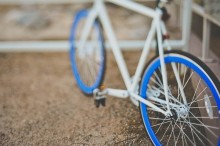
    ANU will celebrate the use of pedal power to fund world-class cancer research on Tuesday with a special cycling Tour de Campus.

    The event will welcome cyclist Chris Gruar to the University as he completes one of the final legs of a 45,000km charity bike ride from England to Sydney.

    Chris, 28, left England in March 2012 on a world cycling expedition to raise money for the Association for International Cancer Research (AICR), which funds cancer research around the world, including at the ANU Research School of Biology.

    He aims to raise $30,000 for AICR in memory of his mother who died of cancer.

    ANU cyclists of all abilities are invited to join Chris on a special campus cycling tour at 10am on Tuesday, to be led by ANU cancer researcher Dr Richard Callaghan, followed by a morning tea to hear Chris talk about his journey.

    Dr Callaghan will also talk about his research into multidrug resistance in cancer chemotherapy treatments, which benefits from a grant of around $300,000 from AICR. The grant funds Dr Callaghan’s lab and three PhD students who are working on cancer research.

    To learn more about Chris’ journey visit cycling4cancer.wordpress.com.

    The tour starts at Sullivans Creek Bridge and finishes at the Wolfgang Buttress sculpture in the Research School of Biology Courtyard. Riders will be asked to make a gold coin donation.

    A detailed map of the cycling route can be found here.

    Source and image.

  • Weekly Science Picks

    Weekly Science Picks

    Here we are again with new stories and news. It took 7 days to return to you and to present you the top stories for the last week. Science and technology community was working hard for real during the previous period and here is what we have selected for you this time. Hope you will enjoy this adventure as we do.

    Ageing: The girls who never grow older

    Scientists have published several hundred theories of ageing, and have tied it to a wide variety of biological processes. But no one yet understands how to integrate all of this disparate information.

    Top 10 new species of the past year – in pictures

    The International Institute for Species Exploration has picked 10 of 18,000 species new to science in the past year, from a tiny skeleton shrimp at Santa Catalina Island in California to a translucent Croatian snail.

    Beer tasting with a cyber tongue

    Maltose or malt sugar, is a stepping stone in the process that converts the starch in barley into the alcohol and fizz in beer. Not much maltose is left at the end of the brewing process, but what there is contributes to the drink’s taste and body. Testing the levels of maltose in beer is something brewers do because too much of it can change the way the beer tastes.

    How the ‘gut feeling’ shapes fear

    We are all familiar with that uncomfortable feeling in our stomach when faced with a threatening situation. By studying rats, researchers have been able to prove for the first time that our ‘gut instinct’ has a significant impact on how we react to fear. An unlit, deserted car park at night, footsteps in the gloom. The heart beats faster and the stomach ties itself in knots. We often feel threatening situations in our stomachs. While the brain has long been viewed as the center of all emotions, researchers are increasingly trying to get to the bottom of this proverbial gut instinct.

    We came to the end of one more journey. Please stay curious and scientifically passionate until the next meeting.

  • Plan to print 3D kidney tissue using Queensland expertise

    Plan to print 3D kidney tissue using Queensland expertise

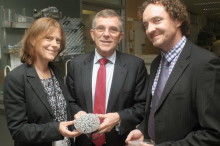
    Minister for Science, Information Technology, Innovation and the Arts The Honourable Ian Walker announced the plan to print 3D kidney tissue using Queensland expertise.

    It sounds like something out of science fiction but a US company is planning to produce kidney tissues using a 3D printer. And there’s a Queensland connection.

    Minister for Science and Innovation Ian Walker said mini-kidney tissue would be printed by America’s 3D bio-printing company Organovo following an agreement signed with the University of Queensland’s commercialisation company UniQuest.

    It delivers on the government’s election promise to provide better front-line services to Queenslanders, especially in health.

    “Professor Melissa Little and her team made a huge leap forward in stem cell technology last year by growing a tiny kidney in a laboratory dish.”

    “One in three Australians are at risk of developing chronic kidney disease so what Professor Little accomplished last year was a hugely important development,” Mr Walker said.

    He said the breakthrough drew enormous international interest, including from the San Diego-based Organovo, because of the continuous research progress shown in Professor Little’s labs.

    “The agreement with Organovo, the world leader’s in 3D printing of human tissue, will optimise the cells created using Professor Little’s technology in order to print kidney tissues from them using 3D bioprinting.”

    Mr Walker said the Queensland Government provided $1 million to support Dr Little’s research and that now the state was seeing a great outcome.

    Prof Little, from the Institute of Molecular Bioscience at UQ, said 3D printing of fully functional mini-kidney tissue would enable better disease modelling and drug development.

    “The mini-kidney tissue can be used to test the safety of new drugs,” Prof Little said.

    “The sad fact is that most new drugs fail during testing in humans and a big reason for that is that they turn out to be toxic to kidneys.

    “If we can test a drug for kidney toxicity before applying it to human trials, we’ll save a lot of time, effort and money.”

    The ultimate goal of Professor Little’s research is to produce artificial kidneys for humans.

    “There’s more work to get to this point but when we do it will save lives and cut the cost of treating the disease.”

  • Soil contamination detector launched in the US

    Soil contamination detector launched in the US

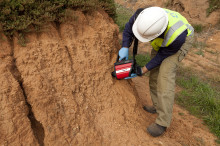
    A handheld detector that reduces both the cost and time taken to remediate sites contaminated by petroleum products has been launched to market in the United States.

    The device, RemScan, developed by CSIRO and industry partner Ziltek, uses an infrared signal to directly measure petroleum hydrocarbons in the soil, giving a result in around 20 seconds.

    The ability to rapidly and accurately detect petroleum contamination on site, instead of the traditional method of sending soil samples to a laboratory and waiting days for results, will enable industry to close projects or declare sites contaminant free, faster and with a greater degree of certainty. The technology has the potential to save the environmental remediation industry millions of dollars per year in laboratory and project costs globally.

    Petroleum contamination as a result of leaking tanks or industrial spills is a widespread global issue with potentially serious impacts for human and environmental health.

    RemScan can be used as a quick in-field screening tool to characterise contaminated sites, to validate spill clean-up areas, or to monitor ongoing contaminant degradation. In remote areas, where laboratory analysis is either not available or is prohibitively expensive – RemScan demonstrates its true value as a quick, easy to use and accurate instrument. The technology is particularly useful for the quantitative measurement of diesel, oil and crude products in soil, but can also be used as a screening tool for lighter fuels such as jet fuel and gasoline.

    Successfully commercialised in Australia by Ziltek in 2012, RemScan is now in use by the mining industry and the oil and gas industries in various Australian states. CSIRO holds the recently accepted US patent for the RemScan method, which is licensed exclusively to Ziltek for global distribution.

    CSIRO has significant expertise in advanced analytical methods to detect contaminants in soils, including new portable spectroscopic techniques for the rapid identification of a variety of soil properties. RemScan is one example of the commercial application of this expertise.

    “CSIRO has enabled the use of infrared spectroscopy for rapid non-destructive prediction of contaminants in soils and soil properties using both near- and mid-infrared spectral regions,

  • Tech girls are superheroes

    Tech girls are superheroes

    A new campaign to encourage more girls to take up careers in computing and information technology has been launched at The Australian National University by the Minister Assisting the Prime Minister for Women, Senator the Hon Michaelia Cash.

    Female participation in IT stands at a mere 25 per cent, against 45 percent for other careers. The Tech Girls Are Superheroes campaign aims to inspire school girls to redress this balance and take up technology careers.

    “I was delighted to attend the launch, but more importantly I was heartened by the dedication that was shown towards greater gender equality in non-traditional roles such as IT,

  • Satellite Hacking: A Closer Look to the Sky

    Satellite Hacking: A Closer Look to the Sky

    Satellites are vital to sustaining the current balance in the global economy, society, and advanced militaries. As such, states are increasingly recognizing satellites as critical infrastructure. They provide a significant role in climate and natural disaster monitoring, communication, early warning systems, global broadcasting, meteorology, navigation, precision strikes, reconnaissance, remote sensing, surveillance, and the advancement of science and understanding.

    1. Introduction

    A significant disruption to satellite services would have damaging effects on society. Limiting the information given might be due to security concerns or a lack of attention span on the part of its intended audience; however oversimplification gives the impression that an individual hacker sitting at their computer can access satellites with a few simple keystrokes. Conversely, it might lead others to dismiss the topic as fiction when there is a credible threat that needs to be addressed.

    This article investigates key questions relevant to the topic of satellite hacking: What is the structure of satellite systems? What does it mean to ‘hack’ a satellite? And why are these systems vulnerable to hacking?

    2. The Structure of Satellite Systems

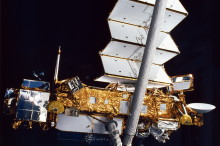
    In order to better address satellite hacking, it is first necessary to have an understanding of how satellites work. Most satellite systems conform to a broad template, which consists of the satellite itself, a tracking, telemetry, and control (TT&C) ground station, communications ground stations, and uplinks and downlinks between these ground stations and the satellite.

    The satellite itself is composed of a bus and payload. The payload is usually a collection of electronic devices specific to that satellite’s desired function. For example, a surveillance satellite would contain imaging equipment, while the payload for a communications satellite would include transponders for receiving and relaying signals such as telephone or television. The bus is the platform housing the payload; this includes equipment for manoeuvring, power, thermal regulation, and command and control.

    TT&C ground stations “perform tracking and control functions to ensure that satellites remain in the proper orbit and to monitor their performance. Communications ground stations process imagery, voice, or other data and provide, in many cases, a link to ground-based terrestrial network interconnections

  • Twitter tool shows a real-time view of our emotions

    Twitter tool shows a real-time view of our emotions

    Researchers from CSIRO have unveiled a new online tool developed for the Black Dog Institute, in partnership with Amazon Web Services, called ‘We Feel’ which analyses the words from millions of tweets to display a real-time view of our emotions.

    The tool will help researchers understand how our emotions fluctuate over time due to changes in social, economic and environmental factors such as weather, time of day, news of a natural disaster or announcements about the economy.

    We Feel will help Black Dog Institute’s researchers who are world leaders in the diagnosis; treatment and prevention of mood disorders such as depression, verify whether the large and fast sample of information coming from Twitter can accurately map our emotions. It is hoped the tool could help to understand how our collective mood changes, help monitor community mental health and predict where services needed to be assigned.

    “We Feel looks for up to 600 specific words in a stream of around 27 million tweets per day and maps them to a hierarchy of emotions which includes love, joy, surprise, anger, sadness and fear,

  • Artificial Gravity Swimming Pool

    Artificial Gravity Swimming Pool

    The idea of taking a space holiday, once the stuff of science fiction, is no longer a far flung fantasy. The major hurdle to a viable commercial space holiday venture has long been the provision of a reusable launch system. Until an orbital launch system similar to the reusability of aircraft is developed, we will remain earthbound. Efforts to overcome this barrier have been underway since an international conference on the subject in Bremmen, Germany in 1997. More recently, the Space X reusable launch system development program has progressed to the active test program stage.

    The possibilities that these advances have opened in terms of space leisure are tantalizing. The imaginations of science enthusiasts and future astronomical entrepreneurs have been running wild with the possibilities. One of the most intriguing concepts is that of an artificial gravity swimming pool.

    Space hotels will, inevitably, offer their guests recreational options to occupy themselves and enhance the experience beyond the novelty of simply being in space. And, just as no self-respecting hotel on earth would open for business without a swimming pool, it seems likely that their orbiting counterparts will find a way to do the same. This, however, does present a challenge. The zero gravity environment of space means that water acts a whole lot differently to the way it does on earth. As explained in detail in a new paper published on Space Future , a space swimming pool presents some very interesting physics dilemmas.

    The lack of gravity means that, without some sort of artificial compensator, you’re not going to get a pool that resembles anything you’re used to. For a layman’s explanation of the limitations of zero gravity swimming (along with a cool experiment), click onto this article:

    For space patrons to dive into anything resembling the familiar is going to require the addition of artificial gravity. How can man recreate gravity? With the benefit of inertia. An example of inertia creating a gravitational effect is when spinning a bucket overhead. For this reason most space habitat designs use a rotating design. While a tethered section of a hotel with a rotating pool is a possibility, the length of tether required to create the required gee force is not practical. More feasible is a rotating, cylindrical pool design. This could be accomplished in three ways:

    (1) The entire hotel rotates around the same axis as the pool

    (2) The pool is the only rotating part of the hotel requiring an arm attaching it to the hotel

    (3) The pool is housed in a portion of the hotel that rotates around the same axis as the pool

    The Space Future article details each of the functional and logistical requirements that the above options entail, with a focus on the third option. These include the water management system, which will have to include an efficient anti-sloshing system to prevent excessive oscillation of the pool’s structure. Several options are offered, but most of them would provide some level of inconvenience for swimmers. Water retention is another issue, with a greater likelihood of leakage in an artificial gravity pool than in a 1-g earth bound pool. Water purification systems would also be necessary, although there would be no need to modify the processes used on earth, as microbes and moulds act the same in both environments.

    The logistical requirements of the rotating joint that connects the rotating pool room with the stationary main part of the complex are considered in some detail. Limitations identified include the transport limitations of launch vehicles. The largest single assembly component would be the rotating joint, while the transport of the water to fill the pool would take the most time. A volume of 600 cubic meters would require approximately 100 dedicated flights to transport to it’s space hotel destination.

    In order for the concept of a space hotel, along with it’s artificial gravity water sports facilities, to ever venture beyond the design stage, a number of safety concerns must be addressed. Prime among them is eliminating the problems associated with orbital debris. A collision would smash the man-made structure to oblivion. To combat this danger, a range of methods have been developed to remove debris from the atmosphere. The most viable – and cost effective – method involves the use of ground-based lasers.

    The only physical health problems associated with short term space travel involve solar flares, which are brief bursts of intense energy emanating from the Sun. On earth we are protected from the effects of solar radiation by the earth’s atmosphere and magnetic field. In space, however, there is no such protection. To protect against solar flares, storm shelters will have to be built.

    The effects of the living in a weightless environment on the human body present further challenges. In the absence of gravity, our key balancing mechanism, the vestibulary system, would be disoriented, making it difficult to distinguish direction and orientation. This had led to what is known as Space Adaptation Syndrome, a condition which results in feelings of nausea and vomiting. In space there is no force to keep our internal body fluids – water, blood and other liquids – flowing to the bottom of the body. This results in too much fluid migrating to the head, with resultant sinus problems along with puffy faces and shrunken legs. More seriously, because the heart no longer needs to pump blood around the body, the heart shrinks. Muscles, no longer required to work against gravity, also atrophy, as do bones.

    The article also discusses the feasibility of such a project from a commercial vantage point. Potential costs are analyzed and from them some basic end user costings are proposed. The end analysis concludes that an artificial gravity swimming pool as part of a space hotel complex would be an attractive commercial proposition to at least some hotel operators.

    The major limiting factor to any commercial space development remains the cost of launching. While such costs are still prohibitive for the majority of consumers, robust competition is already taking shape which will, inevitably, drive prices down. Once this occurs, the article makes it clear, space hotels with inbuilt water sports facilities will surely follow.

  • Weekly Science Picks

    Weekly Science Picks

    One more week finishes and here we are to recapitulate what have happened during the last exciting and promising 7 days. The task was quite challenging, but after careful consideration we made it. Here we would like to present what have attracted our attention the best. Sure you will enjoy this journey.

    How extreme isolation warps the mind

    That summer, the 32-year-old had been hiking with two friends in the mountains of Iraqi Kurdistan when they were arrested by Iranian troops after straying onto the border with Iran. Accused of spying, they were kept in solitary confinement in Evin prison in Tehran, each in their own tiny cell. She endured almost 10,000 hours with little human contact before she was freed. One of the most disturbing effects was the hallucinations.

    How do you build a city in space?

    Science fiction has delivered on many of its promises. Star Trek videophones have become Skype, the Jetsons’ food-on-demand is materialising through 3-D printing, and we have done Jules Verne one better and explored mid-ocean trenches at crushing depths. But the central promise of golden age sci-fi has not yet been kept. Humans have not colonised space.

    Here’s to accidental discoveries

    What do Velcro, penicillin, the microwave and Coca-Cola have in common? They were all discovered by accident. While most accidents are best avoided, some can turn out to be pretty awesome. Take wine for instance, one of the oldest drinks known to mankind.

    High-speed solar winds increase lightning strikes on Earth

    Scientists have discovered new evidence to suggest that lightning on Earth is triggered not only by cosmic rays from space, but also by energetic particles from the sun. Researchers found a link between increased thunderstorm activity on Earth and streams of high-energy particles accelerated by the solar wind, offering compelling evidence that particles from space help trigger lightning bolts.

    These would be all for this Weekly Science Picks. Hope you have enjoyed this trip at least as we did.

  • WHO’s first global report on antibiotic resistance reveals serious, worldwide threat to public health

    WHO’s first global report on antibiotic resistance reveals serious, worldwide threat to public health

    New WHO report provides the most comprehensive picture of antibiotic resistance to date, with data from 114 countries.

    A new report by WHO–its first to look at antimicrobial resistance, including antibiotic resistance, globally–reveals that this serious threat is no longer a prediction for the future, it is happening right now in every region of the world and has the potential to affect anyone, of any age, in any country. Antibiotic resistance–when bacteria change so antibiotics no longer work in people who need them to treat infections–is now a major threat to public health.

    “Without urgent, coordinated action by many stakeholders, the world is headed for a post-antibiotic era, in which common infections and minor injuries which have been treatable for decades can once again kill,

  • Levels of Cyber Intelligence

    Levels of Cyber Intelligence

    When one considers the decision-making and planning necessary to conduct malicious cyber activity, it becomes easier to understand how it is not simply an “on-the-network