Blog

  • Paper Consumption Impact in Australia

    Paper Consumption Impact in Australia

    Everyone must play their part in creating sustainable futures for the world’s commodities. Paper is a huge commodity and is consumed at exorbitant rates as outlined by Forest Ethics‘ recent research. They reported that across the world North America used on average 229kg of paper per capita annually, Western Europe got through 178.7 kilograms, Latin America 43.02, Asia 41 and Africa 7.51 kilograms per person. In Australia we use on average 230kg per person per year. It is clear that the paper industry demands exponential resources to continue to fulfill the demand and if Australia would like to achieve sustainability we must rethink our consumerist ways.

    Recycling

    Even though environmental organisations may talk of green initiatives to reduce paper consumption the idea of a paperless-society is far from being a possibility. People are still heavily reliant on paper to run a business, school or organisation and to fuel general lifestyle products such as boxes, packaging, magazines, newspapers and labels. Since European Settlement Australia has cleared almost half of its forest areas and we continue to deforest an area the size of the ACT every year. The act of paper-want is putting a heavy burden on Australia’s ecological sustainability. In 2007-2008 Clean Up Australia reported that we used 4,250, 000 tonnes of paper and of that we sent 1.9 million tonnes straight to landfill. Every office uses 10,000 sheets of A4 paper on average and 50% of that will end up as garbage. These statistics are a sobering reminder of Western waste.

    Paper production is a process that has not changed in over 2000 years. In today’s measures it takes 24 trees to produce one tonne of virgin printer paper but only 25% of each tree is used to produce the paper product. The paper industry is a greedy resource consumer that uses more water to produce a tonne of its product than any other industry. It uses a staggering 90,000 litres of water per tonne of virgin paper.

    Recycled paper not only assuages environmental impact but drastically reduces the amount of vital resources needed to produce it. Creating one tonne of recycled paper consumes 50% less energy than virgin paper which equates to only 4100 kilowatt hours of electricity per tonne as well as only requiring 25% of the amount of bleach used new office paper. It also saves:

    • 13-24 trees
    • 31,780 litres of water
    • 2.5 barrels of oil
    • 4 cubic metres of landfill
    • 27 kilograms of air pollutants

    Paper recycling plays a pivotal role in helping to reduce the environmental impact the paper industry has had on vital world resources since the European Settlement. There are initiatives that independent Governments, organisations and the likes of the European Union have put forward to curb the astonishing waste of resources which is a result of paper production. The environmental management of paper is an ever present issue which individuals, groups and continents must acknowledge before the world’s forests are depleted to a point of complete environmental hazard.

    Recycling in general benefits the environment no matter what type of item you choose. Be it paper or cans, food scraps or plastic there is worth in saving every item. Planet Arc dispels the myth in their 2006 report which was created to enlighten people from the persuasive and unrealistic myths which prohibit the proliferation of recycling across the world. They note that every commodity has ‘embodied energy’ which is the energy that it took to produce the item and the act of recycling it recovers a portion of that energy. The Australian Council of Recyclers estimated for the benefit of the report that recycling in Australia generates $3.5 billion of eco-services, recovers $912 million of commodity value and 68,400 giga-watt hours (GWh) of embodied energy.

    Both businesses and organisations can support paper recycling and environmental management by aligning their practices to an international standard such as EMAS. EMAS volunteer their time to appraise organisations that continually enhance their environmental performance. Businesses which run an Environment Management System and regularly report their performance in published form, which is verified by an independent statement, can be registered with EMAS. They are also encouraged to use the EMAS logo on their promotional material so their customers can be guaranteed that they are legally compliant.

    In small measures individuals can improve their participation in paper wastage. Do some research and make sure that you are doing your best to help the cause.

    Images by Joel Penner and Nicolas Raymond

  • ANU delivers the world’s first Hindi-English MOOC

    ANU delivers the world’s first Hindi-English MOOC

    The Australian National University is offering the world’s first bilingual Hindi-English Massive Open Online Course (MOOC).

    The 10-week course, Engaging India, is a partnership between ANU and the global MOOC provider edX, which was founded by American universities Harvard and MIT.

    MOOCs are free courses, open to anyone around the world and delivered online. Engaging India already has 10,000 enrolments.

    “India is more than Bollywood and cricket, the Taj Mahal and yoga. It is a vibrant, many-sided nation, with a rich history that is undergoing massive change and reasserting itself on the world stage,

  • The Best of Australian Science: April 2014

    The Best of Australian Science: April 2014

    It’s the end of April, 2014. It’s our time to summarise what we have done during this month. In fact, we are going to recount the best highlights for April.

    Here are the most exciting and interesting articles of this month.

    What is Big Data, and why it matters? by Danica Radovanovic

    Big Data refers to technology (tools and processes) and large amounts of data that is difficult to store, manage, analyse, share, and visualise with the traditional database software tools. From the semantic perspective, big data isn’t new concept at all: every time we generate data, we also generate metadata, “data about data

  • Developing nations ride a motorcycle boom

    Developing nations ride a motorcycle boom

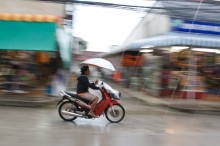
    Asia’s rapidly developing economies should prepare for a full-throttle increase in motorcycle numbers as average incomes increase, a new study from The Australian National University has found.

    Using data from 153 countries, researchers Dr Paul Burke and Dr Shuhei Nishitateno found the number of motorcycles per capita increases until average incomes reach around $8,000 per person per year. The number then declines as incomes rise higher.

    The research has implications for road safety in developing countries, where motorcycle use remains a relatively risky form of transport. Around 300,000 motorcyclists are killed around the world each year, with the death rate higher in developing countries.

    “Our research suggests that many low-income countries should plan for a sharp increase in motorcycle use over coming years,

  • What is Big Data, and why it matters?

    What is Big Data, and why it matters?

    In the past few years you probably read everywhere about the “new big thing ” – the big data promise, opportunities, challenges, etc. What is actually big data? A new concept, a social media buzzword, or maybe something else? The first mention of “big data

  • Weekly Science Picks

    Weekly Science Picks

    It’s time to summarise scientific contributions for this week. As usual, we would like to present the headlines which marked out the current week. The task was not the simple one, but we made it. Here are the most incredible things from the world of science and technology that have happened during this week.

    Reading the minds of the ‘dead’

    “Imagine you wake up, locked inside a box,

  • Scientists find new way to fight Malaria drug resistance

    Scientists find new way to fight Malaria drug resistance

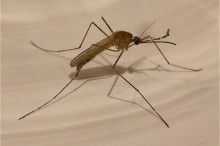
    An anti-malarial treatment that lost its status as the leading weapon against the deadly disease could be given a new lease of life, with new research indicating it simply needs to be administered differently.

    The findings could revive the use of the cheap anti-malarial drug chloroquine in treating and preventing the mosquito-bourne disease, which claims the lives of more than half a million people each year around the world.

    The parasite that causes malaria has developed resistance to chloroquine, but research carried out at the Australian National University (ANU) and Germany’s University of Heidelberg has shown that the parasite protein that causes resistance has an Achilles’ heel.

    “We studied diverse versions of this protein and in all cases found that it is limited in its capacity to remove the drug from the parasite,

  • The Science of the World’s Most Popular Drug

    The Science of the World’s Most Popular Drug

    Here’s a quick shot of science to start your day.

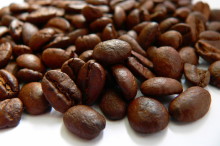
    The American Chemical Society, an organization representing chemists across the US, has released the latest in a series of Reactions videos. Attempting to explain the science of everyday things, previous Reactions videos have demystified the chemistry of Sriracha, Love, Pepper and more. This latest video breaks down the world’s most widely used stimulant, caffeine. If you haven’t had your morning cup of coffee, you may need to watch this video twice.

    On a side note, if you live in the San Francisco Bay Area, consider spending Saturday, May 3rd at Stanford’s one-day coffee symposium. Organized by Stanford Continuing Studies, the symposium – Coffee: From Tree to Beans to Brew and Everything in Between – will feature guest speakers (historians, scientists, the CEO of Blue Bottle Coffee, etc.) talking about what goes into making this great beverage of ours. Students will also have the opportunity to participate in coffee tasting and evaluation sessions.

    Source and image.

  • Deregulation of student contributions

    Deregulation of student contributions

    Vice-Chancellor Professor Ian Young and Chancellor Professor Gareth Evans have called for the deregulation of student contributions so Australian institutions can offer courses which better compete with those on offer from the world’s best universities.

    In an opinion piece published in The Australian,  they said the proposal would provide the best outcome for students, and would allow universities to focus on delivering a quality education comparable to universities such as Harvard and Stanford in the United States.

    “We want to provide an education that is comparable to that offered by the great universities of the world,

  • ‘Botox of plastic’ to freeze power costs

    ‘Botox of plastic’ to freeze power costs

    A new material that prevents plastic from ageing has been developed by CSIRO – offering huge environmental and cost savings for the energy industry.

    When applied to plastic lining this ‘botox for plastic’ can clean up exhaust gases from power plants much more effectively than existing methods.

    Currently, the techniques industry use to separate out raw materials such as gases, liquids and solids are extremely energy-intensive, accounting for 40 per cent of the world’s energy use each year.

    According to lead author Dr Sam Lau, the new ‘botox’ technique offers a solution that will make the separation process a staggering 50 times faster.

    “At the moment power generators rely on plastic linings made up of tiny holes just one nanometre wide, a tiny fraction of a width of a human hair,

  • Two Artificial Intelligence Chatbots Talk to Each Other & Get Into a Deep Philosophical Conversation

    Two Artificial Intelligence Chatbots Talk to Each Other & Get Into a Deep Philosophical Conversation

    The folks at the Cornell Creative Machines Lab are “interested in robots that create and are creative.

  • Research leads to food and sport deals

    Research leads to food and sport deals

    The commercialisation of CSIRO research and technology reached an important milestone last week with agreements being signed in the food, sport and surveying industries.

    CSIRO has now created more than 150 companies and currently hold interests in around 30. It is also Australia’s largest patent portfolio and issues around 80 licenses each year, many to Australian businesses.

    CSIRO Director of Business Development and Commercial Jan Bingley said the deals for BARLEYmax, Zebedee and WASP, further demonstrate how CSIRO was helping build Australian businesses and boost the country’s productivity.

    “CSIRO works with about 3000 clients each year, including more than 20 per cent of the Australian Stock Exchange top 200 companies and 1300 Small to Medium Enterprises,

  • Weekly Science Picks

    Weekly Science Picks

    Indeed, it’s Sunday again. But, it’s not only Sunday. It’s Easter for all Christians all over the globe. Happy Easter to everyone! Also, it’s our time to recapitulate what have happened in this week. To be honest, the task was quite challenging, since the science and technology market is highly competitive and unpredictable. Luckily, we made it. Now we would like to present you top stories that were published during this week.

    The crashes that changed plane designs forever

    Sacrifices were made in great numbers in the early days of powered flight. Aeroplanes suffered a catalogue of catastrophic construction and engineering failures compounded by bad weather and pilot error. These tragedies were part of a long and fraught process that helped make flying as safe as it is today.

    Nasa Kepler telescope discovers planet believed to be most Earth-like yet found

    A newly discovered planet may be the most Earth-like yet found in another solar system, scientists believe. Kepler-186f is almost the same size as the Earth and occupies its star’s “habitable zone” where temperatures are mild enough to allow liquid surface water.

    Ancient viruses sound scary, but there’s no need to panic

    The researchers raised concerns that drilling in the permafrost may expose us to many more pathogenic viruses. Should we be worried about being infected from the past? Can human viruses survive in this permafrost environment and come back to wreak havoc?

    ‘Dressed’ laser aimed at clouds may be key to inducing rain, lightning

    The adage “Everyone complains about the weather but nobody does anything about it” may one day be obsolete if researchers further develop a new technique to aim a high-energy laser beam into clouds to make it rain or trigger lightning. Other possible uses of this technique could be used in long-distance sensors and spectrometers to identify chemical makeup.

    Until next meeting, please stay thirsty for new updates from the world of science and technology.

  • 2014 Prime Minister’s Prizes for Science

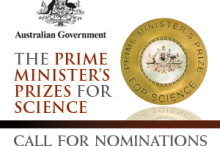
    2014 Prime Minister’s Prizes for Science

    The Prime Minister’s Prizes for Science are Australia’s national annual awards for recognition of outstanding achievement in science and excellence in science education. Nominations are open to Australian citizens and Australian permanent residents.

    The five awards are:

    • The Prime Minister’s Prize for Science (AUD$300,000);
    • The Frank Fenner Prize for Life Scientist of the Year (AUD$50,000);
    • The Malcolm McIntosh Prize for Physical Scientist of the Year (AUD$50,000);
    • The Prime Minister’s Prize for Excellence in Science Teaching in Primary Schools; (AUD$50,000); and
    • The Prime Minister’s Prize for Excellence in Science Teaching in Secondary Schools (AUD$50,000)

    The Prime Minister’s Prize for Science

    • The Prime Minister’s Prize for Science is awarded for an outstanding specific achievement or series of related scientific achievements advancing human welfare or benefitting society.
    • Nominees can be an individual or a group of up to four, if the achievement is a collaborative team effort.
    • There are no restrictions as to when the achievement was accomplished, however nominees must be currently active in research.
    • Past recipients of the Malcolm McIntosh Prize and Frank Fenner Prize (or its predecessor, the Science Minister’s Prize) are eligible to be nominated and considered for this award.
    • Previous nominees are eligible for re-nomination subject to eligibility criteria being met.
    • The award comprises an award certificate, a gold embossed medallion, lapel pin and a grant of AUD$300,000.

    Frank Fenner Prize for Life Scientist of the Year and Malcolm McIntosh Prize for Physical Scientist of the Year

    • Nominations are open to individuals only.
    • Previous nominees are eligible for re-nomination subject to eligibility criteria being met.
    • The Frank Fenner Prize and the Malcolm McIntosh Prize recognise the achievement of scientists in their early to mid-career whose research advances human welfare or benefits society – or has the potential to do so.
    • The Frank Fenner Prize is awarded for achievement in the life sciences, including health and medical research, biology, agriculture, veterinary science and environmental science.
    • The Malcolm McIntosh Prize is awarded for achievement in the physical sciences and related enabling sciences, including chemistry, engineering, physics, astronomy, earth sciences, mathematics and information technology.
    • To be eligible, the nominee must have achieved outstanding research during a research career spanning no more than 10 years (or full time equivalent):

    The nominee’s highest degree should have been awarded not more than 10 years ago (on or after 29 May 2004), and a certified copy of the testamur must be provided.

    The achievements listed in the nomination can include research conducted as part of studies for a bachelor’s degree, master’s degree or PhD.

    At least four years of the nominee’s research career must have been spent in Australia.

    Allowances will be made for career disruptions such as family leave.

    Each award comprises an award certificate, an embossed silver medallion, lapel pin and a grant of AUD$50,000.

    Prime Minister’s Prize for Excellence in Science Teaching in Primary Schools and Prime Minister’s Prize for Excellence in Science Teaching in Secondary Schools

    • These prizes are awarded in recognition of contributions by science teachers in their commitment and dedication to effective and creative science teaching.
    • Nominations are open to individual teachers only.
    • Previous nominees are eligible for re-nomination subject to eligibility criteria being met.
    • The AUD$50,000 grant component of the prizes for science teaching will be shared equally between the prize recipient and the last school in the Australian education system in which the achievements cited in the nomination were realised. The school’s share of the grant must be used to finance a project or projects that will improve the school’s capacity to teach science.
    • In addition to their share of the grant, the recipient will receive an award certificate, an embossed silver medallion and lapel pin.

    The full eligibility criteria, nomination guidelines and the online nomination form are online at: http://www.industry.gov.au/scienceprizes.

    For further information, please email: pmprize@industry.gov.au

    How to nominate

    Nominations for all five prizes will be conducted in two stages.

    Nominators are advised to refer to the 2014 nomination guidelines for the Prime Minister’s Prizes for Science before submitting a nomination. Nominations will be assessed in accordance with the guidelines.

    Stage 1 requires that nominators register online to complete a form including:

    • Nominator and nominee(s) details.
    • Details of two supporters (for the three science prizes, one of these supporters must be based overseas).
    • An achievement summary of no more than 800 words describing the achievement nominated, with reference to the selection criteria for the prize.
    • A two-page curriculum vitae, which must be compiled with reference to the specific guidelines for each prize category.
    • Certified proof of Australian citizenship or permanent residency.
    • For the three science prizes only: the curriculum vitae should include reference to at least four articles or publications or patents which relate directly to the achievements for which the nomination is made.
    • For the Frank Fenner and Malcolm McIntosh Prizes only: evidence that the nominee’s research career spans no more than 10 years (or full time equivalent):

    The nominee’s highest degree should have been awarded not more than 10 years ago (on or after 29 May 2004), and a certified copy of the testamur must be provided.

    The achievements listed in the nomination can include research conducted as part of studies for a bachelor’s degree, master’s degree or PhD, so long as the entire period covered is not more than 10 years.

    At least four years of the nominee’s research career must have been spent in Australia.

    Allowances will be made for career interruptions such as family leave.

    Stage 2 requires shortlisted nominees to submit further details, including:

    • Reference from the nominator of no more than five pages, addressing each point of the prize selection criteria.
    • References from the two supporters endorsing the nominated achievement.
    • A paragraph in simple English describing the nature, impact and importance of the nominee’s nominated achievements, for possible use in publicity.
    • For the three science prizes only: a list of publications and copy of each of the four publications which best describe the nominated achievement.

    CLOSING DATE: 29 May, 5.00 pm local time in Canberra