Blog

  • The Future of Solar Power Technologies in Australia

    The Future of Solar Power Technologies in Australia

    As the cost of fossil fuels go up around the world, and the impact of climate change becoming increasingly avoidable, people are looking for reliable, alternative sources of energy. With the favourable climate in Australia, it’s a no-brainer that solar power is the way forward. But gone are the days of inefficient panels at extraordinary prices – and Australian researchers are leading the way.
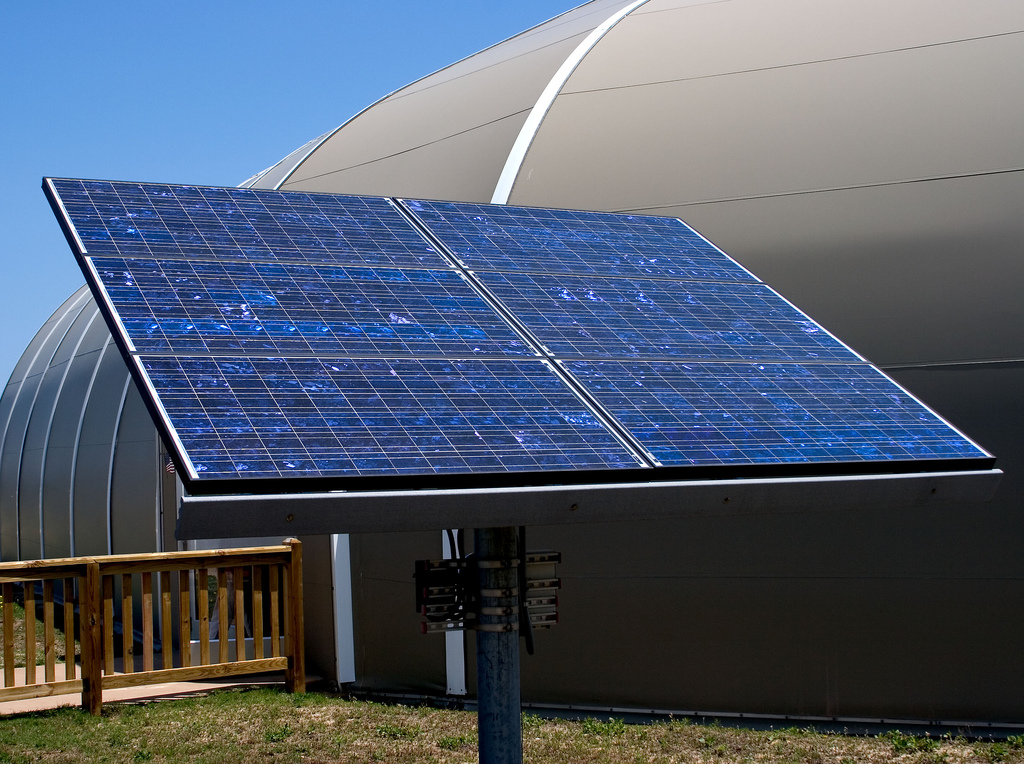
    Solar Power Panels
    Cutting edge solar panels

    About solar power

    Solar power is fast becoming the top choice for families and businesses looking to cut down on their electricity bills and minimise their impact on climate change. In the past, the cost was inhibiting, but as technology improves and costs come down – it is being rapidly implemented.

    Solar power can be used for a variety of purposes – some use it in combination with standard energy while others use it as a sole energy provider. It can also be used as a standalone technology to heat a hot water system, which can be a popular choice as heating can account for up to 70 per cent of energy bills.

    In the past, solar energy could only be captured and used at that same moment – but now, solar systems are able to store energy during the day and then release it at night, making it a much more practical choice.

    Australia and solar power

    Australia is a global leader in solar power technology. There are nearly 17,000 people employed full-time in the solar industry and there are now over one million solar power systems installed across the country, compared to just 8,000 in 2007.

    A 2013 report into Australia’s solar energy future found that despite Australia being the world’s sunniest continent, solar energy was largely underutilised. However, it also found that the price of solar power systems were dropping so fast that in some areas the cost was almost competitive with standard electricity companies, and the cost of installation was less than a quarter of the price a decade ago. (Flannery, T., 2013)

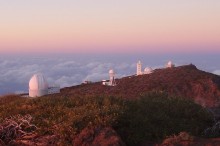
    Solar station in White Cliffs
    Solar station in White Cliffs

    Current solar power technology

    Solar power technology has come a long way even in just the past few years, and Australians now have numerous options when it comes to choosing a solar energy solution. Options include manufacturers, materials used and the technology within the solar panels, too.

    There are three main types of solar panels – polycrystalline, monocrystalline and amorphous modules. There are numerous others, but these are the most popular choices due to efficiency, cost and aesthetics. For example, monocrystalline tend to be the most efficient, but are not as cheap as polycrystalline is cheaper to produce. In the past few years, though, the cost of monocrystalline panels have dropped – making them the most popular choice for Australians.

    Future of solar power

    It is estimated that by 2050, solar power will account for 29 per cent of Australia’s energy needs. (Flannery, T., 2013) To achieve this, technology needs to be continually advancing – and new solar technology is already on its way, with Australia leading the research. Here are a few key developments happening in Australia right now.

    Printable Solar Panels

    Australian researchers have recently developed a method of producing printable solar cells. A printer that has been installed at CSIRO is capable of printing solar cells in A3 size – the largest ever created. Although they are not ready to be released to the public, the technology – and low cost of production – is a good sign of things to come.

    Solar Power Farms

    In August 2013, the University of Queensland announced that it had would be leading a $450 million solar farm project in western New South Wales. A joint initiative between the Federal Government and AGL Energy, the project will see the building of the southern hemisphere’s largest solar power plant, bringing renewable energy into many more homes.  (UQ, 2013)

    The building of solar farms has the benefit of providing mass solar power and minimising our carbon footprint, without the need for individual homes to have solar panels installed.

    Mildura Solar Concentration Power Station

    The largest step towards increasing solar energy in the state of Victoria is due to be completed in 2017. The Mildura Solar Concentration Power Station, which will become Australia’s largest concentrated solar panel plant on completion, is set to be a 100MW power plant and currently has 40 CPV dishes already feeding power into the region’s grid. The technology to be used at the power station was originally developed by Boeing to be used on satellites.

    The company who owns the power station, Silex, has said that the cost of energy could drop to 10c/kWh ($100/MWh) within a few years using their innovative technology, which – if achieved – is a significant decrease. (Renew Economy, 2013)

    Conclusion

    Considering the huge increase in uptake of solar energy in just the past five years, solar is clearly the way forward for Australia’s energy supplies. Not only is it cost-effective but it utilises a resource that is naturally available to us and doesn’t require Earth-destroying mining or drilling to get to it.

    Although solar power is already a relatively significant part of energy in Australia, technology still has a long way to come before it is considered our primary source.

    Images by Kenny LouieJimmy Joe and Richard Gifford.
  • Science & Cooking

    Science & Cooking

    I can hardly think of a more appealing nexus of the sciences, for most of us and for obvious (and delicious) reasons, than food.

    Add a kind of engineering to the mix, and you get the study of cooking. Back in 2012, we featured the first few lectures from Harvard University’s course Science and Cooking: From Haute Cuisine to the Science of Soft Matter. Their collection of rigorous and entertaining presentations of that which we love to prepare and, even more so, to eat has since expanded to include one- to two-hour lectures delivered by sharp professors in cooperation with respected chefs and other food luminaries on culinary subjects like the science of sweets (featuring Flour Bakery’s Joanne Chang), how to do cutting-edge modernist cuisine at home (featuring Nathan Myhrvold, who wrote an enormous book on it), and the relevance of microbes, misos, and olives (featuring David Chang of Momofuku fame).

    Alternatively, you can pick and choose from the complete list of Harvard’s Science and Cooking lectures on Youtube or on iTunes. Some get deep into the natural workings of specific dishes, ingredients and preparation methods; others, like “The Science of Good Cooking

  • Chocolate bytes with virtual mouth this Easter

    Chocolate bytes with virtual mouth this Easter

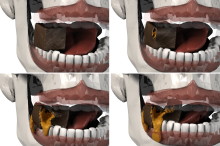
    Here’s something to chew over. Easter chocolates, along with our favourite everyday foods, could taste just as good but be healthier in future, thanks to new technology that is revealing the science of chewing.

    CSIRO’s 3D mastication modelling, demonstrated for the first time in Melbourne today, is starting to provide researchers with new understanding of how to reduce salt, sugar and fat in food products, as well as how to incorporate more fibre and nutrients, and even how to create new food sensations.

    CSIRO biomechanical engineer and computer modeller, Dr Simon Harrison, said the world’s first 3D dynamic virtual mouth can provide detailed insight for developing healthier foods.

    Just in time for Easter, Dr Harrison has modelled a caramel filled Easter Egg to see what happens when the virtual mouth takes a bite.

    “In polite company, we can’t see inside someone’s mouth while they’re eating and, until now, it has not been possible to view how the chewing process alters food,

  • A Secret Code to the Cosmos is Hidden in the Light

    A Secret Code to the Cosmos is Hidden in the Light

    Are you watching the new Cosmos: A Spacetime Odyssey – the scientific documentary television series? I am, and I’m thoroughly enjoying it! The series is a follow-up to the 1980 television series Cosmos: A Personal Voyage, which was presented by Carl Sagan. The all new Cosmos: A Spacetime Odyssey science documentary consists of thirteen episodes and just like the original program, continues to use a storytelling approach to present complex astronomy and science concepts in an accessible and entertaining manner. The episodes feature the latest information which has been updated since the 1980 series and uses substantial computer-generated special effects and animation to illustrate and enhance the narration.

    The series is hosted and presented by astrophysicist and science communicator Neil deGrasse Tyson, who was inspired by Sagan as a college student. He created a new version of the series, aiming to reach a wider audience and not just those specifically interested in the sciences.

    The entire Cosmos: A Spacetime Odyssey series is dedicated to exploring how we discovered different laws of nature and explaining how scientists found our Earthly coordinates in space and time in relation to the universe and created a vision of the cosmos. Listening to the great narratives, watching the stars, and contemplating the scale of space and time relative to Earth, is enough to humble any scientifically curious soul.

    My favourite episode, called “Hiding in the Light

  • Years of Living Dangerously – the New Series on Climate Change

    Years of Living Dangerously – the New Series on Climate Change

    Ever since Al Gore’s An Inconvenient Truth came out to critical accolades, Conservative scorn and a handful of Oscars, there has been no shortage of well meaning documentaries about the perils of climate change. Most feature a Hollywood celebrity or two, a liberal amount of liberal guilt, and a distinct sense of preaching to the converted.

    The new Showtime series Years of Living Dangerously might have plenty of those first two elements but none of the third. In the first episode of the series –which has been released for free on YouTube (above) – Don Cheadle asks, “Is there a way to discuss climate change without politics or religion getting in the way?

  • Weekly Science Picks

    Weekly Science Picks

    Well, it’s Sunday again. It’s our time to recapitulate all the scientific contributions, ideas, events and discoveries that have occurred in this week. To be honest, the job was quite challenging, since the science and technology market is highly competitive and unpredictable. Luckily, we made it. Now we would like to present you top stories that were published during this week.

    Nanostructures with applications in infrared and terahertz ranges

    Scientists have created a compound semiconductor of nearly perfect quality with embedded nanostructures containing ordered lines of atoms that can manipulate light energy in the mid-infrared range. More efficient solar cells, less risky and higher resolution biological imaging, and the ability to transmit massive amounts of data at higher speeds are only a few applications that this unique semiconductor will be able to support.

    Baking bread by the numbers

    If we had to name who’s involved in bread making, most of us would probably identify the baker, the farmer who grows the wheat and maybe even the miller who grinds the wheat into flour. But how many people would think of the humble statistician? Dr Emma Huang would – and she’s eager to prove their worth in the process.

    Try stargazing wherever you are

    The first “wow” moment of my stargazing adventure took place before I had even looked through a telescope. Staring up at the cloudy night sky one cold March evening, I spotted a bright pinprick of light to the south-west. “Which star is that?” I asked Seb Jay, the astronomer who was going to teach me to stargaze and who was, at that moment, busy setting up a pair of telescopes in my back garden.

    ‘I have lived underwater’

    The first night Deron Burkepile spent underwater was over 10 years ago, but the memory is still fresh in his mind. He remembers getting suited up — a couple of scuba tanks on his back, extra safety gear hanging from his rig—and stepping to the back of the boat. “You’re used to getting off the boat and coming back in an hour, maybe two at most,

  • The Science behind Architecture

    The Science behind Architecture

    Architecture, in various forms, dates back to early man. But it wasn’t until the late Renaissance period that modern architecture that we know today came about; when engineers, artists and architects separated and formal architecture training began in the 19th century. It became less focused purely on its artistic merit, and more on its quality and function.

    The Oxford Dictionary defines architecture as being: ‘the art and science of designing buildings and (some) nonbuilding structures’. (Shorter Oxford English Dictionary, 1993). And now, there is more science behind architecture than ever before – from earthquake and hurricane proof to advanced soundproofing and more, a building is no longer ‘just a building’, and the design needs to be more than just aesthetically pleasing – it needs to be functional too.

    Here, we take a look at some of the common problems faced by architects and the scientific developments that are used to overcome them.

    Sustainability

    The word sustainability has been a hot topic for several years now. Sustainable products are both environmentally friendly and more economical. From energy and transport to clothing and agriculture, engineers and scientists are constantly looking for ways to make things more eco-friendly and sustainable. Architecture is no different. There are several elements of building design and construction that can be more sustainable – including the materials used and machinery involved.

    In Australia, the Green Building Council of Australia gives green ratings to new buildings, based on the environmental impact that they have. Launched in 2002, the not-for-profit Green Building Council aims to help promote more sustainable and green property developments, such as those advocated by Dion Seminara, who is looking to promote what he calls ‘intelligent architecture’.

    The Queensland homes offered many advantages, particularly in terms of lower running costs for heating and cooling. The architectural design responded directly to the local climate using simple materials to create comfortable homes.

  • Market Research: Science vs. Art

    Market Research: Science vs. Art

    Market research – it’s the essential step that every business needs to take to maximise their chance of success. It’s a hugely complex study area, and market research companies are constantly trying to find new ways to get the best results. From online and field surveys to panel interviews and product testing, there are hundreds of ways to gather information about the market place.

    Naturally, there is a lot of science behind this research. With billions of dollars invested by businesses into market research, it’s essential that there is some science to back it up. But increasingly, art and creativity is playing a more prominent role.

    What is market research?

    Market research in itself is a science. At its core, it is about collecting qualitative and quantitative data about customers and the target markets of a particular product or service. The key purpose of market research is to ensure a business or product stays ahead of its competition. The goal once the data is collected is to analyse, interpret and assess what the market wants and needs; it also looks at competition and the size of the need. Using this assessment, businesses can work out how best to market their product. (Small Business Development Corporation, 2014)

    Despite the overall purpose of market research being quite simple, there is not just one way to achieve the end result. In the era of the internet, businesses are becoming more competitive than ever before – and at a much faster rate. Market research needs to be more innovative and creative to stay ahead.

    Psychology and market research

    Many of the world’s largest market research company hire psychologists to develop and analyse market research plans. Qualified consumer psychologists specifically look at the behaviours of shoppers and try to work out why they are making the decisions that they do.

    Psychologists are the perfect fit for market research, says psychologist Graham Chant. “Psychology training is extremely useful in market research. In fact, it could be argued that it is one of the few areas that make use of the board range of psychology skills,

  • Media Studies: new media and new literacies

    Media Studies: new media and new literacies

    Many commentators agree that the field of media studies will become more and more important in the coming years.

    The European Science Foundation (ESF) publication “Media studies: new media and new literacies

  • How a Young Sigmund Freud Researched & Got Addicted to Cocaine

    How a Young Sigmund Freud Researched & Got Addicted to Cocaine

    As David Bowie had his cocaine period, so too did Sigmund Freud, beginning in 1894 and lasting at least two years.

    Unlike the rock star, the doctor was just at the beginning of his career, “a nervous fellow

  • New tool for galactic archaeology

    New tool for galactic archaeology

    Reconstructing the history of our Galaxy has just become a whole lot easier, thanks to a team of international astronomers led by Dr Luca Casagrande from the Research School of Astronomy and Astrophysics.

    By examining both the light and soundwaves from stars, the team has developed a more precise way to deduce the ages of stars and to pinpoint when our Galaxy’s big events happened.

    The development will help astronomers study the properties of ancient stars and help them better understand the formation and evolution of the Milky Way.

    “We might also uncover evidence for violent events in the past, such as collisions with other galaxies,

  • Beautiful Equations

    Beautiful Equations

    Like many right-brained people, artist and critic Matt Collings finds higher math mystifying, a word that implies both bewilderment and wonder.

    Faced with the equations that make, for example, Stephen Hawking’s work possible, most of us are left similarly slack-jawed. Collings aptly describes the realm of theoretical physics—which so contradicts our everyday experience—as “an alien world,

  • Weekly Science Picks

    Weekly Science Picks

    We have come to the end of one more week and it’s time to summarise what has happened during this week. As usual, the task was quite challenging, but we made it. Here is the review of the most exiting and fascinating news from the world of science and technology.

    Do coffee and tea really dehydrate us?

    They enjoy the taste and the fact that the caffeine wakes them up. But when we’re exhorted to drink six or eight glasses of water a day, it’s usually emphasised that drinks like coffee and tea don’t count towards your daily liquid total because they’re dehydrating. Or so we’re told. What’s the evidence?

    Mind-controlled robotic suit to debut at World Cup 2014

    Shortly before 5pm local time on 12 June at Arena Corinthians in São Paulo, a young paraplegic Brazilian will stand up from a wheelchair, walk over to midfield, and take a kick in the opening ceremony of the 2014 World Cup.

    Saving daylight

    Not that “adjusting

  • Whatever You Are, Be a Good One

    Whatever You Are, Be a Good One

    From Tolstoy to Tumblr, a compendium of timeless wisdom on life.

    In March of 1884, Leo Tolstoy resolved in his diary to create a “circle of reading