Blog

  • Teacher awarded international fellowship

    Teacher awarded international fellowship

    A Queensland high school teacher is swapping suburban Brisbane for New York City after winning the 2014 Smithsonian Cooper-Hewitt Fellowship valued at $19,000.

    Science, Information Technology, Innovation and the Art Minister Ian Walker congratulated Kelvin Grove State College teacher, Terry Deen, who would soon be heading off to one of the world’s most renowned design education departments at the Cooper-Hewitt National Design Museum.

    “This is a great opportunity for one of our brightest teachers to gain invaluable experience in delivering quality design education,” Mr Walker said.

    “If we want Queensland students to get the best education, then we need teachers such as Terry to learn from the best and bring that knowledge back to Queensland classrooms.

    “This delivers on a key commitment at the last election to improve frontline services for families, and supporting outstanding teachers to reach their potential means students will get the best.

    “The contribution this fellowship makes to the state is highlighted by the community design projects that students of previous fellows have completed.

    “They played a vital role in the Living City project where students presented responses to the Brisbane City Centre Master Plan in Brisbane’s King George Square, and the Sit-Art project where students produced 60 redesigned chairs for the Myer Centre eatery in Brisbane’s CBD.

    “Great teachers inspire students with their own love for their subjects and Terry is obviously in these ranks.”

    Mr Deen said he recognised the opportunity this fellowship provided for the growth of Queensland’s science, educational and cultural capabilities.

    “I’m proud to be named this year’s recipient of the Smithsonian Cooper-Hewitt Fellowship which will give me the opportunity to enhance my knowledge and provide leadership in design education by partnering with the Cooper-Hewitt National Design Museum in New York,” Mr Deen said.

    “The $19,000 awarded by the Queensland Government will make a real difference to improving my capacity to provide innovative learning experiences in the areas of technology and design, science, IT and engineering.”

    In 2013-14, funding up to $30,000 was made available by the Department of Science, Information Technology, Innovation and the Arts as part of the Queensland Government’s commitment to develop and maintain key strategic alliances through science and innovation.
  • Do Rappers Have a Bigger Vocabulary Than Shakespeare?: A Data Scientist Maps Out the Answer

    Do Rappers Have a Bigger Vocabulary Than Shakespeare?: A Data Scientist Maps Out the Answer

    Each year brings us a new list of words that, once hip or subcultural, signal their admission into the mainstream by entering the pages—print or online—of the Oxford English Dictionary or Merriam Webster’s.

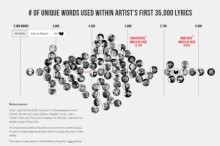
    Many of those come from the world of hip hop. The form is a veritable laboratory of linguistic innovation, spawning dozens of region-specific argots that mutate and evolve beyond the capacity of hip lexicographers to document. One data scientist, Matt Daniels, has made an interesting attempt, however, in a project he calls “The Largest Vocabulary in Hip Hop.

  • An Ode to What a Dog Can Teach Us About the Meaning of Life

    An Ode to What a Dog Can Teach Us About the Meaning of Life

    Mastering the art of unselfconscious presence.

    “Because of the dog’s joyfulness,

  • Ocean winds keep Australia dry, Antarctica cold

    Ocean winds keep Australia dry, Antarctica cold

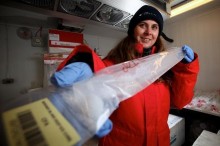
    New ANU-led research has explained why Antarctica is not warming as much as other continents, and why southern Australia is recording more droughts.

    Researchers have found rising levels of carbon dioxide in the atmosphere are strengthening the stormy Southern Ocean winds which deliver rain to southern Australia, but pushing them further south towards Antarctica.

    Lead researcher Nerilie Abram, from the ANU Research School of Earth Sciences, said the findings explained the mystery over why Antarctica was not warming as much as the Arctic, and why Australia faces more droughts.

    “With greenhouse warming, Antarctica is actually stealing more of Australia’s rainfall. It’s not good news – as greenhouse gases continue to rise we’ll get fewer storms chased up into Australia,

  • Weekly Science Picks

    Weekly Science Picks

    Here we are at the end of one more exciting and fascinating week. It’s Sunday, as you know. It’s the day when we summarise what have happened during the last 7 day. This week was amazing, indeed. We got the opportunity to enjoy many different scientific and technological contributions and right now we would like to present what have attracted our attention the most.

    Google Glass: Why the gadget faces its biggest test

    Will Google Glass catch on? With a backlash in full swing, there may be one thing that threatens the technology’s adoption more than anything else, argues Chris Baraniuk. And in the video above, BBC Click’s Spencer Kelly takes a look at how one airline is embracing the technology while some other businesses would rather ban it.

    Shrimp’s shell-smashing punch hands researchers a lead on tougher materials

    Able to withstand thousands of strikes without breaking, the marine crustacean’s “fists” have inspired a carbon-fibre composite material that is stronger and more durable than that currently used by the commercial aircraft industry. Researchers created an architecture of carbon fibres to mimic the claw’s shock-absorbing interior and then used impact testing to judge its toughness versus other composites.

    Creative ways we’re keeping fish on your plate

    Grilled with garlic, oven baked, or lightly pan fried with a hint of lemon: Blue-eye Trevalla is one of Australia’s premium seafoods, and an iconic fish species for commercial fishers and seafood lovers alike.

    Longevity gene may boost brain power: Researchers discover the gene may enhance cognitive abilities

    Scientists showed that people who have a variant of a longevity gene, called KLOTHO, have improved brain skills such as thinking, learning and memory regardless of their age, sex, or whether they have a genetic risk factor for Alzheimer’s disease. Increasing KLOTHO gene levels in mice made them smarter, possibly by increasing the strength of connections between nerve cells in the brain.

    Please stay thirsty and scientifically passionate for new stories. They will come soon.

  • New antivirals closer with opening of new laboratory

    New antivirals closer with opening of new laboratory

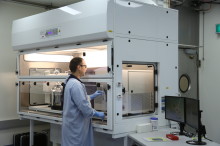
    Construction of the unique Biosecure Immunology Laboratory in Victoria will improve Australia’s ability to develop new treatments for highly infectious viruses such as influenza and Middle Eastern Respiratory Syndrome (MERS).

    CSIRO and Deakin University today officially open the new high-tech national research facility, located inside the Australian Animal Health Laboratory (AAHL) in Geelong.

    Dr Kurt Zuelke, director of AAHL, said the new laboratory will provide more specialised techniques, at a cellular level, to help pin-point the immune mechanisms employed by various animal hosts.

    “This new world-class facility will be critical in helping us develop new, more natural, therapeutics and boost our work in preventing, detecting and treating emerging infectious diseases,

  • 3D printed first to treat sleep apnoea

    3D printed first to treat sleep apnoea

    A new 3D printed device is set to end the suffering for thousands of sleep apnoea patients.

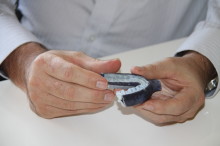
    Using a 3D scanner to map a patient’s mouth, CSIRO researchers and Australian dental company, Oventus, can now print a mouthpiece which prevents dangerous pauses in breath during sleep.

    Printed from titanium and coated with a medical grade plastic, the breakthrough mouthpiece is customised for each patient.

    The device has a ‘duckbill’ which extends from the mouth like a whistle and divides into two separate airways. It allows air to flow through to the back of the throat, avoiding obstructions from the nose, the back of the mouth and tongue.

    Sleep apnoea occurs when the air passage in the throat becomes blocked during sleep and causes people to stoping breathing. In severe cases, people can suffer hundreds of events per night.

    An estimated one million Australians suffer from the disorder, which can lead to high blood pressure, stroke, irregular heartbeats, heart attacks and diabetes. This number is expected to increase due to growing obesity levels and an aging population.

    The existing treatments for sleep apnoea include devices that push the lower jaw forward to open up the airway or in more severe cases; a face mask which creates a continuous flow of air can be used.

    CSIRO’s 3D printing expert, John Barnes, said the technology is opening new doors for treatments of a range of medical issues globally.

    “When Oventus came to CSIRO with this idea, we were really excited. The possibilities of 3D printing are endless and the fact that we can now design and print a completely customised mouthpiece for patients is revolutionary,

  • Most young people go online for fun – but they want to learn more

    Most young people go online for fun – but they want to learn more

    From a recent survey on media usage among 12-13 year olds in Ireland, it came as no surprise to learn that the most common reason cited for going online was fun.

    However, findings also revealed that school work scored just as highly, as did social networking. Not discounting social desirability implications of the ‘school work’ response, our findings confirmed what anecdotally we already knew – that this particular age group, officially too young for Facebook, is active on social networks and the internet and for a variety of reasons.

    The 12-13 Project carried out by the Irish Film Institute (IFI) between October 2012 and May 2013 aimed to map the media usage of this age group in Ireland through an online log to be completed over a finite number of days. The findings would then inform several media literacy interventions which would be delivered at a variety of locations around the country and draw on the expertise of local media providers and professionals. While the primary activity of IFI is cinema exhibition, at the same time we are conscious of the multi-platform ways in which young people today access film. The EU Kids Online Survey has provided invaluable information on young peoples’ online habits across Europe. We were hoping that our small project would tell us a little more about their use of other media such as film, TV and radio – and whethermedia literacy interventions would affect any behavioural or attitudinal change.

    Initially setting out to connect with out-of-school media experiences, including film watching, we wanted to find out the nature and duration of media-based activities, the skills and competencies, and the awareness and understanding of internet safety, amongst our target group. The age range was very particular, falling as it does in Ireland between primary and secondary school, when moving up involves a transition to a very different learning environment. Just as media literacy could provide a transactional learning space between in and out of school, perhaps it could ease transition to more demanding curricula or confidence-building in the challenging teen years. Equally we wanted to facilitate a positive engagement with media, when so much that is published about young people and media inclines towards the negative. This is not to underestimate the role that social networking may have played in serious or tragic occurrences, but rather to acknowledge its place in teen communications and to encourage discussion around issues of safety, with a view to promoting more discerning use.

    From the findings of our online survey, we could surmise that the average 12-13 year old in Ireland used a mobile phone mostly to send texts, would go online each day and they would watch TV. Over half could adjust privacy settings, half would play games. In other words, the young people who took part in our research were to varying degrees media-savvy. Our follow-up media interventions in radio, web design, TV and filmmaking, which also included input and discussion on online safety, offered further confirmation of the participants’ media skills but most significantly, their interest in furthering them. As with our previous research project, Film Focus, and the numerous other research projects that are being carried out by other bodies in this highly pertinent field, we get repeated confirmation that active media engagements excite and motivate young people and they want to learn more. Curriculum developers, youth work and education funders, please take note.

    Source and image.

  • How to Move People with Integrity?

    How to Move People with Integrity?

    “Like it or not, we’re all in sales right now… whether we’re teachers or art directors or in healthcare.

  • Future cyber threats to cause more headaches than ‘Heartbleed’

    Future cyber threats to cause more headaches than ‘Heartbleed’

    Tomorrow’s hackers could shut down infrastructure and defraud public sector of billions according to a new report released by CSIRO at CeBIT’s Cyber Security Conference.

    Many of these future attacks could take advantage of vulnerabilities similar to “Heartbleed

  • Kazakhstan’s first Earth observation satellite has been placed successfully in orbit

    Kazakhstan’s first Earth observation satellite has been placed successfully in orbit

    Recently we have received the news from Airbus Defence & Space saying that Kazakhstan’s first Earth observation satellite has been placed successfully in orbit. Now we would like to explain what it is all about.

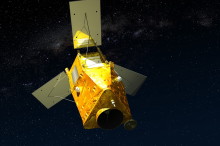
    KazEOSat-1, the Republic of Kazakhstan’s first Earth observation satellite, was successfully launched in night on 29th of April 2014 on board a Vega launcher from the European Spaceport in Kourou (French Guiana). It is in a low Sun-synchronous orbit (about 700 km from Earth), from which it will operate, and has sent the first operational signal. KazEOSat-1 was built entirely by Airbus Defence and Space, the world’s second largest space company.

    “Bravo to the Arianespace teams, who are responsible for the marketing and commercial exploitation of the European launchers at the Guiana Space Centre, for this latest success!

  • Weekly Science Picks

    Weekly Science Picks

    We are at the end of one more exciting and scientifically promising week. It’s time to summarise what have happened during the last 7 days. As usual, the task was quite challenging, but we have obtained it. Here we would like to present the most interesting science and technology innovations of the week.

    Why bad inventions are good

    The answer was revealed at a recent exhibition called Fail Better, at Dublin’s Science Gallery in Ireland. The story of the NeoNurture joined contributions by inventors, athletes, explorers and even astrophysicists, who each submitted an object they thought characterised the theme of failure. It is a compendium of quashed dreams, acts of stupidity, serendipitous success, and crucially, instructive lessons about the true nature of failure.

    Neanderthals aren’t grunting, club-wielding idiots – we are

    They’ve long been maligned as grunting, club-wielding idiots, but apparently we’ve got Neanderthals all wrong. Misled by their simple tools (clubs) and simple language (grunting) we have stereotyped them as primitive beings – but this couldn’t be further from the truth. In fact, according to recent research, Neanderthals were no less intelligent than their modern human contemporaries.

    In the long run: keeping track of athletes with wearable tech

    But today’s coaches aren’t satisfied with analysing highlights footage post-match to get these stats – they want to know how fast a player runs, track exactly where they run, and collect data on the movements of all players individually and as a group in real time.

    Nearby galaxy is a ‘fossil’ from the early universe

    Scientists analyzed the chemical elements in the faintest known galaxy, called Segue 1, and determined that it is effectively a fossil galaxy left over from the early universe. Stars form from gas clouds and their composition mirrors the chemical composition of the galactic gas from which they were born.

    That’s all for this Weekly Science Picks. Please stay updated, new stories are coming soon.

  • CSIRO innovation could reduce brown coal emissions by up to 50 per cent

    CSIRO innovation could reduce brown coal emissions by up to 50 per cent

    CSIRO and its industry partners plan to trial the Direct Injection Carbon Engine (DICE) in Victoria’s Latrobe Valley, the second largest and lowest cost brown coal resource in the world, with the aim of reducing emissions from brown coal-generated electricity by 50 per cent compared to current technology.

    Brown Coal Innovation Australia (BCIA) has allocated A$1 million to the technology trial, which is designed to maximise the value of Australia’s unique resource by significantly reducing emissions associated with the use of brown coal.

    The collaboration was announced  by Victorian Minister for Energy and Resources, Russell Northe, at the third International Low Rank Coal Industry Symposium in Melbourne.

    CSIRO Energy Group Executive, Dr Alex Wonhas, said DICE technology may allow Australia to economically develop coal reserves while reducing the environmental impacts of the sector.

    “Australia has the second largest brown coal resource in the world but current utilisation technologies are carbon intensive so we need to implement cleaner and more efficient ways to generate energy from coal,