Blog

  • Peak Data – coming to a network near you

    Peak Data – coming to a network near you

    CSIRO has released a report on “spectrum crunch” and the role of ubiquitous connectivity in future wireless applications.

    The threat of ‘peak data’ and what that could mean for the way we connect and access essential services in the future, is the focus of a report released by CSIRO.

    Director of CSIRO’s Digital Productivity and Services Flagship Dr Ian Oppermann said wireless technology had been adopted at “breakneck pace” in Australia and around the world.

    “The data rates that people now expect from their mobile services are about a hundred times the amount we thought possible only two decades ago,” Dr Oppermann said.

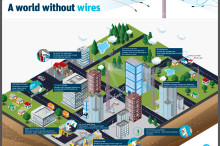
    The report, World Without Wires, points out that wireless communications rely on the availability of radiofrequency spectrum. The spectrum has practical limits and more spectrum cannot be created so we are faced with a finite resource and growing demands to use it.

    Today’s technologies and infrastructure will be hard pressed to support further increases in demand, both in terms of speed and volume, for wireless data and services over the coming decades.

    Many global cities, including here in Australia, are fast approaching the point of ‘peak data’ – where user demand for wireless internet, telephony, and other services can no longer be fully accommodated by the available radiofrequency spectrum.

    “Currently the useable spectrum is divided up and allocated to various uses, such as TV/radio broadcast, emergency services, and mobile phone communications for example,” Dr Oppermann said.

    “In the future, how spectrum is allocated may change and we can expect innovation to find new ways to make it more efficient but the underlying position is that spectrum is an increasingly rare resource.

    “Some estimates suggest that spectrum demand will have almost tripled by 2020, and existing infrastructure will need to rapidly expand its currently available capacity if it’s to meet this demand.

    “With more and more essential services, including medical, education and government services, being delivered digitally and on mobile devices, finding a solution to “peak data” will become ever more important into the future.”

    World Without Wires examines the role that ubiquitous access to high-speed wireless connectivity will play in enabling a range of future applications and social developments, including:

    (1) The replacement of digital TV and telephony services by internet-based, personalised streaming services

    (2) Widespread sensing technologies that optimise and improve almost every aspect of our daily lives

    (3) The widespread use of wireless positioning technologies, from making driverless cars the norm to enhancing retail experiences through “virtual concierges”

    (4) “Tele-services” as the default model of service delivery for government and businesses, with education, healthcare and other public goods being delivered via private digital networks

    (5) A radical improvement in the way existing wireless infrastructure accommodates ongoing growth in service demands, including smaller cells, smarter antennae, and beyond.

    “Such developments will have a profound impact on both Australia and the rest of the world, constituting significant market opportunities, and a chance to deliver widespread public good from our wireless research and enterprise community,” Dr Oppermann said.

    Source and image.

  • How to Code in 12 Weeks?

    How to Code in 12 Weeks?

    Today, we bring you the CS50, Harvard’s Introductory Computer Science course, taught by Professor David Malan, which appeared last year.

    Why revisit an updated version of the same class a year later? For one thing, the material has been updated. And, as you can tell by the rousing reception Malan receives from the audience at the start of the first lecture (above), Malan is kind of a big deal. From his opening boom of “This is CS50,

  • Adapting to change around the Indian Ocean rim

    Adapting to change around the Indian Ocean rim

    Experts from countries around the Indian Ocean rim are meeting this week in India to discuss ways to improve their disaster resilience and improve management of future climate risk.

    The meeting of Indian Ocean Rim Climate Change Adaptation Officials, under the auspices of the Indian Ocean Rim Association (IORA), is the first meeting of delegates from around the Indian Ocean rim to discuss the implications of future climate risk. The workshop, which is being co-organised by CSIRO, was announced as part of a $1.175 million package during the IORA Council of Ministers’ Meeting in Perth in November 2013.

    Workshop convenor, Ms Jennifer Sutton from the CSIRO Climate Adaptation Flagship, said the workshop would share information and plans about practical ways to help communities, farmers, industry and policymakers adapt to climate changes expected around the Indian Ocean rim, including for small island developing states. The meeting would discuss what actions are being taken and determine possible options for future action.

    “Around 50 delegates will share knowledge of the impacts of climate change on the livelihoods of the people of the Indian Ocean rim, to identify the best ways to increase resilience,

  • The Science of Translation

    The Science of Translation

    Language is a fascinating and complex part of human society. Not even the most esteemed linguists can put a number on how many languages there are in the world – not to mention the various dialects within those languages (Linguistic Society, 2014).

    What’s most interesting – and what poses the biggest challenges for translators – is that words don’t always have the same meaning in every language. As such, words are not ‘just words’ – they have a cultural and historical background, that only those who grew up immersed in the language can truly understand.

    This ambiguity across languages and dialects is a huge challenge for scientists, in particular, and has been the focus of several research projects. If a scientific study is in French, how can one be certain that its English or Chinese counterpart, for example, holds the same meaning as the original author intended?

    Studies into Translation

    Naturally, a lot of scientific translations have been done. Almost every significant study or piece of research done around the world is likely to have been translated into another language for scholars to read.

    Several studies have looked at the discrepancies, and consequences, that have arisen from poor translation.  Examples include a study conducted in 2011 (Shuttleworth, M.) investigated the translations of 1354 sections of text published across 62 Scientific American articles in several different languages, while Sharkhas (2009) did a quality assessment of English-Arabic translations in popular science. Both found that the key discrepancies related to cultural variations and semantic differences.

    The Translator journal published a very interesting special issue that looked at some of the key studies surrounding science and translation in 2011, which included Shuttleworth’s study.

    Machine translations

    Millions, perhaps billions, of dollars have been thrown into computer-generated translators over the past few decades. But you only need to have a little experience of using the popular Google Translate tool to know that there is still a long way to go. Unfortunately we’re still not at a stage where scientists can put full faith into automated translators.

    Despite how incredibly far we have come over the last 40 years, the same problems exist in translation – language is just too complex.  Philipp Koehn, a machine translation researcher at the University of Edinburgh School of Informatics told the BBC, “Language is always ambiguous, so you can’t always use rules, and new vocabulary is always coming in, so you need someone to continually maintain those rules.” (BBC, 2012)

    The future of translation

    Considering how much has been achieved in the science of translation over the past few decades, there is no doubting we are moving forward and getting closer to more accurate translations.

    There is still a while to go until scientists can fully trust computer-generated translations, however, because in many cases there can significant consequences to poor translations. Imagine if a medical textbook given to new doctors mixed up some key theories?

    So, while travelers, businesses and language students already have access to fantastic tools for everyday translations that are close to reliable, scientists will keep on researching and developing for many years to come.

    Other useful References:
    http://www.simpletranslation.com/
    http://www.ncbi.nlm.nih.gov/pmc/articles/PMC3204888/

  • Shedding new light on the origins of life

    Shedding new light on the origins of life

    Researchers looking at the origins of life on Earth have come up with a new explanation for how the earliest molecular material was able to replicate in the primordial soup.

    They have found that hydrogen peroxide, an ingredient commonly associated with hair bleach, may have been the key to the early replication of RNA – the polymeric molecule that is thought to have existed before cellular life and DNA.

    The research sheds new light on how the earliest forms of life developed, and helps explain the mystery of why new forms of life don’t emerge on modern Earth.

    “The problem of how life originated is enormously complicated,

  • The Best of Australian Science: March 2014

    The Best of Australian Science: March 2014

    It’s the end of March, 2014. It’s our time to summarise what we have done during this month. In fact, we are going to recount the best highlights for March.

    Here are the most exciting and interesting articles of this month.

    How to Remain Cyber Safe?

    Over the decades security experts all around the world have been debating what sort of protection is the most suitable for a PC. So, what do you think you should do to keep your computer cyber safe?

    Grand Engineering Challenge – Providing Energy from Fusion by Milica Djekic

    Fusion is a process by which two light nuclei join together (fuse) to form a heavier nucleus, and in doing so release considerable energy. Achieving this requires high temperatures such as those that drive the fusion processes which power the sun and stars. The aim of fusion research and development is to create conditions on earth which are sufficient to generate many fusion reactions which may be harnessed to produce large amounts of thermal and/or electrical power.

    10 Tips for Making Online Video a Joined-Up Experience

    Today, video plays an ever-increasing role in education. However, there is a major difference between an ad hoc, disjointed approach to video and a joined-up approach that sees video embraced as an integral part of university life.

    International Conference on Digital Discrimination and Social Networks Online by Danica Radovanovic

    It was a wonderful opportunity and space for interaction, discussion, learning and exchange of ideas and experiences: for social workers, academics, researchers, educators, Internet experts, NGOs, activists, young people and anyone interested in the issues surrounding discrimination on the Internet, especially in regards to social networking sites.

    Please stay curious and scientifically passionate! New stories are coming soon.

  • Weekly Science Picks

    Weekly Science Picks

    It’s Sunday again! It’s our time to give a brief review of the most amazing science and technology news that have appeared on the web during this week. The task was quite challenging, but we made it. We proudly present you the top stories of this Weekly Science Picks.

    Will we ever… travel in wormholes?

    The universe is huge. Travelling at light speed to the nearest star would take more than four years. Venturing to the other side of the galaxy? More than 100,000 years. So what’s an intrepid space traveller to do?

    Airliners should broadcast location every 15 minutes, says Inmarsat expert

    Inmarsat, which analysed the eight satellite “pings” from the missing MH370 to determine that it crashed in the southern Indian Ocean, already offers a service which costs $1 per hour to provide rapid updates. This service were used by Air France, and helped rescue services determine where flight 447 crashed into the sea off Brazil.

    What on earth is urban mining?

    There is a wealth of valuable metals – gold, silver, copper, rare earths – that can be extracted, processed and reused from products, which is what we call ‘urban mining’. This saves energy, water and landfill, but it could also deliver benefits to our national economy.

    Autism begins in pregnancy, according to study: Cortical layers disrupted during brain development in autism

    Researchers have published a study that gives clear and direct new evidence that autism begins during pregnancy. The researchers analyzed 25 genes in post-mortem brain tissue of children with and without autism. These included genes that serve as biomarkers for brain cell types in different layers of the cortex, genes implicated in autism and several control genes.

    That’s all for this Sunday. Until next meeting, stay thirsty for new scientific stories.

  • How the Ancient Greeks Shaped Modern Mathematics

    How the Ancient Greeks Shaped Modern Mathematics

    If you think Ancient history doesn’t matter to your life today, think again.

    Created by The Royal Institution and the animation shop 12Foot6, this short animated video reminds us that the Greeks gave us some of the most basic concepts used in mathematics — concepts that we still use to navigate our modern world today. As with drama and philosophy, everything goes back to the Ancient Greeks.

    Source and image.

  • Detailing diversity of life in Booderee National Park

    Detailing diversity of life in Booderee National Park

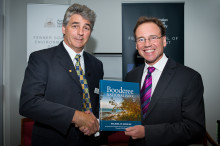
    A new book detailing the rich diversity of life in one of Australia’s greatest and most popular national parks, the Booderee National Park, has been written in a unique collaboration between ANU researchers, Parks Australia managers and the Wreck Bay Aboriginal Community.

    Booderee National Park, at Jervis Bay south of Sydney, receives more than 450,000 visitors annually – more than Kakadu and Uluru National parks combined – and is a major part of Australia’s tourism infrastructure.

    The book contains stunning images of the park, its plants and wildlife, and examines research spanning more than a decade into the park’s biodiversity.

    The authors find the park, which covers 6,600 hectares of land and coast, is both thriving and surviving, despite challenges posed by the large number of visitors, and from bushfires, invasive plants species and feral pests, such as the Red Fox.

    “This park is a crucial part of the nation’s tourism infrastructure, but it still maintains its ecological integrity,

  • Skills over Degrees

    Skills over Degrees

    Universities in Australia should prepare themselves for a fundamental change in their relationship with employers, who increasingly want students with particular skills rather than degree qualifications.

    Employers were moving past the 20th-century model in which students removed themselves while they studied for a bachelor’s degree, and then possibly a master’s degree, before entering the workforce. This is a fundamental change. The credential is still important but it’s actually the skills that are attached to it that will drive the economy forward.

    What employers want to know today is what skills candidates have gained and how they have applied them in the field.

    The tendency is as follows. People want to go to university because they believe it will help them get a good job and a better quality of life. But, from employers’ perspective, the value of a degree is actually waning.

    So, what should be the purpose of a good education system? To provide a proper education, nice knowledge and maybe ability to process the facts or something else?

    First of all, an education system must follow the current trends regarding industry and market. No one needs experts who are good at theoretical level only. Today’s employees must be good in resolving practical problems, because that’s what the country needs for a strong economy and stable system.

  • Digital tools hold promise for Australia’s bill of health spending

    Digital tools hold promise for Australia’s bill of health spending

    Robots on hospital wards, smart apps on mobile devices and home-monitoring systems will transform our health system a report released by CSIRO has revealed.

    The report A Digitally-enabled Health System looks at how the Australian health system can reduce costs and deliver quality care.

    “We know Australia’s health system faces significant challenges including rising costs, an ageing population, a rise in chronic diseases and fewer rural health workers,

  • Going ‘Smart’: Interactive Home Technologies

    Going ‘Smart’: Interactive Home Technologies


    The home is undergoing its greatest advancements since the 1950s. Instead of new appliances like the fridge and vacuum cleaner, we’re getting interactive technologies that are making our homes ‘smart’.

    These developments are geared towards making our lives easier, cheaper (through lowered bills), and less hands-on. The following are just some of the technologies that will help homes look radically different in coming years.


    Smart Thermostats

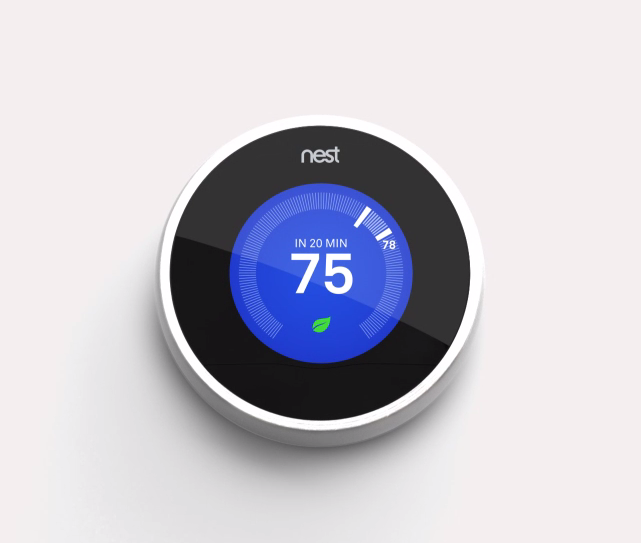
    The smart thermostat is more than just managing the temperature of your home through a smartphone or tablet app. The Nest is the premiere example of what this technology can already achieve for your home today.

    What really sets the Nest apart is that it’s a ‘learning’ thermostat. It takes notice of your schedule, knowing exactly when you leave your home, the typical temperatures you prefer at a given time of day and yes, it also allows you to tweak the settings from its app.

    So how does it work? Nest uses a combination of activity and humidity sensors, current weather conditions (by checking forecasts through Wi-Fi), and temperature sensors to adjust the thermostat. As it begins to learn from your activity over time, you will need to be less involved in manually setting the temperature.


    nest
    Image credit: Nest


    Superior Lock Technology

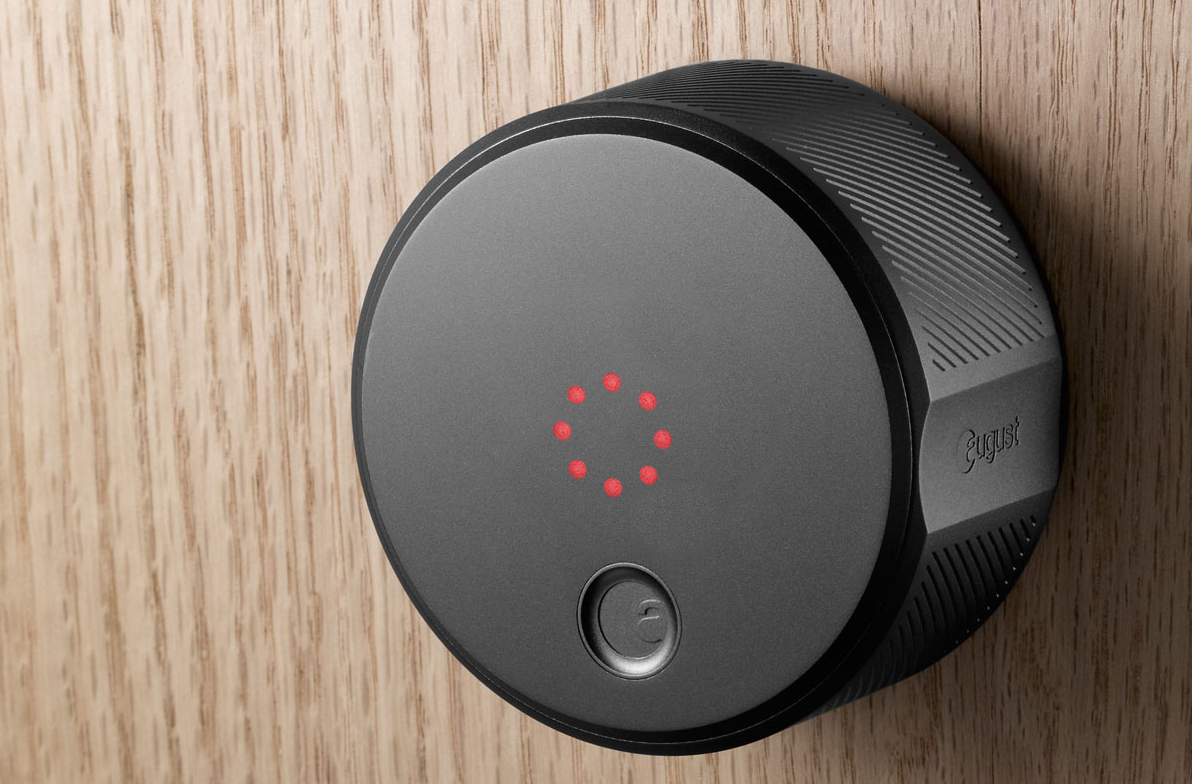
    The so-called ‘smart lock’ discards the need for codes or keys, allowing you to manage your entire home security system from your computer, smartphone or tablet. This nifty technological advancement keeps your home safe – even when you’re not around.

    In addition to the ability to lock and open your doors securely without the need for the traditional key, you also get log records to see who’s gone in and out, temporary access for short-term visitors, as well as the superior security from encryption (similar to what’s used in the banking industry). It beats the danger of someone copying a lost key or cracking entry codes.

    You can also check everything is as it should be long after you’ve left the home (saving you the trip back to double check), you can let in guests at the touch of a button without having to be there, and should anything untoward happen the app instantly notifies you. It all works through an app you install on your smartphone and the inbuilt Bluetooth technology that allows the lock to synch with your device. It’s all password protected, meaning only you can manage your system.


    augustlock
    Image credit: August


    One of the reasons these smart locks are so promising is that they ‘retrofit’ into existing single-cylinder deadbolts. This means you still have the capability of using the traditional key, as well as saving you the hassle of dismantling your entire doorway system from top to bottom in order to use the device.

    We’ve already seeing a wave of start-ups and established brands offering devices that boast similar feature sets, and we only expect the demand to rise as the technology is further perfected. Don’t be surprised to see keys demoted to a museum display and out of day-to-day use.


    Touch-Screen Fridge

    The modern-day fridge has long offered more than just the ability to keep your foods chilled. The icemaker was an early break-through, but now the fridge is really starting to move into the 21st century.

    The fridge has essentially become the manager of your entire diet. It keeps tabs on which foods are about to expire and even gives you recipe ideas based on what you’ve got in your fridge. When something’s about to run out (milk, for example) you get a warning so you can stock up early.


    Image credit: Make it mine


    In terms of technology, it’s all based on Radio Frequency Identification (RFID). These days, many common food products have an RFID tag that can be automatically read by your smart fridge. Your stock list will be updated based on data gathered from a remote database of products. If you happen to buy something that doesn’t have a tag (such as organic food from a farmer’s market), then all you need to do is enter it manually.


    Sleep Sensors

    Ever wondered why you wake up groggy in the morning and can’t seem to get a good night’s rest? Perhaps the new wave sleep sensor technology can help. And if you’re already rolling your eyes, it does more than just track movement like some of the low-end apps for your smartphone.

    This is a step up from anything we’ve seen on the market before. You don’t need to wear uncomfortable sensors on your body – all you need to do is attach it to your mattress. The device will then track your heart rate, breather, movement, and snoring. Not only that, it keeps track of your ambient environment. Your responses to noise and temperature will be tracked.


    Image credit: Digital trends


    The device will then give suggestions as to why you’re struggling to get decent shuteye. Perhaps it’s that your room gets a little too hot at night? Or maybe your partner tends to start snoring in the middle of the night, disturbing your sleep. You can then make adjustments to your sleeping habits, which can make all the difference in the amount of actual rest you get.

  • International Conference on Digital Discrimination and Social Networks Online

    International Conference on Digital Discrimination and Social Networks Online

    Recently, I had a chance to attend and participate at the ICUD International Conference: Digital Discrimination and Social Networks that took place takes on March 13 and 14, 2014 in Barcelona, Spain. The ICUD Project aims to Creatively Unveil hidden forms of Discrimination on the Internet, especially on social network sites such as Facebook, and provide practical tools to combat discrimination online. This project is lead by www.asceps.org, and is co-funded by the European Union’s DG Justice: Fundamental Right and Citizenship programme.

    It was a wonderful opportunity and space for interaction, discussion, learning and exchange of ideas and experiences: for social workers, academics, researchers, educators, Internet experts, NGOs, activists, young people and anyone interested in the issues surrounding discrimination on the Internet, especially in regards to social networking sites.

    Complex topics like teen usage of Internet tools and social networks, racial discrimination, digital divides, network strategy against discrimination, hate speech, online gaming communities, LGBT issues, presence and representations of women online, youth and identity were discussed during the two-day conference.

    Each session, talk, workshop and panel contributed to the ICUD conference and discussion, I’m selecting here few of them, for other details please see the references.

    Game Over Hate: Building Better Online Gaming Communities

    A project and an initiative Game Over Hate (Germany/Portugal) that was presented during the first day of the conference – had the goal to tackle hate in online gaming environments and to foster inclusive gaming communities.

    Participants had a chance to discuss the most profitable branch of the entertainment industry (video games), the massive online communities that exist around it and how everything comes together in a world of hate speech, trolling and rape culture.

    In this workshop there was a discussion about the role of the internet as both entertainment and as an alternative to offline socialisation by looking at the impact, size and scope of the new online gaming communities. Through interaction, some stereotypes about games were unmasked.  There was an interesting discussion on how players interact online, what types of games they play and what happens when so many people cooperate and compete online.

    In an effort to understand this, workshop leaders look into cases from different communities, such as Anita Sarkeesian (FeministFrequency), Phil Fish (FEZ), Carolyn Petit (GameSpot), Zoe Quinn (Depression Quest), and “Fat, Ugly or Slutty

  • Reviving Einstein’s “spooky action at a distance

    Reviving Einstein’s “spooky action at a distance

    Physicists from the Australian National University and the University of Queensland have demonstrated a software-based quantum amplifier, which has the potential to expand the use of ultra-secure quantum cryptographic communications.

    The development could lead to new ways to guarantee security of everyday communications, including financial transactions and email.

    “This has the potential to guarantee security for any kind of information you want to transmit, from particularly sensitive information, like banking data or electoral results, to personal emails,