Blog

  • Weekly Science Picks

    Weekly Science Picks

    We came to the end of this week and it is our time to recount the most exciting and incredible stories from the world of science and technology. As usual, we had to make a hard decisions and after a careful consideration we decided to promote the news as follows:

    Can Facebook make you sad?

    Not so long ago a new form of communication swept the world, transforming life in ways unimagined just a few years before. One commentator heralded it as “the greatest means of communication ever developed by the mind of man

  • The Science of Which Came First, the Chicken or the Egg, Animated

    The Science of Which Came First, the Chicken or the Egg, Animated

    What the ancient proto-chicken has to do with how wolves became dogs.

    Since the dawn of recorded history, philosophers have pondered which came first, the chicken or the egg, as a causality dilemma exploring grander existential inquiries into the origin of life and the universe. But, it turns out, science has an answer that bypasses the metaphysical and dives right into the nitty-gritty of the tangible and concrete. In yet another illuminating animation, AsapSCIENCE enlist evolutionary biology in answering the age-old question, comparing the process to how dogs became dogs and ultimately demonstrating that — like much of science — the solution may have more to do with semantics and nomenclature than with actual scientific evidence.

    Source and image.

  • Scientists: accelerate your career with collaborative, high impact fellowships

    Scientists: accelerate your career with collaborative, high impact fellowships

    Queensland’s researchers and scientists are encouraged to apply for fellowships to help them develop and establish their professional reputations through innovative, practical and applied research, working closely with business.

    The $3 million Accelerate Fellowships funding program was opened today by Queensland Chief Scientist Dr Geoff Garrett AO who said the program will support scientists to undertake research that can have a positive impact on Queensland.

    “Early career fellowships will offer a researcher with up to five years’ post-PhD research experience $180,000 over three years to support them lead and manage a research project, with close engagement with business partners.

    “Mid-career fellowships will offer $300,000 over three years for a researcher with five to ten years’ post-PhD experience to lead a research team to deliver a significant research project,

  • The Chemistry of Sriracha

    The Chemistry of Sriracha

    If you head over to the Huy Fong Foods web site, they’ll tell you that Sriracha, their ever-popular Thai condiment, is “made from sun ripen chilies which are ground into a smooth paste along with garlic and packaged in a convenient squeeze bottle.

  • The Occupation of Parents Defines Kid’s Results at School

    The Occupation of Parents Defines Kid’s Results at School

    Children who have at least one parent working in IT, business or engineering are the best performing students in Australia.

    An OECD report into the connection between student performance and their parents’ occupations has also found the kids of subsistence farmers, salespeople and machine operators are the lowest performing students in the nation’s schools.

    Not only were the kids of information and communications technology (ICT) workers top of the country in maths and science, they were also the best in terms of reading.

    By Australian Information Industry Association, ICT workers’ skills include the analytical, the innovative, the creative thinking, the can-do, curiosity and solving business problems.

    These means that the children of ICT workers are enjoying the benefits of being exposed to all of those skills and being inspired in their family environment to take risks.

    But, that’s not the end of the story. The gap between Australia and the top maths performers is so big that the children of a Shanghai (China) subsistence farmer will perform as well as the offspring of an Australian health or teaching professional.

  • State of the Climate 2014: A clear picture of Australia’s climate

    State of the Climate 2014: A clear picture of Australia’s climate

    A definitive report on observed changes in long term trends in Australia’s climate has been released today by CSIRO and the Bureau of Meteorology.

    Bureau Chief Executive Dr Rob Vertessy said temperatures across Australia were, on average, almost 1°C warmer than they were a century ago, with most of the warming having occurred since 1950.

    “Australia’s mean temperature has warmed by 0.9°C since 1910,

  • Google’s Military Robots are Here

    Google’s Military Robots are Here

    Computers and robots will become smarter and more adept than human beings in 15 years time. Computers develop an almost-organic intelligence gleaned from experience, and will be able to tell jokes and flirt with humans.

    How real is this? Well, it’s quite real. Internet search giant Google has spent billions buying up the world’s top robotics companies. These corporations include DeepMind, a British company which specializes in machine learning, and Boston Dynamics, which makes advanced military robots.

    We present you some of their solutions in the following video material.

  • New grants to accelerate research uptake

    New grants to accelerate research uptake

    Queensland’s researchers, scientists and their commercial partners are encouraged to apply for grants of up to half a million dollars under the state government’s new science and research funding program.

    The Accelerate Partnerships funding program was opened by Queensland Chief Scientist Dr Geoff Garrett AO who said universities and research organisations with their industrial or commercial partners could apply for research grants from the $8.75 million Accelerate Science and Innovation Program.

    Dr Garrett said collaboration and the translation of research into tangible outcomes were the key focuses of the program. “The Queensland Government will be supporting new projects that will deliver benefits for Queensland through the creation of innovative products, technologies or processes that will have practical application within five years,

  • Weekly Science Picks

    Weekly Science Picks

    It’s Sunday again! It’s our time to give a brief review of the most amazing science and technology news that have appeared on the web during this week. The task was quite challenging, but we made it. We proudly present you the top stories of this Weekly Science Picks.

    Body bacteria: Can your gut bugs make you smarter?

    Far from being freeloading passengers, many of these microbes actively help digest food and prevent infection. And now evidence is emerging that these tiny organisms may also have a profound impact on the brain too. They are a living augmentation of your body – and like any enhancement, this means they could, in principle, be upgraded. So, could you hack your microbiome to make yourself healthier, happier, and smarter too?

    Geoengineering side effects could be potentially disastrous, research shows

    Science academies around the world as well as some climate activists have called for more research into geoengineering techniques, such as reflecting sunlight from space, adding vast quantities of lime or iron filings to the oceans, pumping deep cold nutrient-rich waters to the surface of oceans and irrigating vast areas of the north African and Australian deserts to grow millions of trees. Each method has been shown to potentially reduce temperature on a planetary scale.

    Proteins to plastics: chemistry as a dynamic discipline

    Chemistry is the most central of scientific disciplines and underpins the physical, material and biological world. Opportunities are abundant in the field of chemistry, as most major advances take place at the interface of two or more disciplines and chemistry sits at the core of trans-disciplinary research.

    Water detected in a planet outside our solar system

    Water has been detected in the atmosphere of a planet outside our solar system with a new technique that could help researchers to learn how many planets with water, like Earth, exist throughout the universe. The team of scientists that made the discovery detected the water in the atmosphere of a planet as massive as Jupiter that is orbiting the nearby star tau Boötis.

    That’s all for this time. Please stay thirsty for new scientific stories and news!

  • Quantum Entanglement Animated

    Quantum Entanglement Animated

    PhD Comics has released the third video in an animated series explaining Quantum concepts and devices.

    This one focuses on Quantum Entanglement and features the work of Caltech physicists Jeff Kimble and Chen-Lung Hung. Meanwhile Jorge Cham, creator of PhD Comics, provides the accompanying animation.

    Source and image.

  • The Best of Australian Science: February 2014

    The Best of Australian Science: February 2014

    It’s the end of February, 2014. It’s our time to summarise what we have done during this month. Basically, we are going to recount the best highlights for February.

    Here are the most exciting and most interesting articles of this month.

    Mars Colony Development: Mars One Supplier Update by Ashton Jones

    All of the greatest explorations undertaken by humanity have been hindered by unexpected variables, the Mars One mission is no exception. The first settlers on Mars are currently projected to begin colonization in 2025, making homo sapiens an inter-planetary species. With so much progress and many promising suppliers to propel the mission there are plenty of reasons to be excited!

    Offices Tech Tools That Will Transform Our Future by Michelle Lee

    With technology expanding at incredibly rapid rates and businesses today under constant pressure to perform and keep up with the global economy, technological tools and appliances are reaching new levels of innovation.

    Advances in the Robotics Industry: DARPA Robotics Challenge Trials by Dunya

    Every year it seems a new movie comes out that tells a story of robots going out of control and taking over the world. In reality, some of the world’s brightest minds are developing robots and software to help assist humans in a range of important work, including surgery, bomb detection and natural disaster assistance.

    Discovering Cyber Forensics by Milica Djekic

    Cyber forensics is a new and fast growing field that involves carefully collecting and examining electronic evidence that not only assesses the damage to a computer as a result of an electronic attack, but also to recover lost information from such a system to prosecute a criminal. With the growing importance of computer security today and the seriousness of cyber crime, it is important for computer professionals to understand the technology that is used in cyber forensics.

    Ten tools for social media practioners by Danica Radovanovic

    Whether you are a web creator, blogger, engineer, educator, journalist, marketing specialist or a scientist, with ever-emerging opportunities to share information on digital platforms, the importance to keep digital skills up-to-date is vital.

    Please stay curious and scientifically passionate! New stories are coming soon.

  • Harvard Free Online Courses

    Harvard Free Online Courses

    A quick note: Shaye J.D. Cohen, a professor of Hebrew Literature and Philosophy at Harvard, has recently released his second free course on iTunes.

    The first course was called The Hebrew Scriptures in Judaism & Christianity. The new one, simply titled The Hebrew Bible,

  • Ten tools for social media practioners

    Ten tools for social media practioners

    Whether you are a web creator, blogger, engineer, educator, journalist, marketing specialist or a scientist, with ever-emerging opportunities to share information on digital platforms, the importance to keep digital skills up-to-date is vital.

    Here’s our list of top ten online useful tools for helping and fostering digital literacy skills on web, in everyday work.

    Buffer Business Tools

    If you are a content creator, writer or analyst on the web, the best features Buffer has to offer that can help with your increasingly complex social publishing needs are: the analytics and reporting for business customers. Buffer also added graphs so you can visualize your stats and you can compare post types, like posts per day and clicks or retweets.

    Beside the fact that Buffer have an option to add multiple team members and more social accounts in your team, there is a Business analytics now offering integration with Google Analytics as well. This option enables much easier to track and report on your specific marketing campaigns, or those of your clients. More at: https://bufferapp.com/

    Image source: http://blog.bufferapp.com/introducing-buffer-for-business-the-most-simple-powerful-social-media-tool-for-your-business

    buffer-banner-4

    Datawrapper

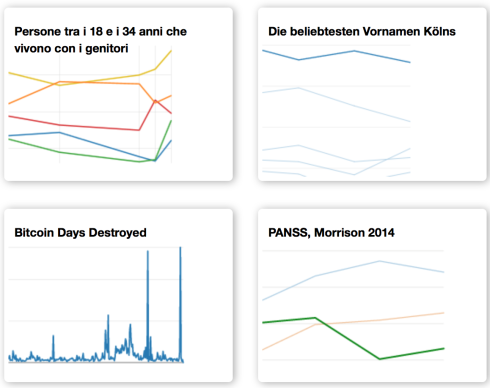
    Datawrapper is a great open source tool helping anyone to create simple, correct and embeddable charts in minutes, for visualising large datasets. This tool reduces the time needed to create a correct chart and embed it into any website from hours to seconds. You can clean up your data, upload it and choose from numerous interactive formats to help you create the content and tell your story. The hosted service is free, or you can install it on your own server for maximum control. You can even make the data downloadable for interested readers and clients. More at: http://datawrapper.de
    Screen Shot 2014-02-13 at 11.58.45

    Google Media Tools

    Google’s Media Tools present a toolbox of exciting digital tools that can enhance newsgathering and exposure across television, radio, print and online, suitable for journalists, reporters, web content creators, and those involved in social media analytics. These tools feature range from Develop & Publish, learning how to visualize data using Google Maps, improving your audience engagement through Google+, Google Earth Pro to Advanced Search, that provide an advanced super powered search capabilities, and allows you to filter your results by region, keyword and time. More at: http://www.google.com/get/mediatools/

    LinkedIn Instream Ads

    LinkedIN Sponsored Updates enables you to put custom in-stream content in front of the specific LinkedIn professionals your business wants to work with.

    Assuming you already have a Company Page and that you are publishing regular updates to your followers, the next step is to turn on the LinkedIn Sponsored Updates option that provides a native solution for rapidly increasing awareness and shaping the perception of your brand, products, and services.

    More at: http://business.linkedin.com/marketing-solutions/content-marketing/sponsored-updates.html

    Screen Shot 2014-02-13 at 12.39.00

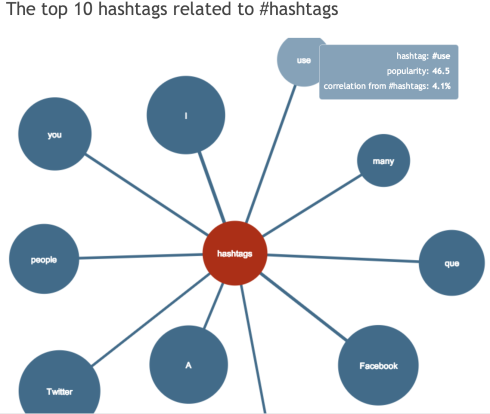
    Hashtagify.me  – The Most Advanced Twitter Hashtags Search Engine

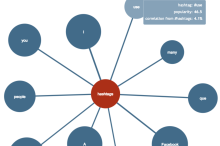
    Hashtafigy is a free tool that promotes the best use of hashtags by finding and understanding them in a quick, intuitive, visual way. Hashtags are one of the best ways to find and reach the right audience for your message on social media, and this tool helps innovators with the visualisation of Twitter hashtags related to a particular tag.

    Hashtagify.me allows you to search among 26,995,169 Twitter hashtags and quickly find the best ones for your need based on their popularity, relationships, languages, influencers and other metrics.
    Screen Shot 2014-02-13 at 12.55.22

    School of Data 

    School of Data brings free online tutorials, courses and tools for those who are working with data and open data. School of Data works to empower civil society organisations, journalists, analysts, scientists, researchers, and citizens with the skills they need to use data effectively. Many of the groups who are closest to the problems currently “lack the skills to use data effectively — and even an awareness of the potential of data for their work. School of Data’s mission is to teach people how to gain powerful insights and create compelling stories using data.


  • Rocks around the clock: asteroids pound tiny star

    Rocks around the clock: asteroids pound tiny star

    Asteroids hit the Earth, the Moon and even, it seems, distant stars.

    Scientists using CSIRO’s Parkes telescope and another telescope in South Africa have found evidence that a tiny star called PSR J0738-4042 is being pounded by asteroids — large lumps of rock from space.

    “One of these rocks seems to have had a mass of about a billion tonnes,” CSIRO astronomer and member of the research team Dr Ryan Shannon said.

    PSR J0738-4042 lies 37,000 light-years from Earth in the constellation of Puppis.

    The environment around this star is especially harsh, full of radiation and violent winds of particles.

    “If a large rocky object can form here, planets could form around any star. That’s exciting,” Dr Shannon said.

    The star is a special one, a ‘pulsar’ that emits a beam of radio waves.

    As the star spins, its radio beam flashes over Earth again and again with the regularity of a clock.

    In 2008 Dr Shannon and a colleague predicted how an infalling asteroid would affect a pulsar. It would, they said, alter the slowing of the pulsar’s spin rate and the shape of the radio pulse that we see on Earth.

    “That is exactly what we see in this case,” Dr Shannon said.

    “We think the pulsar’s radio beam zaps the asteroid, vaporising it. But the vaporised particles are electrically charged and they slightly alter the process that creates the pulsar’s beam.”

    Asteroids around a pulsar could be created by the exploding star that formed the pulsar itself, the scientists say.

    The material blasted out from the explosion could fall back towards the forming pulsar, forming a disk of debris.

    Astronomers have found a dust disk around another pulsar called J0146+61.

    “This sort of dust disk could provide the ‘seeds’ that grow into larger asteroids,” said Mr Paul Brook, a PhD student co-supervised by the University of Oxford and CSIRO who led the study of PSR J0738-4042.

    In 1992 two planet-sized objects were found around a pulsar called PSR 1257+12.  But these were probably formed by a different mechanism, the astronomers say.

    Source and image.