Blog

  • The Art of Restoring Classic Films

    The Art of Restoring Classic Films

    Why have cinephiles, from the era of Laserdiscs through that of DVDs and now Blu-rays, so consistently respected The Criterion Collection? Speaking as one such cinephile, we could point to a number of factors: their curatorial bent toward important films, their production of rich supplementary features, their always impressive pieces of cover art.

    But Criterion has become increasingly known for the considerable work they put in not at the end of the process, when they package a classic or potentially classic motion picture for maximum aesthetic and intellectual appeal (and your purchase), but at the beginning, when they track down the actual celluloid film in the first place, often aged or damaged, and engage in the often painstaking task of returning it to the prime of visual and sonic life.

    Source and image.

  • Weekly Science Picks

    Weekly Science Picks

    We have come to the end of one more week and it’s time to summarise what has happened during this week. As usual, the task was quite challenging, but we made it. Here is the review of the most exiting and fascinating news from the world of science and technology.

    Science and Religion, Genome Cryptography, and the Coolest Science Fact

    Last week, thousands of scientists gathered in Chicago, Illinois, to share their latest research with the world. Here are some of our favorite stories from the meeting, held each year by AAAS, which publishes Science.

    Is this whale-shaped plane the future of airliners?

    Spotting an Airbus A380 at an airport can still create great excitement. The giant, double-decker plane can seat between 500 and 850 people, depending on how much space is given to space-saving economy class, and how much goes to higher-paying passengers with all that extra leg room. It’s an aviation giant, the biggest passenger-carrying aircraft ever to fly the skies.

    Asteroid 2000 EM26: ‘potentially hazardous’ space rock to fly close to Earth

    But it is defined as a potentially hazardous near-Earth object (NEO) large enough to cause significant damage in the event of an impact. Scientists estimate the asteroid, travelling at 27,000mph, is 270 metres (885ft) wide.

    Why does the brain remember dreams?

    Some people recall a dream every morning, whereas others rarely recall one. In a new study, research shows that the temporo-parietal junction, an information-processing hub in the brain, is more active in high dream recallers. Increased activity in this brain region might facilitate attention orienting toward external stimuli and promote intrasleep wakefulness, thereby facilitating the encoding of dreams in memory.

    That’s all for this Weekly Science Picks. Until next meeting, stay thirsty for new scientific stories.

  • New analysis promises better weed management of the Lake Eyre Basin

    New analysis promises better weed management of the Lake Eyre Basin

    A new cost-effective weed management analysis has been developed to help protect one of the most unique regions in the world – the 120 million ha Lake Eyre Basin.

    A team of experts developed the framework for cost-effective investment in weed management in the Lake Eyre Basin (LEB). The aim of the project was to help guide future investment in management activities for invasive species in the LEB.

    Dr Jennifer Firn, project leader and Queensland University of Technology senior lecturer and visiting scientist at CSIRO’s Climate Adaptation Flagship, said substantial amounts have been invested in invasive species management to reduce negative impacts on natural assets and agricultural production in the basin.

    “What is unclear is whether the invasive weed species currently being targeted represent the best investment so we brought together and a broad range of stakeholders including policy makers, managers, scientists and community representatives to find the best strategies

  • The Importance of Mathematics Teaching in Australian Education

    The Importance of Mathematics Teaching in Australian Education

    There is a concerning question nowadays in Australia which started as a debate of University lecturers who said high school physics is at a very low level of quality and focused on the history of physics at the expense of rigorous mathematical analysis and problem-solving. As a result, they said, students often arrive at university with a distorted view of what physics is and whether they are good at it.

    Introduction

    To define the goals of mathematics teaching, it is necessary to consider what mathematics is and does and what might be the purposes for teaching mathematics to school students. The basic argument is that the emphasis in school mathematics should be predominantly on practical and useable mathematics that can enrich not only students’ employment prospects but also their ability to participate fully in modern life and democratic processes.

    The Goals of Mathematics Teaching

    There is a broad consensus among policy makers, curriculum planners, school administrations and business and industry leaders that mathematics is an important element of the school curriculum. Rubenstein (2009), for example, offers a compelling description of the importance of mathematics from the perspective of mathematicians, as well as the challenges Australia is facing due to the decline in mathematics enrolments in later year university mathematics studies.

    Part of the context in which this debate is being conducted is that schools are confronting the serious challenge of disengaged students. In their report on the national Middle Years Research and Development Project, Russell, Mackay and Jane (2003) made recommendations for reform associated with school leadership and systematic school improvement, especially emphasising the need for more interesting, functionally relevant classroom tasks which can enhance engagement in learning. Additionally, there is said by some to be a serious decline in the number of students completing later year university level mathematics studies, thereby threatening Australia’s future international competitiveness and capacity for innovation. These claims feed calls for more mathematical rigour at secondary level, as preparation for more advanced learning in mathematics. Unfortunately, these claims are presented by the protagonists as though teachers must adopt one perspective or the other.

    In one of the major presentations at the Teaching Mathematics? Make it count conference, Ernest (2010) delineated both perspectives. He described the goals of the practical perspective as follows: students learn the mathematics adequate for general employment and functioning in society, drawing on the mathematics used by various professional and industry groups. He included in this perspective the types of calculations one does as part of everyday living including best buy comparisons, time management, budgeting, planning home maintenance projects, choosing routes to travel, interpreting data in the newspapers, and so on. Ernest also described the specialised perspective as the mathematical understanding which forms the basis of university studies in science, technology and engineering.

    Conclusion

    A necessary corollary to incorporating these dual perspectives in mathematics teaching and learning in pedagogy is a consideration of the ways that teachers might engage their students in more productive learning. The research strongly suggests that teachers incorporate both types of mathematical actions in tasks for their students to undertake when learning mathematics.

    References:

    [1] Peter Sullivan, Australian Education Review – Teaching Mathematics: Using research-informed strategies, 2011.

  • Discovering Cyber Forensics

    Discovering Cyber Forensics

    Cyber forensics is a new and fast growing field that involves carefully collecting and examining electronic evidence that not only assesses the damage to a computer as a result of an electronic attack, but also to recover lost information from such a system to prosecute a criminal. With the growing importance of computer security today and the seriousness of cyber crime, it is important for computer professionals to understand the technology that is used in cyber forensics.

    Introduction

    Cyber forensics involves the preservation, identification, extraction, documentation and interpretation of computer data.

    The three main steps in any computer forensic investigation are acquiring, authenticating, and analyzing of the data. Acquiring the data mainly involves creating a bit-by-bit copy of the hard drive. Authentication is the ensuring that the copy used to perform the investigation is an exact replica of the contents of the original hard drive. Analysis of the data is the most important part of the investigation since this is where incriminating evidence may be found.

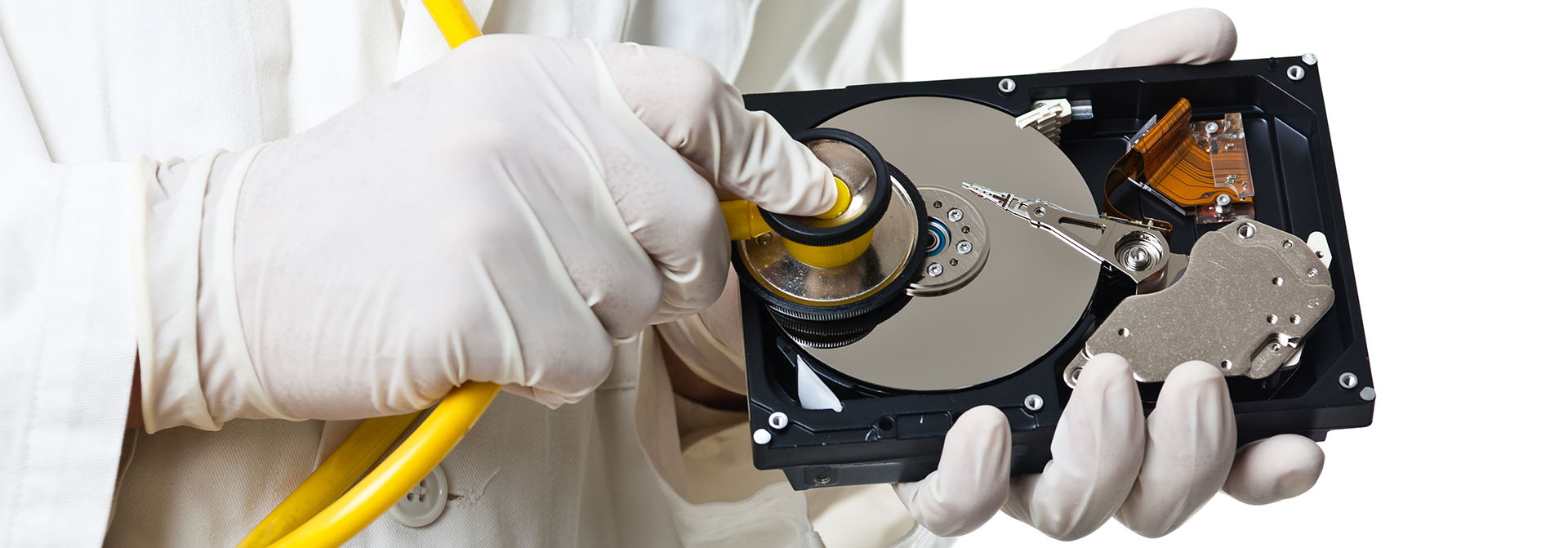
    Part of the analysis process is spent in the recovery of deleted files. The job of the investigator is to know where to find the remnants of these files and interpret the results. Any file data and file attributes found may yield valuable clues. If deleted data could not be recovered through the use of common forensic tools, more sensitive instruments can be used to extract the data.

    Data recovery is only one aspect of the forensics investigation. Tracking the hacking activities within a compromised system is also important. With any system that is connected to the Internet, hacker attacks are as certain as death and taxes. It is impossible to completely defend against all attacks. As soon as a hacker successfully breaks into a computer system the hacker begins to leave a trail of clues and evidence that can be used to piece together what has been done and sometimes can even be used to follow a hacker home. Computer forensics can be employed on a compromised system to find out exactly how a hacker got into the system, which parts of the system were damaged or modified.

    Image source: http://www.datasector.hr
    Image source: http://www.datasector.hr

    What is Cyber Forensics?

    If you manage or administer information systems and networks, you should understand computer forensics. Forensics is the process of using scientific knowledge for collecting, analyzing, and presenting evidence to the courts. Forensics deals primarily with the recovery and analysis of latent evidence. Latent evidence can take many forms, from fingerprints left on a window to DNA evidence recovered from blood stains to the files on a hard drive.

    Because computer forensics is a new discipline, there is little standardization and consistency across the courts and industry. As a result, it is not yet recognized as a formal “scientific

  • Pilbara marine health check – good and bad news

    Pilbara marine health check – good and bad news

    A health and wellbeing check up of World Heritage-listed reef ecosystems in the Pilbara region of Western Australia will provide a critical baseline of marine conditions to government, industry and researchers.

    The 300km swathe of coastline to be surveyed during the five year, $12 million Pilbara Marine Conservation Partnership includes two major marine parks and also areas under development for ports, and oil and gas extraction and processing.

    The partnership, a joint venture between CSIRO’s Wealth from Oceans Flagship and The University of Western Australia, will be the first whole of ecosystem study for the region’s unique marine environment.

    “Our research will help government and industry balance the environmental sustainability of the Pilbara with its increasing broad sector use,” CSIRO lead scientist Dr Russ Babcock said.

    “Over the next five years we want to find out everything we can about the health and makeup of the region, as well as observe and evaluate any localised changes, so we can give the best possible advice to future use managers on how they can act sustainably.”

    Dr Babcock and his team have recently returned from their first exploratory tour of the region, where they were scouting survey sites.

    Some unwelcome discoveries were made, including the bleaching and decimation of a pocket of ancient coral heads – many up to 400 years old – that have provided an important record of reef health.

    “We suspect this bleaching event was due to marine heatwaves that occurred in the region over the past few summers, and to see it up close was sobering,” said Dr Babcock.

    “But to offset this loss, some reefs only a short distance north showed much less damage and will continue to contribute to a healthy ecosystem.

    “By studying these sorts of variations and finding out why they occur, we can improve our overall understanding of the marine environment in the region, and how we can best preserve it”.

    The University of Western Australia’s Professor Shaun Collin said the study would set a precedent for future development in the Pilbara.

    “This study will develop a greater understanding of the dynamics of coral and fish communities in the region, which in turn will provide us with the ecological indicators of potential human impacts,” Professor Collin said.

    “With it, we can provide a research baseline for decision making in the region that will strike the right balance between environmental conservation and industry development.”

    Source and image.

  • How Does Bacteriography Work?

    How Does Bacteriography Work?

    Stephen Fry is taking part in a curious science experiment. It involves creating a portrait of the writer/comedian/science enthusiast, using nothing but his own bacteria and cells.

    According to the web site of The Big Bang UK Young Scientists & Engineers Fair, the “bacteriographs

  • Weekly Science Picks

    Weekly Science Picks

    It’s the end of this week, so it’s our time to summarise the most incredible and fascinating news from the area of science and technology. After careful consideration, we decided to share the following highlights with you.

    Genetic Forensics Wakes a Dragon

    A genetic investigation into the illegal trade of sailfin dragons has unearthed a surprise: a new species of the rainbow-colored lizards that resemble small dinosaurs. The finding highlights just how little is known about these mysterious and threatened animals.

    Why birds can’t avoid hitting your car windscreen

    It’s not just a superstition – a bird hitting your car windscreen really is an omen of death. No, not for you, but for the poor bird. It’s estimated that at least 80 million birds are killed this way every year in the United States alone. That’s not just distressing and dangerous for drivers. It’s a potentially significant source of fatalities to some rare and endangered bird species, which is why wildlife researchers and conservationists would like to understand more about why they fail to avoid oncoming vehicles.

    Nuclear fusion breakthrough raises hopes for ultimate green energy source

    The scientists generated more energy from fusion reactions than they put into the nuclear fuel, in a small but crucial step along the road to harnessing fusion power. The ultimate goal – to produce more energy than the whole experiment consumes – remains a long way off, but the feat has nonetheless raised hopes that after decades of setbacks, firm progress is finally being made.

    New pathway for fear discovered deep within brain

    Fear is primal. In the wild, it serves as a protective mechanism, but for humans, fear is more complex. A normal amount keeps us safe. But too much fear, like PTSD, can prevent people from living healthy lives. Researchers are working to understand how the brain translates fear into action. Today, scientists announce the discovery of a new neural circuit that links the site of fear memory with a brain area that controls behavior.

    That’s all for this Weekly Science Picks. Until next time, stay curious and scientifically passionate.

  • Researchers to debunk super spending myths

    Researchers to debunk super spending myths

    Researchers from CSIRO and Monash University in Melbourne are putting the spending habits of retirees under the microscope in an effort to understand the finer details behind how they use and manage their super in retirement.

    “We’re looking to understand what retirees need, how long their super lasts and what investment options and financial products might best suit them throughout their retirement so we can figure out how their super could work smarter,

  • Could Our Software be Unhackable?

    Could Our Software be Unhackable?

    A team from ULCA and MIT recently came to very interesting results. Namely, they offer hope that encryption could protect not just an output, but an entire program. Too good to be true, ha? This new method of program obfuscation could lead to ultra-secure software that keeps your personal information safe from potential attackers.

    The idea of obfuscating a program has been around for decades. But, the security and hacking communities have been able to defeat all these measures. Cryptographic experts have long been tinkering with stronger approaches, but it nothing happened until now.

    Cryptographers have been chasing the idea of a so-called “black box obfuscator

  • Study into the Media Environment of Japanese Schools

    Study into the Media Environment of Japanese Schools

    NHK (the Japanese Broadcasting Corporation) has been providing educational services for schools across Japan since the days of radio as an important element in their mission as a public service broadcaster. School radio started in 1935, and school TV in 1953, at the same time as the start of TV broadcasting in Japan. Furthermore, NHK released the online service “NHK Digital Curriculum

  • ANU astronomers discover oldest star

    ANU astronomers discover oldest star

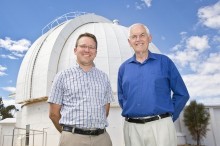
    A team led by astronomers at The Australian National University has discovered the oldest known star in the Universe, which formed shortly after the Big Bang 13.7 billion years ago.

    The discovery has allowed astronomers for the first time to study the chemistry of the first stars, giving scientists a clearer idea of what the Universe was like in its infancy.

    “This is the first time that we’ve been able to unambiguously say that we’ve found the chemical fingerprint of a first star,

  • New maps reveal locations of species at risk as climate changes

    New maps reveal locations of species at risk as climate changes

    An international team of scientists has produced global maps showing how fast and in which direction local climates have shifted.

    In research published in the journal Nature, CSIRO and an international team of scientists revealed global maps showing how fast and in which direction local climates are shifting. This new study points to a simpler way of looking at climatic changes and their likely effects on biodiversity.

    As climate change unfolds over the next century, plants and animals will need to adapt or shift locations to track their ideal climate.

    “The maps show areas where plants and animals may struggle to find a new home in a changing climate and provide crucial information for targeting conservation efforts,