Blog

  • Is Maturity That Important for School Starters?

    Is Maturity That Important for School Starters?

    Over the decades experts were debating what age is the most appropriate for school beginning. Many believe that a child’s ability to make friends, follow instructions and take care of themselves is the real indicator if they are ready to start school, rather than understanding their letters and numbers. On the other hand, parents do not want their children to feel incapable, because they are not going to be there to help them. They want to give their children the best possible start. So, what would be the right age for children to start their schooling?

    Children in Australia begin school at age of 5. It is younger than almost anywhere else in the developed world – up to two years ahead of students in top-performing countries such as Finland and Korea.

    Experts warn the early transition could be detrimental to the learning and well-being of students, especially those from disadvantaged backgrounds. In a major international study of 15-year-olds in 2012, 58 % of Australian students said they started primary school at the age of 5, 27 % started at 6, and only 3 % at 7. 12 % were aged 4. That means the average starting age among Australians was 5.2-years-old, which was lower than most developed countries and similar to Britain.

    On the other hand, in the highest-performing education systems in the world such as Singapore, Shanghai and Finland, the average starting age was almost 7 years old, with 13 % of students in Shanghai starting at 8.

    The leading world experts suggest that 5 is just too young to start formal learning. Children should be engaged in informal play-based learning until the age of about 7.

    The benefits of delaying formal schooling are particularly significant for disadvantaged children, who are often forced into school early in Australia by the high costs of childcare.

    The issue of a later starting age has been raised in submissions to the federal government’s public inquiry into childcare and early childhood learning.

    In conclusion, some claim the emotional, social, psychological, physical and cognitive development are all impeded negatively for the vast majority of children by this push down in the early years. On the other hand, there is a theory which says that the starting age that is not that important but rather what children are doing at school. For instance, in a kindergarten, there is a balance between what’s often called play-based learning and what is a more traditional learning of children sitting at tables.

  • Four women researchers who were overshadowed in the sciences

    Four women researchers who were overshadowed in the sciences

    As an advocate of women in science, I am illustrating why supporting the presence of women researchers as the voices of science today plays the crucial role, by presenting four stories of women who have changed the world in the male-dominated world of science, and still have been overlooked throughout their careers.

    Beside well known women scientists who had to deal with biases against them in the STEM, such as Ada Lovelace, Marie Curie, Vera Rubin, Hedy Lamarr and many others who invented the core technologies that make civilization possible, here are four female scientists who did groundbreaking work and have made those contributions in spite of astonishing hurdles due to sexism.

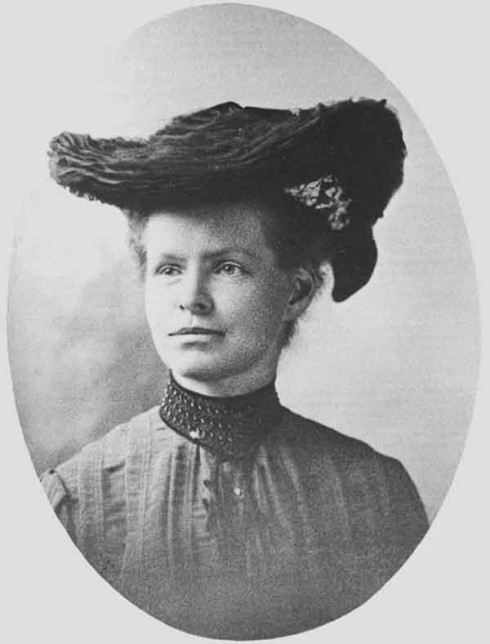
    Nettie Stevens, born on 7 July, 1861, in Cavendish, Vermont, was an American biologist and geneticist who was one of the first scientists to find that sex is determined by a particular configuration of chromosomes.

    She received a Ph.D.  in biology from Bryn Mawr College in 1903 and remained at the college as a research fellow in biology for a year, as reader in experimental morphology for another year, and as associate in experimental morphology from 1905 until her death, in 1912.

    Image source: http://en.wikipedia.org/wiki/File:Nettie_Stevens.jpg
    Image source: http://en.wikipedia.org/wiki/File:Nettie_Stevens.jpg

    She discovered that chromosomes determined sex, and in her first study, she looked at sex determination in the common mealworm. Investigating the mealworms, she found that the males contained reproductive cells with both X and Y chromosomes whereas the females contained only those with X. She proposed that these two chromosomes be called X and Y, and explained that sex is inherited as a chromosomal factor and that males determine the gender of the offspring. Her work on sex determination was published as a Carnegie Institute report in 1905.

    “At the time, the chromosomal theory of inheritance was not yet accepted, and it was commonly believed that gender was determined by the mother and/or environmental factors.

  • Grand Engineering Challenge – Economical Solar Energy

    Grand Engineering Challenge – Economical Solar Energy

    As a source of energy, nothing can be compared with the sun. Solar energy is so called renewable source of energy which means it has very vital and promising role on our whole civilization. Nowadays humans have to be very efficient and capable to use all these sources of renewable energy to harness our economical and social growth.

    Introduction

    At the moment, sun’s contribution to human energy needs is crucial. But, total solar energy market remains quite small. It covers below 1 % of total energy consumption, compared with roughly 85 % from oil, natural gas, and coal.

    Those fossil fuels cannot remain the dominant sources of energy forever. For a long-term, sustainable energy source such as solar power offers an attractive alternative. Its availability far exceeds any conceivable future energy requirements. It is environmentally clean, and its energy transfer from the sun to the Earth is free of charge.

    Many of the technologies to resolve these issues already exist. Dishes can concentrate the sun’s rays to heat fluids that drive engines and produce power which is a possible approach to solar electricity generation. Another popular method is direct production of electric current from captured sunlight.

    The efficiency of solar energy technology

    Energy consumption has been growing worldwide during the last decade. It is well known that growing population usually accelerates energy consumption. Nowadays, fossil fuels supply a huge percentage of the primary energy consumed worldwide. This fact is responsible for the global warming and climate change. On the other hand, energy is a key asset in the welfare of humankind and its development. It is also important to understand the definition of energy efficiency. In general, it is the need for rationalization and reduction of energy consumption and to which a set of actions contribute to improve its use.

    Let’s return to solar energy issue. Today’s commercial solar cells normally convert sunlight into electricity with an efficiency of only 10 % to 20 %. To make solar economically competitive, engineers must find ways to improve the efficiency of the cells and to lower their manufacturing costs.

    Basically, prospects for improving solar efficiency are promising. Current standard cells have a theoretical maximum efficiency of 31 % due to the electronic properties of the silicon material. But, new materials can evade that limit. Experimental cells have exceeded 40 % efficiency.

    Can solar energy be more economical?

    A key issue here is material purity. Current solar cell designs require high-purity, because impurities block the flow of electric charge. That problem would be avoided if charges had to travel only a short distance, through a thin layer of material.

    Another interesting thing here is an application of renewable energy in building systems. Because of its energy-efficient technology and friendly environmental benefits, building combined cooling heating and power (BCHP) system is broadly identified as an alternative for the world to meet and solve energy-related problems and environmental issues. Solar energy has been applied to BCHP systems for its compromising environmental benefits and cost saving potentials.

    Clean solar energy

    The solar power satellites concept has been around late 1968. The method of transmitting power to the earth using microwaves from the small antenna on the satellite to a much larger area on the ground is known as rectenna. The concept has again become interesting due to increased energy demand and cost.

    The space has several advantages over Earth for the collection of solar power. There is no air in the space, so satellites would receive somewhat more intense light unaffected by weather and day night cycle. This received amount of energy will be transformed in microwave energy and will be transmitted through the antenna previously place on satellite aimed at Earth.

    The solar power satellite essentially consists of 3 parts: (1) a micro wave antenna on satellite aimed at earth, (2) a huge solar collector made up of solar cells, (3) an antenna occupying large are on the earth to collect the power disadvantages for lower orbits. Satellite power and obvious choice would be to look for an orbit which maximises the use of the power system on the night side on the Earth.

    The storage of solar energy

    Many technologies offer mass-storage opportunities. New materials could greatly improve the effectiveness of capacitors, superconducting magnets, or flyweels, all of which could provide convenient power storage in many applications.

    Another possible solution to the storage problem would mimic the biological capture of sunshine by photosynthesis in plants. The plant’s way of using sunlight to produce food could be duplicated by people to produce fuel. Fuel cells have other advantages. They could be distributed widely, avoiding the vulnerabilities of centralized power generation.

    Conclusion

    One of the greatest engineering challenges nowadays is to improve solar cells, reduce their costs, and provide efficient ways to use their electricity to create storable fuel. If we resolve all this problems in the future a solar power will assert its superiority to fossil fuels as a sustainable motive force for civilization’s brilliant prosperity.

    References:

    [1] Aditya goel, Rishi P Jamdagni, N. K.Mishra, New Hope for Clean Energy through Exploring Space, IEEE, 2010.
    [2] Dr. D. Biran, Prof. A. Braunstein, Solar Electrical Systems for Communication, IEEE, 1978.
    [3] J. Galvão, S. Leitão, S. Malheiro, T. Gaio, Model of Decentralized Energy on Improving the Efficiency in Building Services, IEEE, 2010.
    [4] Jiang-Jiang Wang, He Bai, You-Yin Jing, You-Yin Jing, Economic Analysis and Optimization Design of a Solar Combined Cooling Heating and Power System in Different Operation Strategies, IEEE, 2011.

  • Disposable Nappies: Are They Stinking Up Our Planet?

    Disposable Nappies: Are They Stinking Up Our Planet?

    Disposable nappies may seem highly convenient when babies are abound, but there is an uglier side to keeping our bubs clean: disposable nappies pose serious issues for the natural environment that will last well into the future.

    Disposable Nappies: A Brief Background

    The idea of the disposable nappy first came to light in the early 20th Century. Its technology and ‘absorbent’ methods saw much development in the 1930s-1950s and many began to turn to the disposable in response to problems associated with reusable nappies (such as poor hygiene and skin rashes).

    The first “official

  • Common Myths and Truths About Food

    Common Myths and Truths About Food

    It seems that a new study or experiment comes out on a weekly basis, claiming to expose a common food ingredient or simply to support a new fad diet. How do you if the claims are true, or if you’re being fed myths?

    It all comes down to due diligence. When you hear the latest claim, check out the scientific basis of the study and who was behind it. If McDonald’s comes out with a study that proves eating burgers all day is good for you, you may want to approach with a little caution.

    The following claims are some of the most common, with some having just hit the scene while others have been around for what seems like centuries. Each can either be debunked or proven with just a little bit of research – check out the results below.

    Claim: Carrots Improve Your Eyesight
    Reality: Myth (At Least in the Way You Think)

    This is probably one of the most widely believed myths out there. It’s rare to find a child who wasn’t encouraged to eat their carrots while at the dinner table, with improved vision as the promise. Sadly, the dream of developing x-ray vision just like Superman simply never came true.

    It’s easy to see why this myth has endured. Carrots are packed with beta carotene (aka Vitamin A), which is known to improve overall eye health. However, having healthy eyes doesn’t translate to 20/20 vision.

    Carrots will improve your vision if you’re highly deficient of Vitamin A. And carrots aren’t the only vegetable that can help you boost your intake – broccoli, pumpkin, and most leafy greens can do the job equally well.

    Claim: Peanut Butter Makes You Fat
    Reality: Myth

    Dieters these days are so obsessed with numbers that they don’t look at ingredients. This has unfairly lumped peanut butters in the ‘it makes you fat’ camp. While it’s true that peanut butter contains fat, it’s also the case that it comes packed with the good kind of fat. Monounsaturated fat will actually help keep your heart healthy, as illustrated by Harvard Medical School.

    Not only that, peanut butter also delivers a range of other benefits. For instance, you can protect yourself from developing benign breast disease. You’re also less likely to develop type-2 diabetes. Just make sure you get the good kind– avoid added fat or sugar if you can.

    Claim: Aspartame Causes Cancer
    Reality: Myth

    Aspartame and other artificial sweeteners are found in most diet drinks – it’s likely that if you don’t for the full-sugar version, you’re ingesting a hefty dosage of aspartame instead. The debate on whether it causes healthy problems is one of the most controversial.

    The fact is that there is no conclusive evidence. Most studies conducted thus far have not shown any links between cancer and the artificial sweetener. Studies that purportedly do establish causation simply do not have a large enough data set or have other inconsistencies.

    So should we discard the warnings and continue drinking diet sodas? We wouldn’t advise it, especially if you’re consuming soft drinks in large quantities – overdoing anything is never a good thing.

    Claim: Eat Fish to Boost Your Brain
    Reality: Truth

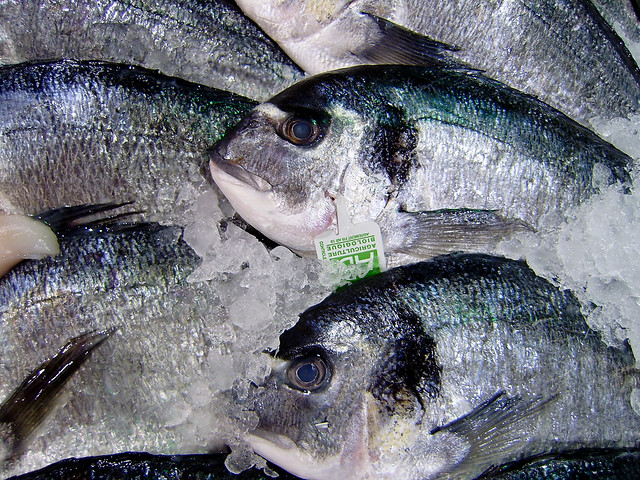
    Can fish really boost your brainpower? Yes, This is particularly applicable in those of us who are getting a bit long in the tooth. This study from Chicago’s Rush University Medical Center highlights the abundance of links between cognitive performance and the regular consumption of fish, including a 60% risk reduction of developing Alzheimer’s disease.

    So if you’re suspecting your brain of feeling the knocks of old age, try and add fish to your diet. Once a week is enough to make a difference. Considering the overall benefits of fish anyway, there’s no reason not to include it in your menu.

    Research Your Food

    Before you take our claims and run with them, do your own research and verify the studies yourself. It’s all about knowing what you’re adding to your diet and being aware of the benefits and downsides of a particular food item. Don’t believe hype or unfounded claims – always look for the numbers and the scientific proof before buying into the next fad.

  • Will the Humans be Able to Cure Cancer Soon?

    Will the Humans be Able to Cure Cancer Soon?

    A great discovery has just arrived! Very exciting time for the world of medicine is coming! For the first time in history, scientists have been able to take out all the RNA from a single living cell as it is still in its natural microenvironment.

    A multi-disciplinary team from the University of Pennsylvania has published this discovery in Nature Methods It was the first-of-its-kind way to isolate RNA from live cells in their natural tissue microenvironment without damaging nearby cells. Now researchers can analyse how cell-to-cell chemical connections impact individual cell function and overall protein production.

    As it is known, even cells of seemingly the same type are not identical at the molecular level. Most knowledge about variability in gene expression was from studies using heterogeneous groups of cells grown in culture.

    The new method provides a unique way to study cell function. Basically, it could be developed into a new way to study the effects of drugs inside the body. The tool is used it to show that a neuron interacting with its neighbors expresses a very different set of genes than a neuron grown in culture.

    In general, studying the molecular makeup of single cells is quite challenging. Most lab tests require much more starting material than one cell can offer. However, while analysing a large number of cells at once, it tends to muddy the results. The reason for that is researchers are taking an average of what is happening in each cell.

    In conclusion, this is an important contribution for medicine. Take, for instance, a tumor. Two different cells in the same tumor can have different DNA mutations and also other molecular changes that contribute to their deranged state. So, when scientists want to estimate whether a tumor has a particular mutation that can be treated with a particular drug, they may not know if that drug will attack all or even most of the cells in that tumor.

  • Resuscitation through the ages

    Resuscitation through the ages

    Every 90 seconds, one person in the United States suffers from a cardiac arrest, and a large majority of those people will be given Cardiopulmonary Resuscitation (CPR) as a first aid method (Cooper et al, 2006). Since modern resuscitation has been around, it has become the only reliable way to keep a patient alive long enough while they await for further treatment.

    Despite it’s prevalence around the world, CPR as we know it today has own really been around for about 50 years. However, various forms of resuscitation have been in existence for centuries, with varying success rates.

    Here we take a journey back through the ages to see just how far resuscitation has come.

    Early Resuscitation

    Very early in human history, our ancestors made some observations about the human body in its dying stages. They noticed that the body became cold when it was dying, and so connected heat with life. This observation was the basis for their resuscitation attempts, and they would use hot material laid on the body to try bring it back to life.

    This early method is relatively tame compared to what came next over the following centuries.

    Flagellation Method – 1500 AD

    In one of the more extreme methods of resuscitation, the Flagellation Method was used – this involved whipping the victim to try and shock the body back to life (Gordon S., 1966). In some ways, the methods behind it are not completely dissimilar to the modern day defibrillators, however it rarely worked in resuscitating a patient.

    Bellows Method – 1530 AD

    In the 1530’s, the Bellows Method came about. At this stage they realised that air needed to reach the lungs, and developed a contraption called the bellows, which was actually used to put out fires in a fireplace. This method was not without its faults, however. Although used for over 300 years as the primary resuscitation method, the key problem it had was that few people would be carrying bellows with them at the right time. Doctors also had a much lesser understanding of the human respiratory system, and didn’t realise that the neck of the patient needed to be held back to open up the airways, minimise the life-saving effects. (Cooper J., 2006)

    The bellows method was discontinued in 1829, after Leroy d’Etiolles demonstrated – using an animal – that it could actually cause death by providing too much air to the patient.

    The method wasn’t completely lost in history, though – modern day bag-valve masks were based on the Bellows Method theory.

    Trotting Horse Method – 1812 AD

    One of the more unusual methods was the Trotting Horse Method. In the United States in 1812, lifeguards on beaches were equipped with a horse, which they would place a drowning victim on, and run them up and down the beach. The belief was that the movement would result in alternate compression and relaxation of the chest. It was banned just three years later due to complaints from the public about the cleanliness of the beaches. (Malek J., 2011)

    Other methods

    Other resuscitation techniques came and went throughout these years, too, including the fumigation method from 1711-1811, which involved blowing tobacco smoke into the victim’s rectum; the inversion method – first used by the Ancient Egyptians, but popularised again in the 1770’s – and had the victim hanging upside down.

    Modern Resuscitation

    Modern resuscitation, known as mouth-to-mouth resuscitation, was first proven to be an effective method of life saving in 1956, by James Elam and Peter Safar. Just a year later, the U.S. military adopted this method as it’s primary resuscitation technique.

    In 1960, cardiopulmonary resuscitation (CPR) was invented, and the American Heart Foundation were at the forefront of the the new method – training healthcare professionals and the general public across the USA. CPR went global and it is still the primary first aid method for resuscitation.

    CPR is a life-saving combination of mouth-to-mouth resuscitation and chest compressions. As well as getting much-needed oxygen into the lungs, it also triggers artificial blood circulation. (Better Health, 2014)

    Different countries and health organisations often recommend slightly varied methods of performing CPR – or more importantly, ways to remember CPR. In Australia, the New South Wales Ambulance Service recommends the acronym ‘DRS ABCD‘ : Danger, Response, Send for Help, Airway, Breathing, CPR, Defibrillation – as a way of remembering the CPR steps. Most other guidance is a variation on these key steps.

    Despite modern day resuscitation largely staying the same for the last half century, it is constantly being reviewed and tweaked. For example, health organisations are currently promoting hands-only CPR methods as opposed to a combination with mouth-to-mouth resuscitation. In 2008, the American Heart Foundation released guidelines on hands-only CPR, which advises the use of hard and fast chest compressions on a person who has gone into cardiac arrest.

    One of the most recent developments in hands-only CPR came off the back of a study from the University of Illinois College of Medicine that found that hands-only CPR is most effective when done to the beat of the Bee Gee’s aptly-named classic, ‘Stayin’ Alive’. The British Heart Foundation hired Vinnie Jones to front their effective television campaign to promote the method.

    https://www.youtube.com/watch?v=JR0aZX1_TD8

  • Weekly Science Picks

    Weekly Science Picks

    Well, it’s Sunday again. It’s our time to recapitulate all the scientific contributions, ideas, events and discoveries that have occurred in this week. To be honest, the job was quite challenging, since the science and technology market is highly competitive and unpredictable. Luckily, we made it. Now we would like to present you top stories that were published during this week.

    Are we born good or evil?

    Do humans have an innate sense of morality? If so, where does it exist in the brain and how did it get there? BBC’s Horizon shows how scientists looking into the minds of babies and criminals are rewriting our ideas of right and wrong.

    Archaeologists find remains of previously unknown pharaoh in Egypt

    The discovery of King Senebkay is the first firm evidence of a pharaonic dynasty whose existence archaeologists had suspected but never proved. About 20 previously undiscovered pharaohs may lie near Senebkay’s tomb, explained Josef Wegner, the dig’s head archaeologist.

    On the hunt for black holes

    The concept of a ‘black hole’ is one of the most curious in astrophysics. It’s a region of space-time where nothing, not even light, can escape. While there are countless studies that support the existence of this phenomenon, when it comes to actually proving black holes are real, all of the evidence is indirect.

    One Quarter of the World’s Cartilaginous Fish, Namely Sharks and Rays, Face Imminent Extinction

    Sharks and rays are at substantially higher risk of extinction than many other animals and have the lowest percentage of species considered safe. Using the IUCN Red List, the authors classified 107 species of rays (including skates) and 74 species of sharks as threatened. Just 23 percent of species were labeled as being Least Concern.

    Until next Sunday, stay thirsty for new updates from the world of science and technology.

  • Did You Know This About Einstein?

    Did You Know This About Einstein?

    The following story is so amazing, so that’s why we decided to share it with you. Imagine Albert Einstein. Image 1931. Imagine the Yale Puppeteers of that time. Here we are. Our journey can begin.

    The Yale Puppeteers, consisting of Forman Brown, Harry Burnett, and Roddy Brandon, came together in the 1920s and spent almost the next seven decades touring the United States, putting on satirical performances that featured puppets in starring roles. They also staged performances at the Turnabout Theater from 1941 to 1956, turning it into a Hollywood institution.

    In 1965, while speaking to the Los Angeles Times, Harry Burnett reflected on his career and recalled how the puppet troupe “entertained Charles Chaplin, Greta Garbo, Lionel Barrymore,

  • 10 years on Mars leads to liveable mud

    10 years on Mars leads to liveable mud

    A team of researchers has found what may once have been the most liveable mud on Mars.

    Some of the oldest minerals ever analysed by NASA’s Mars Opportunity Rover show that around four billion years ago Mars had liquid water so fresh it could have supported life.

    The findings were announced in a special ‘Exploring Mars Habitability’ edition of the journal Science released today to coincide with the 10th anniversary of the Mars Opportunity Rover and its twin, Spirit, landing on the red planet.

    CSIRO’s Dr Paulo de Souza, who is on the science team led by Cornell University’s Professor Steven Squyres, said a major focus on NASA’s decade of research on Mars surface was whether the planet may ever have been habitable.

    “While Mars is too cold now to have the liquid water needed for life, we’ve had evidence for past water activity on the planet from satellite images of valleys and analysis of rocks by the Rovers,” Dr de Souza said.

    “But the water that once shaped those landscapes and minerals was as acidic as vinegar.

    “Our latest research has found not only the earliest episode of water activity documented yet by the Opportunity Rover, but that the geochemistry of the 4 billion year old rocks indicates extensive deposits of past water that’s among the freshest, most life-sustaining found so far anywhere on Mars.

    “If there was ever life on Mars, then this would have been the mud for it to live in.”

    Dr de Souza is a Science Leader at CSIRO in micro-sensors and has worked with NASA since the Mars Exploration Rover Program began, having collaborated with NASA’s research teams for many years.

    Dr de Souza is very proud of the Opportunity Rover, a golf buggy-sized all-terrain vehicle also known as ‘Oppy’, whose tenth birthday is today.

    “She’s a brave little Rover and she’s way past warranty,” he said.

    “Opportunity’s Mars mission was expected to last just months but she’s still going strong 10 years on with no signs of stopping.  She’s travelled 38km instead of the few hundred metres planned.

    “Along the way, Oppy’s collected invaluable information about Mars’ surface with her high tech toolkit of rock scrapers, chemical sensors, and spectral analysers.”

    Oppy’s been beaming a decade’s worth of data back to space receiving stations on Earth, including the Canberra Deep Space Communication Centre outside Canberra at Tidbinbilla managed by CSIRO.

    “Thanks to the Rovers, we now have a much richer knowledge of our nearest planet and where to focus our future search for microfossils, present water and other signs of life,” Dr de Souza said.

    Dr de Souza is giving three public lectures on 23-24 January at CSIRO Discovery in Canberra to celebrate the 10th Anniversary of the NASA Mars Exploration Rover Program. The lectures are suitable for all ages.

    Source and image.

  • 5 Eco-friendly Inventions that Australia can be Proud of

    5 Eco-friendly Inventions that Australia can be Proud of

    Australia is one of the world’s most eco-friendly countries. We have banned plastic bags in South Australia, put a tax on carbon and most homes have a government-issued recycling bin. However, much of the country’s environmental efforts happen behind the scenes – in construction, building and mining.

    Here we look at five of the best eco-friendly Australian inventions.

    Solar roof tiles

    As the Earth’s natural resources are diminishing and the price of them rises, solar energy is set to be a big part of the world’s future. Solar energy is also significantly better for the environment. In 2013, Australia’s Climate Commission’s Solar Energy report found that 2.5 million or 10 per cent of Australians were already using solar energy.

    Australian company B-Pods hopes to increase that number further with the invention of Tractile Solar Energy Roof Tiles. Designed to blend in with whatever type of roof tiles you have, Tractile also offer the added benefit of powering electricity and hot water through one unit. The invention, which was a finalist in the 2006 Australian Design Awards, has already been patented in 28 different countries.

    Mechanical joining systems

    A University of Technology Sydney report found that almost 70 per cent of greenhouse gas emissions in Australia come from the transport and energy industries (UTS, 2008), providing huge leeway for improvement.

    Australian inventor, Dean Cameron, saw that there were inefficiencies and wastage when exporting his previous creation – sewage systems, so he sought to find a solution. After being inspired by the strong force that clams use to cling on to rocks, he created Joinlox – a mechanical joining system that works in a similar way to Velcro.

    The system, which won him Inventor of the Year in 2006 on ABC show, New Inventors, has a variety of applications – but one of its features is that it doesn’t require any eco unfriendly machinery or adhesives to use. The system is reusable, reducing the need for replacing and throwing out materials, and is cheaper to transport – reducing greenhouse gas emissions.

    Here’s more info on their reusable joints.

    Waste sifting system

    Research has shown that up to 10-15 per cent of a building’s material can go to waste during the construction phase (Skoyles ER. Skoyles JR., (1987)).

    FlipScreen, created by Australian inventor Sam Turnbull, is a mesh attachment that joins onto construction equipment and machinery. Instead of small bits of waste, such as woodchips and rubble, being left on the ground, FlipScreen collects up that waste in the mesh sift so that it can be reused or recycled.

    Biodegradable temporary coatings

    The effects of harmful chemicals used in building and construction on our environment are immense. Among many of the negative effects is the impact on aquatic life. Chemicals are often washed into the sewers, which deliver the toxic water into our oceans and rivers – harming and killing sea life. Those chemicals can then also make their way back into our bodies through the food and water that we consume.

    John Gregory from goGreen Enterprises developed a biodegradable, environmentally-friendly temporary coating that can be used to protect surfaces such as bathtubs, countertops and window frames while construction work is conducted around them. Containing no chemicals or harsh toxins, the patented one4allTM coating both saves money and minimises environmental impact.

    Building insulation system

    There is no doubt that air conditioning is considered an essential part of life in many parts of Australia, but they require huge amounts of fossil fuels to run and release ozone-depleting gases called hydrofluorocarbons (Parliament of Australia, 2008). Between 2008 and 2012 alone, the Sydney Morning Herald reported that 1.7 million air conditioners were installed in Australia, and one air conditioner could use as much energy to run as 40 fans.

    Now, an invention by Sydney-based Rex Lehmann, helps to minimise the need for cooling and insulation with his SkyCool coating system. Painted onto the roof of a building, it works by deflecting heat, before it can enter. A study by the University of Technology Sydney found that the coating could reduce air conditioning costs by up to 50 per cent (Geoffrey, 2007).

    Conclusion

    When it comes to protecting our environment, every little bit counts. While environmentally-friendly products have long been considered the more expensive solution, these Australian inventions show that you can actually cut down costs – and your carbon footprint – by implementing them.

    This is what makes these particular inventions so clever and innovative – they break down the barrier that prevents businesses and individuals from choosing eco-friendly solutions by ensuring there is a cost benefit to go with them.

  • A Private or Public Education: How Much Do They Cost?

    A Private or Public Education: How Much Do They Cost?

    Education in Australia can be distinguished according to sources of funding and administrative structures. There are two broad categories of schools in Australia: public schools and private schools. But, what are the differences at the moment? How much do they cost today?

    The Australian Scholarships Group organised a survey that showed parents of a child born this year who choose private education could expect to spend $504,742 in metropolitan Melbourne from preschool to year 12. In other words, that cost is $45,747 more than the national metropolitan average.

    The Australian Scholarships Group is a member-based organisation that invests money on behalf of parents to offset education costs for their children.

    The survey was based on 6900 responses from the group’s members. The figures show the “upper ranges” that parents can expect to pay. The survey includes costs such as school fees, transport, uniforms, computers, excursions and sports trips.

    Also, this year, it estimates parents would spend up to $4730 on a child in a public high school, about $12,852 on a Catholic systemic school and $26,078 on an independent school.

    Experts say the cost of education in Australia had risen by more than double the rate of inflation in the past decade. That is not surprising since we all know that education is a massive investment.

  • What Do Big Thinkers Think of the Big Question?

    What Do Big Thinkers Think of the Big Question?

    It’s a New year, which means it’s time for the Edge.org to pose its annual question to some of the world’s finest minds. The 2014 edition asks the question, “What Scientific Idea is Ready for Retirement?

  • New Research Proves the Bird’s “V

    New Research Proves the Bird’s “V

    The brilliance of nature’s genius has been proven once again. New research shows that the bird’s “V