Blog

  • The Greatest Engineering Challenges for the Future

    The Greatest Engineering Challenges for the Future

    If there would be a way to see the future, we believe the engineering one would be extremely exciting. With the development of science and technology, the progress of the Human Kind is going on at very high rate. Almost every day of modern history is known as the beginning of some new and amazing discovery or even achievement. From that perspective, the future of engineering seems quite promising.

    But, from today’s point of view, what would be the greatest engineering challenges for the future? By a committee of the National Academy of Engineering, the Grand Challenges for engineering would be:

    Make solar energy economical

    As everyone knows, the Sun is a source of energy in our Solar system. It out-powers anything that human technology could ever produce. Only a small amount of the Sun’s energy comes to the Earth. Amazingly, even that provides 10,000 times as much as all the commercial energy that humans use on the planet. Imagine what would be the possibilities of the commercial use of solar energy.

    Provide energy from fusion

    If you have any mobile device at home, its battery normally consists of the metallic element lithium. Theoretically, the lithium in that battery could supply your household electricity needs for 15 years. Imagine what else would be feasible if we could provide an energy form fusion.

    Develop carbon sequestration methods

    The fact is that the growth in emissions of carbon dioxide causes a global warming. That problem no longer can be ignored. Perhaps it can be buried deep underground or beneath the ocean.

    Manage the nitrogen cycle

    The human-induced changes in the global nitrogen cycle pose engineering challenges just as critical as coping with the environmental consequences of burning fossil fuels for energy.

    Provide access to clean water

    When Samuel T. Coleridge wrote “water, water, everywhere, nor any drop to drink,

  • Weekly Science Picks

    Weekly Science Picks

    It’s time to summarise scientific contributions for this week and to open a new chapter for new discoveries. As usual, we would like to present the headlines which marked out the current week. The task was not the simple one, but we made it. Here are the most incredible things from the world of science and technology that happened during this week.

    Answering the burning questions

    So while many of us were enjoying our summer holidays, our team of fire scientists were hard at work with researchers and volunteers from Victoria’s Country Fire Authority (CFA) to help learn more about grassfire behaviour in Australia.

    ‘Falcon cam’ reveals how the birds of prey close in for the kill

    The strategy exploits an effect called motion camouflage, where the predator does not seem to be moving from the point of view of the prey. Done well, the only clue that the bird is approaching is the gradual increase in its size.

    The last place on Earth without human noise

    A special kind of noisiness accosts passengers waiting for New York City subways. Down there, sound levels regularly exceed 100 decibels – enough to damage a person’s hearing over time. It was on one such platform that George Foy, a journalist and New York University creative writing professor, suddenly found himself losing it one day, when four trains pulled in at once. “I kind of went momentarily crazy,

  • Bee sensors take flight to help farmers

    Bee sensors take flight to help farmers

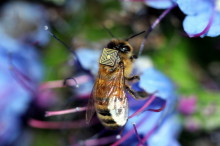
    Thousands of honey bees in Australia are being fitted with tiny sensors as part of a world-first research program to monitor the insects and their environment using a technique known as ‘swarm sensing’.

    The research is being led by CSIRO and aims to improve honey bee pollination and productivity on farms as well as help understand the drivers of bee Colony Collapse Disorder (CCD), a condition decimating honey bee populations worldwide.

    Up to 5,000 sensors, measuring 2.5mm x2.5mm are being fitted to the backs of the bees in Hobart, Tasmania, before being released into the wild. It’s the first time such large numbers of insects have been used for environmental monitoring.

    “Honey bees play a vital role in the landscape through a free pollination service for agriculture, which various crops rely on to increase yields. A recent CSIRO study showed bee pollination in Faba beans can lead to a productivity increase of 17%,” CSIRO science leader Dr Paulo de Souza, who leads the swarm sensing project, said.

    “Around one third of the food we eat relies on pollination, but honey bee populations around the world are crashing because of the dreaded Varroa mite and Colony Collapse Disorder. Thankfully, Australia is currently free from both of those threats.”

    The research will also look at the impacts of agricultural pesticides on honey bees by monitoring insects that feed at sites with trace amounts of commonly used chemicals.

    “Using this technology, we aim to understand the bee’s relationship with its environment. This should help us understand optimal productivity conditions as well as further our knowledge of the cause of colony collapse disorder,” Dr de Souza said.

    The sensors are tiny Radio Frequency Identification sensors that work in a similar way to a vehicle’s e-tag, recording when the insect passes a particular checkpoint. The information is then sent remotely to a central location where researchers can use the signals from the 5,000 sensors to build a comprehensive three dimensional model and visualise how these insects move through the landscape.

    “Bees are social insects that return to the same point and operate on a very predictable schedule. Any change in their behaviour indicates a change in their environment. If we can model their movements, we’ll be able to recognise very quickly when their activity shows variation and identify the cause. This will help us understand how to maximise their productivity as well as monitor for any biosecurity risks,” Dr de Souza said.

    Understanding bee behaviour will give farmers and fruit growers improved management knowledge enabling them to increase the benefit received from this free pollination service. It will also help them to gain and maintain access to markets through improving the way we monitor for pests.

    “We’re working with the University of Tasmania, Tasmanian Beekeepers Association, local beekeepers in Hobart and fruit growers around the state to trial the technology. Many growers rely on wild bees or the beekeepers to provide them with pollinators so they can improve their crops each year. Understanding optimal conditions for these insects will improve this process,” Dr de Souza said.

    To attach the sensors, the bees are refrigerated for a short period, which puts them into a rest state long enough for the tiny sensors to be secured to their backs with an adhesive. After a few minutes, the bees awaken and are ready to return to their hive and start gathering valuable information.

    “This is a non-destructive process and the sensors appear to have no impact on the bee’s ability to fly and carry out its normal duties,” Dr de Souza said.

    The next stage of the project is to reduce the size of the sensors to only 1mm so they can be attached to smaller insects such as mosquitoes and fruit flies.

    Source and image.

  • New Reforms in Computer Science will Examine Teacher’s Skills

    New Reforms in Computer Science will Examine Teacher’s Skills

    As a new National Curriculum says children in schools will start learning the principles of computer programming from kindergarten. But there are concerns teachers would be seriously unable to go through the ambitious reform agenda without meaningful retraining.

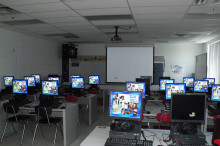
    The new technologies Curriculum gives a considerable boost to the role of computer science in primary and secondary school education. Some of the authors of the Curriculum said students would be taught to write computer code from year 3 which should give them a competitive edge in the emerging digital economy.

    In general, code is a set of instructions used to manage computer software.

    The British Government announced it would become the first country to mandate computer programming in its schools.

    On the other hand, Australia’s new curriculum was ”reasonably comparable” to Britain’s and ”has kids at least starting to get some of the ideas of programming right from kindergarten”.

    Making teachers competent and confident enough to teach the content would be the main challenge.

    There are over 9000 schools in Australia. Experts believe teachers in each of those schools should be capable to transfer their technical knowledge and skills and also the philosophical underpinnings of computer science.

    Indeed, it is a huge job to get everyone up to scratch on this stuff. Basically, this is a very significant challenge, because many specialist teachers can not do everything that’s in the Curriculum.

    It is up to the states and territories to decide whether or not they implement the Curriculum. It is just a waiting game to find out what happens and what decisions they make.

  • Their Time is Coming!

    Their Time is Coming!

    A cyborg future is coming. Man’s relationship with machine is merging. Machines are an extension of our own intelligence. Soon we all will wear some kinds of bio-sensors to tell us what is happening inside us. That’s the future.

    A cyborg or a cybernetic organism is a being with both biological and mechanical parts. Generally, the term “cyborg” is used to refer to a human with bionic, or robotic, implants. The beginning of cyborg creation began when HCI (human-computer interaction) started. The term cyborg is often applied to an organism that has advanced abilities due to technology. While cyborgs are commonly considered as mammals, they might also be any kind of organism. There is a hypothesis saying that cyborg technology will build up a part of the future human evolution.

    The use of prostheses or implants is not a new idea. Humans have been using implanted technical aids of various types in the past to compensate for defects caused by illnesses.

    Today, it is essential that the system are closely related to the living organism. Ideally, the system itself should be capable of receiving and sending the appropriate signals for the movement and control directly from the central nervous system and especially the brain itself. For instance, in vision science, direct brain implants have been used to treat non-congenital blindness. The first system included cameras mounted on glasses to send signals to the implant.

    Nowadays there are two main applications of cyborg systems: (1) animal cyborgs and (2) social cyborgs.

    The world’s first commercially available cyborg was an animal cyborg ant it is called the RoboRoach. The RoboRoach was officially released into production via a TED talk at the TED Global conference. Other groups have developed cyborg insects, but the RoboRoach was the first kit available to the general public.

    But, what is a social cyborg? More broadly, the term “cybernetic organism” is used to describe larger networks of communication and control. For instance, cities, networks of roads, networks of software, corporations, markets, governments, and so on. A corporation can be assumed as an artificial intelligence that makes use of replaceable human components to function.

    As we can see, a cyborg time is undoubtedly coming. How will it look like? Well, we guess it would bring some advancements in our lives. The ethical question should be: “Will the humans stay humans after the cybernetic revolution?

  • The Next Generation IT Security System

    The Next Generation IT Security System

    Spies, communication, and secret codes! Cryptography is the art of encrypting and decrypting messages. It has existed as long as people have distrusted each other and looked for the forms of secure communication. Cryptographic techniques have evolved over the centuries. The aim is always the same – the code-makers work to stay ahead of the code-breakers. Today’s most common encryption methods are threatened by the potential creation of the quantum computer. In other words, quantum cryptography promises more secure communication than any existing technique.

    Introduction

    Quantum cryptography is focused on the unique behavior of microscopic objects which enable users to securely develop secret keys. The work on quantum cryptography was begun by Stephen J. Wiesner in the late 1960’s. The first protocol for sending a private key using quantum techniques is published in 1984 by Bennett and Brassard. The development of quantum cryptography is based on “public-key

  • Is gold (literally) everywhere around us?

    Is gold (literally) everywhere around us?

    It sounds like something out of an Austin Powers movie, but could gold be created within an instant? Recently, scientists have been reporting that non typical objects such as water have literally been turning into gold.

    Now, this isn’t a cause to quit your day job, there are huge amounts of global-sized factors in play. But it’s still pretty cool.

    Water into gold

    Approximately 10 kilometres beneath the Earth’s surface, where it is incredibly hot and high-pressured, water that flows through fracture and fault lines is rich in high concentrations of elements, which include gold.

    In early 2013, Australian researchers found that gold could be instantaneously formed during an earthquake. When a fluid-filled rock fracture receives a sudden drop in pressure, the gold particles in solution leach out and change from a soluble state into highly concentrated deposits of gold.

    The amount of gold created after an earthquake is minimal as the concentrations of gold particles is small. However, in parts of the world such as New Zealand’s Alpine Fault that lie on very active fault lines, there is the possibility of seeing mineable amounts of gold in the next 100,000 years, according to geoscientist, Jamie Wilkinson.

    Bacteria

    The word bacteria doesn’t conjure up the most pleasant of images in people’s minds, but that could change with the news that they could be used to help ions turn into solid gold.

    A study by researchers at McMaster University found that a certain type of bacteria – Delftia acidovorans – turns toxic gold ions that are dissolved in water into harmless particles as a defense mechanism.

    Although the size and amount of gold particles produced are minimal (you need a microscope to see them), this discovery could open several scientific doors. Gold sellers [link?] could have a field day with this.

    Meteorites into gold

    Research suggests that the Earth’s gold (as well as platinum and other precious metals) could have been brought here during meteorite impacts. In fact, researchers have even put a date on the deposit – around 3.9 billion years ago.

    A huge meteorite storm brought with it a range of new metals, which were deposited in the Earth’s crust, say some. Earth scientists have shown that the Earth should not contain metals like gold as they would have melted into the core, which gives further proof that meteorites were the source of many precious metals.

    Some dispute these claims, citing the fact that sedimentary rocks should contain large amounts of precious metals if this had occurred, but they don’t.

    Sources:

    http://www.abc.net.au/science/articles/2013/03/18/3716298.htm

    http://www.abc.net.au/science/articles/2013/02/04/3682812.htm

    http://www.goldsmart.co.nz/gold-smart-blog/interesting-news/ultimate-gold-bugs-insects-produce-gold-jewellery

    http://newswatch.nationalgeographic.com/2013/02/06/scientists-discover-how-bacteria-changes-ions-into-gold/

    http://www.newscientist.com/article/mg21128294.200-meteorite-storm-showered-planet-in-gold.html#.Uq601M2cG5A


  • Weekly Science Picks

    Weekly Science Picks

    As you all know, we proudly can say we fixed all the problems we had in the past and returned to our audience after a short break. We are continuing our work as before and for this weekly wrap up we prepared quite interesting things from the area of science and technology.

    Will drones become the future of farming?

    Robots are being used to survey crops and help farmers manage the water and chemicals they use in vast fields. Chris Anderson, the former editor-in-chief of Wired magazine, recently switched careers to move into drone manufacturing. He co-founded 3D Robotics, which is building drones in Mexico and the US which may one day keep a beady electronic eye on the food being grown for our tables.

    Y chromosome is not doomed to shrivel away to nothing, say researchers

    Reports of the coming death of the male sex chromosome are greatly exaggerated, say scientists, whose work will raise a collective cheer from at least half the population. The fate of the Y chromosome, which carries the genetic switch that sends a developing embryo down the route to maleness, has been questioned since scientists first discovered that it had lost more than 90% of its genes over millions of years of evolution.

    Here be 3D printed dragons

    Toothless, 3D printed out of titanium, came into the world at Lab 22, our additive manufacturing facility in Melbourne. The scientists there have printed some extraordinary things in the past—huge anatomically correct insects, biomedical implants and aerospace parts. So they thought a dragon was achievable.

    Surprising New Class of ‘Hypervelocity Stars’ Discovered Escaping the Galaxy

    The discovery of this new set of “hypervelocity” stars was described at the annual meeting of the American Astronomical Society this week in Washington, D.C., and is published in the Jan. 1 issue of the Astrophysical Journal.

    Please keep following us because an emerging science and technology news are coming soon.

  • Does Spacetime Have Any Time Dimension?

    Does Spacetime Have Any Time Dimension?

    The concept of time as a way to measure the duration of events is basically intuitive. Some researchers believe that this Newtonian idea of time as an absolute quantity and fourth dimension in spacetime is incorrect. They propose to replace these concepts of time with a completely new view: time as a measure of the numerical order of change.

    Einstein never interpreted time as a fourth dimension of space. By this theory, space is not 3D + T, space is 4D. With clocks we measure numerical order of material change. This numerical order is the only time that exists in a physical world. 4D space is a medium of quantum information transfers.

    Scientists at the Scientific Research Centre Bistra in Ptuj, Slovenia, theorize that this Newtonian idea of time as an absolute quantity, along with the idea that time is the fourth dimension of spacetime, are not accurate. They propose to replace these concepts of time with a view that say that time is a measure of the numerical order of change.

    This view doesn’t mean that time does not exist, but that time has more to do with space than with the idea of an absolute time. So while 4D spacetime is considered to consist of three dimensions of space and one dimension of time, this view suggests that it’s more correct to imagine spacetime as four dimensions of space. In other words, the Universe is “timeless.

  • Eddies may put Sydney-Hobart in a spin

    Eddies may put Sydney-Hobart in a spin

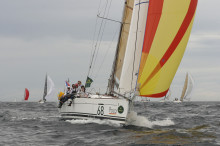
    Competitors in this year’s Rolex Sydney-Hobart race fleet may need to negotiate their way around three significant ocean eddies as they sail south this year, according to oceanographers.

    CSIRO’s Dr David Griffin has generated a view of the course based on observations from Australia’s Integrated Marine Observing System (IMOS).

    The first, south-east of Jervis Bay, is the weakest of the three and may dissipate or move farther offshore between now and Boxing Day. Nevertheless, he says yachts will want to remain inshore of the eddy, other factors such as wind strength being equal.

    “The second eddy is more important and extends over 180 nautical miles from 36S to about 39S,” Dr Griffin said.

    “I believe it could give yachts a significant advantage of one to four hours over those that do not find this river of southward flowing tropical water.

    “Finally, an isolated warm-core eddy is off Tasmania’s Freycinet Peninsula (42S), potentially giving a small boost to yachts keeping a bit further east.”

    The ocean eddy off Tasmania’s east coast will be relevant to entrants in the Launceston to Hobart race, starting on December 27.

    Dr Griffin provides ocean current analysis products for IMOS on a daily basis for IMOS.

    Source and image.

  • The Highlights of 2013

    The Highlights of 2013

    This year our writers churned out a host of fantastic articles, including a series of posts dedicated to women in space, written by Sharon Harnett. One of the most notable of the series was all about Valentina Tereshkova, the first woman astronaut. This year was the 50th anniversary of her historic spaceflight. We also had a few great interviews, including one with Henry Reich, creator of the YouTube series Minute Physics.  We’ve managed a number of achievements. We’ve helped several science writers gain exposure and reputation world wide, we’ve appeared on ABC’s Newsline, and we’ve been listed in TED’s top 10 science and technology websites.

    So, in no particular order, here are ten of our favourite articles from 2013. We hope you’ll enjoy these stories. Stay curious and scientifically passionate!

    A Tale of Two STEM Women by Buddhini Samarasinghe

    When I first read this story, I was struck by how often we focus on happy stories like Marie Curie’s, and how the story of someone like Clara Immerwahr remains largely forgotten. She had a tremendous amount of potential, as evidenced by her being the first female to receive a Ph.D at the University of Breslau, an endeavor that is certainly not for the faint-hearted even now. One can only wonder at the ‘might-have-beens’ if she had had the same support and encouragement that Marie Curie did, if she had not married Haber, or if Haber had been a different kind of person. These examples highlight that talent alone is not enough; we need to encourage that talent by promoting equality and recognizing our own biases when it comes to women in STEM. Read more>>


    Sometimes it’s hard to be a woman (in science) by Amy Reichelt

    Obtaining a senior academic position for any aspiring young academic is one of those uphill struggles with roads lined with self doubt, setbacks and sacrifice. Some call it the way to tenure-track, in my mind it’s one of those ill-defined paths through a potentially haunted forest inhabited with monsters, gigantic poisonous spiders and creepy people who communicate by screaming. It can be harder still to even reach that point, particularly for young women. While the number of women professors in Europe, N. America and Australia has increased over the last decade, universities still have a disproportionately small number of women in senior professorial positions. Read more>>


    Spiders on Mars? No, An Australian Radio Telescope! by Elizabeth Howell

    The MWA is a powerful telescope in its own right, but what is even more exciting is it will form part of a larger project in the coming years. The Square Kilometre Array will link radio telescopes on two continents — Australia and Africa — to get a fine look at the sky in radio wavelengths. MWA is just one part of this array. There will also be dish receptors in eight countries in Africa, with the core and some mid-frequency aperture arrays in South Africa’s Karoo desert. Read more>> 


    Hopeful results in latest HIV vaccine trial, but many hurdles to overcome yet by David Borradale

    A HIV vaccine, known as SAV001-H has shown promising results in an early clinical trial, with no adverse effects reported and importantly, a significant increase reported in HIV specific antibodies in participants who received the vaccine. In this trial, 33 HIV positive participants were randomly allocated to one of two groups: half into a treatment group receiving the vaccine and half into a placebo group who did not receive the vaccine. The participants were followed up at regular periods, testing safety of the vaccine and antibody response over a one year period. Read more>>

    Are Australians Really Getting Dumber? by  Magdeline Lum

    The Australian Academy of Science has found that when it comes to science Australians are getting dumber in its latest report on science literacy. Compared to three years ago, less people in Australia know that the Earth’s orbit of the sun takes one year. Among 18-24 year olds 62% surveyed knew the correct answer, a fall from 74% three years ago. Other results would also send scientists into a tail spin of despair, with 27% of respondents saying that the earliest humans lived at the same time as dinosaurs, though an improvement from 30% of respondents in 2010 who thought this. What does this all say? If you take the face value of the press release and the ensuing media coverage, Australians are getting dumber. Read more>>

    From fables to Facebook: Why do we tell stories? by Lauren Fuge

    Storytelling is one of our most fundamental communication methods, for an obvious reason: narrative helps us cognise information. Telling intelligible, coherent stories to both ourselves and others helps our brains to organise data about our lives and our world. But when we askwhy stories are so effective at helping us cognise information, the answers are surprising: it seems that somewhere in the otherwise ruthless process of natural selection, evolution has wired our brains to prefer storytelling over other forms of communication. Read more>>


    Plastic’s Reach by Kelly Burnes

    Plastic. Seems it has extended its reach into the farthest corners of the universe. An earliest post described how plastic has changed our lives, for better…and for worse. ADD link to earlier post. That post largely reflected on the growing problem of plastic in the oceans and the effect on plant and animal life. Now, it seems that plastic threatens our freshwater lakes now too. Read more>>


    Postcard from Spitzer: weather on 2M2228 is hot and cloudy by Kevin Orrman-Rossiter

    Long distance weather reports are now a commonality. The report for 2MASSJ22282889-431026 is somewhat unusual. It forecasts wind-driven, planet-sized clouds, with the light varying in time, brightening and dimming about every 90 minutes. The clouds on 2MASSJ22282889-431026 are composed of hot grains of sand, liquid drops of iron, and other exotic compounds. Definitely not the first place to spend a summer holiday. Not that 2MASSJ22282889-431026 (or 2M2228 as it is known in The Astrophysical Journal Letters) will appear on a travel itinerary anytime soon. For 2M2228 is a brown dwarf, 39.1 light years from earth. Read more>>


    The bacteria that live inside hurricanes by Charles Ebikeme

    Seven miles above the Earth’s surface, where the weather is born, lies the troposphere – the lowest layer of Earth’s atmosphere. Up there, where the clouds dance around, are bacteria that can make it rain, and are important for the formation of clouds. The atmospheric microbiome is a concept and field of study that is gaining importance. As we come to grips with a changing climate and environment, understanding more and more our Earth ecosystem remains vital. With hurricane damage in the US and elsewhere seemingly on an exponential increase in recent decades, it is important to mitigate for the worst. Read more>>


    Quantum computing: Australian researchers store data on a single atom! by Markus Hammonds

    Computing is also an incredibly fast moving field of technology, and research is finally taking us towards the exciting world of quantum computing! Quantum computers will work using quantum bits, or qubits for short, which are analogous to the digital bits used in computers like the one which you’re using to read this article. Recently, a team of engineers at the University of New South Wales (UNSW) has successfully demonstrated, for the first time ever, how a single atom can be act as a qubit, effectively showing the first step in building an ultra fast quantum computer. And they might just have created the best qubit ever made. Read more>>

    Happy 2014 from Markus, Charles, Kevin, Kelly, and Danica!

  • Discover your own black hole

    Discover your own black hole

    Discover black holes while you ride to work! Or hunt them down on your home computer.

    ‘Radio Galaxy Zoo’, launching today, is a new ‘citizen science’ project that lets anyone become a cosmic explorer.

    By matching galaxy images with radio images from CSIRO’s Australia Telescope, you can work out if a galaxy has a supermassive black hole.

    “It takes about a minute to learn what to do,” said CSIRO’s Dr Julie Banfield, an Australian coordinator of the international project.

    “Then to actually work with the images takes only a few seconds each – perhaps a couple of minutes for the really tough ones.

    “You just need match up a couple of pictures and look for what you think is the galaxy at their centre.”

    Join up and you’ll be part of a community of almost a million people who work in the ‘Zooniverse’ – a set of citizen-science projects covering everything from galaxy shapes to cancer data and whale songs.

    The first Zooniverse project, Galaxy Zoo, was started by astronomers Chris Lintott and Kevin Schawinski in 2006 when they were both at Oxford University.

    “Galaxy Zoo and the other projects have been producing real science, science that gets published,” said CSIRO’s Dr Ivy Wong, who has been working to set up Radio Galaxy Zoo.

    “Everyone, literally everyone, can now help to make discoveries.”

    Source and image.

  • Is Our Universe Simply a Projection of Another Cosmos?

    Is Our Universe Simply a Projection of Another Cosmos?

    A new research theory claims that we could simply live in a projection of another cosmos. How is that possible? By holographic principle, gravity comes from thin, vibrating strings. These strings are holograms of events which exist in a flatter cosmos. According to this theory, everything we experience can be assumed as events occurring in this flatter location. This is the first time the validity of the model has been mathematically tested.

    The universe is a hologram and everything you can see is just a projection. This is the fact according to a controversial model proposed in 1997 by physicist Juan Maldacena. Until now the theory had never been tested. However, recent mathematical models suggest that this principle could be accurate.

    The holographic principle is a characteristic of quantum gravity and string theories. It states that the description of a volume of space can be thought of as encoded on a boundary to the region. The theory is first proposed by Gerard’t Hooft and its precise string-theory interpretation is given by Leonard Susskind. By this observation, the string theory admits a lower-dimensional description in which gravity emerges from it in a holographic way.

    In a larger scale, the theory suggests that the entire universe can be viewed as a 2-D information structure “painted” on the cosmological horizon, such that the 3-D we observe are only an effective description at macroscopic scales. In general, cosmological holography has not been made mathematically precise, because the cosmological horizon has a finite area and grows with time.

    The holographic principle is inspired by black hole thermodynamics. This implies that the maximal entropy in any region increases with the radius squared. In such a case, the insight was that the informational content of all the objects that have fallen into the hole can be entirely contained in surface fluctuations of the event horizon. This principle resolves the black hole information paradox within the support of string theory.

    In his paper presented at the arXiv repository, a Japanese scientist Yoshifumi Hyakutake calculated the internal energy of a black hole in order to try to provide mathematical evidence for the holographic principle. He explored the boundaries of a specific black hole as well as the effects of ‘virtual particles’ which is a type of particle that is believed to continuously pop in and out of existence. In a separate paper, Professor Hyakutake calculated the energy contained inside of the alternate flatter cosmos with no gravity. Surprisingly, the computer calculations of the theoretical universe and the black hole’s boundaries matched. Some believe this is ‘compelling’ evidence of the dual nature of the universe.

    Professor Maldacena reported that this fact provides hope that the gravitational properties of our universe can someday be explained by quantum theory.

  • Weekly Science Picks

    Weekly Science Picks

    It is with a heavy heart that I must say, this is my final set of Weekly Science Picks here on Australian Science. In fact, it’s to be the final set of Weekly Science Picks. Unfortunately, running a site like this one is a costly affair, and it’s been an honour to be a writer here over the past year and a half. Scientific progress will, of course, always carry on and I hope there will always be places to discuss new findings, implications, and effects of it on human culture and society.

    So, proudly then, here are the final set of news stories which caught my eye this week. Make no mistake – there’s been some pretty cool news recently!


    Firstly, and in my opinion most excitingly, is a medical breakthrough which could actually revolutionise surgery in the future. And anyone who knows me will know that I don’t use words like “revolutionise” lightly. Quite simply, the device is a small pen, developed by the Australian Research Council Centre of Excellence for Electromaterials Science (ACES), which will be able to deposit stem cells and growth factors directly into injuries. This means that this pen could help injured tissue – bones, muscle, and even nerves – to regrow. Oh, and did I mention it works using 3D printing technology?

    BioPen to rewrite orthopaedic implants surgery

    The BioPen prototype was designed and built using the 3D printing equipment in the labs at the University of Wollongong and was this week handed over to clinical partners at St Vincent’s Hospital Melbourne, led by Professor Peter Choong, who will work on optimising the cell material for use in clinical trials.


    For a long time humans were considered unique in that we use tools where other animal species don’t. But since that old idea, more and more animals – from birds to octopodes – have been shown to use tools in their daily lives. The most recent addition to this collection of smart creatures is the crocodile which has been found to use lures while hunting. Perhaps this might help show that reptiles are smarter than we give them credit for!

    Alligators and Crocodiles Use Tools to Hunt, in a First

    Relatively less is known about crocodiles and alligators than many animals, because, as large predators, they are difficult to raise in the lab and study up close in the wild. Their cold-bloodedness also makes them slow. “They operate on a different time scale; they do things more slowly,” Burghardt said. “Sometimes we don’t have the patience to let them strut their stuff, as it were … so this kind of study is important.”


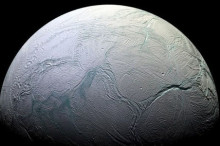
    A huge plume of water has been spotted, gushing from the surface of Enceladus, Saturn’s tiny snowball moon. While the exact source of Enceladus’ warmth is still something of a mystery, this sighting means that its activity is quite clear – this water plume is reaching an altitude of around 201 km above the surface of the tiny world. That’s nearly ten times as high as Olympus Mons, the solar system’s largest mountain (which itself dwarfs Everest, the heighest mountain on Earth).

    Hubble Space Telescope Sees Evidence of Water Vapor Venting off Jupiter Moon

    “By far the simplest explanation for this water vapor is that it erupted from plumes on the surface of Europa,