
Swedish animator Erik Wernquist calls his short science fiction film, Wanderers, a speculative look at “humanity’s future expansion into the Solar System,
Blog
-

Why Should We Trust to Cyber?
These days many people are speculating about ongoing mass e-surveillance systems, which got applied by a lot of countries, but the best known is still an NSA project. As the most usual reason against those projects, some people see privacy breach concerns. But, what is a privacy? Why would our governments “spy
-
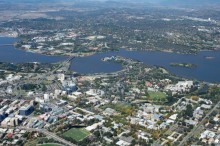
New report shows universities crucial to ACT economy
A new report by Deloitte Access Economics, commissioned by The Australian National University (ANU) and the University of Canberra (UC), found the two leading institutions contributed more than $1.7 billion of activity to the ACT economy.
The report underlines Canberra’s strength as a university town and demonstrates the importance of the higher education sector to the economy.
It found that in 2012 around 38,000 students were enrolled at the two universities, accounting for 92 per cent of the tertiary students in the ACT and pushing down the ACT median age to 35 years, lower than every other state except the Northern Territory.
The report also found every dollar of expenditure on the universities returned 80 cents of value to the local economy, and one in nine people in the ACT were university staff or students.“Canberra is Australia’s top university town, and this comprehensive report shows the benefits to the economy and society of having two great universities in the national capital,
-

What Is the Future of Energy in Japan?
Today, the whole world is trying to reduce its dependence on fossil fuels. The vast supplies of coal and oil are exhaustible after all, and given the list of pollutants they emit and their adverse impact on the environment, the tendency is absolutely understandable. The world offers us an abundance of renewable energy sources and those who see far into the future are smart enough to use them.
However, unlike the countries that want to minimize the use of fossil fuels and nuclear energy, Japan is among those that have no other options. Since the Fukushima Daiichi nuclear disaster in 2011, Japan has had to rely on other sources of energy. The country’s 48 nuclear reactors are still shut down and Japan faces an uncertain energy future. At the moment, their plans include making hydrogen the main energy source in the country. (more…)
-
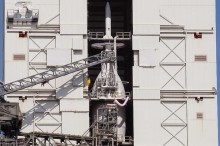
Orion Test Flight a Critical Step on NASA’s Journey to Mars
America embarks on a long-lasting trip to Mars this Thursday.
Orion’s maiden flight, Exploration Flight Test-1 (EFT-1), slated to test spacecraft’s crucial systems is a critical first step on our journey to destinations beyond Earth never before visited by humans, like asteroids and Mars. “Everyone is very excited about this mission,
-
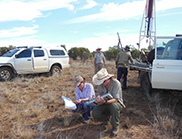
Australia’s living skin bared in stunning three dimensions
Australia’s vast and complex land surface has been exposed in new ways thanks to the most comprehensive nation-wide digital maps of our soils and landscapes yet produced.
The entire country is now represented as a digital grid with two billion ‘pixels’ that are about 90 by 90 metres, down to a depth of two metres below the surface.
The Soil and Landscape Grid of Australia, launched today at the National Soil Science Conference in Melbourne, is the result of a partnership between CSIRO, the University of Sydney, several federal, state and territory government agencies and the Terrestrial Ecosystem Research Network (TERN).
The Grid draws information from the partner agency databases weaving together both historical and current data generated from sampling, laboratory sensing, modelling and remote sensing.
The Grid also includes estimates of reliability and is designed to integrate new data in the future – even data generated by technology that has not yet been invented.
Soil and landscape attributes such as soil water, nutrients and clay, affect the sustainability of Australia’s natural resources and the profitability of sectors such as agriculture, mining and infrastructure.
CSIRO Research Director Mike Grundy said the Grid had already woven together hundreds of millions of dollars’ worth of past soil and landscape science into a new ‘digital tapestry’.
“The research community has known we need better ways to make this diverse information available; new science and technology has let us make the most of the rich data we have,” Mr Grundy said.
“From exploring new land use options, to making the most of water, to finding habitats for endangered native species, this technology has applications we are only just beginning to imagine.”
The Grid will be beneficial to a wide range of applications and users including urban and regional planners, land managers, farming groups, scientists and engineers.
Alexandra Gartmann, CEO at Foundation for Rural & Regional Renewal and former CEO of Birchip Cropping Group, has worked with rural industries for almost two decades. Ms Gartmann said she was excited by the new technology.
“Knowledge is power, and our agricultural industries have a very narrow margin for error these days, so the more knowledge to reduce poor decisions, the better,” Ms Gartmann said.
“Agribusiness will benefit from this technology, both at the farm scale — with data to inform production models and risk management decisions — and industry scale, as it draws together many years of past research and knowledge for future investment decisions.
“The Soil and Landscape Grid is a huge leap forward. With its national datasets and consistent and comparable data, it has huge potential for regional development, informing planning and decision-making.”
-
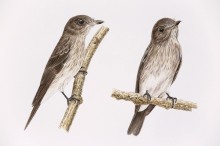
Scientists confirm new bird species in Indonesia
Scientists have confirmed a new bird species found in the tropical rainforests on the Indonesian island of Sulawesi.
The Sulawesi Streaked Flycatcher (Muscicapa sodhii) lives in the forest canopy of the rugged hills of Sulawesi, and has heavily streaked underparts and relatively short wings.
Ding Li Yong, a PhD student at the Fenner School of Environment and Society, was part of an international team which described the bird as a new species.
“As a kid I was inspired by the great naturalists Darwin and Wallace, and the early explorers who risked their lives by leaving the comforts of Europe for the tropics to collect specimens for science,
-

Weekly Science Picks
It’s Sunday… Hurray! It’s our time to review what have happened during the last 7 days. This time we bring you the most exciting stories from biology, nature and wildlife. So, let’s start our tour!
Grey seals identified as killers behind mystery harbour porpoise deaths
Using DNA analysis of the the bite wounds, a Dutch team examined 721 porpoises that were stranded between 2003 and 20013 along the Dutch coastline and found that nearly one in five had been killed by seals. That makes the seals the major cause of harbour porpoise deaths in the Netherlands, alongside being killed as fishing bycatch.
Turtles and dinosaurs: Scientists solve reptile mysteries with landmark study on the evolution of turtles
A team of scientists has reconstructed a detailed ‘tree of life’ for turtles. Next generation sequencing technologies have generated unprecedented amounts of genetic information for a thrilling new look at turtles’ evolutionary history. Scientists place turtles in the newly named group ‘Archelosauria’ with their closest relatives: birds, crocodiles, and dinosaurs.
Exploring the ocean’s hidden depths
We know so little about the depths of our oceans that they might as well exist on another planet. The majority of the sea floor has never been visited by humans. As to what lives and feeds and breeds down there in the icy depths, it remains best left to our imagination.
The thorny issue threatening the coral reefs of Pilbara
The Great Barrier Reef is a global icon and something of a heavyweight in the natural world. If it was a movie it would be a Spielberg-directed Hollywood blockbuster starring Hugh Jackman and Angelina Jolie. Its cousin, Ningaloo Reef, off Australia’s western coast, is something of a poor relation in a branding sense, but still holds a relative degree of fame. It would be more your ‘straight-to-video’ sort of flick.
That would be all for this week’s choice. Please stay curious and scientifically passionate. We promise you a great stuff in the coming period.
-
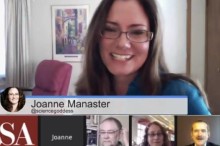
Interview with Joanne Manaster – a multipassionate scientist
 Joanne Manaster is a cell and molecular biology lecturer at the University of Illinois. She currently works as an online course developer and lecturer of science courses for the School of Integrative Biology. Prior to this current position, Joanne has taught histology, cell biology, and tissue engineering laboratories to biology and bioengineering students for nearly 20 years. Beside her academic career, she is a science writer and communicator, science video host, and STEM advocate. Joanne has run a girls’ bioengineering camp, and helped with the iGEM synthetic biology team and other outreach activities. She also makes video reviews of popular science books as well as whimsical science experiments with cats, cookies, gummy bears and make-up.
Joanne writes about science at her website, Joanne Loves Science and also at Scientific American blogs. She has been named by Mashable as having one of the 25 Twitter Accounts That Will Make You Smarter. You can find her on Twitter as ScienceGoddess.
Welcome to Australian Science! Would you, please, tell our readers a little bit more about yourself? What is your scientific background, and your professional scope?
Thank you for asking me to join you!
I am a faculty lecturer at the University of Illinois. I initially started my college studies with plans to head to medical school but through my course of studies I found I really clicked with cell and molecular biology and was very adept at lab work. Through various opportunities, I also discovered I had a knack for explaining scientific concepts so eventually changed my path to teach at the university level. I studied muscle development at the microscopic level in grad school and eventually transitioned to teaching cell biology and histology.
How did you initially get interested in science? When did you start to express your curiosity for science?
I always loved nature and had a fascination with human health. I spent a lot of time in nature and did a lot of reading on science topics. I didn’t know any scientists. I knew they existed from reading textbooks, but the whole field seemed shrouded in mystery. However, I understood what doctors did and thought that becoming a physician would be a valid way to pursue my passion for science. As I mentioned above, it wasn’t until college that I realized how scientists did their work, and could then consider that as a career path.
It is interesting to mention that you are a former international model, back in the days of your adolescence. Did you find something scientific in the world of modeling and fashion?
As far as modeling goes, I was discovered while I was in high school. Initially, I wasn’t enthusiastic about it but realized it would be a great way to earn money for medical school. While I was modeling, I wasn’t thinking about it in any scientific manner as I was learning to interact with a very new and somewhat foreign world. It wasn’t until I completed my science training in college did I really start to see how science explained just about everything. In my course of teaching students, I also began to see the value in piquing their interest by talking about things they could relate to in terms of science, and that extends to my online outreach!
Would you tell us more about your role within executing online courses for current and future science teachers?
After many years of giving lectures and running laboratory classes which overlapped with my online outreach, I realized that I could apply my ability to communicate online to my instructing position so I transitioned to teaching cutting edge biology through my online program for middle school and high school teachers who want to obtain their Master of Science Teaching. I have designed and executed three courses for this program so far: The Human Genome and Bioinformatics, Evolution and Medicine and Emerging Infectious Diseases. I enjoy mixing primary scientific literature with popular science communication to both train the teachers and to give them resources for their classrooms. Teachers make the best students!
You have a very unique approach for science book reviews using video as a format for presentation, encouraging everyone to read. Other videos are an interesting and whimsical introduction to the world of science disguised in everyday items. How did you get inspired to make such videos?
Book reviews are a natural for me. I love to read and I love science! The gummi bear videos began from a question asked by one of my college students. He asked if a gummy bear could be liquefied through the process of sonication (using high frequency sound waves). I then considered how I could subject the gummy bears to other lab techniques!
One of my favorite videos is Cats In Sinks, which was inspired by a fun website that showed numerous cats in sinks and it made me think I could talk about theoretical vs. experimental science by trying to figure out how many cats could fit in my large lab sink.
I also really enjoyed using cookies as my models of blood cells to create a series about those cells called “Blood Cell Bakery
-
Australia’s biosecurity may be shocked
A human disease pandemic, European honey bee colonies wiped out and an invasion of a devastating wheat disease are just three potential biosecurity threats facing Australia, according to a report released this week.
These three events alone could devastate Australia’s agricultural industries, economy and environment, and could severely alter our way of life. But, how can we ensure that we see them coming and are we prepared to respond if they occur?
As an island nation Australia has, largely been able to maintain an enviable biosecurity status. However, experts warn that the 12 biosecurity megashocks identified in a new report – Australia’s Biosecurity Future – could turn into reality if we become complacent with our nation’s biosecurity measures.
CSIRO Biosecurity Flagship Science Director Dr Gary Fitt said it was much better to pre-empt and avoid biosecurity issues than have to deal with the consequences.
“Dominating the news right now is the Ebola virus crisis, which is an obvious global health concern,
-

The Best of Australian Science: November 2014
It’s the end of November, 2014 and it is our time to summarise our contribution for this month.
Please enjoy our this month’s selection.
A Cyber Disaster Somehow Occurred… What to Do the Next? by Milica Djekic
A modern business environment is frequently connected with many risks and uncertainties. The fact is the majority of modern businesses rely on IT infrastructure, but is a cyber threat the only thing that concerns us? Certainly, it’s not. There are a lot of different risks such as natural disasters, fires, threats to physical security and so on they can affect a business continuity and people’s safety.
Life – Evolved by Lia Paola Zambetti
What is a life form? Most of us, if asked, will think of an animal or a human being-in other words, a multicellular organism. However, life itself evolved in cells, single cells of various types that existed and propagated independently. What are, then, the factors that led cells to collaborate together and give rise to complex organisms? Collaboration is possible only if there are no cheaters -cells that exploit the collaboration of others- and cheaters always arise. How is possible, then, for a multicellular organism to develop? Do the cheaters need to be eliminated –an evolutionary impossibility- for complex organisms to occur?
Worldwide action needed to address hidden crisis of violence against women and girls
Yet, despite increased global attention to violence perpetrated against women and girls, and recent advances in knowledge about how to tackle these abuses, levels of violence against women – including intimate partner violence, rape, female genital mutilation, trafficking, and forced marriages – remain unacceptably high, with serious consequences for victims’ physical and mental health. Conflict and other humanitarian crises may exacerbate ongoing violence.
How to Get Skills in Cyber Security? by Milica Djekic
It is also well-known that people are not born with such a skill; they need to master their fields of interest through their lives. That’s exactly the case with cyber! Requirements are high, every single day something new appears and what you need to have for such a career is an excellent learning curve which will allow you to cope with the change and successfully adopt and apply new things.
Well, that would be all for this monthly review. New stories are coming soon!
-
New research centre to investigate how language works
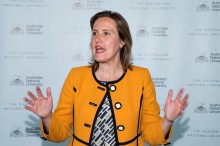
A new national research centre based at ANU will investigate how language works and how it makes us who we are.
Based at the University, the ARC Centre of Excellence for the Dynamics of Language draws together the nation’s top linguists, philosophers, psychologists and roboticists to puzzle out the complex mechanisms of human communication.
The new centre will focus on four key areas: how languages differ, how they are learned, how the brain processes them and how they evolve.
“We once imagined that all languages had the same basic operating system,
-

Worldwide action needed to address hidden crisis of violence against women and girls
Current efforts to prevent violence against women and girls are inadequate, according to a new Series published in The Lancet. Estimates suggest that globally, 1 in 3 women has experienced either physical or sexual violence from their partner, and that 7% of women will experience sexual assault by a non-partner at some point in their lives.
Yet, despite increased global attention to violence perpetrated against women and girls, and recent advances in knowledge about how to tackle these abuses, levels of violence against women – including intimate partner violence, rape, female genital mutilation, trafficking, and forced marriages – remain unacceptably high, with serious consequences for victims’ physical and mental health. Conflict and other humanitarian crises may exacerbate ongoing violence.
Between 100 and 140 million girls and women worldwide have undergone female genital mutilation (FGM), with more than 3 million girls at risk of the practice every year in Africa alone. Some 70 million girls worldwide have been married before their eighteenth birthday, many against their will.
Although many countries have made substantial progress towards criminalising violence against women and promoting gender equality, the Series authors argue that governments and donors need to commit sufficient financial resources to ensure their verbal commitments translate into real change. Even where laws are progressive, many women and girls still suffer discrimination, experience violence, and lack access to vital health and legal services.
Action needed on causes of violence
Importantly, reviewing the latest evidence, the authors show that not enough is being done to prevent violence against women and girls from occurring in the first place. Although resources have grown to support women and girls in the aftermath of violence (e.g., access to justice and emergency care), research suggests that actions to tackle gender inequity and other root causes of violence are needed to prevent all forms of abuse, and thereby reduce violence overall.
“Globally, 1 in 3 women will experience intimate partner and/or sexual violence by non-partners in their lifetime, which shows that more investment needs to be made in prevention. We definitely need to strengthen services for women experiencing violence, but to make a real difference in the lives of women and girls, we must work towards achieving gender equality and preventing violence before it even starts,
-

A Cyber Disaster Has Somehow Occurred… What to Do Next?
More often than not, people and businesses keep their sensitive and confidential information in their data storage within their cyber system. Their main concern is how not to lose that valuable content. Some studies suggest that more than 40% of businesses never re-open after losing their confidential data, while around 90% of them close their businesses 5 years after such an incident. So, losing this type of information can be seen as a serious and sometimes fatal harm to many organisations. The thing everyone should think about is how to protect their critical data from harm or how to recover them after a disaster happens. In this article, we deal with well-known scenarios in terms of data recovery and provide a better insight into current issues and trends in the field.
What Are the Current Cyber Threats for a Business?
There are numerous risks and uncertainties connected to a modern business environment. The fact is the majority of modern businesses rely on IT infrastructure, but is a cyber threat the only thing that concerns us? Certainly, it’s not. There are a lot of different dangers, such as natural disasters, fires, threats to physical security, etc. that can affect business continuity and people’s safety.
When talking about current business and its functioning, let’s compare it to a surface of the water. If there is no wind or no one throws the stone in, the surface will remain calm. The similar situation is with the business. If an incident happens, it will seriously affect an operation of the entire business.
So, what would be the goal of any business existing in a highly aggressive and risky environment? Many believe that a contemporary business has no future without a good business continuity and disaster recovery strategy. This plan should ensure a continual and safe operation of the business, even in case of an emergency situation.
As far as computer-based attacks to our business infrastructure are concerned, it must be said that not only big companies are under risk, but very often, small and midsize businesses as well. Many hackers and cybercriminals target this sort of businesses, because they believe they are an easy catch due to their low security measures.
Indeed, there is a large spectre of scenarios and techniques that data thieves can apply. These normally include cyber espionage in order to obtain confidential details about the business. Afterwards, these would be sold on the black market and consequently the thieves could make a financial gain. The other scenario includes hackers’ and intruders’ activities that can lead to diverse sorts of cyber sabotage and different types of IT harm to their victims.
OK! The Incident Happened… Now What?
Many studies suggest that the majority of small and midsize businesses worldwide are simply unprepared to handle an occurrence of a cyber incident within their IT infrastructure. Many of them are not even capable of surviving an ordinary data breach, which is a regular incident in a cyberspace of today.Why is it so?
First of all, small businesses are too small to invest a serious amount of money and time into their cyber defence. That opens numerous opportunities for cybercrime groups.
In addition, such businesses are still profitable and usually possess highly confidential and valuable data, such as credit card details, employees’ documentation and even some intellectual property or patent information. All those things must be so appealing to bad guys!
So, what we have is such valuable data that can be sold on the black market on one hand, and on the other, easy access to all of those.
In such a case, what we are supposed to do is to try to save what we can. The best advice here is to follow security procedures and try to recover the data using tools available on the market. System and data recovery, as well as a good backup, can be a vital link in the chain that could protect your business from a permanent data loss.
In general, when such an incident happens, the best thing to do is to take some steps that will help you to recover from a disaster. Organisations with a high level of cyber maturity do not improvise or resolve problems ad hoc; they follow very-well defined standards and procedures which enable them to minimize an impact of the incident on their staff, customers and overall reputation.
Things that Can Protect your Organization from Harm
As mentioned before, the best things here are proper cyber defence procedures and processes. After all, cyber security is not only about risk management; it is also about people, processes and technologies involved into that management.
Finally, if a business is not capable of functioning in case of an emergency, it will not survive in a dynamic environment such as our today’s market. In other words, to get ready for such an extreme situation, it is vitally important to have a very-well developed business continuity plan, as well as a disaster recovery strategy.
These two plans will prove themselves more than useful in the situation of uncertainty and high risk to your organisation and employees. Only with them, you will be able to protect your strategically important resources and eventually save your business.
Thinking Ahead is the Best Protection at the Moment
So, what seems as crucial here is a well-planned scenario in case of a disaster. In order to make a good strategy, you need to think in advance and protect yourself and your business from all the potential difficulties that can occur in a real life situation. In other words, thinking ahead can offer the best protection at this moment.